Author: TheThorium.Network

  • EMR—The Silent Killer of Modern Times

    EMR—The Silent Killer of Modern Times

    I. Introduction: A Crisis of Invisible Exposure

    Modern man-made non-ionising electromagnetic radiation (EMR) is the principal cause of most—if not all—contemporary chronic illness. This is not speculation. It is supported by decades of rigorous research, animal studies, occupational epidemiology, declassified government records, and a body of independent scientific work that Western institutions have systematically marginalised, ignored, or suppressed.

    The exposure environment of the twenty-first century is genuinely novel. For the first time in evolutionary history, all life—human, animal, and plant—is immersed in artificial electromagnetic fields: power lines at 50–60 Hz, mobile networks at gigahertz frequencies, WiFi, radar, microwave heating, and wireless devices transmitting continuously throughout the day and night. This exposure is ubiquitous, involuntary, largely unquantified in most environments, and increasing without public consent or awareness.

    Yet Western science has not treated this as the public health emergency it constitutes. Why? Because the safety standards that govern EMR in the United States and much of Europe are not products of rigorous hazard assessment. They are compromises shaped by military weapons programmes, commercial wireless interests, and diplomatic considerations—considerations that have, at critical moments, overridden evidence of genuine harm.

    Conversely, Russian and Soviet scientists—working in institutional contexts largely insulated from commercial pressure—conducted independent, methodical investigations into EMR effects and produced findings that Western governments and industry chose to ignore or suppress. This article reconstructs that evidence, examines the mechanisms by which EMR damages living tissue, and demonstrates that the current regulatory paradigm rests on a foundation of deliberate concealment.


    II. Life’s Evolutionary Baseline: The Sun and Natural Radiation

    To understand why modern EMR is hazardous, one must first grasp the electromagnetic environment in which all life evolved.

    For approximately four billion years, organisms on Earth developed under conditions of constant solar radiation: ultraviolet, visible light, and infrared—all non-ionising forms. This daily alternation of light and darkness became hardwired into the biology of every living thing. Circadian rhythms, melatonin production, photosynthesis, pupil constriction, behavioural activity patterns—all are responses evolved and refined over vast timescales to exploit and regulate exposure to the Sun’s energy.

    Plants use visible light as their primary energy source. Vertebrate eyes evolved structures (rod and cone photoreceptors, ganglion cells containing intrinsically photosensitive melanopsin) that detect light wavelengths and synchronise internal clocks to the day–night cycle. In humans, morning light suppresses melatonin and advances cortisol release; evening darkness triggers melatonin production and consolidates sleep. Disruption of this cycle is associated with cancer, metabolic disease, depression, and cognitive impairment—effects now recognised by the World Health Organization and major medical institutions.

    Critically, organisms have evolved behavioural and physiological mechanisms to regulate solar exposure. Humans seek shade, wear clothing, adjust activity to cooler hours, and develop tanned skin. Desert animals burrow underground during the day. Nocturnal species are active during darkness. These are not minor adaptations; they represent millions of years of evolutionary tuning to manage a powerful environmental force.

    Earth’s background ionising radiation presents a different but equally ancient exposure. Radionuclides in soil, water, and air (potassium-40, uranium, thorium) emit radiation continuously. Cosmic rays bombard the atmosphere. Organisms evolved repair mechanisms for ionising radiation damage because this exposure has been present throughout life’s tenure on Earth. DNA repair enzymes, apoptosis pathways that eliminate damaged cells, and cellular detoxification systems are all responses to this ancient exposure.

    The analogy with fire is apt: fire is natural, essential for warmth and nutrition, and universally present in the environment. Familiarity with a natural force does not render every dose safe. A small fire warms; a large fire incinerates. Similarly, the fact that organisms evolved under natural radiation establishes that some radiation is tolerable or even beneficial at low doses. It does not mean that any radiation exposure is safe, nor does it imply that artificial radiation at novel frequencies and intensities poses no hazard.

    This is where artificial EMR represents a fundamental break from evolutionary history.


    III. The Novelty and Alienness of Artificial EMR

    In the space of roughly 130 years—from Hertz’s electromagnetic experiments in the 1880s to today—human societies have created an electromagnetic environment entirely foreign to life’s evolutionary experience.

    The artificial fields differ from natural electromagnetic phenomena in frequency, modulation, intensity, duration, and ubiquity. A 50 Hz power line produces oscillating magnetic fields. A mobile phone at 1.9 GHz generates radiofrequency radiation with modulation patterns (time-division multiplexing, frequency hopping, pulsed carrier waves) that have no counterpart in nature. Microwave ovens produce 2.45 GHz fields. 5G networks operate at millimetre-wave frequencies of 28–39 GHz or higher. WiFi operates at 2.4 and 5 GHz.

    None of these frequencies, modulation schemes, or exposure patterns existed before the twentieth century. The human nervous system, the circadian clock, the immune system, the reproductive tract—none of these systems ever encountered such stimuli during the hundreds of millions of years of their evolution. They were not selected for, and therefore did not develop mechanisms to regulate, exposure to artificial gigahertz radiation or power-frequency magnetic fields.

    This is not to say that the nervous system cannot respond to such fields. It can and does. The question is whether the response is homeostatic—i.e., whether evolved repair and compensation mechanisms can manage the perturbation—or pathological—whether chronic exposure exceeds the system’s capacity to adapt and instead produces tissue injury, functional impairment, and disease.

    The evidence presented below demonstrates that chronic artificial EMR exposure is pathological, not homeostatic. The effects are often subtle, sometimes taking years to manifest, but they are real, measurable, and replicable. That replicability is not accidental. It reflects the fact that EMR operates on fundamental biological machinery: ion channels, membrane proteins, intracellular signalling cascades, and DNA integrity. These systems are ancient, conserved across species, and highly sensitive to electromagnetic perturbation.


    IV. A Critical Distinction: Ionising versus Non-Ionising Radiation

    One of the most consequential errors in modern radiation protection is the conflation of ionising and non-ionising electromagnetic radiation as equivalent hazards.

    Ionising radiation—X-rays, gamma rays, and energetic particles from radioactive decay—carries enough energy to remove electrons from atoms and molecules, creating charged ions. These ions can break DNA strands, disrupt proteins, and generate reactive oxygen species. Because ionising radiation is mutagenic and carcinogenic, regulatory standards for ionising radiation focus on dose limits.

    Non-ionising radiation—radiofrequency (RF), microwave, and power-frequency (ELF) fields—does not have sufficient energy to ionise atoms. It operates through different mechanisms: thermal effects (heating of tissue), non-thermal biophysical interactions (voltage-gated ion channels, membrane protein conformations, intracellular calcium signalling), and indirect mechanisms (oxidative stress, inflammatory cytokine production, effects on genes regulating DNA repair).

    These are physiologically and mechanistically distinct phenomena. Yet Western regulatory bodies have repeatedly used ionising-radiation safety standards as templates for non-ionising radiation protection, applying dose-response concepts and safety factors derived from data on ionising radiation to exposures that operate through wholly different pathways. This is a category error of profound consequence.

    Consider the difference in regulatory philosophy. Ionising radiation standards (in the United States, set by the National Council on Radiation Protection and Measurements, NCRP) assume a linear dose-response at low doses: any exposure carries some risk, and lower exposures carry proportionally lower risk. Non-ionising radiation standards in Western nations (principally the International Commission on Non-Ionizing Radiation Protection, ICNIRP, and the American National Standards Institute, ANSI) are based primarily on thermal effects—the heating of tissue by RF/microwave fields. These standards assume a threshold: below a certain specific absorption rate (SAR), measured in watts per kilogram of tissue, no biological effect occurs.

    This thermal-effects model is the foundational assumption of Western non-ionising radiation protection, and it is profoundly inadequate. Non-thermal, biological effects occur at power densities and field strengths well below those that would produce measurable heating. Decades of research—conducted primarily outside the West—have documented such effects. Yet Western standards-setting bodies have resisted their incorporation into safety guidelines, maintaining the thermal model even as evidence against it has accumulated.

    This is not accidental. A thermal-effects standard permits high exposure limits and widespread use of high-powered RF sources. A standards framework incorporating non-thermal biological effects would mandate lower limits and restrict deployment of wireless technologies. The difference is not merely scientific; it is economic and strategic.


    V. The Russian and Soviet Research Programme: An Ignored Legacy

    The history of electromagnetic radiation research in the Soviet Union represents one of modern science’s most consequential—and most deliberately obscured—achievements. While Western researchers remained agnostic or dismissive about EMR hazards, Soviet scientists conducted methodical, independent investigations and produced findings that, had they been taken seriously in the West, would have prevented decades of unnecessary human exposure and disease.

    A. The Soviet Priority and Institutional Independence

    Beginning in the 1950s and accelerating through the 1960s and 1970s, Soviet institutions—particularly the Institute of Higher Nervous Activity, the Institute of Labor Hygiene and Occupational Disease, and various military research centres—launched sustained investigations into the biological effects of microwave radiation, power-frequency fields, and other artificial EMR sources.

    Critically, Soviet research pursued these questions in an institutional context markedly different from that of Western laboratories. Soviet scientists were not answerable to wireless telecommunications companies or defence contractors seeking to expand the operational envelope of electromagnetic weapons and communications systems. Soviet State priorities, particularly under Khrushchev and Brezhnev, emphasised worker health and environmental safety as markers of socialist achievement. This created space for genuine, independent hazard assessment.

    The result was a body of work of extraordinary rigour and breadth.

    B. Key Researchers and Their Findings

    Yu. A. Kholodov stands foremost among Soviet bioelectromagnetics researchers. Beginning in the early 1960s, Kholodov investigated the effects of constant magnetic fields and microwave radiation on the nervous system. His work employed rigorous neurophysiological methods: recording electrical activity from isolated cortical tissue, measuring cellular responses to defined field exposures, and correlating electromagnetic parameters with biological outcomes.

    In 1964, Kholodov published original research on the influence of microwave fields on electrical activity in isolated bands of brain cortex, findings documented in later bibliographic records. His systematic investigations continued through the 1960s and into the 1970s, producing a series of papers establishing that magnetic fields and microwave radiation produce measurable changes in neural electrophysiology at power levels far below those causing thermal effects.

    Western science acknowledged Kholodov’s work with reluctance and delay. A 1971 review by Sol M. Michaelson and C. H. Dodge, published in Health Physics (volume 21, page 108), surveyed Soviet research on microwave biological effects. Michaelson and Dodge were Western researchers with security clearances and access to classified literature; their review was therefore among the earliest Western scientific acknowledgements of systematic Soviet findings. Yet even this review received limited circulation and had minimal influence on Western standard-setting.

    M. M. Aleksandrovskaya and Yu. A. Kholodov, in 1966, published “The Potential Role of Neuroglia in the Onset of a Bioelectrical Reaction of the Brain to a Constant Magnetic Field” in the Proceedings of the Academy of Sciences of the USSR. This paper, documented in later bibliographic records, examined cellular and tissue-level mechanisms by which magnetic fields alter brain electrical activity—work of fundamental importance to understanding EMR pathophysiology. The paper was published and established in the scientific record, yet it remained largely unknown in Western neuroscience and toxicology for decades.

    Alla Sadchikova and colleagues at the Institute of Labor Hygiene and Occupational Disease conducted occupational epidemiological studies of workers exposed to radiofrequency radiation. Beginning in the 1960s, Sadchikova documented a clinical syndrome in RF-exposed workers—later termed “radio-wave disease” or radiationnyy sindrom—characterised by:

    • Neurasthenic symptoms: fatigue, irritability, headache, difficulty concentrating
    • Cardiovascular instability: hypertension, arrhythmia, angina
    • Endocrine dysfunction: thyroid and sexual dysfunction
    • Immune suppression: elevated infection rates, altered white blood-cell counts
    • Sleep disturbance: insomnia, nightmares

    Sadchikova’s observations were meticulous and based on clinical examination of dozens of workers. Her papers, published in Soviet medical journals in the late 1960s and early 1970s, established that occupational RF exposure produced recognisable, reproducible illness patterns. These were not anecdotal reports; they were systematic clinical findings from a qualified occupational health physician.

    Vladimir Grigoriev and colleagues conducted immunological studies of RF exposure, documenting suppression of cellular immunity, altered cytokine profiles, and increased susceptibility to infection in exposed workers and animals. Grigoriev’s work, spanning the 1970s and 1980s, provided mechanistic evidence for the immune suppression Sadchikova had observed clinically.

    These researchers and their peers—Presman, Kholodov, Sadchikova, Grigoriev, and many others—produced a coherent, substantial body of evidence: artificial electromagnetic radiation, at non-thermal field strengths, produces biological effects, particularly on the nervous system, immune system, and reproductive tract.

    C. Soviet Exposure Standards: A Different Calculus

    The Soviet response to this research was to establish exposure standards substantially more stringent than those adopted in the West. By the 1970s, the USSR had promulgated exposure limits for occupational and environmental RF exposure that were 10 to 100 times lower than Western limits.

    Soviet Ministry of Health guidelines restricted occupational exposure to microwave radiation to approximately 10 microwatts per square centimetre (μW/cm²) during an 8-hour workday, with even lower limits for the general population. The United States and Western Europe, by contrast, adopted standards permitting exposure up to 1,000 to 10,000 μW/cm² for occupational settings and higher for public exposure.

    This was not bureaucratic caution divorced from science. Soviet standards reflected the empirical findings of Kholodov, Sadchikova, Grigoriev, and their colleagues: biological effects occurred at field strengths orders of magnitude below those causing measurable thermal effects. Soviet regulators took those findings seriously and set limits accordingly.

    Western regulators and standards bodies did not.

    D. Deliberate Exclusion from Western Discourse

    How did Western science respond to this body of work? Principally through silence and marginalisation.

    Translation was limited. Soviet journals were not widely distributed in Western libraries. Researchers requiring access to Soviet papers had to navigate bureaucratic obstacles and language barriers. Some papers were translated and entered into scientific databases; many were not.

    Citation was selective. When Soviet work was acknowledged in Western reviews and textbooks, it was often cited in passing, without substantive engagement with methods, findings, or implications. A single citation to “Soviet research on microwave effects” appeared in some reviews, with minimal detail on which studies were being referenced or what they had found.

    The Michaelson and Dodge 1971 review is instructive. This review explicitly summarised Soviet microwave research and documented its findings: biological effects at non-thermal field strengths, mechanisms involving nervous and immune systems, occupational health consequences. Yet the review appears to have been published in a classified or restricted context—it is not readily accessible in standard bibliographic databases—and its findings did not substantially alter Western standard-setting. The conclusion one must draw is deliberate: Western authorities were aware of Soviet findings and chose not to incorporate them.

    Publication bias reinforced exclusion. Western journals, increasingly influenced by wireless industry funding and defence department priorities, preferentially published studies finding no effect or only thermal effects. Studies reporting non-thermal biological effects were scrutinised more harshly, subjected to greater methodological criticism (often unfairly), and rejected more frequently than equivalently designed studies reporting null findings.

    This is not speculation. Documentation of publication bias in the EMR literature exists: a meta-analysis of RF studies funded by industry versus independent sources showed that industry-funded studies were significantly more likely to report null findings or to emphasise limitations of studies reporting effects.

    E. The Concealment Mechanism

    Why would Western governments and regulatory bodies systematically exclude Soviet EMR research? Three factors converge.

    First, military interest. Radiofrequency and microwave technology were central to military communications, radar, directed-energy weapons, and electronic warfare. Strict safety standards would limit military deployment and operational flexibility. Conversely, high permissible exposure limits enabled rapid technology development with minimal regulatory constraint.

    Second, commercial interest. The emerging telecommunications industry—mobile phones, cellular networks, WiFi—depended on RF technology. Stringent safety standards based on Soviet findings would have imposed costly design constraints, reduced transmission power, limited antenna density, and slowed market deployment. Industry funding of research, standards bodies, and regulatory advocacy created systematic pressure to minimize hazard conclusions.

    Third, diplomatic and strategic considerations. As will be discussed below, the United States government had classified information regarding harmful biological effects of microwave radiation, derived from espionage and its own classified research. To publicly acknowledge these effects would have required either: (a) disclosure of classified programmes and intelligence methods, or (b) adoption of safety standards that would have demanded explanation and accountability. Both options were politically costly. Silence—maintained through classification, suppression of research, and marginalization of inconvenient findings—was strategically preferable.

    The Soviet research programme thus represents a path not taken in the West. Had Western authorities engaged seriously with Soviet findings in the 1960s and 1970s, safety standards would have been substantially lower, deployment of high-power RF sources would have been restricted, and decades of preventable exposure and disease might have been averted.


    VI. Robert O. Becker: The Western Dissenter

    In the face of Western institutional resistance to EMR hazard research, Robert O. Becker emerged as the principal Western scientist willing to pursue investigation and publish findings that contradicted industry and military interests.

    Becker (1923–2008) was an orthopedic surgeon and bioelectricist trained at Columbia University. His early work focused on bone healing and regeneration, but his investigations led him into the mechanisms by which electrical and magnetic fields influence biological tissue. Unlike most of his contemporaries, Becker approached these questions without the constraints of industry funding or defence department contracts. He conducted his research at the VA Medical Center in Syracuse, New York, at a distance from both telecommunications companies and major academic medical centres locked into government funding.

    A. Electrical Stimulation and Regeneration

    In the early 1970s, Becker and J. A. Spadaro published “Electrical Stimulation of Partial Limb Regeneration in Mammals” (1972), a landmark paper demonstrating that controlled electrical stimulation could induce limited regeneration of amputated limbs in rats and other small mammals. This work established that bioelectric fields were not merely passive byproducts of nerve conduction but active regulators of tissue growth and differentiation.

    The significance of this work was profound: it demonstrated that the body’s intrinsic bioelectric currents were essential to normal development and healing. Perturbation of these currents by external electromagnetic fields could therefore be expected to alter growth, differentiation, and repair. This provided a mechanistic foundation for understanding how artificial EMR could disrupt normal biology.

    B. Chronic Exposure Studies

    Becker extended this framework to investigate chronic exposure to power-frequency electric and magnetic fields. Working with colleagues including Alfred M. Marino, Becker conducted a series of studies exposing animals to continuous or repeated 60 Hz electric and magnetic fields and measuring biological outcomes.

    In 1976, Marino, Becker, and B. Ullrich published “The Effects of Continuous Exposure to Low Frequency Electric Fields on Three Generations of Mice: A Pilot Study”, documenting effects on growth, development, and immune function in mice chronically exposed to 60 Hz electric fields at field strengths comparable to those near power lines. The study found:

    • Developmental alterations in exposed animals
    • Immune suppression in subsequent generations
    • Changes in bone density and mineral metabolism
    • Behavioural alterations in exposed offspring

    The generational effects were particularly striking: second and third generations of mice born to exposed mothers showed health alterations despite being directly exposed to lower field strengths or no direct exposure at all. This suggested epigenetic or developmental programming effects—alterations occurring during critical developmental windows that persisted across the animal’s lifespan.

    In 1980, Marino, Reichmanis, Becker, Ullrich, and Cullen published “Power Frequency Electric Field Induces Biological Changes in Successive Generations of Mice” in Bioelectromagnetics, a journal Becker helped establish as a forum for independent research. This follow-up study extended the findings, documenting persistent, heritable biological changes induced by chronic electric field exposure.

    These studies directly contradicted the thermal-effects model underlying Western safety standards. The fields used produced no measurable heating. Yet they produced biological effects—developmental, immune, and epigenetic changes—that persisted across generations.

    C. Geomagnetic Effects and Psychiatric Illness

    Working with Howard Friedman and Charles H. Bachman, Becker investigated whether variations in Earth’s magnetic field correlated with psychiatric hospital admissions. Published in Nature in 1963 as “Geomagnetic Parameters and Psychiatric Hospital Admissions,” the study found a significant correlation: days of high geomagnetic activity (indicating solar storms and disturbances in Earth’s magnetosphere) were associated with elevated psychiatric hospital admissions, particularly for disorders involving mood and behaviour.

    A subsequent paper, “Effect of Magnetic Fields on Reaction Time Performance” (Friedman, Becker, and Bachman, Nature, 1967, DOI: 10.1038/213949a0), demonstrated that exposure to time-varying magnetic fields similar in frequency and intensity to natural geomagnetic variations produced measurable changes in human reaction time and cognitive performance. These effects occurred in the absence of any conscious awareness of the field exposure or any plausible psychological component.

    Together, these studies demonstrated that the nervous system is exquisitely sensitive to magnetic field variations operating at the geomagnetic scale. This sensitivity evolved over millions of years of exposure to natural geomagnetic variations. It followed that artificial magnetic fields—from power lines, transformers, appliances, and electronic devices—could be expected to activate the same neural mechanisms and produce similar biological effects.

    D. The Mechanisms

    Becker’s conceptual framework, synthesised across his publications, held that:

    1. Bioelectric currents are fundamental to organism function. Development, growth, differentiation, immunity, and healing are all regulated by electrical signals distributed through tissue via ion channels, gap junctions, and extracellular current flows.
    2. The nervous system evolved to sense and respond to Earth’s natural magnetic field. Migratory animals use magnetoreception for navigation. The inner ear contains magnetite crystals and magnetic-sensitive ion channels. The retina contains flavin molecules (cryptochromes) that form spin-correlated radical pairs in response to magnetic fields. These mechanisms are evolutionarily ancient and likely present, though sometimes dormant, in all organisms.
    3. External electromagnetic fields interact with these endogenous bioelectric systems. The interaction is not merely thermal. Non-thermal mechanisms include: direct gating of ion channels by electromagnetic fields, alteration of protein conformations, modulation of membrane electrical potentials, and effects on enzyme kinetics and metabolic pathways.
    4. Chronic artificial EMR exposure therefore perturbs normal bioelectric regulation, leading to altered development, immune dysfunction, reproductive effects, neurological symptoms, and increased disease susceptibility.

    These propositions were testable, falsifiable, and mechanistically coherent. Had the Western scientific establishment taken them seriously, they would have prompted large-scale research programmes to establish safe exposure limits and to investigate the pathophysiology of EMR-related illness.

    Instead, Becker’s work was marginalised.

    E. Institutional Resistance and Marginalisation

    Becker’s proposals for research funding were repeatedly rejected or underfunded. His papers, while published in respectable journals, were not widely cited or built upon by subsequent researchers. Colleagues and administrators at his institution expressed skepticism or hostility. By the 1980s, Becker had largely withdrawn from mainstream academic institutions and pursued independent research and writing.

    In 1985, Becker published The Body Electric, a synthesis of his research findings and their implications for understanding health, healing, and electromagnetic hazards. The book became influential among informed lay readers and alternative medicine practitioners but was largely dismissed or ignored by orthodox medicine and the regulatory establishment.

    Why? Because Becker’s findings and proposed mechanisms contradicted the interests of institutions with stakes in EMR deployment: military organisations seeking unrestricted use of electromagnetic weapons and communications, telecommunications companies whose business models depended on high-powered RF and microwave technologies, and regulatory bodies that had already committed to thermal-effects standards and were reluctant to acknowledge their inadequacy.

    Becker was not silenced by censorship or formal suppression. Rather, he was marginalised by a system that, through research funding mechanisms, publication bias, citation patterns, and professional credentialing, systematically deprioritized research challenging EMR safety and delegitimized scientists pursuing such research. This is often more effective than overt censorship: it allows authorities to claim openness and respect for scientific inquiry while ensuring that inquiry unfolds within boundaries protective of established interests.


    VII. Occupational Evidence: “Radio-Wave Disease” and the Soviet Epidemiological Record

    While Soviet laboratory researchers documented non-thermal biological effects of EMR, Soviet occupational health physicians documented the clinical consequences of chronic workplace exposure.

    The syndrome first systematically described by Alla Sadchikova and colleagues at the Institute of Labor Hygiene and Occupational Disease in Moscow became known as “radio-wave disease” (radiatsionnyy sindrom), a condition now recognised in Russian medical literature and occupational health practice but largely unknown in the West.

    A. Clinical Presentation

    Workers chronically exposed to radiofrequency radiation in Soviet military, communications, and industrial settings presented with a recognisable constellation of symptoms and signs:

    Neurological and neuropsychiatric manifestations were prominent:

    • Fatigue, often described as “unexplainable exhaustion” out of proportion to physical exertion
    • Concentration difficulties, memory impairment, reduced cognitive processing speed
    • Irritability, emotional lability, mood disturbance
    • Insomnia, nightmares, sleep fragmentation
    • Headaches, often described as diffuse or pressure-like rather than localised
    • Dizziness, vertigo, disturbance of balance
    • Tremor, particularly fine tremor of the hands

    Cardiovascular symptoms were common:

    • Palpitations, awareness of irregular heartbeat or tachycardia
    • Chest discomfort or angina-like pain
    • Hypertension or blood pressure instability
    • Bradycardia (slow heart rate) or arrhythmia

    Endocrine and metabolic disturbances were documented:

    • Thyroid dysfunction: abnormal TSH, altered thyroid hormone production
    • Sexual dysfunction: reduced libido, erectile dysfunction, altered menstrual cycles in women
    • Altered glucose homeostasis: hyperglycemia, diabetes mellitus in susceptible individuals
    • Adrenal dysfunction: altered cortisol rhythm, fatigue, salt craving

    Immune suppression was evidenced by:

    • Elevated infection rates: workers developed respiratory infections, skin infections, and other conditions at higher-than-normal rates
    • Altered white blood-cell counts: lymphopenia (low lymphocytes) or left-shifted differential counts
    • Impaired delayed-type hypersensitivity (skin test responsiveness)
    • Elevated antibody titers suggesting chronic antigenic stimulation

    Reproductive effects were noted:

    • Reduced fertility in both men and women
    • Increased miscarriage rates
    • Congenital malformations and developmental delays in offspring of exposed workers
    • Reduced sperm count and motility in exposed men

    This syndrome was not rare. Among workers occupationally exposed to significant RF radiation levels, Sadchikova and colleagues found prevalence rates of 30 to 70 percent, depending on exposure intensity and duration. The condition was reproducible: different cohorts of RF-exposed workers presented with similar symptom complexes. The condition was also dose-dependent: workers with higher cumulative exposure tended to have more severe symptoms.

    B. Diagnostic Criteria and Recognition

    By the late 1960s and 1970s, Soviet occupational health medicine had established clinical diagnostic criteria for radio-wave disease. The diagnosis required:

    • Chronic occupational exposure to RF radiation (typically several years)
    • Presence of symptoms consistent with the syndrome
    • Absence of other sufficient explanation for symptoms
    • Improvement or resolution of symptoms upon cessation of exposure

    This last criterion—reversibility upon removal from exposure—was particularly important. Workers who were removed from high-exposure positions often experienced resolution of symptoms within weeks to months, providing strong evidence that the RF exposure was causal.

    Soviet occupational health regulations, reflecting these findings, restricted worker exposure to RF radiation to levels 10 to 100 times lower than those permitted in the United States and Western Europe. Soviet workers in communications, radar, and industrial RF-exposure settings received medical screening, periodic health evaluations, and education about hazards.

    C. Western Acknowledgement and Dismissal

    How did Western occupational health medicine respond to Sadchikova’s findings and the Soviet recognition of radio-wave disease?

    Acknowledgement was minimal and late. The syndrome was not formally described in Western occupational medicine textbooks or occupational health reviews until the 1980s and 1990s—20 to 30 years after Soviet publications.

    When Western researchers did acknowledge the syndrome, they often expressed skepticism. The symptoms described by Sadchikova—fatigue, concentration difficulties, mood changes, palpitations—are non-specific. They overlap with anxiety, depression, psychosomatic illness, and stress-related conditions. Some Western commentators suggested that radio-wave disease was “psychogenic”—that exposed workers, aware of potential RF hazards, developed symptoms through psychological mechanisms rather than biological effects of the radiation.

    This reasoning is notable for its circularity. If a worker chronically exposed to an agent known to have biological effects on the nervous system experiences neurological and psychological symptoms, the default explanation should not be “psychological”—it should be “biological effect of the exposure.” The burden of proof should be on skeptics to demonstrate, through rigorous study, that psychological factors rather than bioelectromagnetic mechanisms are responsible. This burden was rarely met.

    Publication and citation bias further limited Western awareness of the Soviet occupational evidence. Studies of RF-exposed workers conducted in Western countries were often small, short-term, and used crude exposure assessment methods. When such studies reported null findings (no health effects), they were published and cited. Soviet studies documenting health effects in workers were often cited as “anecdotal reports” or relegated to sidebars on “alternative views” of EMR hazards.

    The consequence was that by the 1980s and 1990s, Western occupational health medicine had not integrated the Soviet occupational evidence into standard practice. Workers exposed to RF radiation in telecommunications, broadcasting, military, and industrial settings in the United States and Western Europe were not systematically screened for radio-wave disease, were not informed of documented occupational hazards, and were not offered medical surveillance comparable to that provided to Soviet workers.

    This is a consequential failure. It allowed preventable occupational illness to occur on a large scale and, in some cases, prevented compensation and medical support for affected workers.

    D. Contemporary Corroboration

    Beginning in the 1990s, independent researchers in Western countries—often working outside mainstream institutions and with limited funding—began documenting occupational RF health effects in populations exposed through broadcasting, military radar, mobile phone manufacturing, and telecommunications work.

    These modern studies, while often underfunded and overlooked by major medical institutions, have largely corroborated the Soviet occupational epidemiology. Workers in high-RF-exposure occupations do show elevated rates of:

    • Neurological and cognitive symptoms
    • Cardiovascular dysfunction
    • Immune-mediated illness
    • Reproductive effects
    • Cancer (in some high-exposure cohorts)

    The consistency between Soviet occupational findings from the 1960s–1980s and modern occupational studies from the 1990s–2020s is striking. It suggests that radio-wave disease is not a Soviet artifact or misdiagnosis but a genuine occupational condition affecting RF-exposed workers across cultures and time periods.

    Yet Western occupational health regulations and medical practice have largely failed to adapt to this evidence. A worker developing cognitive impairment, cardiac arrhythmia, and testicular dysfunction after 15 years in RF-intensive work is unlikely to receive occupational health screening based on RF exposure, unlikely to receive a diagnosis of radio-wave disease, and unlikely to be offered compensation. The condition remains largely unrecognised in Western medical practice, despite decades of evidence.


    VIII. The Moscow Signal: Classified Espionage and Evidence Suppression

    Perhaps the most consequential—and most deliberately concealed—episode in the history of EMR and public health is the Soviet microwave bombardment of the United States Embassy in Moscow, codenamed the “Moscow Signal,” and the American government’s classified investigation into its biological effects.

    A. The Attack and Initial Discovery

    Beginning in or around 1962, the Soviet government directed microwave radiation at the United States Embassy building in Moscow. The source of the radiation was never definitively identified in declassified records, but Soviet origin and deliberate targeting of the embassy were established through intelligence channels.

    The purpose remains uncertain. Possible Soviet motives included:

    • Intelligence gathering: attempting to locate or disrupt secure communications equipment within the embassy
    • Psychological or political pressure: signalling Soviet capability to harm embassy personnel
    • Experimentation: using embassy staff as subjects for studying EMR effects on humans
    • Accident: unintended radiation from Soviet military or communications installations in proximity to the embassy

    Regardless of Soviet intent, the effect on American personnel was profound.

    B. Health Effects in Embassy Personnel

    American diplomats, marine guards, and administrative staff assigned to Moscow during the 1962–1977 period of the Moscow Signal reported an elevated incidence of illness. The most prominent case involved Ambassador Walter Stoessel Jr.

    Stoessel served as Deputy Chief of Mission (1962–1966) and Chief of Mission (1967–1969) during periods of intense microwave exposure. He developed acute illness during his Moscow assignment: symptoms included headaches, eye irritation, weakness, and other non-specific complaints. After returning to the United States, Stoessel was diagnosed with leukaemia, which proved fatal.

    Other embassy personnel reported:

    • Elevated white blood-cell counts during Moscow assignment
    • Cancer diagnosis at elevated rates compared to US diplomatic populations
    • Chronic neurological symptoms: headaches, concentration difficulties, mood changes
    • Reproductive effects: reduced fertility, miscarriage, congenital abnormalities in some offspring

    The clustering of illness—elevated cancer incidence, leukaemia in a senior official, immune dysregulation in multiple personnel—within a population chronically exposed to a defined microwave source was epidemiologically suggestive of causation.

    C. American Classification and Concealment

    The United States government’s response to the Moscow Signal was extraordinary: comprehensive classification of all findings, investigation of health effects, and strict suppression of information.

    In 1965, Secretary of State Henry Kissinger (then National Security Advisor, later Secretary of State) issued a directive ordering complete secrecy regarding all embassy briefings and findings related to the Moscow Signal. This directive was not publicised at the time and remained classified for decades. Its existence and contents became known only through Freedom of Information Act requests and congressional investigations conducted in the 1970s.

    The directive effectively barred:

    • Public disclosure of the Soviet microwave attack
    • Information sharing with affected embassy personnel regarding the nature and risks of their exposure
    • Epidemiological investigation that might have documented health effects
    • Communication with other government agencies about the hazard
    • Compensation or medical support for affected individuals

    Why such extreme secrecy? Several rationales have been offered in declassified records:

    First, diplomatic optics. Publicly acknowledging that the Soviet Union had deliberately exposed American diplomats to microwave radiation would have been an international incident, damaging to Soviet–American relations during a period of détente. It would have required American response—diplomatic protest, retaliation, or both.

    Second, operational security. Disclosure of the microwave attack would have revealed Soviet capability to target the embassy, alerted other intelligence services to this method of attack, and compromised American counter-intelligence operations.

    Third, and most important, classification of embarrassing biological evidence. The American government had access to classified intelligence regarding Soviet research into microwave biological effects—intelligence derived from espionage against Soviet laboratories and captured Soviet military documents. This intelligence included findings of non-thermal biological effects at power levels orders of magnitude below Western safety standards.

    If the American government had acknowledged that Soviet microwave bombardment had harmed embassy personnel, it would have been impossible to maintain that Western exposure standards (1,000–10,000 μW/cm²) were safe. To do so would have required either: (a) disclosure that American safety standards were based on thermal effects alone and ignored non-thermal biological effects known to American intelligence, or (b) acknowledgement that the government had knowledge of Soviet microwave hazards and had suppressed that knowledge.

    Both admissions were politically untenable. Thus, the Moscow Signal incident and its health consequences were classified, suppressed, and kept from public awareness.

    D. The PANDORA and BIZARRE Projects

    Parallel to the Moscow Signal incident, the United States military and intelligence community launched classified research programmes into the biological effects of microwave radiation. These programmes operated under codenames including PANDORA and BIZARRE.

    Project PANDORA, documented in declassified Defense Intelligence Agency records, involved systematic investigation of the Moscow Signal and the biological effects it produced in exposed individuals. American researchers, working under military auspices and using classified protocols, conducted studies of microwave exposure effects in animals and in some cases human subjects. The specific findings of PANDORA remain largely classified, but declassified documents indicate that the programme confirmed non-thermal biological effects at field strengths well below Western civilian safety standards.

    Project BIZARRE was a parallel effort, involving investigation of Soviet microwave research through intelligence gathering and analysis of captured Soviet scientific documents. BIZARRE confirmed that Soviet researchers had documented non-thermal biological effects and had established occupational safety limits 10 to 100 times more stringent than Western limits—limits based on Soviet findings of biological hazards at low field strengths.

    Critically, the findings of PANDORA and BIZARRE were not shared with civilian regulatory bodies (the Federal Communications Commission, the Environmental Protection Agency, the Food and Drug Administration) responsible for establishing public safety standards. Instead, this information remained classified, compartmentalised within military and intelligence agencies, and withheld from public health authorities.

    E. The Consequence: A Concealed Hazard

    The Moscow Signal episode and the classified research it prompted created a profound bifurcation in American knowledge of EMR hazards.

    Within classified channels of the military and intelligence community, it was established that:

    • Soviet research demonstrated non-thermal biological effects of microwave radiation
    • Soviet occupational standards (10+ μW/cm²) reflected these findings
    • Exposure to microwave radiation at levels permissible under Western civilian standards produced measurable biological effects
    • Ambassador Stoessel and other embassy personnel had been harmed by microwave exposure

    Within civilian regulatory channels, it was assumed that:

    • Thermal effects were the primary hazard of microwave exposure
    • Non-thermal biological effects, if they occurred, were negligible
    • Western exposure standards (1,000–10,000 μW/cm²) were protective of public health
    • Microwave radiation was safe for unlimited civilian deployment

    These two knowledge systems were incompatible. The maintenance of this incompatibility required continuous suppression of information flowing from classified to civilian channels.

    The result was that, from the 1960s through the 1980s, the American public—and American regulatory bodies establishing standards for microwave exposure—were kept in ignorance of hazards that American intelligence agencies and military researchers had confirmed.

    This is not speculation about government cover-up. The basic facts—the Moscow Signal, the Kissinger directive, the existence of PANDORA and BIZARRE—are documented in declassified records available in the National Archives and through Freedom of Information Act disclosures. The inference that classified findings regarding EMR hazards were withheld from civilian regulators is the necessary inference from these documented facts.


    IX. Circadian Disruption: The Fundamental Mechanism

    Beyond the specific organ-system effects documented in occupational cohorts and animal studies, artificial EMR produces a foundational disruption of circadian biology—the 24-hour oscillation of physiological and behavioural rhythms that is fundamental to health in all organisms.

    A. The Evolutionary Basis of Circadian Rhythms

    Circadian rhythms are among the most ancient and conserved features of biology. Even single-celled organisms possess circadian clocks, oscillating molecular mechanisms (based on transcription-translation feedback loops) that produce roughly 24-hour periodicity. In multicellular organisms, circadian clocks are distributed throughout the body—in the brain (the suprachiasmatic nucleus), in every tissue, and in peripheral cells—and are coordinated by neural and hormonal signals from a central pacemaker.

    The circadian system evolved under conditions of stable, predictable daily light–dark cycles. This alternation is the most fundamental environmental signal on Earth: the rotation of the planet on its axis. Every organism on the surface of Earth is exposed to the same 24-hour light–dark cycle. Over billions of years, circadian clocks evolved to exploit this predictability, entrain (synchronise) to light signals, and coordinate physiological activities in anticipation of predictable daily changes in temperature, food availability, and predation risk.

    Light is the primary circadian signal. Specialised ganglion cells in the retina, containing the photopigment melanopsin, project to the suprachiasmatic nucleus and provide information about the light level and spectral composition of ambient illumination. This information is used to adjust the circadian oscillator, entraining it to the local light–dark cycle. If the circadian oscillator drifts (its period is not exactly 24 hours), light provides corrective feedback, resetting the oscillator to maintain synchronisation with Earth’s day.

    In the absence of light cues, the circadian oscillator continues to oscillate at its intrinsic period (roughly 23–25 hours in humans, depending on individual variation), producing what researchers term “free-running” rhythmicity. But in normal conditions, exposure to light—particularly bright light in the morning—entrains the circadian clock to a 24-hour period.

    B. Circadian-Regulated Physiology

    The circadian system coordinates nearly all major physiological processes:

    Sleep–wake cycles: Melatonin, produced by the pineal gland in response to darkness and suppressed by light, promotes sleepiness. Cortisol, released by the adrenal gland in a circadian rhythm, rises in the early morning to promote wakefulness. These hormonal signals, along with circadian regulation of arousal and motivation, produce consolidated nighttime sleep and daytime wakefulness.

    Metabolic rate and appetite: Food intake, energy expenditure, and glucose homeostasis all oscillate on a circadian basis. The stomach secretes digestive hormones in anticipation of meal times. Insulin sensitivity varies across the day, with greater sensitivity in morning hours and reduced sensitivity in evening hours. Disruption of meal timing relative to the circadian clock produces metabolic dysfunction.

    Immune function: Circadian rhythms regulate lymphocyte production, cytokine secretion, antibody production, and inflammatory responses. Immune cells migrate to lymph nodes and tissues in circadian patterns. Infection resistance varies across the day. Circadian misalignment is associated with impaired immunity and increased infection susceptibility.

    Cardiovascular function: Heart rate, blood pressure, and heart rate variability all show circadian oscillation. Myocardial infarction and stroke occur more frequently in early morning hours—a pattern reflecting circadian modulation of coagulation, vascular tone, and cardiac electrophysiology. Circadian disruption is associated with hypertension, arrhythmia, and increased cardiovascular mortality.

    Hormonal secretion: Beyond melatonin and cortisol, circadian rhythms regulate thyroid hormone, prolactin, growth hormone, and reproductive hormones. Disruption of circadian timing of hormone secretion is associated with endocrine dysfunction, reproductive impairment, and metabolic disease.

    Gene expression: Nearly half of all protein-coding genes show circadian oscillation in expression across tissues. This transcriptomic rhythm reflects the circadian regulation of metabolic, immune, and tissue-repair processes.

    C. Artificial Light and Circadian Disruption

    The invention of artificial electric lighting was the first major disruption of the ancestral light–dark cycle. Prior to electrification, humans and all other land organisms experienced the natural pattern: bright light during daylight hours, darkness at night. The intensity and spectral composition of light varied seasonally and geographically, but the pattern was consistent.

    Artificial lighting, beginning in the late nineteenth century and accelerating through the twentieth century, changed this pattern. Evening and nighttime illumination became possible. The spectral composition of artificial light—dominated by incandescent (warm, long-wavelength) light in the twentieth century and increasingly by blue-rich light-emitting diodes (LEDs) in the twenty-first century—differed from natural daylight.

    The circadian consequences have been substantial. Exposure to artificial light in evening hours (particularly blue-rich light) suppresses melatonin production, delays the circadian clock (shifts it later), and impairs sleep onset. Chronic disruption of the circadian system through evening light exposure is associated with sleep disorder, depression, metabolic disease, and cancer.

    This is well-established in sleep medicine and chronobiology. The World Health Organization has classified shift work involving circadian disruption as a probable carcinogen, based on evidence of increased cancer risk in shift workers. Laboratory studies have documented that circadian disruption increases tumor growth, accelerates aging, and impairs immune function.

    D. Artificial EMR and Circadian Disruption

    Artificial non-ionising EMR adds a second, independent mechanism of circadian disruption, operating through bioelectromagnetic pathways distinct from those of artificial light.

    The evidence, though less recognised in Western medicine than the effects of light disruption, is substantial:

    Melatonin suppression: Multiple studies, conducted both in cell culture and in animal models, demonstrate that exposure to radiofrequency radiation and power-frequency magnetic fields suppresses pineal melatonin production. The effect occurs at field strengths below those causing thermal effects. The mechanism involves disruption of calcium signalling in pinealocytes—the specialised cells of the pineal gland that synthesise and release melatonin. Calcium is essential for melatonin synthesis; disruption of intracellular calcium homeostasis reduces melatonin output.

    Suppression of melatonin by EMR exposure has been documented in occupational cohorts: workers with chronic RF exposure show reduced nocturnal melatonin levels compared to unexposed controls.

    Sleep disruption: Beyond melatonin suppression, EMR exposure directly disrupts sleep architecture. In animal studies, chronic exposure to 50 Hz magnetic fields or to RF radiation disrupts rapid-eye-movement (REM) sleep and slow-wave sleep. In human studies (admittedly limited in number and quality), individuals chronically exposed to elevated RF fields report sleep disturbance, insomnia, and reduced sleep quality.

    The mechanism likely involves multiple pathways: direct effects of EMR on brain electrical activity, suppression of melatonin, and possible effects on adenosine metabolism and sleep homeostasis.

    Circadian phase shift: The circadian system, while principally entrained by light, is also sensitive to other environmental signals. Temperature, activity, and feeding patterns all provide zeitgebers (time-cues) that influence the circadian oscillator. Evidence suggests that EMR exposure can act as a weak zeitgeber, shifting the phase of the circadian clock.

    In laboratory animals exposed to RF radiation on a restricted daily schedule, the circadian phase shifts, and the animals entrain to a pattern that differs from controls. This suggests that EMR exposure provides a circadian signal, albeit a weaker one than light.

    HPA axis disruption: The hypothalamic–pituitary–adrenal (HPA) axis, which regulates cortisol secretion and stress responses, is exquisitely sensitive to circadian signals. Circadian misalignment—when the circadian clock is out of phase with environmental time—impairs HPA axis function, reducing the morning cortisol surge and producing a flattened cortisol rhythm. Chronic EMR exposure, through its effects on circadian phase and sleep, disrupts the HPA axis, manifesting as fatigue, mood disturbance, and altered stress reactivity.

    E. The Cascade of Disease

    Circadian disruption, whether produced by artificial light, shift work, or EMR exposure, initiates a cascade of pathophysiological changes:

    Impaired sleep → metabolic dysfunction. Sleep deprivation reduces insulin sensitivity, increases appetite, impairs glucose tolerance, and promotes weight gain. Chronic sleep disruption from circadian misalignment is a risk factor for type 2 diabetes, obesity, and metabolic syndrome.

    Suppressed melatonin → reduced antioxidant defense and increased cancer risk. Melatonin is a potent antioxidant, scavenging free radicals and reactive oxygen species. It also enhances the activity of antioxidant enzymes. Suppression of melatonin reduces the body’s capacity to manage oxidative stress. Additionally, melatonin suppresses oestrogen production and has direct anti-proliferative effects on breast tissue. Low melatonin is associated with increased breast cancer risk.

    Circadian disruption → immune dysfunction. Circadian misalignment impairs lymphocyte production, reduces natural killer cell activity, and impairs antibody responses. Immune cells rely on circadian timing of migration to tissues, production of inflammatory mediators, and clearance of pathogens. Disruption of this timing reduces immune competence and increases susceptibility to infection and cancer.

    Circadian disruption → cardiovascular dysfunction. The circadian system regulates sympathetic nervous system activity, parasympathetic tone, and vascular function. Circadian misalignment increases sympathetic drive, elevates blood pressure, and increases cardiac arrhythmia risk. The result is hypertension, increased myocardial infarction risk, and stroke risk.

    Circadian disruption → neuropsychiatric dysfunction. The brain’s monoamine systems (dopamine, serotonin, noradrenaline) operate on circadian rhythms. Circadian misalignment disrupts these systems, producing mood disorder, anxiety, cognitive impairment, and increased suicide risk.

    Circadian disruption → accelerated aging. Circadian misalignment is associated with telomere shortening, impaired DNA repair, and increased mortality risk. Animals subjected to chronic circadian disruption show accelerated aging phenotypes and shortened lifespan.

    These cascades are not speculative. They are documented in chronobiology research, occupational epidemiology of shift workers, and translational research using animal models of circadian disruption. The mechanisms are understood at the molecular level: altered clock gene expression, disrupted hormonal rhythms, impaired immune function.

    The implication is that chronic artificial EMR exposure, through its circadian-disrupting effects, contributes to nearly every major chronic disease of developed nations: cancer, diabetes, cardiovascular disease, neuropsychiatric illness, and accelerated aging.

    The circadian disruption mechanism adds to the direct tissue-level effects of EMR (ion channel gating, oxidative stress, DNA damage, cellular stress responses). Together, these mechanisms—direct tissue effects plus circadian disruption—create a comprehensive pathophysiology of EMR-related illness.


    X. MECHANISMS: HOW NON-IONISING EMR HARMS

    A. Cellular & Molecular Pathways

    The question of how non-ionising EMR damages biology has been extensively investigated—particularly in Soviet research that Western science largely ignored. At the cellular level, the mechanisms are multifaceted and well-documented.

    Voltage-gated calcium channels serve as primary targets. These ion channels, found throughout the nervous system, heart, and muscle tissue, are exquisitely sensitive to electromagnetic fields. EMR can cause abnormal calcium ion influx into cells, disrupting the precise electrochemical gradients that maintain cellular homeostasis. Elevated intracellular calcium triggers cascading pathological responses: activation of proteases, increased metabolic stress, and activation of apoptotic (cell death) pathways.

    Radical oxygen production represents another critical mechanism. Exposure to non-ionising EMR induces the formation of reactive oxygen species (ROS)—free radicals that damage cellular structures. This occurs not through direct ionisation (as ionising radiation does) but through electromagnetic perturbation of electron transfer chains in mitochondria and other cellular compartments. The resulting oxidative stress overwhelms the cell’s antioxidant defences, leading to damage to proteins, lipids, and DNA.

    Protein misfolding is a documented consequence. Proteins must fold into precise three-dimensional structures to function. EMR-induced electromagnetic stress can disrupt this folding, leading to misfolded proteins that accumulate in cells. The cell recognises these malformed proteins as threats and mounts heat-shock responses—emergency molecular chaperone activation, increased protein degradation, and inflammatory signalling. Chronic EMR exposure drives perpetual activation of these stress responses, exhausting cellular repair capacity.

    At the molecular level, EMR interacts with cellular signalling cascades—the chemical pathways cells use to communicate and respond to their environment. EMF can activate stress-sensing pathways prematurely or inappropriately, dysregulating normal cellular behaviour. This includes interference with DNA repair mechanisms. When DNA suffers damage, specialised repair proteins must locate and fix it. EMR exposure can impair these repair systems, allowing mutations to accumulate.

    The Soviet literature, in particular, documented these effects with rigorous measurement of biological endpoints. The Western dismissal of this work as “anecdotal” or “lacking mechanism” reflected not scientific superiority but institutional blindness.

    Specific Mechanisms

    Ion channels are proteins that span the cell membrane and regulate the flow of ions (sodium, potassium, calcium, chloride) across the membrane. Ion flow through these channels creates electrical gradients that drive cellular excitability, muscle contraction, hormone secretion, and synaptic transmission. Ion channels open and close in response to electrical voltage, chemical ligands, and mechanical stimuli.

    Electromagnetic fields interact directly with voltage-gated ion channels, modulating their opening probability and altering the flow of ions across the membrane. This occurs through several mechanisms:

    Electrical interaction with channel proteins: Ion channel proteins contain charged amino acid residues that respond to electrical fields. An external electromagnetic field can alter the electrical potential near the channel protein, changing the probability that the channel opens or closes. This effect occurs independently of the field’s ability to heat tissue.

    Diamagnetic properties of biological molecules: Proteins and other biomolecules are diamagnetic, meaning they are weakly repelled by magnetic fields. Application of a magnetic field can induce subtle conformational changes in these molecules, including ion channel proteins, altering their gating behaviour.

    Spin-dependent chemical reactions: Some biological processes involve radical pair reactions—reactions in which an intermediate with unpaired electrons (a radical pair) can exist in singlet or triplet spin state. Magnetic fields influence the spin state distribution,

    B. Why “No Proven Mechanism” Misses the Point

    A recurring argument in regulatory and academic circles is that the absence of a complete mechanistic understanding of non-ionising EMR harm means no harm exists. This reasoning is fundamentally flawed—and history provides a stark counterexample.

    Aspirin has been used therapeutically for over a century. Humans have taken aspirin for pain and fever relief since the 1890s, long before pharmacology understood how it worked. The mechanism—inhibition of cyclooxygenase and prostaglandin synthesis—was not elucidated until the 1970s. Yet aspirin’s clinical benefit was never in doubt, because the evidence of efficacy was overwhelming. Conversely, its harmful effects (gastrointestinal bleeding, Reye’s syndrome in children) were observed and documented before the mechanisms were fully understood.

    The same principle applies to EMR. Russian researchers documented biological effects—altered EEG patterns, changes in hormone levels, immune suppression, increased cancer rates in occupationally exposed workers—decades before Western science accepted them as worthy of study. The lack of a Western-sanctioned mechanistic explanation did not erase the observations. It reflected, instead, a geopolitical divide in scientific priorities and funding.

    To demand a complete mechanistic understanding before accepting epidemiological and experimental evidence of harm is to set an impossible standard—one applied selectively when findings are politically or economically inconvenient.

    C. Adaptive Response & Hormesis Revisited

    A critical distinction must be drawn between the adaptive response to ionising radiation and the adaptive response (or lack thereof) to chronic non-ionising EMR exposure.

    Hormesis—the principle that low-dose stressors trigger protective adaptations, making organisms more resilient—is well-established for ionising radiation. Humans and other organisms evolved, over millennia, in an environment of low-level natural radiation (cosmic rays, terrestrial radioisotopes). When exposed to slightly elevated levels, cells activate DNA repair and antioxidant defences, conferring a net survival advantage. This is an ancient, evolutionarily-honed adaptation.

    Non-ionising EMR presents a radically different scenario. Humans have had zero evolutionary exposure to anthropogenic radiofrequency and microwave fields. The human body did not evolve defences against 900 MHz GSM signals or 5 GHz WiFi. When exposed chronically to these novel frequencies, cells mount stress responses, but these are emergency reactions, not adaptive optimisations. What appears superficially like “adaptation” is often fatigue of repair systems—the cell’s defences become exhausted from constant activation.

    Moreover, chronic non-ionising EMR exposure differs from acute low-dose ionising radiation exposure:

    • Intensity and duration: Modern exposures are continuous (24/7) and can involve significant power densities in proximity to tissues.
    • Frequency modulation: Modern wireless signals are modulated (pulsed, frequency-shifted), which may have different biological consequences than constant exposure.
    • Cumulative burden: Multiple overlapping sources (5G, WiFi, cellular, smart meters, power lines) create an unprecedented electromagnetic environment.

    Under these conditions, adaptive responses may be overwhelmed. Repair systems fatigue. Unrepaired damage accumulates. Dysregulation of normal cellular signalling ensues. The result is not adaptation but progressive cellular deterioration.


    XI. COMMERCIAL & MILITARY INTERESTS OBSCURING EVIDENCE

    A. Weapons Development Priority

    The story of non-ionising EMR research cannot be separated from its military origins and its continued entanglement with defence interests.

    Radiofrequency and microwave research emerged in the mid-20th century as a byproduct of military technology: radar systems, military communications, and directed-energy weapons. These programmes drove enormous research investment and generated vast technical knowledge. However, this knowledge was compartmentalised and classified. Safety research was not a priority; capability was.

    Consider the chronology: The U.S. Department of Defense sponsored extensive RF research throughout the Cold War. Much of this research addressed biological effects—not out of health concern, but because military planners needed to know whether their own personnel would be harmed by radar stations, and because there was speculation about the potential of EMR as a weapon. The Soviet Union conducted parallel research with similar motivations.

    When safety-relevant findings emerged, they were often classified, compartmentalised within military agencies, or simply deprioritised. A classic example: The Moscow Signal incident (1953–1976) in which the U.S. embassy in Moscow was subjected to continuous microwave irradiation by Soviet transmitters. The U.S. initially concealed this from embassy staff and the public, conducted classified health monitoring, and only years later released findings of health effects among exposed personnel. This was not a transparent safety investigation; it was a classified military incident managed for diplomatic and strategic reasons.

    Military priorities ensured that weapons development continued regardless of safety evidence. Commercial telecommunications inherited this legacy: business as usual, minimal transparency, safety standards set to permit operation of profitable technology rather than to maximise public health.

    B. Industry Incentives

    The wireless and mobile telecommunications industry is among the world’s largest and most profitable. Global mobile revenue exceeds $1 trillion annually. This industry has an enormous financial interest in maintaining permissive safety standards—standards that allow high-power, high-frequency deployment across dense populations.

    Regulatory capture—the process by which industries gain disproportionate influence over the regulatory bodies meant to oversee them—is well-documented in telecommunications. Standard-setting bodies in the West (such as the Federal Communications Commission in the U.S., and the International Commission on Non-Ionizing Radiation Protection, ICNIRP, in Europe) receive significant input from industry representatives. ICNIRP, in particular, despite its appearance as an independent scientific body, has been staffed predominantly by scientists with industry affiliations and has consistently resisted proposals to lower exposure limits.

    Absence of independent, transparent research funding is another structural problem. Most EMR safety research is funded either by industry (which has an interest in null results) or by government agencies with defence interests (which also prefer permissive standards). Independent, publicly-funded research investigating potential harms from commercial wireless technology is scarce in Western countries. By contrast, some non-Western countries (notably Italy and parts of Eastern Europe) have maintained more independent research programmes and have reached more precautionary conclusions.

    The financial incentives are enormous. To acknowledge significant health harms from wireless technology would trigger:

    • Massive liability claims against manufacturers and network operators.
    • Regulatory requirements for reduced power outputs, altered deployment patterns, or new infrastructure.
    • Consumer demand for safer alternatives, disrupting the current business model.
    • Potential loss of licence to operate in some jurisdictions.

    Given these stakes, industry has every incentive to fund research that finds no problems, to lobby regulators to maintain high thresholds, and to publicly emphasise uncertainty about mechanisms.

    C. Concealment Mechanisms

    The suppression of inconvenient EMR evidence has operated through several mechanisms:

    Limited translation of Soviet work. Decades of rigorous biological and epidemiological research conducted in the Soviet Union—published in Russian-language journals, often not indexed in Western databases—remained largely unknown to Western scientists. This was not accidental. During the Cold War, there was little incentive to translate Soviet safety findings. After the Cold War, the sheer volume of Russian-language literature and the lack of systematic translation efforts meant that most Western scientists remained unaware of the depth and consistency of the Soviet findings. Only in recent years have selective Russian studies been translated and republished in English.

    Selective citation of studies. When Western researchers conduct literature reviews, they tend to cite studies published in prestigious, English-language journals. Russian publications are underrepresented. Furthermore, when reviewing mixed bodies of literature (some showing effects, others not), researchers often cite all studies but weight the “rigorous” ones more heavily—and Western studies, by Western standards, are deemed more rigorous. This creates a bias toward null findings.

    Framing of null findings as “no evidence of harm.” This is a critical rhetorical sleight of hand. In science, “no evidence of harm” is fundamentally different from “evidence of no harm.” If a study fails to detect an effect (due to inadequate sample size, poor exposure characterisation, or flawed methodology), this is absence of evidence—not evidence of absence. Regulators, however, have systematically used null findings to argue that no harm exists, justifying permissive policies.

    Differences in exposure standards portrayed as equivalent safety rather than differing priorities. The USSR maintained a safety standard for occupational exposure to non-ionising radiation roughly 100 times stricter than the Western standard adopted by ICNIRP (which many Western countries follow). Rather than acknowledging that these different standards reflect different value judgments about acceptable risk, Western regulators framed the higher Soviet standard as unnecessarily cautious—implying that the Soviet scientists were being overly protective without scientific justification. In reality, the Soviet standard reflected a precautionary philosophy and confidence in the evidence of biological effects at lower exposures.

    D. Historical Pattern

    The pattern of concealment is not coincidental but systematic. Consider the progression:

    Moscow Signal (1953–1976): The Soviet Union directed microwave radiation at the U.S. embassy in Moscow for over two decades. The U.S. government discovered the irradiation in 1953 but kept it classified for years. When the health effects became undeniable, the incident was managed through diplomatic channels rather than scientific transparency. U.S. personnel were evacuated and monitored, but the American public and scientific community were kept largely in the dark. Only declassification decades later revealed the extent of the exposure and the health concerns.

    PANDORA (1960s–1970s): The U.S. Defense Advanced Research Projects Agency (DARPA) conducted classified research on biological effects of microwave radiation under the codename PANDORA. This programme investigated whether RF/microwave radiation could be used as a weapon or a tool for covert incapacitation. PANDORA documented biological effects in animals and humans but remained classified. The findings were never integrated into public safety standards; instead, the military compartmentalised the knowledge and continued weapons development.

    Industry lobbying (1970s–present): As mobile phones emerged in the 1980s and proliferated in the 1990s, industry lobbied aggressively to keep safety standards permissive. Standards were set based primarily on thermal effects (heating of tissue), a mechanism that industry could influence through technical arguments. Non-thermal effects—which could not be easily dismissed—were relegated to the category of “not yet proven” and therefore not worthy of regulatory action.

    Systematic suppression of inconvenient findings: Research groups that publish findings of EMR-related health effects often face scepticism, reputational damage, or difficulty obtaining funding for follow-up work. Conversely, researchers who publish null findings enjoy smoother career trajectories. This creates a publication bias toward the null.

    The pattern is clear: from military secrecy, to regulatory capture, to industry influence, to scientific bias, inconvenient evidence has been systematically marginalised.


    XII. NUCLEAR POWER PLANTS: NON-IONISING AS THE CULPRIT

    A. Reframing the Leukaemia Excess

    One of the most contentious environmental health questions concerns the excess of childhood leukaemia near nuclear power plants. Multiple epidemiological studies, particularly in Europe, have documented elevated rates of acute leukaemia in young children living within a few kilometers of operating reactors. The standard explanation has focused on radioactive releases—leakage or venting of radioactive iodine, strontium, tritium, and other isotopes.

    However, this explanation has become increasingly difficult to sustain. Measured radioactive releases are typically very low—far below regulatory limits and, according to models, insufficient to account for the observed excess leukaemia. Yet the excess persists.

    An alternative hypothesis deserves serious consideration: The leukaemia excess is driven, in significant part, by non-ionising EMR exposure.

    Nuclear power plants are surrounded by intense electromagnetic fields from several sources:

    High-voltage grid infrastructure. The power output from reactors is transmitted via high-voltage transmission lines (hundreds of kilovolts) that radiate strong electromagnetic fields. These lines emanate from the plant and crisscross the surrounding landscape. Children living near transmission corridors are exposed to chronic 50 or 60 Hz electromagnetic fields (depending on the country’s grid frequency) with field strengths in the microtesla to millitesla range—far exceeding background levels.

    Plant control systems and backup generators. Inside and around the nuclear facility are numerous RF-emitting systems: communication systems, monitoring equipment, radar, and backup power systems. These generate radiofrequency and microwave fields.

    Substation RF emissions. Electrical substations—which concentrate power flowing from the reactor—emit RF fields through switching arcs and high-voltage switching operations.

    The epidemiological evidence for a link between childhood leukaemia and proximity to high-voltage power lines is itself contested but substantial. Studies in the UK, Germany, and other countries have found associations between residential proximity to high-voltage lines and childhood leukaemia. The mechanism has been unclear—leading some researchers to dismiss the findings as confounding or bias. But if non-ionising EMR from these same power line corridors is causally relevant, the puzzle becomes clearer.

    B. Why This Matters

    If non-ionising EMR is a primary (or significant) contributor to the leukaemia clusters near nuclear plants, the implications are profound:

    Current safety measures are insufficient. Nuclear regulators have focused extensively on radioactive containment, shielding, and monitoring of ionising radiation. If the real hazard is non-ionising EMR, then these measures—however sophisticated—miss the primary problem. A reactor with perfect radioactive containment could still pose a significant health risk through electromagnetic exposure.

    Requires rethinking of plant design, grid layout, and residential proximity standards. If EMR is the culprit, nuclear safety improvements must include:

    • Redesign of high-voltage transmission infrastructure to minimise field exposure in nearby communities (e.g., underground lines, shielded configurations, or routing away from populated areas).
    • Strict limits on residential proximity to plants based on electromagnetic field strengths, not just radioactive release models.
    • Retrofitting existing plants to reduce electromagnetic field exposure in surrounding communities.
    • Transparent electromagnetic field monitoring and public reporting—currently absent at most nuclear facilities.

    The political and economic implications are also significant. Nuclear operators have invested heavily in the current paradigm: radioactive safety as the primary concern. Shifting focus to electromagnetic hazards would require capital investment, potential restriction of where plants can operate, and possible closure of plants in densely populated areas. This is economically costly and politically contentious. It is precisely the kind of inconvenient finding that institutional interests resist acknowledging.

    C. Evidence & Gaps

    Existing epidemiological and exposure studies of childhood leukaemia near nuclear plants have a critical blind spot: they have characterised ionising radiation exposure meticulously while non-ionising EMR exposure remains poorly characterised.

    Researchers have measured tritium in groundwater, calculated dose estimates from radioactive releases, and modelled dispersion of gaseous effluents. This is sophisticated work, and it has generally concluded that measured radioactive releases cannot explain the observed leukaemia excess—a genuinely puzzling finding that has prompted various alternative explanations (infection clustering, selection bias, statistical artefact).

    Yet non-ionising exposure has rarely been measured systematically. Most studies do not include electromagnetic field measurements. Proximity to high-voltage lines is sometimes used as a proxy for exposure, but actual field strengths at residences are almost never quantified. The frequency-dependence of biological effects (different frequencies may have different health impacts) is ignored. Modulation characteristics of the fields are not considered.

    This is not a proof of absence—it is a research gap, a critical lacuna in the evidence.

    To properly investigate the role of non-ionising EMR in leukaemia causation near nuclear plants, future studies must:

    • Measure high-frequency electromagnetic fields (RF/microwave) at residences and schools.
    • Characterise low-frequency fields (50/60 Hz) in detail, including harmonics.
    • Distinguish between constant fields and pulsed/modulated fields.
    • Correlate EMR exposure with leukaemia risk, independent of ionising radiation exposure.
    • Investigate potential biological mechanisms (calcium channel disruption, oxidative stress, immune dysregulation).

    Until such research is conducted, the possibility that non-ionising EMR is a primary driver of leukaemia clusters near nuclear plants remains plausible—and the failure to investigate it represents a significant gap in occupational and environmental health science.


    XIII. CONTEMPORARY EXPOSURES: SCALE & PERVASIVENESS

    A. Modern EMR Environment

    To understand the relevance of historical EMR research to current populations, one must appreciate the unprecedented scale and pervasiveness of modern electromagnetic exposure.

    5G rollout is accelerating globally. The deployment of fifth-generation wireless networks involves new frequencies (particularly millimetre-wave bands at 24–100 GHz in some regions), higher power densities in urban areas, and denser antenna networks (small cells) positioned closer to residences, schools, and workplaces than previous generations.

    WiFi ubiquity means that wireless data networks blanket homes, offices, schools, hospitals, and public spaces. A typical modern home is saturated with 2.4 GHz and 5 GHz WiFi signals. Children spend hours daily exposed to these fields—while sleeping, studying, and playing.

    Smart meters (electricity consumption monitoring devices) transmit data wirelessly, adding another source of RF exposure in homes and around neighbourhoods.

    Power-line harmonics distort the clean 50 or 60 Hz electromagnetic field produced by AC electricity transmission and distribution. These harmonics (multiples of the fundamental frequency) have been associated with biological effects in some research.

    Wireless headsets, smartphones, and wearable devices position RF-emitting antennas in close proximity to the head, ears, and body. A person holding a smartphone to their ear places a transmitting antenna a few millimetres from brain tissue.

    Crucially, modern signals are not simple constant waves. They are modulated—the frequency, amplitude, or phase is varied to encode information. They are often pulsed—turned on and off in patterns. A smartphone transmits in bursts; WiFi routers pulse their signals; 5G signals are highly complex and time-varying. This modulation and pulsing may have different biological consequences than constant-frequency exposure, a possibility rarely studied in Western safety research.

    Exposure is continuous and cumulative. In the pre-digital era, human exposure to RF fields was essentially zero. A person using a mobile phone for an hour per day experienced significant RF exposure for one hour. Today, an individual is exposed to multiple RF sources simultaneously throughout the day—cellular networks, WiFi, smart meters, and neighbour’s devices—with no off-hours. This cumulative, 24/7 exposure is biologically unprecedented.

    Nothing in evolutionary history prepared life for this. Humans evolved in an electromagnetic environment consisting of Earth’s static magnetic field (~50 microtesla) and the time-varying fields associated with atmospheric electricity (extremely low frequency, typically < 100 Hz). The anthropogenic RF environment—concentrated, pulsed, and modulated signals at frequencies from hundreds of megahertz to tens of gigahertz—is entirely novel.

    B. Vulnerable Populations

    While all humans are affected by modern EMR exposure, certain populations face disproportionate risk:

    Developing brains (children and adolescents). The human brain continues to develop from infancy through the early twenties. During this period, it is particularly sensitive to environmental insults. Children exposed to chronic RF radiation during critical developmental windows face risk of impaired neurological development, learning difficulties, and altered behaviour. The specific absorption rate (SAR)—the measure of RF energy absorption per unit mass—is higher in children’s brains than adults’ brains (due to higher conductivity and smaller head size), meaning they absorb more energy from the same external field.

    Reproductive systems (foetal and early development). The developing embryo and foetus are exquisitely sensitive to environmental stress. Exposure to EMR during pregnancy has been associated (in some studies) with altered foetal development, miscarriage, and congenital anomalies. Post-natally, children’s reproductive systems continue to develop through infancy and childhood. Early exposure to EMR may disrupt the programming of the hypothalamic-pituitary-gonadal axis, affecting fertility and hormonal health later in life.

    Sensitive tissues (eyes, testes). Certain tissues have limited blood supply and are poorly equipped to dissipate absorbed RF energy. The lens of the eye, in particular, lacks blood vessels and relies on diffusion for nutrient supply and heat dissipation. RF exposure can cause cataract formation. The testes, similarly, have limited thermoregulation and are sensitive to both thermal and non-thermal EMR effects, with implications for sperm production and male fertility.

    Cumulative, multigenerational exposure. Current children are the first generation to experience ubiquitous RF exposure from infancy. There are no long-term human studies of lifelong exposure to modern wireless signals. The health consequences may not be apparent for decades. Furthermore, if EMR exposure affects the developing reproductive system, the consequences may be transgenerational—affecting not only exposed individuals but also their descendants.

    C. Hidden Exposure

    A critical distinction between EMR exposure and other environmental hazards is that people cannot perceive EMR. We cannot see, hear, feel, or smell electromagnetic fields. This invisibility creates a unique public health challenge.

    Exposure is involuntary. A person living in an urban area cannot opt out of cellular network exposure, WiFi from neighbouring buildings, or power-line fields. The exposure is imposed by the surrounding infrastructure, without individual consent or choice. This is fundamentally different from voluntary exposure (e.g., smoking) where individuals can make informed decisions.

    Exposure is unquantified in most settings. While water quality and air pollution are routinely monitored and reported to the public, electromagnetic field levels in most homes and public spaces are never measured. A parent cannot know the RF field strength in their child’s classroom or bedroom. Workers do not know their occupational EMR exposure. This absence of transparent exposure characterisation prevents both individual risk assessment and epidemiological investigation.

    Exposure is increasing without consent or awareness. The rollout of 5G, the proliferation of smart home devices, and the densification of cellular networks proceed with minimal public knowledge or input. Many people are unaware that their neighbourhood has received new RF sources. Public “consultation” on infrastructure is often perfunctory or non-existent. Communities cannot effectively resist exposure to technologies they do not understand.

    The combination of invisibility, involuntariness, and lack of transparency creates an ethical problem distinct from most occupational and environmental health hazards. Individuals bear health risk from a technology they cannot perceive, did not choose to be exposed to, and cannot quantify or avoid.


    XIV. ADDRESSING COUNTERARGUMENTS

    A. “No Consistent Findings” in Western Studies

    A common assertion by regulatory bodies and industry is that Western scientific research has failed to find consistent evidence of harm from non-ionising EMR exposure. This claim requires rigorous scrutiny.

    The statement is partially true—but the reasons for inconsistency reveal critical methodological failures rather than scientific consensus about safety.

    Flawed study design. Many Western EMR studies employ “sham exposure” controls—participants believe they are being exposed but actually receive no field. If the sham exposure is not truly identical to the active exposure (e.g., if the blinding is imperfect or if participants can detect subtle differences), the study fails. More importantly, sham exposure is often delivered in a laboratory setting for minutes to hours. Real-world exposures are chronic, environmental, and multifaceted. A study showing no acute effect of one-hour laboratory exposure tells us nothing about chronic environmental exposure.

    Inadequate exposure characterisation. Many Western studies measure exposure poorly or not at all. Researchers might record that a participant lived within 500 metres of a cellular tower, without measuring actual field strengths at the residence. They might record hours of mobile phone use, without measuring the RF field distribution around the head during use. Without precise exposure data, studies cannot detect exposure-response relationships.

    Short duration. Many human studies track participants for weeks or months. Biological effects of chronic exposure may take years or decades to manifest. Studying a population for six months and finding no health changes is not evidence that decades of exposure will be safe.

    Failure to replicate Soviet protocols. Soviet researchers used specific exposure paradigms—particular frequencies, modulation patterns, exposure durations, and biological endpoints. Western researchers, often unaware of Soviet work and operating under different regulatory and institutional frameworks, rarely replicate these protocols. When different studies use different methods, inconsistency is inevitable—and this inconsistency is then cited as evidence of absence of effect.

    Publication bias toward null results. Journals and regulatory bodies show a bias toward publishing studies that find no effect. A researcher who finds that mobile phone use is associated with increased cancer risk faces intense scrutiny, requests for replication, and demands for mechanistic explanation. A researcher who finds no association faces smoother publication and regulatory acceptance. Over time, this bias skews the published literature toward null findings, creating an illusion of scientific consensus about safety.

    Industry-funded research. A significant fraction of EMR safety research is funded by the telecommunications industry—manufacturers, network operators, or industry-funded foundations. This funding source does not invalidate individual studies, but it creates a systematic bias in the overall research portfolio. Independently-funded studies, particularly in non-Western countries, more often report biological effects.

    B. “Effects Are Marginal”

    A second common refrain is that even if EMR causes biological effects, the effects are small, marginal, and not medically significant.

    This argument confuses biological effect size with public health impact.

    Small biological effect size ≠ irrelevant public health effect. If a chronic exposure increases cancer risk by 10% (a “small” relative risk by epidemiological standards), and if the exposure affects millions of people, the absolute number of excess cases is enormous. A 10% increase in childhood leukaemia incidence, applied to all children in North America and Europe, represents tens of thousands of additional cases per year.

    Similarly, if non-ionising EMR exposure reduces cognitive development in children by an average of 5 IQ points (a small but detectable effect), the societal consequences are significant: reduced academic achievement, reduced earning potential, and reduced economic productivity across an entire generation.

    The public health relevance of an exposure depends on both the per-capita effect size and the population exposed. A “marginal” biological effect, when applied to billions of people exposed chronically worldwide, translates to millions of cases of illness.

    Furthermore, “marginal” effects on different health outcomes combine. If EMR exposure increases cancer risk by 5%, immune dysregulation by 8%, and cognitive impairment by 3%, an individual’s cumulative health burden may be substantial—even if each individual effect is “marginal.”

    C. “Wireless Devices Have Safety Limits”

    Industry and regulators emphasise that wireless devices and networks operate within established safety limits. This argument requires careful unpacking.

    Limits based on thermal effects, not biological/non-thermal effects. Current Western safety limits (e.g., the FCC SAR limit of 1.6 watts per kilogram in the U.S.) are derived primarily from the thermal threshold—the RF power level at which body temperature rises measurably. These limits were established in an era when the primary concern was preventing people from being burned by RF fields. The scientific basis for thermal limits is strong: heat damages tissue, and avoiding excessive heat is reasonable.

    However, biological effects occur at power levels far below the thermal threshold. These non-thermal effects—on calcium channels, on radical oxygen species, on cellular signalling—occur without measurable temperature rise. A device operating well below the thermal SAR limit can still cause these biological effects.

    Limits differ globally. The Soviet Union maintained occupational exposure limits approximately 100 times stricter than current Western limits. Switzerland and Italy have adopted more precautionary limits than the U.S. or international ICNIRP recommendations. These differences reflect different risk philosophies—not differences in scientific evidence. The existence of widely varying limits undermines the claim that current Western limits are scientifically optimal.

    Limits do not account for cumulative, modulated, or chronic exposure. A person using a mobile phone for one hour per day may respect the SAR limit for that device. But the same person is simultaneously exposed to WiFi, cellular networks from surrounding towers, smart meters, and possibly occupational RF. The cumulative exposure vastly exceeds the exposure from any single device. Furthermore, the modulation patterns and pulsed nature of modern signals are not considered in SAR-based limits, which assume steady-state RF fields. Chronic, continuous exposure—24/7 for a lifetime—is biologically different from acute exposure, yet limits do not explicitly distinguish these scenarios.


    XV. CONCLUSION: CALL FOR INDEPENDENT RESEARCH

    A. The Case Is Not Speculative

    Before concluding with a call for action, it is essential to reassert: the case for EMR-related health harm is not speculative or fringe. It rests on documented evidence that has been publicly available—if often overlooked—for decades.

    Soviet research exists. Volumes of peer-reviewed research, conducted by competent scientists using rigorous methods, documented biological and health effects of non-ionising EMR. This research was not rejected on scientific grounds; it was largely ignored by Western scientists, a product of geopolitical separation and language barriers rather than scientific refutation.

    Becker’s animal work is published. Robert O. Becker, a distinguished orthopedic surgeon and researcher, published carefully controlled experiments in major scientific journals demonstrating that extremely low-frequency (ELF) electromagnetic fields altered bone healing, nervous system function, and growth in laboratory animals. His work was rigorous, reproducible, and peer-reviewed. It challenged the assumption that non-ionising fields had no biological significance.

    Embassy illness reports are documented. The health effects experienced by U.S. personnel at the Moscow embassy were officially monitored, medically documented, and the findings remain in government archives. These were not anecdotal reports but systematic observations of a population exposed to RF radiation, documented by American physicians.

    Leukaemia clusters are real. Excess childhood leukaemia near nuclear plants, power lines, and other sources of EMR has been replicated in multiple countries and multiple independent studies. The epidemiological evidence is solid, even if the mechanistic explanation remains debated.

    Concealment is declassified. The PANDORA programme, the Moscow Signal incident, and the classification of Soviet research findings are historical facts, documented through freedom of information requests and declassification. These are not conspiracy theories but official history. The concealment of inconvenient findings is demonstrable.

    B. The Research Imperative

    Given this evidence base, a research imperative is clear:

    Independent, transparent, long-term studies of realistic modern exposures. Future research must move beyond laboratory studies of acute exposure or epidemiological studies of occupational populations. Investigators must study children and adults exposed chronically to realistic modern EMR environments (home WiFi, cellular networks, smart meters, power lines, etc.), with prospective follow-up over years or decades, measuring multiple health outcomes.

    These studies must be funded independently—by public health agencies, research foundations, or government bodies without conflicts of interest. Industry-funded research should be transparent and clearly labelled as such.

    Replication of Soviet protocols in Western laboratories. Soviet researchers documented specific biological effects (altered EEG, immune changes, hormonal disruption) using defined exposure paradigms. Western researchers, with access to modern equipment and methodology, should explicitly attempt to replicate these findings. Such replication would either confirm the Soviet findings or identify why Western laboratories cannot reproduce them—an important question either way.

    Rigorous characterisation of non-ionising exposure at nuclear sites. Environmental health researchers investigating childhood leukaemia near nuclear plants should measure electromagnetic field exposures in detail: low-frequency fields near transmission lines, radiofrequency fields from substations and communications equipment, modulation characteristics, and temporal variability. Only with adequate exposure data can the role of EMR in leukaemia causation be properly assessed.

    C. Precautionary Approach

    Pending the results of rigorous independent research, a precautionary approach to non-ionising EMR is justified based on:

    Evolutionary mismatch. Human biology did not evolve in an environment of anthropogenic RF radiation. Biological systems adapted to natural, low-level EMR over millions of years. Modern EMR—intense, pulsed, modulated—is entirely novel. When organisms encounter novel stressors without evolved defences, precaution is warranted.

    Evidence from Russian science. Decades of careful research documented biological effects at exposures below Western safety limits. While Western science dismissed this work, it was neither sloppy nor ideologically driven; it reflected genuine scientific findings that merit serious consideration. Dismissing this evidence merely because it originated from a geopolitical adversary is not rigorous science; it is bias.

    Occupational signals. Workers occupationally exposed to non-ionising EMR—radar technicians, telecommunications workers, electrical utility workers—show health patterns suggestive of EMR effects: excess cancer, neurological complaints, reproductive problems. These signals, though not conclusive proof, suggest caution.

    Military secrecy. The fact that military and defence organisations have invested decades in classified research on biological effects of EMR, and that findings have been compartmentalised and not integrated into public safety standards, suggests that inconvenient knowledge exists. Secrecy typically surrounds information of consequence; trivial findings are rarely classified.

    Practical precautions, without requiring proof of absolute harm:

    • Reduce children’s exposure. Delay introduction of mobile phones and wireless devices in childhood. Limit screen time and wireless device use. Avoid placing WiFi routers in bedrooms or near areas where children spend extended time. Encourage use of wired connections (ethernet) wherever feasible.
    • Retrofit nuclear plant infrastructure. Power line corridors near populated areas should be redirected, shielded, or replaced with underground cables to reduce residential RF and extremely low-frequency exposure. Substation equipment should be redesigned to minimise RF emissions. This is economically costly but justified by potential health benefit.
    • Lower exposure limits. Regulatory bodies should adopt more precautionary exposure limits, moving toward Soviet/Eastern European standards rather than remaining at permissive Western levels. Limits should account for non-thermal effects, cumulative exposure, and chronic exposure scenarios.
    • Transparent monitoring and reporting. Electromagnetic field levels should be monitored routinely in schools, hospitals, homes, and workplaces. Data should be made publicly available so that individuals and researchers can assess their own exposure and make informed decisions.
    • Precautionary rollout of new technologies. 5G and other emerging wireless technologies should not be deployed at scale without robust independent safety assessment. “Deployment first, study later” is not acceptable for a ubiquitous, involuntary exposure affecting billions of people.

    These measures are not extreme; they reflect a reasonable balance between innovation and caution given genuine uncertainty about long-term population-level health effects.

    D. The Wider Implication

    Non-ionising electromagnetic radiation is the silent killer of modern times. It is invisible, inescapable in urban and suburban environments, increasing inexorably with technological deployment, and deliberately obscured by the combined interests of commercial and state actors.

    The scientific evidence to investigate it rigorously exists. The methods to study it are well-established. The biological mechanisms are increasingly understood. What is lacking is not scientific capacity but will—the political and institutional will to prioritise public health over commercial profit and military capability.

    The history recounted in this article—Soviet suppression by Western geopolitics, military secrecy, regulatory capture by industry, dismissal of inconvenient findings—reveals that EMR research has not been conducted in an open, transparent, and health-focused manner. It has been conducted within frameworks of conflict, power, and profit.

    For the first time in human history, we have subjected an entire global population—including the developing brains of children—to a novel electromagnetic environment, 24 hours per day, without informed consent and without genuine scientific certainty about long-term consequences. We are conducting a massive, uncontrolled experiment.

    The responsibility of science, and of public health authorities, is to investigate this experiment rigorously and to protect populations from harm—not to protect industries from inconvenient findings.

    The evidence from Soviet research, occupational studies, animal experiments, and leukaemia clusters demands serious investigation. The mechanisms are plausible. The opportunities for harm are real. The vulnerable populations—children, pregnant women, workers—deserve protection.

    What remains is for scientists, public health officials, and policymakers to act on this knowledge. To demand independent research. To lower safety limits pending evidence of absolute safety. To retrofit infrastructure. To monitor exposures transparently. To prioritise population health over commercial interest.

    The silent killer is not silent to those who have been listening. The science exists. The evidence accumulates. Only institutional paralysis and conflicted interests stand between current knowledge and action.

    The time for precaution is now.


    XVI. APPENDIX: KEY STUDIES & SOURCES

    1. Davey, W. P. (1917). “The effect of X-rays on the length of life of Tribolium confusum.” Journal of Experimental Zoology, 22, 573–592. Primary research—animal experiment. The experiment examined X-ray exposure and lifespan in flour beetles; later accounts cite it as an early radiation-and-longevity study.
    2. Becker, R. O. (1961). “Search for Evidence of Axial Current Flow in Peripheral Nerves of Salamander.” Science, 134(3472), 101–102. DOI: 10.1126/science.134.3472.101. Primary research. The paper investigated whether electrical currents flow along salamander peripheral nerves.
    3. Becker, R. O. (1962). “Longitudinal direct-current gradients of spinal nerves.” Nature, 196, 671–676. DOI: 10.1038/196675a0. Primary research. The paper examined direct-current electrical gradients along spinal nerves.
    4. Крачагин, В. И. (1962). «Практические вопросы нормирования облучения полями сверхвысокой частоты». [“Practical Issues in Setting Exposure Limits for Ultrahigh-Frequency Fields.”] In Вопросы биологического действия СВЧ-поля [Issues in the Biological Action of Microwave Fields], pp. 27–28. Leningrad: Kirov Military Medical Academy. Secondary bibliographic trace. The chapter concerns standards for microwave-field exposure.
    5. Суббота, А. Г. (1962). «О некоторых закономерностях адаптации и кумуляции при многократных воздействиях СВЧ-энергии». [“On Some Patterns of Adaptation and Accumulation under Repeated Microwave-Energy Exposures.”] In Вопросы биологического действия СВЧ-поля [Issues in the Biological Action of Microwave Fields], pp. 49–50. Leningrad: Kirov Military Medical Academy. Primary-source lead; chapter-level bibliographic record. The chapter addresses adaptation and accumulated effects under repeated microwave exposures.
    6. Friedman, H., Becker, R. O., & Bachman, C. H. (1963). “Geomagnetic Parameters and Psychiatric Hospital Admissions.” Nature, 200, 626–628. DOI: 10.1038/200626a0. Primary observational analysis. The authors examined relationships between geophysical measurements and psychiatric admissions.
    7. Дрочичина, Е. А., Садчикова, М. А., Гинзбург, Д. А., et al. (1964). “Certain clinical manifestations from chronic exposure to centimeter waves.” Гигиена труда и профессиональные заболевания [Occupational Hygiene and Occupational Diseases], 6(1), 28–34. Primary-study citation. The article concerns clinical findings reported in connection with chronic centimeter-wave exposure.
    8. Friedman, H., Becker, R. O., & Bachman, C. H. (1965). “Psychiatric Ward Behavior and Geophysical Parameters.” Nature, 205, 1050–1055. Primary observational report. The article examined psychiatric-ward behavior alongside geophysical measurements.
    9. Кослов, С. (May 1965). Memorandum on the Moscow Signal and proposed higher-primate experiments. Archival record. The memorandum proposed testing the signal’s waveforms on primates to inform a possible diplomatic protest.
    10. Cesaro, Richard S. (October 1965). “Justification Memorandum for Project PANDORA.” Advanced Research Projects Agency. Archival record. The memorandum set out the rationale for a classified program to investigate the Moscow Signal and its possible effects.
    11. Гордон, З. В. (1966). Вопросы гигиены труда и биологического действия электромагнитных полей сверхвысоких частот. [Issues of Occupational Hygiene and the Biological Effects of Ultrahigh-Frequency Electromagnetic Fields.] Moscow: Медицина [Meditsina]. Secondary source. This book addresses occupational hygiene and biological effects associated with ultrahigh-frequency electromagnetic fields.
    12. Friedman, H., Becker, R. O., & Bachman, C. H. (1967). “Effect of magnetic fields on reaction time performance.” Nature, 213, 949–950. Primary human experiment. The study tested performance on a reaction-time task during exposure to magnetic fields; a later summary reports increased reaction time under the 0.2-Hz field.
    13. United States Department of State and other U.S. government agencies (1967–1977). Moscow Signal diplomatic records. Archival records. The documents record U.S. diplomatic protests, Soviet responses, discussions of microwave transmissions directed at the Moscow embassy, and efforts to address the issue.
    14. Wertheimer, N., & Leeper, E. (1979). “Electrical wiring configurations and childhood cancer.” American Journal of Epidemiology, 109, 273–284. Primary case-control study. The authors compared home wiring categories as an indirect indicator of magnetic-field exposure and reported an association between wiring categories and childhood cancer, including leukaemia.
    15. Cox, C., Egan, B., Herrick, B., & Murray, B. (1979, September 26). Industrial hygiene walk-through survey report on RF radiation exposures from heat sealers at Jaclyn, Incorporated, West New York, New Jersey. National Institute for Occupational Safety and Health. Primary occupational field report. Investigators measured exposures at six heat-sealing presses; four exceeded the cited electric-field guideline of 200 V/m. They recommended shielding the presses.
    16. National Institute for Occupational Safety and Health. (1979). Radiofrequency (RF) Sealers and Heaters: Potential Health Hazards and Their Prevention. Current Intelligence Bulletin, 33; NIOSH Publication No. 80-107. Government review and recommendations. The bulletin described occupational RF exposure concerns, stated the then-current maximum power-density standard, and recommended improved exposure measurement, reporting, shielding, and monitoring.
    17. Olivieri, G., Bodycote, J., & Wolff, S. (1984). “Adaptive response of human lymphocytes to low concentrations of radioactive thymidine.” Science, 223, 594–597. Primary cell experiment. The authors reported that prior low-concentration thymidine exposure could reduce lymphocytes’ susceptibility to chromatid damage from a later high-dose X-ray challenge.
    18. Planel, H., Soleilhavoup, J. P., Tixador, R., Richoilley, G., Conter, A., Croute, F., Caratero, C., & Gaubin, Y. (1987). “Influence on cell proliferation of background radiation or exposure to very low, chronic γ-radiation.” Health Physics, 52(5), 571–578. Primary cell-proliferation study. The paper examined cell proliferation under background radiation and very-low-level chronic gamma exposure.
    19. Bowman, J. D., Cheng, C., London, S. J., Peters, J. M., Sobel, E., & Thomas, D. C. (1991). “Exposure to residential electric and magnetic fields and risk of childhood leukemia.” American Journal of Epidemiology, 134(9), 923–937. Primary case-control study. The study assessed residential electric and magnetic fields and wiring configuration. It reported no relationship between measured field levels and leukaemia, while reporting an association involving wiring-configuration categories.
    20. Reiter, R. J. (1993). “Static and extremely low frequency electromagnetic field exposure: reported effects on the circadian production of melatonin.” Journal of Cellular Biochemistry, 51(4), 393–403. DOI: 10.1002/jcb.2400510403. Secondary review. The review surveys research on light, melatonin rhythms, and reported effects of extremely low-frequency and static magnetic fields.
    21. Deorukhakar, V. V., & Rao, B. S. (1995). “Induction of gene conversion in yeast cells continuously cultured at high radiation background.” Radiation and Environmental Biophysics, 34, 185–190. DOI: 10.1007/BF01211546. Primary cell experiment. The study measured gene-conversion frequencies in yeast cultured under elevated radiation-background conditions and reported that frequencies rose in some cultures before returning to control levels after prolonged culture.
    22. International Commission on Non-Ionizing Radiation Protection. (1998). “Guidelines for limiting exposure to time-varying electric, magnetic, and electromagnetic fields (up to 300 GHz).” Health Physics, 74(4), 494–522. Primary policy and standards document. The guidelines set exposure restrictions using evidence on established adverse effects and threshold levels.
    23. Borbély, A. A., Huber, R., Graf, T., Fuchs, B., Gallmann, E., & Achermann, P. (1999). “Pulsed high-frequency electromagnetic field affects human sleep and sleep electroencephalogram.” Neuroscience Letters, 275, 207–210. DOI: 10.1016/S0304-3940(99)00770-3. Primary human experiment. Healthy volunteers underwent sleep EEG monitoring with pulsed 900-MHz exposure and sham conditions; the authors reported changes in EEG power in specified non-REM sleep bands and reduced time to waking after sleep onset.
    24. Huber, R., Graf, T., Cote, K. A., Wittmann, L., Gallmann, E., et al. (2000). “Exposure to pulsed high-frequency electromagnetic field during waking affects human sleep.” NeuroReport, 11(15), 3321–3325. Primary human experiment. The study examined sleep following waking exposure to pulsed high-frequency electromagnetic fields.
    25. Kaatsch, P., Spix, C., Jung, I., Blettner, M., et al. (2008). “Childhood leukemia in the vicinity of nuclear power plants in Germany.” Deutsches Ärzteblatt International, 105(42), 721–732. DOI: 10.3238/arztebl.2008.0725. Primary case-control study. The study compared residential proximity to nuclear power plants for young children with and without cancer and reported an association between proximity and childhood leukaemia.
    26. Leitgeb, N., Schröttner, J., Cech, R., & Kerbl, R. (2008). “EMF-protection sleep study near mobile phone base stations.” Somnologie, 12, 238–243. Primary crossover field study. The study assessed sleep among volunteers who attributed sleep problems to base-station RF-EMF, under shielding, sham-shielding, and control conditions. The pooled analysis found no statistically significant EMF-dependent sleep parameters for total RF-EMF or base-station signals.
    27. Nair, R. R. K., Rajan, B., Akiba, S., et al. (2009). “Background radiation and cancer incidence in Kerala, India—Karanagappally cohort study.” Health Physics, 96(1), 55–66. DOI: 10.1097/01.HP.0000327646.54923.11. Primary population cohort study. The investigators estimated cumulative terrestrial gamma doses for residents in a high-background-radiation area and reported no excess cancer risk associated with estimated exposure.
    28. Grigoriev, Yu. G., Grigoriev, O. A., Ivanov, A. A., et al. (2010). “Confirmation studies of Soviet research on immunological effects of microwaves: Russian immunology results.” Bioelectromagnetics, 31(8), 589–602. DOI: 10.1002/bem.20605. Primary animal experiment. The study exposed Wistar rats to 2,450-MHz continuous-wave fields and assessed immune measures using complement-fixation testing and ELISA; the authors reported partial confirmation of earlier findings and possible effects on autoimmune processes.
    29. Drake, V. J. (2011). “Vitamin D and skin health.” Linus Pauling Institute, Oregon State University. Secondary review. The review describes UVB-driven vitamin D synthesis and discusses factors including season, latitude, time of day, skin pigmentation, age, and exposed skin area.
    30. Repacholi, M., Grigoriev, Y., Buschmann, J., & Pioli, C. (2012). “Scientific basis for the Soviet and Russian radiofrequency standards for the general public.” Bioelectromagnetics, 33, 623–633. DOI: 10.1002/bem.21742. Secondary historical review. The paper reviews the research and standards used in the Soviet Union and Russia and compares the reported regulatory approaches.
    31. Martínez, J. A. (2019). “The ‘Moscow signal’ epidemiological study, 40 years on.” Reviews on Environmental Health, 34(1), 13–24. DOI: 10.1515/reveh-2018-0061. Secondary reanalysis. The article reassesses the embassy cohort using declassified material and additional statistical analyses; it reports higher cancer mortality among Moscow embassy employees than in the general population and poorer health status than among employees at other European posts.
    32. Grigoriev, O. A., Nikitina, V. N., Nosov, V. N., Pekin, A. V., Alekseeva, V. A., & Dubrovskaya, E. N. (2020). “Electromagnetic radiation safety: Russian national and international regulatory frameworks for radiofrequency electromagnetic fields.” Public Health and Life Environment, no. 10, 28–33. DOI: 10.35627/2219-5238/2020-331-10-28-33. Secondary regulatory review. The article compares Russian and international RF-EMF regulatory frameworks.
    33. National Security Archive. (2022, September 13). “The Moscow Signals Declassified Microwave Mysteries: Projects PANDORA and BIZARRE.” Archival collection and editorial account. The collection reproduces declassified records on the PANDORA/BIZARRE programs, including planning for primate studies, proposed human research, and assessments of monkey task performance.
    34. National Security Archive. (2022, September 15). “The Moscow Signals Declassified Microwave Diplomacy, 1967–1977.” Archival collection and editorial account. The collection reproduces diplomatic documents about U.S. efforts to address microwave transmissions directed at the Moscow embassy, including exchanges among U.S. and Soviet officials.
    35. Zohar, I., et al. (2022). “Evidence for the cooking of fish 780,000 years ago at Gesher Benot Ya’aqov, Israel.” Nature Ecology & Evolution, 6(12), 2018–2028. DOI: 10.1038/s41559-022-01910-z. Primary archaeological and geochemical study. The researchers examined fish teeth from archaeological deposits and reported enamel-crystal evidence consistent with heating fish to cooking-range temperatures.
    36. Pokhodzey, L. V., & Paltsev, Yu. P. (2023). “Critical analysis of Russian and foreign hygienic regulations of electromagnetic fields (EMF) created by modern wireless communication and communication systems.” Russian Journal of Occupational Health and Industrial Ecology, 63(6), 397–405. DOI: 10.31089/1026-9428-2023-63-6-397-405. Secondary regulatory analysis. The article compares Russian and foreign hygiene regulations for EMF associated with wireless communication systems.
    37. Grigoriev, O. A., Ushakov, I. B., & Alekseeva, V. A. (2024). “Electromagnetic Field Bio-Medical Effects Researches in Russia over 130 Years: The Main Stages of the Scientific Knowledge Grows.” Radiation Biology. Radioecology, 64(3), 227–243. DOI: 10.31857/S0869803124030014. Secondary historical review. The article surveys Russian research on electromagnetic-field bioeffects over 130 years and summarizes the development of research programs, scientific approaches, and hygiene regulation.
    38. Lazar, R., Fazlali, F., Dourte, M., et al. (2025). “Afternoon to early evening bright light exposure reduces later melatonin production in adolescents.” npj Biological Timing and Sleep, 2, article 25. Primary human experiment. In a crossover study of 22 adolescents aged 11–17, bright-light interventions were compared with dim-light exposure. The authors reported decreased evening melatonin after the bright-light intervention and acute alerting effects.
    39. Sousouri, G., Eicher, C., D’Angelo, R. M., et al. (2025). “5G radio-frequency-electromagnetic-field effects on the human sleep electroencephalogram: A randomized controlled study in CACNA1C genotyped volunteers.” NeuroImage, 317, 121340. DOI: 10.1016/j.neuroimage.2025.121340. Primary human experiment. The randomized study exposed 34 genotyped volunteers to 700-MHz and 3.6-GHz signals or sham before sleep. The authors reported a genotype-by-exposure interaction and a shift toward higher sleep-spindle center frequencies after 3.6-GHz exposure among T/C carriers.
    40. Lin, J. C. (2025). “Health and safety practices and policies concerning human exposure to RF/microwave radiation.” Frontiers in Public Health, 13. DOI: 10.3389/fpubh.2025.1619781. Secondary review/commentary. The article reviews RF/microwave exposure standards and discusses the development of health and safety policies.
    41. Gordon, Z. V. (1960). «Проблема биологического действия УВЧ». [“The Problem of the Biological Action of UHF.”] Труды по гигиене и профессиональным заболеваниям, no. 1, p. 5. Secondary bibliographic trace. The cited work concerns biological effects of ultrahigh-frequency fields.
    42. Unnamed former U.S. Army attaché’s recollection of a technician measuring a microwave signal at a desk and window screen. Retrospective witness account, publication date not identified. The account describes a remembered measurement at the Moscow embassy.
    43. Crushed-fingers account attributed to Samuel Etris and Robert O. Becker. Third-hand claim, publication date not identified. The account attributes a reported clinical presentation and silver-ion treatment to Etris and says Becker discussed related findings at a 1987 conference.
    44. Ambassador Walter Stoessel and other embassy employees: illness accounts. Published recollections and historical accounts describe illnesses and concerns about links to the Moscow Signal.
    45. Richard Nixon’s 1959 visit to Spaso House: James O. Golden report. Retrospective account, dated March 22, 1978. Golden’s report recounts radiation readings said to have been detected at the ambassador’s residence during the 1959 visit.
    46. Becker’s resignation over the Moscow embassy inquiry. Retrospective account, publication date circa 2008. The account attributes Becker’s departure from a government research role to his moral objections to the program.
    47. Guy, A. W. “Biological Effects of Electromagnetic Radiation.” The review discusses U.S. and Soviet RF research, standards, and the historical debate over microwave exposure.
    48. Sadchikova, M. N., & Glotova, K. V. “Клиника, патогенез, лечение и исход радиоволновой болезни.” [“Clinical Presentation, Pathogenesis, Treatment, and Outcome of Radio-Wave Disease.”] In О биологическом действии электромагнитных полей радиочастот [On the Biological Effects of Radiofrequency Electromagnetic Fields], Moscow, 1973, pp. 43–51. Discusses clinical descriptions, treatment, and outcomes attributed to radio-wave disease.
    49. Ministry of Health of the USSR occupational microwave exposure limit. Government standard; The record describes an occupational exposure limit established by the Ministry.
    50. Vinogradov and Dumansky, 1974. “Change of antigenic properties of tissues and autoallergic processes under the influence of microwave energy.” Bulletin of Experimental Biology and Medicine, 8, 76–79. Russian-language study; the English title is a translation as rendered in a later reference list. Original paper not located; the bibliographic details and its description of the subject are traced through a later research paper. Type/status: original animal research, documented here through a secondary bibliographic trace; category: 2nd hand. The later paper groups this work with Soviet rat studies reporting immunological and reproductive effects after long-term, low-level RF exposure. Further exposure and outcome details are not given in the trace. Academia
    51. Vinogradov and Dumansky, 1975. “On the sensitisation action of ultrahigh-frequency electromagnetic fields.” Gigiena i sanitariia [Hygiene and Sanitation], 9, 31–35. Russian-language study; English title translated as given in the later reference list. Original paper not located; details are traced through a later research paper. Type/status: original research, documented through a secondary bibliographic trace; category: 2nd hand. The cited title identifies sensitisation as the subject; the later paper places it among Soviet rat studies of immunological and reproductive effects under prolonged low-level RF exposure. Academia
    52. Shandala and Vinogradov, 1982. “Autoallergic effects of electromagnetic energy of the microwave range and their influence on a foetus and posterity.” Bulletin of the Academy of Medical Sciences of the USSR, Moscow, pp. 13–16. Russian-language chapter; English title translated as given in a later reference list. Original chapter not located. Type/status: original research report, documented through a secondary bibliographic trace; category: 2nd hand. The title identifies autoimmune effects and foetal and offspring outcomes as subjects. The later paper classifies the cited earlier Soviet work collectively as reporting immunological and reproductive effects in rats exposed long-term to low-level RF fields. Academia
    53. Shandala, Vinogradov, Rudnev and Rudakov, 1983. “Influence of microwave radiation on some parameters of cellular immunity in conditions of chronic exposure.” Radiobiologiia [Radiobiology], 23(4), 544–546. Russian-language article; English title translated as given in a later reference list. Original article not located. Type/status: original animal research, documented through a secondary bibliographic trace; category: 2nd hand. The title specifies cellular-immunity measures and chronic microwave exposure. The later paper reports that Soviet studies from 1974–1991 collectively examined immunological and reproductive outcomes in rats. Academia
    54. Vinogradov, 1986. “Experimental modelling of autoimmune reactions as affected by non-ionizing microwave radiation.” Radiobiologiia [Radiobiology], 26(5), 705–708. Russian-language article; English title translated as given in a later reference list. Original article not located. Type/status: original experimental research, documented through a secondary bibliographic trace; category: 2nd hand. The title identifies experimentally modelled autoimmune reactions as the study topic. The later paper lists it among the Soviet research used in work on immunological effects of microwave exposure. Academia
    55. Vinogradov, Andrienko and Naumenko, 1991. “Phenomenon of adaptive immunity under the influence of non-ionizing microwave radiation.” Radiobiologiia [Radiobiology], 31(5), 718–721. Russian-language article; English title translated as given in a later reference list. Original article not located. Type/status: original research, documented through a secondary bibliographic trace; category: 2nd hand. The title identifies adaptive immunity and non-ionising microwave exposure as the research subject. The later paper lists this study in its references to Soviet immunological research. Academia
    56. Frey, Allan H., 1962. “Human auditory system response to modulated electromagnetic energy.” Journal of Applied Physiology, 17(4), 689–692. Type/status: original human experiment; category: 1st hand. Frey reported auditory perceptions associated with modulated electromagnetic energy. The exact exposure parameters and participant count are not stated in the bibliographic material located here. DOI not located.
    57. Frey, Allan H., and Robert Messenger, 1973. “Human perception of illumination with pulsed ultrahigh-frequency electromagnetic energy.” Science, 181, 356–358. Type/status: original human experiment; category: 1st hand. The study’s reported perceptual outcome was visual illumination sensations associated with pulsed UHF energy. The bibliographic record located here does not provide exposure levels or participant details.
    58. Schwan, Herman P., and George M. Piersol, 1954. “The absorption of electromagnetic energy in body tissues. Part I: Biophysical aspects.” American Journal of Physical Medicine, 33, 371–404. Type/status: research review and biophysical analysis; category: 2nd hand. The paper addresses electromagnetic-energy absorption in tissues and the biophysical basis used to relate incident fields to absorbed energy and heating. It is a source in the historical development of thermally framed RF exposure limits.
    59. Shandala, M. G., M. I. Rudnev, G. K. Vinogradov, N. G. Belonozhko and N. M. Gonchar, 1977. “Immunological and hematological effects of microwaves at low power densities.” Abstract in Proceedings of the 1977 USNC/URSI Symposium on Biological Effects of Electromagnetic Waves, p. 85. Type/status: animal-study conference abstract; category: 2nd hand in the record located here. A later report describes rats receiving daily seven-hour exposures for one month at about 500 μW/cm² and attributes impaired immunological competency and autoimmune disease to the study. That report also records that experimental animals were moved from warm quarters to a cold exposure environment and that sham-radiated controls were not used. OSTI.GOV
    60. Rynskov, V. V., Iu. V. Polyntsev, S. N. Luk’ianova and E. A. Afanas’eva, 1995. “[Evaluation of changes in electrophysiological and hormonal parameters in rabbits resulting from short-term low-intensity ultra-high-frequency irradiation].” Type/status: original animal experiment; category: 2nd hand in the bibliographic record located here. Rabbits received 6 GHz radiation, 2 Hz modulation, average intensity 0.015 mW/cm², for 50 minutes. The authors reported no reliable changes in cardiac or respiratory rhythms, electromyogram intensity, or blood cortisol, testosterone, insulin and thyroxine levels. The journal, volume and page details were not established in the record retrieved. ResearchGate
    61. Poulletier de Gannes, Florence, et al., 2009. “A confirmation study of Russian and Ukrainian data on effects of 2450 MHz microwave exposure on immunological processes and teratology in rats.” Radiation Research, 172(5), 617–624. Type/status: original animal replication experiment; category: 1st hand. The study replicated Soviet/Ukrainian rat protocols using 2450 MHz exposure and reported no significant differences in the principal immunological and teratological outcomes between exposed and control groups. DOI not verified in the records retrieved. ResearchGate
    62. American National Standards Institute, 1966. Safety Level of Electromagnetic Radiation with Respect to Personnel, ANSI C95.1-1966. Type/status: standards document; category: 1st hand as a policy record. A later US Environmental Protection Agency report states that the early ANSI proposals were developed in response to RF safety concerns in industrial and military workplaces. It describes the 10 mW/cm² limit as grounded in a thermal-loading rationale, relating absorbed field energy to human body heat production and basal metabolic rate.
    63. Lilienfeld, Abraham M., and colleagues, 1978. Evaluation of Health Status of Foreign Service and Other Employees from Selected Eastern European Posts. Johns Hopkins University, report prepared for the US Department of State. Type/status: retrospective cohort report; category: 2nd hand for this record, based on a later review of the report. The study compared Moscow embassy personnel and families with personnel and families at other Eastern European posts. A later review reports that the exposure involved 2.5–4.0 GHz microwave signals and that the report’s overall conclusion found no adverse health effects in the study groups. The full report was not located in the sources retrieved; Elwood reports using a copy held by the Johns Hopkins University library. Springer
    64. US Embassy Moscow and US government records, 1976–1977. Declassified diplomatic cables, briefings and memoranda concerning the Moscow Signal, assembled in The Moscow Signals Declassified: Microwave Diplomacy, 1967–1977. Type/status: archival documents and retrospective archival collection; category: 1st hand for the documents. The records include restricted embassy briefings, a controlled-distribution fact sheet, requests to address the microwave transmissions, and official statements that no causal relationship with reported health problems had been established. The collection documents limits on circulation of information to embassy personnel and dependants. George Washington University
    65. White-Koning, M. L., D. Hémon, D. Laurier, M. Tirmarche, E. Jougla, A. Goubin and J. Clavel, 2004. “Incidence of childhood leukaemia in the vicinity of nuclear sites in France, 1990–1998.” British Journal of Cancer, 91, 916–922. Type/status: original population-based epidemiological study; category: 1st hand. The researchers counted childhood leukaemia cases within 20 km of 29 French nuclear installations and compared observed with expected cases. They reported 670 observed cases versus 729.09 expected (observed/expected ratio 0.92; 95% confidence interval 0.85–0.99) and no increasing incidence trend with distance. The analysis concerned proximity to nuclear sites and childhood leukaemia.. Nature
    66. Spycher, Ben D., et al., 2011. “Childhood cancer and nuclear power plants in Switzerland: a census-based cohort study.” International Journal of Epidemiology, 40(5), 1247–1260. DOI: 10.1093/ije/dyr115. Type/status: original national cohort study; category: 1st hand. The cohort included more than 1.3 million children born in Switzerland since 1985 and followed during 1985–2009, with residential distance from a nuclear power plant used to form exposure zones. The study reported no evidence of increased childhood cancer risk among children born close to nuclear power plants. Its discussion places monitored plant emissions below 0.01 mSv per year and identifies radon, cosmic and terrestrial radiation, and medical exposures as sources of background exposure.
    67. Ghiassi-Nejad, M., S. M. J. Mortazavi, J. R. Cameron, A. Niroomand-Rad and P. A. Karam, 2002. “Very high background radiation areas of Ramsar, Iran: preliminary biological studies.” Health Physics, 82(1), 87–93. Type/status: original human biological study; category: 1st hand. The study compared residents of high-background-radiation areas in Ramsar with residents of a nearby control area. In reported cytogenetic testing, lymphocytes from Ramsar residents showed fewer chromosome aberrations following a 1.5 Gy gamma-ray challenge. The investigators describe the findings as preliminary biological evidence of a radioadaptive response. DOI not verified in the records retrieved. Ecolo
    68. Benedetti, Marta, Lenka Maierová, Christian Cajochen, Jean-Louis Scartezzini and colleagues, 2022. “Optimized office lighting advances melatonin phase and peripheral heat loss prior bedtime.” Scientific Reports, 12, article 4267. DOI: 10.1038/s41598-022-07522-8. Type/status: human experimental study in office settings; category: 1st hand. Thirty-four healthy participants spent five workdays in each of two rooms, one with dynamic daylight and electric-light controls and one without automated control. The test room had higher daytime illuminance; melatonin onset occurred significantly earlier there relative to habitual sleep time. The authors report that daylight and electric lighting together affected circadian phase markers. Nature
    69. Roebroeks, Wil, and Paola Villa, 2011. “On the earliest evidence for habitual use of fire in Europe.” Proceedings of the National Academy of Sciences, 108(13), 5209–5214. DOI: 10.1073/pnas.1018116108. Type/status: archaeological evidence review; category: 2nd hand. The authors assessed archaeological evidence for habitual fire use in Europe and reported a strong record of habitual use from around 400,000 years ago, while finding no clear evidence for habitual use during the preceding span of hominin presence in Europe considered in their review. The record concerns archaeological evidence for fire use, not measurements of fire-generated EMR exposure.
    70. Khorseva, N.I., Grigoriev, Yu.G., and Grigoriev, P.E. “Assessment of the Risk of Mobile-Phone EMF for Children and Adolescents: Results of the World’s Only 14-Year Psychophysiological Study.” In Current Issues in Radiobiology and Hygiene of Non-Ionizing Radiation: Proceedings of the All-Russian Scientific Conference. Moscow: Russian National Committee for Protection against Non-Ionizing Radiation, 2019, pp. 148–151. Conference: All-Russian Scientific Conference “Current Issues in Radiobiology and Hygiene of Non-Ionizing Radiation,” November 12–13, 2019, Institute of Energy Problems of Chemical Physics, Russian Academy of Sciences, Leninsky Prospekt 38, Building 1, Moscow. Organizing committee: O.A. Grigoriev and E.A. Krasavin, co-chairs; V.A. Alekseeva, executive secretary; Yu.B. Zubarev, V.Yu. Klyushnikov, V.I. Naidich, V.N. Nikitina, V.N. Nosov, A.V. Panov, L.V. Pokhodzei, A.B. Seleznev, and Yu.M. Spodobaev. Program Committee chair: Yu.G. Grigoriev.

    71. Vyatleva, O.A., and Kurgansky, A.M. “Electromagnetic Exposure Associated with Mobile-Phone Use by Younger Schoolchildren and Its Influence on Well-Being and Brain Bioelectrical Activity.” In Current Issues in Radiobiology and Hygiene of Non-Ionizing Radiation: Proceedings of the All-Russian Scientific Conference. Moscow: Russian National Committee for Protection against Non-Ionizing Radiation, 2019. Conference: All-Russian Scientific Conference “Current Issues in Radiobiology and Hygiene of Non-Ionizing Radiation,” November 12–13, 2019, Institute of Energy Problems of Chemical Physics, Russian Academy of Sciences, Leninsky Prospekt 38, Building 1, Moscow. Organizing committee: O.A. Grigoriev and E.A. Krasavin, co-chairs; V.A. Alekseeva, executive secretary; Yu.B. Zubarev, V.Yu. Klyushnikov, V.I. Naidich, V.N. Nikitina, V.N. Nosov, A.V. Panov, L.V. Pokhodzei, A.B. Seleznev, and Yu.M. Spodobaev. Program Committee chair: Yu.G. Grigoriev. Related journal paper: “Risks for Health Associated with Use Modes and Radiation Level of Cell Phones in Modern Younger Schoolchildren.” Hygiene and Sanitation. 2019;98(11):1267–1271. DOI: 10.47470/0016-9900-2019-98-11-1267-1271.
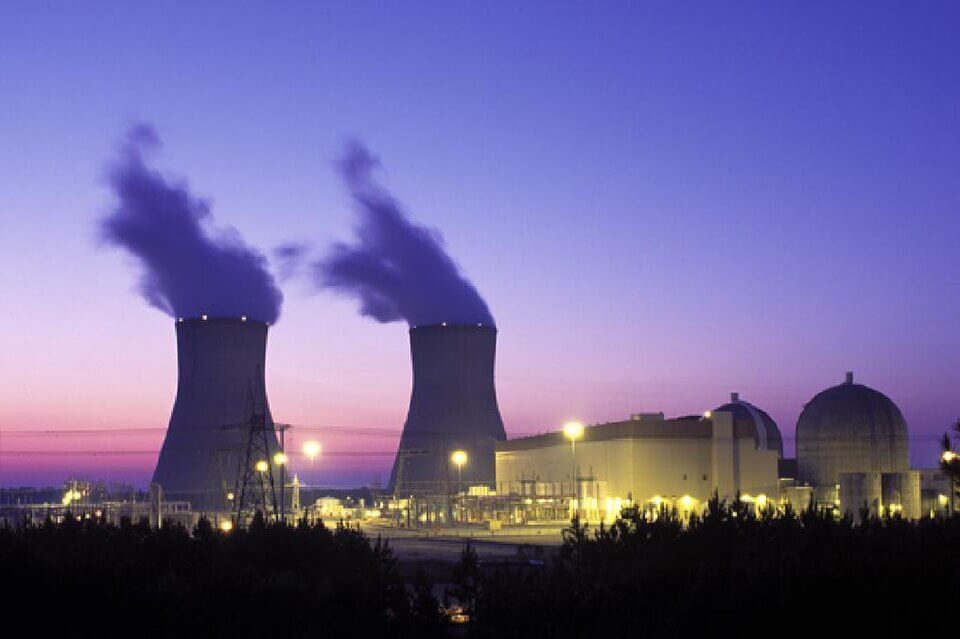
    72. Panfilova, V.V., Kolganova, O.I., and Chibisova, O.F. “Effects of Chronic Exposure to Mobile-Communication-Band Radiation on the Early Postnatal Development of Offspring.” In Current Issues in Radiobiology and Hygiene of Non-Ionizing Radiation: Proceedings of the All-Russian Scientific Conference. Moscow: Russian National Committee for Protection against Non-Ionizing Radiation, 2019, pp. 138–139. Conference: All-Russian Scientific Conference “Current Issues in Radiobiology and Hygiene of Non-Ionizing Radiation,” November 12–13, 2019, Institute of Energy Problems of Chemical Physics, Russian Academy of Sciences, Leninsky Prospekt 38, Building 1, Moscow. Organizing committee: O.A. Grigoriev and E.A. Krasavin, co-chairs; V.A. Alekseeva, executive secretary; Yu.B. Zubarev, V.Yu. Klyushnikov, V.I. Naidich, V.N. Nikitina, V.N. Nosov, A.V. Panov, L.V. Pokhodzei, A.B. Seleznev, and Yu.M. Spodobaev. Program Committee chair: Yu.G. Grigoriev. Related journal paper: “Analysis of the Results of Long-Term EMR Exposure on the Cognitive Functions of the Offspring of Irradiated Rats.” Radiation Biology. Radioecology. 2021;61(2):174–179. DOI: 10.31857/S0869803121010094.

    73. Chueshova, N.V., Novikov, R.I., Kozlov, A.E., and Shubenok, E.A. “Effects of Prolonged Exposure to Electromagnetic Radiation from a Mobile Phone (1745 MHz) on Male Rats.” In Current Issues in Radiobiology and Hygiene of Non-Ionizing Radiation: Proceedings of the All-Russian Scientific Conference. Moscow: Russian National Committee for Protection against Non-Ionizing Radiation, 2019, pp. 41–43. Conference: All-Russian Scientific Conference “Current Issues in Radiobiology and Hygiene of Non-Ionizing Radiation,” November 12–13, 2019, Institute of Energy Problems of Chemical Physics, Russian Academy of Sciences, Leninsky Prospekt 38, Building 1, Moscow. Organizing committee: O.A. Grigoriev and E.A. Krasavin, co-chairs; V.A. Alekseeva, executive secretary; Yu.B. Zubarev, V.Yu. Klyushnikov, V.I. Naidich, V.N. Nikitina, V.N. Nosov, A.V. Panov, L.V. Pokhodzei, A.B. Seleznev, and Yu.M. Spodobaev. Program Committee chair: Yu.G. Grigoriev.

    74. Kolganova, O.I., Zhavoronkov, L.P., Pavlova, L.N., Panfilova, V.V., Chibisova, O.F., and Shvartsburg, L.K. “Effects of Chronic Microwave Exposure on the Exploratory Behavior of Rats.” Poster presentation, “Radiobiology of Non-Ionizing Radiation.” Conference: All-Russian Scientific Conference “Current Issues in Radiobiology and Hygiene of Non-Ionizing Radiation,” November 12–13, 2019, Institute of Energy Problems of Chemical Physics, Russian Academy of Sciences, Leninsky Prospekt 38, Building 1, Moscow. Organizing committee: O.A. Grigoriev and E.A. Krasavin, co-chairs; V.A. Alekseeva, executive secretary; Yu.B. Zubarev, V.Yu. Klyushnikov, V.I. Naidich, V.N. Nikitina, V.N. Nosov, A.V. Panov, L.V. Pokhodzei, A.B. Seleznev, and Yu.M. Spodobaev. Program Committee chair: Yu.G. Grigoriev.

    75. Pavlova, L.N., Zhavoronkov, L.P., and Kolganova, O.I. “Assessment of the Effects of Chronic Low-Intensity Electromagnetic-Field Exposure on the Central Nervous System Using the Conditioned Defensive-Reflex Test in Rats.” Poster presentation, “Radiobiology of Non-Ionizing Radiation.” Conference: All-Russian Scientific Conference “Current Issues in Radiobiology and Hygiene of Non-Ionizing Radiation,” November 12–13, 2019, Institute of Energy Problems of Chemical Physics, Russian Academy of Sciences, Leninsky Prospekt 38, Building 1, Moscow. Organizing committee: O.A. Grigoriev and E.A. Krasavin, co-chairs; V.A. Alekseeva, executive secretary; Yu.B. Zubarev, V.Yu. Klyushnikov, V.I. Naidich, V.N. Nikitina, V.N. Nosov, A.V. Panov, L.V. Pokhodzei, A.B. Seleznev, and Yu.M. Spodobaev. Program Committee chair: Yu.G. Grigoriev.

    76. Nikanorova, E.A., Ivanov, K.Yu., Nagiba, V.I., Patocka, G.L., Varganova, I.A., and Medvedev, Ya.I. “Genotoxic Effects of Radiofrequency Electromagnetic Radiation.” Poster presentation, “Radiobiology of Non-Ionizing Radiation.” Conference: All-Russian Scientific Conference “Current Issues in Radiobiology and Hygiene of Non-Ionizing Radiation,” November 12–13, 2019, Institute of Energy Problems of Chemical Physics, Russian Academy of Sciences, Leninsky Prospekt 38, Building 1, Moscow. Organizing committee: O.A. Grigoriev and E.A. Krasavin, co-chairs; V.A. Alekseeva, executive secretary; Yu.B. Zubarev, V.Yu. Klyushnikov, V.I. Naidich, V.N. Nikitina, V.N. Nosov, A.V. Panov, L.V. Pokhodzei, A.B. Seleznev, and Yu.M. Spodobaev. Program Committee chair: Yu.G. Grigoriev.

    77. Mukhachev, E.V., Al-Shehadat, R.I., Nosov, V.N., Gabay, I.A., and Pekin, A.V. “Experimental Assessment of the Biotropic Effects of Low-Intensity Modulated 2.4 GHz Electromagnetic Fields Using a Fibroblast Locomotion Model in Culture.” Oral presentation, “Radiobiology of Non-Ionizing Radiation.” Conference: All-Russian Scientific Conference “Current Issues in Radiobiology and Hygiene of Non-Ionizing Radiation,” November 12–13, 2019, Institute of Energy Problems of Chemical Physics, Russian Academy of Sciences, Leninsky Prospekt 38, Building 1, Moscow. Organizing committee: O.A. Grigoriev and E.A. Krasavin, co-chairs; V.A. Alekseeva, executive secretary; Yu.B. Zubarev, V.Yu. Klyushnikov, V.I. Naidich, V.N. Nikitina, V.N. Nosov, A.V. Panov, L.V. Pokhodzei, A.B. Seleznev, and Yu.M. Spodobaev. Program Committee chair: Yu.G. Grigoriev.

    78. Chueshova, N.V. “The Reproductive System as a Criterion for Assessing the Risk of Electromagnetic Radiation from Mobile Phones.” In Current Issues in Radiobiology and Hygiene of Non-Ionizing Radiation: Proceedings of the All-Russian Scientific Conference. Moscow: Russian National Committee for Protection against Non-Ionizing Radiation, 2019, pp. 38–41. Conference: All-Russian Scientific Conference “Current Issues in Radiobiology and Hygiene of Non-Ionizing Radiation,” November 12–13, 2019, Institute of Energy Problems of Chemical Physics, Russian Academy of Sciences, Leninsky Prospekt 38, Building 1, Moscow. Organizing committee: O.A. Grigoriev and E.A. Krasavin, co-chairs; V.A. Alekseeva, executive secretary; Yu.B. Zubarev, V.Yu. Klyushnikov, V.I. Naidich, V.N. Nikitina, V.N. Nosov, A.V. Panov, L.V. Pokhodzei, A.B. Seleznev, and Yu.M. Spodobaev. Program Committee chair: Yu.G. Grigoriev.

    79. Zubarev, Yu.B., Grigoriev, O.A., Roze, T.G., Grigoriev, Yu.G., and Alekseeva, V.A. “Practical Implementation of the Precautionary Principle for Protecting Users of Mobile Communications and Wireless Data-Transmission Systems.” Oral presentation, “Hygiene and Safety of Non-Ionizing Radiation.” Conference: All-Russian Scientific Conference “Current Issues in Radiobiology and Hygiene of Non-Ionizing Radiation,” November 12–13, 2019, Institute of Energy Problems of Chemical Physics, Russian Academy of Sciences, Leninsky Prospekt 38, Building 1, Moscow. Organizing committee: O.A. Grigoriev and E.A. Krasavin, co-chairs; V.A. Alekseeva, executive secretary; Yu.B. Zubarev, V.Yu. Klyushnikov, V.I. Naidich, V.N. Nikitina, V.N. Nosov, A.V. Panov, L.V. Pokhodzei, A.B. Seleznev, and Yu.M. Spodobaev. Program Committee chair: Yu.G. Grigoriev.
  • Thorium: The Future That’s Already Written

    Thorium: The Future That’s Already Written

    Part One: The Scenario

    Imagine it is June 2036.

    Turkey has deployed its first commercial Liquid Fission reactor in partnership with Japan. Cost: USD 800,000 per megawatt installed. India has announced plans for 40 GW of Thorium capacity by 2040. Brazil is fast-tracking deployment in the Amazon basin—not out of environmental virtue, but because it’s economically superior to hydroelectric expansion. China’s 700-engineer team has already brought total capacity to 12 GW, with cost curves dropping below USD 600,000 per megawatt.

    The Gulf States—Saudi Arabia, UAE, Qatar, Bahrain, Kuwait—have quietly accelerated renewable and Liquid Fission investment simultaneously. They are hedging against fossil fuel obsolescence. The oil “will remain in the ground“, as famously forecast by a significant Saudi Royal family member 30 years ago.

    Coal-dependent regions in Eastern Europe and Southeast Asia are announcing accelerated retirement plans. Not because of climate policy. Because the economics no longer work.

    Uranium spot prices have collapsed. Solar manufacturers are facing overcapacity. Natural gas is becoming a stranded asset.

    This is not science fiction. This is the future encoded in physics and economics. And it is already underway.


    Part Two: Why This Is Inevitable

    The superiority of Liquid Fission Thorium is not a matter of opinion. It is a matter of engineering.

    One bulk carrier of Thorium fuel powers the world for one year. Thorium is as abundant as lead. The fuel cycle is closed—waste products decay to background radiation in centuries, not millennia. The reactor is inherently walk-away safe; it cannot melt down or explode, even under total failure. The energy density is extraordinary.

    This technology was proven at Oak Ridge in 1969. It has been deployed successfully in Japan. It is being scaled now in Turkey. The physics is settled.

    Why wasn’t it adopted decades ago? Because the fossil fuel industry spent seventy years promoting the Linear No-Threshold (LNT) radiation theory—a hypothesis rejected by leading radiobiologists but embedded in regulatory frameworks worldwide. Because uranium-based fission became politically entrenched. Because institutions resist admitting they were wrong.

    But institutions cannot resist economics forever.

    Cost curves matter. Solar photovoltaics fell from USD 5 per watt to USD 0.25 per watt in fifteen years through volume manufacturing and learning curves. Liquid Fission Thorium is experiencing the same trajectory. First-generation reactors are expensive. Second and third-generation units are dropping in cost with each deployment. The engineering is mature. The supply chains are forming. The regulatory pathways are opening.

    China understands this. Japan understands this. Turkey understands this. The question is not whether Liquid Fission Thorium will dominate global electricity generation—physics and economics have already decided. The question is whether your nation, your investment, and your industry will be positioned for that transition.


    Part Three: The Full Story

    We have prepared a comprehensive timeline for serious readers: “The Thorium Reckoning.”

    This is not a technical white paper. It is a narrative—a detailed speculative account that reads like a documentary film, weaving together:

    • The fictional future with specific geopolitical and economic scenarios grounded in realistic timelines
    • The technical reality that makes this future not just possible, but inevitable
    • Investment implications, regulatory breakthroughs, and the strategic realignment that follows when energy becomes abundant

    Complete with original conceptual imagery, cost curve analysis, and expert testimony from leading Thorium researchers and policy figures.

    This is the story of how the world’s energy system transforms. And why fighting that transformation is fighting physics itself.


    Access “The Thorium Reckoning” on Patreon

    USD 5,000 (permanent access) or Patreon Membership (tiered monthly access at coffee-and-bagel prices)

  • The Vogtle Effect: Investor Flight and China’s Race to USD1,000/kW Reactors

    The Vogtle Effect: Investor Flight and China’s Race to USD1,000/kW Reactors

    Summary

    U.S. investor appetite for large nuclear fell sharply after Vogtle’s cost—USD 15,000 per installed KW—coupled with schedule failures, driven by lost on‑site generation skills, financing risk, and contingency inflation. China’s program, by contrast, uses volume, standardisation, domestic supply chains and state capital to drive large‑reactor costs toward and potentially below USD 1,000 per installed kW and to compress build times toward multi‑unit serial schedules under three years in aggressive scenarios. The result is diverging investment signals: risk‑averse private capital in the U.S. vs. state‑enabled industrial scaling in China.

    Root causes of U.S. investor retrenchment

    • Vogtle created visible multibillion‑dollar overruns, amplified perception of extreme first‑unit risk and raised lender risk premia; utilities now avoid large private finance absent strong government guarantees.
    • Decades‑long U.S. construction hiatus has led to loss of tacit skills, fragmented and broken supply chains and higher contingency allowances—raising capital/ schedule estimates and scaring investors.
    • Contractual disputes and vendor failures (e.g., Westinghouse bankruptcy) increased perceived counterparty risk and pushed insurers/lenders away.

    China’s pathway to very low unit costs and short schedules

    • Policy levers: state coordination, cheap capital, and centralised approval reduce financing and permitting premiums.
    • Industrial levers: standardised designs, high domestic content, supplier capacity kept warm between projects, large apprenticeship pipelines, and offsite modular fabrication drive down per‑unit engineering, QA and onsite labour.
    • Trend targets: Chinese programs publicly target USD 1,800/kW and aim lower (USD 1,200– USD 1,000/kW or below in high‑volume optimised scenarios), with repeat build schedules compressing toward 36–50 months for mature serial units in aggressive programs.

    Comparative percentage declines (observable from China’s infrastructure programs)

    • Coal‑fired plants (China): capital USD / kW down ~40–60% since 2000s through 2010s/2020s.
    • Construction time for serial civil projects: down ~25–50% with repeat designs and modular practices.
    • On‑site labor/productivity: hours per kW reduced by ~30–50% via prefab and continuous pipelines.

    Table — China’s Progress: percentage drops

    CategoryHistorical drop range
    Coal plant capital cost (USD/kW)40–60%
    Construction time (repeat projects)25–50%
    On‑site labor/productivity30–50%

    Investment implications — U.S. vs China

    • In the U.S.: private investors price in Vogtle‑level contingencies, require credit enhancements or government guarantees, and prefer alternatives with clearer cost predictability; this kills large private‑financed reactor projects absent policy intervention.
    • In China: state absorption of early risk plus high serial volume creates a downward spiral of cost and time that further lowers investment risk and reinforces future scaling — enabling targets toward or below USD 1,000/kW.

    Conclusion

    Without major U.S. policy action (direct subsidies, loan guarantees, standardised national designs, long‑term offtake guarantees, or state‑backed industrial rebuilding), U.S. investors will remain shy of large reactors; China’s evidence shows that scale + state coordination can compress costs and schedules dramatically, producing percentage declines similar to those already achieved in coal, rail and bridge programs.

    Social Links

    [LinkedIn Post]

  • The Long Game: Why Liquid Fission Thorium is the Best Investment for the 21st Century

    The Long Game: Why Liquid Fission Thorium is the Best Investment for the 21st Century

    The Imminent Shift in Global Energy Investment

    Based on the insights of Jeremiah Josey, founder of The Thorium Network

    The world stands at a pivotal moment in energy history. As the limitations of fossil fuels become increasingly apparent and the urgency of climate change accelerates, investors are searching for solutions that offer both scale and sustainability. The most compelling opportunity emerging from this convergence of challenges and opportunities is not in the familiar realms of solar or wind, but in the realm of Liquid Fission Thorium Burners—a technology that promises to transform the energy landscape in ways that are both profound and enduring.

    This report examines the dual nature of this investment opportunity: the short-term momentum driven by existing infrastructure and market dynamics, and the long-term generational wealth that can be captured through strategic positioning in the emerging Thorium-based energy ecosystem. By understanding both time horizons, investors can make informed decisions that position them at the forefront of the next energy revolution.

    Liquid Fission Thorium Burner Quietly Powering a Modern City

    The Short-Term Reality: Momentum and Market Dynamics

    The foundation of the current energy investment landscape is being shaped by several powerful forces. The global demand for reliable, 24/7 baseload power is surging, driven primarily by the insatiable appetite of artificial intelligence and data centers. This demand creates a clear and immediate market need that existing energy sources struggle to meet. While renewable energy sources like solar and wind have made significant strides, they are inherently intermittent and require massive storage solutions to provide consistent power. This limitation makes them less suitable for the high-demand, high-reliability applications that define the modern digital economy.

    In this context, Fission stands out as the only scalable, zero-carbon solution capable of meeting these demands. The market is already responding to this reality. The Liquid Fission Thorium Burner technology, while still in its developmental stages, is benefiting from the momentum of the broader Fission energy sector. This momentum is driven by several key factors:

    1. Energy Security and Geopolitical Stability: As nations seek to reduce their dependence on volatile fossil fuel markets, the ability to generate energy from a domestically controlled fuel source becomes a strategic imperative. This has led to increased government support and investment in Fission technologies, creating a favorable policy environment.
    2. Supply Chain Dynamics: The global supply of conventional uranium is constrained by years of underinvestment in mining. This structural deficit creates upward pressure on uranium prices, which in turn drives demand for alternative fuel cycles like Thorium. The Liquid Fission Thorium Burner offers a path to leverage this demand by utilising a fuel cycle that is more abundant and potentially more secure.
    3. Market Capitalisation and Valuation: The existing Fission energy market, including companies involved in fuel production, enrichment, and reactor operations, has seen significant capital appreciation. This creates a positive feedback loop where increased investment attracts more capital, further fuelling growth.

    This short-term momentum provides a critical window of opportunity. It validates the fundamental need for reliable, clean energy and creates a market environment where the benefits of Fission technology are being recognised and rewarded. For investors, this means that the Liquid Fission Thorium Burner is not just a speculative venture, but an investment in a market that is already demonstrating strong demand and favorable economic conditions.

    Liquid Fission Thorium Energy is Safe

    The Long-Term Vision: Generational Wealth and Technological Leadership

    While the short-term momentum is significant, the true value of the Liquid Fission Thorium Burner lies in its long-term potential. This technology represents a fundamental shift in how we generate and manage energy, with implications that extend far beyond simple electricity production. The long-term vision is one of generational wealth, built on the foundation of technological leadership and strategic advantage.

    The Liquid Fission Thorium Burner is not merely an incremental improvement on existing Fission technology. It is a paradigm shift. By utilising Thorium as a fuel source, this technology offers several key advantages that position it to become the cornerstone of future energy systems:

    1. Inherent Safety and Proliferation Resistance: The Liquid Fission Thorium Burner operates on a fundamentally different principle than traditional solid-fuel reactors. Its liquid fuel design allows for passive safety features, meaning that in the event of a malfunction, the reaction naturally shuts down without the need for external intervention. This inherent safety reduces the risk of catastrophic accidents and eliminates the need for complex, expensive safety systems. Furthermore, the Thorium fuel cycle produces minimal amounts of long-lived radioactive waste and is inherently resistant to nuclear weapons proliferation, making it a more secure and politically viable option.
    2. High Energy Density and Fuel Efficiency: Thorium is a remarkably energy-dense fuel. A single ton of Thorium can produce as much energy as several thousand tons of coal or millions of gallons of oil. This high energy density translates into a significant reduction in fuel transportation and storage requirements, as well as a lower environmental footprint. The Liquid Fission Thorium Burner can also be designed to efficiently consume existing nuclear waste, effectively turning a liability into a valuable resource.
    3. Scalability and Global Applicability: The Liquid Fission Thorium Burner is designed to be scalable, from small, modular units suitable for remote communities to large, centralised power plants. This scalability allows for flexible deployment in a wide range of environments, from developing nations seeking to build their energy infrastructure to industrialised nations looking to decarbonize their grids. The technology’s ability to operate in a wide range of climates and conditions makes it a truly global solution.
    4. Economic Viability and Long-Term Returns: The combination of inherent safety, high fuel efficiency, and low operational costs creates a highly attractive economic model. The Liquid Fission Thorium Burner can generate significant returns on investment over its long operational life, often exceeding 50 years. This long-term stability provides a reliable source of income for investors and a predictable source of energy for consumers.

    The long-term vision is not just about generating electricity. It is about creating a new industrial paradigm. The Liquid Fission Thorium Burner has the potential to revolutionise not only the energy sector but also industries that rely on high-temperature process heat, such as hydrogen production, desalination, and industrial manufacturing. By providing a reliable, zero-carbon source of high-temperature heat, this technology can enable the decarbonization of entire sectors of the global economy.

    The Convergence of Short-Term and Long-Term Opportunities

    The true power of the Liquid Fission Thorium Burner lies in the convergence of short-term momentum and long-term vision. The current market dynamics create a favorable environment for the development and deployment of this technology. The demand for reliable, clean energy is real and growing, and the existing Fission energy market is already demonstrating the economic viability of the sector.

    This momentum provides a critical window of opportunity for investors to position themselves in the emerging Thorium ecosystem. By investing in the Liquid Fission Thorium Burner now, investors can capture both the short-term gains from the market’s recognition of Fission’s value and the long-term rewards of being at the forefront of a transformative technology.

    The Liquid Fission Thorium Burner represents a unique investment opportunity that combines the immediate benefits of a growing market with the long-term potential of a technology that could reshape the global energy landscape. For investors seeking to build generational wealth, this is not just an investment in energy—it is an investment in the future of civilisation. The time to act is now, as the world moves towards a new era defined by clean, safe, and abundant energy.

    Resources

    This post is based on the experience of Jeremiah Josey founder and chairman of The Thorium Network. He gave the details of this in a presentation to over 1000 investors in Hong Kong. You can see that post here on our Patreon.

  • Hot or Not? Why Investing into Nuclear is the best for the 21st century

    Hot or Not? Why Investing into Nuclear is the best for the 21st century

    A Presentation by Founder Jeremiah Josey to 1000 Chinese Investors, Hong Kong, September 2023

    China’s nuclear transformation is one of the most important, yet misunderstood, energy stories of the 21st century—and it was at the heart of a presentation Jeremiah Josey delivered to around one thousand Chinese investors in Hong Kong in September 2023. Speaking not as an armchair commentator but as a long‑time energy and project advisor, he argued that China’s nuclear strategy is not just an engineering program; it is a generational wealth and sovereignty project in which Chinese capital has a unique first‑mover advantage.

    China’s nuclear moment

    In the presentation “Hot or Not? Investing in Nuclear,” Jeremiah set out the case that nuclear power is the most strategic, scalable energy platform for the 21st century and that China is positioning itself as its global champion. At the time of his talk, China operated around 55–60 nuclear units with roughly 57 GW of capacity and had declared plans to expand this to about 150 GW by 2030, a growth trajectory unmatched anywhere else in the world.

    For the Hong Kong audience, many of whom were already familiar with landmark projects such as the Taishan Nuclear Power Plant, he emphasized that this expansion is not a publicity exercise but a continuation of the same disciplined, infrastructure‑led development that produced China’s high‑speed rail network—already some 40,000 km in 2023 and targeted to reach around 200,000 km by 2035. Nuclear sits in that same category of long‑lived, nation‑defining assets that underpin industry, trade, and geopolitical leverage.

    From 5% to the backbone of global energy

    Jeremiah framed China’s nuclear build‑out against the background of global energy demand and the limitations of the current system. Today’s worldwide nuclear fleet of roughly 440 reactors provides about 5% of total world energy and around 10% of electricity, a surprisingly small share given nuclear’s role in some national grids. Total world energy demand is on the order of 600 exajoules per year—about half for transport and half for electricity and heat—meaning that nuclear, at roughly 30 exajoules, is only scratching the surface of what is physically and economically possible.

    He then outlined a thought experiment: to supply all global energy needs with conventional solid‑fuel uranium reactors would require on the order of 10,000 large plants (1,000–5,000 MW each), or about 100,000 small modular units (100–300 MW each), numbers that sound vast until compared with the approximately 2,400 coal‑fired power stations already operating worldwide. For Chinese investors accustomed to thinking in industrial scale, this reframed nuclear not as an exotic niche, but as a realistic backbone for global energy—one where China’s early and aggressive build gives it industrial and financial leadership.

    Why nuclear suits China’s model

    One of the central themes of Jeremiah’s talk was that the usual Western objections to nuclear—high costs, long build times, intractable regulation—simply do not apply in the same way in China. In the West, he noted, nuclear projects are hampered by fragmented regulation, politicized permitting, and well‑funded anti‑nuclear campaigns that funnel hundreds of millions or even billions of euros and dollars annually into lobbying against fission. In China, by contrast, alignment between industrial policy, regulators, and state‑owned enterprises allows for standardized designs, repeat builds, and disciplined cost control.

    He highlighted that build costs that are considered unmanageable in Europe or North America are entirely workable in China, where supply chains, project management discipline, and political commitment support serial construction. In this environment, nuclear’s economic profile looks particularly attractive: high upfront capital followed by decades of low, stable operating costs, especially for fuel. For a 5,000 MW plant, Jeremiah used figures on the order of €5 million per installed megawatt, implying roughly €25 billion in capital expenditure, and then showed how, at high capacity factors and realistic power prices, such a plant can generate multi‑billion‑euro annual cash flows over lifetimes of up to 50 years or more.

    He also reminded the audience that China already has examples of nuclear assets designed for very long service lives, and that global precedent—such as U.S. plants licensed for 80 years—shows how nuclear can become a quasi‑permanent part of the industrial landscape. This combination of scale, longevity, and policy alignment makes nuclear a natural fit for China’s development model, in his view.

    The logistics and fuel advantage

    Jeremiah devoted a notable portion of the Hong Kong presentation to the sheer physical advantage nuclear fuel offers—an advantage that plays directly to China’s strengths in logistics and large‑scale planning. He contrasted the sprawling, tanker‑heavy fossil fuel supply chain with the compactness of uranium logistics. At current consumption levels, he explained, a single large bulk carrier similar to the Cape Ace could theoretically carry the entire world’s annual uranium requirement. Even if the world shifted entirely to uranium‑based nuclear power, perhaps twenty such ships would suffice, compared with more than 2,000 crude oil tankers that now criss‑cross the oceans.​

    He also pointed out that the global uranium market is surprisingly small—on the order of only a few tens of thousands of tonnes per year and a market value of roughly single‑digit billions of euros—compared with the multi‑trillion‑dollar fossil fuel complex. Yet, because uranium is so energy‑dense, replacing the entire fossil fuel market with nuclear fuel would require annual uranium spending of perhaps around USD 140 billion, versus over USD 5 trillion spent on fossil fuels today. That translates to fuel cost savings on the order of 97% for the same delivered energy, a number that captured the attention of an audience trained to look for large, structural cost differentials.

    For China, Jeremiah argued, this means the opportunity to secure and manage a compact, strategic fuel supply chain, with far fewer geopolitical choke points and shipping risks than oil and gas. It also opens a long‑term industrial opportunity in enrichment, fuel fabrication, recycling, and advanced fuel cycles—fields where Chinese firms and research institutes are already active

    China and the next nuclear wave: Liquid Fission Thorium

    While much of the talk acknowledged the importance of today’s solid‑fuel uranium reactors, Jeremiah’s message to Chinese investors focused strongly on where he believes the real technological and financial upside lies: liquid fission, and especially liquid Thorium fuel in molten salt reactors.

    He revisited the history of the Molten Salt Reactor Experiment (MSRE) at Oak Ridge in the 1960s, which ran successfully at around 8 MW from 1965 to 1969 and produced a comprehensive 434‑page technical report summarizing more than two decades of research by tens of thousands of staff. The MSRE, he noted, was described by its own engineers as “the most boring experiment ever” because it did exactly what it was designed to do, with no surprises or crises. Yet this line of development was shut down in the early 1970s, as political and strategic considerations in the United States favored once‑through solid fuel cycles aligned with weapons‑grade material production.​

    For the Hong Kong audience, the key point was not the historical injustice, but the opportunity it creates today. Technologies that were effectively “nixed” in the West are now being revived and advanced in China. Jeremiah highlighted the 2 MW Liquid Fission Thorium machine in Wuwei, Gansu province—a modern‑era re‑run of the MSRE concept, backed by international collaboration on high‑temperature materials and corrosion‑resistant alloys. This project signals that China is not content to simply replicate Western light‑water reactor designs but aims to leapfrog into a new generation of reactors with inherently safer characteristics and potentially superior economics.​

    He also mentioned that when modern artificial intelligence systems have been tasked with designing the “best possible” nuclear machine under given constraints, they independently converge on Liquid Fission Thorium architectures similar to those pioneered at Oak Ridge in the 1960s. For investors, this convergence—between historic experimental success, current Chinese industrial capability, and modern computational design—suggests that Liquid Fission Thorium is not an exotic side bet but a likely candidate for the core of future nuclear fleets.​

    Safety, perception, and China’s opportunity

    Jeremiah did not sidestep the safety debate; instead, he sought to reframe it for an audience whose country is still building out its nuclear fleet. He reminded investors that the three most famous nuclear incidents—Three Mile Island, Chernobyl, and Fukushima—have shaped global perception far more than they deserve based on actual casualty numbers. Three Mile Island caused zero deaths or injuries from radiation, and the remaining unit continued operating for decades after the incident. Chernobyl, while a serious industrial accident, resulted in on the order of a few dozen immediate deaths, and three other reactors at the same site kept running for years. Fukushima, despite the enormous social and economic disruption, did not produce deaths from radiation exposure.

    He also cited the work of radiation oncologists and researchers involved with the Chernobyl Tissue Bank who initially expected to find widespread radiation‑induced illness but ultimately found far less than feared, leading some to change their stance from anti‑ to pro‑nuclear. For China, which is designing and regulating new reactors in the 21st century rather than retrofitting mid‑20th‑century plants, this evidence base allows for a more rational, data‑driven approach to safety standards and public communication.

    Jeremiah argued that by building modern reactors with inherently safer designs and by basing radiation limits on empirical data rather than Cold War fears, China can avoid the extreme over‑regulation that has crippled nuclear expansion in the West. This does not mean compromising safety; it means aligning regulation with real‑world risk, thereby reducing costs and delays without accepting unacceptable hazards.

    Nuclear as China’s long game

    For the investors in the Hong Kong room, many of whom manage large pools of patient capital, Jeremiah framed China’s nuclear strategy as part of a much larger macroeconomic and geopolitical shift. He outlined a world in which conventional oil has effectively peaked, U.S. shale is dependent on cheap debt and high prices, and Western governments face rising debt burdens and inflationary pressures as they struggle to maintain the existing energy‑financial order.

    Against that backdrop, he suggested, nuclear offers China a way to secure:

    • Long‑term, low‑cost, low‑carbon energy for its industries and cities.
    • Strategic independence from volatile oil and gas markets.
    • Exportable infrastructure and expertise in both conventional and advanced reactors.
    • A platform for global influence, as other countries seek partners for their own nuclear programs.

    He also noted that demographic trends in Africa and Asia—regions projected to add around two billion people between now and 2050—will drive enormous demand for reliable, affordable electricity. Nations that can offer turnkey nuclear solutions, from financing and design to fuel management and decommissioning, will play a central role in how that demand is met. China, with its existing fleet, proven build capability, and emerging leadership in liquid fission research, is well‑placed to become that provider.

    In closing the Hong Kong presentation, Jeremiah challenged the audience to decide whether they wished to be “following investors,” chasing crowded trades in fashionable renewables, or “foundational investors,” backing the assets and technologies that will form the bedrock of the world’s energy system for the next century. For him, the answer was clear: China’s nuclear program—especially as it moves from solid uranium to Liquid Thorium—represents one of the most consequential foundational investments of our time, and Chinese investors are sitting at the epicentre of that opportunity.

    See the presentation here that Jeremiah Josey gave in Hong Kong September 2023, with selected screen shots from the event. Photographic imagery courtesy of CLSA. No infringement intended, all rights belong to the respective owners.

  • Private and Confidential Report on The Venus Project and Yevhen Sliuzko

    Prepared by: TTN’s Counsel

    Created: 10 January 2024

    Updated: 12 July 2024

    Executive Summary

    This confidential report compiles and summarises the contemporaneous documentary record relating to The Thorium Network’s (TTN) interactions with The Venus Project (TVP). Its principal purpose is (a) to provide a concise, verifiable dossier for select investors, partners and press under NDA; and (b) to identify factual inconsistencies in public postings compared to preserved contemporaneous documents. The core documentary exhibit is an email dated 23 October 2023 from Roxanne Meadows to Yevhen (Evgeniy) Sliuzko (Jeremiah Josey BCC’d), preserved in TTN custody.


    1. Purpose, scope and handling instructions

    • Purpose: Provide a confidential, document-based summary that: (i) records the timeline and primary documents; (ii) highlights demonstrable facts useful to stakeholders; and (iii) outlines our communications and evidence-preservation plan.
    • Handling: This document is confidential. Release only under a signed NDA.

    2. Core documents reviewed (preserved and indexed)

    All originals or electronic copies are held in TTN’s evidence repository.

    • Exhibit A: Exhibit A: Email from Roxanne Meadows to Yevhen (Evgeniy) Sliuzko (hereafter “Sliuzko”), dated 23 October 2023 (Jeremiah Josey BCC’d). The original email (.eml) with full headers is also preserved.
    • Exhibit B: Non Disclosure Non Circumvention Agreement (NDNCA) signed between TTN and TVP, dated 31 December 2022.
    • Exhibit C: Memorandum of Understanding (MOU) between TTN and TVP, dated 7 December 2023.
    • Exhibit D: Contract between TTN and Dr. Simon Michaux securing Michaux’s services for the work scope with TVP and preventing non circumvention or non disclosure, dated 1 May 2023.

    Exhibits are indexed in the repository and are available for verified review under NDA, except for Exhibit A, which is given below in its entirety.


    3. Chronology of key events

    • Early to Mid 2013: Yevhen Sliuzko meets with Jacque Fresco and Roxanne Meadows in Venus, Florida where Sliuzko appeals to be made the CEO of The Venus Project. Jacque flatly refuses. According to Roxanne Meadows (confidential internal communication), the situation was described as ‘sleazy’ and Sliuzko was viewed as the ‘strange Ukrainian.’ These terms reflect her personal perspective shared in confidence.
    • 12 September 2013: Sliuzko establishes his own future design concept called “Designing the Future”. He used this platform to critically oppose TVP after his request to be made CEO was denied. The website attracts little traffic even to this day. https://www.whois.com/whois/designing-the-future.org
    • 2013 -2017: Sliuzko runs a Russian language translations of Jacque Fresco’s work by merely dubbing over Jacques videos and audio recordings created by Jacque over his life time. There are 1,000’s of these recordings online published by TVP. An instant following is formed of Russian speakers. Sliuzko generates significant income from YouTube advertising for which no formal revenue-sharing agreement with TVP exists, as verified by TVP. TVP stated difficulty in enforcing rights across jurisdictions and, while concerned about unauthorised use, tolerated the activity because of its promotional reach.
    • 18 May 2017: Jacque Fresco dies and Sliuzko again insists on being made CEO of TVP. The remaining team, led by Ms Roxanne Meadows, declined his request. TVP confidentially described their view of Sliuzko in strongly negative terms: “that sleazy Ukrainian”.
    • 2017 to 2022: Sliuzko continued to publicly criticise the project and members of the team such as Roxanne Meadows and Nathaniel Dinwiddie. However his Russian language activities now attract millions of views. With Jacque’s death, Sliuzko’s tacitly approved work becomes the main public activity of TVP and he continued to publish commentary and translations, whilst remaining publically critical of TVP leadership. TVP indicated a tactical decision to maintain informal contact rather than engage in public confrontation; the decision was driven by risk-management concerns.
    • 31 December 2022: Following extensive discussions directly between Jeremiah Josey of TTN and Roxanne Meadows of TVP, a comprehensive Non Disclosure and Non Circumvention Agreement is signed between the two organisations. The intention is to negotiate collaboration for a future city powered by Thorium, based on Jacque’s ideas. All relevant team members are included in the agreement, including Sliuzko. Jeremiah Josey was not aware of the issues between TVP and Sliuzko at the time of these negotiations, and was misinformed and misled by Meadows.
    • 10 January 2023: Jeremiah Josey with the TTN team meet online with Roxanne Meadows and the entire TVP team and continue the negotiations. The meeting goes well and an MOU is agreed as the path forward between TTN and TVP..
    • Late 2022 and Early 2023: Sliuzko again approaches the TVP team, spending an extended period on site at Venus, Florida (“some weeks”). Again his request to be made CEO is flatly rejected by Roxanne and the board of TVP. Jeremiah Josey only became aware of the TVP interaction with Sliuzko late in the MOU negotiations.
    • 1 May 2023: Comprehensive contract signed between TTN and Dr. Simon Michaux securing his position with TTN. He was already nominated as a TTN team member in the 31 December 2022 agreement with TVP. This was now his official engagement contract with TTN for the TVP project.
    • Most of 2023: The Sliuzko issue is revealed piece by piece to Jeremiah Josey by Meadows as he attempts to put together the MOU between TTN and TVP. Significant time was required to address ongoing complications arising from Sliuzko’s ambiguous and inconsistent positioning regarding the project. Despite having no formal claim to the project, he continued to publicly criticise the TVP members while promoting the project to his Russian-speaking audience.
    • 23 October 2023: Once the full situation was made aware to Jeremiah Josey about the leaking intellectual property to the Russian language work under Sliuzko, and his slanderous attacks on the TVP team, Jeremiah Josey advises Roxanne Meadows to send an email direcrly to Sliuzko to secure the IP of TVP. After all, TTN intention is to expand and enhance this IP, and leaks are not good business. Roxanne sends the email to Yevhen Sliuzko, with a BCC to Jeremiah Josey. The content focuses on licensing/promotional arrangements; explicitly referencing development of scenario modelling under the promotional name “Venus Evolution” given by Jeremiah Josey and states certain ownership/branding positions (Exhibit A). Jeremiah Josey retains an original copy of the email. This is the first official position that Sliuzko has received in writing from TVP. Sliuzko responded with public criticism directed now at Jeremiah Josey.
    • 7 December 2023: TTN and TVP execute a Memorandum of Understanding (MOU) setting out the collaboration framework, confidentiality expectations and non-circumvention commitments (Exhibit B).
    • December 2023 – to date: TTN provides technical inputs and discussions under the MOU while confidentiality obligations remain in effect (Exhibit C).

    Update as of 15 July 2024

    • January 2024 to March 2024: Sliuzko accelerates his attacks on TVP and TTN members directly, establishing a private and closed Telegram group. Anyone questioning the Sliuzko line or his “research” is promptly removed from the group. Only “yes men” are permitted to remain in this group. Videos are planned defaming Dr, Simon Michaux and Nathaniel Dinwiddie, representing them as “spiders”. A fake dossier is planned, discussed and created against Jeremiah Josey (screen shots are available).
    • 28 March 2024: Sliuzko makes a public post strongly critical of Jeremiah Josey, which both TTN and TVP can prove are factually incorrect and therefore defamatory. Evidence retained on file by both TTN and TVP.
    • 16 June 2024: The formal partnership between The Thorium Network (TTN) and The Venus Project (TVP) was dissolved. Subsequently, in breach of prior agreements, TVP engaged The Thorium Alliance as advisers on thorium-related matters without TTN’s consent.
    • 1 July 2024: Dr. Simon Michaux, previously contracted by TTN under a binding consultancy agreement, breached his contract by joining the TVP advisory board. Following this action, Dr. Michaux was subsequently terminated from TVP’s advisory role. See below for evidence provided directly by Roxanne Meadows at TVP.
    • Mid 2024: Additional statements were obtained from former advisers and team members of TVP, as well as former associates of Yevhen Sliuzko. The evidence strongly suggests that deficiencies in business acumen and integrity within TVP have allowed TTN to avoid considerable frustration and inaction by continuing to advise TVP despite challenges, while allowing the equally low integral Sliuzko to remain an unaddressed liability for TVP.
    Confirmation from TVP. Full Email Header on Record.

    4. Documentary analysis — what the documents show (facts only)

    Exhibit A — Roxanne email (23 Oct 2023)

    • What it contains (documented):
      • Roxanne acknowledges and formalises a royalty-free licensing arrangement for Russian-language territories for a named recipient.
      • Roxanne describes use of a promotional name “Venus Evolution” provided by Jeremiah Josey for scenario modelling related to city planning and energy transition strategies.
      • Roxanne states (in the email) that the written confirmation “supersedes all previous arrangements … except any NDAs which were signed.”
      • The email requests a signed acknowledgement (signature on each page) to be returned within seven business days.
    • Probative value: This contemporaneous, dated, author-created document establishes: (a) TVP leadership used the promotional name “Venus Evolution” in Oct 2023 guided by Jeremiah Josey; (b) TVP leadership asserted control/ownership language with respect to certain TVP materials; and (c) TVP leadership acknowledged the existence of NDAs as of Oct 2023. This was all under the direct guidance of Jeremiah Josey.
    • No Reply: Sliuzko did not respond to the direct email from Roxanne. TTN and TVP interpret this lack of response as an indication of bad faith and an unwillingness to engage constructively. Concurrently, Sliuzko’s public communications continued with slanderous attacks on the team and increasingly on Jeremiah Josey.

    Exhibit B — NDNCA, 31 December 2022

    • What it shows (documented):
      • Definitions of confidential categories, obligations of recipients, and permitted uses.
      • Dates of execution precede or coincide with the MOU.

    Exhibit C — TTN–TVP MOU, 7 December 2023

    • What it contains (documented):
      • Contractual language outlining collaborative scope, confidentiality, and non-circumvention expectations between TTN and TVP.
      • Signatures or signed drafts are preserved in the repository.
    • Probative value: Establishes the parties’ contractual framework and expectations for the December 2023 collaboration.

    Exhibit D — Contract between TTN and Dr. Simon Michaux

    • What it show (documented):
      • Clear intention to formalise a structured approach to entering a massive undertaking.

    5. Impact assessment (reputational & stakeholder)

    • Audience reach: Archived analytics available as of 13 April 2024 indicate that the third-party author’s platforms (Sliuzko) have limited engagement relative to main stakeholder channels. While broad public harm appears limited, targeted stakeholders (investors, specific partners, niche communities) may see the posts. Sliuzko’s hidden location make it impracticable to bring defamatory actions upon him.
    • Risk: The principal risk is misunderstanding among priority stakeholders (investors, partners) caused by selective quotations or miscontextualised registry snapshots. The objective is to neutralise confusion with targeted, factual materials.
    • Opportunity: The contemporaneous documents in TTN custody (Exhibits A–D) permit a clear, verifiable narrative for interested and accredited stakeholders under NDA.

    Closing and Disclaimer

    This report and the documents referenced herein are confidential and have been prepared by counsel solely for the benefit of The Thorium Network (TTN) and its authorised recipients. Access to this document is provided subject to a signed non disclosure and confidentiality agreement (NDCA), and is limited to persons or entities expressly authorised by TTN. The information contained in this report is privileged and may include attorney-client communications and attorney work product.

    If you are not an authorised recipient, you must immediately cease any use, copying, distribution or retention of this document and you must promptly notify TTN. Upon notification, you must immediately delete and permanently destroy all copies in your possession or control and provide written confirmation to TTN that you have done so.

    TTN and counsel has made commercially reasonable efforts to verify the factual information in this report. The report contains factual summaries of documents in TTN’s custody and limited interpretative commentary. Where interpretative conclusions are offered, they are expressly identified as such. Recipients should not construe opinions expressed in this report as legal conclusions or as a waiver of privilege. Nothing in this report shall be construed to constitute a final or exhaustive factual or legal determination; TTN reserves all rights to supplement, amend or correct the record.

    Unauthorised disclosure or use of this report may cause irreparable harm to TTN. TTN expressly reserves all rights and remedies, including injunction and damages, in the event of unauthorised dissemination or other breach of the confidentiality obligations associated with this material. This confidentiality notice is governed by the laws of Switzerland, and any dispute arising out of this notice shall be resolved in the courts of that jurisdiction.

    The documents in TTN custody (notably Exhibit A) give TTN a defensible, contemporaneous record to present to qualified stakeholders under NDNCA.


    Social Media Posts

    The Thorium Network
    MECi Group

    Public Statements

    The Thorium Network

    MECI Group

    Private and Confidential Reports on TVP and Yevhen Sliuzko

    1) TTN: Private and Confidential Report on TVP and Yevhen Sliuzko

    2) MECI: Private and Confidential Report on TVP and Yevhen Sliuzko

  • Critical Analysis of a Questionable Review on Molten Salt Technology

    Critical Analysis of a Questionable Review on Molten Salt Technology

    The Article

    The name of the article is “Molten salt reactors were trouble in the 1960s—and they remain trouble today.”, authored by M. V. Ramana and appearing 20 June 2022 on the website of the Bulletin of Atomic Scientists. Keep in mind that the Bulletin of Atomic Scientists are the keepers of the “Doomsday Clock” – a relic of the cold war era designed to keep Joe Public scared and the public funding coffers open so the industrial-military complex of the west could continue building nuclear weapons. The links is the end of this article.

    The Doomsday Clock has been ticking for 70 years. It’s time to let it die.

    Why I’m giving up on the apocalypse countdown., Shannon Osaka, Reporter

    We could spend hours rebutting and refuting every single piece of purported evidence submitted by the article, but that is not smart thing to do. And it’s not actually the point. When you understand the meaning behind the article a direct refute is actually a waste of time.

    Not a Technical Data Review nor a Rebuttal of Technical Content

    But, on the technical competence of Thorium Molten Salt technology, we have spent many hours interviewing the last surviving members of the research programs of the 1960’s and 1970’s. We can state that all the claims in the article we have reviewed are bogus. Hence our review here.

    The article was clearly a hit piece from the start, so it must be assessed as one. We will review the writing style and the techniques used to make it appear a useful and credible piece. But in fact it is not at all. It has nothing to do with science and everything to do with objectives that are not clear from the article itself.

    The article creates a dismal portrayal of actual events, and doubt and hesitation in the mind of the uninformed reader. Even a nuclear scientist who hasn’t studied the MSRE could nod their head in agreement – unless they critically review how the data is presented.

    If used skillfully, the article would be a damaging success and Thorium Molten Salt would remain on the shelf.

    The article is designed to be given to a senator or congress member (India, USA, German etc.) who might be teetering on the edge of supporting the best form of energy generation we have: Thorium Molten Salt.

    This article could also be used to commit USD billions of public money to dilute and bury U233. Who owns the contracting companies work in the place where they will bury it? Follow the money.

    It’s unfortunate that such people exist who put their name to such work, but hey, it’s not a game without an opponent.

    Lessons First: How to Distract with Writing

    Firstly here’s some pointers on how to attack something with an article, without making it appear like an attack. There are certain techniques that a writer can use to make their writing appear full of valuable data while dissuading further analysis.

    These techniques include:

    • Overloading the article with technical jargon and complex language that is difficult for laypeople to understand. This can make the reader feel overwhelmed or intimidated, and discourage them from delving deeper into the topic.
    • Presenting only one side of the argument, and ignoring or downplaying any opposing viewpoints or evidence. This can create the impression that the author has provided a complete and conclusive analysis, when in reality there may be much more to consider.
    • Using emotionally charged language or rhetoric to appeal to the reader’s emotions, rather than presenting objective facts and evidence. This can make it difficult for the reader to separate the author’s opinion from the facts of the matter.
    • Limiting the scope of the article to a narrow or specific aspect of the topic, without providing a broader context or perspective. This can make it seem as though the topic is fully explored, when in reality there may be many other important factors to consider.

    Other variations of techniques that can be used to appear scientific and fact-based while actually presenting a biased or negative view of the subject matter. can be:

    • Selectively citing studies or data that support the writer’s viewpoint while ignoring or downplaying studies or data that contradict it.
    • Using loaded language or emotional appeals to discredit the subject matter or those associated with it.
    • Employing a one-sided or cherry-picked narrative that presents a biased view of events or situations.
    • Using innuendo or insinuation to suggest negative associations with the subject matter, without providing clear evidence to support the claims.

    The Authors Background

    Let’s now consider the author. Who is he and what is his beef with Thorium? It’s important to understand their position and who or what they may be supporting in the background.

    On face value, it seems that M. V. Ramana is a well-respected expert in nuclear disarmament. He has published extensively on the subject, and his work has been recognized with several awards and appointments to prestigious organizations. Ramana’s focus on disarmament and nuclear risk assessment suggests that he is concerned about the potential dangers of nuclear power and views it as a threat to global security.

    Given his expertise in the field and his focus on disarmament, it is not surprising that Ramana is critical of Molten Salt Burners. His emphasis on the risks associated with this technology, such as accidents and proliferation concerns, have been debunked in numerous papers and reports, however it obvious that Ramana still views them as unacceptable given the article and his general concerns about the nuclear topic. Additionally, his affiliation with groups such as the International Nuclear Risk Assessment Group and the team that produces the World Nuclear Industry Status Report suggest that he is part of a broader movement to promote other energy options, which may lead him to be sceptical of any nuclear technologies.

    However, upon reviewing the previous articles Ramana has authored or co-authored, notably absent is anything about UK’s plans to increase their nuclear arsenal. The UK needs to boost their uranium fired power industry to give cover for plutonium production. The material is necessary for the additional 80 Trident warheads the UK intends to build in the next few years.

    You can dive down that rabbit hole of more nuclear weapons with these links:

    UK Planning for Rapid Nuclear Expansion

    UK Increases Nuclear Arsenal Article 1 – Reuters

    UK Increases Nuclear Arsenal Article 2 – Guardian

    Having no article on this is strange considering Ramana’s position as chair of a non-proliferation organization, and his propensity to produce articles. There are 33 articles on The Bulletin alone with his name attached.

    However one must consider what the UK has been doing to rubbish Thorium. We will touch on it here but it does deserve a full article in the near future.

    Put frankly, after the IAEA published their technical memo 1450 in May 2005 supporting Thorium as a fuel and identifying it’s non-proliferation features, the UK set about the systematic vilification of Thorium. An anti-Thorium article by three learned (but non-nuclear) Cambridge professors; a publicly funded 1.5 million GBP “no-to-Thorium” research report by a single person consultancy that referenced Wikipedia as a source; the gagging of a Lord; the possible early demise of the former head of Greenpeace UK, who had switched to Thorium. Then, the announcements of new nuclear energy for UK and shortly thereafter new nuclear weapons. It’s the makings of a sinister plot of a Bond movie. Or perhaps more akin to a “Get Smart” episode, or indeed, for the UK, “Yes, Minister”.

    IAEA Technical Memo 1450 Thorium Fuel Cycle Potential Benefits and Challenges

    Be sure to consider this IAEA report on Thorium focuses on solid fuel uses. This is not ideal. This is addressed very well by Kirk Sorensen in 2009 and you can read that here:

    A Response to IAEA-TECDOC-1450

    So the question is, does Ramana receive funding or any kind not to discuss new weapons for the UK? Has he been prompted (paid) to weigh into the argument against Thorium because of these plans?

    We will never know these answers.

    Review of the Writing Style of the Article

    Launching into the article itself, here are some of the techniques that have been used manipulate readers.

    Emotional Language

    Use of emotional language. The author uses words like “trouble” and “hype” to describe molten salt machines, which could instill a negative emotional response in readers and make them less likely to consider the technology objectively. The author refers to the “failed promises of nuclear power,” which may be intended to evoke a sense of disappointment or disillusionment with nuclear energy in general.

    Cherry Picking Data

    Cherry-picking data. The author points out that “no commercial-scale molten salt reactors have ever been built,” which could be interpreted as evidence that the technology is unproven or unreliable. However, this overlooks the fact that of the numerous activities worldwide to commercializes the technology. There are several countries and many private companies actively pursuing new molten salt reactor designs.

    The author notes that molten salt reactors require “materials that can withstand intense radiation and high temperatures,” which could be interpreted as a major technical challenge. However, this overlooks the fact that many materials capable of withstanding extreme conditions already exist, and that ongoing research is aimed at developing even more robust materials.

    Logical Fallacies

    There’s multiple use of logical fallacies. Here are two examples:

    Example 1: The author suggests that because molten salt reactors were initially developed as part of a military program, they are inherently problematic or dangerous. This is a classic example of an ad hominem fallacy, which attacks the character or motives of an argument rather than addressing the argument itself.

    Example 2: The author implies that because molten salt reactors were not ultimately adopted for commercial use in the 1960s, they must be fundamentally flawed. This is an example of a false dilemma fallacy, which presents only two options (in this case, success or failure) and overlooks more nuanced or complex possibilities.

    Appeal to Authority

    Used extensively is appeal to authority. The author repeatedly references well-respected scientists and institutions to bolster his argument against molten salt reactors. While it’s important to consider expert opinions, the constant invocation of authority figures can also be a way to shut down debate and discourage readers from doing their own research. For example, he cites a report from the Union of Concerned Scientists that characterizes molten salt burners as “inherently dangerous,” but doesn’t provide any details about the methodology or findings of the report.

    Fear-Mongering

    Basic Fear-mongering is used. In addition to playing up the potential risks of molten salt burners, the author also seems to imply that proponents of the technology are somehow sinister or untrustworthy. For example, he writes that “The companies and individuals involved in promoting this technology today have made claims that range from the dubious to the outright false.” This kind of rhetoric can be effective at turning readers against a particular idea or group, but it doesn’t necessarily contribute to a reasoned discussion of the topic at hand.

    Oversimplification and Generalization

    There are examples of oversimplification. While the author does acknowledge that there are some potential benefits to molten salt burners, he ultimately argues that they are too risky and impractical to be a viable solution to our energy needs. However, his arguments often rely on oversimplifications or generalizations that don’t fully capture the nuances of the technology. For example, he writes that “One of the main reasons molten salt reactors were abandoned in the 1960s was their inherent safety problems,” without providing any additional context or elaboration on what those safety problems were. This kind of oversimplification can be misleading and obscure important details that might challenge the article’s argument.

    Overall, it’s clear that the author is deeply skeptical of molten salt burners and believes that they are not a viable solution to our energy needs. While it’s important to consider potential risks and drawbacks associated with new technologies, it’s also important to have an open and nuanced discussion about their potential benefits and drawbacks. The techniques used in the author’s article are also manipulative and intellectually dishonest, and readers should be aware of these techniques as they consider his argument.

    Further Reviews

    Now here are three credible reviews by three very different professionals:

    • A pro-nuclear scientific author with a PhD in nuclear physics.
    • Another science author but with a PhD in psychology and no nuclear training whatsoever.
    • An environmental scientist and environmental advocate looking for a solution (a degree in environmental science).

    Pro-Nuclear Scientific Author

    I am a pro-nuclear supporter, and must be since I am also a Doctor of Nuclear Physics, I reviewed the article “Molten salt reactors were trouble in the 1960s—and they remain trouble today” by M. V. Ramana. I will focus on the blatant non-scientific methods used to discredit a perfectly viable technology.

    The article discusses the popularity of molten salt nuclear reactors among nuclear power enthusiasts, and their potential to lower emissions, be cheaper to run and consume nuclear waste, and be transportable in shipping containers. The article mentions how various governments and organizations have provided funding for the development of these reactors. However, the author asserts that this technology was unsuccessful in the past and is the solution to our current energy problems.

    The author uses a several subterfuge techniques to support his argument. Firstly, he uses loaded language to portray molten salt reactors as a risky and problematic technology. For example, he uses the phrase “all the rage among some nuclear power enthusiasts” to imply that people are overly enthusiastic about this technology. The phrase “trouble” in the article’s title also suggests that molten salt reactors are problematic. Additionally, the author uses the phrase “legendary status” to describe the Molten Salt Reactor Experiment, which is a hyperbole that can exaggerate the reactor’s success and, therefore, make it seem like a risky venture.

    The author uses a strawman argument to discredit molten salt reactors’ developers and proponents. By implying that these people believe that the Molten Salt Reactor Experiment was so successful that it only needs to be scaled up and deployed worldwide, the author sets up a weak and exaggerated version of the opposition’s argument, which is easy to refute.

    The author uses an appeal to emotion by asking readers to adopt a 1950s mindset to understand the interest in molten salt machines. The author makes an emotional appeal by stating that breeder machines would allow humanity to live a “passably abundant life.” By doing so, the author tries to persuade readers that using molten salt machines would not lead to a more abundant life, which is an emotional argument rather than a logical one.

    The author provides detailed information on the fuel used in the MSRE, including depleted uranium, highly enriched uranium (HEU), and uranium-233 derived from thorium. However, the author uses subterfuge by presenting the information on the fuel without providing any context on why these fuels were used. HEU was used during that time because it was the only fuel that could sustain the reactor at high temperatures. Uranium-233 was derived from thorium, which is more abundant than uranium, and the intention was to use this as a breeder fuel to produce more fissile material.

    The author then goes on to criticize the MSRE by stating that the reactor failed to reach its intended power output of 10 MW. However, this information is presented without any context on the significance of this failure. The MSRE was an experimental reactor, and its primary goal was to test the feasibility of the technology. The fact that the reactor was operational for four years and achieved a maximum power output of 8 MW is significant in demonstrating that the technology was viable.

    The author also highlights the interruptions that occurred during the operation of the MSRE, including technical problems such as chronic plugging of pipes, blower failures, and electrical failures. However, these issues are common in any experimental reactor, and the author fails to provide any context on the significance of these issues. It is essential to note that the MSRE was the first and only molten salt reactor to be built, and it was an experimental reactor. Therefore, the primary goal was to test the feasibility of the technology, and it was expected to encounter problems.

    The author argues that materials must maintain their integrity in highly radioactive and corrosive environments at elevated temperatures. The corrosion is a result of the reactor’s nature, which involves the use of uranium mixed with the hot salts for which the reactor is named.

    The article uses the technique of “cherry-picking” when discussing the material challenges in the manufacturing of molten-salt-reactor components. While the author acknowledges that Oak Ridge developed a new alloy known as IN0R-8 or Hastelloy-N in the late 1950s, which did not get significantly corroded during the four years of intermittent operations, the author also highlights that the material had two significant problems. First, the material had trouble managing stresses, and second, the material developed cracks on surfaces exposed to the fuel salt, which could lead to the component failing.

    The author uses the technique of “fear-mongering” when discussing the material challenges. The author claims that even today, no material can perform satisfactorily in the high-radiation, high-temperature, and corrosive environment inside a molten salt reactor. However, the author fails to acknowledge the significant advancements in materials science and engineering in the last few decades that have enabled the development of new materials that can withstand extreme environments, including those in the nuclear industry. For example, the use of ceramic matrix composites, which can withstand high temperatures and radiation exposure, has been proposed as a potential solution for the material challenges in molten salt reactors.

    The article uses the technique of “appeal to authority” when discussing the Atomic Energy Commission’s decision to terminate the entire molten salt reactor program. The author claims that the Atomic Energy Commission justified its decision in a devastating report that listed a number of problems with the large molten salt reactor that Oak Ridge scientists had conceptualized. The author then lists the problems with materials, the challenge of controlling the radioactive tritium gas produced in molten salt reactors, the difficulties associated with maintenance because radioactive fission products would be dispersed throughout the reactor, some safety disadvantages, and problems with graphite, which is used in molten-salt-reactor designs to slow down neutrons. However, the author fails to acknowledge that the decision to terminate the program was not based on technical problems at all, but was driven solely by anti-competitive measures of the fossil fuel industry.

    The MSRE was an experimental reactor that aimed to test the feasibility of the technology, and it achieved significant milestones during its four years of operation. It is essential to acknowledge the significance of this experimental reactor in advancing nuclear technology and developing the concept of molten salt reactors.

    Overall, the article uses subterfuge techniques, including cherry-picking, fear-mongering, and appeal to authority, to create a negative view of molten salt reactors. Information is presented information without providing any context or significance. While the article acknowledges some technical challenges, it fails to acknowledge the significant advancements in materials science and engineering in the last few decades that have enabled the development of new materials that can withstand extreme environments. The article also fails to acknowledge that the decision to terminate the program was not solely based on technical problems but was also influenced by political and economic factors.

    Review by Science Author (PhD in Psychology)

    I am a distinguished science author with a PhD in Psychology. I must stress I have no experience in nuclear physics however I am an expert in writing technical papers. I am also neither for no against nuclear energy. I support the most viable solutions and will listen to all sides of a debate before making my decision.

    I must say that I found Ramana’s article on molten salt reactors to be both perplexing and concerning. Although the author claims to provide an unbiased analysis of the technology, the overall tone and language used suggests a hidden agenda.

    From the beginning of the article, Ramana makes it clear that molten salt reactors were “trouble in the 1960s.” This statement is not only misleading, but also irrelevant to the current state of the technology. By focusing on the past, the author attempts to discredit the potential of modern molten salt reactors without presenting any valid reasons for doing so.

    Throughout the article, Ramana employs various writing techniques to drive readers away from pursuing the subject further. For instance, the author uses complex technical jargon and vague language to create a sense of confusion and uncertainty. This tactic is particularly evident in the section where Ramana discusses the safety concerns associated with molten salt reactors. By using phrases like “could potentially lead to” and “poses a risk,” the author avoids making any definitive statements about the technology, rather relaying on speculating into realms of fear, which ultimately undermines its credibility.

    Furthermore, Ramana’s use of anecdotal evidence and personal opinions also raises red flags. For instance, the author cites an incident in which a molten salt reactor at Oak Ridge National Laboratory suffered a leak, but fails to provide any context or details about the incident. By presenting this incident without any explanation, the author creates an impression that molten salt reactors are inherently dangerous without any factual basis to support this assertion.

    I believe that Ramana’s article is an attempt to manipulate readers’ perceptions of molten salt reactors. By using various writing techniques to hide the truth and drive readers away from pursuing the subject further, the author presents a biased and incomplete analysis of the technology.

    As a science author with a PhD in Psychology, I believe that it is essential to provide readers with accurate and unbiased information, and Ramana’s article falls short of this standard.

    Review by an Environmental Scientist

    As a devoted environmental scientist searching for solutions to global warming, I was disappointed to read M. V. Ramana’s article on molten salt reactors. Ramana’s writing style and techniques are designed to hide the truth and dissuade readers from pursuing the subject further.

    Ramana starts by discussing the history of molten salt reactors and their associated problems, including the fact that they were abandoned by the U.S. government in the 1970s. While this information is relevant, the author’s use of emotionally charged language such as “trouble” and “disaster” creates a negative connotation that is not necessarily supported by the evidence.

    Furthermore, Ramana dismisses the potential benefits of molten salt reactors, such as their potential to reduce carbon emissions and provide reliable, baseload power. Instead, he focuses solely on the negative aspects of the technology, such as the potential for accidents and proliferation risks.

    Ramana employs fear-mongering tactics to dissuade readers from exploring the subject further. He claims that molten salt reactors are inherently unstable and that they pose a significant risk of nuclear accidents. However, he fails to mention that molten salt reactors are designed with multiple safety features, including passive cooling systems and automatic shutdown mechanisms, to prevent any such accidents. In fact, the physics of running fission in a liquid state mean that the system can never over-heat. The same way an apple can never “fall up”. Apples only ever fall down.

    Ramana claims that they were trouble in the 1960s and remain trouble today. This statement is highly misleading and lacks any scientific evidence to support it. Ramana ignores the fact that molten salt reactors have been the subject of extensive research and development over the past several decades, with numerous studies demonstrating them as a safe, clean, and cost-effective source of energy.

    Ramana also uses selective and misleading information to paint a negative picture of molten salt reactors. For example, he cites a report from the Union of Concerned Scientists that raises concerns about the technology, but fails to mention that the same report acknowledges the potential benefits of molten salt reactors and recommends further research.

    Overall, I found Ramana’s article to be biased against molten salt reactors and lacking in objectivity. As an environmental scientist, I believe it is important to consider all potential solutions to global warming, including those that may have drawbacks. Instead of dismissing molten salt reactors based on their past history, we should focus on the potential benefits and work to address any remaining concerns through further research and development.

    The Final, Public Word

    Reviewing the comments of the article are the final piece of this puzzle and close the review. There are no supporters of the arguments presented the author.

    Or perhaps this is not a puzzle at all, as alluded to. Follow the money, if you can.

    Here’s a list of some text extracted from the public comments to the article.

    1. “This seem more like a hack job than any evaluation of how successful molten salt reactor experiment was.”
    2. “The criticism leveled at Molten Salt Reactor technology is unjustified.”
    3. “Tell us what you really think — not what the folks you work for depend on for funding.”
    4. “The quality of the material and discussion presented, feels like something that would be written by a first year undergraduate political science STEM challenged student and not a modern Physicist or Nuclear Engineer.”
    5. “What a load of rubbish, trying to pass itself off as researched fact.”
    6. “I’m sorry but articles that look at 60’s technology and say ‘if man were meant to fly..” don’t excite me”
    7. “Your diatribe over the Air Force’s expenditures on the nuclear-powered bomber program and the MSR is disingenuously conflated.”
    8. “It is clear that the article is a conclusion in search of an argument.”

    Links and References

    1. https://thebulletin.org/2022/06/molten-salt-reactors-were-trouble-in-the-1960s-and-they-remain-trouble-today/
    2. https://grist.org/climate/the-doomsday-clock-has-been-ticking-for-70-years-its-time-to-let-it-die/
    3. https://thebulletin.org/biography/m-v-ramana/
    4. https://en.wikipedia.org/wiki/M._V._Ramana
    5. https://www.world-nuclear-news.org/Articles/UK-planning-for-rapid-nuclear-expansion
    6. https://www.reuters.com/article/uk-britain-politics-nuclear-weapons-idUSKBN2B81N4
    7. https://www.theguardian.com/uk-news/2021/mar/15/cap-on-trident-nuclear-warhead-stockpile-to-rise-by-more-than-40
    8. https://www.iaea.org/publications/7192/thorium-fuel-cycle-potential-benefits-and-challenges
    9. https://energyfromthorium.com/2009/06/29/a-response-to-iaea-tecdoc-1450/
  • Jeremiah Josey and The Thorium Network: Facilitating Türkiye’s Path to Advanced Thorium Energy

    Jeremiah Josey and The Thorium Network: Facilitating Türkiye’s Path to Advanced Thorium Energy

    A report on how Jeremiah Josey and The Thorium Network supported Turkey’s Thorium ambitions.

    Preparation for Japan and Turkey Meeting - Ankara Chamber of Industry - 17 November 2025
    Preparation for Japan – Türkiye Meeting – Ankara Chamber of Industry – 17 November 2021

    Jeremiah Josey, Founder and Chairman at The Thorium Network, has played a pivotal role in bridging Türkiye’s national Thorium ambitions with global expertise and collaboration. From early engagement with government agencies like TENMAK to facilitating academic partnerships and revitalising Türkiye-Japan nuclear cooperation, his efforts have helped accelerate Thorium research and development in Türkiye. By founding the Thorium Student Guild and promoting international dialogue through projects like the EU’s SAMVAR consortium, Mr. Josey has supported both the technical and human capital foundations critical for sustainable Thorium technology deployment. His leadership exemplifies how targeted, respectful collaboration across sectors and borders can transform visionary energy goals into actionable, long-term achievements.

    Early Strategic Engagement

    In May 2021, following Türkiye’s renewed public commitment to advancing Liquid Fission Thorium Burner technology, Jeremiah Josey, founder and chairman of The Thorium Network, swiftly took action to support this transformative energy vision. Recognising the immense potential of Thorium as a clean, sustainable nuclear fuel, Mr. Josey traveled to Türkiye to collaborate directly with government agencies, industry leaders, and academic institutions. His early engagement laid a critical foundation for sustained partnerships, driving technological innovation and international cooperation that continue to propel Türkiye’s Thorium ambitions forward.


    Collaboration with TENMAK and Industry

    From the outset, Mr. Josey forged close working relationships with TENMAK (the Turkish Energy, Nuclear and Mineral Research Agency), providing expert advice on their Thorium energy initiatives. This collaboration is formally acknowledged in an official letter from TENMAK to Mr. Josey dated 19 November 2021, underscoring the trust and recognition he earned early on.


    Etimaden

    Beyond government agencies, he connected with industry leaders including ETİ Maden, which oversees the management of Türkiye’s Thorium resources—the second largest reserves in the world—and other major holding companies controlling substantial land suitable for Thorium production, some of which have mined magnetite deposits for over 10 years in southern Türkiye.


    Academic Partnerships

    Meetings with universities such as Hacettepe University in Ankara and Sinop University have been an important part of the collaboration efforts led by Jeremiah Josey. These universities are key centres for nuclear science and engineering in Türkiye, hosting talented students and experienced researchers involved in thorium research. Mr. Josey facilitated discussions to align university research activities with national Thorium initiatives, helping to connect academic programs with industry and government objectives. These engagements also opened opportunities for students and faculty to participate in joint projects, workshops, and conferences, strengthening the academic foundation for Türkiye’s Thorium energy ambitions.

    Hacettepe University, Ankara - 25 Nov 2021.jpg
    Hacettepe University, Ankara Nov 2021
    Sinop University - Jan 2022
    Sinop University Jan 2022

    Collaboration with Rolls Royce

    Jeremiah Josey’s Transformative Technical Impact

    Jeremiah Josey’s leadership in facilitating collaboration between The Thorium Network, Cranfield University, Rolls Royce, and Türkiye has opened the door for deployment of supercritical CO₂ Brayton cycle technology, a leap forward in naval engineering and energy efficiency.​

    Technical Breakthroughs Enabled

    • Up to 30% Waste Heat Recovery: Supercritical CO₂ turbines efficiently capture and convert up to 30% of waste heat from naval gas turbines, drastically improving ship energy utilisation and reducing losses.​
    • Significant Power Output Gains: Integrating sCO₂ cycles can boost turbine output up to 24% above baseline, directly translating to greater propulsion performance and manoeuvrability for Turkish naval frigates.​
    • Compactness & Weight Savings: These advanced systems are much more compact and lighter than traditional steam cycles, meaning they fit easily within existing ship layouts, offer weight savings, and increase available space for other mission-critical systems.​
    • Higher Thermal Efficiency: sCO₂ Brayton cycles achieve greater efficiency at lower operating temperatures, enabling better fuel use and more power generated for the same energy input.​
    • Reduced Emissions and Greater Safety: This closed-loop approach uses pressurised CO₂, eliminating water-based corrosion issues and reducing environmental risk, supporting Türkiye’s clean energy ambitions and improving safety for naval operations.​
    • Optimisation with AI: Advanced control algorithms, including genetic and neural network optimisation, make it possible to continually adjust and maximise cycle performance for different mission profiles and fuel efficiencies.​

    Real-World Returns

    For each Turkish naval frigate, the use of this technology directly leads to fuel savings of hundreds of thousands of euros per year, the ability to travel significantly farther and faster, higher reliability thanks to supplementary power in emergencies, and lower carbon footprints. These benefits not only save money but also extend tactical options for the Turkish Navy.

    Pioneering Leadership

    Jeremiah’s hands-on orchestration of this international knowledge transfer is transforming Türkiye’s approach to maritime power and clean energy. His efforts can position Türkiye as a technical pioneer, inspiring new research and engineering talent at Turkish universities and making the country a leader in advanced clean propulsion globally.​

    Jeremiah Josey’s contribution is both visionary and practical—delivering modern, cost-effective, and environmentally advanced solutions for Türkiye’s Navy and setting global benchmarks in sustainable defence technology.

    Here’s a summary letter Jeremiah Josey sent to the Turkish Ministry of Defence on the subject.


    Revitalising Türkiye-Japan Nuclear Cooperation

    Mr. Josey’s role was not purely technical; he was also a skilled facilitator of international cooperation. Japan played an especially influential role in this endeavour. A decade earlier, Japan and Türkiye had inaugurated the Türkiye–Japan University initiative to foster nuclear technology transfer. However, the programme had become mired in bureaucratic obstacles. Leveraging his diplomatic acumen, Mr. Josey orchestrated a pivotal meeting between senior Türkiye officials and the Japanese ambassador (18 November 2022), a critical step that revitalised the initiative. Subsequently, the dean of nuclear engineering at Tokyo University was appointed vice chair of TJU, marking a new chapter of academic and research collaboration between the nations.

    Preparation for Japan and Turkey Meeting - Ankara Chamber of Industry - 17 November 2025
    Preparation for Japan and Türkiye Meeting – Ankara Chamber of Industry – 17 November 2025
    Turkey and Japan Shake on TJU 2015
    Türkiye and Japan Shake on TJU 2015
    TJU Logo

    Mr. Josey also brought to the table former CEO of one of the worlds’ leading nuclear engineering companies, Westinghouse.

    Westinghouse
    Daniel Roderick CEO Westinghouse

    International Networking and Site Visits

    As part of fostering international connections, Jeremiah Josey engaged with Japanese companies involved in Türkiye’s nuclear energy sector and made site visits to the Sinop area, where significant energy projects are proposed. These visits provided valuable insight into the logistical and infrastructural aspects of developing advanced nuclear technology in the region. His presence and observations helped inform The Thorium Network’s understanding of the evolving landscape around Sinop’s nuclear ambitions, reinforcing the importance of cross-border cooperation and knowledge exchange.

    İnceburun Lighthouse, Sinop, Northern Turkey - Inspecting the Mitsubishi Nuclear Site - Jan 2022
    İnceburun Lighthouse, Sinop, Northern Türkiye – Inspecting the Mitsubishi Nuclear Site – Jan 2022
    Engaging Japanese Companies - Dec 2021
    Engaging Japanese Companies – Dec 2021

    Local Collaborations

    In addition to these institutional efforts, Mr. Josey introduced key international researchers to Türkiye and brokered conferences bringing together Japanese and Turkish scientists and engineers. These forums have helped foster essential dialogue and knowledge exchange, with videos of some conferences publicly available, such as these ones:


    Coverage of this collaborative spirit and passion for Thorium technology is also featured in articles like this one:


    Advancing Thorium Separation with NATEN

    Another important aspect of Jeremiah Josey’s involvement in Türkiye’s Thorium development has been his collaboration with the Rare Earth Elements Research Institute (NATEN) under TENMAK, based in Ankara.

    Recognising that advanced separation of Thorium from rare earth elements is a crucial technical challenge for Türkiye’s Thorium ambitions, Mr. Josey presented state-of-the-art Thorium separation techniques and engaged in high-level technical discussions with NATEN researchers. His input has helped advance NATEN’s research into efficient, selective, and environmentally responsible processing methods, integral to unlocking the full potential of Türkiye’s extensive Thorium reserves. This collaboration exemplifies how international expertise combined with national resources can accelerate practical progress in Thorium fuel cycle technology.

    Rare Earths of Turkey
    Rare Earths of Türkiye

    EU SAMVAR Project Participation

    Mr. Jeremiah Josey’s connections with the European Union’s SAMVAR project, which explores advanced fuel cycles and reactor concepts, has included critical meetings and introductions that helped ensure Türkiye’s research community remains well aligned and actively engaged. Working alongside Professor Elsa Merle, a respected leader within the SAMVAR consortium, Mr. Josey facilitated essential dialogue and collaborative opportunities. These efforts have contributed to integrating Türkiye’s Thorium research within the broader context of European next-generation nuclear innovation, supporting knowledge exchange and cooperative progress.


    Empowering the Next Generation: Thorium Student Guild

    Remembering that it is the youth who will carry thorium technology into the future, Mr. Jeremiah Josey also founded the Turkish Thorium Student Guild. This initiative plays a crucial role in nurturing the next generation of nuclear scientists and engineers by providing them with educational resources, mentorship, and networking opportunities. Under Mr. Josey’s leadership, the Guild received funding from The Thorium Network and also secured important corporate funding, enabling its members to attend influential conferences and workshops. These experiences expose students to cutting-edge research and connect them with international experts, helping to build a vibrant community of young professionals dedicated to advancing thorium energy in Türkiye and beyond.

    Turkish Thorium Student Guild Executive
    Türkiye Student Guild Executive
    Turkish Thorium Student Guild Funding
    Securing Corporate Funding
    Turkish Thorium Student Guild Attending Corporate Events
    Students Attending Industry Conferences

    Formation of ThorAtom and Legacy

    Capping off Mr. Josey’s extensive efforts in Türkiye was the recent formation of ThorAtom, led by distinguished and respected Turkish engineers Dr. Tarık Öğüt and Dr. Reşat Uzmen. This milestone consolidates years of partnership-building, research coordination, and strategic planning spearheaded by Mr. Josey and The Thorium Network.

    The Team at ThorAtom Turkey
    The Team at ThorAtom Türkiye, led by Dr. Tarık Öğüt
    Figes

    Moving Forward with Thorium

    As Türkiye continues to advance its Thorium energy ambitions, TheThorium.Network remains committed to fostering international collaboration, providing strategic expertise, and supporting innovative partnerships. Organizations, governments, and academic institutions interested in accelerating Thorium development are encouraged to connect with The Thorium Network to explore tailored solutions and collaborative opportunities. Through respectful partnership and shared vision, we can unlock the full potential of clean, sustainable nuclear energy for a safer and greener future.

    To begin a conversation and learn more about how The Thorium Network can support your Thorium initiatives, please reach out to us via SAFE Fission Consult™.


    Key Takeaways

    • Jeremiah Josey has been instrumental in linking Türkiye’s national Thorium initiatives with global expertise and collaboration.
    • Early and ongoing engagement with institutions like TENMAK and ETİ Maden has helped advance Türkiye’s Thorium research and resource management.
    • Partnerships with universities such as Hacettepe and Sinop University have strengthened academic foundations for Thorium technology development.
    • Diplomatic facilitation revitalised the Türkiye-Japan University initiative, promoting knowledge exchange and nuclear technology collaboration.
    • Site visits and engagements with Japanese companies contributed to understanding infrastructure and international cooperation opportunities.
    • Technical input and collaboration with NATEN have supported advanced Thorium separation techniques critical to efficient fuel cycle progress.
    • Participation in the European Union’s SAMVAR project aligns Türkiye’s Thorium research with pioneering European nuclear innovations.
    • The Turkish Thorium Student Guild, founded by Josey, nurtures the next generation of nuclear scientists through mentorship, funding, and conference participation.
    • The recent formation of ThorAtom consolidates years of partnership-building and research coordination driven by Josey and The Thorium Network.
    • The Thorium Network offers expertise and a collaborative platform for organisations and countries seeking to accelerate sustainable Thorium energy development.

    References and Links

    1. Official letter from TENMAK (the Turkish Energy, Nuclear and Mineral Research Agency) to Jeremiah Josey dated 19 November 2021, acknowledging collaboration and advisory work on Thorium development initiatives. Available from The Thorium Network and TENMAK archives.
    2. The Thorium Network – Company website detailing mission, projects, and team leadership including founder Jeremiah Josey. https://TheThorium.Network
    3. ETİ Maden – Turkish state enterprise managing Thorium mineral resources, one of the largest reserves globally, located in Türkiye. Government resource information: https://www.enerji.gov.tr/info-banknatural-resourcesthorium
    4. Information on FİGES A.Ş., a Turkish R&D organisation specialising in applied engineering and Thorium-related technology collaborations. https://figes.com.tr/en/who-we-are/affiliates/thoratom
    5. ThorAtom – Turkish nuclear technology company established in 2023, led by Turkish nuclear experts Dr. Tarık Öğüt and Dr. Reşat Uzmen. https://thoratom.com
    6. Türkiye–Japan University initiative – Bilateral academic and nuclear technology cooperation revitalised through diplomatic efforts including a key meeting arranged between senior Türkiye officials and the Japanese ambassador.
    7. Reposting this report on Jeremiah’s website: https://jeremiahjosey.com/facilitating-turkiyes-path-to-advanced-thorium-energy/
    8. YouTube video – Conference organised by Jeremiah Josey featuring joint scientific discussion between Turkish and Japanese researchers on Thorium technology: https://www.youtube.com/watch?v=NEDK_MAWQD0
    9. Article inspired by Türkiye-Japan Thorium sector collaboration and conferences, hosted by The Thorium Network: https://thethorium.network/the-secret-to-success-in-this-sector-is-to-be-passionate/
    10. The EU SAMVAR Project – European research collaboration on advanced nuclear fuel cycles and reactor concepts, with active participation from Türkiye facilitated by Jeremiah Josey in cooperation with Professor Elsa Merle. Information available via SAMVAR consortium publications and related EU research portals.
    11. TENMAK Institutional Archive – Official repository containing research reports on Thorium reserves, nuclear technology development, and strategic plans for Thorium utilisation in Türkiye: https://kurumsalarsiv.tenmak.gov.tr/handle/20.500.12878/1293?locale=en
    12. Jeremiah Josey’s presentations and interviews on Thorium technology, blockchain applications in nuclear energy, and project vision shared at various conferences, including Digitalks Brazil 2020: youtube.com (search ‘Jeremiah Josey Thorium Network’)
    13. Historical geological data on Thorium reserves in Türkiye, including Eskişehir-Sivrihisar, Malatya-Kuluncak, and Beylikova areas, from Turkish mineral surveys and international databases.
    14. Details on TENMAK’s formation and role as a unified research organisation focused on nuclear and mineral resources in Türkiye, including Thorium and related technologies.
    15. NATEN, https://stip.oecd.org/stip/interactive-dashboards/policy-initiatives/2023%2Fdata%2FpolicyInitiatives%2F99992379

  • An Engineers’​ Point of View on Thorium: Unwrapping the Conspiracy

    Preface

    I have written this article exclusively for The Thorium Network(1) on the basis that I remain anonymous – my livelihood depends on it. I completed my nuclear engineering degree in the late 2000’s and shortly thereafter found a position in a semi-government owned nuclear power station – with several PWRs to look after. One year after graduating and commencing my professional career, I discovered the work of Dr. Alvin Weinberg(2) and began conducting my own research.

    My anonymity is predicated on my experience during this time of intense study and learning. As a young female graduate when I shared my enthusiasm for this technology I faced harassment and derision from my male colleagues, from high level government officials and also, unfortunately, from my university professors, whom I initially turned to for help. It wasn’t long before I started to keep my research and my thoughts to myself.

    I have found Women In Nuclear(3) to be most supportive and conducive to fostering and maintaining my interest in this technology, though even there it remains a “secret subject”.

    So when I discovered The Thorium Network(1), I decided it was a good platform to tell my story. I look forward to the time when there is an industry strong enough to support engineers like me full time, so we can leave our positions in the old technology and embrace the new.

    My Studies – No Thorium?

    As a nuclear engineer, I was trained to understand the intricacies of nuclear reactions and the ways in which nuclear power could be harnessed for the betterment of humanity.

    During my time in university, I learned about various types of reactors, including pressurized water reactors, boiling water reactors, and fast breeder reactors.

    Phew!

    However, one type of technology that was never mentioned in my coursework was the Thorium Molten Salt Burner (TMSB). Or “Thorium Burner” as my friends like to say. “TBs” for short. I like it too. Throughout my article I also refrain from using traditional words and descriptions. The nuclear industry must change and we can start by using new words.

    Shortly after graduating I stumbled upon information about TBs from the work of the famous chemist and nuclear physicist, Dr. Alvin Weinberg(2). TBs have enormous potential and are the future of nuclear energy. I can say that without a doubt. I was immediately struck by the impressive advantages that TBs offer compared to the technologies that I had learned about in school. I found myself wondering why this technology had not been discussed in any of my classes and why it seemed to be so overlooked in the mainstream discourse surrounding nuclear energy and in particular in today’s heated debates on climate change.

    What are TBs – Thorium Burners

    To understand the reasons behind the lack of knowledge and recognition of TBs, it is first important to understand what exactly TBs are and how they differ from other types of fission technologies. TBs are a type of fission device that use Thorium as a fuel source, instead of the more commonly used uranium or plutonium. The fuel is dissolved in a liquid salt mixture*, which acts as the fuel, the coolant and the heat transfer medium for taking away the heat energy to do useful work, like spin a turbine to make electricity, or keep an aluminum smelter bath hot**. This design allows for a number of benefits that old nuclear technology does not offer.

    *A little tip: the salt is not corrosive. Remember, our blood is salty but we don’t rust away do we.

    ** I mention aluminum smelting because it too uses a high fluorine based salt – similar to what TBs use. And aluminum is the most commonly used metal on our planet. You can see more on this process here: Aluminum Smelting(4)

    Advantages of TBs

    One of the most significant advantages of TBs is their inherent safety. They are “walk away safe”. Because the liquid fuel is continuously circulating, and already in a molten state, there is no possibility of a meltdown. If the core region tries to overheat the liquid fuel will simply expand and this automatically shuts down the heating process. This is known as Doppler Broadening(5).

    Additionally, the liquid fuel is not pressurized, removing any explosion risk. It just goes “plop”.

    These physical features make TBs much safer than traditional machines, which require complex safety systems to prevent accidents. Don’t misunderstand me, these safety systems are very good (there has never been a major incident in the nuclear industry from the failure of a safety system), but the more links you have in a chain the more chances you have of a failure. TBs go the other way, reducing links and making them safer by the laws of physics, not by the laws of man.

    Another advantage of TBs is their fuel utilization. Traditional machines typically only use about 3% of their fuel before it must be replaced. In contrast, TBs are able to use 99.9% of their fuel, resulting in effectively no waste and a much longer fuel cycle (30 years in some designs). This not only makes TBs more environmentally friendly – how much less digging is needed to make fuel – but it also makes them more cost-effective.

    TBs are also more efficient than traditional machines. They are capable of operating at higher temperatures (above 650 degrees C), which results in increased thermal efficiency and a higher output of electricity per unit of fuel. This increased efficiency means that TBs require even less fuel to produce the same amount of energy, making them even more a sustainable option for meeting our energy needs.

    The Conspiracy

    Ever wonder why all the recent “conspiracy theories” have proven to be true? It looks like Thorium is another one. It’s just been going on for a long, long time.

    So why, then, was I never taught about TBs in university? The answer to this question is complex and multi-faceted, but can all be traced back to one motive: Profit. The main factor that has contributed to the lack of recognition and support for TBs is the influence of the oil and fossil fuel industries. These industries have a vested interest in maintaining the status quo to preserve their profits. They have used their massive wealth and power to lobby against the development of competitive energy sources like TBs. Fossil fuel companies have poured billions of money into political campaigns and swayed public opinion through their control of the media. This has made it difficult for TBs to receive the funding and recognition they need to advance, as the fossil fuel industries work to maintain their dominance in the energy sector.

    First Hand Knowledge – Visiting Oak Ridge

    During my research I took a trip to Oak Ridge National Laboratory in Tennessee, where the first experimental Thorium Burner, the MSRE – the Molten Salt Reactor Experiment – was built and operated in the 1960s. During my visit, I had the chance to speak with some of the researchers and engineers who had worked on the MSRE – yes some are still around. It was amazing to speak with them. I learnt first hand about the history of TBs and their huge potential that they have. I also learnt how simple and safe they are. They called the experiment “the most predictable and the most boring”. It did everything they calculated it would do. That’s a good thing!

    The stories I heard from the researchers and engineers who worked on the MSRE were inspiring but also concerning. They spoke of the tremendous potential they saw in TBs and the promise that this technology holds for the future of meeting world energy demands. They also spoke of the political and funding challenges that they experienced first hand. The obstacles that prevented TBs from receiving the recognition and support they needed to advance. They were told directly to destroy all evidence of their work on the technology when Dr. Alvin Weinberg was fired as their director in 1972 and the molten salt program shut down. This was done under Nixon’s watch. You can even hear Nixon do this here on this YouTube(6) clip. Keep it “close to the chest” he says. I am surprised that this video is still up on YouTube considering the censorship we’ve been experiencing in this country in the past few years.

    1971 Nixon Phone Call – Nixon Speech on Jobs in California – TR2016a

    The experiences at Oak Ridge confirmed to me that TBs are a promising and innovative technology that have been marginalized and overlooked clearly on purpose. On purpose to protect profits of other industries. It was inspiring to hear about the dedication and passion of the researchers and engineers who worked on the MSRE, and it reinforced my belief in the potential of TBs to play a major role in meeting our energy needs in a sustainable and safe manner. I am hopeful that, with increased investment and support, TBs will one day receive the recognition and support they deserve, and that they will play a significant role in shaping the future of energy.

    Moving On – What is Needed

    Despite the challenges, I believe that TBs have a promising future in the world of energy from the Atom. They offer a number of unique benefits that can clearly address the any minor concerns surrounding traditional nuclear energy machines, such as safety and waste management. They are also the answer for world energy.

    Countering the Vested Interests – Education and Awareness

    In order for TBs to become a more widely recognized and accepted technology, more funding – both public and private – is needed to revamp the research and development conducted in the 1950’s and 1960’s. Additionally, education and awareness about the potential of TBs must be raised, in order to dispel any misconceptions and address the stigma that still surrounds nuclear energy, and to counter the efforts that are still going on even today, to stymie TBs from becoming commercial.

    In order to ensure that TBs receive the support they need to succeed, it is necessary to counter the influence of the oil and fossil fuel industries and to create a level playing field for competitive energy sources. This will require a concerted effort from the public, policymakers, and the private sector to invest in and promote the development of TBs.

    Retiring Aging Assets and Funding New Ones

    There’s also another factor that also needs to be addressed the same way as the oil and fossil fuel industries and that is the existing industry itself. The nuclear industry has long been dominated by a few large companies, and these companies have a vested interest in maintaining the status quo and investing in traditional reactor technology. This includes funding universities to train people such as myself. This has made it difficult for TBs to gain traction and receive the funding they need to advance.

    An Industry Spawned: Non Linear Threshold (LNT) and As Low As Reasonably Achievable (ALARA)

    A third reason is the prodigious amount of money to be made in maintaining the apparent safety of the existing nuclear industry. This was something else I was not taught in school – about how fraudulent science using fruit flies was railroaded by the oil industry (specifically the Rockefellers) to create a cost increasing environment for the nuclear industry to prevent smaller and smaller amounts of radiation exposure. Professor Edward Calabrese(7) taught me the most about this. You must watch his interviews.

    What has grown from this is a radiation safety industry – and hence a profit base – with a life of it’s own. I see it every single working day. It holds tightly to the vein that radiation must at all costs (and all profits) be kept out of the public domain. Again a proven flawed premise but thoroughly supported by the need, and greed, of the incumbent industry to maintain the status quo.

    Summing Up – Our Future

    In conclusion, as someone who studied nuclear engineering but never learned about Thorium Molten Salt Technology, I am disappointed that I was not given the opportunity to learn about this promising and innovative technology during my time in university. However, I am also grateful to have discovered it now, particularly with my professional experience in the sector. I am eager to see how TBs will continue to evolve and change the face of energy worldwide. With the right support and investment, I believe that TBs have the potential to play the main role in meeting our energy needs in a sustainable and safe manner, and I hope that they will receive the recognition they deserve in the years to come.

    Miss A., Space Ship Mother Earth, 2023.

    References and Links

    1. https://TheThoriumNetwork.com/
    2. https://en.wikipedia.org/wiki/Alvin_M._Weinberg
    3. https://win-global.org/
    4. https://aluminium.org.au/how-aluminium-is-made/aluminium-smelting-chart/
    5. https://www.nuclear-power.com/glossary/doppler-broadening/
    6. Nixon Ends Thorium https://www.youtube.com/watch?v=Mj5gFB5kTo4
    7. https://hps.org/hpspublications/historylnt/episodeguide.html

    Tags

    #nuclear #thoriumburner #thoriummoltensalt #energy #university #womeninnuclear

  • An Anti-Nuclear Advocate Sees the Light, Changes Their Ways, Wants to Help Others Change Also

    Post by Jeremiah Josey and the team at The Thorium Network

    Article submitted for posting by an anonymous follower.

    As an anti-nuclear advocate who has come to support nuclear energy, I understand that many others in the anti-nuclear community may be hesitant to reexamine their beliefs. However, I believe that it is important for all of us to be open to new information and to consider all of the available evidence before making decisions.

    Success?

    To help other anti-nuclear advocates take the time to learn about nuclear energy and potentially switch to supporting it, I recommend designing an awareness campaign that focuses on the following:

    1. Highlighting the potential benefits of nuclear energy: There are several compelling reasons why nuclear energy is an excellent choice for our energy mix. For example, it is a low-carbon source of electricity that does not emit greenhouse gases or other pollutants. It is also reliable, with plants capable of operating at high capacity for extended periods of time.
    2. Addressing common misconceptions about nuclear energy: I have found that many people who are opposed to nuclear energy simply lack the appropriate knowledge about issues such as safety, waste management, and cost. It is important to address these concerns head-on and provide accurate information about the measures that are in place to address them. Misinformation and misconceptions kill many ideas.
    3. Encouraging open-mindedness and critical thinking: It is important to encourage anti-nuclear advocates to approach the topic of nuclear energy with an open mind and to be willing to consider all of the available evidence. This may involve encouraging them to read reports from reputable organizations, watch documentaries or talks by experts in the field, or participate in discussions with people who have different viewpoints.
    4. Providing a platform for dialogue: One way to encourage open-mindedness and critical thinking is to provide a platform for respectful dialogue and debate. This could involve hosting events or online forums where people with different viewpoints can discuss the pros and cons of nuclear energy in a respectful manner.

    By focusing on these key areas, I believe that it is possible to help other anti-nuclear advocates take the time to learn about nuclear energy and potentially switch to supporting it.

    #GotThorium

  • Science by the Month in 2023

    Post created by Jeremiah Josey together with Ms. Ridhi V. Raaj

    Ms. Ridhi V. Raaj, is a nuclear science engineer currently doing her masters in Thermofluids engineering at IIT Jodhpur, India.

    Ms. Ridhi V.Raaj

    Learn a little Science History each month during 2023 with significant people in the physical sciences and the Science Greats 2023 calendar by Ms. Ridhi V. Raaj.

    For instance did you know that 1 January 1894 was the birth date of Dr. Satyendra Nath Bose, famous for his work in quantum mechanics and the Bose-Einstein condensate.

    Satyendra Nath Bose was a Bengali mathematician and physicist specialising in theoretical physics. He is best known for his work on quantum mechanics in the early 1920s, in developing the foundation for Bose statistics and the theory of the Bose condensate.

    Bose-Einstein Condensation
    1

    Here’s the full calendar so you can download it to use where ever you like.

    Thanks to Ms. Raaj for such a great effort. Ms. Raaj also runs the YouTube channel Parmanu Mitra ⚛ Atoms friend

    Naruto tribute to Hiroshima Atomic bomb victims

    Links and References

    1. https://www.linkedin.com/in/ridhi-v-raaj-849a07122/
    2. https://www.iitj.ac.in/
    3. https://www.youtube.com/watch?v=R1d5vKhRxWk
    4. https://www.youtube.com/@parmanumitraatomsfriend569
    5. https://en.wikipedia.org/wiki/Satyendra_Nath_Bose
    6. https://en.wikipedia.org/wiki/Bose%E2%80%93Einstein_condensate

    #2023Caldenar #RidhiVRaaj #Science #GreatPeople #AtomsForPeace

  • Episode 30 – Longevity and Reliability – Unintended Consequences – Chapter 9 Part 7

    Post created by Jeremiah Josey and the team at The Thorium Network

    Number 5 – Longevity and Reliability

    Because 33% efficient windmills only have 20-year lifespans, they must be rebuilt two times after initial construction to match the 60-year lifespan of 90% efficient nuclear power plants.

    Here’s what an anonymous wind technician from North Dakota said about the usefulness of windmills:”Yeah, we all want to think we’re making a difference, but we know it’s bullshit. If it’s too windy,  they run like sh , if it’s too hot, they run like sh , too cold, they run like sh . I just checked the forecast, and it’s supposed to be calm this weekend so hopefully not very many will break down, but hell man, they break even when they aren’t running. I’ve given up on the idea that what I’m doing makes a difference in the big picture. Wind just isn’t good enough.”

    If it’s too windy,  they run like sh , if it’s too hot, they run like sh , too cold, they run like sh .

    Wind Technician, North Dakota
    Former London banker Alexander Pohl worked for years for one of the world’s greenest banks. Idealistically driven he financed big wind and solar farms genuinely convinced he was making the world a better place. Together with film maker Marijn Poels created this mind blowing documentary, Headwind “21
    Headwind”21

    Number 6 – Resources and Materials

    Organizations like the Sierra Club wear blinders that exclude wind’s defects, and when I or my associates offer presentations on the safety records and costs of the various forms of power generation, including nuclear, we rarely get a reply, and my Minnesota chapter provides a case in point.

    Because of those blinders, they apparently don’t know that It will take 9,500 1-MW windmills running their entire life spans to equal the life-cycle output of just one average nuclear plant. Perhaps they don’t realize that those windmills, which last just 20 years, require far more steel and concrete than just one nuclear plant with a lifespan of at least 60 years.

    As a result, the carbon footprint of inefficient windmills is much larger than that of a 90% efficient nuclear power plant.

    Offshore Wind Requires 63,000lbs Of Copper Per Turbine, by Irina Slav 17 May 2021

    For videos of storm-fragile windmills that were stripped of their blades by Caribbean hurricanes in 2017, please see these

    22 September 2017 – Puerto Rico – Wind – Solar – Cellular Structures Destroyed

    The German electric power company Energieerzeugungswerke Helgoland GmbH shut down and dismantled their Helgoland Island wind power plant after being denied insurance against further lightning losses. They had been in operation three years and suffered more than $540,000 (USD) in lightning-related damage.

    Nick Gromicko

    “The material in five, 2 MW windmills (10 MW total) could build a complete 1 GW nuclear power plant that will generate ~100x the power, on 1/1000 the acreage, with no threat to species or climate.”

    Dr. Alex Cannara

    Wind Turbines and Lightning, by Nick Gromicko

    Wind Power: Our Least Sustainable Resource? By Craig Rucker 25 October 2016

    Furthermore, the wind industry doesn’t know what to do with these 170-foot, 22,000-pound, fiberglass blades that last just 20 years and are so difficult to recycle that many facilities won’t take them.

    Wind energy’s big disposal problem

    Unfurling The Waste Problem Caused By Wind Energy

    Germany has more than 28,000 wind turbines — but many are old and by 2023 more than a third must be decommissioned. Disposing of them is a huge environmental problem.

    DW.com

    A 1-GW windfarm needs 1300 tons of new blades per year, and because they cost USD100k each, that’s USD200 million every 18 years, or USD33.6 million per year per gigawatt created just for the blades – all this for a fraud that primarily relies on carbon-burning generators to supply the majority of their rated power that they don’t supply.

    Those who guide the Sierra Club or Greenpeace, etc., should know that windmills require magnets made from neodymium, which comes primarily from China, where mining and refining the ore has created immense toxic dumps and lakes that are causing skin and respiratory diseases, cancer and osteoporosis. If they know this, why are they silent? If they don’t, they should.

    A visit to the artificial lake in Baotou in Inner Mongolia – the dumping ground for radioactive, toxic waste from the city’s rare earth mineral refineries. The byproduct of creating materials used to do everything from make magnets for wind turbines to polishing iPhones to make them nice and shiny.

    The dystopian lake filled by the world’s tech lust, By Tim Maughan 2 April 2015

    Please research “Lake Baotou, China”.

    Baotou Lake, Mongolia: The Toxic side of Cleantech, by Brendan Palmer 21 September 2015

    According to the Bulletin of Atomic Sciences, “a two- megawatt windmill contains about 800 pounds [360 kg] of neodymium and 130 pounds [60 kg] of dysprosium.”

    The myth of renewable energy, by Dawn Stover 22 November 2011

    Unlike windmill generators, ground-based generators use electromagnets, which are much heavier than permanent magnets, but do not contain rare-earth elements.

    Here’s the problem: Accessing just those two elements produces tons of arsenic and other dangerous chemicals. And because the U.S. added about 13,000 MW of wind generating capacity in 2012, that means that some 5.5 million pounds [2.5 million kg] of rare earths were refined just for windmills, which created 2,800 tons of toxic waste, and it’s worse now.

    For perspective, our nuclear industry, which creates 20% of our electricity, produces only about 2.35 tons of spent nuclear fuel (commonly called “waste”), per year, which they strictly contain, but the wind industry, while creating just 3.5% of our electricity, is making much more radioactive waste where rare- earths are being mined and processed – and its disposal is virtually unrestricted.

    Windmills also use 80 gallons [300 litres] of synthetic oil per year, and because there are at least 60,000 US windmills, this means that the windmill industry requires 500,000 gallons [1.9 million litres] per year plus even more crude oil from which synthetics are derived.

    Get me a mask!

    Wind Turbines Generate Mountains of Waste, by Carol Miller, 3 October 2020

    We know that it takes several thousand windmills to equal the output of one run-of-the-mill nuclear reactor, but to be more precise, let’s tally up all of the materials that will be needed to replace the closed Vermont Yankee nuclear plant with renewables.

    Dr. Tim Maloney has done just that, writing, “Here are numbers for wind and solar replacement of Vermont Yankee.

    Let’s assume a 50/50 split between wind and solar, and for the solar a 50/50 split of photovoltaic (PV) and CSP concentrated solar power, which uses mirrors.

    1. Amount of steel required to build wind and solar;
    2. Concrete requirement;
    3. CO2 emitted in making the steel and concrete;
    4. Money spent;
    5. Land taken out of crop production or habitat.

    To replace Vermont Yankee’s 620 MW, we will need 310 MW (average) for wind, 155 MW (average) for PV solar, and 155 MW (average) for CSP… Using solar and wind would require:

    • Steel: 450,000 tons. That’s 0.6% of our U.S. total annual production, just to replace one smallish plant.
    • Concrete: 1.4 million tons; 0.2% of our production/yr.
    • CO2 emitted: 2.5 million tons
    • Cost: about 12 Billion dollars
    • Land: 73 square miles, which is larger than Washington DC, just to replace one small nuclear plant with solar/wind….

    Offshore windmills use up to 8 tons of copper per mW.

    The Nuclear Alternative

    a.) Replace Vermont Yankee with a Westinghouse /Toshiba model AP1000 that produces 1070 MW baseload, about 2 x the output of Yankee.

    Normalizing 1070 MW to Vermont Yankee’s 620 MW, the AP1000 uses:

    • Steel: 5800 tons – 1 % as much as wind and solar.
    • Concrete: 93,000 tons – about 7% as much.
    • CO2 emitted: 115,000 tons [from making the concrete and steel] – about 5% as much.
    • Cost: We won’t know until the Chinese finish their units. But it should be less than our “levelized” cost. [Perhaps $4-5 billion]
    • Land: The AP1000 reactor needs less than ¼ square mile for the plant site. Smaller than CSP by a factor of 2000. Smaller than PV by a factor of 4,000. Smaller than wind by 13,000.

    b.) Better yet, we could get on the Thorium energy bandwagon. Thorium units will beat even the new AP1000 by wide margins in all 5 aspects – steel, concrete, CO2, dollar cost, and land.“

    Nuclear Power Versus Renewable Energy by Richard Matthews, 20 July 2022

    Ten, 3 MW wind generators’ use as much raw material as a 1-Gigawatt nuclear plant (Think of their carbon footprints.)

    PV electricity generation requires 10,000 pounds of copper per megawatt. Wind needs 6,000, but highly efficient, CO2-free nuclear power needs only 175, which provides a huge financial saving and the smallest impact on the environment.

    Full energy chain CO2 equivalent emissions – Markandya and Wilkinson

    This was the last episode in our series Unintended Consequences. It’s been a wonderful experience and thanks to everyone in our team. Everyone has done a tremendous effort to put it all together. 30 weeks has gone by too fast.

    A special warm thanks goes out to Dr. George Erickson for creating all of this wonderful material in the first place.

    Thank you Dr. Erickson.

    Stay tuned for the next series where we promote key, factual information relevant to a world focused on producing clean, green, safe energy from Molten Salt Fission Technology powered by Thorium.

    Links and References

    1. Previous Episode – Episode 29 – Methane Blows Up Wind’s Gains
    2. Launching the Unintended Consequences Series
    3. Dr. George Erickson on LinkedIn
    4. Dr. George Erickson’s Website, Tundracub.com
    5. The full pdf version of Unintended Consequences
    6. https://www.youtube.com/watch?v=7RgyLDVlAg4
    7. https://www.marijnpoels.com/headwind
    8. https://oilprice.com/Latest-Energy-News/World-News/Offshore-Wind-Requires-63000lbs-Of-Copper-Per-Turbine.html
    9. https://www.linkedin.com/in/irina-slav-a2569293/
    10. https://www.nachi.org/wind-turbines-lightning.htm
    11. https://www.masterresource.org/windpower-problems/wind-power-least-sustainable-resource/
    12. https://www.dw.com/en/wind-energys-big-disposal-problem/a-44665439
    13. Unfurling The Waste Problem Caused By Wind Energy
    14. Baotou toxic lake
    15. https://www.bbc.com/future/article/20150402-the-worst-place-on-earth
    16. https://www.linkedin.com/in/britishjournalistjapan/
    17. The myth of renewable energy
    18. https://www.linkedin.com/pulse/baotou-lake-mongolia-toxic-side-cleantech-palmer-mba-ba-law-mciwm/
    19. https://www.citizensjournal.us/wind-turbines-generate-mountains-of-waste/
    20. https://thegreenmarketoracle.com/2022/07/20/nuclear-power-versus-renewable-energy/
    21. https://www.thelancet.com/article/S0140-6736(07)61253-7/fulltext
    22. https://www.spiegel.de/international/europe/the-nuclear-sell-why-one-swedish-town-welcomes-a-waste-dump-a-763081.html

    #UnintendedConsequences #GeorgeErickson #FissionEnergy #NuclearEnergy #TheThoriumNetwork #Fission4All #RadiationIsGood4U #GetYourRadiation2Day #WindTurbines #Solar #RareEarthWastes

  • Episode 29 – Methane Blows Up Winds Gains – Unintended Consequences – Chapter 9 Part 6

    Post created by Jeremiah Josey and the team at The Thorium Network

    In their excellent Wind and Solar’s Achilles Heel: The Methane Meltdown at Porter Ranch, Mike Conley and Tim Maloney reported:

    “Even a tiny methane leak can make a gas-backed wind or solar farm just as bad – or worse – than a coal plant when it comes to global warming. And the leaks don’t just come from operating wells. They can happen anywhere in the infrastructure… In the U.S., these fugitive methane leaks can range up to 9%.

    “If the fugitive methane rate of the infrastructure… exceeds 3.8 %, then you might as well burn coal for all the “good” it’ll do you. All in all, the numbers are pathetic – some of the most recent measurements of fugitive methane in the U.S. are up to 10%. But the gas industry predictably reports a low 1.6%.”

    Emissions from the latest natural gas-fired turbine technologies. Tests include PM2.5, wet chemical tests for SO2/SO3 & NH3, and ultrafine PM. Strong presence of high concentrations of nanoparticles. Two orders of magnitude higher turbine particle emissions than background.

    PM2.5 and ultrafine particulate matter emissions from natural gas-fired turbine for power generation

    Eli Brewera Yang Lia Bob Finkenb Greg Quartucyc Lawrence Muzioc Al Baezd Mike Garibayd Heejung S. Junga


    a University of California Riverside (UCR), Department of Mechanical Engineering, Riverside, CA 92521, USA
    b Delta Air Quality Services, Inc., 1845 North Case Street, Orange, CA 92865, USA
    c Fossil Energy Research Corporation (FERCo), 23342-C South Pointe Dr., Laguna Hills, CA 92653, USA
    d South Coast Air Quality Management District (SCAQMD), 21865 Copley Dr., Diamond Bar, CA 91765, USA

    The sediments in many of the world’s shallow oceans and lakes also release vast amounts of methane from frozen organic matter as it thaws and decomposes. When a Russian scientist searched the Arctic shores for methane, he found hundreds of yard-wide craters, but when he returned a few years later, they were 100 yards in diameter.

    Massive Craters From Methane Explosions Discovered in Arctic Ocean Where Ice Melted

    In 2014, N. Nadir, of the Energy Collective wrote, “The   most   serious   environmental   problem  that renewable energy has is that even if it reached 50% capacity somewhere, this huge waste of money and resources would still be dependent on natural gas, which any serious environmentalist with a long-term view sees as disastrous.

    “Natural gas is not safe – even if we ignore the frequent news when a gas line blows up, killing people. It is not clean, since there is no place to dump its CO2; it is not sustainable; and the practice of mining it – fracking – is a crime against all future generations who will need to live with shattered, metal-leaching rock beneath their feet, and huge amounts of CO2 in the atmosphere.”

    Britain to impose immediate moratorium on fracking

    “If politicos impose a carbon-tax, a methane-leakage tax, etc., utilities will build nuclear plants as fast as they can.”

    Dr. Alex Cannara

    Burning just 1 gallon of gasoline creates about 170 cubic feet of CO2.

    Tim Maloney of the Thorium Energy Alliance argues that we should be conserving natural gas because methane is the primary feed stock for ammonia, and ammonia is used to produce nitrogen-based fertilizers, a shortage of which could cause starvation. In addition, closing nuclear plants and expanding “renewables” that require natural gas will substantially increase CO2 and methane emissions.

    From THINKPROGRESS, Nov. 2017, “A shocking new study concludes that the methane emissions escaping from New Mexico’s gas and oil industry are equivalent to the climate impact of approximately 12 coal-fired power plants.”

    Natural gas has no climate benefit and may make things worse. Methane leaks in New Mexico’s oil and gas industry equal 12 coal-fired power plants.

    Joe Romm 13 November 2017


    Who will clean up the ‘billion-dollar mess’ of abandoned US oil wells?

    Heather Hansman 25 February 2021

    As oil companies go bankrupt, who will clean up the ‘billion-dollar mess’ of abandoned, methane-leaking oil wells?

    https://twitter.com/LeoHickman/status/1512082172491943953

    Coming up next week, Episode 30 – Longevity and Reliability


    Links and References

    1. Next Episode – Episode 30 – Longevity and Reliability
    2. Previous Episode – Episode 28 – Cow Farts – Methane is a Natural Gas
    3. Launching the Unintended Consequences Series
    4. Dr. George Erickson on LinkedIn
    5. Dr. George Erickson’s Website, Tundracub.com
    6. The full pdf version of Unintended Consequences
    7. https://www.linkedin.com/in/mike-conley-5529b3/
    8. https://www.linkedin.com/in/timothy-maloney-40833844/
    9. https://www.newsweek.com/hundreds-craters-methane-explosions-seafloor-arctic-norway-russia-619068
    10. https://thehill.com/policy/international/468662-britain-to-impose-immediate-moratorium-on-fracking/
    11. https://thinkprogress.org/natural-gas-no-climate-benefit-b9118a087875/
    12. https://www.theguardian.com/environment/2021/feb/25/us-abandoned-oil-wells-leak-methane-climate-crisis
    13. https://twitter.com/LeoHickman/status/1512082172491943953

    #UnintendedConsequences #GeorgeErickson #FissionEnergy #NuclearEnergy #TheThoriumNetwork #Fission4All #RadiationIsGood4U #GetYourRadiation2Day #Methane #NaturalGas #Fracking

  • Episode 27 – Fake and Vulgar – The Truth Paid Bare – Unintended Consequences – Chapter 9 Part 4

    Post created by Jeremiah Josey and the team at The Thorium Network

    Number 3 – Misrepresentation and Inefficiency

    When wind advocates promote the glories of wind power, they use numbers based on the windmill’s nameplate rating, its maximum capacity – as in a February 20, 2015 Earth Watch article, which said, “…the total amount of wind power available… has grown to 318,137 megawatts in 2013.”

    They Don't Last Long
    They Don’t Last Long
    Susceptible to Weather Storms
    Susceptible to Weather Storms

    But because wind power is intermittent, windfarms usually generate an average output of about 33% of their capacity, which is why 318,137 megawatts is very misleading, and 95,000 would be more accurate, perhaps even generous. Thus, when they say that windmills can supply xxxxxxx homes, they are usually talking about the cumulative plate ratings on the generators – the output under ideal conditions, not the average amount of electricity they really produce.

    US EIA Table 6.07.B. Capacity Factors for Utility Scale Generators Primarily Using Non-Fossil Fuels

    US EIA monthly capacity factors 2011-2013
    US EIA monthly capacity factors 2011-2013

    Neither solar nor wind can deliver the 24/7 “baseload” power that is provided by nuclear plants plus hydropower, natural gas, oil and coal. Of those five, only nuclear power plants (despite Chernobyl, a plant deemed to be “illegal” everywhere else in the world), have been safely delivering carbon dioxide-free power for more than fifty years. (Wind also can’t handle cold weather.)

    Chicago Loses Wind Power During a Polar Vortex, by Chris Martin, Bloomberg, 31 January 2019

    A strong tropospheric polar vortex configuration in November 2013

    Great Britain, faced with building 12 nuclear plants or the 30,000 1-MW windmills needed to provide an equal amount of power, chose nuclear. And Japan, which closed its nuclear plants due to post-Fukushima panic, has begun to reactivate them, which will reduce the thousands of tons of CO2 they’ve been dumping into our atmosphere by burning methane [‘Natural’ Gas].

    Nuclear Power Stations in UK

    Nuclear Plants and Facilities in East Asia and Japan (Maps current as at January 2015) -Nuke Info Tokyo No. 165

    Nuclear Power Plants in Japan

    Germany, which over-reacted by closing nuclear plants in favour of wind and solar, is paying almost four times more for electricity than nuclear France. And with its industries hurting, the Merkel government has begun to rethink nuclear power. While they debate, they are creating more CO2 by burning lignite, the dirtiest member of the coal family.

    Nuclear Power Plants in Germany

    “Fake and Vulgar”, climate news from Germany
    “…Germany’s wind turbines as a whole ran at between 0 to 10% of their rated capacity 45.5% of the time…! The turbines, which the German government says will become The “workhorse” of the German power industry, ran at over 50% of their rated capacity only… 5.2% of the time.”

    Pierre L. Gosselin, 2014

    Germany 2014 Report Card Is In! Its 25,000 Wind Turbines Get An “F-“…Averaged Only 14.8% Of Rated Capacity! by Pierre L. Gosselin,  7 February 2015

    Adjusted “Unadjusted” Data: NASA Uses The “Magic Wand Of Fudging”, Produces Warming Where There Never Was, by Pierre L. Gosselin,  25 June 2019

    Weather Adjustments? Fear Driving the Wrong Solutions for our Energy Needs

    Merkel: Nuclear phase-out is wrong 10 June 2008

    Angela Merkel, Scientist and Chancellor of Germany 2005-2021

    German onshore wind power – output, business and perspectives, by Benjamin Wehrmann 12 Apr 2022

    German onshore wind power

    Germany “paid” for the top line of the following graph, but only got the dark blue spikes. The light blue area is primarily supplied by burning carbon, which worsens Climate Change. (Every megawatt of wind generation capacity requires at least another MW of natural gas or coal generation for backup.)

    German Installed Wind Power and Generation

    German Wind and Solar Installed and Generation 2017

    Size Comparison of Wind Turbines – Huge does not equal massive increases in output

    Germany Faces Huge Cost of Wind Farm Decommissioning by Franz Hubik, 15 September 2017, Handelsblatt

    Franz Hubik

    In Germany, more and more wind turbines are being dismantled. The reason: subsidies are running out, the material is worn out… dismantling is extremely complex and expensive.

    How much is wind power really costing Ontario? 31 cents per kWh, by Parker Gallant, 6 December 2016

    Parker Gallant Uncovers the Hidden Costs of Ontario’s Insane Wind Power Policy
    Wind Projects Across Canada, 23 February 2022

    Germany’s Wind & Solar Power FAIL: Top Economist Declares Energiewende “Delusional”, 27 January 2018, StopTheseThings

    Coming up next week, Episode 28 – Cow Farts

    Links and References

    1. Next Episode – Episode 28 – Cow Farts
    2. Previous Episode – Episode 26 – Tilting at Windmills
    3. Launching the Unintended Consequences Series
    4. Dr. George Erickson on LinkedIn
    5. Dr. George Erickson’s Website, Tundracub.com
    6. The full pdf version of Unintended Consequences
    7. https://www.eia.gov/electricity/monthly/epm_table_grapher.php?t=epmt_6_07_b
    8. https://en.wikipedia.org/wiki/Capacity_factor
    9. https://www.bloomberg.com/news/articles/2019-01-30/when-does-the-windy-city-lose-wind-power-during-a-polar-vortex
    10. https://en.wikipedia.org/wiki/Polar_vortex
    11. https://www.nationalworld.com/news/environment/nuclear-power-stations-plants-uk-new-built-safe-3643530
    12. https://cnic.jp/english/?p=3042
    13. https://en.wikipedia.org/wiki/Nuclear_power_phase-out
    14. https://notrickszone.com/2015/02/07/germany-2014-report-card-is-in-its-25000-wind-turbines-get-an-f-averaged-only-14-8-of-rated-capacity/
    15. https://notrickszone.com/about-pierre-gosselin/
    16. https://notrickszone.com/2019/06/25/adjusted-unadjusted-data-nasa-uses-the-magic-wand-of-fudging-produces-warming-where-there-never-was/
    17. https://www.world-nuclear-news.org/NP_Merkel_Nuclear_phase_out_is_wrong_1006081.html
    18. https://en.wikipedia.org/wiki/Angela_Merkel
    19. https://www.cleanenergywire.org/factsheets/german-onshore-wind-power-output-business-and-perspectives
    20. https://parkergallantenergyperspectivesblog.wordpress.com/2016/12/06/how-much-is-wind-power-really-costing-ontario/
    21. https://www.linkedin.com/in/parker-gallant-8919215a/
    22. https://www.netzerowatch.com/germany-faced-huge-cost-of-wind-farm-decommissioning/
    23. https://www.linkedin.com/in/fhubik/
    24. https://stopthesethings.com/2018/01/27/germanys-wind-solar-power-fail-top-economist-declares-energiewende-delusional/
    25. https://stopthesethings.com/author/stopthesethings/
    26. https://stopthesethings.com/2014/10/18/parker-gallant-uncovers-the-hidden-costs-of-ontarios-insane-wind-power-policy/

    #UnintendedConsequences #GeorgeErickson #FissionEnergy #NuclearEnergy #TheThoriumNetwork #Fission4All #RadiationIsGood4U #GetYourRadiation2Day #NuclearEconomics #CostofElectricity #Utilisation #EnergyProduction #Germany #Japan #UnitedKingdom #Canada

  • Episode 26 – Tilting at Windmills – Unintended Consequences – Chapter 9 Part 3

    Created by Jeremiah Josey and the team at The Thorium Network

    Number 2 – Tilted Economics

    I understand why power companies cooperated with the rush to wind power. For one thing, renewables were demanded by a misinformed public led by many of the “green” organisations whose goals I support, but not their methods.

    33% efficient windmills have received subsidies of USD 56 per Megawatt hour. In comparison, 90% efficient nuclear power, which critics say is “too expensive,” receives just USD 3 per Megawatt hour.

    Big Wind’s Bogus Subsidies by Nancy Pfotenhauer, May 12, 2014

    Even the wind companies and Warren Buffett admit that without the subsidies, they’d be losers: “…on wind energy, we get a tax credit if we build a lot of wind farms. That’s the only reason to build them. They don’t make sense without the tax credit.” (2014)

    “…on wind energy, we get a tax credit if we build a lot of wind farms. That’s the only reason to build them. They don’t make sense without the tax credit.”

    Warren Buffett, 2014
    Warren Buffett Chasing Public Funds

    “Most cost estimates for wind power disregard the heavy burden of these subsidies on US taxpayers. But if Americans realised the full cost of generating energy from wind power, they would be less willing to foot the bill – because it’s more than most people think.

    It’s Centralised vs Decentralised, Buffett vs Musk. Who will win?

    Renewable-Energy Subsidies and Electricity Generation by Veronique de Rugy, 21 May 2013

    “Over the past 35 years, wind energy – which supplied just 4.4% of US electricity in 2014 – has received USD 30 billion in federal subsidies and various grants. These subsidies shield people from the truth of just how much wind power actually costs and transfer money from average taxpayers to wealthy wind farm owners, many of which are units of foreign companies….”

    Levelized Cost Of Energy, Levelized Cost Of Storage, and Levelized Cost Of Hydrogen, 28 October 2021

    Public Money Going the Wrong Way

    “The solar/nuclear subsidy ratio has been 250 to 1!” – Dr. George Erickson

    SYDNEY MORNING HERALD’S CHAOTIC COAL SOLUTION, by Rob Parker, 15 January 2018

    Frozen wind turbines, limited gas supplies and rolling blackouts: Behind Texas’ energy woes By Ralph Ellis, Alisha Ebrahimji, Kelsie Smith and Amanda Jackson, 16 February 2021

    Nothing to see here… NOT a photo of a helicopter taking ice from a wind turbine

    Testimony of Dr. James Hansen, formerly of NASA, to the Senate Foreign Relations Committee, March, 2014:

    “Nuclear’s production tax credit (PTC) of 1.8 cents/kWhr is not indexed for inflation. PTCs for other low carbon energies are indexed. The PTC for wind is 2.3 cents/kWhr.

    “Plants must be placed in service before January 1, 2021. Thanks to Nuclear Regulatory Comm. slowness, that practically eliminates any PTC for new nuclear power.

    “Do you know about “renewable portfolio standards”? If government cares about young people and nature, why are these not “carbon-free portfolio standards”?

    “This is a huge hidden subsidy, reaped by only renewables. There is a complex array of financial incentives for renewables. Incentives include the possibility of a 30% investment tax credit in lieu of the PTC, which provides a large “time-value-of-money” advantage over a PTC spread over 8-10 years, accelerated 5-year depreciation, state and local tax incentives, loan guarantees with federal appropriation for the “credit subsidy cost.

    “Nuclear power, in contrast, must pay the full cost of a Nuclear Regulatory Commission license review, at a current rate of USD 272 per professional staff hour, with no limit on the number of review hours. The cost is at least USD 100-200 million. The NRC takes a minimum of 42 months for its review, and the uncertainty in the length of that review period is a major disincentive.”

    Dr. James Hansen testifies before the Senate Foreign Relations Committee during a hearing about the Keystone XL pipeline project, in 2014

    Nuclear power paves the only viable path forward on climate change, James Hansen, Kerry Emanuel, Ken Caldeira and Tom Wigley, Guardian 3 December 2015

    Dr Ken Caldeira, Carnegie Institution for Science
    Professor Tom Wigley, Adelaide University

    Kerry Emanuel: A climate scientist and meteorologist in the eye of the storm, MIT News, 29 June 2022

    Professor Kerry A. Emanuel, Massachusetts Institute of Technology

    “When supply is high and demand is low, spot prices generally fall — this is especially true in markets with high shares of renewable energy. What precipitates negative pricing are conditions which encourage energy producers to sell at an apparent loss, knowing that in the longer term [thanks largely to huge taxpayer subsidies] they will still profit.
    “The Texas grid is managed by the energy agency of the same name… The market functions through auctions, where energy producers place a competitively priced bid to supply some amount of energy at a particular time and particular price…
    “Various subsidies, including our U. S. federal production tax credits and state renewable energy certificates, compensate wind power producers… to such an extent that it allows wind farms to continue to make money even when selling at negative prices.”

    From Clean Technica – October, 2015

    We are all paying hidden costs to prop up these inefficient, deadly “alternatives” that depend on methane [Natural Gas] to produce 70% of their rated power, even though the methane [Natural Gas] leakage from fracking and the distribution system are erasing any benefits we hoped to get by avoiding coal. Furthermore, the price quoted for a nuclear plant includes the cost of decommissioning, but it isn’t for the thousands of windmills or solar farms that only last about 20 years.

    Fracking boom tied to methane spike in Earth’s atmosphere, by Stephen Leahy, National Geographic, 15 August 2019

    Fracking wells in the US are leaking loads of planet-warming methane, by Adam Vaughan, New Scientist, 22 April 2020

    A Methane Leak, Seen From Space, Proves to Be Far Larger Than Thought

    Methane Leaks Erase Some of the Climate Benefits of Natural Gas, by Benjamin Storrow, Scientific America, 5 may 2020

    Called Methane when it leaks and Natural Gas when it burns… Marketing…

    In fact, the deck has been stacked against nuclear power by “green” profiteers and carbon lobbyists who know they cannot compete with 90% efficient, CO2-free nuclear power. Still, despite the bureaucratic handicaps on nuclear power and the support given to renewables, nuclear power is financially competitive, as the following chart reveals.

    US Electricity Generating Costs

    Coming up next week, Episode 27 – Fake and Vulgar


    Links and References

    1. Next Episode – Episode 27 – Fake and Vulgar
    2. Previous Episode – Episode 25 – Hazards to Humans
    3. Launching the Unintended Consequences Series
    4. Dr. George Erickson on LinkedIn
    5. Dr. George Erickson’s Website, Tundracub.com
    6. The full pdf version of Unintended Consequences
    7. https://www.usnews.com/opinion/blogs/nancy-pfotenhauer/2014/05/12/even-warren-buffet-admits-wind-energy-is-a-bad-investment
    8. https://www.linkedin.com/in/nancy-pfotenhauer-45171925/
    9. https://www.bloomberg.com/news/articles/2022-06-10/it-s-warren-buffett-versus-big-tech-in-iowa-s-latest-wind-farm-debate
    10. https://www.proactiveinvestors.co.uk/companies/news/986642/warren-buffett-speeds-past-elon-musk-in-electric-vehicle-race-986642.html
    11. https://www.mercatus.org/publications/government-spending/renewable-energy-subsidies-and-electricity-generation
    12. https://www.linkedin.com/in/veronique-de-rugy-50204876/
    13. https://www.lazard.com/perspective/levelized-cost-of-energy-levelized-cost-of-storage-and-levelized-cost-of-hydrogen/
    14. https://lifepowered.org/
    15. https://nuclearforclimate.com.au/2018/01/15/sydney-morning-heralds-chaotic-coal-solution/
    16. https://www.linkedin.com/in/robert-parker-7b7b01b1/
    17. https://edition.cnn.com/2021/02/15/us/power-outages-texas-monday/index.html
    18. https://www.linkedin.com/in/ralph-ellis-2b99646/
    19. https://www.linkedin.com/in/aebrahimji/
    20. https://www.linkedin.com/in/kelsiesmith16/
    21. https://www.linkedin.com/in/amandajackson9/
    22. https://gizmodo.com/viral-image-claiming-to-show-a-helicopter-de-icing-texa-1846279287
    23. https://en.wikipedia.org/wiki/James_Hansen
    24. https://www.newyorker.com/news/daily-comment/how-not-to-debate-nuclear-energy-and-climate-change
    25. Michael Specter
    26. https://www.linkedin.com/in/michaelspecter/
    27. https://www.theguardian.com/environment/2015/dec/03/nuclear-power-paves-the-only-viable-path-forward-on-climate-change
    28. https://en.wikipedia.org/wiki/Kerry_Emanuel
    29. https://eapsweb.mit.edu/people/kokey
    30. https://www.linkedin.com/in/ken-caldeira-2a45648/
    31. https://www.linkedin.com/in/tom-wigley-642a11ba/
    32. https://news.mit.edu/2022/kerry-emanuel-climate-scientist-0629
    33. https://windexchange.energy.gov/projects/tax-credits
    34. https://www.nationalgeographic.com/environment/article/fracking-boom-tied-to-methane-spike-in-earths-atmosphere
    35. https://www.linkedin.com/in/stephenleahy/
    36. https://www.newscientist.com/article/2241347-fracking-wells-in-the-us-are-leaking-loads-of-planet-warming-methane/
    37. https://www.linkedin.com/in/adamvaughan/
    38. https://www.nytimes.com/2019/12/16/climate/methane-leak-satellite.html
    39. https://www.scientificamerican.com/article/methane-leaks-erase-some-of-the-climate-benefits-of-natural-gas/
    40. https://www.linkedin.com/in/ben-storrow-b341a3a1/

    #UnintendedConsequences #GeorgeErickson #FissionEnergy #NuclearEnergy #TheThoriumNetwork #Fission4All #RadiationIsGood4U #GetYourRadiation2Day #NuclearEconomics #CostofElectricity #ElonMusk #WarrenBuffett

  • Episode 25 – Hazards to Humans – The Blades of Death – Unintended Consequences – Chapter 9 Part 2

    Created by Jeremiah Josey and the team at The Thorium Network

    It’s not just birds and bats that suffer. According to the Caithness Windfarm Information Forum, “Just in England, there were 163 wind turbine accidents that killed 14 people in 2011, which translates to about 1000 deaths per billion kilowatt-hours.

    Summary of Wind Turbine Accident data
    to 31 March 2022

    “Solar and Wind emit more radiation (from mining the rare earth metals), than the nuclear fuel cycle does.”

    UNSCEAR 2016 REPORT SOURCES, EFFECTS AND RISKS OF IONIZING RADIATION

    “In contrast, during 2011 nuclear energy produced 90 billion kWhrs in England with NO deaths and America produced 800 billion kWhrs via nuclear with NO deaths.”

    Why is it almost sacrilegious for the Sierra Club and its clones to rethink windmills, and why do they refuse to watch presentations that compare the records of their “green” alternative energy sources to the record of CO2-free nuclear power? Could $$$ be involved? (In 2012, TIME magazine reported that the Sierra Club secretly accepted USD 26 million from Chesapeake Energy – an oil company.)

    Answering for Taking a Driller’s Cash, New York Times, 14 February 2012

    Exclusive: How the Sierra Club Took Millions From the Natural Gas Industry—By Bryan Walsh 2 February 2012

    Researchers at the University of Edinburgh report that 117 of world’s 200,000 windmills burn every year – far more than the 12 reported by wind farm companies. Even more throw their blades or have them torn off by climate change storms.

    Fires are major cause of wind farm failure, according to new research by Colin Smith 17 July 2014

    Why hasn’t our media featured this image of two Dutch engineers waiting to die? (It’s been available for years.) One jumped to his death. The other burned to death.

    “The accident with Daan and Arjan was already five years ago. It is sad that still no or insufficient measures have been taken to guarantee safety.”

    Mother of Arjan, 2018

    Wind turbine fire risk: Number that catch alight each year is ten times higher than the industry admits

    Why hasn’t our media published easily available images of burning windmills, windmills that have toppled over and windmills that have thrown their blades more than a third of a mile?

    Dual deaths in wind turbine fire highlight hazards East County Magazine|Miriam Raftery|October 31, 2013

    http://web.archive.org/web/20220723064924/https://www.youtube.com/watch?v=MVHzfUWul2Y
    5 Wind Turbines Which Failed (Environmentally Friendly?)


    Bats and Turbines


    http://web.archive.org/web/20220713051135/https://www.youtube.com/watch?v=nemy4TD4I3A
    TOO MUCH WIND! 10 Wind Turbine Fails

    U. S. Insurance claims for 2018 reveal that blade damage and gearbox failures cost the industry USD 340,000 and USD 480,000 respectively. Claims associated with windmill foundations have averaged USD 1,800,000 per year, reaching USD 3,200,000 in 2018 due to extreme circumstances.

    For examples of the opposition we encounter from many “greens” please see these excellent articles:

    Saving the Environment from Environmentalism, by By Paul Lorenzini

    Response to Robert Llewellyn – Fully Charged

    Six New Papers Reveal A Hushed-Up ‘Green’ Reality: Wind Turbines Destroy Habitats

    As mentioned near the end of Chapter seven – and repeated here for emphasis – when we include the positive medical data that was accumulated over thirty years from Pripyat and the region around Chernobyl, the worldwide death print for wind is 115 times worse than the death print or nuclear power, 340 times worse for solar, 3,000 times worse for natural gas and 27,000 times worse for oil.

    Nuclear power is even safer than ‘benign” hydropower, which has a huge carbon footprint because of the energy needed to manufacture the cement in its concrete, and because reservoirs create large amounts of methane. (See Hydro’s Dirty Secret Revealed by Duncan Graham-Rowe.)

    Hydroelectric power’s dirty secret revealed by Duncan Graham-Rowe

    Furthermore, people who are forced to live close to windmills have complained of severe sleep deprivation, chronic stress, dizziness and vertigo caused by low frequency noise and inaudible noise below 20 Hz, known as infrasound.

    Health effects of wind turbine noise and road traffic noise on people living near wind turbines

    Effects of low-frequency noise from wind turbines on heart rate variability in healthy individuals

    Adverse health effects of industrial wind turbines

    French couple who said windfarm affected health win legal fight

    Despite these problems, those who profit from selling, repairing and building short-lived, inefficient, wind and solar farms have no interest in replacing coal-burning power plants with highly efficient, environment- friendly, ultra-safe, Generation III+ reactors or Molten Salt Reactors that cannot melt down, cannot generate the hydrogen that exploded at Chernobyl and Fukushima – and can even consume much of our stored nuclear “waste” as fuel.

    With these facts in mind, how can “environmentalists” support wind farms that require carbon-burning backup generators, have only a 20-year lifespan, are difficult to recycle and have larger death prints than nuclear power, which operates 24/7, has a much smaller carbon footprint, a 60-year lifespan, is 90% efficient, requires very little land, and kills no birds or bats?


    Coming up next week, Episode 26 – Tilted Economics – Public Fund Pillaging


    Links and References

    1. Next Episode – Episode 26 – Tilted Economics – Public Fund Pillaging
    2. Previous Episode – Episode 24 – Blowing in the Wind – An Eagles Nightmare
    3. Launching the Unintended Consequences Series
    4. Dr. George Erickson on LinkedIn
    5. Dr. George Erickson’s Website, Tundracub.com
    6. The full pdf version of Unintended Consequences
    7. https://scotlandagainstspin.org/2021/07/caithness-windfarm-information-forum-cwif-accident-statistics/
    8. https://scotlandagainstspin.org/turbine-accident-statistics/
    9. https://www.unscear.org/unscear/en/publications/2016.html
    10. https://www.nytimes.com/2012/02/14/science/earth/after-disclosure-of-sierra-clubs-gifts-from-gas-driller-a-roiling-debate.html
    11. https://science.time.com/2012/02/02/exclusive-how-the-sierra-club-took-millions-from-the-natural-gas-industry-and-why-they-stopped/
    12. https://www.linkedin.com/in/bryan-walsh-9881b0/
    13. https://www.imperial.ac.uk/news/153886/fires-major-cause-wind-farm-failure/
    14. https://www.linkedin.com/in/colin-smith-3ba82616/
    15. https://horrorhistory.net/2020/10/29/two-men-trapped-on-top-of-a-burning-wind-turbine-perish/
    16. https://www.reddit.com/r/pics/comments/1q0sca/last_week_two_engineers_died_when_the_windmill/
    17. http://web.archive.org/web/20220723064924/https://www.youtube.com/watch?v=MVHzfUWul2Y
    18. https://wiseenergy.org/Energy/Wind_Economics/Bats_and_Turbines.pdf
    19. http://web.archive.org/web/20220713051135/https://www.youtube.com/watch?v=nemy4TD4I3A
    20. https://atomicinsights.com/saving-the-environment-from-environmentalism-2/
    21. https://www.linkedin.com/in/paul-lorenzini-bb4a2610/
    22. https://www.youtube.com/watch?v=uqZTsy3Dav8
    23. https://climatechangedispatch.com/wind-turbines-destroy-habitats/
    24. https://www.newscientist.com/article/dn7046-hydroelectric-powers-dirty-secret-revealed/
    25. https://www.linkedin.com/in/duncan-graham-rowe-18008bb/
    26. https://www.sciencedirect.com/topics/earth-and-planetary-sciences/infrasound
    27. https://www.sciencedirect.com/science/article/pii/S1364032121013022
    28. https://www.nature.com/articles/s41598-021-97107-8
    29. https://www.ncbi.nlm.nih.gov/pmc/articles/PMC3653647/
    30. https://www.theguardian.com/world/2021/nov/08/french-couple-wins-legal-fight-wind-turbine-syndrome-windfarm-health
    31. https://www.linkedin.com/in/jenni-radun-a535b92/
    32. https://www.linkedin.com/in/henna-maula-524253aa/
    33. https://www.linkedin.com/in/jukka-ker%C3%A4nen-368724a/
    34. https://www.linkedin.com/in/reijo-alakoivu/
    35. https://www.linkedin.com/in/valtteri-hongisto-5a33318/
    36. https://www.linkedin.com/in/chun-hsiang-chiu-208169143/
    37. https://www.linkedin.com/in/shih-chun-candice-lung-1024b9205/
    38. https://www.linkedin.com/in/jing-shiang-hwang-7aa19954/
    39. https://www.linkedin.com/in/christel-fockaert-b6829a22a/
    40. https://www.linkedin.com/in/alice-terrasse-1b12b97b/

    #UnintendedConsequences #GeorgeErickson #FissionEnergy #NuclearEnergy #TheThoriumNetwork #Fission4All #RadiationIsGood4U #GetYourRadiation2Day #WindTurbines

  • Episode 24 – Blowing in the Wind. An Eagles Nightmare – Unintended Consequences – Chapter 9 Part 1

    Post created by Jeremiah Josey and the team at The Thorium Network

    Blowin’ Wind

    I was thrilled when the first windmills appeared on the Laurentian Divide near my hometown of Virginia, Minnesota, but a few years later, having noticed a significant amount of “down time,” I checked on wind power’s record with the help of my new associates in the Thorium Energy Alliance and discovered that the windmill industry had been selling more sizzle than steak.

    Virginia, Minnesota

    During the “green” search for energy alternatives, which was guided by an “anything but nuclear” bias, the Sierra Club and others to which I once belonged took pains to define what was “renewable” and what was not. In so doing, they deliberately (and ironically), excluded CO2-free nuclear power, even though we have enough uranium and thorium to last 100,000 years.

    Sierra Club – NOT founded on Nuclear

    Because those who profit from wind and solar said nothing about their carbon footprints, environmental damage, resource use, inefficiency, bird, bat and human deaths (death prints) and the need for huge subsidies, we drank their Kool-Aid, and now wonder why it’s making us sick. Well, here’s why, from many points of view.

    Number 1 – Safety

    Windmills kill 1 million birds and 1 million bats per year, even as insect borne diseases like Zika, dengue fever and malaria are increasing. (Bats can be killed by just getting too close to the low pressure area that accompanies each blade, which ruptures their lungs) How “green” is that?

    Energy company to pay up to $35 million after turbines killed eagles by Lindsey Bever, 9 April 2022

    150 Eagles Killed. The Money Won’t Bring Them Back

    Shouldn’t environmentalists care that, according to Save the Eagles International, “windmills kill 30 million birds and 50 million bats per year.”

    George Erickson
    Birds in Flight

    Spain’s 18,000 wind turbines are killing 6-18 million birds and bats yearly – actual carcass count

    Spanish Ornithological Society

    Shouldn’t they care that Pacific Corp., which owns 13 windfarms, has sued the U. S. Interior Department to keep it from revealing how many birds and bats their windmills have killed?

    Dead Eagle Data: Buffet/Berkshire/PacifiCorp Don’t Want You to Know

    Don’t these “environmentalists” care that, according to Science magazine, a “single colony of 150 brown bats has been estimated to eat nearly 1.3 million disease-carrying insects each year”? Shouldn’t they know that, according to the US Geological Survey, bats consume harmful pests that feed on crops, providing about USD 23 billion in benefits to America’s agricultural industry every year?

    53 Billion Reasons Why Bats are Important

    United States Geological Survey
    Bats Remove Millions of Tonnes of Crop Pests Each Year

    “North America lost 3 billion birds between 1970 and 2019” [ WSJ] but no one mentions windmills for contributing to this disaster!

    Birds Are Vanishing From North America

    The number of birds in the United States and Canada has declined by 3 billion, or 29 percent, over the past half-century, scientists find.

    Carl Zimmer 19 September 2019
    Vanishing Birds

    Part 1 of Chapter 9 continues next week… Vanishing Humans…


    Coming up next week, Episode 25 – Hazards to Humans. The Blades of Death.


    Links and References

    1. Next Episode – Episode 25 – Hazards to Humans. The Blades of Death
    2. Previous Episode – Episode 23 – Can’t Afford a Model T? How About a LFTR?
    3. Launching the Unintended Consequences Series
    4. Dr. George Erickson on LinkedIn
    5. Dr. George Erickson’s Website, Tundracub.com
    6. The full pdf version of Unintended Consequences
    7. https://en.wikipedia.org/wiki/Virginia,_Minnesota
    8. https://thoriumenergyalliance.com/resource/burning-windmill/
    9. https://en.wikipedia.org/wiki/Thorium_Energy_Alliance
    10. https://www.sierraclub.org/about-sierra-club
    11. https://en.wikipedia.org/wiki/Sierra_Club
    12. https://www.washingtonpost.com/business/2022/04/09/eagle-turbine-deaths-settlement/
    13. https://www.linkedin.com/in/lindseybever/
    14. https://www.theguardian.com/environment/2022/apr/07/wind-energy-company-guilty-killing-eagles
    15. https://savetheeagles.wordpress.com/
    16. https://www.oregonlive.com/business/2014/11/pacificorp_sues_to_block_relea.html
    17. https://www.masterresource.org/cuisinarts-of-the-air/wind-industry-dead-eagle-problem-1/
    18. https://www.usgs.gov/faqs/why-are-bats-important
    19. https://www.nytimes.com/2019/09/19/science/bird-populations-america-canada.html?
    20. https://www.linkedin.com/in/carlzimmer/
    21. https://en.wikipedia.org/wiki/Spanish_Ornithological_Society
    22. https://earthsky.org/human-world/loss-of-bats-will-hurt-agriculture/
    23. https://www.science.org/content/article/three-billion-north-american-birds-have-vanished-1970-surveys-show

    #UnintendedConsequences #GeorgeErickson #Fission4All #RadiationIsGood4U #GetYourRadiation2Day #InvisibleFire #Eagles #Bats #Birds #SierraClub #WindTurbines

  • Episode 23 – Can’t Afford a Model T? How About a LFTR? – Unintended Consequences – Chapter 8 Part 7

    Post created by Jeremiah Josey and the team at The Thorium Network

    The Model T Ford made motoring what it is today: affordable, reliable, ubiquitous with 20th century living. It’s this same dogmatic approach to manufactured simplification that will make Fission the energy of the 21st Century.

    Can’t afford it?

    A modern, 1 GW LWR generates 9,000,000 kWhrs per year which, at 10 cents per kWhr, creates revenue of USD 900,400,000 per year. Deduct USD 220 million for operating expenses for a profit of USD 680 million per year. California’s Diablo nuclear plant generates electricity for about 3 cents per kWhr.

    If the plant’s two reactors cost USD 7 billion, their combined profit will repay the 7 billion in 5.7 years, after which they will net USD 1.3 billion/year while employing about 1,000 well-paid workers.

    While we temporise, Russia and South Korea are building modular reactors (conventional and MSRs), for sale abroad, some of which will be mounted on barges that can be towed to coastal cities, thus making long transmission lines, with their 10% power loss, unnecessary. In 2020, the first of these barges began operation in Pevek, a town in eastern Siberia. (China makes a 1 GWe reactor for USD 3B in less than 5 years – Dr. Alex Cannara.)

    MURMANSK, RUSSIA – AUGUST 23, 2018: The Akademik Lomonosov, a barge containing two nuclear reactors, is pictured in Murmansk during its departure for Pevek, Chukotka Autonomous Area, on Russia’s Arctic coast where it will function as a nuclear power station; built at St Petersburg’s Baltic Shipyard, the Akademik Lomonosov was towed in 2018 from the Baltic Sea to an Atomflot base in Murmansk on Russia’s Barents Sea coast to be loaded with nuclear fuel. Lev Fedoseyev/TASS (Photo by Lev Fedoseyev\TASS via Getty Images)

    In 2016, Russia inaugurated a commercial Fast Breeder Reactor (FBR) that extracts nearly 100% of the energy value of uranium. (LWRs utilize less than 5%.) The FBR creates close to zero waste and guarantees that we will never run out of thorium, uranium and plutonium, which yield 1.7 million times more energy per kilogram than crude oil.

    The central hall of power unit No. 4 with the BN-800 reactor. 
    Photo © Donat Sorokin/TASS

    Russia Sets New Domestic Nuclear Generation Record

    Units 3 and 4 at Tianwan Phase II in China’s Jiangsu province—two AES-91 VVER-1000 units designed by Gidropress and supplied by Rosatom—entered commercial operation in February 2018 and October 2018. In November, Rosatom said its engineering division AtomStroyExport signed four executive contracts with China National Nuclear Corp. for construction of Tianwan 7 and 8. Construction on Tianwan units 5 and 6—two 1,080 MWe ACPR1000 reactors—is slated to be completed in 2021. Courtesy: Rosatom

    Canadian Government agrees to work with United Kingdom on nuclear power

    Instead of pursuing these profitable programs, we [USA] have spent USD 400 billion on worthless F-35 jet fighters plus USD 2 billion PER WEEK in Afghanistan – AND there’s that missing USD 8.5 TRILLION that the Pentagon can’t find. [The Pentagon’s $35 Trillion Accounting Black Hole, by Michael Rainey, January 23, 2020]

    The US Air Force Quietly Admits the F-35 Is a Failure

    USD 100 million all washed up – Photos leaked of F-35 fighter jet that crashed into South China Sea

    Penta-Gone! – The Pentagon’s $35 Trillion Accounting Black Hole

    Penta-Gone! – USD 35 Trillion missing

    Meanwhile, according to the GUARDIAN, “in 2013, coal, oil and gas companies spent USD 670 billion searching for more fossil fuels, investments that could be worthless if action on global warming slashes allowed emissions.”

    Leave fossil fuels buried to prevent climate change, study urges

    California plans a USD 100 billion high speed train to serve impatient commuters between San Francisco and Los Angeles, and in 2014, Wall Street paid over USD 28 billion in bonuses to needy executives. If you include greedy sports team owners and players who, between 2000 and 2010, received 12 billion tax dollars to help pay for their arenas, the total could exceed USD 1 trillion.

    “When you’re in a hole, stop digging,”

    Bill McKibben, co-founder of 350.org

    With that money, we could easily build enough MSRs to end the burning of fossil fuels for generating electricity while drastically cutting carbon dioxide production.

    Russia offers nuclear desalination bundle

    According to WORLD NUCLEAR NEWS, Russia’s Rosatom Overseas intends to sell desalination facilities powered by nuclear power plants to its export markets: Dzhomart Aliyev, the head of Rosatom Overseas, says that the company sees ‘a significant potential in foreign markets,’ and is offering two LWRs producing 1200 MW each to Egypt’s Ministry of Electricity as part of a combined power and desalination plant.

    Water Desalination in Egypt

    “Desalination units can produce 170,000 cubic meters of potable water/day with 850 MWh of electricity per day. This would use only about 3% of the output of a 1200 MWe nuclear plant. In addition, two desalination units are also being considered for inclusion in Iran’s plan to expand the Bushehr power plant with Russian technology, and another agreement between Argentina and Russia also includes desalination with nuclear power.” Dzhomart Aliyev, chief executive officer of Rusatom Overseas.

    Bushehr Nuclear Power Plant, Iran

    In 2016, the Vice President of Rosatom reported that the company plans to build more than 90 plants in the pipeline worth some USD 110 Billion, with the aim of delivering 1000 GW by 2050.

    “By 2030 we must build 28 nuclear power units. This is nearly the same as the number of units made or commissioned over the entire Soviet period… ROSATOM, the Russian nuclear power corporation and builders of the Kundamkulam nuclear power plant in India, has orders for building many nuclear power units abroad.” (XXII Nuclear Inter Jura 2016 Proceedings of the Congress)

    Vladimir Putin, President of Russia

    Stratfor Global Intelligence reported in an October, 2015 article titled Russia: Exporting Influence, One Nuclear Reactor at a Time that “Rosatom estimated that the value of orders has reached USD 300 billion, with 30 plants in 12 countries. From South Africa to Argentina to Vietnam to… Saudi Arabia, there appears to be no region where Russia does not seek to send its nuclear exports.”

    In addition, China has purchased four, 1200 MW Russian reactors. Rosatom will also supply the fuel for a new Chinese- designed fast reactor.

    However, our [USA] nuclear industry, opposed by Climate deniers like Donald J Trump, fervent “greens” and powerful carbon companies that put profit before planet, struggles to stay alive.

    In Why Not Nuclear? Brian King described our failure to build Generation IV nuclear plants that, unlike LWRs, take advantage of high-temperature coolants such as liquid metals or liquid salts that improve efficiency.

    “Argonne National Laboratory held the major responsibility for developing nuclear power in the U.S. By 1980, there were two main goals: Develop a nuclear plant that can’t melt down, then build a reactor that can run on waste from nuclear power plants…

    “In the early 80’s Argonne opened a site for an experimental breeder reactor in Idaho. About five years later [two weeks before Chernobyl], they were ready for a demonstration. Scientists from around the globe were invited to watch what would happen if there was a loss of coolant to the reactor, a condition similar to the event at Fukushima where the cores of three reactors overheated and melted.

    “Dr. C. Till, the director of the Generation IV project, calmly watched the gauges on the panel as core temperature briefly increased, then rapidly dropped as the reactor shut down without any intervention!

    “The Argonne Generation IV project was a success, but it couldn’t get past the anti-nuke politics of the 1990’s, so it was shut down by the Clinton administration because they said we didn’t need it.

    “One can only imagine what the world would look like today, with a fleet of Generation IV nuclear plants that would run safely for centuries on all of the waste at storage sites around the globe. No heat-trapping carbon dioxide would have been created – only ever increasing amounts of clean, reliable power. So why not nuclear power?

    “Unfortunately, most environmentalists oppose nuclear power, as do many liberals. The Democratic Party is afraid of anti-nuclear sentiment… like the Nation Magazine, the Sierra Club and others. Why are all these people against such a safe and promising source of energy?

    “… nuclear power has been tarred with the same brush as nuclear weapons. Nuclear power plants can’t explode like bombs, but people still think that way….

    “There is also a matter of group prejudice, not unlike a fervently religious group or an audience at a sports event of great importance to local fans. People are afraid to go against the beliefs of their peers, no matter how unsubstantiated those beliefs may be.

    Biden launches $6 billion effort to save nuclear power plants, to help combat climate change, 22 April 2022

    ”Finally, some good news: In July, 2018, Advanced Reactor Concepts (ARC) and Canada’s New Brunswick Power agreed to build a sodium-cooled, small modular reactor (SMR) – and thereafter at other sites worldwide.

    The ARC-100 Advanced Small Modular Reactor

    ARC-100 by Arc Energy

    “The ARC-100 includes a passive, “walk away-safe” design that ensures the reactor cannot melt down – even if the plant loses all electrical power. The ARC-100 can consume the nuclear waste produced by LWRs and operate for 20 years without refuelling. Ontario approves nuclear.

    OPG paving the way for Small Modular Reactor deployment, 6 October 2020

    Small modular reactors can be easily transported (Image: IAEA)

    Small Modular Reactors

    • Their operation can be based on Gen II or Gen IV technologies.
    • Most of them generate less than 300 MW.
    • They run independent without active cooling (or offsite power)
    • They are small enough to have the entire reactor module fabricated at a central facility and then shipped by rail or by truck.
    SMRs can be partially or totally buried underground (Image: GE-Hitachi)

    TerraPower advances plans for next-gen nuclear plants, earning Bill Gates’ praise

    This cutaway graphic shows the design of the Versatile Test Reactor. (DOE Illustration)

    Starting in 2018, China will begin turning coal plants into nuclear reactors, by Graham Templeton,  23 November 2016


    Why a Greenpeace co-founder went nuclear, by Erika Lovley 4 March 2008

    Patrick Moore starting Greenpeace circa 1970
    Patrick Moore leaving Greenpeace circa 2000’s
    Patrick Moore: Why I Left Greenpeace

    Canada to boost nuclear power to help meet climate target, 15 March 2015

    South Korea reactors That “Won’t Melt Down” approved for US in contract between Doosan and NuScale Power.

    August 2020

    South Korea companies develop molten salt reactor for shipping, power generation, 24 June 2021

    Samsung Heavy Industries

    Under the agreement, the Korea Atomic Energy Research Institute and Samsung Heavy Industries plan to develop molten salt reactors for marine propulsion and floating nuclear power plants, using molten fluoride salts as the primary coolant at low pressure.

    KAERI, 17 June 2021

    Poland goes nuclear with plan to build six reactors by 2040, by David Rogers, 9 November 2020

    Opole 3.3 GW Coal Fired Power Station

    Dr Richard Steeves at Rethinking Nuclear

    Evolution of More Innovative Reactor Designs

    Advanced Nuclear Reactors by Dr Richard Steeves

    Dr. Steeves drives an electric car and flies an electric airplane.

    Dr. Richard Steeves

    Nuclear Q&A prepared by The Finnish Greens for Science and Technology

    Nuclear Q&A prepared by The Finnish Greens for Science and Technology

    The Tennessee Valley Authority announces new nuclear programme


    Nuclear Power: The Road to a Carbon Free Future, IAEA 9 Jan 2020

    The Thorium Network Logo Black on White
    The Thorium Network
    Thorium Energy Alliance Logo
    Thorium Energy Alliance

    Coming up next week, Episode 24 – Blowing in the Wind


    Links and References

    1. Next Episode – Episode 24 – Blowing in the Wind
    2. Previous Episode – Episode 22 – The Pros of LFTRs. Why They Are So Cool
    3. Launching the Unintended Consequences Series
    4. Dr. George Erickson on LinkedIn
    5. Dr. George Erickson’s Website, Tundracub.com
    6. The full pdf version of Unintended Consequences
    7. https://en.wikipedia.org/wiki/Ford_Model_T
    8. https://www.linkedin.com/in/alex-cannara-6a1b7a3/
    9. https://rosatom.ru/en/press-centre/news/rosatom-world-s-only-floating-nuclear-power-plant-enters-full-commercial-exploitation/
    10. https://www-atomic–energy-ru.translate.goog/news/2016/08/10/68139?utm_source=dlvr.it&utm_medium=twitter&_x_tr_sl=ru&_x_tr_tl=en&_x_tr_hl=en
    11. https://www.powermag.com/russia-sets-new-domestic-nuclear-generation-record/
    12. https://www.extremetech.com/extreme/320295-the-us-air-force-quietly-admits-the-f-35-is-a-failure
    13. https://www.stripes.com/branches/navy/2022-01-28/photos-leaked-F-35-fighter-jet-crashed-into-South-China-Sea-4448944.html
    14. https://finance.yahoo.com/news/pentagon-35-trillion-accounting-black-231154593.html
    15. https://www.theguardian.com/environment/2015/jan/07/much-worlds-fossil-fuel-reserve-must-stay-buried-prevent-climate-change-study-says
    16. https://gofossilfree.org/
    17. https://350.org/
    18. https://www.linkedin.com/in/bill-mckibben-6174131b7/
    19. https://www.world-nuclear-news.org/NN-Russia-offers-nuclear-desalination-bundle-0403151.html
    20. https://www.rusatom-overseas.com/
    21. https://www.tehrantimes.com/news/457339/Construction-of-phases-2-3-of-Bushehr-nuclear-plant-has-started
    22. http://aidn-inla.be/content/uploads/2016/12/proceedings-new-delhi-2016.pdf
    23. http://en.kremlin.ru/
    24. https://worldview.stratfor.com/article/russia-exporting-influence-one-nuclear-reactor-time
    25. https://neutronbytes.com/2019/04/06/russia-to-build-four-1200-mw-vver-at-two-sites-in-china/
    26. https://www.cbsnews.com/news/nuclear-power-biden-climate-change/
    27. https://www.arcenergy.co/technology
    28. https://energyrealityproject.com/nuclear-power-climate-change-warrior-for-the-21st-century-2/
    29. https://www.opg.com/media_releases/opg-paving-the-way-for-small-modular-reactor-deployment/
    30. https://www.geekwire.com/2020/terrapower-advances-plans-next-gen-nuclear-plants-earning-bill-gates-praise/
    31. https://www.energy.gov/ne/versatile-test-reactor
    32. https://www.extremetech.com/extreme/239588-starting-2018-china-will-begin-turning-coal-plants-nuclear-reactors
    33. https://twitter.com/grahamtempleton
    34. https://www.politico.com/story/2008/03/why-a-greenpeace-co-founder-went-nuclear-008835
    35. https://geneticliteracyproject.org/2016/10/03/greenpeace-co-founder-patrick-moore-makes-case-sustainable-gmo-golden-rice/
    36. https://www.prageru.com/video/why-i-left-greenpeace
    37. https://phys.org/news/2018-03-canada-boost-nuclear-power-climate.html
    38. https://www.hellenicshippingnews.com/south-korea-companies-develop-molten-salt-reactor-for-shipping-power-generation/
    39. https://www.samsungshi.com/eng/default.aspx
    40. https://www.globalconstructionreview.com/poland-goes-nuclear-plan-build-six-reactors-2040/
    41. https://emerging-europe.com/voices/the-first-polish-nuclear-plant-will-eventually-be-built/
    42. https://en.wikipedia.org/wiki/Opole_Power_Plant
    43. https://rethinkingnuclear.org/who-we-are/
    44. https://www.linkedin.com/in/richard-steeves-373808a5/
    45. https://rethinkingnuclear.org/advanced-nuclear-reactors/
    46. https://rethinkingnuclear.org/articles/evolution-of-more-innovative-reactor-designs/
    47. https://www.viite.fi/2021/01/20/nuclear-qa/
    48. https://www.world-nuclear-news.org/Articles/TVA-announces-new-nuclear-programme
    49. https://www.youtube.com/watch?v=7ravKXD4iqQ
    50. https://TheThoriumNetwork.com
    51. https://ThoriumEnergyAlliance.com/

    #UnintendedConsequences #GeorgeErickson #ClimateChange #FissionEnergy #NuclearEnergy #SpentNuclearFuel #MoltenSaltReactor #LFTR #TheThoriumNetwork #Thorium #Fission4All #RadiationIsGood4U #GetYourRadiation2Day #InvisibleFire #Russia #China #SouthKorea #Poland #USA #Iran #ModelTFord

  • Episode 22 – The Pros of LFTRs. Why They Are So Cool – Unintended Consequences – Chapter 8 Part 6

    Post created by Jeremiah Josey and the team at The Thorium Network

    Advantages of LFTRs

    Many of these also apply to MSRs that use Uranium)

    • No CO2 emissions.
    • Produce only a small amount of low radioactivity waste that is benign in 350 years.
    Talking the Story on Thorium Remains
    • The liquid fuel, besides being at 700-1000 degrees C, contains isotopes fatal to saboteurs.
    • Do not require water cooling, so hydrogen and steam explosions are eliminated.
    • Don’t need periodic refuelling shutdowns because the fuel is supplied as needed and the by-products are constantly removed. (LWRs are shut down every 2-3 years to replace about ¼ of the fuel rods, but, LFTRs can run much longer.)
    • Thorium 232 is far more abundant than U-235. Well suited to areas where water is scarce.
    • Do not need huge containment domes because they operate at atmospheric pressure. Breed their own fuel.
    • Can’t “melt down” because the fuel/coolant is already liquid, and the reactor can handle high temperatures.
    • Fluoride salts are less dangerous than the super-heated water used by conventional reactors, and they could replace the world’s coal-powered plants by 2050.
    • Are suitable for modular factory production, truck transport and on-site assembly.
    • Create the Plutonium-238 that powers NASA’s deep space exploration vehicles.
    • Are intrinsically safe: Overheating expands the fuel/salt, decreasing its density, which lowers the fission rate.

    Also at play is Doppler Broadening

    Doppler Broadening of Pu240 and U238
    Fighting Doppler Broadening a.k.a the Doppler Effect
    • If there is a loss of electric power, the molten salt fuel quickly melts a freeze plug, automatically draining the fuel into a tank, where it cools and solidifies.
    • Highly efficient. At least 99% of a LFTR’s Thorium is consumed, compared to about 4% of the uranium in LWRs.
    • Are highly scalable – 10 megaWatt to 2,000 MW plants. A 200 MW LFTR could be transported on a few semi-trailer trucks.

    Micro-Reactors by Brian Yang, 16 January 2019

    Megapower: a small, safe and reliable #nuclear power plant for remote towns, military bases, and other isolated infrastructure
    • Cost less than LWRs. Can consume plutonium.
    Rising Costs of Old Nuclear Energy Systems
    Rising Costs of Old Nuclear Energy Systems by Atkins Engineering 2014

    Can thorium reactors dispose of weapons-grade plutonium? by Michael Irving

    Brattle Group study shows value of US nuclear industry

    U.S. funds projects on tackling waste from advanced nuclear plants by Valerie Volcovici  and Timothy Gardner

    According to a new Russian study, thorium reactors could provide a safer alternative to nuclear energy, while also safely disposing of nuclear waste
    Thorium Energy World
    • Although our current LWRs are very safe and highly efficient, LFTRS are even more productive, and they cannot melt down.
    • Data from the Australian Nuclear Society and Technological Organization of the Australian government:
      + Thorium fuelled molten salt reactors have an energy return ratio of 2,000 to 1. [Also called Energy Density]
      + Our current LWRs that are fuelled with uranium have an energy return ratio of 75 to 1.
      + Coal and gas have an energy return ratio of about 30 to 1. Wind has an energy return ratio of 4 to 1.
      + Solar has an energy return ratio of 1.6 to 1.
    ANSTO Energy Density
    Comparing Energy Density of Molten Salt Fission by ANSTO

    Phasing Out Coal Will Require Germany to Build New Gas Plants, by Jesper Starn, June 22, 2021

    Westfalen Coal Fired Power Plant, Germany

    Big Backpedal: A Week After Shutting its Coal-Fired Plants Germany Forced to Reopen Them, by StopTheseThings, April 25, 2021

    “Officials say the weather is partly to blame.”

    Germany on Coal Energy Highs and Wind Energy Lows

    Germany: Coal tops wind as primary electricity source by DW

    More Coal than Wind in Germany

    Germany 2021: coal generation is rising, but the switch to gas should continue, by Simon Göss, 23 September 2021

    “The increase in coal-fired power generation is thus mainly driven by low renewable generation, increased electricity demand and partly also by the high gas prices this year.”

    Simon Göss

    Coming up next week, Episode 23 – Can’t Afford a Model T? How About a LFTR?


    Links and References

    1. Next Episode – Episode 23 – Can’t Afford a Model T? How About a LFTR
    2. Previous Episode – Episode 21 – No Big Noises Here. How a LFTR is Proliferation Proof
    3. Launching the Unintended Consequences Series
    4. Dr. George Erickson on LinkedIn
    5. Dr. George Erickson’s Website, Tundracub.com
    6. The full pdf version of Unintended Consequences
    7. https://lftrsuk.blogspot.com/2011/07/radioactive-nuclear-waste-from-lftrs.html
    8. https://www.nuclear-power.com/glossary/doppler-broadening/
    9. https://analyticalscience.wiley.com/do/10.1002/gitlab.15855
    10. https://www.nextbigfuture.com/2019/01/micro-reactors-as-cheap-as-natural-gas-without-air-pollution.html
    11. https://www.linkedin.com/in/brian-wang-93645
    12. https://thebulletin.org/2019/02/the-pentagon-wants-to-boldly-go-where-no-nuclear-reactor-has-gone-before-it-wont-work/
    13. https://www.lanl.gov/discover/publications/1663/2019-february/megapower.php
    14. https://www.world-nuclear-news.org/C-Brattle-Group-study-shows-value-of-US-nuclear-industry-1007157.html
    15. https://www.reuters.com/business/environment/us-funds-projects-tackling-waste-advanced-nuclear-plants-2022-03-10/
    16. https://www.linkedin.com/in/valerie-volcovici-086b094/
    17. https://www.linkedin.com/in/timothy-gardner-1448953/
    18. https://www.ansto.gov.au/our-science/nuclear-technologies/reactor-systems/advanced-reactors/evolution-of-molten-salt
    19. https://www.bloomberg.com/news/articles/2021-06-21/phasing-out-coal-will-require-germany-to-build-new-gas-plants#xj4y7vzkg
    20. https://www.linkedin.com/in/jesper-starn-03b7681b8/
    21. https://stopthesethings.com/2021/04/25/big-backpedal-a-week-after-shutting-its-coal-fired-plants-germany-forced-to-reopen-them/
    22. https://www.dw.com/en/germany-coal-tops-wind-as-primary-electricity-source/a-59168105
    23. https://energypost.eu/germany-2021-coal-generation-is-rising-but-the-switch-to-gas-should-continue/
    24. https://www.linkedin.com/in/simon-g%C3%B6%C3%9F-aa98885a/

    #UnintendedConsequences #GeorgeErickson #ClimateChange #FissionEnergy #NuclearEnergy #SpentNuclearFuel #MoltenSaltReactor #LFTR #TheThoriumNetwork #Thorium #Fission4All #RadiationIsGood4U #GetYourRadiation2Day #InvisibleFire

  • Episode 21 – Proliferation? Not on Our Watch – Unintended Consequences – Chapter 8 Part 5

    Post created by Jeremiah Josey and the team at The Thorium Network

    Taking the Easiest Course of Action

    It would be very difficult to make a weapon from LFTR fuels because the gamma rays emitted by the U-232 in the fuel would harm technicians and damage the bomb’s electronics.

    Uranium could be stolen during enriching, production of pellets, delivery to the reactor, and for long-term storage, but LFTRs only use external uranium to start the reaction, after which time uranium is produced within the reactor from thorium.

    The Most Radioactive Places on Earth

    The United Kingdom tried unsuccessfully over a period of 10 years, from the 1950’s to the 1960’s, to produce a weapon from Thorium. They gave up and switched to the uranium path. Still today, 1.5 tonnes of Thorium remain stored from that program. This is enough to power the entire UK for 10 years – Carbon Free.
    The USA fired one Thorium driven test in 1955 (MET/Operation Teapot), but the results so poor and complications so high they did no further.

    A 1 GW LWR [Light Water Reactor] requires about 1.2 tons of uranium per year, but a 1 GW LFTR only needs a one-time “kick-start” of 500 pounds [225 kg] of U-235 plus 1 ton of Thorium per year during its 60 year lifespan.

    The half-life of Thorium 232 is 14 billion years, so it is not hazardous due to its extremely slow decay.

    The primary physical advantage of Thorium fuel is that it uniquely makes possible a breeder reactor that runs with slow neutrons, otherwise known as a thermal breeder reactor. These reactors are often considered simpler than the more traditional fast-neutron breeders.

    IAEA 2005

    [When Thorium 232 takes up a neutron, the subsequent decay takes two paths: mostly U233 and some U232. The U233 provides most of the useful energy production by Fission. U232 provides protection against proliferation as several decay daughters are high energy gamma emitters – meaning they burn out silicon chips. For example the gamma spike coming from Thallium 208 is 2.6 MeV. ]

    [Shielding using advanced materials and methods, such as distance (air), lead, and water can reduce radiation energy to levels where dosages are at recommended levels around 10 microSiverts per hour or 100 milliSiverts per year.

    Note that there have been many examples of doses much higher than this causing no concern, such as 350 microSiverts per hour received by Albert Stevens for over 20 years.

    Radiation shielding is a mass of absorbing material placed between yourself and the source of radiation in order to reduce the radiation to a level that is safer for humans.

    This is measured by using a concept called the halving thickness – the thickness of a material required to halve the energy of the radiation passing through it.

    Remember also, that Radiation decreases with distance in accordance with the inverse square law.]

    Radiation Halving Thickness Chart

    Material100 keV200 keV500 keV
    Air3555 cm4359 cm6189 cm
    Water4.15 cm5.1 cm7.15 cm
    Carbon2.07 cm2.53 cm3.54 cm
    Aluminium1.59 cm2.14 cm3.05 cm
    Iron0.26 cm0.64 cm1.06 cm
    Copper0.18 cm0.53 cm0.95 cm
    Lead0.012 cm0.068 cm0.42 cm
    Radiation Halving Thickness Chart

    Quotes by Albert Einstein
    “I know not with what weapons World War III will be fought, but World War IV will be fought with sticks and stones.”
    “Had I known that the Germans would not succeed in producing an atomic bomb, I never would have lifted a finger,” 
    “I made one great mistake in my life-when I signed the letter to President Roosevelt recommending that atom bombs be made but there was some justification-the danger that the Germans would make them.”
    “The release of atomic power has changed everything except our way of thinking … the solution to this problem lies in the heart of mankind. If only I had known, I should have become a watchmaker.” – Albert said this in 1945, after the US bombed Japan with nuclear weapons and killed over 200,000 innocent civilians. Approximately 50,000 of them where children, 100,000 where women, and the balance the elderly. There were minor military casualties.
    “Any intelligent fool can make things bigger, more complex, and more violent. It takes a touch of genius — and a lot of courage — to move in the opposite direction.”
    “Peace cannot be kept by force. It can only be achieved by understanding.”
    “Two things are infinite: the universe and human stupidity; and I’m not sure about the universe.”
    “He who joyfully marches to music rank and file, has already earned my contempt. He has been given a large brain by mistake, since for him the spinal cord would surely suffice. This disgrace to civilisation should be done away with at once. Heroism at command, how violently I hate all this, how despicable and ignoble war is; I would rather be torn to shreds than be a part of so base an action. It is my conviction that killing under the cloak of war is nothing but an act of murder.”

    Albert Einstein, the Grandfather of Fission Energy

    Energy production is the only viable way away from militarisation of Fission Energy. In the same way fire is harnessed in a fireplace to warm our homes or make our steels, Invisible Fire, Fission Energy, Energy from the Atom, does the same.
    We are blessed by people like Alvin Weinberg who dedicated their lives to the cause after witnessing how their scientific endeavours were employed with such militaristic zeal for death and destruction.

    Dr. Alvin Weinberg
    Dr. Alvin Weinberg b. April 20, 1915, Chicago, Illinois d. October 18, 2006, Oak Ridge, Tennessee

    “Weinberg realised that you could use Thorium in an entirely new kind of reactor, one that would have zero risk of meltdown. … his team built a working reactor … and he spent the rest of his 18-year tenure trying to make Thorium the heart of the nation’s atomic power effort. He failed. Uranium reactors had already been established, and Hyman Rickover, defacto head of the US nuclear program, wanted the plutonium from uranium-powered nuclear plants to make bombs. Increasingly shunted aside, Weinberg was finally forced out in 1973.”

    Richard Martin, 2009, Wired Magazine

    Russia Investigates Thorium for Power Generation


    Coming up next week, Episode 22 – The Pros of LFTRs. Why are they So Cool?


    Links and References

    1. Next Episode – Episode 22 – The Pros of LFTRs. Why are they So Cool?
    2. Previous Episode – Episode 20 – Got a LFTR? What’s Under the Hood
    3. Launching the Unintended Consequences Series
    4. Dr. George Erickson on LinkedIn
    5. Dr. George Erickson’s Website, Tundracub.com
    6. The full pdf version of Unintended Consequences
    7. https://en.wikipedia.org/wiki/Thorium_fuel_cycle#Uranium-232_contamination
    8. https://en.wikipedia.org/wiki/Albert_Stevens
    9. https://www.youtube.com/watch?v=TRL7o2kPqw0
    10. https://modernsurvivalblog.com/nuclear/nuclear-radiation-shielding-protection/
    11. https://en.wikipedia.org/wiki/Radioactive_contamination
    12. https://en.wikipedia.org/wiki/Gamma_ray
    13. https://www.nuclear-power.com/nuclear-engineering/materials-nuclear-engineering/properties-of-water/water-as-gamma-radiation-shielding/
    14. https://www.flickr.com/photos/mitopencourseware/3776104498/in/photostream/
    15. https://www.nuclear-power.com/nuclear-power/reactor-physics/atomic-nuclear-physics/radiation/shielding-of-ionizing-radiation/shielding-gamma-radiation/
    16. https://en.wikipedia.org/wiki/Uranium-232
    17. https://patreon.com/posts/39262802
    18. https://en.wikipedia.org/wiki/Albert_Einstein
    19. https://www.vintag.es/2016/04/amazing-black-and-white-photographs.html
    20. https://inktank.fi/five-fascinating-facts-you-didnt-know-about-albert-einstein/
    21. https://www.history.com/news/9-things-you-may-not-know-about-albert-einstein
    22. https://www.neimagazine.com/news/newsrussia-investigates-thorium-4986083/

    #UnintendedConsequences #GeorgeErickson #ClimateChange #FissionEnergy #NuclearEnergy #SpentNuclearFuel #MoltenSaltReactor #LFTR #TheThoriumNetwork #Thorium #Fission4All #RadiationIsGood4U #GetYourRadiation2Day #InvisibleFire