Category: Molten Salt Fission Energy Technology

  • Critical Analysis of a Questionable Review on Molten Salt Technology

    Critical Analysis of a Questionable Review on Molten Salt Technology

    The Article

    The name of the article is “Molten salt reactors were trouble in the 1960s—and they remain trouble today.”, authored by M. V. Ramana and appearing 20 June 2022 on the website of the Bulletin of Atomic Scientists. Keep in mind that the Bulletin of Atomic Scientists are the keepers of the “Doomsday Clock” – a relic of the cold war era designed to keep Joe Public scared and the public funding coffers open so the industrial-military complex of the west could continue building nuclear weapons. The links is the end of this article.

    The Doomsday Clock has been ticking for 70 years. It’s time to let it die.

    Why I’m giving up on the apocalypse countdown., Shannon Osaka, Reporter

    We could spend hours rebutting and refuting every single piece of purported evidence submitted by the article, but that is not smart thing to do. And it’s not actually the point. When you understand the meaning behind the article a direct refute is actually a waste of time.

    Not a Technical Data Review nor a Rebuttal of Technical Content

    But, on the technical competence of Thorium Molten Salt technology, we have spent many hours interviewing the last surviving members of the research programs of the 1960’s and 1970’s. We can state that all the claims in the article we have reviewed are bogus. Hence our review here.

    The article was clearly a hit piece from the start, so it must be assessed as one. We will review the writing style and the techniques used to make it appear a useful and credible piece. But in fact it is not at all. It has nothing to do with science and everything to do with objectives that are not clear from the article itself.

    The article creates a dismal portrayal of actual events, and doubt and hesitation in the mind of the uninformed reader. Even a nuclear scientist who hasn’t studied the MSRE could nod their head in agreement – unless they critically review how the data is presented.

    If used skillfully, the article would be a damaging success and Thorium Molten Salt would remain on the shelf.

    The article is designed to be given to a senator or congress member (India, USA, German etc.) who might be teetering on the edge of supporting the best form of energy generation we have: Thorium Molten Salt.

    This article could also be used to commit USD billions of public money to dilute and bury U233. Who owns the contracting companies work in the place where they will bury it? Follow the money.

    It’s unfortunate that such people exist who put their name to such work, but hey, it’s not a game without an opponent.

    Lessons First: How to Distract with Writing

    Firstly here’s some pointers on how to attack something with an article, without making it appear like an attack. There are certain techniques that a writer can use to make their writing appear full of valuable data while dissuading further analysis.

    These techniques include:

    • Overloading the article with technical jargon and complex language that is difficult for laypeople to understand. This can make the reader feel overwhelmed or intimidated, and discourage them from delving deeper into the topic.
    • Presenting only one side of the argument, and ignoring or downplaying any opposing viewpoints or evidence. This can create the impression that the author has provided a complete and conclusive analysis, when in reality there may be much more to consider.
    • Using emotionally charged language or rhetoric to appeal to the reader’s emotions, rather than presenting objective facts and evidence. This can make it difficult for the reader to separate the author’s opinion from the facts of the matter.
    • Limiting the scope of the article to a narrow or specific aspect of the topic, without providing a broader context or perspective. This can make it seem as though the topic is fully explored, when in reality there may be many other important factors to consider.

    Other variations of techniques that can be used to appear scientific and fact-based while actually presenting a biased or negative view of the subject matter. can be:

    • Selectively citing studies or data that support the writer’s viewpoint while ignoring or downplaying studies or data that contradict it.
    • Using loaded language or emotional appeals to discredit the subject matter or those associated with it.
    • Employing a one-sided or cherry-picked narrative that presents a biased view of events or situations.
    • Using innuendo or insinuation to suggest negative associations with the subject matter, without providing clear evidence to support the claims.

    The Authors Background

    Let’s now consider the author. Who is he and what is his beef with Thorium? It’s important to understand their position and who or what they may be supporting in the background.

    On face value, it seems that M. V. Ramana is a well-respected expert in nuclear disarmament. He has published extensively on the subject, and his work has been recognized with several awards and appointments to prestigious organizations. Ramana’s focus on disarmament and nuclear risk assessment suggests that he is concerned about the potential dangers of nuclear power and views it as a threat to global security.

    Given his expertise in the field and his focus on disarmament, it is not surprising that Ramana is critical of Molten Salt Burners. His emphasis on the risks associated with this technology, such as accidents and proliferation concerns, have been debunked in numerous papers and reports, however it obvious that Ramana still views them as unacceptable given the article and his general concerns about the nuclear topic. Additionally, his affiliation with groups such as the International Nuclear Risk Assessment Group and the team that produces the World Nuclear Industry Status Report suggest that he is part of a broader movement to promote other energy options, which may lead him to be sceptical of any nuclear technologies.

    However, upon reviewing the previous articles Ramana has authored or co-authored, notably absent is anything about UK’s plans to increase their nuclear arsenal. The UK needs to boost their uranium fired power industry to give cover for plutonium production. The material is necessary for the additional 80 Trident warheads the UK intends to build in the next few years.

    You can dive down that rabbit hole of more nuclear weapons with these links:

    UK Planning for Rapid Nuclear Expansion

    UK Increases Nuclear Arsenal Article 1 – Reuters

    UK Increases Nuclear Arsenal Article 2 – Guardian

    Having no article on this is strange considering Ramana’s position as chair of a non-proliferation organization, and his propensity to produce articles. There are 33 articles on The Bulletin alone with his name attached.

    However one must consider what the UK has been doing to rubbish Thorium. We will touch on it here but it does deserve a full article in the near future.

    Put frankly, after the IAEA published their technical memo 1450 in May 2005 supporting Thorium as a fuel and identifying it’s non-proliferation features, the UK set about the systematic vilification of Thorium. An anti-Thorium article by three learned (but non-nuclear) Cambridge professors; a publicly funded 1.5 million GBP “no-to-Thorium” research report by a single person consultancy that referenced Wikipedia as a source; the gagging of a Lord; the possible early demise of the former head of Greenpeace UK, who had switched to Thorium. Then, the announcements of new nuclear energy for UK and shortly thereafter new nuclear weapons. It’s the makings of a sinister plot of a Bond movie. Or perhaps more akin to a “Get Smart” episode, or indeed, for the UK, “Yes, Minister”.

    IAEA Technical Memo 1450 Thorium Fuel Cycle Potential Benefits and Challenges

    Be sure to consider this IAEA report on Thorium focuses on solid fuel uses. This is not ideal. This is addressed very well by Kirk Sorensen in 2009 and you can read that here:

    A Response to IAEA-TECDOC-1450

    So the question is, does Ramana receive funding or any kind not to discuss new weapons for the UK? Has he been prompted (paid) to weigh into the argument against Thorium because of these plans?

    We will never know these answers.

    Review of the Writing Style of the Article

    Launching into the article itself, here are some of the techniques that have been used manipulate readers.

    Emotional Language

    Use of emotional language. The author uses words like “trouble” and “hype” to describe molten salt machines, which could instill a negative emotional response in readers and make them less likely to consider the technology objectively. The author refers to the “failed promises of nuclear power,” which may be intended to evoke a sense of disappointment or disillusionment with nuclear energy in general.

    Cherry Picking Data

    Cherry-picking data. The author points out that “no commercial-scale molten salt reactors have ever been built,” which could be interpreted as evidence that the technology is unproven or unreliable. However, this overlooks the fact that of the numerous activities worldwide to commercializes the technology. There are several countries and many private companies actively pursuing new molten salt reactor designs.

    The author notes that molten salt reactors require “materials that can withstand intense radiation and high temperatures,” which could be interpreted as a major technical challenge. However, this overlooks the fact that many materials capable of withstanding extreme conditions already exist, and that ongoing research is aimed at developing even more robust materials.

    Logical Fallacies

    There’s multiple use of logical fallacies. Here are two examples:

    Example 1: The author suggests that because molten salt reactors were initially developed as part of a military program, they are inherently problematic or dangerous. This is a classic example of an ad hominem fallacy, which attacks the character or motives of an argument rather than addressing the argument itself.

    Example 2: The author implies that because molten salt reactors were not ultimately adopted for commercial use in the 1960s, they must be fundamentally flawed. This is an example of a false dilemma fallacy, which presents only two options (in this case, success or failure) and overlooks more nuanced or complex possibilities.

    Appeal to Authority

    Used extensively is appeal to authority. The author repeatedly references well-respected scientists and institutions to bolster his argument against molten salt reactors. While it’s important to consider expert opinions, the constant invocation of authority figures can also be a way to shut down debate and discourage readers from doing their own research. For example, he cites a report from the Union of Concerned Scientists that characterizes molten salt burners as “inherently dangerous,” but doesn’t provide any details about the methodology or findings of the report.

    Fear-Mongering

    Basic Fear-mongering is used. In addition to playing up the potential risks of molten salt burners, the author also seems to imply that proponents of the technology are somehow sinister or untrustworthy. For example, he writes that “The companies and individuals involved in promoting this technology today have made claims that range from the dubious to the outright false.” This kind of rhetoric can be effective at turning readers against a particular idea or group, but it doesn’t necessarily contribute to a reasoned discussion of the topic at hand.

    Oversimplification and Generalization

    There are examples of oversimplification. While the author does acknowledge that there are some potential benefits to molten salt burners, he ultimately argues that they are too risky and impractical to be a viable solution to our energy needs. However, his arguments often rely on oversimplifications or generalizations that don’t fully capture the nuances of the technology. For example, he writes that “One of the main reasons molten salt reactors were abandoned in the 1960s was their inherent safety problems,” without providing any additional context or elaboration on what those safety problems were. This kind of oversimplification can be misleading and obscure important details that might challenge the article’s argument.

    Overall, it’s clear that the author is deeply skeptical of molten salt burners and believes that they are not a viable solution to our energy needs. While it’s important to consider potential risks and drawbacks associated with new technologies, it’s also important to have an open and nuanced discussion about their potential benefits and drawbacks. The techniques used in the author’s article are also manipulative and intellectually dishonest, and readers should be aware of these techniques as they consider his argument.

    Further Reviews

    Now here are three credible reviews by three very different professionals:

    • A pro-nuclear scientific author with a PhD in nuclear physics.
    • Another science author but with a PhD in psychology and no nuclear training whatsoever.
    • An environmental scientist and environmental advocate looking for a solution (a degree in environmental science).

    Pro-Nuclear Scientific Author

    I am a pro-nuclear supporter, and must be since I am also a Doctor of Nuclear Physics, I reviewed the article “Molten salt reactors were trouble in the 1960s—and they remain trouble today” by M. V. Ramana. I will focus on the blatant non-scientific methods used to discredit a perfectly viable technology.

    The article discusses the popularity of molten salt nuclear reactors among nuclear power enthusiasts, and their potential to lower emissions, be cheaper to run and consume nuclear waste, and be transportable in shipping containers. The article mentions how various governments and organizations have provided funding for the development of these reactors. However, the author asserts that this technology was unsuccessful in the past and is the solution to our current energy problems.

    The author uses a several subterfuge techniques to support his argument. Firstly, he uses loaded language to portray molten salt reactors as a risky and problematic technology. For example, he uses the phrase “all the rage among some nuclear power enthusiasts” to imply that people are overly enthusiastic about this technology. The phrase “trouble” in the article’s title also suggests that molten salt reactors are problematic. Additionally, the author uses the phrase “legendary status” to describe the Molten Salt Reactor Experiment, which is a hyperbole that can exaggerate the reactor’s success and, therefore, make it seem like a risky venture.

    The author uses a strawman argument to discredit molten salt reactors’ developers and proponents. By implying that these people believe that the Molten Salt Reactor Experiment was so successful that it only needs to be scaled up and deployed worldwide, the author sets up a weak and exaggerated version of the opposition’s argument, which is easy to refute.

    The author uses an appeal to emotion by asking readers to adopt a 1950s mindset to understand the interest in molten salt machines. The author makes an emotional appeal by stating that breeder machines would allow humanity to live a “passably abundant life.” By doing so, the author tries to persuade readers that using molten salt machines would not lead to a more abundant life, which is an emotional argument rather than a logical one.

    The author provides detailed information on the fuel used in the MSRE, including depleted uranium, highly enriched uranium (HEU), and uranium-233 derived from thorium. However, the author uses subterfuge by presenting the information on the fuel without providing any context on why these fuels were used. HEU was used during that time because it was the only fuel that could sustain the reactor at high temperatures. Uranium-233 was derived from thorium, which is more abundant than uranium, and the intention was to use this as a breeder fuel to produce more fissile material.

    The author then goes on to criticize the MSRE by stating that the reactor failed to reach its intended power output of 10 MW. However, this information is presented without any context on the significance of this failure. The MSRE was an experimental reactor, and its primary goal was to test the feasibility of the technology. The fact that the reactor was operational for four years and achieved a maximum power output of 8 MW is significant in demonstrating that the technology was viable.

    The author also highlights the interruptions that occurred during the operation of the MSRE, including technical problems such as chronic plugging of pipes, blower failures, and electrical failures. However, these issues are common in any experimental reactor, and the author fails to provide any context on the significance of these issues. It is essential to note that the MSRE was the first and only molten salt reactor to be built, and it was an experimental reactor. Therefore, the primary goal was to test the feasibility of the technology, and it was expected to encounter problems.

    The author argues that materials must maintain their integrity in highly radioactive and corrosive environments at elevated temperatures. The corrosion is a result of the reactor’s nature, which involves the use of uranium mixed with the hot salts for which the reactor is named.

    The article uses the technique of “cherry-picking” when discussing the material challenges in the manufacturing of molten-salt-reactor components. While the author acknowledges that Oak Ridge developed a new alloy known as IN0R-8 or Hastelloy-N in the late 1950s, which did not get significantly corroded during the four years of intermittent operations, the author also highlights that the material had two significant problems. First, the material had trouble managing stresses, and second, the material developed cracks on surfaces exposed to the fuel salt, which could lead to the component failing.

    The author uses the technique of “fear-mongering” when discussing the material challenges. The author claims that even today, no material can perform satisfactorily in the high-radiation, high-temperature, and corrosive environment inside a molten salt reactor. However, the author fails to acknowledge the significant advancements in materials science and engineering in the last few decades that have enabled the development of new materials that can withstand extreme environments, including those in the nuclear industry. For example, the use of ceramic matrix composites, which can withstand high temperatures and radiation exposure, has been proposed as a potential solution for the material challenges in molten salt reactors.

    The article uses the technique of “appeal to authority” when discussing the Atomic Energy Commission’s decision to terminate the entire molten salt reactor program. The author claims that the Atomic Energy Commission justified its decision in a devastating report that listed a number of problems with the large molten salt reactor that Oak Ridge scientists had conceptualized. The author then lists the problems with materials, the challenge of controlling the radioactive tritium gas produced in molten salt reactors, the difficulties associated with maintenance because radioactive fission products would be dispersed throughout the reactor, some safety disadvantages, and problems with graphite, which is used in molten-salt-reactor designs to slow down neutrons. However, the author fails to acknowledge that the decision to terminate the program was not based on technical problems at all, but was driven solely by anti-competitive measures of the fossil fuel industry.

    The MSRE was an experimental reactor that aimed to test the feasibility of the technology, and it achieved significant milestones during its four years of operation. It is essential to acknowledge the significance of this experimental reactor in advancing nuclear technology and developing the concept of molten salt reactors.

    Overall, the article uses subterfuge techniques, including cherry-picking, fear-mongering, and appeal to authority, to create a negative view of molten salt reactors. Information is presented information without providing any context or significance. While the article acknowledges some technical challenges, it fails to acknowledge the significant advancements in materials science and engineering in the last few decades that have enabled the development of new materials that can withstand extreme environments. The article also fails to acknowledge that the decision to terminate the program was not solely based on technical problems but was also influenced by political and economic factors.

    Review by Science Author (PhD in Psychology)

    I am a distinguished science author with a PhD in Psychology. I must stress I have no experience in nuclear physics however I am an expert in writing technical papers. I am also neither for no against nuclear energy. I support the most viable solutions and will listen to all sides of a debate before making my decision.

    I must say that I found Ramana’s article on molten salt reactors to be both perplexing and concerning. Although the author claims to provide an unbiased analysis of the technology, the overall tone and language used suggests a hidden agenda.

    From the beginning of the article, Ramana makes it clear that molten salt reactors were “trouble in the 1960s.” This statement is not only misleading, but also irrelevant to the current state of the technology. By focusing on the past, the author attempts to discredit the potential of modern molten salt reactors without presenting any valid reasons for doing so.

    Throughout the article, Ramana employs various writing techniques to drive readers away from pursuing the subject further. For instance, the author uses complex technical jargon and vague language to create a sense of confusion and uncertainty. This tactic is particularly evident in the section where Ramana discusses the safety concerns associated with molten salt reactors. By using phrases like “could potentially lead to” and “poses a risk,” the author avoids making any definitive statements about the technology, rather relaying on speculating into realms of fear, which ultimately undermines its credibility.

    Furthermore, Ramana’s use of anecdotal evidence and personal opinions also raises red flags. For instance, the author cites an incident in which a molten salt reactor at Oak Ridge National Laboratory suffered a leak, but fails to provide any context or details about the incident. By presenting this incident without any explanation, the author creates an impression that molten salt reactors are inherently dangerous without any factual basis to support this assertion.

    I believe that Ramana’s article is an attempt to manipulate readers’ perceptions of molten salt reactors. By using various writing techniques to hide the truth and drive readers away from pursuing the subject further, the author presents a biased and incomplete analysis of the technology.

    As a science author with a PhD in Psychology, I believe that it is essential to provide readers with accurate and unbiased information, and Ramana’s article falls short of this standard.

    Review by an Environmental Scientist

    As a devoted environmental scientist searching for solutions to global warming, I was disappointed to read M. V. Ramana’s article on molten salt reactors. Ramana’s writing style and techniques are designed to hide the truth and dissuade readers from pursuing the subject further.

    Ramana starts by discussing the history of molten salt reactors and their associated problems, including the fact that they were abandoned by the U.S. government in the 1970s. While this information is relevant, the author’s use of emotionally charged language such as “trouble” and “disaster” creates a negative connotation that is not necessarily supported by the evidence.

    Furthermore, Ramana dismisses the potential benefits of molten salt reactors, such as their potential to reduce carbon emissions and provide reliable, baseload power. Instead, he focuses solely on the negative aspects of the technology, such as the potential for accidents and proliferation risks.

    Ramana employs fear-mongering tactics to dissuade readers from exploring the subject further. He claims that molten salt reactors are inherently unstable and that they pose a significant risk of nuclear accidents. However, he fails to mention that molten salt reactors are designed with multiple safety features, including passive cooling systems and automatic shutdown mechanisms, to prevent any such accidents. In fact, the physics of running fission in a liquid state mean that the system can never over-heat. The same way an apple can never “fall up”. Apples only ever fall down.

    Ramana claims that they were trouble in the 1960s and remain trouble today. This statement is highly misleading and lacks any scientific evidence to support it. Ramana ignores the fact that molten salt reactors have been the subject of extensive research and development over the past several decades, with numerous studies demonstrating them as a safe, clean, and cost-effective source of energy.

    Ramana also uses selective and misleading information to paint a negative picture of molten salt reactors. For example, he cites a report from the Union of Concerned Scientists that raises concerns about the technology, but fails to mention that the same report acknowledges the potential benefits of molten salt reactors and recommends further research.

    Overall, I found Ramana’s article to be biased against molten salt reactors and lacking in objectivity. As an environmental scientist, I believe it is important to consider all potential solutions to global warming, including those that may have drawbacks. Instead of dismissing molten salt reactors based on their past history, we should focus on the potential benefits and work to address any remaining concerns through further research and development.

    The Final, Public Word

    Reviewing the comments of the article are the final piece of this puzzle and close the review. There are no supporters of the arguments presented the author.

    Or perhaps this is not a puzzle at all, as alluded to. Follow the money, if you can.

    Here’s a list of some text extracted from the public comments to the article.

    1. “This seem more like a hack job than any evaluation of how successful molten salt reactor experiment was.”
    2. “The criticism leveled at Molten Salt Reactor technology is unjustified.”
    3. “Tell us what you really think — not what the folks you work for depend on for funding.”
    4. “The quality of the material and discussion presented, feels like something that would be written by a first year undergraduate political science STEM challenged student and not a modern Physicist or Nuclear Engineer.”
    5. “What a load of rubbish, trying to pass itself off as researched fact.”
    6. “I’m sorry but articles that look at 60’s technology and say ‘if man were meant to fly..” don’t excite me”
    7. “Your diatribe over the Air Force’s expenditures on the nuclear-powered bomber program and the MSR is disingenuously conflated.”
    8. “It is clear that the article is a conclusion in search of an argument.”

    Links and References

    1. https://thebulletin.org/2022/06/molten-salt-reactors-were-trouble-in-the-1960s-and-they-remain-trouble-today/
    2. https://grist.org/climate/the-doomsday-clock-has-been-ticking-for-70-years-its-time-to-let-it-die/
    3. https://thebulletin.org/biography/m-v-ramana/
    4. https://en.wikipedia.org/wiki/M._V._Ramana
    5. https://www.world-nuclear-news.org/Articles/UK-planning-for-rapid-nuclear-expansion
    6. https://www.reuters.com/article/uk-britain-politics-nuclear-weapons-idUSKBN2B81N4
    7. https://www.theguardian.com/uk-news/2021/mar/15/cap-on-trident-nuclear-warhead-stockpile-to-rise-by-more-than-40
    8. https://www.iaea.org/publications/7192/thorium-fuel-cycle-potential-benefits-and-challenges
    9. https://energyfromthorium.com/2009/06/29/a-response-to-iaea-tecdoc-1450/
  • How U.S. Policy Shifted Energy & Technology Hegemony to China

    Post created by Jeremiah Josey and the team at The Thorium Network on 11 October 2022

    By James Kennedy, President of ThREEConsulting.com and John Kutsch, Executive Director of Thorium Energy Alliance, October 3, 2022.

    Ordinally appearing in LinkedIn Pulse. Reproduced for educational purposes and with permission.

    The Pentagon recently halted the delivery of F-35 fighter jets when it was discovered that they contained Chinese rare earth components. If the Pentagon would look a little more closely, they would find that Chinese rare earth derived components are ubiquitously distributed throughout all U.S. / NATO weapon systems.

    It isn’t only U.S. weapon systems, China controls global access to rare earth metals and magnets (and other downstream critical materials) for EVs, wind turbines, and most other green- technology.

    However, China’s vision is much more ambitious than controlling the supply-chain for high-tech commodities, they are leveraging their dominance into the clean energy sector. Last month Chinese authorities authorized the startup of what should be considered the world’s only Generation-5 nuclear reactor: a reactor that is inherently safe, non-proliferating, and can consume nuclear waste.

    The goal of Net-Zero, and any potential economic benefits, are entirely under China’s control.

    China’s leadership position in both of these areas can be traced back to irrational policies and legacy prejudices specific to Thorium, a mildly radioactive element that is commonly found in heavy rare earth minerals.

    The words that follow, detail the history of how China surpassed the U.S. with its own nuclear technology and displaced its historic leadership position in rare earths.

    A Short History on U.S. Nuclear Development

    In 1962 Nobel Prize Winning scientist Glenn Seaborg responded to President John F. Kennedy’s request for a Sustainable U.S. Energy Plan. The report titled “Civilian Nuclear Power” called for the development and deployment of Thorium Molten Salt Breeder Reactors.

    Glenn T Seaborg 1961
    Glenn T. Seabourg – Nobel Prize winner and adviser to 10 Presidents – knew a thing or two about Atomic Energy

    Abstract
    This overarching report on the role of nuclear power in the U.S. economy was requested by U.S. President John F. Kennedy in March, 1962. The U.S. Atomic Energy Commission was charged with producing the report, gaining input from individuals inside and outside government, including the Department of Interior, the Federal Power Commission, and the National Academy of Sciences Committee on Natural Resources. The study was to identify the objectives, scope, and content of a nuclear power development program in light of prospective energy needs and resources. It should recommend appropriate steps to assure the proper timing of development and construction of nuclear power projects, including the construction of necessary prototypes and continued cooperation between government and industry. There should also be an evaluation of the extent to which the U.S. nuclear power program will further international objectives in the peaceful uses of atomic energy.

    Civilian Nuclear Power, a Report to the President by Glenn T Seaborg, Atomic Energy Commission, U.S.A. 1962

    These ultra-safe reactors are nothing like the legacy reactors that make up today’s Light Water fleet (LWR). When deployed globally, many believe they will be the primary backbone of Green Energy – replacing the existing natural gas dispatchable power that makes up over 70% of the ‘balance-of-power’ in renewable systems.

    Unfortunately, Seaborg’s plan died with Kennedy. The cold-war preference for uranium and plutonium over Thorium in the 1960s and 70s, coupled with the 1980s modification to U.S. Nuclear Regulatory Committee (NRC) and International Atomic Energy Agency (IAEA) regulations that also impacted how Thorium is classified and processed, led to the termination of the U.S. Thorium Molten Salt Reactor program and, effectively, the U.S. (French and Japanese) rare earth industry.

    Today, China controls the downstream production of rare earth metals and magnets (used in EVs, Wind Turbines and U.S. / NATO weapon systems) and is boldly pursuing Glenn Seaborg’s plan for clean, safe energy. China’s nuclear regulatory authorities have cleared the 2MWt TMSR-LF1, China’s first Thorium Molten Salt Reactor (Th-MSR), for startup. There is no U.S. equivalent program on the horizon.

    TMSR LF1 Cutaway SINAP
    TMSR LF1 Cutaway SINAP

    Considering that the U.S. initially developed this reactor, it begs the question of why China is leading with its commercial development. That requires a bit of a history lesson.

    The goal of harnessing nuclear energy began shortly after World War II. At that time, a number of Manhattan Project scientists were tasked with quickly developing civilian nuclear power. One of the mission goals was to distribute the ongoing cost of producing bomb-making materials across our secretive Manhattan Project campuses onto a ‘civilian’ nuclear energy program. That program eventually morphed into the Atomic Energy Commission and then to the Department of Energy.

    From an accounting standpoint, the DOE’s primary purpose was to divert the balance- sheet cost of our nuclear weapons programs off the military’s books.

    For its entire history, 70% or more of the Department of Energy’s budget has been directed towards nuclear weapons development, maintenance, and research programs (and cleanup funding of legacy Manhattan Project sites). As the budget priorities demonstrate, solving America’s energy needs was never the first priority of the DoE. Accept that reality, and the long history of DoE mal-investment begins to make sense.

    James Kennedy

    Results came quickly. The first reactor designs, still in use today, are essentially ‘first concept reactors’: something more than a Ford Model T, but possibly less than a Model A, as economies of standardization were purposely never attempted in the USA, and therefore the USA never achieved the economies of scale that comes from making only 1 type of reactor model like the French and Japanese do.

    The rollout of Thorium MSRs will be the equivalent of a modern-day automobile (with standardization of parts and licensing, automated assembly-line production and centralized operation permitting).

    Every U.S. Light Water Reactor (LWR) facility is uniquely engineered from the ground up— maximizing its cost. Every permit application is unique. Permit requirements, timelines and outcomes are fluid. The timeline from initial funding for permitting to buildout can take decades. This equates to tying up tens of billions of dollars in financial commitments over a very long time for an uncertain outcome (a number of reactor projects were terminated during the buildout phase, with some near completion). There is an incentive to drag projects out because the EPC builders of the plan are not the operators, so they have to make all their money in the build. For example, the most recent U.S. nuclear buildout is 8 years behind schedule and at twice the estimated cost. This is a recipe for failure.

    Plant Vogtle

    The original LWR designs, largely developed by Alvin Weinberg, boiled water under immense pressure to turn a shaft, similar to the turbines of a coal fired power plant. The use of water as a coolant is one of the largest contributors to LWR system complexity, risk and costs.

    Water’s liquid phase range at normal pressure is 1 to 99°C. Water’s natural boiling temperature does not generate sufficient pressure to economically operate traditional steam turbines so all LWR type reactors use high pressure to force water to remain liquid at higher temperatures. The need to contain coolant failures in such a high-pressure operating environment greatly effects the safety and cost of the entire system. All water-cooled reactors have an inherent design risk, no matter how small, built in.

    Weinberg knew there must be a better design, but government and military support rushed in to prop up the development of the Light Water Reactor design. Admiral Hyman Rickover was the leading advocate, quickly developing the first nuclear-powered submarine. The U.S. Army also got in the game, developing a prototype mobile field reactor. The Air Force, feeling left out, looked to Alvin Weinberg to develop a nuclear-powered aircraft.

    The Air Force Reactor project required that he develop something entirely new; keeping in mind that this reactor would operate inside an airplane with a crew and live ordinance. These are truly remarkable constraints in terms of weight, size, safety, and power output. Weinberg’s insight led to a reactor that used a liquid fuel instead of solid fuel rods. It was simply known as Alvin’s 3P reactor, all he needed was a Pot, a Pipe and a Pump to build his new reactor design.

    High Temperature Reactor Experiment 3 ARE
    High Temperature Reactor Experiment 3

    Elegant in its simplicity, its safety was based on physics and geometry – not pumps, values, backup generators and emergency protocols.

    The Air Force Reactor program was able to prove out all requirements of the program. It was / is possible to build a nuclear-powered bomber aircraft and keep the crew ‘reasonably safe’. However, the development of nuclear-launch capable submarines and the Inter-Continental Ballistic Missile supplanted the need for a nuclear bomber.

    The original Air Force Reactor Experiment evolved into the Molten Salt Reactor Experiment (MSRE) developed at Oak Ridge National Lab. This moderated reactor operated for 19,000 hours over 5 years. The reactor was designed to run on a Thorium-uranium mixed fuel. Prior to termination of the project, all operational, safety, material science, and corrosion issues were resolved.

    More importantly, the MSRE project proved that you could build a revolutionary nuclear reactor that eliminated all of the inherent safety concerns of the LWR while minimizing the spent fuel issue (what some people call nuclear waste).

    The new reactor, commonly known as a Molten Salt Reactor (MSR), used heated salt with a liquid-to-boil temperature range that can exceed 1000°C (a function of chemistry), to act both as coolant and fuel. The recirculation of the liquid fuel/coolant allowed for the fuller utilization (burn up) of the actinides and fission products. The salt’s higher temperature operation that did not need water for cooling, eliminated the need to operate under extreme pressures.

    The Molten-Salt Reactor Experiment

    This salt coolant cannot overheat, and meets the definition of having inherent safety – MSR’s are inherently safe reactors that eliminate scores of redundant systems, significantly increasing the simplicity of the overall system while lowering risks and cost and increasing its safety profile.

    Another advantage is that MSR’s higher operating temperatures allow it to utilize liquid CO2 (or other high compression gases), thus eliminating H2O steam from the system. Moving away from the Rankine turbine system to much smaller and more efficient Brayton turbines delivers a much higher energy conversion at lower costs. The real promise of the MSR was that it produced process heat directly, for hydrogen, desalination, fertilizer, steel production – avoiding inefficient electricity production all while utilizing 100% of the heat energy directly.

    Another beneficial feature is the reduced quantity and timeframe of storage requirements for spent fuel (aka: nuclear waste). Inherent to their design, MSRs use-up nuclear fuel far more efficiently than LWRs, less than 1% of the original fuel load can end up as spent fuel, and due to acceleration of decay under the recirculation of the fuel/coolant load the residual spent fuel decays to background (radiation levels equal to the natural environment) in as little as 300 years.

    LWRs utilize about 3% of the available energy in solid fuels and the spent fuel does not decay to background levels for tens of thousands of years.

    The most promising MSR design feature was found to be that fission criticality (a sustained chain reaction) is self-regulating due to the reactor’s geometry and self-purging features that dumped the fuel/coolant into holding tanks and regulated fission rates (again, based on geometry) if the reactor exceeded design operating temperatures. These features made a reactor “meltdown” impossible and “walk-away safe”.

    Because the salt coolant has such a high liquid phase the system can be air cooled (in any atmosphere: the artic, the desert , even versions for space). The elimination of water from the system eliminates the primary failure-point of all conventional nuclear reactors, including explosive events that can occur with water cooled reactors.

    NOTE: LWR reactor explosions are due to disassociation of water into hydrogen and oxygen when exposed to Zirconium at high temperatures during coolant system failure. The zirconium fuel casings act as a catalyst, causing a massive rapid atmospheric expansion. This atmospheric expansion was the cause of the explosive event associated with the Fukushima disaster.

    The elimination of any high-pressure hydrogen event excludes the potential for widespread radiation release and thus, the need for a massive containment vessel.

    Alvin Weinberg’s reactor design also solved another challenge of that time. Prior to the mid- 1970s the U.S. government believed that global uranium resources were very scarce. This new reactor, fueled with a small amount of fissile material added to the Thorium salt, could breed new fuel. In fact, it turned out that the reactor could also be used to dispose of weapons grade plutonium or even spent fuel (stockpiled nuclear waste).

    ABSTRACT
    The Molten Salt Reactor (MSR) option for burning fissile fuel from dismantled weapons is examined. It is concluded that MSRs are very suitable for beneficial utilization of the dismantled fuel. The MSRs can utilize any fissile fuel in continuous operation with no special modifications, as demonstrated in the Molten Salt Reactor Experiment. Thus MSRs are flexible while maintaining their economy. MSRs further require a minimum of special fuel preparation and can tolerate denaturing and dilution of the fuel. Fuel shipments can be arbitrarily small, all of which supports nonproliferation and averts diversion. MSRs have inherent safety features which make them acceptable and attractive. They can burn a fuel type completely and convert it to other fuels. MSRs also have the potential for burning the actinides and delivering the waste in an optimal form, thus contributing to the solution of one of the major remaining problems for deployment of nuclear power.

    ORNL – Thorium MSRs From Using Dismantled Weapons, 1991

    Unlike natural mined Uranium, which needed intensive processing to concentrate the fissile U235, Thorium is widely abundant and a byproduct of phosphate, titanium, zircon and rare earth ores. Thorium can be used in a nuclear reactor after minimal processing, all benefits that were unheeded in the 60s and 70s.

    Since MSRs run at a much higher temperature than LWRs, the greatest benefit would be the direct utilization of thermal energy for industrial processes requiring thermal loads (allowing for the carbon free production of steel, cement and chemicals that make up nearly 25% of all CO2 emissions). Possibilities seemed endless.

    Glenn Seaborg’s 1962 report to President Kennedy devised a national plan for sustainable civilian nuclear power. Evaluating the relative safety, efficiency, and economy of the Th-MSR vs. the LWR, Seaborg recommended that the U.S. phase out LWRs in favor of Alvin Weinberg’s Th- MSR Thorium “breeder reactor”.

    So why didn’t this reactor design prevail? Considering its economic advantages, the Th-MSR would cause the phase out of the existing nuclear fleet and would be more cost competitive than coal or natural gas (and could replace petroleum via a nuclear-powered Fischer Tropes process), it is no wonder that the reactor was rejected by the prevailing political-economy of cold-war industrialism and what was primarily a hydro-carbon based economy.

    The production cost for these reactors was a key concern. The relative cost of assembly line built MSRs reactor would be a fraction of traditional LWRs (these are small modular reactors). As such, MSRs could bring installed cost per megawatt in line with coal fired power plants.

    The construction cost advantages are numerous: inherent safety based on geometry (translates into simplicity of design and construction), small, modular, assembly-line built, roll-off permitting, air cooled (eliminating the primary critical failure risk of LWRs and, thus the possibility for a wide-spread radiation event), no need for a massive containment vessel, and small Bryton turbines.

    The Thorium fuel would be a byproduct of rare earths (no enrichment is necessary). Rare earths would be a byproduct of some other mined commodity.

    Regardless of the economic opposition, there was also a geopolitical conflict. Fueled with Thorium, the MSR did not produce plutonium (fissile bomb making materials) or anything else that was practically usable for the production of nuclear weapons. The reactor was highly proliferation resistant—and who would not like that?

    The Nixon Administration, for one. American politics in 1968 were largely influenced by the U.S.’s relative status in the nuclear weapons arms race with Russia. Nixon, a nuclear hawk, killed the MSR program and committed the country to the development of fast spectrum breeder reactors (the program was a total failure), circa 1972.

    As early as 1970 a new, safe, clean, cost-efficient, and self-generating energy economy was technically possible but was sacrificed to the objectives of the cold war and preservation of the existing LWR fleet.

    If the U.S. had followed Seaborg’s advice the entire world could be pulling up to the curb of Net-Zero today and U.S. energy hegemony would be preserved long into the future.

    Instead, today, China is leading the world in the development of Thorium fueled reactors and Thorium based critical materials. They intend to use it as a geopolitical tool: the Chinese version of “Atoms for Peace”. This would end U.S. energy hegemony.

    Sadly, most Americans can’t fathom how that would impact their standard of living and create a domestic energy source that would cement their position in the world.

    But the story of how Thorium politics and policy derailed U.S. energy and national security interests does not end there.

    The Story of Rare Earths

    A decade later, the production and proliferation of nuclear weapons material became an international matter of concern. In 1980 the NRC and IAEA collaborated on regulations to ratchet down on the production and transportation of uranium. The regulatory mechanism 10 CFR 40, 75 applied the rules and definitions specific to the uranium mining industry to all mining activity, using the 1954 Atomic Energy Act terminology of nuclear “source material” to define the materials to be controlled.

    Uranium, plutonium and Thorium are all classified as nuclear fuel: source material. However, Thorium cannot be used for nuclear weapons (Thorium is fertile, not fissile).

    James Kennedy

    This caused a new and unintended problem. At the time, nearly 100 percent of the world’s supply of heavy rare earths contained Thorium in their mineralization and were the byproduct of some other mined commodity. Consequently, when these commodity producers extracted their target ores (titanium, zirconium, iron, phosphates, etc.) they triggered the new regulatory definition of ‘processed or refined ore (under 10 CFR 40)’ for these historical rare earth byproducts, causing the Thorium-bearing rare earth mineralization to be classified as “source material”.

    In order to avoid the onerous costs, regulations, and liabilities associated with being a source material producer these commodity producers disposed of these Thorium-bearing resources along with their other mining waste and continue to do so today.

    Currently, in the U.S. alone, the annual quantity of rare earths disposed of to avoid the NRC source material regulations exceeds the non-Chinese world’s demand by a factor of two or more. The amount of Thorium that is also disposed of with these rare earths could power the entire western hemisphere if utilized in MSRs.

    The scale of this potential energy waste dwarfs the collective efforts of every environmentalist on a global basis (including all of the World Economic Forum programs being forced on farmers and consumers across the globe).

    As a result, all downstream rare earth value chain companies in the U.S. and IAEA compliant countries lost access to reliable supplies for these rare earth resources.

    Capitalizing on these regulatory changes, China quickly became the world’s RE producer.

    World Rare Earth Production

    During the 1980s, China increased its leverage by initiating tax incentives and creating economically favorable manufacturing zones for companies that moved rare earth technology inside China.

    U.S., French and Japanese companies were happy to off-shore their technology and environmental risks (mostly related to Thorium regulations). The 1980 regulatory change and China’s aggressive investment policies allowed China to quickly acquire a foothold in metallurgical and magnet capabilities.

    For example: China signed rare earth supply contracts with Japan that required Japan to transfer rare earth machinery and process technology to mainland China while establishing state-sponsored acquisition strategies for targeted U.S. metallurgical and magnetic manufacturing technologies.

    By 1995 the U.S. had sold its only NdFeB magnet producer, and all of its IP, to what turned out to be Deng Xiaoping’s family.

    In just two decades China moved from a low value resource producer to having monopoly control over global production and access to rare earth technology metals.

    By 2002 the U.S. became 100% dependent on China for all post-oxide rare earth materials. Today, China’s monopoly is concentrated on downstream metallics and magnets. In 2018, Japan, the only country that continued to produce rare earth metals outside of China, informed the U.S. government that they no longer make “new” rare earth metals.

    Japan stated the reason for terminating all new rare earth metal production is “China controls price”.

    Thorium policy was the leading culprit in America’s failure to lead the world in the evolution of the rare earth dependent technologies. From its powerful vantage point, China was able to force technology companies to move operations inside China. From a practical standpoint all past and future breakthroughs in rare earth based material science and technology migrate to China.

    Cumulative Patent Deficit USD vs China
    Cumulative Patent Deficit USD vs China

    The best example of this is Apple. Because the iPhone is highly rare earth dependent, Apple was forced to manufacture it in China. In January 2007 Apple introduced its revolutionary iPhone. By August of the same year high quality Chinese knockoffs were being produced by a largely unknown company named Huawei. By 2017 Huawei was outselling Apple on a worldwide basis.

    This story is not uncommon. It is typical of what happens to Western companies who move manufacturing inside China. Apple knew this but had no choice: developing a domestic rare earth value chain was impossible for any single company, industry, or even country by this point in the game.

    Today China’s monopoly power allows them to control the supply chain of the U.S. military and NATO defense contractors.

    From its diminished vantage point, the Pentagon is somehow unable to understand that China’s monopoly is a National Program of Industrial and Defense Policy.

    Instead, the Pentagon pretends that this is a problem that can be solved by ‘the free market’, naively betting U.S. national security on a hodgepodge of junior rare earth mining ventures with economically questionable deposits, no downstream metal refining capabilities and no access to the critical heavy rare earths.

    The Pentagon twice bet our national security on a geochemically incompatible deposit in California. The first time was in 2010. The Pentagon was forewarned that the deposit controlled by Molycorp, was incompatible with U.S. technology and defense needs, due to its lack of heavy rare earths, and that its business plan was “unworkable”. The company was bankrupt in just 5 years.

    In 2020, despite the same deposit’s intractable deficiencies, Chinese ownership and a commitment to supply China, the Pentagon backed a venture capital group ‘developing’ the deposit under the name MP Materials. The new company has made the same unfulfillable promises as its predecessor but further domestic downstream capability into metallics is unlikely.

    MP may remain profitable as long as it continues to sell concentrate and oxides into China, but profitable downstream refining into metallics / magnets is not possible when accounting for China’s internal cost, scale and subsidy advantages (and control over price).

    The Pentagon, like so many other investors, fails to accept the reality of China’s monopoly.

    It is both an economic monopoly, and a geopolitical monopoly.

    Consequently, there have been over 400 bankruptcies in rare earth projects since 2010. Only two western controlled rare earth mines went into production: Molycorp, mentioned above, and Lynas, the Australian company Lynas. Lynas’s success is mostly due the current environment of higher prices (ultimately under China’s control) and a modestly superior rare earth chemistry when compared with the Molycorp Mt. Pass deposit. Lynas survived the 2015 downturn through direct subsidies form the Japanese government, price supports and debt forgiveness from its customers and investors.

    Today the U.S. and all western governments find themselves outmaneuvered in rare earths (and other critical materials), the green economy and Thorium nuclear energy.

    China is leading the world in the development of Thorium MSRs. Their first two-megawatt prototype reactors was recently cleared for startup (August, 2022). China’s MSR program was built on massive direct investment by the Chinese government and the direct transfer of technology and technical support by the U.S. Department of Energy.

    China’s first to market strategy can be expected to conform to their tendency to vertically and horizontally monopolize industries, like rare earths. As such, China is poised to control the global roll out of this technology—displacing the U.S. as the global energy hegemon.

    Because the U.S. failed to rationalize Thorium policy it has lost control of its destiny in rare earths and the future of safe, clean, affordable, and sustainable nuclear energy.

    Unchallenged, China will be the global champion of net-zero energy.

    What are the domestic obstacle to achieving Thorium MSR?

    Opposition is directly linked to the cold war policies of the past and the intersection of legacy energy producers (LWR nuclear, coal, natural gas and petroleum) and renewable energy producers. These energy sectors individually and collectively are the political constituents of the DoE. So, despite the opposing interests between each of these energy sectors, the threat of Th-MSR expresses itself as DoE opposition (that is beginning to change).

    The other problem with Th-MSR development is the regulatory environment. Regulations are more about protecting legacy interests than public safety. In nuclear regulation it is all about protecting the legacy fleet from new entrants.

    For example, the company Nuscale spent over $600 million, over a decade, to certify a new nuclear reactor design. This expense was not to build a reactor. It was the regulatory cost of permitting a new reactor design that (highly conforms to existing LWR designs).

    What people overlook is that the real cost and risk in new reactor design is a function of time, money and investor expectations.

    In the case of Nuscale, the regulatory and construction cost of a new reactor will be in the multi-billion-dollar range, with over a decade of investor money tied up in the highly speculative investment (speculative in regulatory outcomes and customer orders against existing and alternative technologies) makes this the highest investment risk imaginable.

    Accounting for the magnitude of these risks and return expectations, this type of investment is at the outer bounds of what is achievable — in the absence of a monopoly. That is why public investment was always necessary in the nuclear industry. China understands this and has acted accordingly.

    What are the domestic obstacles to a domestic rare earth value chain?

    The current rare earth issue has not been a mining issue but rather a regulatory issue. The U.S. continues to mine enough rare earths, as the byproduct of some other commodity, to exceed the entire non-Chinese world demand. These resources would quickly become available if the U.S. rationalized its Thorium policy.

    The larger downstream problems resulting from China’s massive overinvestment and negligible return requirements in its rare earth industry have yet to express themselves, as the U.S. government blindly funds non-compatible, non-viable, non-economic downstream projects.

    Without a production tax credit to off-set Chinese subsides, all of these projects will fail.

    Balancing the comparative cost of capital and investor return expectation also must be answered.

    Solutions

    There are potential solutions. For rare earths there is a production tax credit bill that could off- set China’s generous subsidies, zero-cost capital and production cost advantages (comparative labor & environmental costs). There may also soon be proposed legislation to solve the Thorium problem. This same proposal would also provide a funding and development platform for a U.S. based Thorium MSR reactor industry.

    There are solutions, but time is running out.

    To learn more about advancing U.S. interests in the development of MSRs and ending China’s rare earth monopoly please visit the ThoriumEnergyAlliance.com or ThREEConsulting.com.

    Authors

    James Kennedy is an internationally recognised expert, consultant, author, and policy adviser on rare earths and Thorium energy.

    John Kutsch is the executive director of Thorium Energy Alliance, an organisation dedicated to the advancement of Thorium for power and critical materials applications.

    References and Links

    1. http://threeconsulting.com/
    2. https://www.linkedin.com/in/james-kennedy-5622bb50/
    3. https://thoriumenergyalliance.com/
    4. https://www.linkedin.com/in/kutschenergy/
    5. https://www.linkedin.com/pulse/how-us-policy-shifted-energy-technology-hegemony-china-james-kennedy/
    6. https://www.politico.com/news/2022/09/07/pentagon-suspends-f-35-deliveries-china-00055202
    7. https://en.wikipedia.org/wiki/Glenn_T._Seaborg
    8. https://pastdaily.com/2018/10/29/october-29-1961-dr-glenn-seaborg-has-a-word-or-two-about-nuclear-energy-meet-the-press-past-daily-reference-room/
    9. https://www.osti.gov/servlets/purl/1212086
    10. https://www.world-nuclear-news.org/Articles/Chinese-molten-salt-reactor-cleared-for-start-up
    11. https://www.augustachronicle.com/story/news/2021/11/04/georgia-power-nuclear-reactors-plant-vogtle-cost-doubles-energy-costs/6286729001/
    12. https://en.wikipedia.org/wiki/Hyman_G._Rickover
    13. https://energyeducation.ca/encyclopedia/Aircraft_reactor_experiment
    14. https://en.wikipedia.org/wiki/Molten-Salt_Reactor_Experiment
    15. https://www.youtube.com/watch?v=tyDbq5HRs0o
    16. https://www.nuclear-power.com/nuclear-engineering/thermodynamics/thermodynamic-cycles/rankine-cycle-steam-turbine-cycle/
    17. https://www.energy.gov/ne/articles/sandia-researchers-deliver-power-grid-new-brayton-cycle-technology
    18. https://threeconsulting.com/mt-content/uploads/2021/04/th_msrs_heufrom_dismantled_weapons.pdf
    19. https://web.archive.org/web/20151107033818/https:/inldigitallibrary.inl.gov/sti/2664750.pdf
    20. https://www.nrc.gov/reading-rm/doc-collections/cfr/part075/index.html
    21. https://threeconsulting.com/mt-content/uploads/2021/04/chiarepatent.pdf
    22. https://en.wikipedia.org/wiki/Deng_Xiaoping
    23. https://www.congress.gov/115/crpt/hrpt676/CRPT-115hrpt676.pdf
    24. https://threeconsulting.com/mt-content/uploads/2021/04/sme-rareearthsdeceptionwebv.pdf
    25. https://www.world-nuclear-news.org/Articles/Chinese-molten-salt-reactor-cleared-for-start-up
    26. https://www.nextbigfuture.com/2022/08/chinas-2-megawatt-molten-salt-thorium-nuclear-reactor-has-start-up-approval.html
    27. https://threeconsulting.com/mt-content/uploads/2021/04/casdoetech.pdf
    28. https://www.congress.gov/bill/117th-congress/house-bill/5033/text?r=164&s=1

    #rareearths #nuclearenergy #nationalsecurity #nationaldefense #china #criticalminerals #departmentofenergy #departmentofdefense #EV #netzero #netzerocarbon #greentech #geopolitics #renewableenergy #cobalt #nickel #graphite #lithium #weapons #defensetechnology #mining #miningindustry #miningnews #greensteel #neodymium #terbium #pentagon #hegemony #monopoly #intellectualproperty #windenergy #solarenergy #hydrogen #thorium #thoriumenergyallianc #energy #scienceandtechnology #aviationindustry #aviationnews #airforce

  • Safeguards for the Lithium Fluoride Thorium Reactor: A Preliminary Nuclear Material Control and Accounting Assessment – by Oak Ridge National Laboratories – Publication ORNL/TM/2022/2394

    Post created by Jeremiah Josey and the team at The Thorium Network

    The most modern reproduction and replication of the work of the 1960’s undertaken by Flibe Energy Inc. is reviewed by Oak Ridge National Laboratories in a private public partnership. (ORNL is managed by UT-Battelle).

    Today we spotlight the most recent production from Oak Ridge National Laboratories in Tennessee, USA, (ORNL). The report is all about Molten Salt Fission Technology Powered by Thorium. This concise 54 page report is akin to the ORNL report produced 44 years ago in August 1978, entitled Molten-Salt Reactors Efficient Nuclear Fuel Utilization without Plutonium Separation and further extends the ORNL work reported in The Development Status of Molten Salt Breeder Reactors from August 1972. (It appears that August is the month of important reports by ORNL). This later behemoth 434 page report is the mother lode of information for all work done at ONRL regarding Molten Salt Fission Energy Technology powered by Thorium. Anyone looking at investing into this technology must make it a priority read – all of the work has been done before. The report can be found further below in this post.

    This most recent report on this technology has been produced by the authors, Dr. Richard L. Reed, Dr. Louise G. Evans and Donald N. Kovacic, B.Sc. All are senior scientists involved with Molten Salt Technology at ORNL.

    Before we discuss the report, first we’ll discuss why it’s important to define new terminology for nuclear energy sector.

    For generations massive amounts of negative press and target funding has branded the word nuclear as simply bad. And let’s face it. Nuclear Physics is complicated, and so conversations get complicated pretty quickly too. Let’s just look at the elements we can play with.

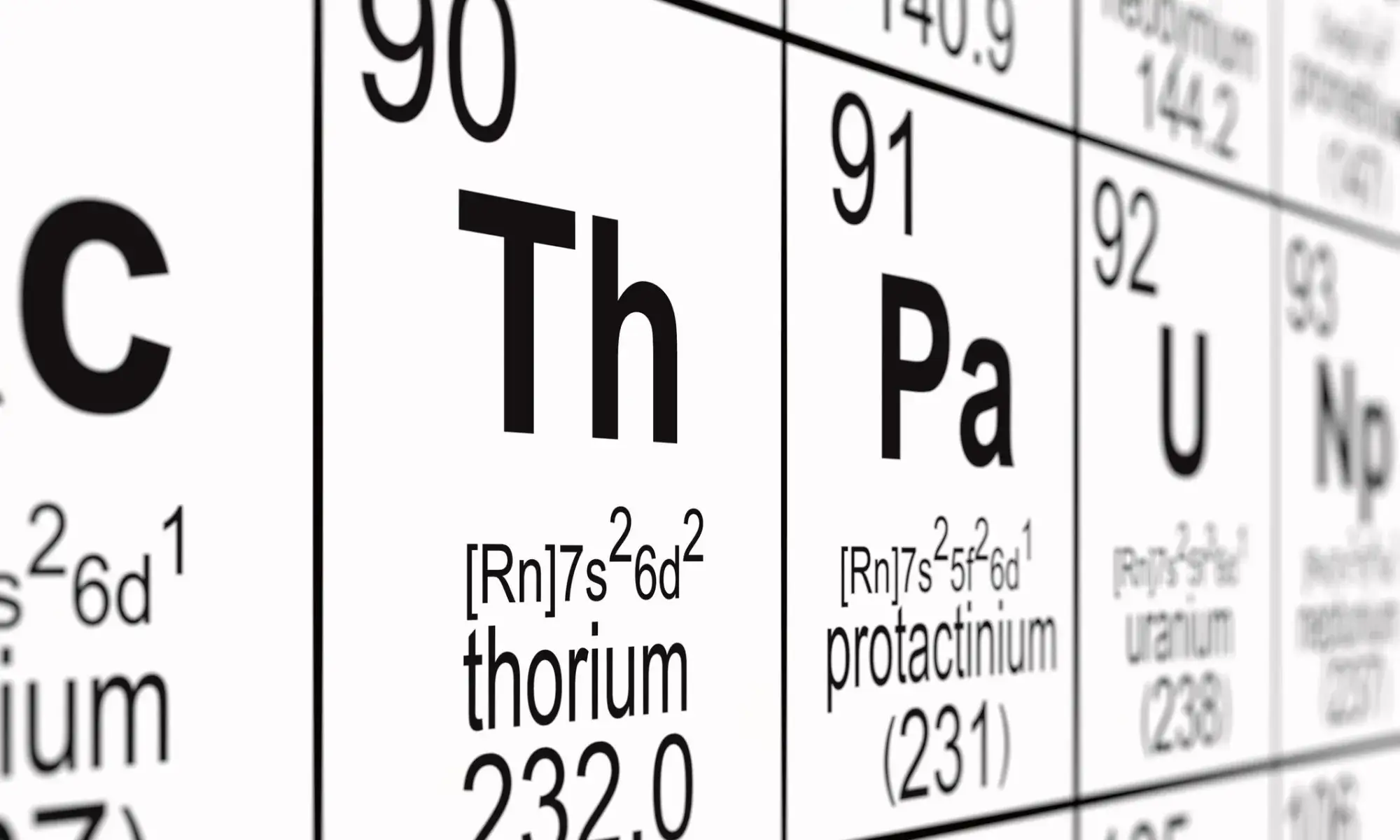
    Periodic Table

    Out of 118 elements in the Periodic Table, 80 are stable having 339 isotopes, leaving 38 elements – those heavier than lead – as unstable. These 38 elements have over 3,000 possible isotope existent states. Hence thousands of unstable isotopes, lead to 10’s of thousands of combinations of decay, neutron absorption, and possible fission events, from neutrons both fast – high energy particles, and thermal – low energy particles, and then hundreds of other non responsive isotopes of non responsive elements that exhibit different behaviours over time and distance. For example water is better for absorbing fast neutrons and lead is better for thermal neutrons. Boron-10 absorbs neutrons, whilst boron-11 does not. Neutrons bounce off, are reflected by graphite, beryllium, steel, tungsten carbide, and gold (There are more too). OK, so the picture is clear – fission energy gets complicated very quickly.

    DOE Explains…Isotopes

    Shielding Neutrons with Different Materials

    Remember too, that this all started in a race to build nuclear weapons – not to make energy. Weapons should all be dismantled and destroyed. USA and UK should follow in the footsteps of South Africa who dismantled their last bomb in 1989. Today the USA and UK combined have enough firepower to destroy humanity entirely 150 times over. We are thankful that Molten Salt technology was pursued with such vigor precisely because it cannot make weapons. It only makes energy.

    The Thorium fuel cycle is “intrinsically proliferation-resistant”

    The International Atomic Energy Agency, 2005

    Thorium fuel cycle — Potential benefits and challenges IAEA, May 2005

    Hans Blix, former head of IAEA explaining why Thorium, and Molten Salt Fission Energy Technology doesn’t even need to be addressed by the IAEA.

    Former head of IAEA, Hans Blix, discussing why Thorium is superior

    Why South Africa Dismantled Its Nuclear Weapons

    by Evelyn Andrespok, March 2010
    South African Nuclear Bomb Casings
    Bomb Delivery – English Electric Canberra South African Air Force in Angola

    We are also thankful that nuclear weapons are now illegal (why did THAT take so long?)

    Treaty on the Prohibition of Nuclear Weapons

    So back to the nomenclature.

    We call it Fission, not nuclear.

    We call them Machines, not reactors. (By the way, there’s no reactions going on, and indeed in the core region fuel is “burned” according to the physics text books. In Fission, atoms are split, so “splitter” is the correct term!)

    We say Molten Salt Fission Energy TechnologyMSFT. Not anything else. Calling it LFTR ties the technology to a specific fluid-fuel type. Even the company FLIBE are considering changing the Beryllium metal to Sodium metal (the BE means Beryllium in their company’s name).

    And Fission – Nuclear Energy – is effectively Carbon Free. Even Bill Gates knows this.

    Bill Gates getting into Molten Salt

    Bill Gates going Nuclear

    The latest ORNL report is excellent at defining the challenges already identified 50 years ago. The net result is that ORNL have made recommendations to modify the Flibe design thus eliminating any chance of weapons production from Molten Salt Fission Energy Technology powered by Thorium.

    Some of these recommendations are:

    • Use multiple, smaller decay vessels for salt distribution for emergency shutdown events.
    • Install stringent material monitoring systems with tamper evident features for fuel processing.
    • Use batch fuel processing and not continuous for better inventory controls.
    • Recombine fuel elements to increase gamma activity of the fuel processing cycle.
    • Allow U232 production to increase hence increasing the self protection mechanism.
    • Eliminate the decay fluorinator entirely by allowing protactinium to decay in the fuel salt.
    • Remove physical access to the UF6 stream by have vessels immediately adjacent to each other.

    These, and other recommendations, effectively define Molten Salt Fission Technology powered by Thorium as proliferation proof.

    You can see the full report here:

    The latest ORNL report must be read in conjunction with a 1978 report, also by ORNL staff – and also released in the month of August – where proliferation concerns of the earlier designs where addressed. In that report the authors J. R. Engel, W. R. Grimes, W. A. Rhoades and J. F. Dearing allowed the build up of U232 to create self protection whilst still maintaining machine performance – “denatured”, as they called it.

    Here is that report, Technical Memorandum TM 6413, from August 1978:

    ORNL TM 6413 August 1978 Molten-Salt Reactors for Efficient Nuclear Fuel Utilization Without Plutonium Separation

    Here’s one of the authors of that report – John Richard “Dick” Engel – shortly before his passing in 2017.

    Dick Engel & Syd Ball – ORNL Molten Salt Reactor Engineer Interview shot for THORIUM REMIX

    The following documents should also be read together with ORNL report 2022/2394 to ensure full understanding:

    ORNL TM 3708 1964 Molten Salt Reactor Program Semiannual Progress Report for Period Ending July 31, 1964

    This report summarized the work leading up to the Molten Salt Reactor Experiment, that ran from 1965 to 1969 – the “most boring experiment ever. It did everything we expected it to do.”, said by Dr. Sydney Ball.

    The Molten-Salt Reactor Experiment

    ORNL TM 4658 1972 Chemical Aspects of MSRE Operations

    This report debunks corrosion myths surrounding Molten Salt Technology.

    ORNL TM 4812 August 1972 Development Status of Molten-Salt Breeder Reactors

    This is the report that ended in the program being shut down. The USD 1 billion funding request was too obvious to ignore and many people realised what impact this would have on existing business interests in energy.

    Why MSRS Abandoned ORNL Weinberg’s Firing by Bruce Hoglund

    A concise summary of the facts behind the closure of the Molten Salt Program at Oak Ridge.

    Here is the 2015 assessment report referenced in ORNL report 2022/2394.

    Electric Power Research Institute – Program on Technology Innovation: Technology Assessment of a Molten Salt Reactor Design – The Liquid Fluoride Thorium Reactor (LFTR)

    Electric Power Research Institute Report Abstract

    EPRI collaborated with Southern Company on an independent technology assessment of an innovative molten salt reactor (MSR) design—the liquid-fluoride thorium reactor (LFTR)—as a potentially transformational technology for meeting future energy needs in the face of uncertain market, policy, and regulatory constraints. The LFTR is a liquid-fueled, graphite-moderated thermal spectrum breeder reactor optimized for operation on a Th-233U fuel cycle. The LFTR design considered in this work draws heavily from the 1960s-era Molten Salt Reactor Experiment and subsequent design work on a similar two-fluid molten salt breeder reactor design. Enhanced safety characteristics, increased natural resource utilization, and high operating temperatures, among other features, offer utilities and other potential owners/operators access to new products, markets, applications, and modes of operation. The LFTR represents a dramatic departure from today’s dominant and proven commercial light water reactor technology. Accordingly, the innovative and commercially unproven nature of MSRs, as with many other advanced reactor concepts, presents significant challenges and risks in terms of financing, licensing, construction, operation, and maintenance.

    This technology assessment comprises three principal activities based on adaptation of standardized methods and guidelines: 1) rendering of preliminary LFTR design information into a standardized system design description format; 2) performance of a preliminary process hazards analysis; and 3) determination of technology readiness levels for key systems and components. The results of the assessment provide value for a number of stakeholders. For utility or other technology customers, the study presents structured information on the LFTR design status that can directly inform a broader technology feasibility assessment in terms of safety and technology maturity. For the developer, the assessment can focus and drive further design development and documentation and establish a baseline for the technological maturity of key MSR systems and components. For EPRI, the study offers an opportunity to exercise and further develop advanced nuclear technology assessment tools and expertise through application to a specific reactor design.

    The early design stage of the LFTR concept indicates the need for significant investment in further development and demonstration of novel systems and components. The application of technology assessment tools early in reactor system design can provide real value and facilitate advancement by identifying important knowledge and design performance gaps at a stage when changes can be incorporated with the least impact to cost, schedule, and licensing.

    Thorium Reactor Graphic by PopSci

    Finally, a reminder. Why all the fuss about Thorium Molten Salt anyway? What did those giants of nuclear energy see starting way back in 1947 that we don’t see today? It’s because of this chart by ANSTO of Australia. It’s a little known – public – secret, that Australia, part of the Generation IV Forum, but ironically staunchly anti nuclear, is also one of the strongest countries in technology development for Molten Salt Fission Energy powered by Thorium.

    ANSTO Energy Density
    ANSTO Energy Density (LWR = Solid Fission; MSR = Molten Salt Fission)

    We hoped you enjoyed this article, produced free for all advocates and students of Molten Salt Fission Energy powered by Thorium. If you like this work and want to see more, please support this work by going to our contributions page, where you can then find our Patreon account.

    Links and References

    1. https://www.ornl.gov/
    2. https://en.wikipedia.org/wiki/UT%E2%80%93Battelle
    3. https://flibe-energy.com/
    4. https://www.worldatlas.com/articles/how-many-elements-are-there.html
    5. https://en.wikipedia.org/wiki/Isotope
    6. https://www.osti.gov/biblio/5289038-molten-salt-reactors-efficient-nuclear-fuel-utilization-without-plutonium-separation
    7. https://www.osti.gov/biblio/5688579-molten-salt-reactors-efficient-nuclear-fuel-utilization-without-plutonium-separation
    8. https://digital.library.unt.edu/ark:/67531/metadc1033578/
    9. https://www.osti.gov/biblio/4099994-status-us-program-development-molten-salt-breeder-reactor
    10. https://www.linkedin.com/in/richard-reed-98769430/
    11. https://www.linkedin.com/in/louisegevans/
    12. https://www.linkedin.com/in/donald-kovacic-7b468a6/
    13. https://www.nuclear-power.com/nuclear-power/reactor-physics/atomic-nuclear-physics/fundamental-particles/neutron/shielding-neutron-radiation/
    14. https://www.worldatlas.com/articles/how-many-elements-are-there.html
    15. https://en.wikipedia.org/wiki/Treaty_on_the_Prohibition_of_Nuclear_Weapons
    16. https://en.wikipedia.org/wiki/South_Africa_and_weapons_of_mass_destruction
    17. https://wp.towson.edu/iajournal/articles/2010-2019/fall-2010-issue/why-south-africa-dismantled-its-nuclear-weapons/
    18. https://www-pub.iaea.org/mtcd/publications/pdf/te_1450_web.pdf
    19. https://splash247.com/bill-gates-joins-nuclear-powered-shipping-push/
    20. https://www.epri.com/
    21. https://www.southerncompany.com/
    22. https://www.epri.com/research/products/000000003002005460
    23. https://newenergyandfuel.com/http:/newenergyandfuel/com/2011/11/04/thorium-fueled-nuclear-plant-to-be-built/
    24. https://www.youtube.com/watch?v=tyDbq5HRs0o
    25. https://www.legacy.com/us/obituaries/knoxnews/name/john-engel-obituary?id=16904544
    26. https://www.youtube.com/watch?v=_yO0Qk-_Gms
    27. https://www.linkedin.com/in/bruce-hoglund-52194814/
    28. https://www.ansto.gov.au/our-science/nuclear-technologies/reactor-systems/advanced-reactors/evolution-of-molten-salt
    29. https://www.popsci.com/technology/article/2010-08/thorium-reactors-could-wean-world-oil-just-five-years/
    30. https://www.gen-4.org/

    #FissionEnergy #NuclearEnergy #TheThoriumNetwork #Fission4All #RadiationIsGood4U #GotThorium #ORNL #OakRidge #MSRE #MoltenSaltFissionEnergy #Thorium

  • Episode 30 – Longevity and Reliability – Unintended Consequences – Chapter 9 Part 7

    Post created by Jeremiah Josey and the team at The Thorium Network

    Number 5 – Longevity and Reliability

    Because 33% efficient windmills only have 20-year lifespans, they must be rebuilt two times after initial construction to match the 60-year lifespan of 90% efficient nuclear power plants.

    Here’s what an anonymous wind technician from North Dakota said about the usefulness of windmills:”Yeah, we all want to think we’re making a difference, but we know it’s bullshit. If it’s too windy,  they run like sh , if it’s too hot, they run like sh , too cold, they run like sh . I just checked the forecast, and it’s supposed to be calm this weekend so hopefully not very many will break down, but hell man, they break even when they aren’t running. I’ve given up on the idea that what I’m doing makes a difference in the big picture. Wind just isn’t good enough.”

    If it’s too windy,  they run like sh , if it’s too hot, they run like sh , too cold, they run like sh .

    Wind Technician, North Dakota
    Former London banker Alexander Pohl worked for years for one of the world’s greenest banks. Idealistically driven he financed big wind and solar farms genuinely convinced he was making the world a better place. Together with film maker Marijn Poels created this mind blowing documentary, Headwind “21
    Headwind”21

    Number 6 – Resources and Materials

    Organizations like the Sierra Club wear blinders that exclude wind’s defects, and when I or my associates offer presentations on the safety records and costs of the various forms of power generation, including nuclear, we rarely get a reply, and my Minnesota chapter provides a case in point.

    Because of those blinders, they apparently don’t know that It will take 9,500 1-MW windmills running their entire life spans to equal the life-cycle output of just one average nuclear plant. Perhaps they don’t realize that those windmills, which last just 20 years, require far more steel and concrete than just one nuclear plant with a lifespan of at least 60 years.

    As a result, the carbon footprint of inefficient windmills is much larger than that of a 90% efficient nuclear power plant.

    Offshore Wind Requires 63,000lbs Of Copper Per Turbine, by Irina Slav 17 May 2021

    For videos of storm-fragile windmills that were stripped of their blades by Caribbean hurricanes in 2017, please see these

    22 September 2017 – Puerto Rico – Wind – Solar – Cellular Structures Destroyed

    The German electric power company Energieerzeugungswerke Helgoland GmbH shut down and dismantled their Helgoland Island wind power plant after being denied insurance against further lightning losses. They had been in operation three years and suffered more than $540,000 (USD) in lightning-related damage.

    Nick Gromicko

    “The material in five, 2 MW windmills (10 MW total) could build a complete 1 GW nuclear power plant that will generate ~100x the power, on 1/1000 the acreage, with no threat to species or climate.”

    Dr. Alex Cannara

    Wind Turbines and Lightning, by Nick Gromicko

    Wind Power: Our Least Sustainable Resource? By Craig Rucker 25 October 2016

    Furthermore, the wind industry doesn’t know what to do with these 170-foot, 22,000-pound, fiberglass blades that last just 20 years and are so difficult to recycle that many facilities won’t take them.

    Wind energy’s big disposal problem

    Unfurling The Waste Problem Caused By Wind Energy

    Germany has more than 28,000 wind turbines — but many are old and by 2023 more than a third must be decommissioned. Disposing of them is a huge environmental problem.

    DW.com

    A 1-GW windfarm needs 1300 tons of new blades per year, and because they cost USD100k each, that’s USD200 million every 18 years, or USD33.6 million per year per gigawatt created just for the blades – all this for a fraud that primarily relies on carbon-burning generators to supply the majority of their rated power that they don’t supply.

    Those who guide the Sierra Club or Greenpeace, etc., should know that windmills require magnets made from neodymium, which comes primarily from China, where mining and refining the ore has created immense toxic dumps and lakes that are causing skin and respiratory diseases, cancer and osteoporosis. If they know this, why are they silent? If they don’t, they should.

    A visit to the artificial lake in Baotou in Inner Mongolia – the dumping ground for radioactive, toxic waste from the city’s rare earth mineral refineries. The byproduct of creating materials used to do everything from make magnets for wind turbines to polishing iPhones to make them nice and shiny.

    The dystopian lake filled by the world’s tech lust, By Tim Maughan 2 April 2015

    Please research “Lake Baotou, China”.

    Baotou Lake, Mongolia: The Toxic side of Cleantech, by Brendan Palmer 21 September 2015

    According to the Bulletin of Atomic Sciences, “a two- megawatt windmill contains about 800 pounds [360 kg] of neodymium and 130 pounds [60 kg] of dysprosium.”

    The myth of renewable energy, by Dawn Stover 22 November 2011

    Unlike windmill generators, ground-based generators use electromagnets, which are much heavier than permanent magnets, but do not contain rare-earth elements.

    Here’s the problem: Accessing just those two elements produces tons of arsenic and other dangerous chemicals. And because the U.S. added about 13,000 MW of wind generating capacity in 2012, that means that some 5.5 million pounds [2.5 million kg] of rare earths were refined just for windmills, which created 2,800 tons of toxic waste, and it’s worse now.

    For perspective, our nuclear industry, which creates 20% of our electricity, produces only about 2.35 tons of spent nuclear fuel (commonly called “waste”), per year, which they strictly contain, but the wind industry, while creating just 3.5% of our electricity, is making much more radioactive waste where rare- earths are being mined and processed – and its disposal is virtually unrestricted.

    Windmills also use 80 gallons [300 litres] of synthetic oil per year, and because there are at least 60,000 US windmills, this means that the windmill industry requires 500,000 gallons [1.9 million litres] per year plus even more crude oil from which synthetics are derived.

    Get me a mask!

    Wind Turbines Generate Mountains of Waste, by Carol Miller, 3 October 2020

    We know that it takes several thousand windmills to equal the output of one run-of-the-mill nuclear reactor, but to be more precise, let’s tally up all of the materials that will be needed to replace the closed Vermont Yankee nuclear plant with renewables.

    Dr. Tim Maloney has done just that, writing, “Here are numbers for wind and solar replacement of Vermont Yankee.

    Let’s assume a 50/50 split between wind and solar, and for the solar a 50/50 split of photovoltaic (PV) and CSP concentrated solar power, which uses mirrors.

    1. Amount of steel required to build wind and solar;
    2. Concrete requirement;
    3. CO2 emitted in making the steel and concrete;
    4. Money spent;
    5. Land taken out of crop production or habitat.

    To replace Vermont Yankee’s 620 MW, we will need 310 MW (average) for wind, 155 MW (average) for PV solar, and 155 MW (average) for CSP… Using solar and wind would require:

    • Steel: 450,000 tons. That’s 0.6% of our U.S. total annual production, just to replace one smallish plant.
    • Concrete: 1.4 million tons; 0.2% of our production/yr.
    • CO2 emitted: 2.5 million tons
    • Cost: about 12 Billion dollars
    • Land: 73 square miles, which is larger than Washington DC, just to replace one small nuclear plant with solar/wind….

    Offshore windmills use up to 8 tons of copper per mW.

    The Nuclear Alternative

    a.) Replace Vermont Yankee with a Westinghouse /Toshiba model AP1000 that produces 1070 MW baseload, about 2 x the output of Yankee.

    Normalizing 1070 MW to Vermont Yankee’s 620 MW, the AP1000 uses:

    • Steel: 5800 tons – 1 % as much as wind and solar.
    • Concrete: 93,000 tons – about 7% as much.
    • CO2 emitted: 115,000 tons [from making the concrete and steel] – about 5% as much.
    • Cost: We won’t know until the Chinese finish their units. But it should be less than our “levelized” cost. [Perhaps $4-5 billion]
    • Land: The AP1000 reactor needs less than ¼ square mile for the plant site. Smaller than CSP by a factor of 2000. Smaller than PV by a factor of 4,000. Smaller than wind by 13,000.

    b.) Better yet, we could get on the Thorium energy bandwagon. Thorium units will beat even the new AP1000 by wide margins in all 5 aspects – steel, concrete, CO2, dollar cost, and land.“

    Nuclear Power Versus Renewable Energy by Richard Matthews, 20 July 2022

    Ten, 3 MW wind generators’ use as much raw material as a 1-Gigawatt nuclear plant (Think of their carbon footprints.)

    PV electricity generation requires 10,000 pounds of copper per megawatt. Wind needs 6,000, but highly efficient, CO2-free nuclear power needs only 175, which provides a huge financial saving and the smallest impact on the environment.

    Full energy chain CO2 equivalent emissions – Markandya and Wilkinson

    This was the last episode in our series Unintended Consequences. It’s been a wonderful experience and thanks to everyone in our team. Everyone has done a tremendous effort to put it all together. 30 weeks has gone by too fast.

    A special warm thanks goes out to Dr. George Erickson for creating all of this wonderful material in the first place.

    Thank you Dr. Erickson.

    Stay tuned for the next series where we promote key, factual information relevant to a world focused on producing clean, green, safe energy from Molten Salt Fission Technology powered by Thorium.

    Links and References

    1. Previous Episode – Episode 29 – Methane Blows Up Wind’s Gains
    2. Launching the Unintended Consequences Series
    3. Dr. George Erickson on LinkedIn
    4. Dr. George Erickson’s Website, Tundracub.com
    5. The full pdf version of Unintended Consequences
    6. https://www.youtube.com/watch?v=7RgyLDVlAg4
    7. https://www.marijnpoels.com/headwind
    8. https://oilprice.com/Latest-Energy-News/World-News/Offshore-Wind-Requires-63000lbs-Of-Copper-Per-Turbine.html
    9. https://www.linkedin.com/in/irina-slav-a2569293/
    10. https://www.nachi.org/wind-turbines-lightning.htm
    11. https://www.masterresource.org/windpower-problems/wind-power-least-sustainable-resource/
    12. https://www.dw.com/en/wind-energys-big-disposal-problem/a-44665439
    13. Unfurling The Waste Problem Caused By Wind Energy
    14. Baotou toxic lake
    15. https://www.bbc.com/future/article/20150402-the-worst-place-on-earth
    16. https://www.linkedin.com/in/britishjournalistjapan/
    17. The myth of renewable energy
    18. https://www.linkedin.com/pulse/baotou-lake-mongolia-toxic-side-cleantech-palmer-mba-ba-law-mciwm/
    19. https://www.citizensjournal.us/wind-turbines-generate-mountains-of-waste/
    20. https://thegreenmarketoracle.com/2022/07/20/nuclear-power-versus-renewable-energy/
    21. https://www.thelancet.com/article/S0140-6736(07)61253-7/fulltext
    22. https://www.spiegel.de/international/europe/the-nuclear-sell-why-one-swedish-town-welcomes-a-waste-dump-a-763081.html

    #UnintendedConsequences #GeorgeErickson #FissionEnergy #NuclearEnergy #TheThoriumNetwork #Fission4All #RadiationIsGood4U #GetYourRadiation2Day #WindTurbines #Solar #RareEarthWastes

  • A Crib Sheet for Journalists and Students of Thorium

    A Crib Sheet for Journalists and Students of Thorium

    Authored by Jeremiah Josey 23 July 2022

    Are you a journalist – or a student – looking for the inside on Liquid Fission Thorium? Unlimited energy. Secure. Reliable. Well this page is for you.

    We’ve been asked many times for a summary of resources or key people to speak with.

    Are we biased? Of course we are. Read on and you’ll know why. You’ll probably want to Join Us too.


    A Future Powered by Thorium is our objective. We are leveraging the billions of USD in today’s value and millions of hours invested over 50 years ago in a technology that is demonstrably superior to anything else we have today. China knows this very well and is now leading the world in it’s re-deployment.

    Here’s a summary of that work from Oak Ridge National Laboratories:

    The Molten-Salt Reactor Experiment from 1969

    We have this YouTube and other useful 3rd party links on our website here:

    The Thorium Knowledge Base

    See this chart of energy density from an Australian government website. Everything else pales into insignificance when compared to Liquid Fission Thorium Burners. Some people like to call them MSR Molten Salt Reactors. We just call them LFTBs.

    ANSTO Energy Density Bar Chart
    ANSTO Energy Density Bar Chart

    Here’s a recent article from Germany we translated into Japanese. It contains a lot of information on China’s progress also. China is replicating the 1960’s USA program, publicly announcing in 2011 investing USD 3,3 billion and 700 engineers for the work. This is not about reinventing the wheel, it’s just remembering what we’ve done before to bring LFTBs back to life. Remember also China and Australia worked together to create a replacement for the super alloy metal “Hastelloy”. The original super metal was created in the 1950’s in the USA for their advanced nuclear programs and is only made today by two companies in the world – one in the USA and Mitsubishi. Now China, supported by Australia, has an alternative.

    The article also includes information on Japan’s LFTB project –  FUJI.

    Here’s a list of must-do-interviews for background on Liquid Fission Thorium Energy, LFTBs or subjects related, such as radiation safety, the effects of Chernobyl and Linear No Threshold theory.

    Professor Geraldine Thomas
    Director of the Chernobyl Tissue Bank, the world’s preeminent knowledge base for all things related to the real effects of that industrial accident. Prof. Thomas is became staunchly pro-nuclear due to her directorship. George Monbiot – a former Greenpeace anti-nuc activist, and now no longer in Greenpeace and strongly pro nuclear – after an interview he also had with Prof Thomas he had as a writer for the UK’s Guardian. 

    Geraldine Thomas

    George Monbiot on Wikipedia

    Geraldine Thomas on Wikipedia

    Chernobyl Tissue Bank

    Mr. Daniel Roderick
    Former President and CEO of Westinghouse and then Toshiba Energy Systems. Danny steered the sale of  Westinghouse for Toshiba, securing a positive, multi billion USD outcome for Japan. Danny was also the leader of negotiations to secure USD 50 billion in funding for a new nuclear build in Türkiye (derailed by the 2016 attempted coup in Türkiye). Mitsubishi subsequently submitted (and withdrew)  a nuclear build in Sinop, Northern Türkiye. Rosatom (Russia) is now building a nuclear power station in Akkuyu, southern Türkiye.

    Daniel Roderick

    Dr. Adi Paterson
    Dr. Paterson is the former head of ANSTO and an advocate of Liquid Fission Thorium Energy Technology. During his 9 year tenure at ANSTO, Dr. Paterson steered Australia to membership of the Generation IV forum, kind of the United Nationals for advanced fission designs and includes LFTBs. This is no mean feat given Australia’s lack of much to do with nuclear energy. 

    Generation IV Forum

    Adi Paterson

    Dr. Resat Uzman
    Director of nuclear energy systems at Figes AS, of Türkiye. Dr. Uzman has more than 40 years experience in all things nuclear, Türkiye and rare earths – the materials where Thorium is often found bound with.

    Nukleer Enerji Seminer 3 Dr. Resat Uzmen
    Dr. Resat Uzmen

    Professor Berrin Erbay
    Senior lecturer and former dean of mechanical engineering at Osmangazi University, Türkiye Prof. Erbay has been liaising with the professors in Japan for several decades. You can see one of her presentations on the status of Liquid Fission Technology and LFTBs in Japan here on Youtube: 

    Berrin Erbay
    4. Nesil Nükleer Reaktör Teknolojileri Toplantısı

    Mr. Phumzile Tshelane
    Mr. Tshelane is a former CEO of NECSA South Africa, now holds various directorships across a wide range of industrial sectors. His position as head of a state owned nuclear technology development company gives him a particular view point on commercialisation of nuclear energy technologies, especially LFTBs.

    Mr. Phumzile Tshelane
    S3E6 Africa4Nuclear: The Story of Thorium

    Ms. Rana Önem
    Former president of the Thorium Student Guild. You should hear from someone discovered the benefits of Liquid Fission Thorium and LFTBs when studying their nuclear engineering degree. You can see Rana interviewing Dr. Uzman here. Follow the links at the end of the article to see her role as president of the Guild: 

    President – Ms. Rana Önem, Eng
    Fmr. President – Ms. Rana Önem, Eng

    An important subject to cover is linear no threshold theory – a fraudulent model of radiation management that, unfortunately, has spawned an industry of radiation protection and radiation safety keen on maintaining its own survival. This results in massive, unnecessary overspending on nuclear builds. Professor Edward Calabrese is a leading expert on this subject and you can watch a series of interviews with Ed here: 

    The History of the Linear No-Threshold (LNT) Model Episode Guide

    Together with Professor Jerry Cuttler, Ed presents clearly, laying out how LNT has demonstrably been proven false. (And consequently those that died at Fukushima died unnecessarily, as a direct result of inappropriately applying that theory).

    What would become of nuclear risk if governments changed their regulations to recognize the evidence of radiation’s beneficial health effects for exposures that are below the thresholds for detrimental effects?

    Here’s the background on the Türkiye Japan University (TJU). Our founder, Jeremiah Josey, met with the Japanese Ambassador to Türkiye in 2021 and confirmed Japanese support for technology development of Liquid Fission and LFTBs is easier should such work be included in the curriculum of the TJU. Early planning stages of the TJU can be seen here below. The vice president of TJU is a senior professor at the Tokyo University responsible for nuclear engineering.

    The “only” obstacle to adoption of Liquid Fission Thorium and LFTB technology is the incumbent energy industries, coal, oil and gas. It’s a significant obstacle, and it would be naive to think otherwise. Operating much like the tobacco industry has done in the past, lobbyists and funding at all levels occurs to stymie any potential competitors.

    It is predicted that the 7 Trillion USD per year fossil fuel energy market would shrink to a few hundred billion USD per year with a society powered by Liquid Fission Thorium and LFTBs. This is an obvious disincentive for incumbents to do anything but to obfuscate and delay. For the true scale of these numbers, that means that a world powered by Liquid Fission Thorium energy would require only one ship like the one below to carry ALL WORLD’s Energy for ONE year.

    100,00 DWT Bulk Carrier Cape Ace

    You can see that obfuscation at work here with both Wired and the Bulletin in 2019 on USA presidential candidate Andrew Yang:

    Fact-check: Five claims about thorium made by Andrew Yang – Bulletin


    Andrew Yang Wants a Thorium Reactor by 2027. Good Luck, Buddy – Wired

    The half truths and lies are difficult, if not impossible, for the layperson to identify. We contacted one of Andrew’s advisory team members and confirmed Andrew supports Liquid Fission Thorium, and was committing several billion USD to have USA’s energy footprint 100% on the technology by 2030. Technically very doable. Politically, not.

    It is important to recognise the ecological and economic footprint of energy from Thorium (a substance as common as lead) as being much smaller than even uranium. In the article link above (the Japanese translation one) there are three slides that demonstrate the significant benefits Thorium has over uranium.  These slides are repeated below.

    Thorium and Uranium Compared Slide 1 of 3
    Thorium and Uranium Compared Slide 1 of 3
    Thorium and Uranium Compared Slide 2 of 3
    Thorium and Uranium Compared Slide 2 of 3
    Thorium and Uranium Compared Slide 3 of 3
    Thorium and Uranium Compared Slide 3 of 3

    The IAEA report TE1450 from 2005 is an excellent read. It says Thorium is not an issue and is a good prospect for energy – back in 2005. Once the physics is proven it doesn’t need to be “upgraded” every 6 months like an iPhone.

    And yes, Thorium doesn’t explode. “Walk away safe” is a suitable term for Liquid Fission Technology and LFTBs.

    Here’s the former head of IAEA, Hans Blix, stating that “Thorium shouldn’t be treated like uranium”. 

    Thorium Nuclear Power and non Proliferation Hans Blix IAEA ThEC13

    See more Hans Blix on Liquid Fission Thorium Energy

    Attached below is a brief summary of “Why Thorium didn’t take off” by Bruce Hoglund, 5 November 2010. It’s an excellent starting point for data gathering and research – and not “Wikipedia”. Wikipedia was used as partial evidence why the United Kingdom should’t use Thorium for energy. Around 2012 in a UK government 1.5m GBP funded “study”, rubbished Thorium and directly contradicted the advice of the IAEA’s TE 1450 report.


    The information here is but the tip of the iceberg, however it gives an excellent starting point. There are of course, many, many others who can contribute considerably for a balanced and objective article or articles on Thorium for our energy future with LFTBs. And with today’s communications technology, such conversations are only but a few key strokes away.

    Burning stuff is old tech.

    Star Trek technology is where we have to be now. Fission does that, especially Liquid Fission Thorium Energy Technology and Liquid Fission Thorium Burners – LFTBs.

    Uncle Martin would be proud. Nanu, nanu!


    Post created following a 2 hour interview between Associated Press representative for Japan, Ms. Yuri Kageyama and chairman and founder of The Thorium Network, Jeremiah Josey


    1. Join The Thorium Network
    2. https://www.youtube.com/watch?v=tyDbq5HRs0o
    3. https://thethorium.network/about-thorium/thorium-knowledge-base/
    4. https://www.ansto.gov.au/our-science/nuclear-technologies/reactor-systems/advanced-reactors/evolution-of-molten-salt
    5. https://thethorium.network/%e3%83%91%e3%83%bc%e3%83%95%e3%82%a7%e3%82%af%e3%83%88%e3%83%86%e3%82%af%e3%83%8e%e3%83%ad%e3%82%b8%e3%83%bc-%e3%83%90%e3%82%a4%e3%83%aa%e3%83%b3%e3%82%ac%e3%83%ab%e8%a8%98%e4%ba%8b-%e6%97%a5%e6%9c%ac/
    6. https://en.wikipedia.org/wiki/Geraldine_Thomas
    7. https://en.wikipedia.org/wiki/George_Monbiot
    8. https://www.chernobyltissuebank.com/contact-us
    9. https://www.linkedin.com/in/danielroderick/
    10. https://www.linkedin.com/in/adi-paterson/
    11. https://www.gen-4.org/
    12. https://figes.com.tr/en/home
    13. https://www.linkedin.com/in/resat-uzmen-051a824/
    14. https://thethorium.network/interview-3-dr-resat-uzmen-nuclear-technology-director-of-figes-part-of-the-thorium-student-guild-interview-series-leading-to-nuclear/
    15. https://www.youtube.com/watch?v=NEDK_MAWQD0
    16. https://www.linkedin.com/in/l-berrin-erbay-61b04745/
    17. https://www.linkedin.com/in/phumzile-tshelane-3014945a/
    18. https://www.necsa.co.za/
    19. https://www.youtube.com/watch?v=6MsgDx8K-t4
    20. https://www.linkedin.com/in/rana-%C3%B6nem-57a14718b/
    21. https://thethorium.network/join-us/student-guild/
    22. https://www.linkedin.com/in/ed-calabrese-697a1119/
    23. https://thethorium.network/2022/02/12/the-big-deceit-episode-6-unintended-consequences-chapter-2/
    24. https://hps.org/hpspublications/historylnt/episodeguide.html
    25. https://www.linkedin.com/in/jerry-cuttler-26106763/
    26. https://www.linkedin.com/posts/jerry-cuttler-26106763_what-would-become-of-nuclear-risk-if-governments-activity-6870517584475824128-qr3W
    27. https://www.youtube.com/watch?v=eJSeQIW-X44
    28. https://thebulletin.org/2019/12/fact-check-five-claims-about-thorium-made-by-andrew-yang/
    29. https://www.wired.com/story/andrew-yang-wants-a-thorium-reactor-by-2027-good-luck-buddy/
    30. https://www.youtube.com/watch?v=F4m10Y0rWBY
    31. https://www.youtube.com/results?search_query=hans+blix+thorium
    32. https://www.linkedin.com/in/bruce-hoglund-52194814/

    #Journalist #CribSheet #Thorium #Interviews #LiquidFissionThoriumBurner #MoltenSalt #RosAtom #Japan #Turkey #China #LNT #LiquidFission #AssociatedPress

  • Episode 23 – Can’t Afford a Model T? How About a LFTR? – Unintended Consequences – Chapter 8 Part 7

    Post created by Jeremiah Josey and the team at The Thorium Network

    The Model T Ford made motoring what it is today: affordable, reliable, ubiquitous with 20th century living. It’s this same dogmatic approach to manufactured simplification that will make Fission the energy of the 21st Century.

    Can’t afford it?

    A modern, 1 GW LWR generates 9,000,000 kWhrs per year which, at 10 cents per kWhr, creates revenue of USD 900,400,000 per year. Deduct USD 220 million for operating expenses for a profit of USD 680 million per year. California’s Diablo nuclear plant generates electricity for about 3 cents per kWhr.

    If the plant’s two reactors cost USD 7 billion, their combined profit will repay the 7 billion in 5.7 years, after which they will net USD 1.3 billion/year while employing about 1,000 well-paid workers.

    While we temporise, Russia and South Korea are building modular reactors (conventional and MSRs), for sale abroad, some of which will be mounted on barges that can be towed to coastal cities, thus making long transmission lines, with their 10% power loss, unnecessary. In 2020, the first of these barges began operation in Pevek, a town in eastern Siberia. (China makes a 1 GWe reactor for USD 3B in less than 5 years – Dr. Alex Cannara.)

    MURMANSK, RUSSIA – AUGUST 23, 2018: The Akademik Lomonosov, a barge containing two nuclear reactors, is pictured in Murmansk during its departure for Pevek, Chukotka Autonomous Area, on Russia’s Arctic coast where it will function as a nuclear power station; built at St Petersburg’s Baltic Shipyard, the Akademik Lomonosov was towed in 2018 from the Baltic Sea to an Atomflot base in Murmansk on Russia’s Barents Sea coast to be loaded with nuclear fuel. Lev Fedoseyev/TASS (Photo by Lev Fedoseyev\TASS via Getty Images)

    In 2016, Russia inaugurated a commercial Fast Breeder Reactor (FBR) that extracts nearly 100% of the energy value of uranium. (LWRs utilize less than 5%.) The FBR creates close to zero waste and guarantees that we will never run out of thorium, uranium and plutonium, which yield 1.7 million times more energy per kilogram than crude oil.

    The central hall of power unit No. 4 with the BN-800 reactor. 
    Photo © Donat Sorokin/TASS

    Russia Sets New Domestic Nuclear Generation Record

    Units 3 and 4 at Tianwan Phase II in China’s Jiangsu province—two AES-91 VVER-1000 units designed by Gidropress and supplied by Rosatom—entered commercial operation in February 2018 and October 2018. In November, Rosatom said its engineering division AtomStroyExport signed four executive contracts with China National Nuclear Corp. for construction of Tianwan 7 and 8. Construction on Tianwan units 5 and 6—two 1,080 MWe ACPR1000 reactors—is slated to be completed in 2021. Courtesy: Rosatom

    Canadian Government agrees to work with United Kingdom on nuclear power

    Instead of pursuing these profitable programs, we [USA] have spent USD 400 billion on worthless F-35 jet fighters plus USD 2 billion PER WEEK in Afghanistan – AND there’s that missing USD 8.5 TRILLION that the Pentagon can’t find. [The Pentagon’s $35 Trillion Accounting Black Hole, by Michael Rainey, January 23, 2020]

    The US Air Force Quietly Admits the F-35 Is a Failure

    USD 100 million all washed upPhotos leaked of F-35 fighter jet that crashed into South China Sea

    Penta-Gone! – The Pentagon’s $35 Trillion Accounting Black Hole

    Penta-Gone! – USD 35 Trillion missing

    Meanwhile, according to the GUARDIAN, “in 2013, coal, oil and gas companies spent USD 670 billion searching for more fossil fuels, investments that could be worthless if action on global warming slashes allowed emissions.”

    Leave fossil fuels buried to prevent climate change, study urges

    California plans a USD 100 billion high speed train to serve impatient commuters between San Francisco and Los Angeles, and in 2014, Wall Street paid over USD 28 billion in bonuses to needy executives. If you include greedy sports team owners and players who, between 2000 and 2010, received 12 billion tax dollars to help pay for their arenas, the total could exceed USD 1 trillion.

    “When you’re in a hole, stop digging,”

    Bill McKibben, co-founder of 350.org

    With that money, we could easily build enough MSRs to end the burning of fossil fuels for generating electricity while drastically cutting carbon dioxide production.

    Russia offers nuclear desalination bundle

    According to WORLD NUCLEAR NEWS, Russia’s Rosatom Overseas intends to sell desalination facilities powered by nuclear power plants to its export markets: Dzhomart Aliyev, the head of Rosatom Overseas, says that the company sees ‘a significant potential in foreign markets,’ and is offering two LWRs producing 1200 MW each to Egypt’s Ministry of Electricity as part of a combined power and desalination plant.

    Water Desalination in Egypt

    “Desalination units can produce 170,000 cubic meters of potable water/day with 850 MWh of electricity per day. This would use only about 3% of the output of a 1200 MWe nuclear plant. In addition, two desalination units are also being considered for inclusion in Iran’s plan to expand the Bushehr power plant with Russian technology, and another agreement between Argentina and Russia also includes desalination with nuclear power.” Dzhomart Aliyev, chief executive officer of Rusatom Overseas.

    Bushehr Nuclear Power Plant, Iran

    In 2016, the Vice President of Rosatom reported that the company plans to build more than 90 plants in the pipeline worth some USD 110 Billion, with the aim of delivering 1000 GW by 2050.

    “By 2030 we must build 28 nuclear power units. This is nearly the same as the number of units made or commissioned over the entire Soviet period… ROSATOM, the Russian nuclear power corporation and builders of the Kundamkulam nuclear power plant in India, has orders for building many nuclear power units abroad.” (XXII Nuclear Inter Jura 2016 Proceedings of the Congress)

    Vladimir Putin, President of Russia

    Stratfor Global Intelligence reported in an October, 2015 article titled Russia: Exporting Influence, One Nuclear Reactor at a Time that “Rosatom estimated that the value of orders has reached USD 300 billion, with 30 plants in 12 countries. From South Africa to Argentina to Vietnam to… Saudi Arabia, there appears to be no region where Russia does not seek to send its nuclear exports.”

    In addition, China has purchased four, 1200 MW Russian reactors. Rosatom will also supply the fuel for a new Chinese- designed fast reactor.

    However, our [USA] nuclear industry, opposed by Climate deniers like Donald J Trump, fervent “greens” and powerful carbon companies that put profit before planet, struggles to stay alive.

    In Why Not Nuclear? Brian King described our failure to build Generation IV nuclear plants that, unlike LWRs, take advantage of high-temperature coolants such as liquid metals or liquid salts that improve efficiency.

    “Argonne National Laboratory held the major responsibility for developing nuclear power in the U.S. By 1980, there were two main goals: Develop a nuclear plant that can’t melt down, then build a reactor that can run on waste from nuclear power plants…

    “In the early 80’s Argonne opened a site for an experimental breeder reactor in Idaho. About five years later [two weeks before Chernobyl], they were ready for a demonstration. Scientists from around the globe were invited to watch what would happen if there was a loss of coolant to the reactor, a condition similar to the event at Fukushima where the cores of three reactors overheated and melted.

    “Dr. C. Till, the director of the Generation IV project, calmly watched the gauges on the panel as core temperature briefly increased, then rapidly dropped as the reactor shut down without any intervention!

    “The Argonne Generation IV project was a success, but it couldn’t get past the anti-nuke politics of the 1990’s, so it was shut down by the Clinton administration because they said we didn’t need it.

    “One can only imagine what the world would look like today, with a fleet of Generation IV nuclear plants that would run safely for centuries on all of the waste at storage sites around the globe. No heat-trapping carbon dioxide would have been created – only ever increasing amounts of clean, reliable power. So why not nuclear power?

    “Unfortunately, most environmentalists oppose nuclear power, as do many liberals. The Democratic Party is afraid of anti-nuclear sentiment… like the Nation Magazine, the Sierra Club and others. Why are all these people against such a safe and promising source of energy?

    “… nuclear power has been tarred with the same brush as nuclear weapons. Nuclear power plants can’t explode like bombs, but people still think that way….

    “There is also a matter of group prejudice, not unlike a fervently religious group or an audience at a sports event of great importance to local fans. People are afraid to go against the beliefs of their peers, no matter how unsubstantiated those beliefs may be.

    Biden launches $6 billion effort to save nuclear power plants, to help combat climate change, 22 April 2022

    ”Finally, some good news: In July, 2018, Advanced Reactor Concepts (ARC) and Canada’s New Brunswick Power agreed to build a sodium-cooled, small modular reactor (SMR) – and thereafter at other sites worldwide.

    The ARC-100 Advanced Small Modular Reactor

    ARC-100 by Arc Energy

    “The ARC-100 includes a passive, “walk away-safe” design that ensures the reactor cannot melt down – even if the plant loses all electrical power. The ARC-100 can consume the nuclear waste produced by LWRs and operate for 20 years without refuelling. Ontario approves nuclear.

    OPG paving the way for Small Modular Reactor deployment, 6 October 2020

    Small modular reactors can be easily transported (Image: IAEA)

    Small Modular Reactors

    • Their operation can be based on Gen II or Gen IV technologies.
    • Most of them generate less than 300 MW.
    • They run independent without active cooling (or offsite power)
    • They are small enough to have the entire reactor module fabricated at a central facility and then shipped by rail or by truck.
    SMRs can be partially or totally buried underground (Image: GE-Hitachi)

    TerraPower advances plans for next-gen nuclear plants, earning Bill Gates’ praise

    This cutaway graphic shows the design of the Versatile Test Reactor. (DOE Illustration)

    Starting in 2018, China will begin turning coal plants into nuclear reactors, by Graham Templeton,  23 November 2016


    Why a Greenpeace co-founder went nuclear, by Erika Lovley 4 March 2008

    Patrick Moore starting Greenpeace circa 1970
    Patrick Moore leaving Greenpeace circa 2000’s
    Patrick Moore: Why I Left Greenpeace

    Canada to boost nuclear power to help meet climate target, 15 March 2015

    South Korea reactors That “Won’t Melt Down” approved for US in contract between Doosan and NuScale Power.

    August 2020

    South Korea companies develop molten salt reactor for shipping, power generation, 24 June 2021

    Samsung Heavy Industries

    Under the agreement, the Korea Atomic Energy Research Institute and Samsung Heavy Industries plan to develop molten salt reactors for marine propulsion and floating nuclear power plants, using molten fluoride salts as the primary coolant at low pressure.

    KAERI, 17 June 2021

    Poland goes nuclear with plan to build six reactors by 2040, by David Rogers, 9 November 2020

    Opole 3.3 GW Coal Fired Power Station

    Dr Richard Steeves at Rethinking Nuclear

    Evolution of More Innovative Reactor Designs

    Advanced Nuclear Reactors by Dr Richard Steeves

    Dr. Steeves drives an electric car and flies an electric airplane.

    Dr. Richard Steeves

    Nuclear Q&A prepared by The Finnish Greens for Science and Technology

    Nuclear Q&A prepared by The Finnish Greens for Science and Technology

    The Tennessee Valley Authority announces new nuclear programme


    Nuclear Power: The Road to a Carbon Free Future, IAEA 9 Jan 2020

    The Thorium Network Logo Black on White
    The Thorium Network
    Thorium Energy Alliance Logo
    Thorium Energy Alliance

    Coming up next week, Episode 24 – Blowing in the Wind


    Links and References

    1. Next Episode – Episode 24 – Blowing in the Wind
    2. Previous Episode – Episode 22 – The Pros of LFTRs. Why They Are So Cool
    3. Launching the Unintended Consequences Series
    4. Dr. George Erickson on LinkedIn
    5. Dr. George Erickson’s Website, Tundracub.com
    6. The full pdf version of Unintended Consequences
    7. https://en.wikipedia.org/wiki/Ford_Model_T
    8. https://www.linkedin.com/in/alex-cannara-6a1b7a3/
    9. https://rosatom.ru/en/press-centre/news/rosatom-world-s-only-floating-nuclear-power-plant-enters-full-commercial-exploitation/
    10. https://www-atomic–energy-ru.translate.goog/news/2016/08/10/68139?utm_source=dlvr.it&utm_medium=twitter&_x_tr_sl=ru&_x_tr_tl=en&_x_tr_hl=en
    11. https://www.powermag.com/russia-sets-new-domestic-nuclear-generation-record/
    12. https://www.extremetech.com/extreme/320295-the-us-air-force-quietly-admits-the-f-35-is-a-failure
    13. https://www.stripes.com/branches/navy/2022-01-28/photos-leaked-F-35-fighter-jet-crashed-into-South-China-Sea-4448944.html
    14. https://finance.yahoo.com/news/pentagon-35-trillion-accounting-black-231154593.html
    15. https://www.theguardian.com/environment/2015/jan/07/much-worlds-fossil-fuel-reserve-must-stay-buried-prevent-climate-change-study-says
    16. https://gofossilfree.org/
    17. https://350.org/
    18. https://www.linkedin.com/in/bill-mckibben-6174131b7/
    19. https://www.world-nuclear-news.org/NN-Russia-offers-nuclear-desalination-bundle-0403151.html
    20. https://www.rusatom-overseas.com/
    21. https://www.tehrantimes.com/news/457339/Construction-of-phases-2-3-of-Bushehr-nuclear-plant-has-started
    22. http://aidn-inla.be/content/uploads/2016/12/proceedings-new-delhi-2016.pdf
    23. http://en.kremlin.ru/
    24. https://worldview.stratfor.com/article/russia-exporting-influence-one-nuclear-reactor-time
    25. https://neutronbytes.com/2019/04/06/russia-to-build-four-1200-mw-vver-at-two-sites-in-china/
    26. https://www.cbsnews.com/news/nuclear-power-biden-climate-change/
    27. https://www.arcenergy.co/technology
    28. https://energyrealityproject.com/nuclear-power-climate-change-warrior-for-the-21st-century-2/
    29. https://www.opg.com/media_releases/opg-paving-the-way-for-small-modular-reactor-deployment/
    30. https://www.geekwire.com/2020/terrapower-advances-plans-next-gen-nuclear-plants-earning-bill-gates-praise/
    31. https://www.energy.gov/ne/versatile-test-reactor
    32. https://www.extremetech.com/extreme/239588-starting-2018-china-will-begin-turning-coal-plants-nuclear-reactors
    33. https://twitter.com/grahamtempleton
    34. https://www.politico.com/story/2008/03/why-a-greenpeace-co-founder-went-nuclear-008835
    35. https://geneticliteracyproject.org/2016/10/03/greenpeace-co-founder-patrick-moore-makes-case-sustainable-gmo-golden-rice/
    36. https://www.prageru.com/video/why-i-left-greenpeace
    37. https://phys.org/news/2018-03-canada-boost-nuclear-power-climate.html
    38. https://www.hellenicshippingnews.com/south-korea-companies-develop-molten-salt-reactor-for-shipping-power-generation/
    39. https://www.samsungshi.com/eng/default.aspx
    40. https://www.globalconstructionreview.com/poland-goes-nuclear-plan-build-six-reactors-2040/
    41. https://emerging-europe.com/voices/the-first-polish-nuclear-plant-will-eventually-be-built/
    42. https://en.wikipedia.org/wiki/Opole_Power_Plant
    43. https://rethinkingnuclear.org/who-we-are/
    44. https://www.linkedin.com/in/richard-steeves-373808a5/
    45. https://rethinkingnuclear.org/advanced-nuclear-reactors/
    46. https://rethinkingnuclear.org/articles/evolution-of-more-innovative-reactor-designs/
    47. https://www.viite.fi/2021/01/20/nuclear-qa/
    48. https://www.world-nuclear-news.org/Articles/TVA-announces-new-nuclear-programme
    49. https://www.youtube.com/watch?v=7ravKXD4iqQ
    50. https://TheThoriumNetwork.com
    51. https://ThoriumEnergyAlliance.com/

    #UnintendedConsequences #GeorgeErickson #ClimateChange #FissionEnergy #NuclearEnergy #SpentNuclearFuel #MoltenSaltReactor #LFTR #TheThoriumNetwork #Thorium #Fission4All #RadiationIsGood4U #GetYourRadiation2Day #InvisibleFire #Russia #China #SouthKorea #Poland #USA #Iran #ModelTFord

  • Episode 20 – Got a LFTR? What’s Under the Hood – Unintended Consequences – Chapter 8 Part 4

    Post created by Jeremiah Josey and the team at The Thorium Network

    How a LFTR works

    In one type of LFTR, a liquid Thorium salt mixture circulates through the reactor core, releasing neutrons that convert Thorium 232 in an outer, shell-like “jacket” to Thorium 233. Thorium 232 cannot sustain a chain reaction, but it is fertile, meaning that it can be converted to fissile U-233 through neutron capture, also known as “breeding.”

    Space LFTR by fmilluminati
    Newcastle Molten Salt Burner

    When a Uranium 233 atom absorbs a neutron, it fissions (splits), releasing huge amounts of energy and more neutrons that activate more Thorium 232. In summary, a LFTR turns Thorium-232 into U-233, which thoroughly fissions while producing only 10% as much “waste” as LWRs produce.

    How Thorium “Burns”

    “Thorium energy can help check CO2 and global warming, cut deadly air pollution, provide inexhaustible energy, and increase human prosperity. Our world is beset by global warming, pollution, resource conflicts, and energy poverty. Millions die from coal plant emissions. We war over mideast oil. Food supplies from sea and land are threatened. Developing nations’ growth exacerbates the crises. Few nations will adopt carbon taxes or energy policies against their economic self-interests to reduce global CO2 emissions. Energy cheaper than coal will dissuade all nations from burning coal. Innovative Thorium energy uses economic persuasion to end the pollution, to provide energy and prosperity to developing nations, and to create energy security for all people for all time.”

    Dr. Robert Hargraves

    Dr. Robert Hargraves has written articles and made presentations about the liquid fluoride Thorium reactor and energy cheaper than from coal – the only realistic way to dissuade nations from burning fossil fuels. His presentation “Aim High” about the technology and social benefits of the liquid fluoride Thorium reactor has been presented to audiences at Dartmouth ILEAD, Thayer School of Engineering, Brown University, Columbia Earth Institute, Williams College, Royal Institution, the Thorium Energy Alliance, the International Thorium Energy Association, Google, the American Nuclear Society, the President’s Blue Ribbon Commission of America’s Nuclear Future, and the Chinese Academy of Sciences. With coauthor Ralph Moir he has written articles for the American Physical Society Forum on Physics and Society: Liquid Fuel Nuclear Reactors (Jan 2011) and American Scientist: Liquid Fluoride Thorium Reactors (July 2010). Robert Hargraves is a study leader for energy policy at Dartmouth ILEAD. He was chief information officer at Boston Scientific Corporation and previously a senior consultant with Arthur D. Little. He founded a computer software firm, DTSS Incorporated while at Dartmouth College where he was assistant professor of mathematics and associate director of the computation center. He graduated from Brown University (PhD Physics 1967) and Dartmouth College (AB Mathematics and Physics 1961).

    Dr. Robert Hargraves – Aim High! @ TEAC3
    Increase your Knowledge – Read Robert’s book

    “This book presents a lucid explanation of the workings of Thorium-based reactors. It is must reading for anyone interested in our energy future.”

    Leon Cooper, Brown University physicist and 1972 Nobel laureate for superconductivity
    Dr. Leon Cooper

    “As our energy future is essential I can strongly recommend the book for everybody interested in this most significant topic.”

    Dr. George Olah, 1994 Nobel laureate for carbon chemistry
    Dr. George Olah

    Amazon 5 Star comments on “Thorium – energy cheaper than coal” by Dr. Robert Hargraves

    • Why Thorium must be the Future of Energy, Robert Orr Jr.
    • Fascinating read with lots of calcs you can perform yourself, DGD
    • Thorium, what we should have done, B. Kirkpatrick
    • Fantastic book about this little known alternative nuclear energy source, ChicagoRichie
    • Should be in the hands of every science class and on top of every policy maker’s desk, R. Kame
    • A MUST HAVE resource on energy generation alternatives, George Whitehead
    • Get Free Energy, Abolish CO2, End Energy Dependency, Clean – Up the Planet and Make a Fortune. Kindle Customer
    • Essential education, Ames Gilbert
    • A solution for global climate change, Lawrence Baldwin
    • Wonderful book, written in text book style, Dot Dock
    • The place to go for Thorium info. Gerald M. Sutliff
    • Global warming killer, Red Avenger
    • Thorium reactors can be civilizations future for energy, Hill Country Bob
    • Thorium fuel in a breeder reactor implies limitless future energy, Fred W. Hallberg
    • On the ESSENTIAL BOOK LIST, James38

    The half-life of Thorium 232, which constitutes most of the earth’s Thorium, is 14 billion years, so it is not hazardous due to its extremely slow decay. – Dr. George Erickson

    Liquid Fluoride Thorium Reactors, American Scientist, 2010

    “Given the diminished scale of LFTRs, it seems reasonable to project that reactors of 100 megawatts can be factory produced for a cost of around $200 million.”

    Dr. Robert Hargraves – American Scientist, July 2010
    Dr. Robert Hargraves and his book

    Coming up next week, Episode 21 – No Big Noises Here. How a LFTR is Proliferation Proof.


    Links and References

    1. Next Episode – Episode 21 – No Big Noises Here. How a LFTR is Proliferation Proof
    2. Previous Episode – Episode 19 – Want a Lift? Grab a LFTR
    3. Launching the Unintended Consequences Series
    4. Dr. George Erickson on LinkedIn
    5. Dr. George Erickson’s Website, Tundracub.com
    6. The full pdf version of Unintended Consequences
    7. https://www.deviantart.com/fmilluminati/art/Liquid-Fluoride-Thorium-Reactor-500641963
    8. https://en.wikipedia.org/wiki/Thorium
    9. https://engineering.dartmouth.edu/
    10. https://www.brown.edu/
    11. https://www.earth.columbia.edu/
    12. https://www.williams.edu/
    13. https://www.rigb.org/
    14. https://thoriumenergyalliance.com/
    15. http://www.thoriumenergyworld.com/organization.html
    16. https://talksat.withgoogle.com/
    17. https://www.ans.org/
    18. https://www.energy.gov/articles/blue-ribbon-commission-americas-nuclear-future-charter
    19. https://english.cas.cn/
    20. https://engage.aps.org/fps/home
    21. https://www.bostonscientific.com/en-US/Home.html
    22. https://www.adlittle.com/en
    23. https://home.dartmouth.edu/
    24. https://www.youtube.com/watch?v=BOoBTufkEog
    25. https://www.amazon.com/THORIUM-energy-cheaper-than-coal/dp/1478161299
    26. https://www.nobelprize.org/prizes/physics/1972/cooper/biographical/
    27. https://en.wikipedia.org/wiki/Leon_Cooper
    28. https://www.nobelprize.org/prizes/chemistry/1994/olah/biographical/
    29. https://en.wikipedia.org/wiki/George_Andrew_Olah
    30. https://www.americanscientist.org/article/liquid-fluoride-thorium-reactors
    31. https://www.americanscientist.org/author/robert_f._hargraves
    32. https://www.linkedin.com/in/roberthargraves/
    33. https://www.americanscientist.org/author/ralph_moir
    34. https://www.linkedin.com/in/ralph-moir-3a8b2615/
    35. https://www.americanscientist.org/article/not-so-fast-with-thorium
    36. https://energycentral.com/c/ec/lftr-american-scientist
    37. https://www.linkedin.com/in/charles-barton-b081499/

    #UnintendedConsequences #GeorgeErickson #ClimateChange #FissionEnergy #NuclearEnergy #SpentNuclearFuel #MoltenSaltReactor #LFTR #RobertHargraves #TheThoriumNetwork #Thorium #Fission4All #RadiationIsGood4U #GetYourRadiation2Day #InvisibleFire

  • Episode 19 – Want a Lift? Grab a LFTR – Unintended Consequences – Chapter 8 Part 3

    Post created by Jeremiah Josey with the team at The Thorium Network

    What’s a LFTR?

    A thoriumfuelled MSR [Molten Salt Reactor] is a Liquid Fluoride Thorium Reactor – a LFTR

    Pronounced ‘LIFTER
    A Lifetime of power in the palm of your hand [with Thorium]

    With a half-life of 14 billion years, Thorium-232 is one of the safest, least radioactive elements in the world. Thorium-232 emits harmless alpha particles that cannot even penetrate skin, but when it becomes Th-233 in a Molten Salt Reactor, it becomes a potent source of power. Sunlight, living at high altitude and the emissions from your granite counter-top or a coal-burning plant are more hazardous than thorium-232.

    LFTRs are even more fuel-efficient than uranium- fuelled MSRs, and they create little waste because a LFTR consumes close to 99% of the thorium-232. LWRs reactors consume just 3% of their uranium before the rods need to be changed. That’s like burning just a tiny part of a log while polluting the rest with chemicals you must store for years.

    Just one pound of thorium can generate as much electricity as 1700 tons coal, so replacing coal-burning plants with LFTRs would eliminate one of the largest causes of climate change. That same pound (just a golf ball-size lump), can yield all the energy an individual will ever need, and just one cubic yard of thorium can power a small city for at least a year. In fact, if we were to replace ALL of our carbon-fuelled, electrical power production with LFTRs, we would eliminate 30 to 35% of all man-made greenhouse gas production.

    From 1977 to 1982, the Light Water Reactor at Shippingport, Pennsylvania was powered with thorium, and when it was eventually shuttered, the reactor core was found to contain about 1% more fissile material (U233/235) than when it was loaded. (Thorium has also fuelled the Indian Point 1 facility and a German reactor.)

    Shippingport Atomic Power Station

    India, which has an abundance of thorium, is planning to build Thorium-powered reactors, as is China while we struggle to overcome our unwarranted fear of nuclear power. And in April, 2015, a European commission announced a project with 11 partners from science and industry to prove the innovative safety concepts of the Thorium-fuelled MSR and deliver a breakthrough in waste management.

    Please read Thorium: the last great opportunity of the industrial age by David Archibald

    Thorium: the last great opportunity of the industrial age, by David Archibald

    Fossil fuel has a tail starting very soon
    Massive 250 MW machine building opportunity coming up

    To Slow Global Warming, We Need Nuclear Power by By Lamar Alexander and Sheldon Whitehouse

    China Ramps Up New Nuclear Reactor Construction

    China is Determined
    China Nuclear Build Map – World Nuclear Association

    Supplies

    Thorium is four times as plentiful as uranium ore, which contains only 1% U-235. Besides being almost entirely usable, it is 400 times more abundant than uranium’s fissile U-235. Even at current use rates, uranium fuels can last for centuries, but thorium could power our world for thousands of years.

    Just 1 ton of thorium is equivalent to 460 billion cubic meters of natural gas. We already have about 400,000 tons of thorium ore in “storage”, and we don’t need to mine thorium because our Rare-Earth Elements plant receives enough thorium to power the U. S. every year. Australia and India tie for the largest at about 500,000 tons, and China is well supplied.

    A 1 GW LWR requires about 1.2 tons of uranium each year, but a 1 GW LFTR only needs a one-time “kick start” of 500 pounds of U-235 plus 1 ton of thorium each year.

    Waste and Storage

    Due to their high efficiency, LFTRs create only 1% of the waste that conventional reactors produce, and because only a small part of that waste needs storing for 400 years – not the thousands of years that LWR waste requires – repositories much smaller than Yucca mountain would easily suffice.

    Furthermore, LFTRs can run almost forever because they produce enough neutrons to make their own fuel, and the toxicity from LFTR waste is 1/1000 that of LWR waste. So, the best way to eliminate most nuclear waste is to stop creating it with LWRs and replace them with reactors like MSRs or LFTRs that can utilize stored “waste” as fuel.

    With no need for huge containment buildings, MSRs can be smaller in size and power than current reactors, so ships, factories, and cities could have their own power source, thus creating a more reliable, efficient power grid by cutting long transmission line losses that can run from 8 to 15%. Unfortunately, few elected officials will challenge the carbon industries that provide millions of jobs and wield great political power. As a consequence, thorium projects have received little to no help from our government, even though China and Canada are moving toward thorium, and India already has a reactor that runs on 20% thorium oxide.

    GE Hitachi, ARC to license joint reactor in Canada; Siemens installs first live 3D-printed part

    3D Printed Nuclear Reactor Core Microreactor ORNL, 25 May 2020

    India on the road map of tripling nuclear power capacity

    Kaiga Nuclear Power Plant, India

    After our DOE signed an agreement with China, we gave them our MSR data. To supply its needs while MSRs are being built, China is relying on 27 conventional nuclear reactors plus 29 Generation III+ (solid fuel) nuclear plants that are under construction. China also intends to build an additional fifty-seven nuclear power plants, which is estimated to add at least 150 GigaWatts (GW) by 2030.

    Nuclear Scientists Head to China to Test Experimental Reactors, by Stephen Stapczynski

    China’s Fusion Machine

    China to start building 6-8 new nuclear reactors in 2018

    “Global increase in nuclear power capacity in 2015 hit 10.2 gigawatts, the highest growth in 25 years driven by construction of new nuclear plants mainly in China…. We have never seen such an increase in nuclear capacity addition, mainly driven by China, South Korea and Russia,.. It shows that with the right policies, nuclear capacity can increase.”

    Dr Fatih Birol, Executive Director, International Energy Agency, Paris Conference, Reuters, 28 June 2016
    Russia Building the Akkuyu Nuclear Power Plant in Turkey

    “When the China National Nuclear Power Manufacturing Corporation sought investors in 2015, they expected to raise a modest number of millions but they raised more than $280 billion.”

    Dr. Alex Cannara

    MIT: China Is Beating America In Nuclear Energy

    In 2016, the Chinese Academy of Sciences allocated $1 billion to begin building LFTRs by 2020. As for Japan, which began to restart its reactors in 2015, a FUJI design for a 100 to 200 MW LFTR is being developed by a consortium from Japan, the U. S. and Russia at an estimated energy cost of just three cents/kWh. Furthermore, it appears that five years for construction and about $3 billion per reactor will be routine in China.

    Fail-Safe Nuclear Power, By Richard Martin

    Dr Alvin Weinberg at ORNL Stylised
    New Machines from Oak Ridge and China, featuring Dr. Alvin Weinberg

    China spending US$3.3 billion on molten salt nuclear reactors for faster aircraft carriers and in flying drones, December 6, 2017 by Brian Wang

    Chinese Gobi Desert Molten Salt Industrial Facility
    Chinese Gobi Desert Molten Salt Industrial Facility

    Westinghouse’s eVinci would look a lot like a LFTR in operation. See more next week on how a LFTR works.

    eVinci by Westinghouse

    Westinghouse Electric’s parent company wants to put the nuclear company on the market by Anya Litvak

    Westinghouse HQ
    eVinci by Westinghouse

    Coming up next week, Episode 20 – Got a LFTR? Lets Look Under the Hood


    Links and References

    1. Next Episode – Episode 20 – Got a LFTR? Lets Look Under the Hood
    2. Previous Episode – Episode 18 – Pass the Salt Dear – How Fission Gets Rock Solid Stability
    3. Launching the Unintended Consequences Series
    4. Dr. George Erickson on LinkedIn
    5. Dr. George Erickson’s Website, Tundracub.com
    6. The full pdf version of Unintended Consequences
    7. https://en.wikipedia.org/wiki/Shippingport_Atomic_Power_Station
    8. https://wattsupwiththat.com/2015/05/16/thorium-the-last-great-opportunity-of-the-industrial-age/
    9. https://www.amazon.com/David-Archibald/e/B00I32BANS/
    10. https://www.nytimes.com/2016/12/21/opinion/to-slow-global-warming-we-need-nuclear-power.html?
    11. https://www.linkedin.com/in/lamar-alexander-68290688/
    12. https://www.linkedin.com/in/alexander-whitehouse/
    13. https://neutronbytes.com/2020/07/11/china-ramps-up-new-nuclear-reactor-construction/
    14. https://world-nuclear.org/information-library/country-profiles/countries-a-f/china-nuclear-power.aspx
    15. https://www.reutersevents.com/nuclear/ge-hitachi-arc-license-joint-reactor-canada-siemens-installs-first-live-3d-printed-part?
    16. https://www.ornl.gov/news/3d-printed-nuclear-reactor-promises-faster-more-economical-path-nuclear-energy
    17. https://www.thehindubusinessline.com/economy/india-on-the-roadmap-of-tripling-nuclear-power-capacity/article64295841.ece
    18. https://www.thestatesman.com/india/indian-nuclear-reactor-at-kaiga-sets-world-record-for-continuous-operation-1502700962.html
    19. https://www.bloomberg.com/news/articles/2017-09-21/nuclear-scientists-head-to-china-to-test-experimental-reactors
    20. https://www.linkedin.com/in/stephen-stapczynski-61187919/
    21. https://thedebrief.org/chinese-fusion-reactor-sets-new-record-of-1056-seconds/
    22. https://neutronbytes.com/2018/04/02/china-to-start-6-8-new-nuclear-reactors-in-2018/
    23. https://www.iea.org/contributors/dr-fatih-birol
    24. https://www.linkedin.com/in/fatih-birol/
    25. https://www.linkedin.com/in/alex-cannara-6a1b7a3/
    26. https://dailycaller.com/2016/08/02/mit-china-is-beating-america-in-nuclear-energy/
    27. http://climatecolab.org/web/guest/plans/-/plans/contestId/4/planId/15102
    28. http://en.m.wikipedia.org/wiki/Fuji_MSR
    29. https://www.technologyreview.com/2016/08/02/158134/fail-safe-nuclear-power/
    30. https://linkedin.com/in/richard-martin-80344410/
    31. https://www.patreon.com/posts/39262802
    32. https://www.nextbigfuture.com/2017/12/china-spending-us3-3-billion-on-molten-salt-nuclear-reactors-for-faster-aircraft-carriers-and-in-flying-drones.html
    33. https://www.linkedin.com/in/brian-wang-93645/
    34. https://www.post-gazette.com/business/powersource/2022/05/10/westinghouse-for-sale-brookfield-energy-nuclear-sale-russia-ukraine-europe-evinci-microreactor-temelin-climate/stories/202205100052
    35. https://www.linkedin.com/in/anya-litvak-a060096/
    36. https://www.westinghousenuclear.com/new-plants/evinci-micro-reactor
    37. https://www.youtube.com/watch?v=Us1WGZtzVCw

    #UnintendedConsequences #GeorgeErickson #ClimateChange #FissionEnergy #NuclearEnergy #SpentNuclearFuel #MoltenSaltReactor #LFTR #TheThoriumNetwork #Thorium #Fission4All #RadiationIsGood4U #GetYourRadiation2Day

  • Episode 18 – Pass the Salt Dear – How Fission Gets Rock Solid Stability – Unintended Consequences – Chapter 8 Part 2

    Post created by Jeremiah Josey and the team at The Thorium Network

    What’s an MSR? A Molten Salt Reactor of Course!

    Molten Salt Reactors are superior in many ways to conventional reactors.

    In a Molten Salt Reactor, the uranium (probably Thorium in the future), is dissolved in a liquid fluoride salt. (Although fluorine gas is corrosive, fluoride salts are not.) Fluoride salts also don’t break down under high temperatures or high radiation, and they lock up radioactive material, which prevents it from being released to the environment.

    As noted earlier, Dr. Alvin Weinberg’s Oak Ridge MSR ran successfully for 22,000 hours during the sixties. However, the program was shelved, partly for political reasons and partly because we [USA] favoured Admiral Rickover’s water-cooled reactors.

    Schematic of a Molten Salt Reactor

    When uranium or thorium is combined with a liquid fluoride salt, there are no pellets, no zirconium tubes and no water, the source of the hydrogen that exploded at Chernobyl and Fukushima. The fluid that contains the uranium is also the heat-transfer agent, so no water is required for cooling. MSRs are also more efficient than LWR plants because the temperature of the molten salt is about 1300 F [700 C], whereas the temperature of the water in a conventional reactor is about 600 F [315 C], and higher heat creates more high-pressure steam to spin the turbines.

    Thorium Debunk

    This extra heat can also be used to generate more electricity, desalinate seawater, split water for hydrogen fuel cells, make ammonia for fertilizer and even extract CO2 from the air and our oceans to make gasoline and diesel fuel. In addition, MSRs can be fueled with 96% of our stored uranium “waste” – spent fuel – and the fissile material in our thousands of nuclear bombs.

    Thorium: Kirk Sorensen at TEDxYYC

    Why Hydrogen Needs Nuclear Power To Succeed by By Alan Mammoser – Mar 07, 2021

    Hydrogen: The best shot for nuclear sustainability? by Susan Gallier, Nuclear News Dec 4, 2021

    Because some MSR designs do not need to be water-cooled, those versions don’t risk a steam explosion that could propel radioactive isotopes into the environment. And because MSRs operate at atmospheric pressure, no huge, concrete containment dome is needed.

    When the temperature of the liquid salt fuel rises as the chain reaction increases, the fuel expands, which decreases its density and slows the rate of fission, which prevents a “runaway” reaction. As a consequence, an MSR is inherently self-governing, and because the fuel is liquid, it can easily drain by gravity into a large containment reservoir. As a consequence, the results of a fuel “spill” from an MSR would be measured in square yards, not miles.

    Nuscale Fission Machine

    In the event of a power outage, a refrigerated salt plug at the bottom of the reactor automatically melts, allowing the fuel to drain into a tank, where it spreads out solidifies, stopping the reaction. In effect, MSRs are walk-away- safe.

    Even if you abandon an MSR, the fuel will automatically drain and solidify without any assistance.

    Terrestrial Energy IMSR Plant

    If the Fukushima reactor had been an MSR, there would have been no meltdown, and because radioactive by-products like caesium, iodine and strontium bind tightly to stable salts, they would not have been released into the environment. (In 2018 Jordan agreed to purchase two, 110 MW, South Korean molten salt reactors,)

    May 2021 – Danish firm plans floating SMR for export South Korea firm to build floating nuclear plants. NuScale and Canadian firm to build floating MSRs. Saskatchewan Indigenous company to explore small MSRs.
    August 2021 – Wall Street Journal – Small Reactors, Big Future for Nuclear Power

    January 2022 – Modular Molten Salt Reactors Starting 2028

    Progress

    USEFUL MSR BYPRODUCTS

    Besides producing CO2-free electricity, fissioning U-233 in an MSR creates essential industrial elements that include xenon, which is used in lasers, neodymium for super-strength magnets, rhodium, strontium, medical molybdenum-99, zirconium, ruthenium, palladium, iodine-131 for the treatment of thyroid cancers and bismuth-213, which is used for targeted cancer treatments.

    Why are we so afraid of nuclear? By James Conca, 7 July 2015

    Press Here to Get your Daily Essential Dose

    Fuel needed for a 1,000 MW Power Plant per day

    7 pounds Uranium 235No CO2
    3.2 kg Uranium 235No CO2
    9,000 tons Coal26,000 tons of CO2
    240,000,000 cubic feet Natural gas320,000 cu ft of CO2
    4,838 tons Natural gas16.6 tons of CO2

    Coming up next week, Episode 19 – Want a Lift? Grab a LFTR


    Links and References

    1. Next Episode – Episode 19 – Want a Lift? Grab a LFTR
    2. Previous Episode – Episode 17 – All At Sea – The Best Technology and Not Used. Why?
    3. Launching the Unintended Consequences Series
    4. Dr. George Erickson on LinkedIn
    5. Dr. George Erickson’s Website, Tundracub.com
    6. The full pdf version of Unintended Consequences
    7. https://www.youtube.com/watch?v=nUg0QdtO6bQ
    8. https://periodictable.com/Elements/090/pictures.html
    9. https://www.youtube.com/watch?v=H6mhw-CNxaE
    10. https://www.youtube.com/watch?v=N2vzotsvvkw
    11. https://oilprice.com/Energy/Energy-General/Why-Hydrogen-Needs-Nuclear-Power-To-Succeed.html
    12. https://www.linkedin.com/in/alan24/
    13. https://www.ans.org/news/article-3472/hydrogen-the-best-shot-for-nuclear-sustainability/
    14. https://www.linkedin.com/in/susan-bailey-gallier/
    15. https://en.wikipedia.org/wiki/NuScale_Power
    16. https://en.wikipedia.org/wiki/Terrestrial_Energy
    17. https://www.wsj.com/articles/nuclear-power-generation-electricity-small-reactors-11629239179
    18. https://www.nextbigfuture.com/2022/01/modular-molten-salt-reactors-starting-2028-in-canada.html
    19. https://thehill.com/blogs/pundits-blog/energy-environment/247017-why-are-we-so-afraid-of-nuclear/
    20. https://www.linkedin.com/in/jim-conca-2a51037/
    21. https://www.aqua-calc.com/calculate/volume-to-weight

    #UnintendedConsequences #GeorgeErickson #ClimateChange #FissionEnergy #NuclearEnergy #SpentNuclearFuel #MoltenSaltReactor #TheThoriumNetwork #Thorium #Fission4All #RadiationIsGood4U #GetYourRadiation2Day

  • 「パーフェクトテクノロジー」-バイリンガル記事-日本語/英語 – “The Perfect Technology” – a Bilingual Article – Japanese & English

    Post created by Jeremiah Josey and the team at The Thorium Network

    この記事は、2022年3月14日にプロイセンの一般新聞Preußische Allgemeine Zeitungによって公開されました。著作権表示:教育目的でフェアユースを適用する。 / This article published 14 March 2022 by Preußische Allgemeine Zeitung, the Prussian General Newspaper. Copyright notice: applying fair use for educational purposes.

    トリウムベースの溶融塩原子炉・液体燃料No.1 の責任:上海応用物理学研究所

    Responsible for the Thorium-based Molten Salt Reactor-Liquid Fuel No. 1: The Shanghai Institute of Applied Physics

    中国の溶融塩ループ実験 / China’s molten salt loop experiment

    トリウム溶融塩原子炉

    核燃料が溶融塩の形である原子炉は、多くの恩恵をもたらします。近い将来、中国で試験施設が稼働する予定です。

    THORIUM MOLTEN SALT REACTORS Nuclear reactors in which the nuclear fuel is in the form of molten salt offer a wealth of advantages. A test plant will go into operation in China in the near future.

    「パーフェクトテクノロジー」

    原料は安価で世界中で入手可能であり、冷却水さえも必要ではなく、廃棄物は少なくなり、従来の核廃棄物よりもはるかに速く崩壊する

    “Perfect technology”

    The raw material is cheap and available worldwide, not even cooling water is needed and the waste is less and decays much faster than conventional nuclear waste: Thorium technology stands for a new quality of the use of nuclear energy

    Wolfgang Kaufmann 23.01.2022

    中国中部甘粛省の武威近くにある紅沙港工業団地では、パイロットプラントが間もなく稼働し、中国だけでなく世界中のエネルギー生産に革命を起こす可能性があります。 化石燃料の使用による二酸化炭素の排出、風力タービンの景観の劣化、環境に有害な生産による電池の大量使用、風や曇りのない天候での停電、リスクはありません。原子炉の事故による放射能の増加は、革新的なトリウムベースの溶融塩原子炉によって約束されています。 上海応用物理研究所のトリウムベースの溶融塩原子炉No.1(TMSR-LF1)は、原子力エネルギーの使用における新しい品質を表しており、それに「グリーンコート」を与えることになっています。

    In the Hongshagang Industrial Park near Wuwei in the central Chinese province of Gansu, a pilot plant will go into operation in the near future, which has the potential to revolutionize energy production not only in the Middle Kingdom, but throughout the world. No more carbon dioxide emissions as a result of the use of fossil fuels, no more landscape degradation by wind turbines, no mass use of batteries from environmentally harmful production, no power outages in calm winds and clouds, but also no radiation risk due to reactor accidents, all this promises the innovative Thorium-based Molten Salt Reactor-Liquid Fuel No. 1 (TMSR-LF1) of the Shanghai Institute of Applied Physics, which advocates a new quality of use of the Nuclear energy is in place and this should give it a kind of “green coat of paint”.

    溶融塩核分裂エネルギー回路図 / Molten Salt Fission Energy Schematic
    Yoichiro Shimazu – FUJI Molten Salt Reactor [MSR] Passive Heat Removal System @ ThEC12

    TMSR-LF1トリウム液体塩原子炉の機能は比較的簡単です。 弱放射性元素のトリウムは液体の塩に溶解し、中性子を照射します。 これにより、核分裂時に大量の熱を放出する同位体ウラン233が生成されます。 したがって、原子炉は独自の燃料を生成します。最終的に、このプロセスは、従来の原子炉の運転よりもはるかに安全であり(以下を参照)、他にも多くの利点があります。

    The operation of the Thorium Molten Salt reactor TMSR-LF1 is relatively simple. The weakly radioactive element Thorium is dissolved in molten salt and bombarded with neutrons. This produces the isotope uranium 233, the fission of which releases large amounts of heat. So the reactor produces its own fuel. This process ultimately brings much more safety than the operation of classic nuclear reactors (see below) and also a variety of other advantages.

    6つの恩恵

    Six Benefits

    まず、必要なトリウム232はごく少量です。 イタリアのノーベル物理学賞を受賞したカルロ・ルビアが計算したところ、1トンのトリウムのエネルギー含有量は200トンのウラン金属または2800万トンの石炭のエネルギー含有量に相当するためです。

    First, only extremely small amounts of Thorium 232 are needed. The energy content of one ton of Thorium corresponds to that of 200 tons of uranium metal or 28 million tons of coal, as the Italian Nobel Laureate in Physics Carlo Rubbia calculated.

    第二に、世界中に主要なトリウム鉱床があります。 原則として、この元素は鉛と同様の頻度で岩石地殻に発生し、希土類の採掘における廃棄物としても発生します。 それが高価ではない理由です。 一方で、最近、従来の原子力発電所の数が再び大幅に増加しているため、ウランの不足や価格の高騰が見込まれます。

    Secondly, there are larger Thorium deposits all over the world. In principle, the element occurs in the rock crust as often as lead and is also produced as a waste product in the extraction of rare earths. That’s why it’s not expensive. On the other hand, there is a risk of shortages and price explosions for uranium in the future, because the number of conventional nuclear power plants has recently increased significantly again.

    第三に、トリウム溶融塩反応器は、例えば砂漠地域を含む事実上どこにでも建設することができる。冷却水を必要としないからです。

    Thirdly, a Thorium Molten Salt reactor can be built virtually anywhere, including desert regions, for example. Because it does not require any cooling water.

    第四に、そのオペレーション(原典はドイツ語であるので、この場合ビトリーブとなりうるか)はまた、大幅に少ない放射性廃棄物を生成します。また、TMSR-LF1からの核廃棄物の99%以上は、遅くとも300年後には無害な同位体に崩壊したと言われています。さらに、より高度な溶融塩反応器で後でより長い放射材料の少量の残留量を処理し、したがって完全に中和することができる。比較すると、ウランを動力源とする従来の原子炉は、使用される核燃料のほんの一部しか使用されていないにもかかわらず、数千年の半減期を持つ長寿命の放射性核分裂生成物を生成します。

    Fourthly, its operation also generates significantly less radioactive waste. In addition, more than 99 percent of the nuclear waste from the TMSR-LF1 is said to have decayed into harmless isotopes after 300 years at the latest. Furthermore, it is possible to process the small residual amounts of longer radiating material later in more advanced molten salt reactors and thus completely neutralise. By way of comparison, conventional nuclear reactors powered by uranium produce long-lived radioactive fission products with half-lives of many thousands of years, even though only a small fraction of the nuclear fuel used is used.

    第五に、トリウム溶融塩炉の建設と運転のコストは、通常使用される軽水炉のコストよりも低い。これは主に、システムの動作圧力が低いため、多くの安全上の注意が不要であること、および燃料棒を調達する必要がないという事実によるものです。

    Fifthly, the costs for the construction and operation of Thorium Molten Salt reactors are lower than those of the light-water reactors that are usually used. This is mainly due to the low operating pressure of the systems, which makes numerous safety precautions superfluous, as well as the fact that no fuel rods have to be procured.

    第六に、TMSR-LF1のような原子炉は、ウラン233がインキュベートされるだけでなく、核医学などで必要とされる他の多くの放射性核分裂生成物も生成されるため、非常に経済的に運転することができます。そして、放射性核種のいくつかは、ルビジウム、ジルコニウム、モリブデン、ルテニウム、パラジウム、ネオジム、サマリウムなどの非常に求められている元素にさえ変わります。同様に、希ガスキセノンが放出され、とりわけ絶縁媒体として、またレーザーおよび航空宇宙技術において使用される。

    Sixthly, reactors such as the TMSR-LF1 can also be operated extremely economically because not only uranium 233 is incubated in them, but also many other radioactive fission products are produced, which are required, for example, in nuclear medicine. And some of the radionuclides even turn into highly sought-after elements such as rubidium, zirconium, molybdenum, ruthenium, palladium, neodymium and samarium. Likewise, the noble gas xenon is released, which is used, among other things, as an insulation medium as well as in laser and aerospace technology.

    戦争は万物の父

    War is the father of all things

    TMSR-LF1の基礎となる技術は、中国ではなく米国で発明されました。早くも1954年には、空軍は長距離爆撃機に動力を供給するために小型の溶融塩原子炉を実験しました。しかし、このプロジェクトは、米国が大陸間弾道ミサイルを保有していたときに急速に終了しました。同様に、1970年代初頭、ユーリッヒ原子力研究施設の西ドイツの科学者は、溶融塩炉に関するいくつかの研究を発表しましたが、当時の原子炉開発責任者ルドルフ・シュルテンの消極的な態度のために最終的に注目されませんでした。

    The technology underlying the TMSR-LF1 was not invented in China, but in the USA. As early as 1954, the Air Force experimented with a small molten salt reactor to power long-range bombers. However, the project came to a rapid end when the United States had intercontinental ballistic missiles. Likewise, at the beginning of the 1970s, West German scientists from the Jülich nuclear research facility presented some studies on molten salt reactors, which ultimately received no attention because of the negative attitude of the then head of reactor development, Rudolf Schulten [main developer of the pebble bed reactor design, a non fluid fuel system].

    代替原子炉の受け入れの欠如のもう一つの理由は、世界中の原子力産業の関心の絶対的な欠如でした。古典的な原子炉では、優れたお金を稼ぐことができ、燃料棒の生産からの収入なしには誰もやりたがらなかった。したがって、腐食のリスクが高いとされるものや、誰かが原子炉を誤用して兵器級の核分裂性物質を製造するという仮説的な危険性など、溶融塩反応器の使用に反対するあらゆる種類のふりをした議論が持ち込まれた。

    Another reason for the lack of acceptance of the alternative reactor type was the absolute lack of interest of the nuclear industry around the world. With the classic nuclear reactors, excellent money could be earned, and no one wanted to do without the income from the production of fuel rods. Therefore, all sorts of pretended arguments against the use of molten salt reactors were brought into play, such as the allegedly higher risk of corrosion and the hypothetical danger that someone will misuse the reactors to produce weapons-grade fissile material.

    これは、中華人民共和国が2011年以来、TMSR-LF1の開発に4億ユーロ相当を投資することを妨げていない。結局のところ、北京の指導者たちは、2050年までに中国を「クライメートニュートラル」にするという野心的な目標を追求しており、溶融塩反応器の「完璧な技術」は絶対に不可欠であることを証明することができるだろう。

    This has not prevented the People’s Republic of China from investing the equivalent of 400 million euros in the development of the TMSR-LF1 since 2011. After all, Beijing’s leaders are pursuing the ambitious goal of making the Middle Kingdom “climate neutral” by 2050, and the “perfect technology” of molten salt reactors could prove absolutely indispensable.

    250MW溶融塩核分裂エネルギー発電設備 / 250 MW Molten Salt Fission Energy Power Facility

    現在ゴビ砂漠の端でテストされている原子炉は、当初の公称出力はわずか2メガワットです。これは、約1000世帯にしか電力を供給できないことを意味します。しかし、TMSR-LF1の設計原理が成功すれば、出力373メガワットのトリウム溶融塩反応器の最初のプロトタイプが2030年頃までに稼働し、その後、中国全土で同じプラントが急速に連続して稼働します。ドイツが今なお原子力から遠ざかり続けるのか、それとも今も「グリーン原子力エネルギー」に頼っているのかは、まだ分からない。

    The reactor, which is now to be tested on the edge of the Gobi Desert, initially has a nominal output of only two megawatts. This means that it can only supply around 1000 households with electricity. If the design principle of the TMSR-LF1 proves successful, however, the first prototype of a Thorium Molten Salt reactor with an output of 373 megawatts would go into operation by around 2030, which will then be followed by identical plants throughout China in rapid succession. It remains to be seen whether Germany will still remain in its abstinence from nuclear power at this time or whether it will now also rely on “green nuclear energy”.

    中国ゴビ砂漠溶融塩工業施設 / Chinese Gobi Desert Molten Salt Industrial Facility
    ゴビ砂漠溶融塩インスタレーション / Gobi Desert Molten Salt Installation

    Development of GH3535 Alloy for Thorium Molten Salt Reactor

    Wuwei, Gansu, China


    PreußischeAllgemeineZeitung(PAZ)は、ドイツのメディア業界で唯一の声です。毎週、政治、文化、ビジネスの現在の出来事を報告し、私たちの社会の根本的な発展を支持しています。彼らの作品の中で、編集者は伝統的なプルーセンの価値観にコミットしていると感じています。古いプルーセンは、宗教的および思想的寛容、祖国への愛情と寛容さ、法の支配と知的誠実さ、そして特に社会のすべての分野での理由に基づく行動。このことを念頭に置いて、PAZはオープンな議論の文化を維持しています。これは、情熱的に独自の視点を表し、異なる考え方をする人々の意見を尊重し、発言権を与えます。日々の出来事を超えて、PAZは歴史的なプロイセンを思い出し、その文化遺産を大切にすることにコミットしていると感じています。これらの原則により、PreußischeAllgemeine Zeitungは、昨日、今日、明日、西と東の国と地域の間、そして私たちの国のさまざまな社会の流れの間のユニークなジャーナリズムの架け橋です。

    The Preußische Allgemeine Zeitung (PAZ) is a unique voice in the German media landscape. Week after week, it reports on current events in politics, culture and business and takes a stand on the fundamental developments in our society. In their work, the editors feel committed to the traditional Prussian canon of values: The old Prussia stood and stands for religious and ideological tolerance, for love of homeland and open-mindedness, for the rule of law and intellectual honesty, and not least for reason-guided action in all areas of society . With this in mind, the PAZ maintains an open culture of debate, which passionately represents its own point of view and respects the opinions of those who think differently – and also lets them have their say. Beyond day-to-day events, the PAZ feels committed to remembering historical Prussia and caring for its cultural heritage. With these principles, the Preußische Allgemeine Zeitung is a unique journalistic bridge between yesterday, today and tomorrow, between the countries and regions in West and East – as well as between the different social currents in our country.


    Translation courtesy of Duck Duck GoYour personal data is nobody’s business.

    Like the article? Give payments directly to PAZ here, Anerkennungszahlung

    Support us to make more bilingual offerings like this via our Patreon.


    Links and References

    1. Original article: https://paz.de/artikel/perfekte-technologie-a6180.html
    2. https://paz.de/impressum.html
    3. https://english.sinap.cas.cn/
    4. https://www.ans.org/news/article-3091/china-moves-closer-to-completion-of-worlds-first-thorium-reactor/
    5. https://en.wikipedia.org/wiki/Thorium
    6. https://de.wikipedia.org/wiki/Forschungszentrum_J%C3%BClich
    7. https://en.wikipedia.org/wiki/Rudolf_Schulten
    8. https://en.wikipedia.org/wiki/Pebble_bed_reactor
    9. https://en.wikipedia.org/wiki/Aircraft_Reactor_Experiment
    10. https://en.wikipedia.org/wiki/Aircraft_Nuclear_Propulsion
    11. https://www.nextbigfuture.com/2017/12/china-spending-us3-3-billion-on-molten-salt-nuclear-reactors-for-faster-aircraft-carriers-and-in-flying-drones.html
    12. https://regulatorwatch.com/reported_elsewhere/china-spending-us3-3-billion-on-molten-salt-nuclear-reactors-for-faster-aircraft-carriers-and-in-flying-drones/
    13. https://www.nuclearaustralia.org.au/wp-content/uploads/2021/04/Mark_Ho_20210512.pdf
    14. http://samofar.eu/wp-content/uploads/2019/07/2019-TMSR-SAMOFAR%E2%80%94%E2%80%94Yang-ZOU-PDF-version-1.pdf
    15. https://threeconsulting.com/mt-content/uploads/2021/04/chinatmsr2018.pdf
    16. https://www.gen-4.org/gif/upload/docs/application/pdf/2017-05/03_hongjie_xu_china.pdf
    17. https://msrworkshop.ornl.gov/wp-content/uploads/2018/04/MSR2016-day1-15-Hongjie-Xu-Update-on-SINAP-TMSR-Research.pdf
    18. https://www.researchgate.net/publication/324580866_Development_of_GH3535_Alloy_for_Thorium_Molten_Salt_Reactor
    19. Wuwei, Gansu, China
    20. https://tcw15.mit.edu/sites/default/files/documents/TMSRstatus-liuwei.pdf
    21. https://paz.de/anerkennungszahlung.html
    22. https://www.patreon.com/TheThoriumNetwork
    23. https://help.duckduckgo.com/results/translation/

    #PreußischeAllgemeineZeitung #PAZ #ShanghaiInstituteofAppliedPhysics #SINAP #ThoriumMoltenSalt #MoltenSaltFissionEnergyTechnology #MSFET #Thorium #Japan

  • The „Perfekte Technologie“ – a Bilingual Article

    Post created by Jeremiah Josey

    This article published 14 March 2022 by Preußische Allgemeine Zeitung, the Prussian General Newspaper. Copyright notice: applying fair use for educational purposes.

    Zeichnet für den Thorium-based Molten Salt Reactor-Liquid Fuel No. 1 verantwortlich: Das Shanghai Institute of Applied Physics

    Responsible for the Thorium-based Molten Salt Reactor-Liquid Fuel No. 1: The Shanghai Institute of Applied Physics

    China’s molten salt loop experiment

    THORIUM-FLÜSSIGSALZREAKTOREN Kernreaktoren, in denen der Kernbrennstoff in Form geschmolzenen Salzes vorliegt, bieten eine Fülle von Vorteilen. In China wird in nächster Zukunft eine Versuchsanlage in Betrieb gehen

    THORIUM MOLTEN SALT REACTORS Nuclear reactors in which the nuclear fuel is in the form of molten salt offer a wealth of advantages. A test plant will go into operation in China in the near future.

    „Perfekte Technologie“

    Der Ausgangsstoff ist billig und weltweit vorhanden, nicht einmal Kühlwasser wird benötigt und der Müll wird weniger und verfällt viel schneller als herkömmlicher Atommüll: Die Thorium-Technologie steht für eine neue Qualität der Nutzung der Kernenergie

    Wolfgang Kaufmann, 23.01.2022

    “Perfect technology”

    The raw material is cheap and available worldwide, not even cooling water is needed and the waste is less and decays much faster than conventional nuclear waste: Thorium technology stands for a new quality of the use of nuclear energy

    Wolfgang Kaufmann 23.01.2022

    Im Hongshagang-Industriepark bei Wuwei in der zentralchinesischen Provinz Gansu wird in nächster Zukunft eine Versuchsanlage in Betrieb gehen, die das Potential besitzt, nicht nur die Energieerzeugung im Reich der Mitte, sondern in der ganzen Welt zu revolutionieren. Keine Kohlendioxidemissionen mehr infolge der Nutzung fossiler Brennstoffe, keine Landschaftsverschandelung durch Windräder, kein massenhafter Einsatz von Akkus aus umweltschädlicher Produktion, keine Stromausfälle bei Windstille und Bewölkung, aber auch kein Strahlungsrisiko aufgrund von Reaktorhavarien, alles das verspricht der innovative Thorium-based Molten Salt Reactor-Liquid Fuel No. 1 (TMSR-LF1) des Shanghai Institute of Applied Physics, der für eine neue Qualität der Nutzung der Kernenergie steht und dieser quasi einen „grünen Anstrich“ geben soll.

    In the Hongshagang Industrial Park near Wuwei in the central Chinese province of Gansu, a pilot plant will go into operation in the near future, which has the potential to revolutionize energy production not only in the Middle Kingdom, but throughout the world. No more carbon dioxide emissions as a result of the use of fossil fuels, no more landscape degradation by wind turbines, no mass use of batteries from environmentally harmful production, no power outages in calm winds and clouds, but also no radiation risk due to reactor accidents, all this promises the innovative Thorium-based Molten Salt Reactor-Liquid Fuel No. 1 (TMSR-LF1) of the Shanghai Institute of Applied Physics, which advocates a new quality of use of the Nuclear energy is in place and this should give it a kind of “green coat of paint”.

    Molten Salt Fission Energy Schematic

    Die Funktionsweise des Thorium-Flüssigsalzreaktors TMSR-LF1 ist relativ einfach. Das schwach radioaktive Element Thorium wird in Flüssigsalz aufgelöst und mit Neutronen beschossen. Dadurch entsteht das Isotop Uran 233, dessen Spaltung große Wärmemengen freisetzt. Der Reaktor produziert also seinen Brennstoff selbst. Dieses Verfahren bringt letztlich sehr viel mehr Sicherheit als der Betrieb klassischer Kernreaktoren (siehe unten) und darüber hinaus auch noch eine Vielzahl weiterer Vorteile.

    The operation of the Thorium Molten Salt reactor TMSR-LF1 is relatively simple. The weakly radioactive element Thorium is dissolved in molten salt and bombarded with neutrons. This produces the isotope uranium 233, the fission of which releases large amounts of heat. So the reactor produces its own fuel. This process ultimately brings much more safety than the operation of classic nuclear reactors (see below) and also a variety of other advantages.

    Sechs Vorteile

    Six Benefits

    Zum Ersten werden nur äußerst geringe Mengen an Thorium 232 benötigt. Denn der Energiegehalt einer Tonne Thorium entspricht der von 200 Tonnen Uran-Metall oder 28 Millionen Tonnen Kohle, wie der italienische Physik-Nobelpreisträger Carlo Rubbia errechnete.

    First, only extremely small amounts of Thorium 232 are needed. The energy content of one ton of Thorium corresponds to that of 200 tons of uranium metal or 28 million tons of coal, as the Italian Nobel Laureate in Physics Carlo Rubbia calculated.

    Zum Zweiten gibt es überall auf der Welt größere Thorium-Vorkommen. Im Prinzip kommt das Element in der Gesteinskruste ähnlich häufig vor wie Blei und fällt zudem als Abfallprodukt bei der Förderung von Seltenen Erden an. Deshalb ist es auch nicht teuer. Dahingegen drohen perspektivisch Verknappungen und Preisexplosionen beim Uran, weil die Zahl der konventionellen Kernkraftwerke neuerdings wieder deutlich zunimmt.

    Secondly, there are larger Thorium deposits all over the world. In principle, the element occurs in the rock crust as often as lead and is also produced as a waste product in the extraction of rare earths. That’s why it’s not expensive. On the other hand, there is a risk of shortages and price explosions for uranium in the future, because the number of conventional nuclear power plants has recently increased significantly again.

    Zum Dritten kann ein Thorium-Flüssigsalzreaktor praktisch überall errichtet werden, also beispielsweise auch in Wüstenregionen. Denn er benötigt keinerlei Kühlwasser.

    Thirdly, a Thorium Molten Salt reactor can be built virtually anywhere, including desert regions, for example. Because it does not require any cooling water.

    Zum Vierten entstehen bei seinem Betrieb auch deutlich weniger radioaktive Abfälle. Außerdem sollen über 99 Prozent des Atommülls aus dem TMSR-LF1 nach spätestens 300 Jahren in harmlose Isotope zerfallen sein. Des Weiteren besteht die Möglichkeit, die geringen Restmengen an länger strahlendem Material später in fortgeschritteneren Flüssigsalzreaktoren zu verarbeiten und damit gänzlich zu neutralisieren. Zum Vergleich: In mit Uran betriebenen konventionellen Atommeilern fallen langlebige radioaktive Spaltprodukte mit Halbwertszeiten von vielen tausend Jahren an, obwohl nur ein kleiner Bruchteil des verwendeten Kernbrennstoffs genutzt wird.

    Fourthly, its operation also generates significantly less radioactive waste. In addition, more than 99 percent of the nuclear waste from the TMSR-LF1 is said to have decayed into harmless isotopes after 300 years at the latest. Furthermore, it is possible to process the small residual amounts of longer radiating material later in more advanced molten salt reactors and thus completely neutralise. By way of comparison, conventional nuclear reactors powered by uranium produce long-lived radioactive fission products with half-lives of many thousands of years, even though only a small fraction of the nuclear fuel used is used.

    Zum Fünften liegen die Kosten für den Bau und Betrieb von Thorium-Flüssigsalzreaktoren niedriger als bei den sonst zumeist verwendeten Leichtwasser-Reaktoren. Das resultiert vor allen aus dem geringen Betriebsdruck der Anlagen, der zahlreiche Sicherheitsvorkehrungen überflüssig macht, sowie der Tatsache, dass keine Brennstäbe beschafft werden müssen.

    Fifthly, the costs for the construction and operation of Thorium Molten Salt reactors are lower than those of the light-water reactors that are usually used. This is mainly due to the low operating pressure of the systems, which makes numerous safety precautions superfluous, as well as the fact that no fuel rods have to be procured.

    Zum Sechsten lassen sich Reaktoren wie der TMSR-LF1 auch deshalb ausgesprochen wirtschaftlich betreiben, weil in ihnen nicht nur Uran 233 erbrütet wird, sondern zusätzlich noch viele andere radioaktive Spaltprodukte entstehen, die zum Beispiel in der Nuklearmedizin benötigt werden. Und manche der Radionuklide verwandeln sich sogar in ausgesprochen begehrte Elemente wie Rubidium, Zirconium, Molybdän, Ruthenium, Palladium, Neodym und Samarium. Desgleichen wird das Edelgas Xenon frei, das unter anderem als Isolationsmedium sowie in der Laser- und Raumfahrttechnik zum Einsatz kommt.

    Sixthly, reactors such as the TMSR-LF1 can also be operated extremely economically because not only uranium 233 is incubated in them, but also many other radioactive fission products are produced, which are required, for example, in nuclear medicine. And some of the radionuclides even turn into highly sought-after elements such as rubidium, zirconium, molybdenum, ruthenium, palladium, neodymium and samarium. Likewise, the noble gas xenon is released, which is used, among other things, as an insulation medium as well as in laser and aerospace technology.

    Der Krieg ist aller Dinge Vater

    War is the father of all things

    Erfunden wurde die dem TMSR-LF1 zugrunde liegende Technologie nicht in China, sondern in den USA. Dort experimentierten die Luftstreitkräfte bereits ab 1954 mit einem kleinen Flüssigsalzreaktor, der zum Antrieb von Langstreckenbombern dienen sollte. Das Projekt fand jedoch ein rapides Ende, als die Vereinigten Staaten über Interkontinentalraketen verfügten. Ebenso legten bundesdeutsche Wissenschaftler aus der Kernforschungsanlage Jülich zu Beginn der 1970er Jahre einige Studien über Flüssigsalzreaktoren vor, die letztlich wegen der ablehnenden Haltung des damaligen Leiters der Reaktorentwicklung, Rudolf Schulten, keine Beachtung fanden.

    The technology underlying the TMSR-LF1 was not invented in China, but in the USA. As early as 1954, the Air Force experimented with a small molten salt reactor to power long-range bombers. However, the project came to a rapid end when the United States had intercontinental ballistic missiles. Likewise, at the beginning of the 1970s, West German scientists from the Jülich nuclear research facility presented some studies on molten salt reactors, which ultimately received no attention because of the negative attitude of the then head of reactor development, Rudolf Schulten [main developer of the pebble bed reactor design, a non fluid fuel system].

    Ein weiterer Grund für die fehlende Akzeptanz des alternativen Reaktortyps war das absolute Desinteresse der Nu-klearindustrie rund um die Welt. Mit den klassischen Atommeilern ließ sich hervorragend Geld verdienen, und auf die Einnahmen aus der Herstellung von Brennstäben wollte auch niemand verzichten. Deshalb wurden allerlei vorgeschobene Argumente gegen den Einsatz von Flüssigsalzreaktoren ins Spiel gebracht, wie beispielsweise das angeblich höhere Korrosionsrisiko und die hypothetische Gefahr, dass jemand die Meiler missbraucht, um waffenfähiges Spaltmaterial zu produzieren.

    Another reason for the lack of acceptance of the alternative reactor type was the absolute lack of interest of the nuclear industry around the world. With the classic nuclear reactors, excellent money could be earned, and no one wanted to do without the income from the production of fuel rods. Therefore, all sorts of pretended arguments against the use of molten salt reactors were brought into play, such as the allegedly higher risk of corrosion and the hypothetical danger that someone will misuse the reactors to produce weapons-grade fissile material.

    Dies hat die Volksrepublik China nicht davon abgehalten, seit 2011 umgerechnet 400 Millionen Euro in die Entwicklung des TMSR-LF1 zu investieren. Schließlich verfolgt die Pekinger Führung das ehrgeizige Ziel, das Reich der Mitte bis 2050 „klimaneutral“ zu machen, und dabei könnte sich die „perfekte Technologie“ der Flüssigsalzreaktoren als absolut unverzichtbar erweisen.

    This has not prevented the People’s Republic of China from investing the equivalent of 400 million euros in the development of the TMSR-LF1 since 2011. After all, Beijing’s leaders are pursuing the ambitious goal of making the Middle Kingdom “climate neutral” by 2050, and the “perfect technology” of molten salt reactors could prove absolutely indispensable.

    250 MW Molten Salt Fission Energy Power Facility

    Der Reaktor, der nun am Rande der Wüste Gobi erprobt werden soll, hat erst einmal nur eine Nennleistung von zwei Megawatt. Damit kann er lediglich um die 1000 Haushalte mit Strom versorgen. Sollte sich das Konstruktionsprinzip des TMSR-LF1 bewähren, dann würde allerdings bis etwa 2030 der erste Prototyp eines Thorium-Flüssigsalzreaktors mit 373 Megawatt Leistung in Betrieb gehen, dem dann in schneller Folge identische Anlagen in ganz China folgen. Ob Deutschland zu diesem Zeitpunkt immer noch in seiner Atomkraft-Abstinenz verharrt oder inzwischen auch auf die „Grüne Kernenergie“ setzt, bleibt abzuwarten.

    The reactor, which is now to be tested on the edge of the Gobi Desert, initially has a nominal output of only two megawatts. This means that it can only supply around 1000 households with electricity. If the design principle of the TMSR-LF1 proves successful, however, the first prototype of a Thorium Molten Salt reactor with an output of 373 megawatts would go into operation by around 2030, which will then be followed by identical plants throughout China in rapid succession. It remains to be seen whether Germany will still remain in its abstinence from nuclear power at this time or whether it will now also rely on “green nuclear energy”.

    Chinese Gobi Desert Molten Salt Industrial Facility
    Gobi Desert Molten Salt Installation

    Die Preußische Allgemeine Zeitung (PAZ) ist eine einzigartige Stimme in der deutschen Medienlandschaft. Woche für Woche berichtet sie über das aktuelle Zeitgeschehen in Politik, Kultur und Wirtschaft und bezieht zu den grundlegenden Entwicklungen unserer Gesellschaft Stellung. In ihrer Arbeit fühlt sich die Redaktion dem traditionellen preußischen Wertekanon verpflichtet: Das alte Preußen stand und steht für religiöse und weltanschauliche Toleranz, für Heimatliebe und Weltoffenheit, für Rechtstaatlichkeit und intellektuelle Redlichkeit sowie nicht zuletzt für ein von der Vernunft geleitetes Handeln in allen Bereichen der Gesellschaft. In diesem Sinne pflegt die PAZ eine offene Debattenkultur, die gleichermaßen den eigenen Standpunkt mit Leidenschaft vertritt wie sie die Meinung von Andersdenkenden achtet – und diese auch zu Wort kommen lässt. Jenseits des Tagesgeschehens fühlt sich die PAZ der Erinnerung an das historische Preußen und der Pflege seines kulturellen Erbes verpflichtet. Mit diesen Grundsätzen ist die Preußische Allgemeine Zeitung eine einzigartige publizistische Brücke zwischen dem Gestern, Heute und Morgen, zwischen den Ländern und Regionen in West und Ost – sowie zwischen den verschiedenen gesellschaftlichen Strömungen in unserem Lande.

    The Preußische Allgemeine Zeitung (PAZ) is a unique voice in the German media landscape. Week after week, it reports on current events in politics, culture and business and takes a stand on the fundamental developments in our society. In their work, the editors feel committed to the traditional Prussian canon of values: The old Prussia stood and stands for religious and ideological tolerance, for love of homeland and open-mindedness, for the rule of law and intellectual honesty, and not least for reason-guided action in all areas of society . With this in mind, the PAZ maintains an open culture of debate, which passionately represents its own point of view and respects the opinions of those who think differently – and also lets them have their say. Beyond day-to-day events, the PAZ feels committed to remembering historical Prussia and caring for its cultural heritage. With these principles, the Preußische Allgemeine Zeitung is a unique journalistic bridge between yesterday, today and tomorrow, between the countries and regions in West and East – as well as between the different social currents in our country.


    Translation courtesy of Duck Duck GoYour personal data is nobody’s business.

    Like the article? Give payments directly to PAZ here, Anerkennungszahlung

    Support us to make more bilingual offerings like this via our Patreon.


    References and Links

    1. Original article: https://paz.de/artikel/perfekte-technologie-a6180.html
    2. https://paz.de/impressum.html
    3. https://english.sinap.cas.cn/
    4. https://www.ans.org/news/article-3091/china-moves-closer-to-completion-of-worlds-first-thorium-reactor/
    5. https://en.wikipedia.org/wiki/Thorium
    6. https://de.wikipedia.org/wiki/Forschungszentrum_J%C3%BClich
    7. https://en.wikipedia.org/wiki/Rudolf_Schulten
    8. https://en.wikipedia.org/wiki/Pebble_bed_reactor
    9. https://en.wikipedia.org/wiki/Aircraft_Reactor_Experiment
    10. https://en.wikipedia.org/wiki/Aircraft_Nuclear_Propulsion
    11. https://www.nextbigfuture.com/2017/12/china-spending-us3-3-billion-on-molten-salt-nuclear-reactors-for-faster-aircraft-carriers-and-in-flying-drones.html
    12. https://regulatorwatch.com/reported_elsewhere/china-spending-us3-3-billion-on-molten-salt-nuclear-reactors-for-faster-aircraft-carriers-and-in-flying-drones/
    13. https://www.nuclearaustralia.org.au/wp-content/uploads/2021/04/Mark_Ho_20210512.pdf
    14. http://samofar.eu/wp-content/uploads/2019/07/2019-TMSR-SAMOFAR%E2%80%94%E2%80%94Yang-ZOU-PDF-version-1.pdf
    15. https://threeconsulting.com/mt-content/uploads/2021/04/chinatmsr2018.pdf
    https://www.gen-4.org/gif/upload/docs/application/pdf/2017-05/03_hongjie_xu_china.pdf
    16. https://msrworkshop.ornl.gov/wp-content/uploads/2018/04/MSR2016-day1-15-Hongjie-Xu-Update-on-SINAP-TMSR-Research.pdf
    17. https://tcw15.mit.edu/sites/default/files/documents/TMSRstatus-liuwei.pdf
    18. https://paz.de/anerkennungszahlung.html
    19. https://www.patreon.com/TheThoriumNetwork
    20. https://help.duckduckgo.com/results/translation/

    #PreußischeAllgemeineZeitung #PAZ #ShanghaiInstituteofAppliedPhysics #SINAP #ThoriumMoltenSalt #MoltenSaltFissionEnergyTechnology #MSFET #Thorium

  • Interview #1, Prof. Akira Tokuhiro of Ontario Tech University. Part of the Student Guild Interview Series, “Leading to Nuclear”

    Interview #1, Prof. Akira Tokuhiro of Ontario Tech University. Part of the Student Guild Interview Series, “Leading to Nuclear”

    Created by Jeremiah Josey and Rana, president of the Student Guild

    Professor Akira Tokuhiro

    World’s first reactor was built in 1942 in Chicago by Enrico Fermi and his team. Since then several hundred nuclear reactors were built, shut downed and rebuilt. For the future, six types of Generation 4 fission machines wait to be born. The world needs the energy to develop and maintain life but above all these reasons there is an essential one: going to Mars and supplying all energy that is needed for life. That’s my priority motivation and purpose for choosing the nuclear area to work. History tells us that “never forget to take lessons from past” and future tells us that “enlighten your ways from your mistakes”. The nuclear accidents that happened in the past led us to Gen 4 designs. As students, we are the ones who determine the nuclear reactor’s destiny. One of the Gen 4 designs is Molten Salt Reactor. We are trying to understand what can we do to design and build a molten salt reactor. We do this by interviewing nuclear experts, engineers all over the world. Come and join our story!

    Stagg Field, Chicago Pile 1
    Enrico Fermi
    Molten Salt Fission Energy Technology

    The Student Guild’s first interview was with Professor Akira Tokuhiro. He recently stepped down as the Dean of the Faculty of Energy Systems and Nuclear Science at Ontario Tech University in Canada. Also, he was in the American Nuclear Society’s President’s Committee on the 2011 Fukushima Daiichi nuclear power plant accident in Japan. He is an international nuclear energy expert.

    Rana
    President of the Student Guild
    The Thorium Network

    Interview 001, Prof Akira Tokuhiro of Ontario Tech University – Leading to Nuclear Interview Series

    What does nuclear energy expert do?

    We do many things. We design Generation 4 (IV) systems. We look at the safety issues of current reactors and reactors that will be constructed. We are always looking for continuous safety improvements. We have 4 questions to be answered about safety and accidents, “what can happen, how often can it happen, how does it happen and what are the consequences?”. We ask these questions and we do the engineering design, safety analysis for that. Now nuclear engineering requires computer programming and engineering analysis. Applications of virtual reality, augmented reality, new applications of artificial intelligence, and machine learning will be used by new nuclear engineers to design and operate reactors.

    In one of your interviews, you said “Nuclear reactors are challenging, that’s why I choose the nuclear energy area to work”. What is the most complex and challenging thing in the nuclear area or reactor physics?

    For me, the most interesting and challenging thing is you have to know many things. You may find the solution for a small area but nuclear power plant is many different things. If you find a solution for a small area, it may impact other things. That’s why you have to look at many different things and you have to integrate them. That’s challenging for me. That integration that I teach to my students. How do you design a reactor? You design from the reactor core and then outward from the core.

    What are the most common safety design features for Gen 4 that at the same time can be used for Gen 3 or Gen 2 reactor safety designs?

    We have learned from Generation 2, 3 and 3+ about human factors engineering. There are two things about human beings, one is human beings are unreliable, other is unpredictable. When you apply these to safety systems, you want to design the reactor that minimizes probability for human error. Gen 4 and small modular reactors are designed so that cooling is assured, and do not rely on human operators because they can make mistakes under pressure. You have to design the reactor so that after shutdown decay heat can be removed without human intervention.

    What is the biggest problem about safety that must be redesigned immediately now? For example, for PWR Generation 2 designs, what is the biggest safety problem about that reactor, and how can it be redesigned?

    My opinion is reactor is designed so that it can shut down when a postulated event occurs. Even if an earthquake happens, the reactor can shut down like the reactors are located at Fukushima. The reactor was shut down after the earthquake. To remove the decay heat that’s remaining, pumps may be required to facilitate cooling for the first 72 hours. After two weeks the decay heat has to be much less. That has to change in all plants. Cooling after shut down is possible, we can do that but we have to make sure that even if we have a terrible earthquake, sufficient cooling has to remove thermal energy from the core. In SMR’s we don’t need pumps, like large reactors; when you have a pump, you also need a source of water in order to maintain cooling to take the heat. The safety problem of Gen 2 and Gen 3 designs is to prevent the meltdown of the core.

    “By 2030 or 2035 Gen 4 large reactors or small modular reactors will be built by Russia or China.”

    When do you think the first Gen 4 reactor will be built and where will it be built and which design will be built?

    I think by 2030 or 2035 some Gen 4 reactors will be built. It may be Gen 4 large reactors but it is also possible that small modular reactor may be built too. It depends on the country. Russia and China have their designs and they are being constructed. It is difficult to call them Gen 4 but recent VVER is an improved design. China is building different kinds of reactors and operating them. So by 2030 or 2035 Gen 4 large reactors or small modular reactors will be built by Russia or China. In the west, new reactors very much depends on investment. For example, in North America before 2035 there will be a small modular reactor constructed and ready to operate as well.

    What are your thoughts about thorium molten salt reactors?

    Thorium Molten Salt reactors combine interesting reactor design with a fresh look at a new type of fuel. In the least next 3-5 years, we need much more engineering to finish the design and to get the regulatory approval of the completed design. Since my background is from the US, I am familiar with US Nuclear Regulatory Commission and they will importantly ask safety questions about design basis accidents. If you don’t have a pump, as part of the design natural convection cools the reactor so it may be a preferred design. Molten salt reactors are an interesting design and thorium is a different type of fuel. Perhaps by analogy, the nuclear industry is very similar to a restaurant or the automotive sector. You have to have customers and people come to eat at a restaurant. You have to make a popular automobile and people have to trust the safety and they are buying the safety in design that comes with it. Thorium Molten Salt design has to be finished and the design has to convince the regulator that it is a sufficiently safe design and that is constructed.

    You are an expert on nuclear safety. Do you think passive safety systems designed for molten salt reactors are sufficient? Are there any other passive systems projects running? Can you please give us the details?

    The molten salt reactor concept came from the 1950s and 1960s. Modernized design of the MSR started with Oak Ridge Molten Salt Reactor. (MSRE) They operated a research and demonstration reactor for a few years so fifty years later we are updating this design. I think the concept is solid but needs details; safety cases are convincing. If you have the money and engineers the first step to building a reactor is making a research and demonstration reactor to show that the reactor is very safe. For example, in molten salt reactors, fuel flows in a tank by gravity when an unanticipated event occurs. That is when a PS may be needed. So this means no operator, no human error.

    “We need more nuclear power plants because we need a quick transition to a lower CO2 economy or scale.”

    About thorium molten salt reactors, what can students do?

    Now in the last five years, I think it is very important for students to find friends all over the world and to be interested in solving the challenges posed by climate change. We need to reach net-zero as quickly as possible: even before 2050. I think we have to make progress every five years or it will become very difficult to meet our net-zero carbon economy. We have to make as much progress by 2030. By 2050 we have to make substantial progress or net-zero carbon economy. If we don’t have any progress by 2030 reaching a net-zero carbon economy becomes increasingly difficult. Now we have the power of social media. Students have to ask many questions to old people like me about safety, design. We have to change and seek from the regulator, approval of the new reactors designs. We have a lot of experts from many countries. We already have about 440 nuclear power plants in the world but we need as many as ten times as many reactors to tackle climate change. We need more nuclear power plants because we need a quick transition to a lower CO2 economy or scale. It is not the ultimate solution for climate change but it is a solution that we have now. Young people can become involved through social media and by asking good questions. We need to convince people that by combining nuclear energy, wind, and solar we can reach a net-zero carbon economy. We need nuclear power, it may be risky, but risk and fear are a spectrum. If you think the benefit is greater than the risk then you would do it. People are usually afraid when they don’t understand the risk so they think the risk is very big and the benefit is not so big.

    How did you decide to join the Thorium Network? What was the most attractive thing that impressed you about Thorium Network?

    I contacted one of the founders Jeremiah Josey. I thought the thorium molten salt reactor is interesting and thorium is an alternative to uranium. It is a network. This network includes many people all around the world. That’s why I joined. The network is a new way to design a reactor.

    I had a great time while talking with Professor Tokuhiro. I would like to thank him for his time and perfect answers.

    Thorium Network Student Guild continues to inspire people all around the world. Come and join our team! You can find the Student Guild application on this page:

    The Student Guild of The Thorium Network

    1. Professor Akira Tokuhio on LinkedIn
    2. Rana on Linkedin
    3. The interview on YouTube
    4. Ontario Technical University
    5. Generation IV Fission Technology
    6. Chicago Pile 1
    7. ANS Committee Report: Fukushima Diiachi
    8. Launching “Leading to Nuclear, Interviews by the Thorium Network Student Guild”
    9. The Thorium Student Guild

    #ThoriumStudentGuild #LeadingToNuclear #Interview #AkiraTokuhiro #OTU

  • Launching the Student Guild Interview Series, “Leading to Nuclear”

    Launching the Student Guild Interview Series, “Leading to Nuclear”

    Created by Jeremiah Josey and Rana, president of the Student Guild

    We live in a finite world. Our world has a limited time until its end. There are 7.753 billion people who are trying to survive every day out there. Climate change is real and our world continues to warm. If we don’t do something about climate change, we will never live in the same world that we used to live in. Our lives might change completely. We are responsible for all the actions that we have done to the world and nature. So it is time to correct our mistakes and take the action! 

    Bill Gates

    “Nuclear energy, in terms of an overall safety record, is better than other energy.” 

    Bill Gates

    We all know that wind and solar are not enough to stop climate change. We need a combination of nuclear, solar, and wind because nuclear energy has zero carbon emissions. That’s what we need! Do your research, ask what you want to ask at the end of the day you will see that nuclear is the only answer. Now we have an even better option which is Molten Salt Fission Energy Technology. It is safe, reachable but needs committed research and development programs worldwide. We need to convince the world that now nuclear power is safer than ever.

    Students have the power of changing minds, creating new ideas, and supporting each other. At this point we are going to do all the things that we can do since still we have time. We are going to interview nuclear engineers, nuclear energy experts, and people who are interested in nuclear power to learn how we can reach a net-zero carbon economy with nuclear power. Also, we are going to learn how Molten Salt Fission Energy Technology can be accepted by regulators and what can we do about Thorium-based fuel. We are going to publish blogs about every interview. We interview people as much as we can. This way we will create a new era about Molten Salt Fission Energy Technology and Thorium fuel. It is a long journey but hopefully, at the end of it, we will have smiles on our faces with champagnes in our hands. 

    Our first interview is with Professor Akira Tokuhiro of Canada. He recently stepped down as the Dean of the Faculty of Energy Systems and Nuclear Science at Ontario Tech University in Canada. Also, he was in the American Nuclear Society’s President’s Committee on the 2011 Fukushima Daiichi nuclear power plant accident in Japan. As international nuclear energy expert readers of this interview will gain a rare insight few will experience in their lifetime.

    Prof. Akira Tokuhiro

    Our interview with Professor Tokuhiro will be one of many coming over the next several months as we bring you key insights on an industry rarely discussed outside.

    Rana,
    President
    The Student Guild

    Thorium Network Student Guild continues to inspire people all around the world. Come and join our team! You can find the Student Guild member application on this page:

    The Student Guild of The Thorium Network

    1. Leading to Nuclear, Interiew #1, Prof. Akira Tokurio, Ontario Technical University, Canada
    2. Launching “Leading to Nuclear, Interviews by the Thorium Network Student Guild”
    3. The Student Guild
    4. Rana on Linkedin

    #StudentGuild #LeadingToNuclear #Interview #MoltenSaltFissionEnergy #Thorium