Tag: Fossil Fuel Deaths

  • Episode 16 – Green is Clean Air and Clean Water for All – Unintended Consequences – Chapter 7 Part 2

    Post created by Jeremiah Josey and the team at The Thorium Network

    The trail of destruction continues from Episode 15.

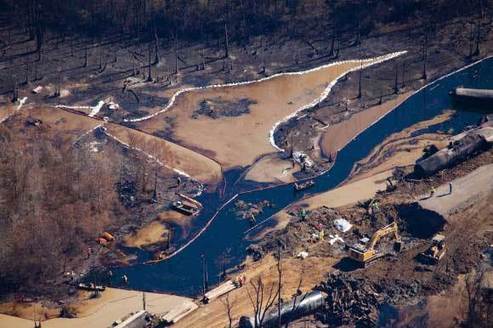
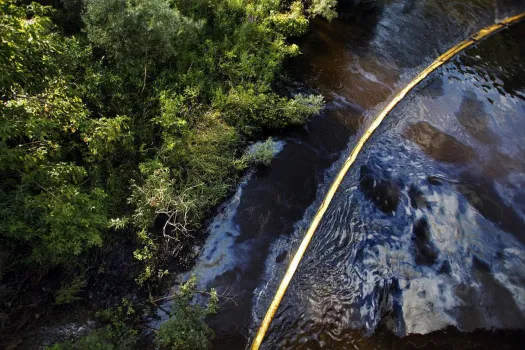
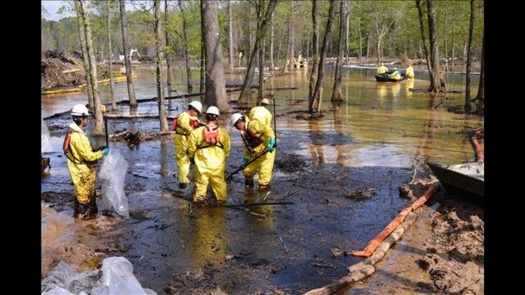
    Later in 2010, an Enbridge pipeline ruptured in Michigan, eventually “spilling” more than a million gallons of tar sands crude into the Kalamazoo River. When monitors at the Alberta office reported that the line pressure had fallen to zero, control room staff dismissed the warning as a false alarm and cranked up the pressure twice, which worsened the disaster. In 2018, Enbridge’s “cleanup” was still incomplete.

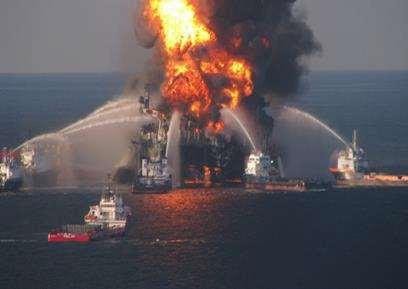
    • Fire at BP Deepwater Horizon 2010
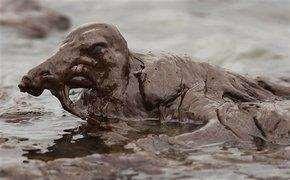
    • Bird in Oil Alaska 1989
    • 800 Mile Oil Spill Alaska 1989
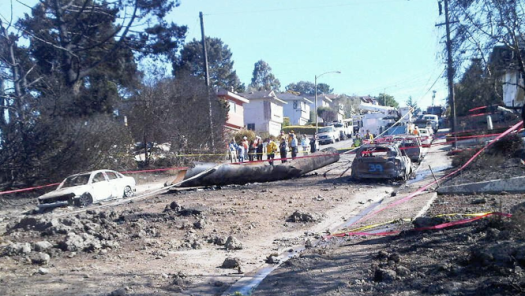
    • San Bruno Gas Pipeline Explosion 2008
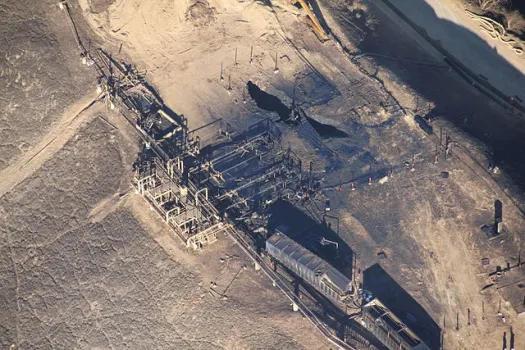
    • Aliso Canyon Methane Leak 2014
    • Alberta Waste Oil Spill 2014
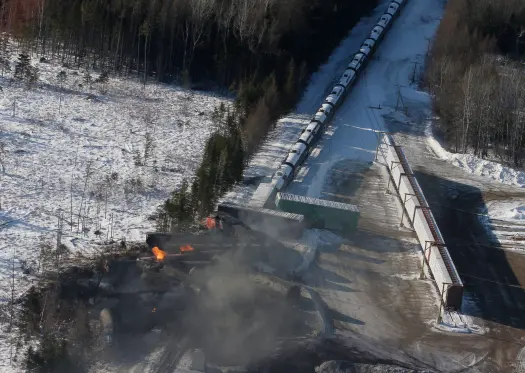
    • Oil Train Derailment in New Brunswick, Canada 2014
    • Alabama Oil Train Fire 2013
    • Mayflower, Arkansas Exxon Oil Spill 2016
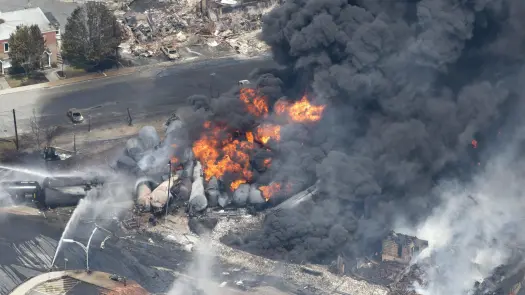
    • Lac Megantic Quebec Oil Train Crash 2013
    • Enbridge Tar Sands Oil Pipeline Spill Kalamazoo 2010
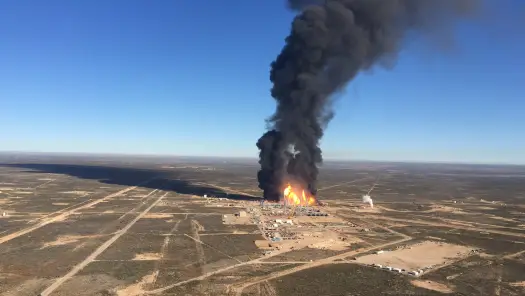
    • Ramsey Natural Gas Processing Plant in Orla, Texas 2015

    In 2013, a spectacular train wreck dumped 2 million gallons of North Dakota crude oil into Lac Megantic, Quebec, killing 47 residents and incinerating the centre of the town – but that’s just another page in the endless petroleum tale that includes Exxon’s disastrous, 2016 “spill” in Mayflower, Arkansas, that received scant notice from the press.

    And in November 2013, a train loaded with 2.7 million gallons of crude oil went incendiary in Alabama, followed in December by a North Dakota conflagration.

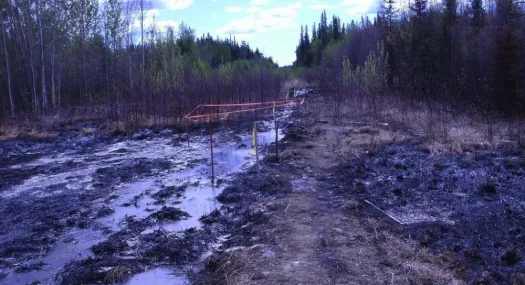
    2014 began with a fiery derailment in New Brunswick, Canada, and in October 2014, 625,000 liters of oil and toxic mine-water were “spilled” in Alberta.

    July, August and September brought Alberta’s autumn, 2014 total to 90 pipeline “spills.”   2015 brought four, fiery oil train wrecks just by March, and 2016 delivered two Alabama pipeline explosions – one close to Birmingham.

    George Erickson

    July, August and September brought Alberta’s autumn, 2014 total to 90 pipeline “spills.”   2015 brought four, fiery oil train wrecks just by March, and 2016 delivered two Alabama pipeline explosions – one close to Birmingham.

    In late 2015, California’s horrific, Aliso Canyon methane “leak” (think “geyser”) erupted, spewing forth 100,000 tons of natural gas, the equivalent of approximately 3 billion gallons of gasoline or adding 500,000 cars to our roads for a year.

    The Southern California Gas Company finally managed to throttle the geyser in February, 2016. Incidentally, Aliso’s 100,000 tons of “leakage” is just 25% of California’s allowed leakage, which is an indication of the political power of the natural gas industry. (Five months later, a new headline appeared: “Massive Fracking Explosion in New Mexico”)

    The Aliso “leak” caused the loss of 70 billion cubic feet (BCF) of gas that California utilities count on to create electricity for the hot summer months. As a consequence, the California Independent Service Operator, which manages California’s grid, estimated that due to Aliso, 21 million customers should expect to be without power for 14 days during the summer.

    Methane leaks offset much of the climate change benefits of natural gas, study says

    Flaring Methane

    According to Reuters, (June 2016), “SoCalGas uses Aliso Canyon to provide gas to power generators that cannot be met with pipeline flows alone on about 10 days per month during the summer, according to state agencies.”

    However, during the summer, SoCalGas also strives to fill Aliso Canyon to prepare for the winter heating season. State regulators, however, subsequently ordered the company to reduce the amount of gas in Aliso to just 15 BCF and use that fuel to reduce the risk of power interruptions in the hot summer months of 2016. Fortunately, State regulators have also said that they won’t allow SoCalGas to inject fuel into the facility until the company has inspected all of its 114 storage facilities.

    The Aliso disaster wiped out all of the state’s Green House Gas (GHG) reductions from its wind and solar systems – and led to a USD 1.8 billion judgement against SoCalGas in September, 2021. In 2016, California officials also reported leakage at a San Joachim County storage facility that was “similar to, or slightly above, background levels at other natural gas storage facilities.”

    Alexander Cannara – Energy Basics @ TEAC3

    Dr. Alex Cannara, a California resident writes,

    “Combustion sources [unlike nuclear power], aren’t burdened with their true costs. Natural gas, for example, is not cheaper than nuclear or anything else. In 2016, our allowed leakage wipes wind/solar out by 4 times. In other words, ‘renewables’ in a gas state like California wipe out their benefits every 3 months because they depend on gas for most of their nameplate ratings. The Aliso storage was largely used to compensate for ‘renewables’ inevitable shortfall.

    “The most important combustion cost is the unlimited downside risk of its emissions for the entire planet, but in February 2016, our CEC approved 600MW of added gas burning in the San Diego region simply because the San Onofre nuclear plant wasn’t running, due to possibly corrupt actions by SoCla Gas, SCE, Sempra Energy and Edison Intl.

    “Such practices were prevented for 75 years by the 1935 PUHCA, but the Bush administration repealed it in 2005 after decades of carbon combustion-interest lobbying. Some states – not California – passed legislation to correct for the 2005 PUHCA repeal.”

    There’s more: In August, 2016, the Pennsylvania EPA admitted that oil and gas production in the state emitted as much methane as Aliso Canyon. The Aliso “leak” was deemed a disaster, but the hundreds of equally damaging Pennsylvania “leaks” were considered business as usual.

    Pittsburgh, Pennsylvania

    Finally, also in August, 2016, a thirty-inch pipeline exploded in southeast New Mexico, killing five adults and five children while leaving two other adults in critical condition in a Lubbock, Texas hospital.

    All of this could have been avoided if, instead of pursuing intermittent, short-lived, carbon-dependent windmills and solar panels (Chapters 9 and 10), we had expanded safe, CO2-free Nuclear Power.

    Dr. Wade Allison, in Nuclear is For Life, wrote: “Critics of civilian nuclear power use what they fear might happen due to a nuclear failure – but never has – but ignore other accidents that have been far worse:
    – The 1975 dam failure in China that killed 170,000;
    – The 1984 chemical plant disaster in Bhopal, India where 3,899 died and 558,000 were injured;
    – The 1889, Johnstown. PA flood that drowned 2,200;
    – The 1917 explosion of a cargo ship in Halifax, N. S. where 2,000 died and 9,000 were injured;
    – Turkey’s 2014 coal mine accident that took 300 lives;
    – The 2015 warehouse explosion in China that cost 173 lives. “

    The list seems endless, but no one advocates destroying dams or closing chemical plants.

    The way the world has reacted to the Fukushima accident has been the real disaster with huge consequences to the environment, but the accident itself was not.”

    See more from Dr Alison here.

    Wade Allison
    Wade Allison
    Rediscovering the Promise of Nuclear Power by Wade Allison

    “In California, defective, Japanese-built steam generators at the San Onofre plant could have been replaced for about USD 600 million, but the plant is being decommissioned at a cost of USD 4.5 billion because of Fukushima and anti-nuclear zealotry. The plant could be replaced with two, CO2-free AP-1000 reactors for USD 14 Billion.” Mike Conley

    In this foolish way, California lost the CO2-free electricity generated by San Onofre – 9% of California’s needs – which was replaced by carbon burning power plants and/or carbon-reliant wind and solar.

    Nuclear plants are required to set aside part of their profits to pay the cost of decommissioning, but no such requirement is made of wind and solar farms. Neither are carbon companies required to pre-fund the removal of miles of pipelines, the cleanup of refinery sites, or the sealing of their abandoned wells.

    Gas Industry Plans to Sink Nuclear Power

    Inside the Gas Industry’s Plan to Sink Nuclear Power, Lachlan Markay 14 April 2019

    I repeat, NO ONE has died from radiation created by commercial nuclear power production in Western Europe, Asia or the Southern and Western hemispheres, but up to 5,000,000 people die prematurely every year from the burning of coal, gas, wood and oil.

    The 2008 UNSCEAR update on their Chernobyl Report changed the “4000” future deaths from cancer to undetectable future deaths. With that reduction, the deaths per TWh drop accordingly.

    A 2019 study lowered the nuclear rate even further from 0.0013 to 0.0007/TWh.

    The original version of this chart, which rated nuclear power at 0.04 deaths per Terawatt hour, included thousands of LNT-predicted Chernobyl deaths that never happened.

    As a consequence, this image, which reflects reality instead of LNT [Linear No Threshold] errors, reveals that nuclear power is far safer than initially thought, and that nuclear is actually 115 times safer than wind – not 4,340 times safer than solar – not 10, 3,000 times safer than natural gas, 27,000 times safer than oil – and coal is out of sight.

    “Renewables” vs Nuclear Power by George Erickson 21 Sept 2017

    While we are at it, let’s explore resources necessary to build equivalent power facilities and the fuel required.

    Quadrennial Technology Review 2015 Department of Energy
    Power StationFuel QuantityFuel Quantity (kg)CO2 Production (Tons)
    Solid Fission (U235)7 Pounds3.2Zero
    Coal Burning9,000 tons9,000,00026,000
    Natural Gas Burning240,000,000 cu ft4,621,30915,210
    How Much Does it Take to Move that Much Materials?
    • Thorium and Uranium Compared Slide 1 of 3
    • Thorium and Uranium Compared Slide 2 of 3
    • Thorium and Uranium Compared Slide 3 of 3

    Coming up next week, Episode 17 – All At Sea – The Best Technology. Not Used. Why?


    Links and References

    1. Next Episode – Episode 17 – All At Sea – The Best Technology. Not Used. Why?
    2. Previous Episode – Episode 15 – Clean Air and Water? Not with Fossil Fuels Around
    3. Launching the Unintended Consequences Series
    4. Dr. George Erickson on LinkedIn
    5. Dr. George Erickson’s Website, Tundracub.com
    6. The full pdf version of Unintended Consequences
    7. https://en.wikipedia.org/wiki/2013_Mayflower_oil_spill
    8. https://www.ecowatch.com/massive-fracking-explosion-in-new-mexico-1919567359.html
    9. https://www.washingtonpost.com/business/economy/methane-leaks-offset-much-of-the-benefits-of-natural-gas-new-study-says/2018/06/21/e381654a-7590-11e8-b4b7-308400242c2e_story.html
    10. https://www.reuters.com/article/us-usa-california-heatwave-idUSKCN0Z60DO
    11. https://thoriumenergyalliance.com/resource/dr-alex-cannara-energy-basics/
    12. https://www.youtube.com/watch?v=aUVq81kBKyk
    13. https://www.linkedin.com/in/alex-cannara-6a1b7a3/
    14. http://www.dep.pa.gov/Business/Air/BAQ/BusinessTopics/Emission/Pages/Marcellus-Inventory.aspx
    15. https://en.wikipedia.org/wiki/Pittsburgh
    16. https://en.wikipedia.org/wiki/Wade_Allison
    17. https://www.linkedin.com/in/wade-allison-08929816/
    18. https://www.researchgate.net/publication/285420212_Nuclear_is_for_Life_A_Cultural_Revolution
    19. https://www.amazon.com/Nuclear-Life-Wade-Allison-author/dp/0956275648
    20. https://www.project-syndicate.org/commentary/nuclear-power-climate-change-misconceptions-by-wade-allison-2018-06
    21. https://www.linkedin.com/in/mike-conley-5529b3/
    22. https://www.thedailybeast.com/inside-the-gas-industrys-plan-to-sink-nuclear-power
    23. https://www.linkedin.com/in/lachlanmarkay/
    24. https://duluthreader.com/articles/2017/09/21/109245-renewables-vs-nuclear-power
    25. https://www.energy.gov/quadrennial-technology-review-2015

    #UnintendedConsequences #GeorgeErickson #ClimateChange #FissionEnergy #NuclearEnergy #FossilFuels #NuclearSafety #TheThoriumNetwork #Fission4All #RadiationIsGood4U #GetYourRadiation2Day #Thorium

  • Episode 15 – Clean Air and Water? Not with Fossil Fuels Around – Death by Fossil – Unintended Consequences – Chapter 7 Part 1

    Post created by Jeremiah Josey and the team at The Thorium Network

    What’s the Fossil Fuel Record? Millions of Air Pollution Deaths each year

    Fossil fuel air pollution responsible for more than 8 million people worldwide in 2018

    Loretta J. Mickley | Harvard
    February 9, 2021
    Loretta J. Mickley, Senior Research Fellow in Chemistry-Climate Interactions, Harvard

    Because the carbon industries are heavily subsidised, one might expect them to have exemplary safety and social records, but one would be wrong!

    According to the Guardian, 6 Oct 2021 “The IMF found the production and burning of coal, oil and gas was subsidised by USD 5.9tn in 2020″ Or USD 11 million a minute every day. This is according to a startling new estimate by the International Monetary Fund. The IMF has noted before that existing fossil fuel subsidies overwhelmingly go to the rich, with the wealthiest 20% of people getting six times as much as the poorest 20% in low and middle-income countries.

    IMF Logo Photo

    IMF found the production and burning of coal, oil and gas was subsidised by USD 5.9tn in 2020, or USD11 per minute.

    Guardian, 6 Oct 2021

    The ash derived from burning coal averages 80,000 pounds per American lifetime. Compare that to two pounds of nuclear “waste” for the same amount of electricity. The world’s 1,200 largest coal-fired plants cause 30,000 premature U.S. deaths every year plus hundreds of thousands of cases of lung and heart diseases.

    In 2006, the Sago coal mine disaster killed 12. A few years later, a West Virginia coal mine explosion killed 29. In May 2014, 240 miners died in a Turkish coal mine.

    Normal Operations – Ash from Coal Fired Power Station – Tennessee Valley Authority

    Generating the 20% of U.S. electricity with nuclear power saves our atmosphere from being polluted with 177 million tons of greenhouse gases every year, but despite the increasing consequences of Climate Change and Ocean Acidification, the burning of carbon to make electricity is still rising.

    Scientific American, 13 Dec 2007: “Coal-fired plants expel mercury, arsenic, uranium, radon, cyanide and harmful particulates while exposing us to 100 times more radiation than nuclear plants that create no CO2. In fact, coal ash is more radioactive than any emission from any operating nuclear plant.”

    How Coal Kills 17 Feb 2015, EarthTalk (Doug Moss & Roddy Scheer), February 17, 2015

    The Human Cost of Energy
    Fossil fuels exact the biggest toll in terms of lives lost
    By 
    Mark Fischetti on September 1, 2011

    In one year, a CO2-free, 1,000 MW nuclear plant creates about 500 cu ft of spent fuel that can be recycled to retrieve useful U-238, reducing its bulk by about 90%. (An average U. S. bathroom is about that size.) In that same year, a 1,000 MW coal plant creates 65,000 tons of CO2 plus enough toxic ash to cover an entire football field to a height of at least 200 feet.

    Burning fossil fuels releases significant quantities of carbon dioxide, aggravating climate change. Although it gets less attention these days, combustion also emits volumes of pollutants, which can cause a variety of illnesses.
    Mark Fischetti


    U.S. Health Burden Caused by Particulate Pollution from Fossil-Fuelled Power Plants

    IllnessMean Number of Cases
    Asthma (hospital admissions)3,020
    Pneumonia  (hospital admissions)4,040
    Asthma (emergency room visits)7,160
    Cardiovascular ills (hospital admissions)9,720
    Chronic bronchitis18,600
    Premature deaths30,100
    Acute bronchitis59,000
    Asthma attacks603,000
    Lower respiratory ills630,000
    Upper respiratory ills679,000
    Lost workdays5.13 million
    Minor restricted-activity days26.3 million
    The Health Care Burden of Fossil Fuels

    Every year, we store 140 million tons of coal ash in unlined or poorly lined landfills and tailing ponds. In 2008, five million tons of toxic ash burst through a Tennessee berm (see below), destroying homes and fouling lakes and rivers.

    Coal Ash Spill Revives Issue of Its Hazards 2008

    Coal-fired power plants leak more toxic pollution into America’s waters than any other industry. (A June, 2013 test found that arsenic levels leaking from unlined coal ash ponds were 300 times the safety level for drinking water.)

    And in 2014, North Carolina’s Duke Energy’s plant (now bankrupt) “spilled” 9,000 tons of toxic coal ash sludge into the Dan River. Why do they always say “spilled” – never “gushed?”

    Duke Ash Spill Dan River 2014

    Coal companies like to promote their supposedly “clean coal,” which really means “not quite so filthy,” but despite making an attempt at carbon capture and storage (CCS) at a new power plant in Saskatchewan, the plant has been a failure. (Burning fossil fuels causes 4.5 million early deaths per year.)

    CO2 Sequestration Critique by The Juice Media 2 Sept 2021

    CO2 removal devices use natural gas or electricity, which is usually generated by burning carbon. The moral hazard of removing CO2 from the air is that it justifies burning fossil fuels.

    Technology to Make Clean Energy from Coal is Stumbling in Practice

    Carbon Capture System at Saskpower Boundary Dam Powerstation


    An electrical plant in Saskatchewan was the great hope for industries that burn coal.

    In the first large-scale project of its kind, the plant was equipped with a technology that promised to pluck carbon out of the utility’s exhaust and bury it, transforming coal into a cleaner power source. In the months after opening, the utility and the government declared the project an unqualified success, but the USD 1.1 billion project is now looking like a dream.

    Known as SaskPower’s Boundary Dam 3, the project has been plagued by shutdowns, has fallen way short of its emissions targets, and faces an unresolved problem with its core technology. The costs, too, have soared, requiring tens of millions of dollars in new equipment and repairs.

    “At the outset, its economics were dubious,” said Cathy Sproule, a member of the legislature who released confidential internal documents about the project. “Now they’re a disaster….”

    New York Times by Ian Austen, 29 March 2016, Ottawa

    Even modern, 75% efficient coal-burners with thirty-year lifespans can’t compete with nuclear plants that have lifespans of 60 years and provide CO2-free power at 90% efficiency, and the new plants are even safer. In addition, our coal reserves will last 100 years at best. And as we “decarbonize”, we will require increasing amounts of electricity, and the only source of economical CO2-free, 24/7 power must be our new, super-safe, highly efficient nuclear reactors that cannot melt down.

    Note: The word “efficiency,” AKA “capacity factor,” in this book means the amount of electricity created over an extended period by wind, solar, etc. compared to their maximum power rating. Unfortunately, the maximum power rating is often used to sell the project. For nuclear reactors, this figure is at least 90%, but it is 33% for windmills and just 19 -22% for pv solar – and solar panel efficiency degrades by 1% per year during their short, 20 year lifespan. (Thermal efficiency is a separate matter.)

    When a gas pipeline exploded in 2010 at San Bruno, California, 8 people died, 35 homes were levelled and dozens more were damaged. In 2016, a federal government report stated that natural gas explosions cause heavy property damage, often with deaths, about 180 times per year – that’s every other day.

    GULF OF MEXICO – APRIL 21: In this handout image provided by the U.S. Coast Guard, fire boat response crews battle the blazing remnants of the off shore oil rig Deepwater Horizon in the Gulf of Mexico on April 21, 2010 near New Orleans, Louisiana. An estimated leak of 1,000 barrels of oil a day are still leaking into the gulf. Multiple Coast Guard helicopters, planes and cutters responded to rescue the Deepwater Horizon’s 126 person crew. (Photo by U.S. Coast Guard via Getty Images)

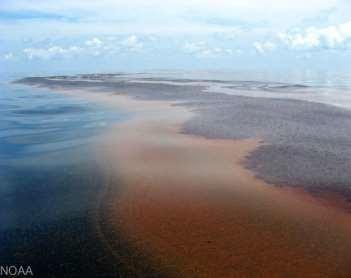
    In 2010, British Petroleum’s Deepwater Horizon disaster in the Gulf of Mexico “spilled” 200 million gallons of oil and killed 11 workers and 800,000 birds. Prior to that, an explosion at a Texas BP refinery killed fifteen workers. And BP, which was also involved in the Exxon Valdez “spill” in Alaska’s Prince William Sound, is just one of the many oil companies that we subsidise with USD 2.4 billion every year.

    “‘Evolution is driven by the tendency of all organisms to expand their habitat and exploit the available resources… Just as bacteria in a Petri dish grow until they have consumed all of the nutrients, and then die in a toxic soup of their own waste.”

    William Ophuls

    Fossil fuels are far deadlier than nuclear power, New Scientist, 23 March 2011, Phil Mckenna

    Power Risks

    Coming up next week, Episode 16 – “Green” Means Everyone Gets Clean Air and Clean Water


    Links and References

    1. Next Episode – Episode 16 – “Green” Means Everyone Gets Clean Air and Clean Water
    2. Previous Episode – Episode 14 – What’s up Doc? Tremors from Fukushima – Unintended Consequences – Chapter 6, Part 2
    3. Launching the Unintended Consequences Series
    4. Dr. George Erickson on LinkedIn
    5. Dr. George Erickson’s Website, Tundracub.com
    6. The full pdf version of Unintended Consequences
    7. https://www.seas.harvard.edu/news/2021/02/deaths-fossil-fuel-emissions-higher-previously-thought
    8. https://www.seas.harvard.edu/person/loretta-mickley
    9. https://www.imf.org/en/Publications/WP/Issues/2021/09/23/Still-Not-Getting-Energy-Prices-Right-A-Global-and-Country-Update-of-Fossil-Fuel-Subsidies-466004
    10. https://www.theguardian.com/environment/2021/oct/06/fossil-fuel-industry-subsidies-of-11m-dollars-a-minute-imf-finds
    11. https://www.bbc.com/news/world-europe-27406195
    12. https://www.timesfreepress.com/news/business/aroundregion/story/2021/jun/21/tva-studies-idle-kingston-coal-plant/549068/
    13. https://www.scientificamerican.com/article/how-coal-kills/
    14. https://earthtalk.org/
    15. https://www.linkedin.com/company/earthtalk/
    16. https://www.linkedin.com/in/roddy-scheer-2070722b/
    17. https://www.scientificamerican.com/article/the-human-cost-of-energy/
    18. https://www.scientificamerican.com/article/graphic-science-health-care-burden-of-fossil-fuels/
    19. https://www.linkedin.com/in/mark-fischetti-7482609/
    20. https://www.nytimes.com/2008/12/25/us/25sludge.html
    21. https://news.stlpublicradio.org/health-science-environment/2014-12-19/first-ever-national-coal-ash-regs-disappoint-missouri-environmentalists
    22. https://www.epa.gov/radtown/radioactive-wastes-coal-fired-power-plants
    23. https://www.southernenvironment.org/news/duke-energy-pleads-guilty-to-environmental-crimes-in-north-carolina/
    24. https://www.youtube.com/watch?v=MSZgoFyuHC8
    25. https://www.thejuicemedia.com/
    26. https://www.nytimes.com/2016/03/30/business/energy-environment/technology-to-make-clean-energy-from-coal-is-stumbling-in-practice.html
    27. https://www.commondreams.org/news/2021/07/19/false-solution-500-groups-urge-us-canadian-leaders-reject-carbon-capture
    28. https://www.linkedin.com/in/catherine-sproule-a049944a/
    29. https://www.nytimes.com/by/ian-austen
    30. https://www.huffpost.com/entry/the-great-invisible-a-new_b_7532262
    31. https://www.helsinkitimes.fi/finland/finland-news/domestic/15265-small-modular-reactors-generating-interest-among-municipalities-in-finland.html
    32. https://www.linkedin.com/in/ian-austen-0a10a944/
    33. https://ccsknowledge.com/news/next-generation-ccs–beyond-coal
    34. https://en.wikipedia.org/wiki/Deepwater_Horizon_oil_spill
    35. https://www.linkedin.com/in/patrick-ophuls-9b3171225/
    36. https://en.wikipedia.org/wiki/William_Ophuls
    37. https://www.newscientist.com/article/mg20928053-600-fossil-fuels-are-far-deadlier-than-nuclear-power/
    38. https://www.linkedin.com/in/phil-mckenna-75930b7/
    39. https://www.newscientist.com/article/mg20928050-200-risk-expert-why-radiation-fears-are-often-exaggerated/

    #UnintendedConsequences #GeorgeErickson #FissionEnergy #NuclearEnergy #FossilFuels #ParticulatePollution #AirPollution #WaterPollution

  • Episode 4 – Fossil Fuel Frolics – Unintended Consequences

    Episode 4 – Fossil Fuel Frolics – Unintended Consequences

    Post by Jeremiah Josey and the team at The Thorium Network

    What’s the Fossil Fuel Record? Millions of Air Pollution Deaths each year
    Because the carbon industries are heavily subsidised, one might expect them to have exemplary safety and social records, but one would be wrong!

    According to the Guardian (2021-10-21) “The IMF found the production and burning of coal, oil and gas was subsidised by USD 5.9tn in 2020″ Or USD 11 million a minute every day. This is according to a startling new estimate by the International Monetary Fund. The IMF has noted before that existing fossil fuel subsidies overwhelmingly go to the rich, with the wealthiest 20% of people getting six times as much as the poorest 20% in low and middle-income countries.

    IMF Logo Photo

    In 2006, the Sago coal mine disaster killed 12. A few years later, a West Virginia coal mine explosion killed 29. In May 2014, 240 miners died in a Turkish coal mine.

    The ash derived from burning coal averages 80,000 pounds per American lifetime. Compare that to two pounds of nuclear “waste” for the same amount of electricity. The world’s 1,200 largest coal-fired plants cause 30,000 premature U.S. deaths every year plus hundreds of thousands of cases of lung and heart diseases.

    Normal Operations – Ash from Coal Fired Power Station – Tennessee Valley Authority

    Generating the 20% of U.S. electricity with nuclear power saves our atmosphere from being polluted with 177 million tons of greenhouse gases every year, but despite the increasing consequences of Climate Change and Ocean Acidification, the burning of carbon to make electricity is still rising.

    Scientific American, 13 Dec 2007: “Coal-fired plants expel mercury, arsenic, uranium, radon, cyanide and harmful particulates while exposing us to 100 times more radiation than nuclear plants that create no CO2. In fact, coal ash is more radioactive than any emission from any operating nuclear plant.” How Coal Kills 17 Feb 2015

    US Health Burden from Fossil Fuels

    In one year, a CO2-free, 1,000 MW nuclear plant creates about 500 cu ft of spent fuel that can be recycled to retrieve useful U-238, reducing its bulk by about 90%. (An average U. S. bathroom is about that size.) In that same year, a 1,000 MW coal plant creates 65,000 tons of CO2 plus enough toxic ash to cover an entire football field to a height of at least 200 feet.

    Every year, we store 140 million tons of coal ash in unlined or poorly lined landfills and tailing ponds. In 2008, five million tons of toxic ash burst through a Tennessee berm (see below), destroying homes and fouling lakes and rivers.

    Coal Ash Spill Revives Issue of Its Hazards 2008

    Coal-fired power plants leak more toxic pollution into America’s waters than any other industry. (A June, 2013 test found that arsenic levels leaking from unlined coal ash ponds were 300 times the safety level for drinking water.)

    And in 2014, North Carolina’s Duke Energy’s plant (now bankrupt) “spilled” 9,000 tons of toxic coal ash sludge into the Dan River. Why do they always say “spilled” – never “gushed?”

    Duke Ash Spill Dan River 2014

    Coal companies like to promote their supposedly “clean coal,” which really means “not quite so filthy,” but despite making an attempt at carbon capture and storage (CCS) at a new power plant in Saskatchewan, the plant has been a failure. (Burning fossil fuels causes 4.5 million early deaths per year.)

    CO2 Sequestration Critique by The Juice Media 2 Sept 2021

    CO2 removal devices use natural gas or electricity, which is usually generated by burning carbon. The moral hazard of removing CO2 from the air is that it justifies burning fossil fuels.

    Technology to Make Clean Energy from Coal is Stumbling in Practice
    An electrical plant in Saskatchewan was the great hope for industries that burn coal.
    In the first large-scale project of its kind, the plant was equipped with a technology that promised to pluck carbon out of the utility’s exhaust and bury it, transforming coal into a cleaner power source. In the months after opening, the utility and the government declared the project an unqualified success, but the USD 1.1 billion project is now looking like a dream.

    Known as SaskPower’s Boundary Dam 3, the project has been plagued by shutdowns, has fallen way short of its emissions targets, and faces an unresolved problem with its core technology. The costs, too, have soared, requiring tens of millions of dollars in new equipment and repairs.

    “At the outset, its economics were dubious,” said Cathy Sproule, a member of the legislature who released confidential internal documents about the project. “Now they’re a disaster….”

    New York Times by Ian Austen, 29 March 2016, Ottawa

    Even modern, 75% efficient coal-burners with thirty-year lifespans can’t compete with nuclear plants that have lifespans of 60 years and provide CO2-free power at 90% efficiency, and the new plants are even safer. In addition, our coal reserves will last 100 years at best. And as we “decarbonize”, we will require increasing amounts of electricity, and the only source of economical CO2-free, 24/7 power must be our new, super-safe, highly efficient nuclear reactors that cannot melt down.

    Note: The word “efficiency,” AKA “capacity factor,” in this book means the amount of electricity created over an extended period by wind, solar, etc. compared to their maximum power rating. Unfortunately, the maximum power rating is often used to sell the project. For nuclear reactors, this figure is at least 90%, but it is 33% for windmills and just 19 -22% for pv solar – and solar panel efficiency degrades by 1% per year during their short, 20 year lifespan. (Thermal efficiency is a separate matter.)

    When a gas pipeline exploded in 2010 at San Bruno, California, 8 people died, 35 homes were levelled and dozens more were damaged. In 2016, a federal government report stated that natural gas explosions cause heavy property damage, often with deaths, about 180 times per year – that’s every other day.

    In 2010, British Petroleum’s Deepwater Horizon disaster in the Gulf of Mexico “spilled” 200 million gallons of oil and killed 11 workers and 800,000 birds. Prior to that, an explosion at a Texas BP refinery killed fifteen workers. And BP, which was also involved in the Exxon Valdez “spill” in Alaska’s Prince William Sound, is just one of the many oil companies that we subsidise with USD 2.4 billion every year.

    “‘Evolution is driven by the tendency of all organisms to expand their habitat and exploit the available resources… Just as bacteria in a Petri dish grow until they have consumed all of the nutrients, and then die in a toxic soup of their own waste.”

    William Ophuls

    Later in 2010, an Enbridge pipeline ruptured in Michigan, eventually “spilling” more than a million gallons of tar sands crude into the Kalamazoo River. When monitors at the Alberta office reported that the line pressure had fallen to zero, control room staff dismissed the warning as a false alarm and cranked up the pressure twice, which worsened the disaster. In 2018, Enbridge’s “cleanup” was still incomplete.

    In 2013, a spectacular train wreck dumped 2 million gallons of North Dakota crude oil into Lac Megantic, Quebec, killing 47 residents and incinerating the centre of the town – but that’s just another page in the endless petroleum tale that includes Exxon’s disastrous, 2016 “spill” in Mayflower, Arkansas, that received scant notice from the press.

    New Scientist – Fossil fuels are far deadlier than nuclear power

    And in November 2013, a train loaded with 2.7 million gallons of crude oil went incendiary in Alabama, followed in December by a North Dakota conflagration.

    2014 began with a fiery derailment in New Brunswick, Canada, and in October 2014, 625,000 liters of oil and toxic mine-water were “spilled” in Alberta.

    July, August and September brought Alberta’s autumn, 2014 total to 90 pipeline “spills.”   2015 brought four, fiery oil train wrecks just by March, and 2016 delivered two Alabama pipeline explosions – one close to Birmingham.

    In late 2015, California’s horrific, Aliso Canyon methane “leak” (think “geyser”) erupted, spewing forth 100,000 tons of natural gas, the equivalent of approximately 3 billion gallons of gasoline or adding 500,000 cars to our roads for a year.

    The Southern California Gas Company finally managed to throttle the geyser in February, 2016. Incidentally, Aliso’s 100,000 tons of “leakage” is just 25% of California’s allowed leakage, which is an indication of the political power of the natural gas industry. (Five months later, a new headline appeared: “Massive Fracking Explosion in New Mexico”)

    The Aliso “leak” caused the loss of 70 billion cubic feet (BCF) of gas that California utilities count on to create electricity for the hot summer months. As a consequence, the California Independent Service Operator, which manages California’s grid, estimated that due to Aliso, 21 million customers should expect to be without power for 14 days during the summer.

    Methane leaks offset much of the climate change benefits of natural gas, study says

    According to Reuters, (June 2016), “SoCalGas uses Aliso Canyon to provide gas to power generators that cannot be met with pipeline flows alone on about 10 days per month during the summer, according to state agencies.”

    However, during the summer, SoCalGas also strives to fill Aliso Canyon to prepare for the winter heating season. State regulators, however, subsequently ordered the company to reduce the amount of gas in Aliso to just 15 BCF and use that fuel to reduce the risk of power interruptions in the hot summer months of 2016. Fortunately, State regulators have also said that they won’t allow SoCalGas to inject fuel into the facility until the company has inspected all of its 114 storage facilities.

    The Aliso disaster wiped out all of the state’s Green House Gas (GHG) reductions from its wind and solar systems – and led to a USD 1.8 billion judgement against SoCalGas in September, 2021. In 2016, California officials also reported leakage at a San Joachim County storage facility that was “similar to, or slightly above, background levels at other natural gas storage facilities.”

    Dr. Alex Cannara, a California resident writes, “Combustion sources [unlike nuclear power], aren’t burdened with their true costs. Natural gas, for example, is not cheaper than nuclear or anything else. In 2016, our allowed leakage wipes wind/solar out by 4 times. In other words, ‘renewables’ in a gas state like California wipe out their benefits every 3 months because they depend on gas for most of their nameplate ratings. The Aliso storage was largely used to compensate for ‘renewables’ inevitable shortfall.“The most important combustion cost is the unlimited downside risk of its emissions for the entire planet, but in February 2016, our CEC approved 600MW of added gas burning in the San Diego region simply because the San Onofre nuclear plant wasn’t running, due to possibly corrupt actions by SoCla Gas, SCE, Sempra Energy and Edison Intl.

    “Such practices were prevented for 75 years by the 1935 PUHCA, but the Bush administration repealed it in 2005 after decades of carbon combustion-interest lobbying. Some states – not California – passed legislation to correct for the 2005 PUHCA repeal.”

    There’s more: In August, 2016, the Pennsylvania EPA admitted that oil and gas production in the state emitted as much methane as Aliso Canyon. The Aliso “leak” was deemed a disaster, but the hundreds of equally damaging Pennsylvania “leaks” were considered business as usual.

    Finally, also in August, 2016, a thirty-inch pipeline exploded in southeast New Mexico, killing five adults and five children while leaving two other adults in critical condition in a Lubbock, Texas hospital.

    All of this could have been avoided if, instead of pursuing intermittent, short-lived, carbon-dependent windmills and solar panels (Chapters 9 and 10), we had expanded safe, CO2-free Nuclear Power.

    Dr. Wade Allison, in Nuclear is For Life, wrote: “Critics of civilian nuclear power use what they fear might happen due to a nuclear failure – but never has – but ignore other accidents that have been far worse:
    – The 1975 dam failure in China that killed 170,000;
    – The 1984 chemical plant disaster in Bhopal, India where 3,899 died and 558,000 were injured;
    – The 1889, Johnstown. PA flood that drowned 2,200;
    – The 1917 explosion of a cargo ship in Halifax, N. S. where 2,000 died and 9,000 were injured;
    – Turkey’s 2014 coal mine accident that took 300 lives;
    – The 2015 warehouse explosion in China that cost 173 lives. “

    The list seems endless, but no one advocates destroying dams or closing chemical plants.

    The way the world has reacted to the Fukushima accident has been the real disaster with huge consequences to the environment, but the accident itself was not.”

    See more from Dr Alison here.

    Dr Wade Alison
    Nuclear is for Life by Wade Alison

    “In California, defective, Japanese-built steam generators at the San Onofre plant could have been replaced for about USD 600 million, but the plant is being decommissioned at a cost of USD 4.5 billion because of Fukushima and anti-nuclear zealotry. The plant could be replaced with two, CO2-free AP-1000 reactors for USD 14 Billion.” – Mike Conley

    In this foolish way, California lost the CO2-free electricity generated by San Onofre – 9% of California’s needs – which was replaced by carbon burning power plants and/or carbon-reliant wind and solar.

    Nuclear plants are required to set aside part of their profits to pay the cost of decommissioning, but no such requirement is made of wind and solar farms. Neither are carbon companies required to pre-fund the removal of miles of pipelines, the cleanup of refinery sites, or the sealing of their abandoned wells.

    Gas Industry Plans to Sink Nuclear Power

    I repeat, NO ONE has died from radiation created by commercial nuclear power production in Western Europe, Asia or the Southern and Western hemispheres, but more than 2,000,000 people die prematurely every year from the burning of coal, gas, wood and oil.

    If you REALLY care about safety, check this chart!

    A 2019 study lowered the nuclear death rate from 0.0013 to 0.0007/Twh.

    The original version of this chart, which rated nuclear power at 0.04 deaths per Terawatt hour, included thousands of LNT-predicted Chernobyl deaths that never happened.

    As a consequence, this image, which reflects reality instead of LNT [Linear No Threshold] errors, reveals that nuclear power is far safer than initially thought, and that nuclear is actually 115 times safer than wind – not 4,340 times safer than solar – not 10, 3,000 times safer than natural gas, 27,000 times safer than oil – and coal is out of sight.

    Comparing Daily Fuel requirements and CO2 production for a 1,000 MW Power Plant

    Power TrainFuel QuantityFuel Quantity (kg)CO2 Production (Tons)
    Solid Fission (U232)7 Pounds3.2Zero
    Coal burning9,000 tons9,000,00026,000
    Natural Gas Burning240,000,000 cu ft4,621,30915,210

    Coming up next week, Episode 5 – The Big Melt and The Acid Bath.

    Links and References

    1. Next Episode – Episode 5 – The Big Melt and The Acid Bath
    2. Previous Episode – Episode 3 – The Preface
    3. Launching the Unintended Consequences Series
    4. Dr. George Erickson on LinkedIn
    5. Dr. George Erickson’s Website, Tundracub.com
    6. The full pdf version of Unintended Consequences
    7. https://www.theguardian.com/environment/2021/oct/06/fossil-fuel-industry-subsidies-of-11m-dollars-a-minute-imf-finds
    8. https://www.imf.org/en/Publications/WP/Issues/2021/09/23/Still-Not-Getting-Energy-Prices-Right-A-Global-and-Country-Update-of-Fossil-Fuel-Subsidies-466004
    9. https://news.stlpublicradio.org/health-science-environment/2014-12-19/first-ever-national-coal-ash-regs-disappoint-missouri-environmentalists
    10. https://www.epa.gov/radtown/radioactive-wastes-coal-fired-power-plants
    11. https://www.scientificamerican.com/article/how-coal-kills/
    12. https://www.scientificamerican.com/article/graphic-science-health-care-burden-of-fossil-fuels/
    13. https://www.southernenvironment.org/news/duke-energy-pleads-guilty-to-environmental-crimes-in-north-carolina/
    14. https://www.nytimes.com/2008/12/25/us/25sludge.html
    15. https://www.youtube.com/watch?v=MSZgoFyuHC8
    16. https://www.thejuicemedia.com/
    17. https://www.nytimes.com/2016/03/30/business/energy-environment/technology-to-make-clean-energy-from-coal-is-stumbling-in-practice.html
    18. https://www.commondreams.org/news/2021/07/19/false-solution-500-groups-urge-us-canadian-leaders-reject-carbon-capture
    19. https://www.nytimes.com/by/ian-austen
    20. https://www.helsinkitimes.fi/finland/finland-news/domestic/15265-small-modular-reactors-generating-interest-among-municipalities-in-finland.html
    21. https://www.linkedin.com/in/ian-austen-0a10a944/
    22. https://www.scientificamerican.com/article/the-human-cost-of-energy/
    23. https://www.linkedin.com/in/patrick-ophuls-9b3171225/
    24. https://en.wikipedia.org/wiki/William_Ophuls
    25. https://www.newscientist.com/article/mg20928053-600-fossil-fuels-are-far-deadlier-than-nuclear-power/
    26. https://en.wikipedia.org/wiki/2013_Mayflower_oil_spill
    27. https://www.ecowatch.com/massive-fracking-explosion-in-new-mexico-1919567359.html
    28. https://www.washingtonpost.com/business/economy/methane-leaks-offset-much-of-the-benefits-of-natural-gas-new-study-says/2018/06/21/e381654a-7590-11e8-b4b7-308400242c2e_story.html
    29. https://www.reuters.com/article/us-usa-california-heatwave-idUSKCN0Z60DO
    30. https://thoriumenergyalliance.com/resource/dr-alex-cannara-energy-basics/
    31. https://www.linkedin.com/in/alex-cannara-6a1b7a3
    32. https://eu.argusleader.com/story/news/local/2015/12/07/ramsey-plant-fire-close-being-extinguished/76942420/
    33. https://en.wikipedia.org/wiki/Wade_Allison
    34. https://www.linkedin.com/in/wade-allison-08929816/
    35. https://www.researchgate.net/publication/285420212_Nuclear_is_for_Life_A_Cultural_Revolution
    36. https://www.project-syndicate.org/commentary/nuclear-power-climate-change-misconceptions-by-wade-allison-2018-06
    37. https://www.linkedin.com/in/mike-conley-5529b3/
    38. https://www.thedailybeast.com/inside-the-gas-industrys-plan-to-sink-nuclear-power

    #ClimateChange #UnintendedConsequences #GeorgeErickson #FissionEnergy #NuclearEnergy #FossilFuels