Summary
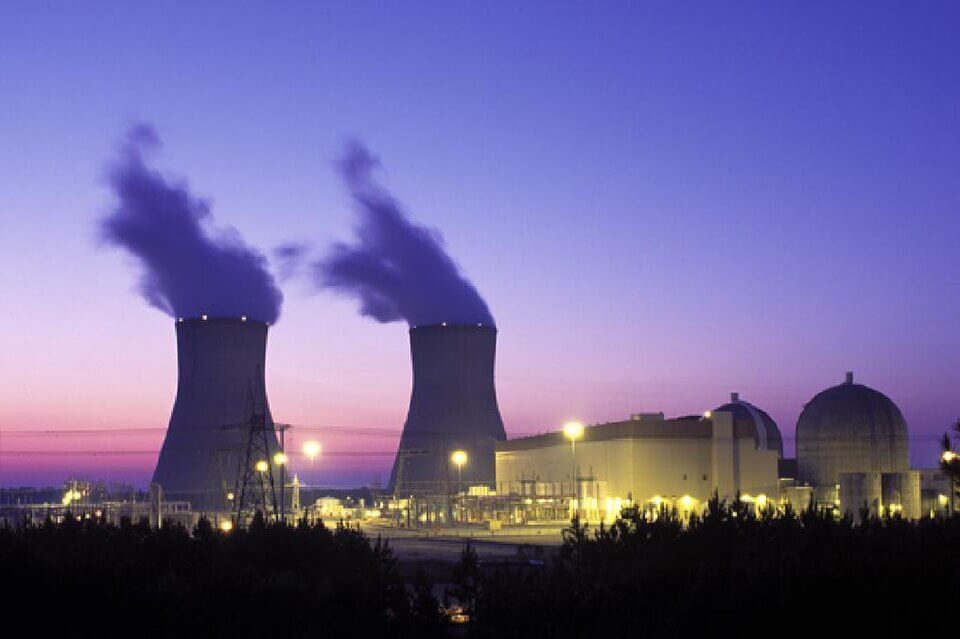
U.S. investor appetite for large nuclear fell sharply after Vogtle’s cost—USD 15,000 per installed KW—coupled with schedule failures, driven by lost on‑site generation skills, financing risk, and contingency inflation. China’s program, by contrast, uses volume, standardisation, domestic supply chains and state capital to drive large‑reactor costs toward and potentially below USD 1,000 per installed kW and to compress build times toward multi‑unit serial schedules under three years in aggressive scenarios. The result is diverging investment signals: risk‑averse private capital in the U.S. vs. state‑enabled industrial scaling in China.
Root causes of U.S. investor retrenchment
- Vogtle created visible multibillion‑dollar overruns, amplified perception of extreme first‑unit risk and raised lender risk premia; utilities now avoid large private finance absent strong government guarantees.
- Decades‑long U.S. construction hiatus has led to loss of tacit skills, fragmented and broken supply chains and higher contingency allowances—raising capital/ schedule estimates and scaring investors.
- Contractual disputes and vendor failures (e.g., Westinghouse bankruptcy) increased perceived counterparty risk and pushed insurers/lenders away.
China’s pathway to very low unit costs and short schedules
- Policy levers: state coordination, cheap capital, and centralised approval reduce financing and permitting premiums.
- Industrial levers: standardised designs, high domestic content, supplier capacity kept warm between projects, large apprenticeship pipelines, and offsite modular fabrication drive down per‑unit engineering, QA and onsite labour.
- Trend targets: Chinese programs publicly target USD 1,800/kW and aim lower (USD 1,200– USD 1,000/kW or below in high‑volume optimised scenarios), with repeat build schedules compressing toward 36–50 months for mature serial units in aggressive programs.
Comparative percentage declines (observable from China’s infrastructure programs)
- Coal‑fired plants (China): capital USD / kW down ~40–60% since 2000s through 2010s/2020s.
- Construction time for serial civil projects: down ~25–50% with repeat designs and modular practices.
- On‑site labor/productivity: hours per kW reduced by ~30–50% via prefab and continuous pipelines.
Table — China’s Progress: percentage drops
| Category | Historical drop range |
|---|---|
| Coal plant capital cost (USD/kW) | 40–60% |
| Construction time (repeat projects) | 25–50% |
| On‑site labor/productivity | 30–50% |
Investment implications — U.S. vs China
- In the U.S.: private investors price in Vogtle‑level contingencies, require credit enhancements or government guarantees, and prefer alternatives with clearer cost predictability; this kills large private‑financed reactor projects absent policy intervention.
- In China: state absorption of early risk plus high serial volume creates a downward spiral of cost and time that further lowers investment risk and reinforces future scaling — enabling targets toward or below USD 1,000/kW.
Conclusion
Without major U.S. policy action (direct subsidies, loan guarantees, standardised national designs, long‑term offtake guarantees, or state‑backed industrial rebuilding), U.S. investors will remain shy of large reactors; China’s evidence shows that scale + state coordination can compress costs and schedules dramatically, producing percentage declines similar to those already achieved in coal, rail and bridge programs.