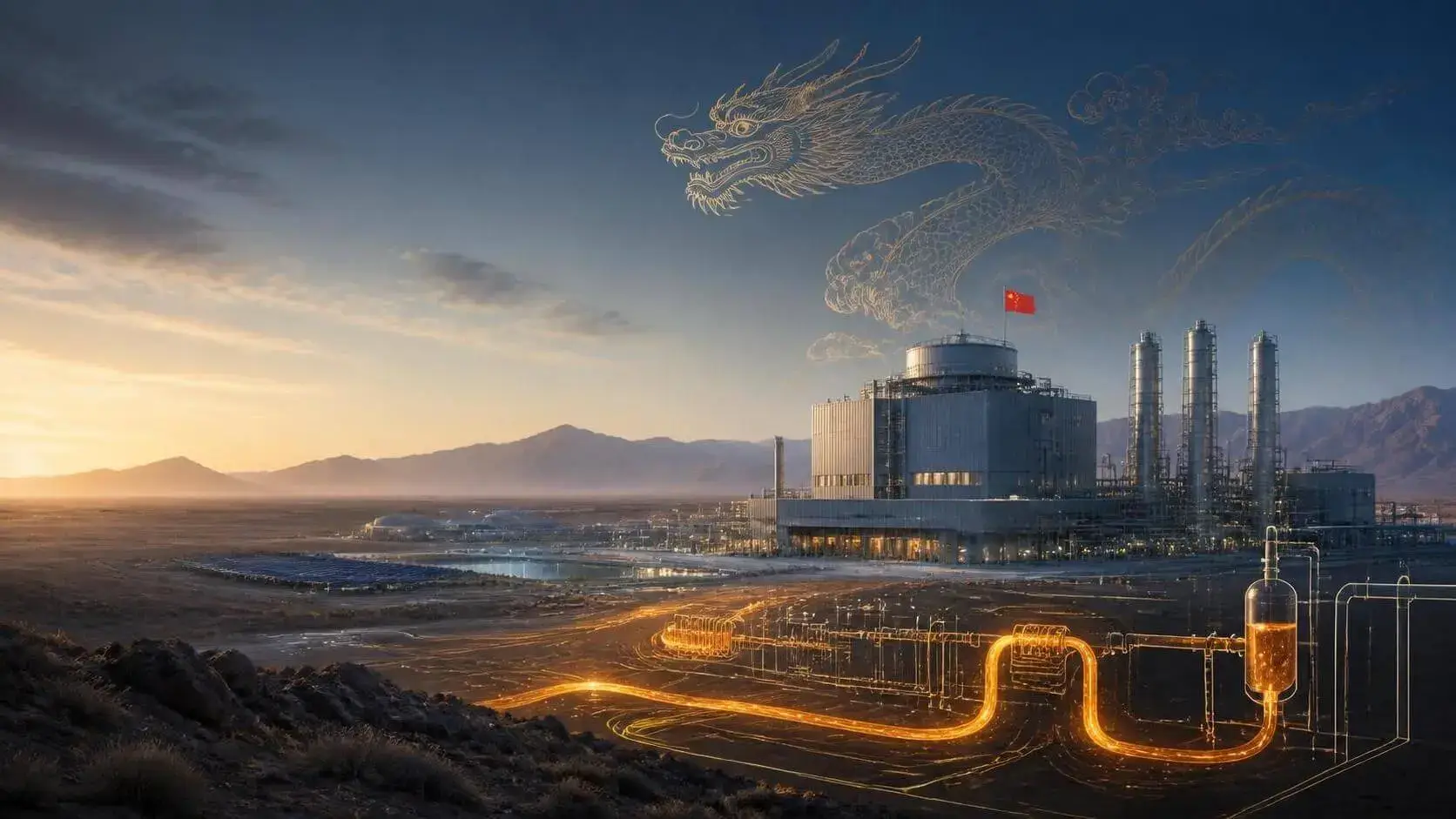
Turkey has deployed its first commercial Liquid Fission reactor in partnership with Japan. Cost: USD 800,000 per megawatt installed. India has announced plans for 40 GW of Thorium capacity by 2040. Brazil is fast-tracking deployment in the Amazon basin—not out of environmental virtue, but because it’s economically superior to hydroelectric expansion. China’s 700-engineer team has already brought total capacity to 12 GW, with cost curves dropping below USD 600,000 per megawatt.
The Gulf States—Saudi Arabia, UAE, Qatar, Bahrain, Kuwait—have quietly accelerated renewable and Liquid Fission investment simultaneously. They are hedging against fossil fuel obsolescence. The oil “will remain in the ground“, as famously forecast by a significant Saudi Royal family member 30 years ago.
Coal-dependent regions in Eastern Europe and Southeast Asia are announcing accelerated retirement plans. Not because of climate policy. Because the economics no longer work.
Uranium spot prices have collapsed. Solar manufacturers are facing overcapacity. Natural gas is becoming a stranded asset.
This is not science fiction. This is the future encoded in physics and economics. And it is already underway.
Part Two: Why This Is Inevitable
The superiority of Liquid Fission Thorium is not a matter of opinion. It is a matter of engineering.
One bulk carrier of Thorium fuel powers the world for one year. Thorium is as abundant as lead. The fuel cycle is closed—waste products decay to background radiation in centuries, not millennia. The reactor is inherently walk-away safe; it cannot melt down or explode, even under total failure. The energy density is extraordinary.
This technology was proven at Oak Ridge in 1969. It has been deployed successfully in Japan. It is being scaled now in Turkey. The physics is settled.
Why wasn’t it adopted decades ago? Because the fossil fuel industry spent seventy years promoting the Linear No-Threshold (LNT) radiation theory—a hypothesis rejected by leading radiobiologists but embedded in regulatory frameworks worldwide. Because uranium-based fission became politically entrenched. Because institutions resist admitting they were wrong.
But institutions cannot resist economics forever.
Cost curves matter. Solar photovoltaics fell from USD 5 per watt to USD 0.25 per watt in fifteen years through volume manufacturing and learning curves. Liquid Fission Thorium is experiencing the same trajectory. First-generation reactors are expensive. Second and third-generation units are dropping in cost with each deployment. The engineering is mature. The supply chains are forming. The regulatory pathways are opening.
China understands this. Japan understands this. Turkey understands this. The question is not whether Liquid Fission Thorium will dominate global electricity generation—physics and economics have already decided. The question is whether your nation, your investment, and your industry will be positioned for that transition.
Part Three: The Full Story
We have prepared a comprehensive timeline for serious readers: “The Thorium Reckoning.”
This is not a technical white paper. It is a narrative—a detailed speculative account that reads like a documentary film, weaving together:
The fictional future with specific geopolitical and economic scenarios grounded in realistic timelines
The technical reality that makes this future not just possible, but inevitable
Investment implications, regulatory breakthroughs, and the strategic realignment that follows when energy becomes abundant
Complete with original conceptual imagery, cost curve analysis, and expert testimony from leading Thorium researchers and policy figures.
This is the story of how the world’s energy system transforms. And why fighting that transformation is fighting physics itself.
Access “The Thorium Reckoning” on Patreon
USD 5,000 (permanent access) or Patreon Membership (tiered monthly access at coffee-and-bagel prices)
Are you a journalist – or a student – looking for the inside on Liquid Fission Thorium? Unlimited energy. Secure. Reliable. Well this page is for you.
We’ve been asked many times for a summary of resources or key people to speak with.
Are we biased? Of course we are. Read on and you’ll know why. You’ll probably want to Join Us too.
A Future Powered by Thorium is our objective. We are leveraging the billions of USD in today’s value and millions of hours invested over 50 years ago in a technology that is demonstrably superior to anything else we have today. China knows this very well and is now leading the world in it’s re-deployment.
See this chart of energy density from an Australian government website. Everything else pales into insignificance when compared to Liquid Fission Thorium Burners. Some people like to call them MSR Molten Salt Reactors. We just call them LFTBs.
Here’s a recent article from Germany we translated into Japanese. It contains a lot of information on China’s progress also. China is replicating the 1960’s USA program, publicly announcing in 2011 investing USD 3,3 billion and 700 engineers for the work. This is not about reinventing the wheel, it’s just remembering what we’ve done before to bring LFTBs back to life. Remember also China and Australia worked together to create a replacement for the super alloy metal “Hastelloy”. The original super metal was created in the 1950’s in the USA for their advanced nuclear programs and is only made today by two companies in the world – one in the USA and Mitsubishi. Now China, supported by Australia, has an alternative.
The article also includes information on Japan’s LFTB project – FUJI.
Here’s a list of must-do-interviews for background on Liquid Fission Thorium Energy, LFTBs or subjects related, such as radiation safety, the effects of Chernobyl and Linear No Threshold theory.
Professor Geraldine Thomas Director of the Chernobyl Tissue Bank, the world’s preeminent knowledge base for all things related to the real effects of that industrial accident. Prof. Thomas is became staunchly pro-nuclear due to her directorship. George Monbiot – a former Greenpeace anti-nuc activist, and now no longer in Greenpeace and strongly pro nuclear – after an interview he also had with Prof Thomas he had as a writer for the UK’s Guardian.
Mr. Daniel Roderick Former President and CEO of Westinghouse and then Toshiba Energy Systems. Danny steered the sale of Westinghouse for Toshiba, securing a positive, multi billion USD outcome for Japan. Danny was also the leader of negotiations to secure USD 50 billion in funding for a new nuclear build in Türkiye (derailed by the 2016 attempted coup in Türkiye). Mitsubishi subsequently submitted (and withdrew) a nuclear build in Sinop, Northern Türkiye. Rosatom (Russia) is now building a nuclear power station in Akkuyu, southern Türkiye.
Dr. Adi Paterson Dr. Paterson is the former head of ANSTO and an advocate of Liquid Fission Thorium Energy Technology. During his 9 year tenure at ANSTO, Dr. Paterson steered Australia to membership of the Generation IV forum, kind of the United Nationals for advanced fission designs and includes LFTBs. This is no mean feat given Australia’s lack of much to do with nuclear energy.
Dr. Resat Uzman Director of nuclear energy systems at Figes AS, of Türkiye. Dr. Uzman has more than 40 years experience in all things nuclear, Türkiye and rare earths – the materials where Thorium is often found bound with.
Professor Berrin Erbay Senior lecturer and former dean of mechanical engineering at Osmangazi University, Türkiye Prof. Erbay has been liaising with the professors in Japan for several decades. You can see one of her presentations on the status of Liquid Fission Technology and LFTBs in Japan here on Youtube:
Mr. Phumzile Tshelane Mr. Tshelane is a former CEO of NECSA South Africa, now holds various directorships across a wide range of industrial sectors. His position as head of a state owned nuclear technology development company gives him a particular view point on commercialisation of nuclear energy technologies, especially LFTBs.
Ms. Rana Önem Former president of the Thorium Student Guild. You should hear from someone discovered the benefits of Liquid Fission Thorium and LFTBs when studying their nuclear engineering degree. You can see Rana interviewing Dr. Uzman here. Follow the links at the end of the article to see her role as president of the Guild:
An important subject to cover is linear no threshold theory – a fraudulent model of radiation management that, unfortunately, has spawned an industry of radiation protection and radiation safety keen on maintaining its own survival. This results in massive, unnecessary overspending on nuclear builds. Professor Edward Calabrese is a leading expert on this subject and you can watch a series of interviews with Ed here:
Together with Professor Jerry Cuttler, Ed presents clearly, laying out how LNT has demonstrably been proven false. (And consequently those that died at Fukushima died unnecessarily, as a direct result of inappropriately applying that theory).
Here’s the background on the Türkiye Japan University (TJU). Our founder, Jeremiah Josey, met with the Japanese Ambassador to Türkiye in 2021 and confirmed Japanese support for technology development of Liquid Fission and LFTBs is easier should such work be included in the curriculum of the TJU. Early planning stages of the TJU can be seen here below. The vice president of TJU is a senior professor at the Tokyo University responsible for nuclear engineering.
The “only” obstacle to adoption of Liquid Fission Thorium and LFTB technology is the incumbent energy industries, coal, oil and gas. It’s a significant obstacle, and it would be naive to think otherwise. Operating much like the tobacco industry has done in the past, lobbyists and funding at all levels occurs to stymie any potential competitors.
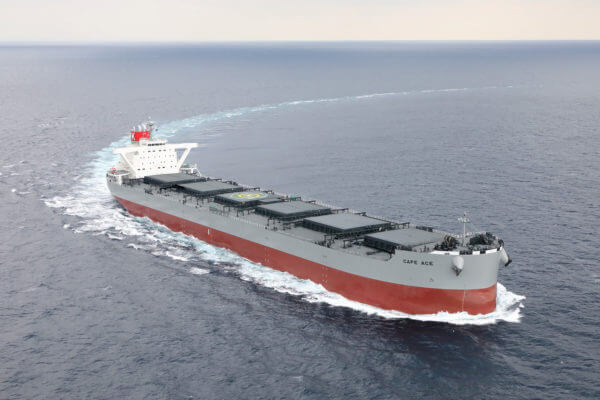
It is predicted that the 7 Trillion USD per year fossil fuel energy market would shrink to a few hundred billion USD per year with a society powered by Liquid Fission Thorium and LFTBs. This is an obvious disincentive for incumbents to do anything but to obfuscate and delay. For the true scale of these numbers, that means that a world powered by Liquid Fission Thorium energy would require only one ship like the one below to carry ALL WORLD’s Energy for ONE year.
100,00 DWT Bulk Carrier Cape Ace
You can see that obfuscation at work here with both Wired and the Bulletin in 2019 on USA presidential candidate Andrew Yang:
The half truths and lies are difficult, if not impossible, for the layperson to identify. We contacted one of Andrew’s advisory team members and confirmed Andrew supports Liquid Fission Thorium, and was committing several billion USD to have USA’s energy footprint 100% on the technology by 2030. Technically very doable. Politically, not.
It is important to recognise the ecological and economic footprint of energy from Thorium (a substance as common as lead) as being much smaller than even uranium. In the article link above (the Japanese translation one) there are three slides that demonstrate the significant benefits Thorium has over uranium. These slides are repeated below.
Thorium and Uranium Compared Slide 1 of 3Thorium and Uranium Compared Slide 2 of 3Thorium and Uranium Compared Slide 3 of 3
The IAEA report TE1450 from 2005 is an excellent read. It says Thorium is not an issue and is a good prospect for energy – back in 2005. Once the physics is proven it doesn’t need to be “upgraded” every 6 months like an iPhone.
And yes, Thorium doesn’t explode. “Walk away safe” is a suitable term for Liquid Fission Technology and LFTBs.
Attached below is a brief summary of “Why Thorium didn’t take off” by Bruce Hoglund, 5 November 2010. It’s an excellent starting point for data gathering and research – and not “Wikipedia”. Wikipedia was used as partial evidence why the United Kingdom should’t use Thorium for energy. Around 2012 in a UK government 1.5m GBP funded “study”, rubbished Thorium and directly contradicted the advice of the IAEA’s TE 1450 report.
The information here is but the tip of the iceberg, however it gives an excellent starting point. There are of course, many, many others who can contribute considerably for a balanced and objective article or articles on Thorium for our energy future with LFTBs. And with today’s communications technology, such conversations are only but a few key strokes away.
Burning stuff is old tech.
Star Trek technology is where we have to be now. Fission does that, especially Liquid Fission Thorium Energy Technology and Liquid Fission Thorium Burners – LFTBs.
Uncle Martin would be proud. Nanu, nanu!
Post created following a 2 hour interview between Associated Press representative for Japan, Ms. Yuri Kageyama and chairman and founder of The Thorium Network, Jeremiah Josey
Since the 1960’s Turkey were trying to get involved with nuclear energy. Turkey was one of the countries that participated in the International Conference on the Peaceful Uses of Atomic Energy, held in Geneva in 1955 September. There is no doubt that Turkey wants to use nuclear energy for energy production. In Turkey, there are many experts that have knowledge about nuclear fission technology. Dr. Reşat Uzmen is one of the most important people who is experienced in the nuclear fuel area. During the interview, his ideas and visions enlighten us about the future of Molten Salt Fission Technology. Here is another instructive interview for building a MSR!
The Atoms for Peace symbol was placed over the door to the American swimming pool reactor building during the 1955 International Conference on the Peaceful Uses of Atomic Energy in Geneva, often called the Atoms for Peace conference.
Rana President of the Student Guild The Thorium Network
Mr. Reşat, can you tell us a little about yourself?
I graduated from İstanbul Technical University (İTU) in the chemical engineering department. I did my master’s degree in İTU also. As soon as I finished the department I became a researcher in The Çekmece Nuclear Research and Training Center, known as ÇNAEM. My research was about how uranium could be treated to obtain an uranium concentrate. I did my doctor’s degree in that topic. Back then, it was so hard to get information because it is a delicate technology. That’s why we did the research by ourselves. Think about that: there was no internet! There was a library in ÇNAEM, it still remains there. All the reports that were collected from all over the world were kept here. We benefit from those reports that were about uranium and thorium. In addition, getting chemicals was difficult. The ores that we were working on were coming from Manisa so mine was tough to process. Despite all these obstacles Turkey needed uranium so we have done what has to be done. I am the founder of “the nuclear fuel technology department in ÇNAEM”. This department was focused on producing uranium fuel that could be ready for fuelling and we did it. We produced uranium pellets by ourselves in our laboratories. We did research about ore sorting of thorium and how it can be used in nuclear reactors. Now I am working as a nuclear technology director at FİGES.
Dr. Reşat Uzmen, Thorium NTE Field in Burdur Turkey
“Turkey is capable of designing its own reactor now!”
Dr. Reşat Uzmen
What are your thoughts on Turkey’s nuclear energy adventure? Although nuclear engineering education has been given at Hacettepe University since 1982, Turkey has never been able to gain an advantage in nuclear energy. What could be the main reasons for this?
Nuclear energy needs government support and government incentive. Government policy must include nuclear energy. In Turkey, nuclear energy was too personal. A government is formed then a team becomes the charge of the Turkey Atomic Energy Agency and this team is working hard, trying to encourage people about nuclear energy but then the new government is formed and the team is changed. Unfortunately, this is how it is done in Turkey. Also, you need money to build reactors. There were some countries that try to build a nuclear reactor in Turkey. Once CANDUs was very popular in Turkey. Canadians supported us a lot. Argentineans came with CAREM design and wanted to develop the design with Turkey also they wanted to build CAREM in Turkey, it was a great offer but the politicians at that time were not open up to this idea. Nuclear energy must be government policy and it should not be changed by different governments.
As you know, there is a PWR-type reactor under construction in cooperation with Rosatom and Akkuyu in our country. Do you think Turkey’s first reactor selection was the right choice?
This cooperation is not providing us any nuclear technology. When The Akkuyu Nuclear Power Plant is finished we will have a nuclear reactor that is operating in Turkey but we can not get any nuclear technology transformation. Right now Turkey can not construct the sensitive components of a nuclear reactor. Akkuyu is like a system that produces energy for Turkey. It would be the same thing if Russia build that plant in a place that is near Turkey. In addition, there is the fate of spent fuels. Russia takes away all the spent fuels, these spent fuels can be removed from Turkey in two ways: by water, starting from the Akkuyu harbor, the ship will pass through the Turkish straits, then pass to the Black Sea and pass through the Novorossiysk harbor to reach Siberia and by land, from Akkuyu it will arrive in Samsun or Trabzon then by water the ship will arrive in Siberia. I suppose spent fuels are going to be transported by water.
What are your thoughts on molten salt reactors?
Molten Salt Reactor is a Gen. 4 reactor and has a lot of advantages. First of all, the fuel of the MSR is molten salt so it is a liquid fuel. Since I am interested in the fuel production part of nuclear energy I am aware of the challenges of solid fuel production. Having liquid fuel is a big virtue. Liquid fuel can be ThF4-UF4. The fuel production step can proceed as: UF4 may be imported as enriched uranium. If you have the technology then UF₆ may be imported as enriched uranium then UF₆ can be converted to UF4. After that step fabrication of the liquid fuel is easier than solid fuel. Second, MSR has a lot of developments in the safety systems of a nuclear reactor. There is no fuel melting danger because it is already melted. The liquid fuel is approximately 700 °C. The important point is molten salt may freeze. If fuel temperature is below approximately 550°C the fuel becomes solid we don’t want that to happen. Also, the fuel has a negative temperature coefficient which means that as the temperature of the fuel rises reactivity of the fuel is going to decrease. There is a freeze plug at the bottom of the core. If the core overheats the freeze plug will melt and the contents of the core will be dropped into a containment tank fed by gravity. This is a precaution against the loss of coolant accident. One of the other advantages is reprocessing opportunity. It is possible with helium to remove volatile fission products from the reactor core. Tritium can be a problem but if the amount of tritium is below the critical level then it wouldn’t be a problem.
” Molten Salt Reactors are advantageous in many ways. The fuel is already melted, freeze plug is going to melt in case of an overheating issue, reproccessing is easier than the solid fuel. ”
FİGES took on the task of designing MSR’s heat exchangers in the SAMOFAR project and your designs were approved. Can you talk a bit about heat exchangers? What are the differences with a PWR exchanger? Why did it need to be redesigned?
There are a lot of differences between a PWR heat exchanger and an MSR heat exchanger. The basic difference is, that in a PWR heat exchanger steam is produced from water. MSR heat exchanger is working with molten salt to produce steam. FİGES finished calculations like the flow rate of the molten salt, the temperature of the molten salt, etc. for a heat exchanger of SAMOFAR. The heat exchanger is made of a material that is the same as the reactor core. In SAMOFAR, Hastelloy is used but boron carbide sheeting may be used for the heat exchanger.
Can you talk a little bit about your collaboration with Thorium Network?
The Founder of the Thorium Network Jeremiah has contacted FİGES about 5 months ago. We met him in one of the FİGES offices which are located in İstanbul. We have discussed what we have done in Turkey thus far. We signed an agreement about sharing networks. We share the thorium and molten salt reactor-based projects with them and they do the same.
If the idea of building an MSR in Turkey is accepted, where will FİGES take part in this project?
As FİGES, building an MSR in Turkey has two steps. The first step is about design. To design a reactor you need software. The existing codes are for solid fuel. First of all the codes that are going to be used for liquid fuel must be developed. There are companies that work to develop required software all around the world. We want to take part in the design step as FİGES. After the design is finished the second step comes. The second step is building the reactor. FİGES doesn’t have the base to build a reactor but an agreement can be made with companies that can build a nuclear power plant.
Do you have any advice you can give to nuclear power engineer candidates who want to work on MSR? What can students do about it?
There are tons of documents about Molten Salt Reactor Technology. These documents are about the material of the reactor core, software codes, design, etc. A student can find everything about MSR on the internet. In addition to this, students should follow the Denmark-based company that is called “Seaborg“. They have a compact molten salt reactor design. Also, there is another MSR design called “ThorCon“. Students can follow the articles, presentations, and events about these two MSR designs. As I said, students must research and follow the literature about Molten Salt Fission Technology.
. . .
It was a great opportunity for me to meet Mr. Reşat who has been working to develop nuclear energy in Turkey. I would like to thank him for his time and great answers.
As students, we are going to change the world step by step with Molten Salt Fission Technology by our side. We are going to continue doing interviews with key people in nuclear energy and MSR!
Post created by Jeremiah Josey and the team at The Thorium Network
この記事は、2022年3月14日にプロイセンの一般新聞Preußische Allgemeine Zeitungによって公開されました。著作権表示:教育目的でフェアユースを適用する。 / This article published 14 March 2022 by Preußische Allgemeine Zeitung, the Prussian General Newspaper. Copyright notice: applying fair use for educational purposes.
THORIUM MOLTEN SALT REACTORS Nuclear reactors in which the nuclear fuel is in the form of molten salt offer a wealth of advantages. A test plant will go into operation in China in the near future.
The raw material is cheap and available worldwide, not even cooling water is needed and the waste is less and decays much faster than conventional nuclear waste: Thorium technology stands for a new quality of the use of nuclear energy
In the Hongshagang Industrial Park near Wuwei in the central Chinese province of Gansu, a pilot plant will go into operation in the near future, which has the potential to revolutionize energy production not only in the Middle Kingdom, but throughout the world. No more carbon dioxide emissions as a result of the use of fossil fuels, no more landscape degradation by wind turbines, no mass use of batteries from environmentally harmful production, no power outages in calm winds and clouds, but also no radiation risk due to reactor accidents, all this promises the innovative Thorium-based Molten Salt Reactor-Liquid Fuel No. 1 (TMSR-LF1) of the Shanghai Institute of Applied Physics, which advocates a new quality of use of the Nuclear energy is in place and this should give it a kind of “green coat of paint”.
The operation of the Thorium Molten Salt reactor TMSR-LF1 is relatively simple. The weakly radioactive element Thorium is dissolved in molten salt and bombarded with neutrons. This produces the isotope uranium 233, the fission of which releases large amounts of heat. So the reactor produces its own fuel. This process ultimately brings much more safety than the operation of classic nuclear reactors (see below) and also a variety of other advantages.
First, only extremely small amounts of Thorium 232 are needed. The energy content of one ton of Thorium corresponds to that of 200 tons of uranium metal or 28 million tons of coal, as the Italian Nobel Laureate in Physics Carlo Rubbia calculated.
Secondly, there are larger Thorium deposits all over the world. In principle, the element occurs in the rock crust as often as lead and is also produced as a waste product in the extraction of rare earths. That’s why it’s not expensive. On the other hand, there is a risk of shortages and price explosions for uranium in the future, because the number of conventional nuclear power plants has recently increased significantly again.
Thirdly, a Thorium Molten Salt reactor can be built virtually anywhere, including desert regions, for example. Because it does not require any cooling water.
Fourthly, its operation also generates significantly less radioactive waste. In addition, more than 99 percent of the nuclear waste from the TMSR-LF1 is said to have decayed into harmless isotopes after 300 years at the latest. Furthermore, it is possible to process the small residual amounts of longer radiating material later in more advanced molten salt reactors and thus completely neutralise. By way of comparison, conventional nuclear reactors powered by uranium produce long-lived radioactive fission products with half-lives of many thousands of years, even though only a small fraction of the nuclear fuel used is used.
Fifthly, the costs for the construction and operation of Thorium Molten Salt reactors are lower than those of the light-water reactors that are usually used. This is mainly due to the low operating pressure of the systems, which makes numerous safety precautions superfluous, as well as the fact that no fuel rods have to be procured.
Sixthly, reactors such as the TMSR-LF1 can also be operated extremely economically because not only uranium 233 is incubated in them, but also many other radioactive fission products are produced, which are required, for example, in nuclear medicine. And some of the radionuclides even turn into highly sought-after elements such as rubidium, zirconium, molybdenum, ruthenium, palladium, neodymium and samarium. Likewise, the noble gas xenon is released, which is used, among other things, as an insulation medium as well as in laser and aerospace technology.
The technology underlying the TMSR-LF1 was not invented in China, but in the USA. As early as 1954, the Air Force experimented with a small molten salt reactor to power long-range bombers. However, the project came to a rapid end when the United States had intercontinental ballistic missiles. Likewise, at the beginning of the 1970s, West German scientists from the Jülich nuclear research facility presented some studies on molten salt reactors, which ultimately received no attention because of the negative attitude of the then head of reactor development, Rudolf Schulten [main developer of the pebble bed reactor design, a non fluid fuel system].
Another reason for the lack of acceptance of the alternative reactor type was the absolute lack of interest of the nuclear industry around the world. With the classic nuclear reactors, excellent money could be earned, and no one wanted to do without the income from the production of fuel rods. Therefore, all sorts of pretended arguments against the use of molten salt reactors were brought into play, such as the allegedly higher risk of corrosion and the hypothetical danger that someone will misuse the reactors to produce weapons-grade fissile material.
This has not prevented the People’s Republic of China from investing the equivalent of 400 million euros in the development of the TMSR-LF1 since 2011. After all, Beijing’s leaders are pursuing the ambitious goal of making the Middle Kingdom “climate neutral” by 2050, and the “perfect technology” of molten salt reactors could prove absolutely indispensable.
250MW溶融塩核分裂エネルギー発電設備 / 250 MW Molten Salt Fission Energy Power Facility
The reactor, which is now to be tested on the edge of the Gobi Desert, initially has a nominal output of only two megawatts. This means that it can only supply around 1000 households with electricity. If the design principle of the TMSR-LF1 proves successful, however, the first prototype of a Thorium Molten Salt reactor with an output of 373 megawatts would go into operation by around 2030, which will then be followed by identical plants throughout China in rapid succession. It remains to be seen whether Germany will still remain in its abstinence from nuclear power at this time or whether it will now also rely on “green nuclear energy”.
The Preußische Allgemeine Zeitung (PAZ) is a unique voice in the German media landscape. Week after week, it reports on current events in politics, culture and business and takes a stand on the fundamental developments in our society. In their work, the editors feel committed to the traditional Prussian canon of values: The old Prussia stood and stands for religious and ideological tolerance, for love of homeland and open-mindedness, for the rule of law and intellectual honesty, and not least for reason-guided action in all areas of society . With this in mind, the PAZ maintains an open culture of debate, which passionately represents its own point of view and respects the opinions of those who think differently – and also lets them have their say. Beyond day-to-day events, the PAZ feels committed to remembering historical Prussia and caring for its cultural heritage. With these principles, the Preußische Allgemeine Zeitung is a unique journalistic bridge between yesterday, today and tomorrow, between the countries and regions in West and East – as well as between the different social currents in our country.
Translation courtesy of Duck Duck Go – Your personal data is nobody’s business.
This article published 14 March 2022 by Preußische Allgemeine Zeitung, the Prussian General Newspaper. Copyright notice: applying fair use for educational purposes.
THORIUM-FLÜSSIGSALZREAKTOREN Kernreaktoren, in denen der Kernbrennstoff in Form geschmolzenen Salzes vorliegt, bieten eine Fülle von Vorteilen. In China wird in nächster Zukunft eine Versuchsanlage in Betrieb gehen
THORIUM MOLTEN SALT REACTORS Nuclear reactors in which the nuclear fuel is in the form of molten salt offer a wealth of advantages. A test plant will go into operation in China in the near future.
„Perfekte Technologie“
Der Ausgangsstoff ist billig und weltweit vorhanden, nicht einmal Kühlwasser wird benötigt und der Müll wird weniger und verfällt viel schneller als herkömmlicher Atommüll: Die Thorium-Technologie steht für eine neue Qualität der Nutzung der Kernenergie
Wolfgang Kaufmann, 23.01.2022
“Perfect technology”
The raw material is cheap and available worldwide, not even cooling water is needed and the waste is less and decays much faster than conventional nuclear waste: Thorium technology stands for a new quality of the use of nuclear energy
Wolfgang Kaufmann 23.01.2022
Im Hongshagang-Industriepark bei Wuwei in der zentralchinesischen Provinz Gansu wird in nächster Zukunft eine Versuchsanlage in Betrieb gehen, die das Potential besitzt, nicht nur die Energieerzeugung im Reich der Mitte, sondern in der ganzen Welt zu revolutionieren. Keine Kohlendioxidemissionen mehr infolge der Nutzung fossiler Brennstoffe, keine Landschaftsverschandelung durch Windräder, kein massenhafter Einsatz von Akkus aus umweltschädlicher Produktion, keine Stromausfälle bei Windstille und Bewölkung, aber auch kein Strahlungsrisiko aufgrund von Reaktorhavarien, alles das verspricht der innovative Thorium-based Molten Salt Reactor-Liquid Fuel No. 1 (TMSR-LF1) des Shanghai Institute of Applied Physics, der für eine neue Qualität der Nutzung der Kernenergie steht und dieser quasi einen „grünen Anstrich“ geben soll.
In the Hongshagang Industrial Park near Wuwei in the central Chinese province of Gansu, a pilot plant will go into operation in the near future, which has the potential to revolutionize energy production not only in the Middle Kingdom, but throughout the world. No more carbon dioxide emissions as a result of the use of fossil fuels, no more landscape degradation by wind turbines, no mass use of batteries from environmentally harmful production, no power outages in calm winds and clouds, but also no radiation risk due to reactor accidents, all this promises the innovative Thorium-based Molten Salt Reactor-Liquid Fuel No. 1 (TMSR-LF1) of the Shanghai Institute of Applied Physics, which advocates a new quality of use of the Nuclear energy is in place and this should give it a kind of “green coat of paint”.
Die Funktionsweise des Thorium-Flüssigsalzreaktors TMSR-LF1 ist relativ einfach. Das schwach radioaktive Element Thorium wird in Flüssigsalz aufgelöst und mit Neutronen beschossen. Dadurch entsteht das Isotop Uran 233, dessen Spaltung große Wärmemengen freisetzt. Der Reaktor produziert also seinen Brennstoff selbst. Dieses Verfahren bringt letztlich sehr viel mehr Sicherheit als der Betrieb klassischer Kernreaktoren (siehe unten) und darüber hinaus auch noch eine Vielzahl weiterer Vorteile.
The operation of the Thorium Molten Salt reactor TMSR-LF1 is relatively simple. The weakly radioactive element Thorium is dissolved in molten salt and bombarded with neutrons. This produces the isotope uranium 233, the fission of which releases large amounts of heat. So the reactor produces its own fuel. This process ultimately brings much more safety than the operation of classic nuclear reactors (see below) and also a variety of other advantages.
Sechs Vorteile
Six Benefits
Zum Ersten werden nur äußerst geringe Mengen an Thorium 232 benötigt. Denn der Energiegehalt einer Tonne Thorium entspricht der von 200 Tonnen Uran-Metall oder 28 Millionen Tonnen Kohle, wie der italienische Physik-Nobelpreisträger Carlo Rubbia errechnete.
First, only extremely small amounts of Thorium 232 are needed. The energy content of one ton of Thorium corresponds to that of 200 tons of uranium metal or 28 million tons of coal, as the Italian Nobel Laureate in Physics Carlo Rubbia calculated.
Zum Zweiten gibt es überall auf der Welt größere Thorium-Vorkommen. Im Prinzip kommt das Element in der Gesteinskruste ähnlich häufig vor wie Blei und fällt zudem als Abfallprodukt bei der Förderung von Seltenen Erden an. Deshalb ist es auch nicht teuer. Dahingegen drohen perspektivisch Verknappungen und Preisexplosionen beim Uran, weil die Zahl der konventionellen Kernkraftwerke neuerdings wieder deutlich zunimmt.
Secondly, there are larger Thorium deposits all over the world. In principle, the element occurs in the rock crust as often as lead and is also produced as a waste product in the extraction of rare earths. That’s why it’s not expensive. On the other hand, there is a risk of shortages and price explosions for uranium in the future, because the number of conventional nuclear power plants has recently increased significantly again.
Zum Dritten kann ein Thorium-Flüssigsalzreaktor praktisch überall errichtet werden, also beispielsweise auch in Wüstenregionen. Denn er benötigt keinerlei Kühlwasser.
Thirdly, a Thorium Molten Salt reactor can be built virtually anywhere, including desert regions, for example. Because it does not require any cooling water.
Zum Vierten entstehen bei seinem Betrieb auch deutlich weniger radioaktive Abfälle. Außerdem sollen über 99 Prozent des Atommülls aus dem TMSR-LF1 nach spätestens 300 Jahren in harmlose Isotope zerfallen sein. Des Weiteren besteht die Möglichkeit, die geringen Restmengen an länger strahlendem Material später in fortgeschritteneren Flüssigsalzreaktoren zu verarbeiten und damit gänzlich zu neutralisieren. Zum Vergleich: In mit Uran betriebenen konventionellen Atommeilern fallen langlebige radioaktive Spaltprodukte mit Halbwertszeiten von vielen tausend Jahren an, obwohl nur ein kleiner Bruchteil des verwendeten Kernbrennstoffs genutzt wird.
Fourthly, its operation also generates significantly less radioactive waste. In addition, more than 99 percent of the nuclear waste from the TMSR-LF1 is said to have decayed into harmless isotopes after 300 years at the latest. Furthermore, it is possible to process the small residual amounts of longer radiating material later in more advanced molten salt reactors and thus completely neutralise. By way of comparison, conventional nuclear reactors powered by uranium produce long-lived radioactive fission products with half-lives of many thousands of years, even though only a small fraction of the nuclear fuel used is used.
Zum Fünften liegen die Kosten für den Bau und Betrieb von Thorium-Flüssigsalzreaktoren niedriger als bei den sonst zumeist verwendeten Leichtwasser-Reaktoren. Das resultiert vor allen aus dem geringen Betriebsdruck der Anlagen, der zahlreiche Sicherheitsvorkehrungen überflüssig macht, sowie der Tatsache, dass keine Brennstäbe beschafft werden müssen.
Fifthly, the costs for the construction and operation of Thorium Molten Salt reactors are lower than those of the light-water reactors that are usually used. This is mainly due to the low operating pressure of the systems, which makes numerous safety precautions superfluous, as well as the fact that no fuel rods have to be procured.
Zum Sechsten lassen sich Reaktoren wie der TMSR-LF1 auch deshalb ausgesprochen wirtschaftlich betreiben, weil in ihnen nicht nur Uran 233 erbrütet wird, sondern zusätzlich noch viele andere radioaktive Spaltprodukte entstehen, die zum Beispiel in der Nuklearmedizin benötigt werden. Und manche der Radionuklide verwandeln sich sogar in ausgesprochen begehrte Elemente wie Rubidium, Zirconium, Molybdän, Ruthenium, Palladium, Neodym und Samarium. Desgleichen wird das Edelgas Xenon frei, das unter anderem als Isolationsmedium sowie in der Laser- und Raumfahrttechnik zum Einsatz kommt.
Sixthly, reactors such as the TMSR-LF1 can also be operated extremely economically because not only uranium 233 is incubated in them, but also many other radioactive fission products are produced, which are required, for example, in nuclear medicine. And some of the radionuclides even turn into highly sought-after elements such as rubidium, zirconium, molybdenum, ruthenium, palladium, neodymium and samarium. Likewise, the noble gas xenon is released, which is used, among other things, as an insulation medium as well as in laser and aerospace technology.
Der Krieg ist aller Dinge Vater
War is the father of all things
Erfunden wurde die dem TMSR-LF1 zugrunde liegende Technologie nicht in China, sondern in den USA. Dort experimentierten die Luftstreitkräfte bereits ab 1954 mit einem kleinen Flüssigsalzreaktor, der zum Antrieb von Langstreckenbombern dienen sollte. Das Projekt fand jedoch ein rapides Ende, als die Vereinigten Staaten über Interkontinentalraketen verfügten. Ebenso legten bundesdeutsche Wissenschaftler aus der Kernforschungsanlage Jülich zu Beginn der 1970er Jahre einige Studien über Flüssigsalzreaktoren vor, die letztlich wegen der ablehnenden Haltung des damaligen Leiters der Reaktorentwicklung, Rudolf Schulten, keine Beachtung fanden.
The technology underlying the TMSR-LF1 was not invented in China, but in the USA. As early as 1954, the Air Force experimented with a small molten salt reactor to power long-range bombers. However, the project came to a rapid end when the United States had intercontinental ballistic missiles. Likewise, at the beginning of the 1970s, West German scientists from the Jülich nuclear research facility presented some studies on molten salt reactors, which ultimately received no attention because of the negative attitude of the then head of reactor development, Rudolf Schulten [main developer of the pebble bed reactor design, a non fluid fuel system].
Ein weiterer Grund für die fehlende Akzeptanz des alternativen Reaktortyps war das absolute Desinteresse der Nu-klearindustrie rund um die Welt. Mit den klassischen Atommeilern ließ sich hervorragend Geld verdienen, und auf die Einnahmen aus der Herstellung von Brennstäben wollte auch niemand verzichten. Deshalb wurden allerlei vorgeschobene Argumente gegen den Einsatz von Flüssigsalzreaktoren ins Spiel gebracht, wie beispielsweise das angeblich höhere Korrosionsrisiko und die hypothetische Gefahr, dass jemand die Meiler missbraucht, um waffenfähiges Spaltmaterial zu produzieren.
Another reason for the lack of acceptance of the alternative reactor type was the absolute lack of interest of the nuclear industry around the world. With the classic nuclear reactors, excellent money could be earned, and no one wanted to do without the income from the production of fuel rods. Therefore, all sorts of pretended arguments against the use of molten salt reactors were brought into play, such as the allegedly higher risk of corrosion and the hypothetical danger that someone will misuse the reactors to produce weapons-grade fissile material.
Dies hat die Volksrepublik China nicht davon abgehalten, seit 2011 umgerechnet 400 Millionen Euro in die Entwicklung des TMSR-LF1 zu investieren. Schließlich verfolgt die Pekinger Führung das ehrgeizige Ziel, das Reich der Mitte bis 2050 „klimaneutral“ zu machen, und dabei könnte sich die „perfekte Technologie“ der Flüssigsalzreaktoren als absolut unverzichtbar erweisen.
This has not prevented the People’s Republic of China from investing the equivalent of 400 million euros in the development of the TMSR-LF1 since 2011. After all, Beijing’s leaders are pursuing the ambitious goal of making the Middle Kingdom “climate neutral” by 2050, and the “perfect technology” of molten salt reactors could prove absolutely indispensable.
250 MW Molten Salt Fission Energy Power Facility
Der Reaktor, der nun am Rande der Wüste Gobi erprobt werden soll, hat erst einmal nur eine Nennleistung von zwei Megawatt. Damit kann er lediglich um die 1000 Haushalte mit Strom versorgen. Sollte sich das Konstruktionsprinzip des TMSR-LF1 bewähren, dann würde allerdings bis etwa 2030 der erste Prototyp eines Thorium-Flüssigsalzreaktors mit 373 Megawatt Leistung in Betrieb gehen, dem dann in schneller Folge identische Anlagen in ganz China folgen. Ob Deutschland zu diesem Zeitpunkt immer noch in seiner Atomkraft-Abstinenz verharrt oder inzwischen auch auf die „Grüne Kernenergie“ setzt, bleibt abzuwarten.
The reactor, which is now to be tested on the edge of the Gobi Desert, initially has a nominal output of only two megawatts. This means that it can only supply around 1000 households with electricity. If the design principle of the TMSR-LF1 proves successful, however, the first prototype of a Thorium Molten Salt reactor with an output of 373 megawatts would go into operation by around 2030, which will then be followed by identical plants throughout China in rapid succession. It remains to be seen whether Germany will still remain in its abstinence from nuclear power at this time or whether it will now also rely on “green nuclear energy”.
Die Preußische Allgemeine Zeitung (PAZ) ist eine einzigartige Stimme in der deutschen Medienlandschaft. Woche für Woche berichtet sie über das aktuelle Zeitgeschehen in Politik, Kultur und Wirtschaft und bezieht zu den grundlegenden Entwicklungen unserer Gesellschaft Stellung. In ihrer Arbeit fühlt sich die Redaktion dem traditionellen preußischen Wertekanon verpflichtet: Das alte Preußen stand und steht für religiöse und weltanschauliche Toleranz, für Heimatliebe und Weltoffenheit, für Rechtstaatlichkeit und intellektuelle Redlichkeit sowie nicht zuletzt für ein von der Vernunft geleitetes Handeln in allen Bereichen der Gesellschaft. In diesem Sinne pflegt die PAZ eine offene Debattenkultur, die gleichermaßen den eigenen Standpunkt mit Leidenschaft vertritt wie sie die Meinung von Andersdenkenden achtet – und diese auch zu Wort kommen lässt. Jenseits des Tagesgeschehens fühlt sich die PAZ der Erinnerung an das historische Preußen und der Pflege seines kulturellen Erbes verpflichtet. Mit diesen Grundsätzen ist die Preußische Allgemeine Zeitung eine einzigartige publizistische Brücke zwischen dem Gestern, Heute und Morgen, zwischen den Ländern und Regionen in West und Ost – sowie zwischen den verschiedenen gesellschaftlichen Strömungen in unserem Lande.
The Preußische Allgemeine Zeitung (PAZ) is a unique voice in the German media landscape. Week after week, it reports on current events in politics, culture and business and takes a stand on the fundamental developments in our society. In their work, the editors feel committed to the traditional Prussian canon of values: The old Prussia stood and stands for religious and ideological tolerance, for love of homeland and open-mindedness, for the rule of law and intellectual honesty, and not least for reason-guided action in all areas of society . With this in mind, the PAZ maintains an open culture of debate, which passionately represents its own point of view and respects the opinions of those who think differently – and also lets them have their say. Beyond day-to-day events, the PAZ feels committed to remembering historical Prussia and caring for its cultural heritage. With these principles, the Preußische Allgemeine Zeitung is a unique journalistic bridge between yesterday, today and tomorrow, between the countries and regions in West and East – as well as between the different social currents in our country.
Translation courtesy of Duck Duck Go – Your personal data is nobody’s business.
Post by Jeremiah Josey and the team at The Thorium Network
More than 50 years since the MSRE ended in Oak Ridge, Tennessee, USA, another starts up. This time in China. Whilst Oak Ridge’s machine was 8 MWt, China’s is 2MWt. This article by Gernot Kramper was published in the German Star online magazine on September 20, 2021. Well done China.
This is page is where our news articles will be published. Those related to our project, and those related to the industries we work in.
Content by Jeremiah Josey and his team at TheThorium.Network
There’s quite a lot going on from Rare Earths mining and processing, Fluorination of fuels, to Molten Salt Modelling Technology, to regulations and new laws from around the world.
Unlock Unfiltered Thorium Intel: Rare Updates, Zero Fluff.
You know the truth: Thorium is the only path to energy freedom. But the real breakthroughs happen in the labs and the supply chains, not in the headlines.
We only drop these newsletters when we have verified, game-changing intelligence on the liquid fission revolution.
The Covenant:
Frequency: We send this only when it matters (rarely).
The Inner Circle: For daily pulse checks, follow our [LinkedIn].
To fuel the mission and get exclusive deep dives, join us on [Patreon].
For real buzz jump on board our [Telegram] to get the Fission Vibe real-time with daily posts from all around the world.