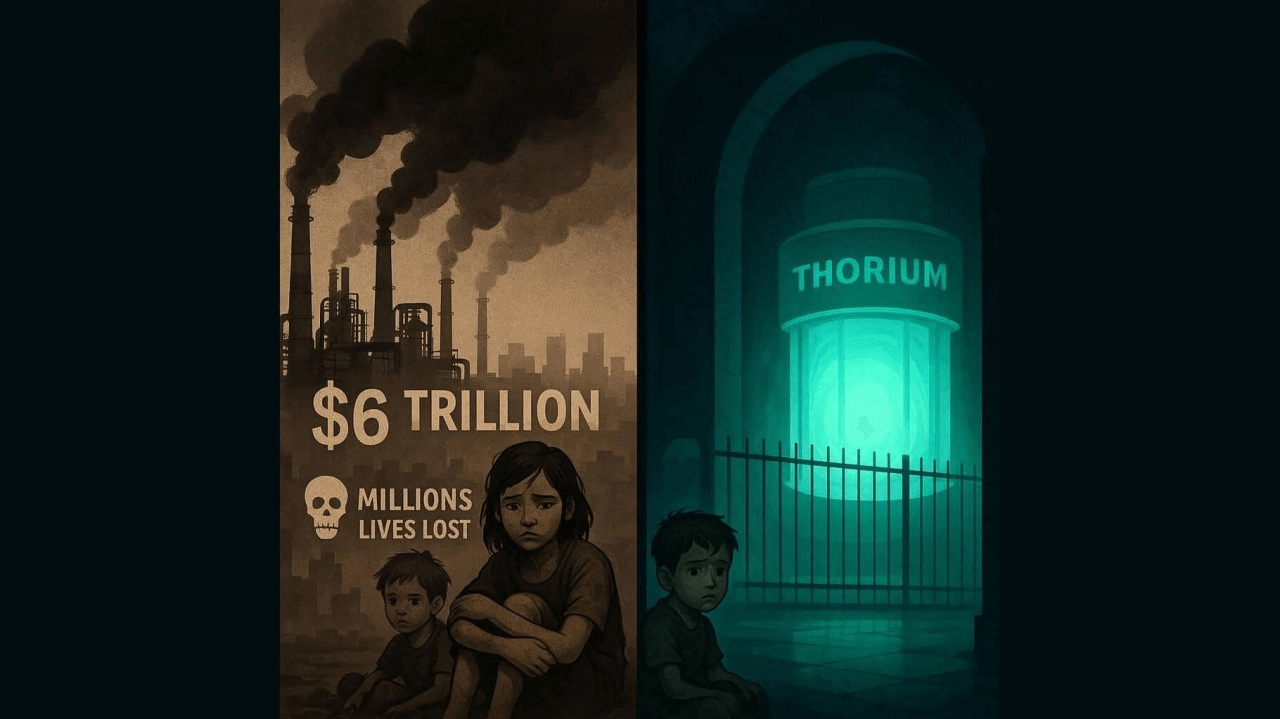
Burning fossil fuels claims nearly 10 million lives annually through air pollution, representing one in five global deaths from PM2.5 particles that trigger heart disease, strokes, COPD, and diabetes. Yet the industry pockets USD 6.7 trillion in yearly revenue, brazenly prioritising shareholder dividends over human lives in a profit-first model that externalizes the death toll onto vulnerable populations.reddit+5
Shocking Death Toll
Harvard research pins 8.7 million deaths in 2018, with earlier peaks at 10.2 million in 2012, doubling WHO’s prior estimates by tracing pollution directly to fossil combustion. China (3.9 million) and India (2.5 million) bear the heaviest burden, but North America and Europe also suffer significant losses, proving no escape from this profit-fueled crisis.weforum+4
Hidden Health Crisis
These tiny PM2.5 particles from coal, oil, and gas pierce lungs and bloodstreams, driving 30% of ischemic heart deaths, 16% of strokes, and 16% of COPD cases worldwide. Fossil fuels account for 61-82% of preventable pollution mortality, with even low exposures deadly and linked to worsened Covid-19 outcomes—all while industry leaders count their trillions.cnn+3
Fossil Fuel Profits: USD 6.7 Trillion Raked In Annually Amid 10 Million Deaths
The global fossil fuel sector generates USD 6.7 trillion in 2025 revenue from oil, gas, and coal—matching major economies—while deliberately externalizing nearly 10 million deaths to boost bottom lines. Oil and gas exploration alone hits USD 4 trillion, with giants like ExxonMobil exceeding USD 400 billion yearly, funneling billions into dividends instead of pollution controls that could save lives. marketreportanalytics+2
This profit-over-people calculus sees executives paid handsomely as societies bury the victims of their emissions. hsph.harvard+1
Urgent Policy Shift
China slashed particulates by half from 2012-2018, averting 2.5 million deaths without economic ruin—evidence that phasing out fossils saves lives faster than climate fixes alone. With alternatives booming, the industry’s USD 6.7T machine clings to combustion, valuing trillions in revenue over millions of lives. Demand accountability now. gaspgroup+3
What’s your stance? Profits before people? Comment below. #FossilFuelsKill #ProfitsOverLives #ClimateJustice #PublicHealth
Article by Jeremiah Josey, founder of The Thorium Network. Dated 13 December 2025
The website whatisnuclear.com/thorium-myths.html presents a series of arguments that attempts to cast doubt on the viability and advantages of Thorium-based Fission technology. We won’t dwell on the psychological tactics used—such as answering a different question to the headline “myth” or relying on technical jargon to create an aura of authority. They’re unnecessary distractions. And we don’t need to. Recent developments, particularly in China, have decisively demonstrated that the supposed technical hurdles previously cited are not only surmountable but are actively being overcome. China’s progress in Thorium Liquid Fission Burner (LFTB) technology reveals a future where energy independence is not just a goal, but a reality that will reshape global energy dynamics.
Addressing the “Myths” with Chinese Achievements
Myth #1: Thorium Burners were cancelled due to economics, not weapons. China’s Thorium Fission programme, launched in 2011 by the Chinese Academy of Sciences, has shown that with sustained investment and state support, economic barriers can be surpassed. The country has not only constructed a complete industrial supply chain for Thorium Fission machines but has also achieved the world’s first conversion of Thorium into uranium-233 within a their LFTB called “TMSR-LF1”. This achievement marks a pivotal step toward self-sustaining Fission cycles, driven by strategic energy security rather than mere economics. Link
Myth #2: Thorium Burners never need enrichment. While initial fissile material is required to start the process, China’s TMSR-LF1 machine has successfully bred uranium-233 from Thorium, proving that self-sustaining cycles are achievable. This milestone is a major leap toward reducing dependence on enriched uranium, making Thorium Liquid Fission Burners a cornerstone of China’s long-term energy strategy. Link
Myth #3: Thorium Burners cannot make bombs. The claim that Thorium Burners could be used to produce weapons-grade material is categorically false. The process of separating protactinium-233 from the fuel solution is technically complex, highly detectable, and practically impossible to achieve covertly. Moreover, the presence of uranium-232 and its intense gamma radiation makes handling and weaponisation not only hazardous but effectively unfeasible. China’s approach to Thorium Fission prioritises civilian energy and employs strict safeguards, ensuring that weaponisation is not a realistic concern. Link
Myth #4: Thorium is more abundant, but that’s not important. China’s discovery of over 1 million tons of Thorium and the mapping of 233 Thorium-rich zones highlight its strategic significance for energy security. For a country with limited uranium, Thorium’s abundance is not just important—it is essential. China’s road map targets commercial deployment by 2029, aiming to secure energy independence for hundreds of thousands of years. This will dramatically reduce China’s reliance on fossil fuels and lead to a significant decline in global demand for coal and oil. Link
Myth #5: Thorium Burners don’t uniquely make safer waste. China’s TMSR produces far fewer long-lived transuranic elements, and its waste decays much faster than that of conventional Fission machines. The technical capability for online fission product removal and passive safety is being proven in real-world operation, making Thorium Liquid Fission Burners a leader in reducing Fission waste hazards. Link
Myth #6: Thorium Burners and molten salt machines are the same thing. China’s programme combines both, but the advances in metallurgy and materials—such as the development of specialised alloys for molten salt environments—are critical. The United States historically restricted sales of Hasteloy N, a key material for liquid fission machines, to control technology spread. China has now overcome this by developing its own high-performance alloys, supported by Australia ensuring supply chain independence and technological leadership. Link
China’s Energy Independence and Global Impact
China’s Thorium Fission programme is not just about technological advancement; it is about energy independence for hundreds of thousands of years. The end of fossil fuels for China is in sight, and considering the country’s massive energy consumption, this will lead to a dramatic decline in global demand for coal and oil. China’s progress in Liquid Fission Thorium Burner technology is setting a new benchmark for advanced energy solutions worldwide, with the potential to transform global energy markets and reduce reliance on fossil fuels. Link
Australia’s Role in Supporting China
Australia has played a crucial role in supporting China’s Thorium Fission ambitions. Under the leadership of Professor Adi Paterson, Australia has become a key partner in the development and supply of Thorium and advanced materials for Liquid Fission Machines. This collaboration not only strengthens bilateral relations but also positions Australia as a vital contributor to the global shift toward sustainable energy solutions. Link
China’s achievements in Thorium Fission Burner technology have decisively refuted the notion that Thorium-based Fission is impractical or hindered by insurmountable technical challenges. The technical hurdles cited by critics globally are being overcome, and China’s progress is setting a new benchmark for advanced energy solutions worldwide. The future of energy is not just about technological innovation but about strategic independence and global sustainability. Link
Article by Jeremiah Josey, founder of The Thorium Network
A big sigh of relief as Japan finally kicks out the western phobia of clean, safe #fission energy. It’s taken 14 years but they’ve made it.
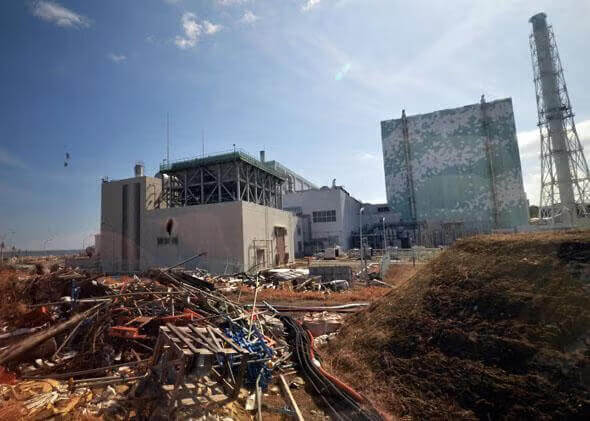
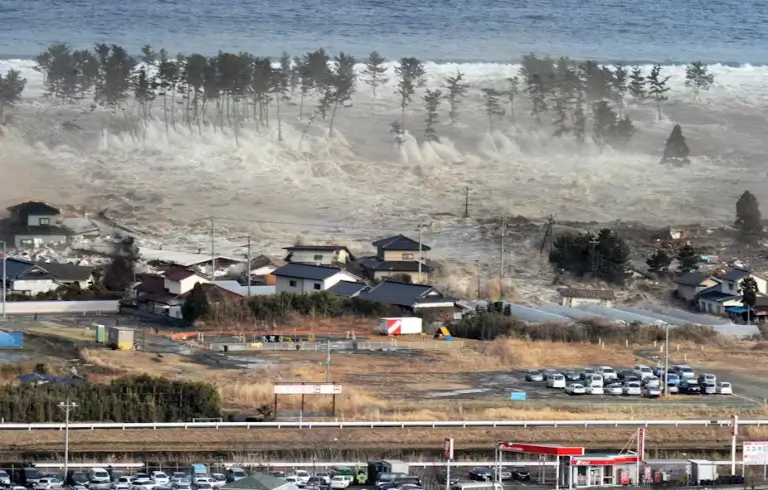
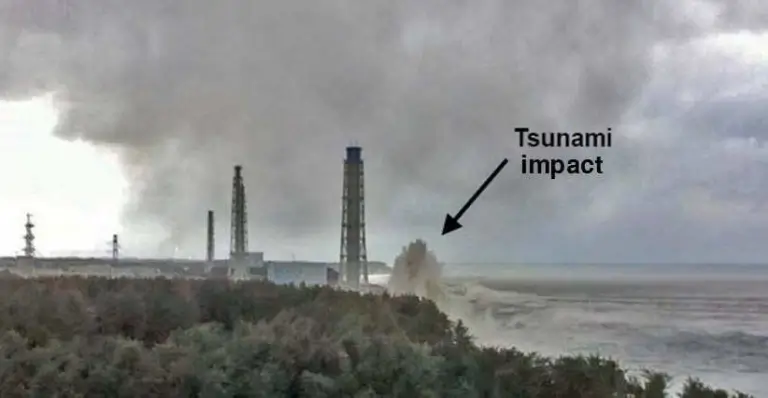
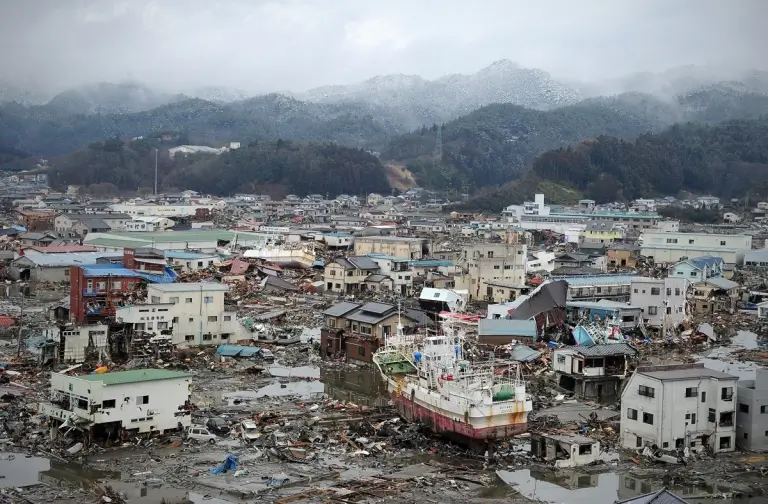
No one died from the minor incident that occurred at #TEPCO‘s #Fukushima#Daiichi#Nuclear Power Plant when the wave of water hit them on 11 March 2011. Yet the world shivered under their collective blankets when the lights went out on that bed time evening those many moons ago.
Japan has now found their torch – powered by #uranium and #plutonium – and again today they bravely find their way to the toilet in the middle of the night. The west seems intent on using bedpans…
There’s a silver lining to this story even brighter than the fission future Japan is turning back on. And that silver is Thorium. Just a few miles away, #China has been steadfast producing reliable secure Thorium energy for almost as long. And Japan is noticing.
Without the fanfare of hype from both sides.
🇯🇵 Japan’s Thorium Awakening: Inside Their Molten‑Salt Ambitions
Japan’s next-gen nuclear vision isn’t just about restarting reactors — it’s about rethinking what fission energy can be. While others fretted, Japan quietly doubled down on research that could transform nuclear safety, waste, and abundance.
At the heart of this is a Liquid Fission Thorium burner (LFTB) ambition.
1. Some MSR & Thorium Roots in Japan
• Japan’s research into MSRs actually has historical depth: IAEA‑sponsored work has looked at Th–233U cycles for molten salt reactors, including their use for transuranic waste reduction.
• At Kyoto University and other Japanese institutions, there have been proposals to build molten salt reactors using Thorium, such as the FUJI Molten Salt Reactor.
• According to Mitsui Strategic Studies, Japan is re-evaluating liquid fission as a technology for sustainable domestic resources.
Bottom line: Japan’s Thorium‑LFTB work is real.
2. Partnerships & Research Focus
Japanese research institutions (universities, national labs) are exploring critical MSR‑related technologies, like:
• Neutronic modeling of Th‑232 → U-233 cycles
• Materials that resist corrosion in hot molten salts
• Reactor vessel designs optimised for safety in earthquake-prone regions
• Online salt circulation and reprocessing concepts.
These partnerships help lay the foundation for a future Thorium-based industry.
3. Conceptual Thorium Burner for Waste Recycling
One of the most attractive ideas in Japanese MSR research is using Thorium‑salt reactors to burn transuranic waste (plutonium and other actinides) produced by conventional light-water reactors. This would:
• Reduce long-lived nuclear waste
• Generate clean energy
• Operate at low pressure, improving safety (no risk of steam‑pressure explosions)
• Use passive safety features.
🇨🇳 China’s Thorium LFTB: The Quiet Competitor
While Japan is preparing, China is already moving.
• Their TMSR‑LF1 liquid fission machine (2 MW thermal) received an operating licence in June 2023.
• This reactor achieved first criticality on October 11, 2023.
• In November 2025, SINAP (Shanghai Institute of Applied Physics) announced the first successful conversion of Thorium to uranium fuel inside this machine, with a conversion ratio of 10%.
• The TMSR‑LF1 design uses a fuel mix including under‑20% enriched uranium-235 and about 50 kg.
Message us if you want to see more detail about the efforts of these countries into Liquid Fission Thorium Burner technology – without doubt the best thing ever for humanity and our precious planet earth.
You can see the original article that promoted our work here on our Telegram channel:
In 1969, the United States was surging ahead with nuclear fission power, flipping the switch on three new reactors a year to electrify millions of homes. Fission energy promised a cheap, reliable, and clean source of power, with a footprint as small as a few Central Parks combined. Fast forward to 2025, and fission energy, though still one of the safest and cleanest energy sources, has been largely sidelined. Why?
The quiet, complex answer to this question lies in the billions—actually, trillions—of dollars the fossil fuel industry spends each year to keep fission energy suppressed. This strategic campaign to protect fossil fuel market share is a story woven through decades of fear-mongering, onerous regulations, and orchestrated myths largely funded by fossil fuel interests and their allies, including influential institutions such as the Rockefeller Institute.
A Global Campaign Against Fission Power
Fission energy’s limitations have less to do with safety or technology and more to do with economics and political influence. Fossil fuel companies, aware of nuclear power’s potential to disrupt their dominance, have poured immense resources into shaping public opinion and regulatory environments. For example, in Germany, a country known for its green-energy ambitions but also high industrial energy costs, the government publicly spent approximately 690 million euros in 2021 campaigning against cheaper French nuclear energy. The result? German industries, like its carmakers, suffered from higher energy prices, making them less competitive than their French counterparts powered predominantly by nuclear electricity.
This is just one part of a global pattern. Various studies and reports highlight how fossil fuel subsidies, lobbying, and marketing have weakened fission power ambitions across continents. In Australia, for example, government fossil fuel subsidies reached USD 14.9 billion in 2024–25, fuelling coal, gas, and oil production, while nuclear options remain politically marginalised despite its obvious and logical potential as a clean energy pillar.
Fossil Fuel Spending on Energy Suppression in 2025
Globally, fossil fuel subsidies and related expenditures to bolster oil, natural gas, and coal industries continue to rise. The International Energy Agency (IEA) reports that in 2025, governments and private interests worldwide will spend billions annually—estimated at over USD 1 trillion—on fossil fuel support measures including subsidies, tax breaks, and lobbying efforts aimed at maintaining the status quo. They are using public funds – your tax money – to keep their merry-go-round going around.
This vast pool of money not only props up fossil fuel extraction but also backs anti-nuclear campaigns, strict regulatory frameworks, and misinformation campaigns that cascade into project delays and cost inflation for nuclear projects. These tactics increase the construction time of nuclear plants from a few years to sometimes decades, exponentially raising capital and interest costs—effectively pricing nuclear out of competitive viability.
The Rockefeller Institute and the Fossil Fuel Nexus
One of the key orchestrators in this suppression strategy has been the Rockefeller Institute and its multifaceted network of foundations and organisations. Historically vested in fossil fuels—mainly oil—the Rockefeller interests have wielded significant influence to sway energy policy, often under the guise of environmental concern.
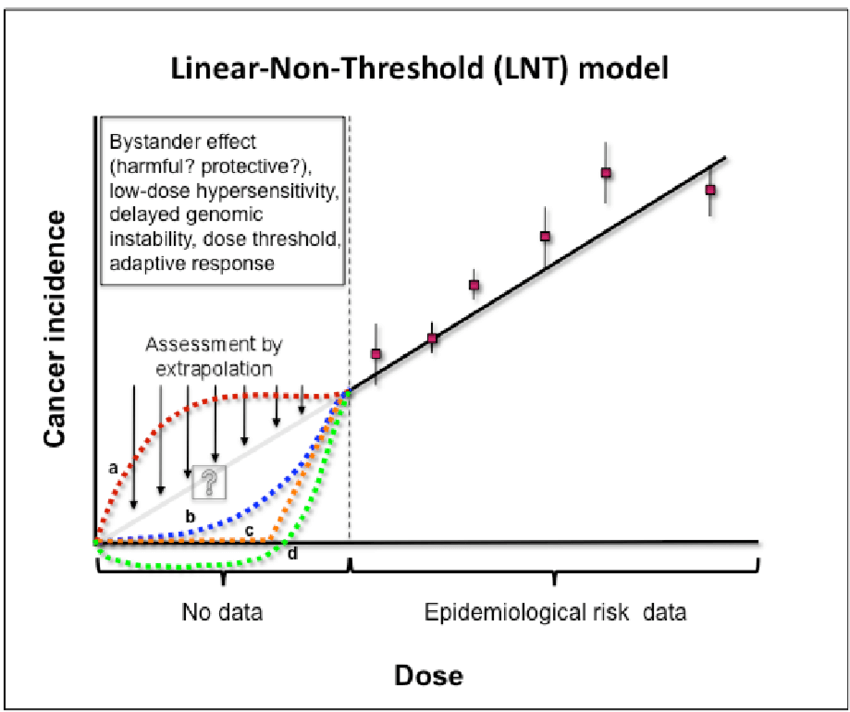
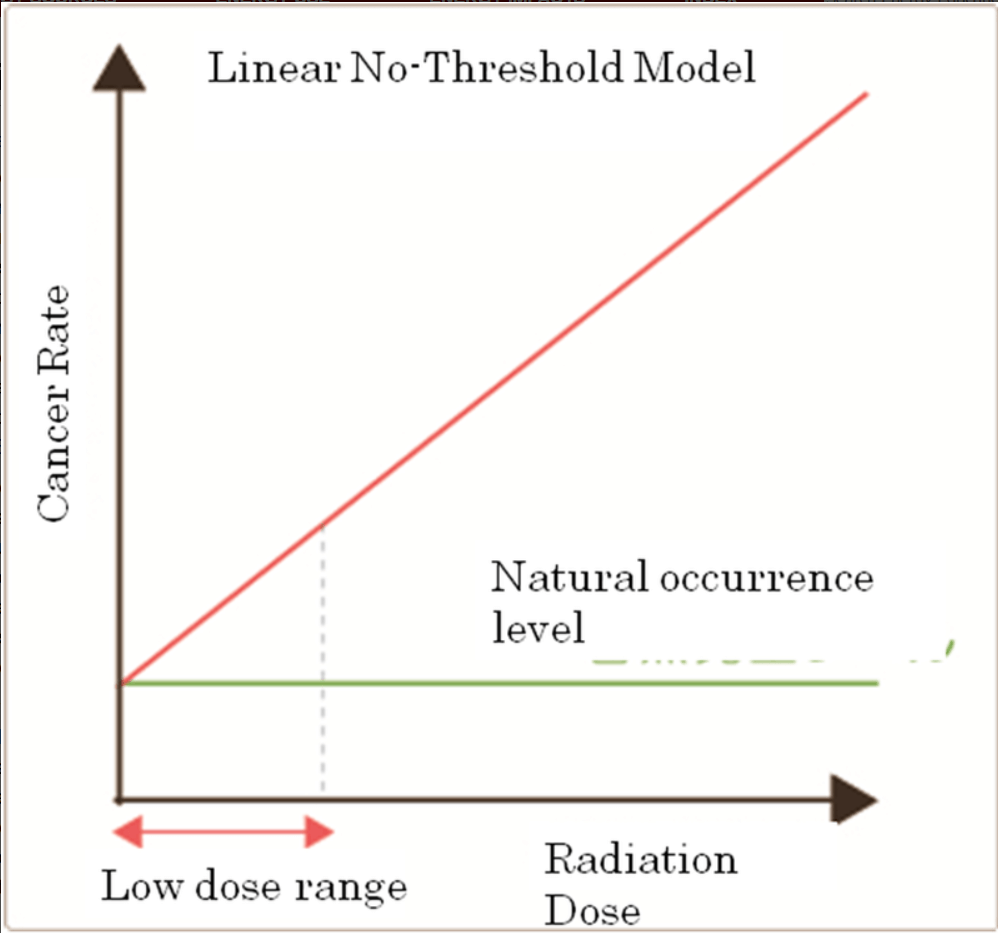
Their involvement is evident in the proliferation of the Linear No-Threshold (LNT) radiation model, which posits that any amount of radiation exposure increases cancer risk. While later findings have disproved the scientific basis of LNT, its implementation led to stringent safety regulations that made nuclear plant construction prohibitively expensive. This regulatory labyrinth was a boon to the fossil fuel sector who benefited—as they intended—from delaying nuclear advancements.
The Economic Scale of Suppression: An Expensive Trade-off
The economic numbers reveal a staggering cost—not just in dollars but in lost opportunity for clean and abundant power. According to U.S. Congressional Budget Office estimates, each month of delay in constructing a nuclear plant can cost about USD 44 million, plus USD 20 million in lost potential revenue. Over decades, the compounded cost of these delays, driven largely by unnecessary regulation and public fear campaigns, has ballooned nuclear construction costs tenfold.
Meanwhile, fossil fuel industries continue to thrive on government support totalling hundreds of billions a year. The contrast is stark: in Australia alone, fossil fuel subsidies outstrip disaster readiness funds by 14 times, underscoring priorities tilted heavily toward maintaining fossil fuel dominance rather than investing in clean alternatives like nuclear.
What This Means for Clean Energy’s Future
Despite these barriers, there’s a renewed interest and slow resurgence in Fission technology, particularly in innovative designs like Small Modular Reactors (SMRs), which are more cost-effective and easier by design. The U.S., Canada, and some European countries are pushing these technologies as part of their clean energy transition. Or, like Sweden, making their main game.
Yet the fossil fuel industry’s influence remains a formidable obstacle. Continued financial prioritisation of fossil fuels over Fission hampers progress and locks in higher emissions, the deaths they cause and energy insecurity risks for decades to come.
Global Reflection: The Need for Transparency and Realignment
Around the world, the fossil fuel industry’s strategic spend to suppress Fission energy is a costly shadow game with massive implications for climate, economy, and energy independence. Countries like Germany demonstrate the pain of energy policy skewed by fossil fuel lobbying, while Australia’s ballooning fossil fuel subsidies show the magnitude of public money fuelling this suppression.
In 2025, as global clean energy investments reach unprecedented levels—over USD 2.2 trillion supporting renewables—the fossil fuel industry’s spending to maintain its grip on the market emphasises how much is at stake. If society is serious about combating climate change, improving energy security, and ensuring economic competitiveness, policymakers must address this imbalance and reconsider the obstacles fossil fuel interests have placed against Nuclear Fission Power.
The truth behind Fission power’s stagnation is not one of technology limits or safety failures but of calculated financial power plays sustained by fossil fuels and their political allies. It’s a story worth knowing—and changing.
Appendix: Country-by-Country Fossil Fuel Spending and Its Impact on Nuclear Energy Suppression in 2025
This appendix complements the main report’s overarching analysis by providing granular data and examples that underscore the global nature of fossil fuel spending in nuclear energy suppression.
These country-specific figures and contexts reveal the scale and diversity of fossil fuel industry support worldwide, illustrating how this financial leverage acts as a powerful brake on the development of safe, reliable, and carbon-free nuclear energy in 2025.
United States
Annual fossil fuel subsidies exceed USD 20 billion, encompassing federal and state tax breaks and direct funding.
Disclosed fossil fuel industry lobbying surpasses USD 125 million each year, heavily influencing regulations that significantly increase nuclear plant construction costs and timelines.
Undisclosed fossil fuel support for suppressive activities is estimated to exceed USD 5 billion annually.
Regulatory frameworks such as the Linear No-Threshold radiation exposure model, instigated by fossil fuel interests, contribute billions in additional costs and delays for nuclear projects.
The combined effect creates a challenging environment for nuclear energy expansion despite its safety and clean energy benefits.
Germany
The German government spent approximately 690 million euros in 2021 actively campaigning against French nuclear power, motivated by economic competition concerns as lower French electricity prices put German industries, especially automotive manufacturing, at a disadvantage. Germany routinely spends more than 500 million euros each year on programs against French Fission energy.
Fossil fuel subsidies and supports range between USD 15-USD 20 billion annually, primarily supporting coal and gas power plants during the energy transition.
These substantial political and financial efforts sustain high fossil fuel dependency and suppress domestic nuclear energy initiatives.
Australia
Total fossil fuel subsidies from federal and state governments amounted to USD 14.9 billion in 2024–25, marking a 3% increase from the previous year.
The Federal Government’s Fuel Tax Credits Scheme is a significant contributor, valued at over USD 10 billion alone.
State-level spending includes substantial funding for coal mines, gas power stations, and related infrastructure, with Queensland and Western Australia being notable contributors.
Nuclear Fission power remains politically sidelined, with fossil fuel industry influence heavily steering energy policy.
Canada
Fossil fuel subsidies are estimated between USD 10-13 billion annually, mainly through tax incentives and direct spending to support oil sands and pipeline infrastructure.
Fossil fuel industry revenues significantly shape regional energy policies, limiting nuclear energy’s expansion potential.
China
China provides over USD 30 billion in annual fossil fuel subsidies, underpinning coal and natural gas as critical transition fuels despite aggressive nuclear development plans.
Political influence from state-owned fossil fuel enterprises delays broader nuclear adoption in some regions, balancing industrial and energy security concerns.
India
Fossil fuel subsidies totalled approximately USD 40 billion in 2024, predominantly favouring coal and oil sectors.
Although nuclear power is considered a future energy option, the overwhelming fossil fuel dominance slows regulatory progress and investment in nuclear infrastructure.
France
France represents a pro-nuclear exception with relatively low fossil fuel subsidies, below USD 5 billion annually.
France’s government-backed nuclear energy utilities have minimised fossil fuel influence, supporting a substantial portion of the country’s electricity without significant opposition.
United Kingdom
Fossil fuel subsidies range between USD 8-10 billion annually, largely focusing on oil and gas industries in the North Sea.
The fossil fuel sector’s political clout contributes to regulatory challenges that inhibit the scaling up of nuclear power projects, despite official plans to expand nuclear capacity.
As the global energy landscape is rapidly evolving, the limitations and challenges of wind and solar power have become increasingly evident. Meanwhile, nuclear energy—especially advanced technologies like Thorium-based reactors championed by TheThorium.Network—stands out as the only truly dependable, scalable, and sustainable clean energy source.
Wind and Solar Facing Increasing Headwinds
While wind and solar continue to expand in capacity, the reality on the ground exposes growing barriers to their sustained dominance.
Offshore wind projects are repeatedly stymied by regulatory and operational roadblocks. The 704 MW Revolution Wind project off Rhode Island was halted by a US federal stop work order due to unresolved compliance issues, delaying critical renewable capacity. Similarly, Equinor’s ambitious 2 GW floating offshore wind initiative in Australia was abandoned because regulatory hurdles could not be overcome.
Technological advances like recyclable turbine blades at the UK’s Sofia offshore wind farm represent progress but cannot mask the sector’s ongoing safety and logistical challenges. Research from Robert Gordon University highlights the high risks faced by offshore wind technicians, underscoring the human and operational costs of these installations.
The solar industry also contends with market saturation and excess production, particularly in China, where regulators are urging the sector to reduce overcapacity and cut back on hyper-competition to stabilize fragile market conditions. In the US, solar accounts for a large portion of new capacity additions, but its intermittent nature and supply chain imbalances raise questions about long-term reliability.
Microgrids, though growing rapidly due to their benefits in rural electrification and risk mitigation, remain niche solutions incapable of meeting the vast and growing global demand for continuous power.
Nuclear Power Advancing as the Backbone of Clean Energy
In stark contrast to the uncertainties facing renewables, nuclear power advances steadily as a reliable and practical solution for the clean energy transition:
Sweden’s Vattenfall is pushing forward with plans for new nuclear power plants using small modular reactors (SMRs), partnering with leading technology providers like GE Vernova and Rolls-Royce SMR. This reflects rising confidence in scalable advanced nuclear technologies as irreplaceable components of future energy systems.
Energy security is paramount, especially for developing nations. Iraq’s recent contract to deploy two powerships delivering dispatchable electricity exemplifies how nuclear technology can provide fast, flexible energy where it is needed most.
The intrinsic benefits of nuclear power—high energy density, continuous 24/7 output, minimal land use, and operational stability—make it uniquely suited to underpin future grids resilient to climate variability and demand flux.
Why Thorium-Based Nuclear Power Is the Only Logical Path Forward
The challenges confronting wind and solar power highlight the necessity for energy sources that guarantee steady supply without dependency on weather or daylight. Thorium-based nuclear technology, as advocated by TheThorium.Network, offers unmatched advantages:
Produces clean, abundant energy with vastly lower environmental impact compared to land-intensive renewables.
Avoids intermittency issues, eliminating the need for costly energy storage and backup systems.
Enhances grid stability and synergizes well with emerging grid architectures and community microgrids.
Supports sustainable economic development, especially in emerging and rural economies, by providing dependable power access.
Facing Reality: The Myths of Renewables and the Promise of Nuclear
Despite some narratives of wind and solar outproducing traditional sources in certain periods, the broader picture shows unresolved technical, regulatory, and economic hurdles hampering renewables’ ability to fully replace fossil fuels reliably. Studies demonstrate nuclear power’s superior cost-effectiveness when system integration, capacity factors, and dispatchability are fully accounted for. Moreover, innovations in thorium molten salt reactors promise safer and more economical nuclear power, free from many drawbacks of conventional uranium reactors.
Conclusion
The future of sustainable, reliable, and scalable energy lies not in the uncertain promises of intermittently dependent wind and solar power, but in embracing nuclear innovation—particularly thorium-based nuclear technologies that TheThorium.Network pioneers. Nuclear power’s unparalleled reliability, efficiency, and environmental credentials make it the only rational cornerstone for a secure energy future worldwide.
Reference List
BKPS, a Karpowership affiliate, signs contract to deliver dispatchable electricity via two powerships to Iraq, supporting energy security. Source: Powerships to support energy security in Iraq
Swedish energy company Vattenfall advances plans for new nuclear power plant on the Värö Peninsula, shortlisting GE Vernova and Rolls-Royce SMR as potential small modular reactor suppliers. Source: Vattenfall advances plan for new nuclear power in Sweden
Equinor withdraws from 2 GW floating offshore wind project off New South Wales, Australia, due to unresolved regulatory challenges. Source: Equinor pulls out of 2 GW floating offshore wind project
China’s industry ministry calls on solar industry to reduce overcapacity and mitigate extreme competition for market stability. Source: China urges its solar industry to curb overcapacity
US utility-scale solar capacity grew by 12 GW in the first half of 2025, with an additional 21 GW planned for the second half; solar expected to make up 50% of new generation capacity additions this year. Source: 50% of new US capacity to come from solar – EIA
Global microgrid capacity projected to reach 1.4 GW by 2034, driven by rural electrification and utility risk mitigation efforts. Source: Microgrid capacity additions to reach 1.4 GW by 2034
Researchers at Robert Gordon University publish study aimed at improving safety for offshore wind technicians working in high-risk environments. Source: New study supports improved offshore safety
RWE and Siemens Gamesa install recyclable wind turbine blades at UK Sofia offshore wind project, marking a UK first for sustainability. Source: Recyclable turbine blades installed at Sofia project
UK-led robotics initiative to accelerate environmental approvals for offshore wind farms, aiming to speed up deployment. Source: UK project aims at speeding up offshore wind approvals
Zambia’s ZESCO and Anzana Electric Group launch $300 million electrification project to expand power access along the Lobito Corridor. Source: Zambia launches $300 m electrification project
For over a century, humanity has paid the ultimate price for the insatiable greed of the fossil fuel industry. The story of tetraethyl lead (TEL) added to petrol—intentionally poisoning workers, children, and millions worldwide—is a stark and brutal example of corporate cruelty disguised as “progress.” Those deaths were never part of any conversation; profit was the sole concern.
Today, as climate change accelerates and pollution kills 8.5 million people annually (WHO, 2023), the truth remains suppressed again. Liquid Fission Thorium (LFT) energy, a proven, clean, and nearly infinite source of power, capable of obliterating oil profits overnight and saving the planet, is deliberately kept from public awareness.
This report exposes how the same forces that poisoned our children with leaded petrol actively suppress LFT, choosing profits over life repeatedly. The pattern is clear: corporations sell death to protect fortunes, and governments, bought and compromised, enable the carnage.
Introduction: No “Economic Realities”—Only Profit and Death
Profits—not “economic realities” or “political complexity”—have always been the brutal truth behind industrial poisonings, colonial massacres, and environmental destruction. The oil industry’s addition of lead to petrol was a deliberate choice to enrich shareholders at the catastrophic cost of human health.
Workers died by the dozens during TEL’s early production. Millions of children suffered irreversible brain damage worldwide. No one asked if it was right or justified—it never entered the conversation. Corporate greed alone decided that killing people was an acceptable collateral cost.
This historical lesson is no ancient tragedy. Today, Liquid Fission Thorium (LFT) energy stands ready to revolutionise the global energy system, eliminate fossil fuels, and save millions of lives lost annually to toxic air pollution. Yet, once again, corporate interests suppress this breakthrough because the survival of big oil—and their profits—depends on it.
Part I: The Leaded Petrol Poisoning—A Century of Corporate Murder for Profit
TEL: The Deadly Additive Created to Expand Oil Profits
In the 1920s, General Motors and DuPont’s engineer Thomas Midgley Jr. synthesised TEL, a compound that allowed car engines to run faster and cheaper but was a potent neurotoxin. The Ethyl Corporation, formed to market TEL, unleashed it worldwide despite knowing its deadly effects.
The goal was not worker safety or public health. It was profit maximisation through controlling a key additive that oil refiners could exploit.
Workers Murdered and Poisoned, Covered Up to Protect Profits
At the Bayway refinery in 1924, five workers died from lead poisoning. Ethyl Corporation responded with lies, denial, and intimidation. No accountability. No remorse. Deaths continued unabated. Even Thomas Midgley Jr. dies a horrible death due to lead poisoning.
Oil and chemical companies financed falsified “safety” studies, suppressed whistleblowers, and bribed politicians to ensure TEL stayed in fuel for nearly 100 years.
Millions died prematurely from cardiovascular and neurological diseases directly linked to lead exposure. The lives lost were a “cost of doing business”—never a matter of ethics or public debate.
Part II: How Lead Devastates the Human Body—Irreversible Damage for Profit
Lead is a ruthless poison that permanently damages the developing brain and multiple organ systems:
Mimics vital metals like calcium, zinc, and iron, disrupting cellular signalling and enzyme functions (Needleman, 2004).
Induces oxidative stress destroying DNA, proteins, and lipids (Cousins et al., 2009).
Accumulates in bones for decades, releasing lead back into the body long after exposure ends (Landrigan et al., 2020).
There is no safe exposure level. Lead destroys brains, bodies, and lives—pure and simple.
Part III: Global Toll of Leaded Petrol—Millions Dead, Trillions Lost
Leaded petrol poisoning caused over 5 million premature deaths annually for decades, predominantly through cardiovascular, neurological, and kidney diseases (The Lancet Public Health, 2023).
Childhood brain damage from lead reduced IQ by 2-5 points on average worldwide, increasing behavioural disorders and societal costs (Grandjean & Landrigan, 2014).
The economic loss in productivity and healthcare exceeded 6 trillion USD per year for almost 100 years, overwhelmingly borne by the poorest countries forced to drag out lead use for economic gain of rich corporations (WHO, 2023).
Part IV: The Shameful Timeline—The Last Countries to Poison Their Citizens
The global phase-out of leaded petrol spanned decades, with many poor countries forced to continue using it to “burn stockpiles” and protect corporate profits:
These deliberate delays were driven by corporate greed. Governments were bribed or intimidated. The smell of leaded petrol was kept in the air and children’s blood because flush profits mattered more than saving lives.
Part V: The Suppression of Liquid Fission Thorium (LFT)—The Clean Energy Solution That Would Obliterate Fossil Fuel Profits Overnight
LFT Is the Perfect Answer — But It Must Be Hidden
Liquid Fission Thorium (LFT) energy provides near-limitless clean power, zero carbon emissions, and eliminates toxic air pollution that causes millions of deaths annually.
Scientifically proven and technologically feasible, LFT reactors:
Produce far more energy than traditional uranium reactors with vastly reduced nuclear waste.
Operate safely, sustainably, and can power entire economies without fossil fuels.
Were LFT deployed worldwide today, the oil industry would collapse in months, wiping out trillions in profits. This existential threat to fossil fuel monopolies explains why LFT remains systematically suppressed.
History Repeating: From Lead Poisoning to Energy Suppression
Just as corporations shoved lead into gasoline to fatten profits—recklessly poisoning workers and the public—they now engineer political and media campaigns to keep LFT out of public consciousness. The same lobbyists bribe politicians, fund misinformation, and block research funding.
This suppression kills millions every year via continued global warming, toxic air pollution, and preventable diseases.
Conclusion: Profits Over People – The Deadly Heart of the Fossil Fuel Industry
The leaded petrol disaster was not an accident or oversight. It was cold-blooded corporate murder aided by complicit governments willing to sell out human health for campaign contributions and economic favours.
Today, the suppression of Liquid Fission Thorium energy is the latest chapter in this ongoing story—a story of deliberate poisoning and deception so fossil fuel profits can continue to soar.
The solutions exist. The lives that could be saved number in the millions every year. It is now a choice unequivocally made by those in power: keep poisoning or save humanity.
At TheThorium.Network, we expose this truth without compromise because corporate avarice must no longer decide who lives and who dies.
If you require a deeper technical overview of Liquid Fission Thorium technology, impact analyses, or historical industry interference case studies, TheThorium.Network stands ready to provide.
References
Calabrese, E. J. (2013). Hormesis and the dose–response revolution. Annual Review of Pharmacology and Toxicology, 53, 175–197.
Cousins, C. R., et al. (2009). Lead toxicity mechanisms and prevention. Environmental Toxicology and Pharmacology, 28(1), 27–34.
Dyni, J. R. (2006). The History of Leaded Gasoline and Its Health Impacts. US Geological Survey Report.
Feinendegen, L. E. (2005). Evidence for beneficial low-level radiation effects and radiation hormesis. British Journal of Radiology, 78(925), 3–7.
Grandjean, P., & Landrigan, P. J. (2014). Neurobehavioural effects of developmental toxicity. The Lancet Neurology, 13(3), 330–338.
Landrigan, P. J., et al. (2020). The Lancet Commission on pollution and health. The Lancet, 391(10119), 462–512.
Needleman, H. (2004). Lead poisoning. Annual Review of Medicine, 55, 209–222.
NBC News Investigative Report (2023). The Poisoned Gas: How leaded gasoline blunted the IQ of half a generation.
The Lancet Public Health (2023). Lead exposure and health impact article.
World Health Organization (2023). Lead Poisoning and Health Fact Sheet.
Wikipedia contributors. “Tetraethyllead.” Wikipedia.
Quartz Africa (2021). “Leaded gasoline is now banned everywhere on Earth.”
Our World in Data (2021). Leaded Gasoline Phase-Out.
Postscript
The estimated global economic loss of approximately 6 trillion USD annually attributable to lead exposure—particularly from leaded petrol—results from extensive interdisciplinary research combining toxicology, epidemiology, labour economics, and demographic modelling.
This figure predominantly arises from the calculation of lost lifetime economic productivity (LEP) due to lead-induced cognitive impairment in children. Scientific consensus establishes that childhood lead exposure lowers intelligence quotient (IQ) by an average of 2 to 5 points depending on exposure levels (Needleman, 2004; Grandjean & Landrigan, 2014). This IQ decrement is not trivial; it significantly hampers educational achievement, workforce participation, and lifetime earnings.
Researchers globally estimate the economic impact by first modelling population blood lead levels through biomonitoring data and environmental measurements. Using dose-response relationships from toxicological studies, they calculate the average IQ loss per birth cohort in each country (Attina & Trasande, 2013). Labour economics research then translates these IQ losses into expected reductions in lifetime income, based on well-established correlations between cognitive ability and earnings (Tsai & Hatfield, 2011).
To derive the aggregate global economic burden, individual country losses are scaled by population size and adjusted for income variations via purchasing power parity or GDP per capita (World Bank data). The resulting sums represent the worldwide loss in lifetime productivity.
Importantly, lost IQ and associated productivity declines are only part of the picture. Lead exposure also elevates risks for cardiovascular disease, stroke, kidney failure, and behavioural disorders, all of which increase healthcare costs, reduce work capacity, and impose broader social costs including criminal justice expenditures (Landrigan et al., 2020; The Lancet Public Health, 2023). These additional direct and indirect costs are integrated into economic models to capture the full extent of lead’s burden on societies.
Premature mortality attributable to lead exposure further amplifies economic loss through lost years of economic contribution.
Multiple meta-analyses and comprehensive studies, including those published in Environmental Health Perspectives (Attina & Trasande, 2013), The Lancet Public Health (2023), and reports from the World Health Organization (WHO, 2023), consistently estimate the total economic losses globally approaching 6 trillion USD each year, equating to roughly 7% of global GDP.
This economic toll disproportionately affects low- and middle-income countries, where lead exposure remains highest and health and educational infrastructure are limited, exacerbating intergenerational poverty and health inequities.
While precise quantifications vary with modelling assumptions and evolving data, the convergence of independent analyses underscores lead poisoning’s status as one of the world’s most damaging and preventable public health crises with catastrophic economic implications.
In summary, the 6 trillion USD figure encapsulates the lifetime lost economic productivity, increased health and social service costs, and premature mortality caused by lead exposure worldwide. It starkly reveals the massive price humanity continues to pay for lead pollution sustained by decades of profit-driven negligence.
References
Attina TM, Trasande L. (2013). Economic costs of childhood lead exposure in low- and middle-income countries. Environmental Health Perspectives, 121(9), 1097–1102.
Tsai SY, Hatfield J. (2011). Removing lead from gasoline worldwide: a step towards improving health and the environment. Environmental Health, 10(44).
World Bank. World Development Indicators, GDP per capita and Purchasing Power Parity Data.
Germany’s wind and solar energy systems in 2025 face serious challenges due to inherently low Energy Returned on Energy Invested (EROI) values, with wind at approximately 3.9 and solar at approximately 1.6. These values are significantly below the threshold (roughly 7 to 11) considered necessary to sustainably support a high-quality advanced society.
Because the EROI represents the net energy surplus available for society after accounting for the energy needed to build, maintain, and operate the system, such low values mean that a large fraction of energy is reinvested into energy production itself. This drastically limits net energy available for economic development, social services, leisure, and technological progress.
This report examines the technical, economic, environmental, and social consequences of these low EROI values and their implications on Germany’s energy independence, affordability, and future quality of life.
1. Verification and Context of EROI Values for Germany’s Wind and Solar
Wind Energy EROI (~3.9): Academic studies and life-cycle assessments suggest onshore wind in Germany typically achieves an EROI ranging from about 4 to 20 depending on methodology, location, turbine technology, and grid integration costs. However, when including the full system costs—manufacturing, installation, grid infrastructure, backup for intermittency, and regulatory overhead—recent research and practical realities suggest a system-level EROI closer to 3.5–4.5 is realistic.
Solar Energy EROI (~1.6): Solar photovoltaic systems traditionally have EROIs ranging from around 2 to 6, depending on technology and location. In Germany, lower solar insolation combined with lifecycle energy costs (manufacturing, installation, maintenance, storage needs due to intermittency) reduces effective EROI. When including these factors, an EROI near 1.5–2.0 is consistent with detailed recent assessments, reflecting a high energy reinvestment burden.
Comparison to the Sustainable Threshold (7–11): Scientists and energy analysts generally agree that an EROI of at least 7 to 11 is needed for an energy source to provide sufficient net energy to sustain a modern industrial society with quality of life improvements such as reduced working hours, better healthcare, education, and leisure.
Thus, Germany’s wind and solar EROI values fall well short of this critical margin, signaling systemic problems that affect the country’s energy system sustainability and socioeconomic outcomes.
2. Consequences of Low EROI on Germany’s Energy System and Society
2.1 Net Energy Deficit and Societal Burden
High Energy Reinvestment: Germany’s wind and solar systems require about one-quarter to two-thirds the energy they generate just to maintain themselves. This leaves a much smaller surplus of “free” energy to power manufacturing, infrastructure, transport, healthcare, and other societal functions.
Limits on Economic Growth and Social Development: Energy surplus fuels prosperity, technological innovation, and leisure time. Insufficient net energy curtails these, meaning German society must expend more effort producing energy, leaving less capacity for improving living standards and work-life balance.
2.2 Energy Freedom and Security
Reliance on Fossil Fuels and Imports: Wind and solar intermittency combined with low EROI increases Germany’s dependence on gas, coal, and electricity imports to ensure stable supply — undermining energy independence, increasing vulnerability to geopolitical risks, and raising carbon emissions.
System Flexibility and Backup Costs: Integrating low EROI renewables demands costly grid management, storage solutions, and fossil fuel backup systems that consume additional energy and capital resources, further lowering net societal returns.
2.3 Cost and Affordability
Rising Levelized Costs of Energy (LCOE): Germany’s complex auction design, permitting delays, and financial risks contribute to increased costs—especially offshore wind, where auction failures highlight risk aversion. Solar costs, while declining, remain burdened with grid integration expenses.
Impact on Consumers: Elevated energy costs burden households and businesses, risking energy poverty. Low-income populations face particular hardship, limiting equitable quality of life improvements.
3. Technical, Environmental, and Policy Challenges
Intermittency and Reliability: Wind output declined by about 30% in early 2025 compared to 2024, driving the fossil fuel share above renewables for the first time in two years. Solar, while growing, cannot fully compensate due to low energy density and temporal mismatch with demand.
Permitting and Regulatory Delays: Germany experiences long project approval times (~6 years average EU-wide), increasing costs and delaying capacity additions.
Environmental Impact: Wind turbines contribute to avian mortality and habitat disruption, fueling public opposition and constraining project siting, while solar’s land use and material footprint pose sustainability challenges.
Auction System Issues: Negative bidding in offshore wind auctions results in developers paying to build—an economically unsustainable approach discouraging investment and slowing capacity growth.
4. Social Implications: Work, Leisure, and Quality of Life
Energy Surplus and Social Welfare: Historically, societal progress and increased leisure have correlated with high net energy availability. Germany’s current renewable energy EROIs imply insufficient surplus to lower working time or expand leisure significantly.
Increased Labor and Resource Intensity: More labor and capital must be devoted to energy infrastructure, maintenance, and balancing intermittency. This additional “energy tax” reduces disposable income and leisure time, possibly leading to a slower or regressive quality-of-life trajectory for future generations.
5. Summary Table: Key Challenges and Implications
Challenge
Description & Impact
Low EROI of Wind (~3.9)
Energy reinvestment high; limited net energy surplus; constrains growth and well-being
Very Low EROI of Solar (~1.6)
Very high energy reinvestment, increasing costs, limiting societal net energy
Intermittency & Reliability
Causes fossil fuel backup dependency, undermining energy independence and emissions goals
Financial & Auction Risks
Negative bidding deters investments, raising system costs and slowing expansion
Permitting Delays
Hinder rapid deployment, add uncertainty and cost
Environmental Concerns
Bird mortality, habitat loss reduce public support and feasible project sites
Increasing Fossil Fuel Usage
Offsets renewables’ benefits, increases emissions
Higher Energy Prices
Risks energy poverty, reduces disposable income and quality of life
Limited Improvement in Leisure & Work-Life Balance
Insufficient surplus energy constrains reductions in working hours and growth of leisure time
6. Conclusion
Germany’s wind and solar energy systems, marked by EROI values of approximately 3.9 and 1.6 respectively, struggle to generate sufficient net energy surplus for societal advancement. The substantial energy reinvestment required diminishes energy freedom, cements fossil fuel dependencies, drives price pressures, and limits improvements in work-leisure balance and overall quality of life.
Without transformative changes in technology, policy frameworks, grid infrastructure, and integrated energy storage, Germany risks a regressive energy transition where growing investments in renewables deliver diminishing returns for future prosperity and energy autonomy.
7. References
1. Data on Wind and Solar Generation in Germany (2024–2025)
Fraunhofer Institute for Solar Energy Systems (ISE). (2025). Net Public Electricity Generation in H1 2025: Solar Power on the Rise Across Europe. Fraunhofer ISE. — Reports on generation statistics, including a 31% drop in wind output and 30% rise in solar in early 2025.
Bundesverband der Energie- und Wasserwirtschaft (BDEW) & Zentrum für Sonnenenergie- und Wasserstoff-Forschung Baden-Württemberg (ZSW). (2025). Germany Renewable Energy Statistics and Market Report H1 2025. — Details renewable shares (~54–61%) and fossil fuel backup reliance.
2. EROI Studies and Life-Cycle Assessments for Wind and Solar
Weißbach, D., Ruprecht, G., Huke, A., Czerski, K., Gottlieb, S., & Heinz, A. (2013). Energy intensities, EROI, and sustainability. Energy, 52, 210-221. https://doi.org/10.1016/j.energy.2013.01.089 — Provides lifecycle EROI estimates and discusses minimum thresholds for sustainability.
Hall, C. A. S., Lambert, J. G., & Balogh, S. (2014). EROI of different fuels and the implications for society. Energy Policy, 64, 141-152. https://doi.org/10.1016/j.enpol.2013.05.049 — Comprehensive review of EROI ranges, including wind and solar.
Kubiszewski, I., Cleveland, C. J., & Endres, P. K. (2010). Meta-analysis of net energy return for wind power systems. Renewable Energy, 35(1), 218-225. https://doi.org/10.1016/j.renene.2009.01.009 — Reviews EROI specific to wind systems, highlighting variability.
Lambert, J. G., Hall, C. A. S., Balogh, S., Gupta, A., & Arnold, M. (2014). Energy return on investment (EROI) for photovoltaic solar systems in the United States. Sustainability, 6(9), 5402-5422. https://doi.org/10.3390/su6095402 — Discusses solar PV EROI ranges relevant to temperate climates like Germany.
Murphy, D. J., & Hall, C. A. S. (2010). Energy return on investment, peak oil, and the end of economic growth. Annals of the New York Academy of Sciences, 1219(1), 52-72. https://doi.org/10.1111/j.1749-6632.2010.05776.x — Explores societal implications of declining EROI values.
3. Economic, Market, and Policy Analyses of German Renewables
Ember. (2025). Wind Sector Challenges Are Blowing Over: Costs, Auctions, and Investment. Ember Energy Market Reports. — Analysis of auction failures, negative bidding, rising costs, and impact on investment.
Strategic Energy. (2025). Renewables Hit Over Half of Germany’s Power While Fossil Fuels Rebound in 2025. Strategic Energy Market Intelligence Report, Q1 2025. — Discusses energy mix changes, permitting delays, and market dynamics.
German Federal Ministry for Economic Affairs and Climate Action (BMWK). (2024). Renewable Energy Expansion and Permitting in Germany. — Policy framework and permitting challenges.
4. Environmental Impact and Social Acceptance
European Environment Agency (EEA). (2022). Environmental Impacts of Renewable Energy Technologies. — Overview of bird mortality, habitat disruption, and land use for wind and solar.
Kleine Zeitung et al. (2024). Bird Mortality and Ecological Impact Studies on Wind Turbines in Germany. Journal of Environmental Management, 300, 113633. — Specific regional field studies on avian impacts.
5. Energy System Reliability and Fossil Fuel Backup
Agora Energiewende. (2025). The German Power Market in 2025: Challenges and Opportunities. — Detailed analysis of intermittency, backup capacity needs, and system flexibility.
Energy Monitor. (2025). Germany’s Clean Energy Output Hits Decade Low. Energy Trends Report, May 2025. — Reports on fossil fuel use resurgence and overall reliability issues.
6. Societal and Economic Context of Low EROI
Cleveland, C. J., Kaufmann, R. K., & Stern, D. I. (1984). Energy and the U.S. Economy: A Biophysical Perspective. Science, 225(4665), 890-897. https://doi.org/10.1126/science.225.4665.890 — Foundational work linking energy surplus and economic growth.
Murphy, D. J., & Grantham, J. (2017). Low EROI and the Energy Challenge: Societal Implications. International Journal of Energy Research, 41(5), 724-739. https://doi.org/10.1002/er.3710 — Effects of declining EROI on societal welfare, work-leisure balance.
Nuclear energy is undergoing a remarkable transformation globally, fuelled by the urgent need for decarbonisation and energy security. At the heart of this revolution are Small Modular technologies—compact, scalable, and inherently safer systems designed to produce reliable, low-carbon power. Among these, the use of Thorium as a nuclear fuel is gaining renewed attention for its unique advantages and potential to reshape how we generate energy.
Why Thorium?
Thorium is a fertile element that, when irradiated, breeds fissile uranium-233. It is more abundant than uranium, with reserves spread worldwide, making it a sustainable and long-term energy resource. The Thorium fuel cycle offers several key benefits:
Reduced long-lived radioactive waste: Thorium produces significantly less high-level waste compared to traditional uranium fuel cycles, and the waste it does produce decays to safe levels in a few hundred years rather than thousands.
Enhanced proliferation resistance: The uranium-233 bred from Thorium is difficult if not impossible to weaponize, improving nuclear security.
High fuel utilization and thermal efficiency: Operating at high temperatures allows for more efficient power conversion, such as through closed-cycle gas turbines.
One of the most promising innovations harnessing Thorium is the concept of Liquid Fission Thorium Burners (LTFBs). These systems use a liquid fuel form—molten salts containing Thorium and fissile material—that circulates continuously through the system. This liquid fuel approach offers transformative advantages:
Continuous fuel reprocessing: Unlike solid fuel, liquid fuel can be chemically processed on the fly to remove fission products and optimise fuel composition, enabling near-complete utilisation of Thorium.
Inherent safety: The liquid fuel’s high boiling point and low pressure operation reduce the risk of meltdown. If the system overheats, the fuel can be drained into safe storage tanks, automatically shutting down the reaction.
Higher operating temperatures: The molten salt medium allows operation at temperatures around 700°C or higher, improving thermal efficiency and reducing cooling requirements.
A well-known example of an LTFB concept is the Liquid Fluoride Thorium Burner (a variant of the LFTR design), which uses a two-fluid system—one fluid containing fissile uranium and the other containing fertile Thorium. Neutrons from fission in the uranium fluid convert Thorium in the blanket fluid into new fissile uranium-233, which is then cycled back to sustain the reaction.
Global Momentum for Thorium and Small Modular Technologies
Several countries and companies are leading the charge in developing LTFBs and related small modular systems fuelled by Thorium:
India continues to advance its Thorium program with the Advanced Heavy Water Burner designed to utilise Thorium-uranium fuel cycles.
China is pioneering molten salt LTFB prototypes, including a 2 MW thermal unit with plans for scale-up to commercial sizes.
Denmark’s Copenhagen Atomics is developing compact molten salt burners with ambitions for mass manufacturing by the 2030s.
Startups in the US and Europe such as Moltex and Terrestrial Energy are innovating molten salt small modular designs adaptable to Thorium fuel.
Why Small Modular?
Small Modular technologies offer several advantages that complement the use of Thorium:
Modular factory fabrication reduces construction time and costs.
Passive safety systems enhance operational safety without complex active controls.
Smaller footprint makes them suitable for remote or smaller grids.
Scalability allows incremental deployment aligned with demand growth.
Challenges and the Road Ahead
Despite the promise, deploying LTFBs and Thorium-based small modular systems faces hurdles:
Fuel cycle complexity: Starting the reaction requires an initial fissile load such as uranium-235 or plutonium.
Regulatory frameworks: Most current nuclear regulations are designed around uranium solid-fuel systems, requiring adaptation for liquid-fuelled Thorium systems.
Industrial experience: Operational data for Thorium-fuelled molten salt systems is still limited compared to conventional reactors.
However, with growing government support, international collaboration, and private sector innovation, these challenges are being actively addressed.
Wrapping Up
Liquid Fission Thorium Burners represent a paradigm shift in nuclear energy—combining the abundance and safety benefits of Thorium with the flexibility and scalability of small modular technology. Over the next five years, we expect to see the first grid-connected small modular systems and pilot LTFBs come online, marking a new chapter in sustainable, low-carbon energy production.
King Mohammed VI Invites Thorium Network President Jeremiah Josey to Present Bold Plan: Replace USD 8B Annual Fossil Fuel Imports with Nuclear Hydrogen by 2035
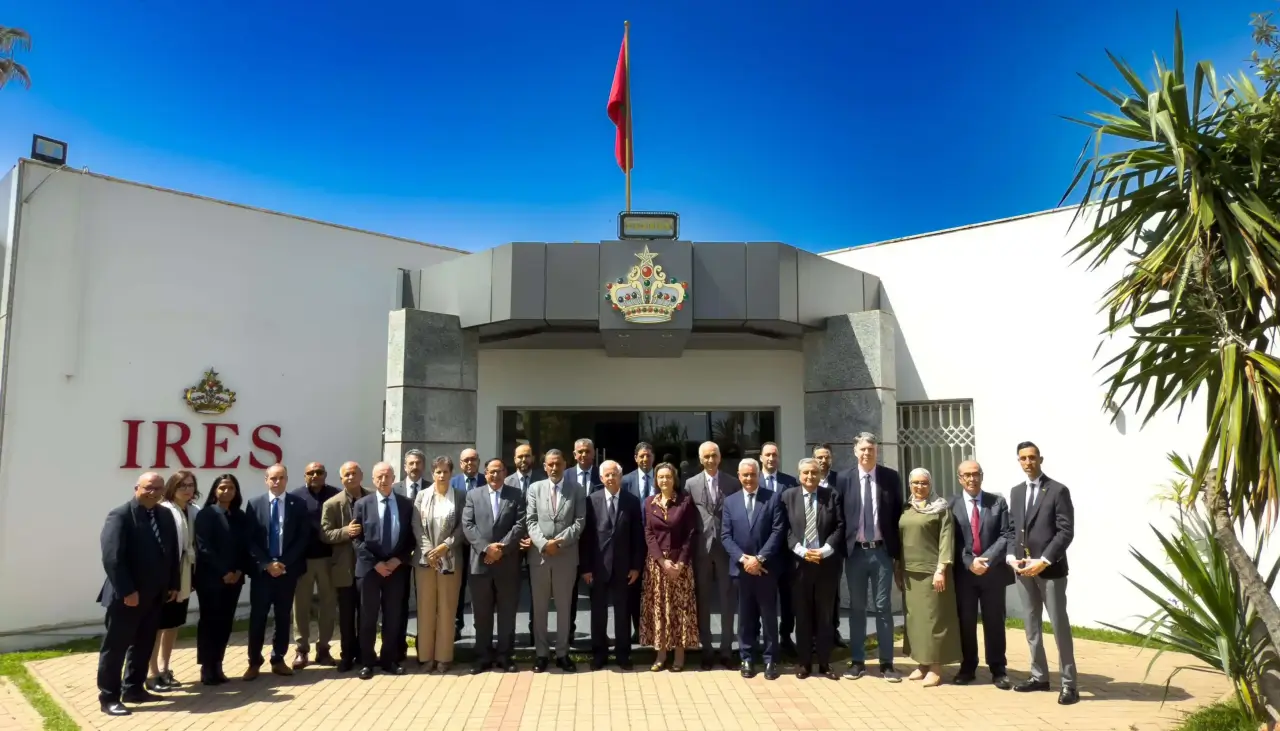
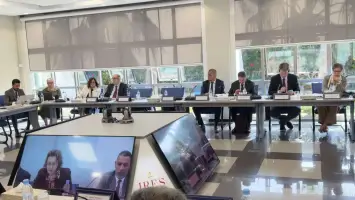
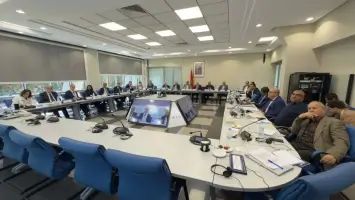
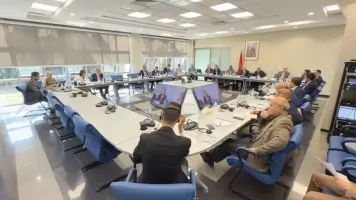
In April 2025, Jeremiah Josey, President of The Thorium Network, received an invitation from the Institut Royal des Études Stratégiques (IRES) on behalf of His Majesty King Mohammed VI to present a transformative vision for North Africa’s energy future. At the international conference “The Future of Nuclear Power in the World and in Morocco: Challenges of Integration into the National Energy Strategy,” Mr. Josey unveiled a bold, evidence-based road-map for how Morocco can leverage its vast nuclear fuel reserves to achieve complete energy independence, economic transformation, and regional leadership in clean energy innovation.
Watch the brief introduction by Jeremiah Josey introducing Thorium to Morocco
The core message was revolutionary yet grounded in geological fact: Morocco sits atop 30,000 tonnes of Thorium and 7 million tonnes of uranium — reserves that could power the nation for thousands of years. Rather than continuing to import USD 8 billion worth of fossil fuels annually, Morocco can harness these domestic resources through Liquid Fission technology, a safer, cheaper, and more sustainable form of nuclear power that eliminates long-term radioactive waste, operates without water cooling, and produces the high-temperature heat necessary for green hydrogen production, industrial processes, and medical isotope manufacturing.
“Morocco doesn’t need to import energy. It holds the key to its own energy sovereignty — in its soil. The question is not whether thorium can power Morocco’s future. The question is how quickly Morocco can seize this opportunity.”
Who Was There: Global Nuclear Leaders Align on Morocco’s Energy Future
The April 24–25, 2025 conference at Morocco’s Institut Royal des Études Stratégiques brought together an unprecedented assembly of international nuclear authorities, world-leading energy companies, and Morocco’s entire government energy sector. This convergence of institutional power signals a historic moment: the alignment of global nuclear expertise with Morocco’s strategic commitment to energy independence through thorium, liquid fission technology, and green hydrogen production.
International Nuclear Authority & World’s Largest Nuclear Operator
The International Atomic Energy Agency (IAEA) — the UN’s nuclear authority — sent senior leadership including Ms. Aline DES CLOIZEAUX, Director of the Nuclear Power Division, and Ms. Molly-Kate GAVELLO, Nuclear Project Officer. Their presence validates Morocco’s nuclear strategy at the highest international level and signals IAEA support for Morocco’s energy transition pathway.
EDF (Électricité de France) — the world’s largest nuclear operator and France’s energy giant — was represented by Mr. Laurent FABRE, Head of Business Development for Africa. EDF’s participation demonstrates confidence in Morocco’s nuclear potential and positions the nation as a strategic partner for Europe’s clean energy future. France’s proven model of 75% nuclear electricity provides the blueprint for Morocco’s transformation.
Newcleo — a leading developer of next-generation Small Modular Reactors (SMRs) and liquid fission technology — sent Mr. Angelo BEATI, Director of Global Innovation and Special R&D Projects. Newcleo’s presence represents the cutting edge of nuclear innovation: Gen-IV reactors that operate at 750°C, require no water cooling, and produce zero long-term waste.
French Government Strategic Partnership
France’s Atomic Energy Commission (CEA) — the nation’s nuclear authority — was represented by Mr. Frank CARRÉ, Former Director and current adviser to the Director of Energy, and Mr. Jacques PENNEROUX, Expert in Radiation Protection and Risk Management. France’s direct government participation signals bilateral nuclear cooperation and technology transfer commitment to Morocco.
Complete Moroccan Government Energy Sector Alignment
Every major Moroccan energy institution was present, demonstrating unprecedented government alignment:
ONEE (National Office of Electricity) — Morocco’s primary energy utility
Ministry of Energy Transition and Sustainable Development — Government energy policy authority
Masen (Moroccan Agency for Sustainable Energy) — Renewable and sustainable energy strategy
CNESTEN (National Center for Nuclear Energy, Sciences, and Techniques) — Nuclear research and development
Moroccan Agency for Nuclear and Radiological Safety and Security — Nuclear regulatory authority
IRESEN (Research Institute for Solar Energy and New Energies) — Renewable energy research
Academic & International Expert Network
MINES Paris – PSL Research University, Hassan II Academy of Sciences and Technology, and Women in Nuclear International provided scientific validation and professional expertise. International nuclear experts including Khammar MRABIT (former IAEA Director of Nuclear Safety) and Chirayu BATRA (Advanced Reactors Expert) presented cutting-edge research and global best practices.
What This Assembly Means
This convergence of international nuclear authority (IAEA), world’s largest nuclear operator (EDF), advanced reactor technology innovators (Newcleo), French government partnership (CEA), and complete Moroccan government alignment signals that Morocco’s nuclear energy transition is not aspirational — it is strategically committed, internationally validated, and technologically ready for deployment.
The presence of these organisations represents billions in combined nuclear expertise, decades of operational experience, and cutting-edge innovation. Morocco is not entering nuclear energy as an experiment — it is joining a global community of proven nuclear leaders committed to decarbonisation, energy independence, and economic transformation.
Immediate Action Catalyst
The presentation by Mr. Josey catalysed immediate action at the event:
A Memorandum of Understanding was reached with a global leader in Small Modular Fission (SMF) technology (under NDA),
A member of the Moroccan senate agreed to support,
Plans where laid out for 200 MW industrial mining and processing centre powered by Fission energy. This isn’t theoretical — it’s happening.
Why Thorium? The Strategic Case for Advanced Nuclear Energy in Morocco
Thorium-based Liquid Fission technology represents a fundamental breakthrough in nuclear energy. Unlike conventional uranium reactors, Thorium systems offer Morocco a unique combination of economic, environmental, and strategic advantages:
90% Cost Reduction — Liquid Fission thorium costs approximately USD 10/MWh versus USD 60/MWh for conventional uranium nuclear and USD 50–60/MWh for fossil fuels
Zero Long-Lived Radioactive Waste — Unlike uranium reactors that produce waste requiring 10,000+ years of storage, Thorium systems produce minimal residual waste with manageable half-lives
High-Temperature Output (~750°C) — Enables direct industrial applications: hydrogen production via high-temperature electrolysis, ammonia synthesis, steel production, and desalination
No Water Cooling Required — Critical for Morocco, a water-stressed nation; Liquid Fission operates at atmospheric pressure without competing for scarce water resources
100% Fuel Burnup — Achieves complete utilisation of nuclear fuel, eliminating waste and maximising energy extraction
Blockchain-Tracked Medical Isotopes — Enables secure, transparent tracking of medical-grade isotopes for cancer therapy and diagnostics
Supercritical CO₂ Turbines — Delivers ultra-efficient power generation with compact, modular designs suitable for distributed energy systems
Fuel Flexibility — Can utilise Thorium, uranium, and even recycled nuclear fuel, providing strategic energy security
These advantages position Thorium not as an alternative to renewable energy, but as the essential complement that makes Morocco’s clean energy transition economically viable and technically feasible.
Morocco’s Energy Crisis: The Urgent Case for Transformation
Morocco’s current energy situation is unsustainable. The nation spends USD 8 billion annually importing fossil fuels — primarily oil, coal, and natural gas — while suffering an additional USD 1.1 billion in annual air pollution costs (approximately 1% of GDP). This represents a massive economic drain that diverts capital from education, healthcare, and infrastructure development.
Current Energy Consumption Breakdown (~1 Exajoule/Year)
Fossil Fuels: >90%
Transport sector: 25% (primarily liquid fuels for vehicles) — USD 6B/year in oil imports
Electricity generation fuel input: 40% (coal at USD 1.5B/year, natural gas at USD 0.5B/year)
Solar Energy: ~0.6% (1.5 GW installed, 13% capacity factor)
Biomass: <1%
Nuclear Energy: 0% (currently non-existent in Morocco’s energy portfolio, despite massive fuel reserves)
This energy portfolio creates multiple vulnerabilities: price volatility in global oil markets, geopolitical dependence on energy suppliers, environmental degradation from coal and oil combustion, and limited economic competitiveness due to high energy costs. Morocco’s population of 37 million, with a GDP of USD 150 billion, cannot afford to remain dependent on imported fossil fuels. The nation needs a strategic pivot toward domestic energy resources.
Morocco’s Untapped Nuclear Treasure: Thorium and Uranium Reserves
Morocco possesses exceptional nuclear fuel resources that could provide energy security for millennia — yet these reserves remain largely undeveloped:
Uranium Reserves: 7 Million Tonnes
Energy Supply Potential: Approximately 6,500 years of energy independence (without breeding or reprocessing)
Global Context: Morocco ranks among nations with the world’s most significant uranium deposits
Current Status: Largely unexploited; represents a strategic reserve for future energy security
Thorium Reserves: 30,000 Tonnes
Energy Supply Potential: Approximately 1,000 years of energy independence (without breeding or reprocessing)
Advanced Utilisation: When fully utilised in advanced Liquid Fission burners, Thorium delivers extraordinary energy density — 79,000,000 MJ/kg compared to petroleum’s 40 MJ/kg
Strategic Value: Thorium is 3–4 times more abundant than uranium globally, making it the ideal long-term fuel for sustainable nuclear energy
To contextualise this energy wealth: Morocco’s Thorium reserves contain more usable energy than all the oil reserves in the Middle East. This is not a minor resource — it is a strategic asset comparable to oil wealth for energy-producing nations, yet with the advantage of domestic availability and zero geopolitical dependence.
Morocco’s Nuclear History: Seven Decades of Scientific Foundation
Morocco’s engagement with nuclear science and technology spans more than 70 years, establishing a foundation of expertise and institutional capacity:
1950s: Initial nuclear applications in medical, agricultural, and industrial sectors; establishment of nuclear research programs
1980s: Sidi Boulbra identified as a suitable nuclear facility site; comprehensive feasibility studies conducted by IAEA and French engineers
1980: Section 123 Agreement signed with the United States, establishing bilateral nuclear cooperation framework
2001: Renewed Section 123 Agreement with the USA, reinforcing long-term nuclear cooperation commitment
2003: Establishment of the Maamora Nuclear Research Centre with a 2 MWt TRIGA reactor
2009: TRIGA reactor becomes operational at La Maamora in Kenitra; Morocco confirms nuclear energy as part of national energy strategy
2015: IAEA International Nuclear Infrastructure Review (INIR) Program supports development of a 1 GW nuclear facility (representing approximately 10% of Morocco’s current grid capacity)
2022: New research reactor planned in partnership with Rosatom (Russia), advancing Morocco’s nuclear capability
This institutional history demonstrates that Morocco is not entering nuclear energy as a novice. The nation has decades of experience with nuclear science, established regulatory frameworks, trained personnel, and proven partnerships with international nuclear authorities. The infrastructure for nuclear expansion already exists; what is needed is strategic commitment and capital investment.
Global Energy Context: Lessons from Germany, China, and France
Germany’s Renewable Transition: A Cautionary Tale
Germany’s experience with renewable energy deployment provides critical lessons for Morocco’s energy planning. Despite investing over €1.5 trillion in renewable infrastructure, Germany has achieved:
No Significant CO₂ Reduction — Emissions have plateaued despite massive renewable investment
Doubled Energy Prices — Electricity costs have increased dramatically compared to nuclear-powered France
Industrial Competitiveness Crisis — Energy-intensive industries are relocating due to high electricity costs
Coal and Nuclear Paradox — Coal power plants are being reactivated to compensate for renewable intermittency and Germany actively buys surplus energy from nuclear neighbour France.
Nuclear Reconsideration — Germany is now reconsidering nuclear energy as essential to its energy transition
The German experience demonstrates that renewables cannot achieve decarbonisation goals. Intermittency creates grid instability, requiring either expensive battery storage, fossil fuel backup, or nuclear baseload power. Morocco must learn from Germany’s costly mistakes and design an integrated energy system combining nuclear baseload with renewable generation.
China and Russia: The Nuclear Construction Advantage
China and Russia have demonstrated the economic and technical advantages of streamlined nuclear development:
Construction Cost: China builds nuclear plants at approximately USD 2 million per installed MW, compared to USD 5–10 million/MW in Western nations
Construction Timeline: Chinese and Russian projects are completed in 5–7 years, versus 10–15+ years for Western projects
Regulatory Efficiency: Streamlined regulatory processes avoid the consultancy overhead that inflates Western nuclear costs
Technology Transfer: Both nations offer proven reactor designs and fuel cycle technology to partner nations
Morocco’s strategic partnerships with China and Russia for nuclear deployment offer significant cost advantages unavailable through Western suppliers, making large-scale nuclear expansion economically feasible.
France: The Nuclear Success Model
France demonstrates that high nuclear penetration is achievable, economically viable, and compatible with industrial competitiveness:
Nuclear Energy Share: 75% of electricity generation
Energy Security: Achieved through domestic nuclear capacity; minimal fossil fuel dependence
Decarbonisation: Lowest carbon electricity in Europe
Energy Prices: Competitive electricity prices despite high labour costs
France’s model proves that nuclear energy enables both decarbonisation and economic competitiveness — a pathway Morocco can replicate.
Morocco’s Renewable Energy Infrastructure: Ouarzazate Solar Power Station Case Study
Morocco’s most significant renewable energy investment — the Ouarzazate Solar Power Station (Noor نور) — provides valuable lessons about the economics and limitations of solar energy in North Africa:
Economic Analysis: Why Solar Costs More Than Nuclear
The dramatic difference between nameplate capacity (580 MW) and firm supply (133 MW) illustrates the fundamental intermittency challenge of solar technology. The 23% capacity factor reflects Morocco’s solar resource availability and operational realities. When compared to nuclear alternatives, the cost differential is striking:
Ouarzazate Solar: USD 68 million per useful-MW
CAP1000 (China): ~USD 2 million per MW (90% capacity factor)
VVER1200 (Russia): ~USD 5.5 million per MW (90% capacity factor)
Over a 100-year lifecycle, this cost differential becomes catastrophic. Solar panels require 100% replacement every 20–25 years; wind turbines need entire overhauls every 20 years; battery storage systems require replacement every 10–15 years. Nuclear plants operate for 60–80+ years with minimal equipment replacement. The Ouarzazate project’s total lifetime cost approaches USD 160 billion, while an equivalent nuclear facility would cost USD 78–105 billion — a USD 55–82 billion savings over the asset’s lifespan.
However, the Ouarzazate project did provide valuable experience with molten salt thermal storage technology, which has direct applications for advanced Liquid Fission machines operating at 750°C.
Morocco’s Hydrogen Economy: USD 32.5 Billion in Approved Projects
Morocco has already committed to substantial green hydrogen and ammonia production projects, positioning itself as a regional clean energy exporter. These projects demonstrate that Morocco’s energy transition is not theoretical — it is already underway:
Major Projects Under Development
Dahamco Ammonia Project (Dakhla)
Investment: USD 25 billion USD
Location: Dakhla, Morocco (Western Sahara region)
Production Capacity: 1 million tonnes of ammonia per year
Timeline: Operational by 2031
Market Focus: Export-oriented (primarily European markets)
Land Requirements: Up to 30,000 hectares for renewables and electrolysis infrastructure
OCP Group Green Ammonia Facility (Tarfaya)
Investment: USD 7 billion USD
Location: Near Tarfaya, Morocco
Phase 1 Production: 1 million tonnes per year by 2027
Phase 2 Production: 3 million tonnes per year by 2032
Land Requirements: Up to 30,000 hectares for renewables and electrolysis infrastructure
Total Approved Investment: USD 32.5 Billion USD
These projects represent Morocco’s commitment to becoming a global clean energy exporter. However, they also highlight a critical challenge: renewable-powered electrolysis is intermittent, matching renewable generation patterns. Nuclear-powered electrolysis could operate continuously, enabling 24/7 hydrogen production and reducing electrolyzer capital costs per unit of hydrogen produced.
Strategic International Partnerships
Morocco’s hydrogen strategy involves partnerships with major international players:
UAE: TAQA (Abu Dhabi National Oil Company) — capital and expertise
China: UEG (United Energy Group) and China Three Gorges — technology and construction
European Union: TotalEnergies, Engie, Acwa Power — technology transfer and export market access
Additional Partners: Multiple additional projects in development with international strategic partners
Hydrogen Production Technologies: Cost Analysis and Strategic Options
Morocco’s hydrogen economy requires understanding the diverse production methods, their costs, and their strategic advantages:
Hydrogen Production Methods and Cost Comparison
Production Method
Cost Range (USD/kg)
Technology Status
Strategic Notes
Steam Methane Reforming
0.5 – 3.5
Mature
Lowest cost; depends on natural gas prices; produces “grey” or “blue” hydrogen with carbon capture
Alkaline Electrolysis
2.0 – 6.0
Mature
Proven technology; cost depends on electricity prices and electrolyzer capital costs
Proton Exchange Membrane (PEM)
2.0 – 6.0
Mature
Flexible operation; higher capital costs; suitable for variable renewable power
Solid Oxide Electrolysis (High-Temperature)
2.0 – 6.0
Emerging
Potential for waste heat integration; improves efficiency with high-temperature nuclear heat
Green Hydrogen (Renewables-Based Electrolysis)
3.0 – 7.0
Mature
Depends on renewable electricity cost, electrolyzer CAPEX, and capacity factor; intermittent production
High-Temperature Electrolysis (Nuclear-Powered)
>4
Emerging
Potential for cost reduction to ~USD 2/kg by 2026 (DOE target); requires stable, continuous heat source
Thermochemical (Solar/Nuclear)
3.5
Emerging
Not yet commercial; requires high-temperature heat source
Methane Pyrolysis
1.0
Laboratory
Emerging breakthrough; produces high-value graphene byproduct; requires stable continuous power
Strategic Hydrogen Production Pathway for Morocco
Near-Term (2025–2030): Green hydrogen via renewable-powered electrolysis (USD 3–7/kg)
Long-Term (2035+): Methane pyrolysis with nuclear heat (USD 1/kg) + graphene byproduct production
Strategic Synergies: Why Nuclear and Renewables Are Complementary, Not Competitive
The most critical insight from Jeremiah Josey’s presentation is that nuclear energy and renewable sources are not competitors but essential complements that create strategic synergies:
How Nuclear Complements Renewables
Baseload Power Supply: Nuclear provides consistent, 24/7 power generation independent of weather conditions, enabling grid stability
Grid Stability: Stable nuclear output balances intermittent renewable generation, reducing need for expensive battery storage
Hydrogen Production: Continuous nuclear power enables consistent hydrogen production via electrolysis, eliminating intermittency limitations
Capacity Factor Advantage: Nuclear plants operate at 90%+ capacity factors, compared to solar (13–23%) and wind (30–40%)
The combination of nuclear power with methane pyrolysis could produce hydrogen at approximately USD 1/kg while generating valuable graphene byproducts — creating a profitable, sustainable hydrogen economy.
Thorium (fully utilised in advanced liquid fission burners): 79,000,000 MJ/kg
The energy density of thorium, when fully utilised in advanced Liquid Fission burners, is approximately 179,000 times greater than petroleum products and 658,000 times greater than ammonia. This extraordinary energy density explains why Thorium reserves of only 30,000 tonnes can power Morocco for 1,000 years.
Liquid fission reactors using eutectic salt fuel represent an advanced nuclear technology with significant advantages over conventional solid-fuel reactors:
Operational Advantages
No Water Required: Eliminates water cooling requirements, enabling deployment in arid regions like Morocco
Low Pressure Operation: Operates at atmospheric pressure, reducing containment requirements and safety risks
100% Fuel Burnup: Achieves complete utilisation of nuclear fuel, eliminating waste and maximising energy extraction
Zero Long-Term Waste: Eliminates long-term radioactive waste storage requirements; residual waste has manageable half-lives
Fuel Flexibility: Can utilize thorium, uranium, and recycled nuclear fuel, providing strategic energy security
High Operating Temperature: Operates at approximately 750°C, enabling high-temperature applications (hydrogen production, industrial heat, desalination)
The elimination of water cooling requirements is particularly significant for Morocco, a water-stressed nation in North Africa. Liquid fission technology enables nuclear power generation without competing for scarce water resources — a critical advantage for a semi-arid country facing increasing water scarcity due to climate change.
Comparative Cost Analysis: Levelized Cost of Electricity (LCOE)
Technology
Cost (USD/MWh)
Capacity Factor
Fuel Cost
Liquid Fission Thorium
10
90%+
Minimal (domestic Thorium)
Solar
20
13–23%
Zero (but requires replacement every 25–30 years)
Wind
20
30–40%
Zero (but requires major overhauls every 20 years)
Coal
50
70%
Ongoing (imported)
Natural Gas
60
50%
Ongoing (imported)
Solid Fission Uranium
60
90%
Ongoing (imported fuel)
This analysis demonstrates that liquid fission Thorium technology offers the lowest cost of electricity generation at approximately USD 10/MWh, compared to USD 20/MWh for solar and wind, and USD 50–60/MWh for conventional nuclear and fossil fuels. Over a 60–80 year operational lifespan, this cost advantage translates to hundreds of billions in economic savings.
Global Thorium Research Initiative: Morocco Joins the Vanguard?
Morocco’s potential with Thorium technology would align it with a global research trend. Major research institutions worldwide are investigating Thorium fuel cycles, positioning thorium as the future of sustainable nuclear energy:
China: Shanghai Institute of Applied Physics (SINAP) — leading thorium research
Russia: Kurchatov Institute — advanced reactor design
France: Grenoble Institute of Technology — fuel cycle research
International: European Organization for Nuclear Research (CERN)
India: Indian Atomic Energy Commission (DAE) — Thorium fuel cycle development
USA: Oak Ridge National Laboratory (ORNL), Idaho National Laboratory (INL), Texas A&M University — Thorium research centers
Canada: Canadian Nuclear Laboratories (CNL)
Japan: Japan Atomic Energy Agency (JAEA)
Netherlands: Netherlands Organisation for Applied Scientific Research (TNO)
Denmark: Denmark Technical University (DTU)
Czech Republic: Nuclear Research Institute (NRI)
Brazil: Brazilian Nuclear Energy Commission (CNEN)
Germany: German Research Center for Geosciences (GFZ)
This global research effort demonstrates the international recognition of Thorium’s potential as a long-term nuclear fuel solution. Morocco, by establishing a Thorium Research Centre and deploying liquid fission technology, would position itself at the forefront of this global energy revolution.
Building Africa’s Nuclear Innovation Hub: The Thorium Research Centre (TRC)
Morocco’s vast reserves of 30,000 tonnes of thorium — sitting largely untapped in its soil — represent far more than a commodity: they represent a pathway to energy independence, economic transformation, and regional leadership. The proposed Thorium Research Centre (TRC), with an estimated CHF 100 million investment and a 5-year development timeline, transforms Morocco from a resource-rich nation into a global hub for advanced nuclear innovation.
TRC Organisational Structure and Research Divisions
Housed in state-of-the-art facilities and powered by Liquid Fission Thorium technology, the TRC will operate five specialized divisions:
1. Power Generation Division
Development of supercritical CO₂ turbines for ultra-efficient electricity generation
Optimisation of liquid fission reactor designs for modular deployment
Integration with grid management systems for distributed energy
Testing and validation of reactor performance at commercial scale
2. Industrial Heat Applications Division
Hydrogen production via high-temperature electrolysis (HTE) at 750°C
Ammonia synthesis for fertilizer and fuel applications
Desalination for water security in arid regions
Steel and cement production using nuclear heat
Process heat for chemical and petrochemical industries
3. Medical Isotope Manufacturing Division
Production of medical isotopes for cancer diagnostics and therapy (Mo-99, Lu-177, I-131)
Blockchain-secured isotope tracking for patient safety and regulatory compliance
Development of Targeted Alpha Therapy (TAT) isotopes for advanced cancer treatment
Collaboration with global medical institutions for clinical trials and distribution
Export of medical isotopes to African and European markets
4. Environmental Research & Sustainability Division
Life-cycle analysis of Thorium fuel cycles versus uranium and fossil fuels
Environmental impact assessment of liquid fission technology
Waste management strategies for minimal environmental footprint
Water conservation studies for arid-region deployment
Carbon footprint reduction through nuclear energy transition
5. Fuel Security & Blockchain Tracking Division
Development of secure Thorium fuel supply chains from mining to reactor
Blockchain-based tracking of nuclear materials for non-proliferation compliance
Smart contract integration for fuel procurement and logistics
Real-time monitoring of fuel burnup and waste generation
International regulatory compliance and IAEA coordination
Economic Impact and Job Creation
Beyond research, the TRC promises transformative economic impact:
High-Skilled Job Creation: 500+ permanent positions in nuclear engineering, materials science, medical physics, and industrial applications
90% Cost Savings: Liquid Fission Thorium systems cost 90% less than conventional uranium-based nuclear
Export Opportunities: Medical isotopes, hydrogen, ammonia, and technical expertise for African and European markets
Technology Transfer: Training programs for African nations seeking nuclear energy independence
Supply Chain Development: Local manufacturing of reactor components, turbines, and specialised equipment
Strategic Partnerships and International Collaboration
The TRC’s success depends on strategic partnerships with global institutions such as:
Shanghai Institute of Applied Physics (SINAP), China: Thorium fuel cycle expertise and reactor design collaboration
Kurchatov Institute, Russia: Advanced reactor engineering and materials science
Oak Ridge National Laboratory (ORNL), USA: Thorium research and medical isotope production
International Atomic Energy Agency (IAEA): Regulatory framework and safety standards
European Nuclear Research Organizations: Technology transfer and hydrogen production research
You can read the presentation for the Thorium Research Centre here:
Storage Technology: Advancement in hydrogen storage solutions (salt caverns, metal hydrides, underground storage)
Transport Technology: Development of safe, efficient hydrogen transport methods (pipelines, ships, trucks)
End-User Solutions: Maturation of hydrogen fuel cells and combustion technologies for transport and industry
Infrastructure Standards: International standardization of hydrogen infrastructure and safety protocols
International Cooperation and Market Development
Technology Transfer: Access to advanced nuclear and hydrogen technologies from global partners
Capital Investment: International financing for large-scale nuclear and hydrogen projects
Export Markets: European and global markets for green hydrogen and ammonia
Regulatory Harmonisation: International standards for nuclear safety and hydrogen trade
Balanced Energy Mix Achievement
If renewables become cheaper and more reliable, and hydrogen storage and transport solutions mature, Morocco can achieve a balanced energy mix combining:
Nuclear Baseload: Stable, large-scale power generation (5–10 GW)
Renewable Generation: Wind and solar for peak and distributed generation (10–15 GW)
Hydrogen Production: Continuous green hydrogen production (4 million tonnes/year)
Energy Storage: Hydrogen and battery storage for grid flexibility
Strategic Resilience
This balanced approach provides:
Energy Security: Reduced fossil fuel imports and enhanced independence
Economic Competitiveness: Affordable, reliable electricity for industry and commerce
Decarbonization: Significant CO₂ emission reductions and air quality improvement
Regional Leadership: Position as clean energy hub for North Africa and Mediterranean region
Climate Resilience: Diversified energy portfolio reduces vulnerability to climate variability
Conclusion: Morocco’s Strategic Energy Transformation
Morocco possesses the resources, strategic location, and international partnerships necessary to transform its energy system from fossil fuel dependence to nuclear-renewable integration with green hydrogen production. The nation’s abundant uranium and thorium reserves, combined with excellent solar and wind resources, create a unique opportunity for comprehensive energy transformation.
Key Strategic Assets
7 million tonnes of uranium (6,500 years of supply)
30,000 tonnes of Thorium (1,000 years of supply, infinite with breeding)
Excellent solar and wind resources for renewable generation
Strategic geographic location for European energy exports
Established international partnerships with China, Russia, UAE, and European firms
USD 32.5 billion in approved green hydrogen and ammonia projects
Decades of nuclear science expertise and institutional capacity
Implementation Requirements
USD 70 billion CAPEX for 35 GW nuclear and renewable capacity
USD 5 billion for hydrogen infrastructure development
International partnerships for technology and capital
Regulatory framework supporting rapid deployment
Workforce development for nuclear and hydrogen sectors
Expected Outcomes by 2035
5 GW coal replacement with nuclear
4 million tonnes per year green hydrogen production
24 million tonnes per year green ammonia production
Enhanced energy security and economic competitiveness
50,000+ jobs in clean energy sectors
USD 30+ billion annually from hydrogen and ammonia exports
Morocco’s nuclear and renewable energy strategy represents a comprehensive, long-term vision for energy independence, economic development, and environmental sustainability. By coupling nuclear baseload power with renewable generation and green hydrogen production, Morocco can achieve energy transformation while positioning itself as a regional clean energy leader and exporter to European markets.
The pathway forward requires sustained commitment to international partnerships, strategic infrastructure investment, and technological innovation. With these elements in place, Morocco can transition from fossil fuel dependence to a sustainable, secure, and prosperous energy future powered by thorium, nuclear technology, and renewable sources.
This is not a distant dream — it is a strategic imperative. The time for Morocco to seize its energy sovereignty is now.
About the Presenter and The Thorium Network
Jeremiah Josey, Founder and Chairman of The Thorium Network, is a leading advocate for Thorium-based nuclear energy and advanced Liquid Fission technology. His presentation to Morocco’s Institut Royal des Études Stratégiques represents a pivotal moment in North Africa’s energy transition, bringing together scientific expertise, economic analysis, and strategic vision to demonstrate how thorium can power Morocco’s future.
The Thorium Network is a global organisation dedicated to advancing Thorium fuel cycle technology, promoting nuclear energy as essential to decarbonisation, and supporting nations seeking energy independence through advanced nuclear innovation.
This comprehensive analysis represents Morocco’s strategic opportunity to transform from a fossil fuel-dependent nation into Africa’s clean energy leader. By leveraging Thorium reserves, advanced nuclear technology, and renewable resources, Morocco can achieve energy independence, economic prosperity, and regional influence while contributing to global decarbonisation goals.
1) Study on Solar Power in Morocco by SAFE Fission ConsultTM a division of The Thorium Network
The Economics of Clean Energy: Why Nuclear Outperforms Renewables Over a Century
In his presentation to Morocco’s Royal Institute for Strategic Studies, Jeremiah Josey presented a groundbreaking economic analysis comparing the Xlinks Morocco-UK renewable project against nuclear power plants using CAP1000 and VVER-1200 technologies. The findings were striking: over a 100-year lifecycle, nuclear power delivers 3.6 GW of firm capacity at a levelized cost of €25–33 per MWh, while the Xlinks project — despite being zero-carbon — costs nearly €50 per MWh due to repeated replacements of solar panels, wind turbines, batteries, and subsea cables.
The numbers tell the story. Nuclear’s total lifetime cost: €78–105 billion. Xlinks’ total lifetime cost: €160 billion. Why the gap? Nuclear plants operate at ~90% capacity factor with minimal equipment replacement over their lifespan, while renewables require 5 solar replacements, 5 wind turbine overhauls, and 10 battery cycles — each a massive capital investment. When you factor in operating costs, maintenance, and the brutal maritime environment of Tan-Tan, Morocco, the renewable project’s financial burden becomes unsustainable. Nuclear’s superior return on investment (19–27% IRR) versus renewables (12% IRR) demonstrates why energy-independent nations are choosing atomic power for long-term stability.
Let’s recap one of the greatest industrial public relations flops of all time: the Fukushima incident. As a testament to Fission’s inherent safety, no one died from the full meltdown of Unit 1, nor from the partial meltdowns of Units 2 and 3. Unit 4 was already offline for cleaning at the time. Units 5 and 6 remained undamaged and continuing to produce electricity for three more years until public fear and pressure forced TEPCO to shut them down as well – for no technical reasons. While two unfortunate workers did die, it was due to an explosion and drowning, and not radiation exposure.
Fukushima Daiichi Control Room
In stark contrast, over 2,300 people died directly from the panicked evacuation of areas where no discernible or dangerous increase in radiation levels was found. Even today, visitors to the area are required to dress more cautiously than they would for the COVID virus – a documented even less risky set of circumstances. It’s also worth noting that three other nuclear power stations in the region were affected by the same tsunami that hit Fukushima, yet all successfully shut down automatically when the earthquake struck and can restart without issue.
Fukushima Hydrogen Explosion
Reports indicate that “the primary contamination spread northwest from the plant, with soil samples showing levels of caesium-137 exceeding 3 MBq/m² in some areas up to 35 km away from the reactor.”
This contamination led to evacuations of approximately 15,000 residents in affected areas—scary stuff indeed.
But what does these scary sounding numbers really mean? Let’s consider bananas and Iran.
Daiichi Internal Design
The caesium levels mentioned correspond to an radiation exposure of only about 0.3 mSv per year. In comparison, The Fukushima region has a natural background radiation level of 5 mSv per year. For context, places like Ramsar in Iran experience natural background levels of 260 mSv per year – and is considered a healthy dose by locals there, with reported lower rates of long term chronic illness than the general, non-irradiated population. To put it another way, the “dangerous release” from Fukushima is akin to consuming ten bananas per day. A banana contains high levels of radioactive potassium, which builds your muscles similarly to caesium.
Daiichi Cooling Tower Wave Damage
This also means that the death rate from evacuations was over 15%. You had a 1-in-6 chance of being killed by being moved “for your safety,” while facing a zero percent chance of harm from radiation concerns. And no, if you stayed you wouldn’t have received a dosage of any concern.
Tsunami Breaching Sea Wall
Almost 20,000 people died due to the tsunami itself—a tragic natural disaster. Even more tragic is that more than 10% of those fatalities were attributed to forced, unnecessary evacuations around the Daiichi power station.
Tsunami Impact on Daiichi
It’s tragic that nuclear fission energy has suffered such a public relations disaster that people are terrified by news reports while slicing up their radioactive banana for breakfast. Presently, about 1 trillion yen (approximately USD 7.3 billion) is being spent on cleaning up Units 1, 2, and 3—not a small sum. But why so much? All in the name of “safety.”
Devastation in Fukushima after Tsunami
Now lets talk water. Also a non issue – unless your income comes from it.
Lake Barrett—renowned for his role in the Three Mile Island disaster cleanup and currently employed for public relations purposes by TEPCO—famously stated during an interview with Mike O’Brien on August 16, 2023: “Now, it depends on how low is low [radiation in water released from the plant]. To be drinkable, it’s going to be many decades—100 years or so. But that’s not really plausible at this stage.”
The World Health Organisation’s limit for radiation in drinking water is set at 10,000 Bq per litre; TEPCO’s discharge limit is only 299 Bq/litre. Even Japanese Prime Minister Fumio Kishida and other officials have publicly consumed this water.
So why did Lake misrepresent the water issue so badly? Employed by the very company to overt the public relations debacle happening around him. Was it for his own benefit? Perhaps. His income from TEPCO is estimated to be around USD 600k per year. Thus if there’s no radiation problem, there’s no income. And that is the heart of the issue: individuals within the nuclear safety industry often amplify fear and misconceptions to maintain their livelihoods.
The Fukushima Daiichi incident starkly illustrates how decades of fear-mongering against nuclear fission energy culminated in a human disaster. It wasn’t a technical one. This was not an unprecedented failure of technology but rather a “normal” unfortunate industrial accident—one among many that must occur in humanity’s relentless pursuit of knowledge and progress. We only learn from our mistakes. The real tragedy lies not in exaggerated radiation levels but in panic-driven decisions that resulted in over 2,300 deaths from evacuation—deaths that were entirely preventable.
As we reflect on Fukushima Daiichi, it is crucial to recognize that misinformation and fear often pose greater dangers than the technologies themselves. Moving forward, we must foster a more rational and informed dialogue about nuclear energy—acknowledging its potential while addressing genuine safety concerns. Only by doing so can we ensure that lessons learned from Fukushima Daiichi lead us toward a more balanced understanding of risk and safety in our quest for energy solutions.
Vacuum Cleaning Machine Fukushima
Post Piece: Strategies to Avoid Fukushima-Type Response Failures
Adopt a decentralised emergency response approach that empowers local authorities and allows for tailored, quick reactions to local conditions.
Establish reliable communication systems that provide real-time data on plant conditions and environmental monitoring to help decision-makers assess risks accurately.
Conduct frequent joint training exercises involving all stakeholders—nuclear plant operators, local emergency services, and government officials—to ensure coordinated responses.
Create flexible evacuation plans that can be adjusted based on real-time data about radiation levels and wind directions, with pre-determined safe zones that can be activated quickly.
Invest in resilient infrastructure capable of withstanding natural disasters, including backup power systems for nuclear plants that remain operational even during extensive outages.
Implement educational programs to inform the public about nuclear safety, radiation risks, and emergency procedures to reduce fear and misinformation.
Convene independent review committees after any significant incident to analyse response effectiveness and identify areas for improvement—fostering continuous learning.
Nuclear Trust Levels in Japan
By incorporating these strategies into emergency response planning, nuclear facilities—and indeed any industrial facility—can enhance their preparedness and minimise potential Fukushima-type response failures in the future.
These recommendations emphasise decentralisation, communication, training, flexibility, infrastructure resilience, public education, and continuous improvement—all crucial elements in developing a comprehensive and effective emergency response framework.
Post created by Jeremiah Josey and the Team at The Thorium Network, 11 July 2024
Diagnosed with Parkinson’s Disease(PD) aged 77, Dr. Hans G. Borgensberger became part of the million or so people in the US living with what is the second most common neurodegenerative disease after Alzheimer’s disease. Like the close to 90,000 who are newly diagnosed every year, this could have spelled limitations and a decline in physical ability as was the case with the legendary Mohammed Ali.
Mohammed Ali
Dr. Hans Borgensberger
But Dr. Borgensberger, with a distinguished career in nuclear physics, wasn’t one to back down from a challenge.
Reading through his own record of the steps he took to orient his journey with PD towards a specific trajectory, it is quickly apparent that his is a lot more than a narration of a medical journey debunking what was supposed to be established consensus on PD. It is an unexpected source of inspiration for the many young scientists graduating out of the safety offered by classrooms and labs and venturing forth exposed to dizzying world academia or the even more precarious one of industry. It is particularly inspirational for those of us from developing countries who have made the trip back at home after decades abroad and now keen to apply what we’ve learned all these years to solve the problems we see around us.
Dr. Hans Borgensberger
Dr. Borgensberger’s approach is a masterclass in perseverance. “Perseverance” is a word that has always sent me on a tangent of nostalgia. “Perseverance Shall win through” is the motto at Maseno School, one of the first academic institutions to be set up in Kenya by European missionaries in the previous century. All Maseno boys through-out the ages, I included, would recite the words every Monday morning during the Start of the Week assembly. The motto is a rallying call that all the notable names in governance, academia and sports in East Africa that passed through Maseno School’s gates made. This includes the Late Barrack Obama Snr whose son was once the president of the United States of America.
Maseno School 1906 – Kenya
Dr. Borgensberger describes how he defied the boundaries set for those with his condition, taking up and thriving in new physical activities like fencing and skiing – activities that most wouldn’t dare attempt with PD. This adventurous and questioning spirit was once considered a very valuable asset in the early days of nuclear science and engineering. There were entire plethora of attempts at what back then were definitely exotic designs aimed at harnessing fission. Just as Dr. Borgensberger has dared to explore unconventional but safe ways to improve his condition, researchers back then did not hesitate to push the boundaries by looking into advanced reactor designs and alternative fuels. It was a golden age that youngsters like myself hope will comeback as anthropogenic climate change bears its sharp teeth.
There is a lot more to Dr. Borgensberger’s story than just his physical feats. That he was able to maintain his genuine curiosity at such an advanced age is equally inspiring. Most of us allow the curiosity that guided us in our early years to be attenuated by the vicissitudes of everyday living as soon as we have bills to pay. Though I am certain there are many who will rank Dr. Borgensberger’s fascination with Quantum entangled particles and his theorizing a connection to his own improvement as science fiction, it is all still quite remarkable.
The thirst for knowledge, understanding and the willingness to question established ideas which imbues Dr. Borgensberger journey, has always been the cornerstone of scientific progress. With academia steadily degenerating into a “who has published more papers” contest, his is a reminder that breakthroughs and deep understanding of the universe around us has often come from those who dare to look beyond the norm. In nuclear science and engineering safety will always be the guiding principle, but as Dr. Borgensberger’s has shown, that should not come at the cost of trying out new ideas and approaches that, of course, must be rigorously tested and validated. The ongoing debate between the champions of the Linear No-Threshold model of the effects of radiation at low doses and the proponents of the Sigmoid No-Threshold model of the same is an excellent place to do exactly that.
Linear No-Threshold and Hormesis
Dr. Borgensberger’s narration of the many remarkable people he worked with at varying stages of their careers is also a testament to the power that teamwork has in scientific endeavors. This cannot be reiterated enough in places like Kenya, for example, where rather than fostering teamwork and camaraderie among our young scientists, professional bodies have over the years encouraged pointless competition whose effects are apparent everywhere you look. Regulatory bodies, like the Engineers Board of Kenya (EBK), have mutated into gatekeeping panels of egotistical senior citizens who probably need time machines to travel to the present.
There is a clear and frankly speaking shocking chasm that has emerged where instead of having a spectrum, we have a polarised practice that has so called “Baby boomers” at one end and my generation of newly minted researchers and engineers at the other. The vacuum in between is partly a consequence of EBK allowing itself to ossify by being dismissive of the reinvigoration that comes with the introduction of youthful energy into any context . The proof of this is the current bizarre state of affairs where it is possible for someone like I for example to graduate with advanced degrees in fields like nuclear and quantum engineering from universities all ranked in the top 100 globally, and still find that neither the courses I have taken nor the universities are accredited by the locals. We can learn a lot from the camaraderie between Dr. Borgensberger and his buddies. When colleagues, regardless of seniority and status collaborate with each other it is only a matter of time before a spark ignites a groundbreaking discovery.
Dr. Hans G. Borgensberger’s story may not directly offer a direct blueprint for the development of safer nuclear reactors. But the spirit he embodies – that of determination, curiosity, and a willingness to explore the unconventional, all within the framework of sound verifiable science – is an inspiration for all of us in the new generation keen to take the button. It’s this kind of inquisitive and persistent mindset that can lead to the next big breakthrough in the nuclear field, paving the way for a safer, brighter and more prosperous future for all.
Post Created by Jeremiah Josey and the Team at The Thorium Network, Work by Omondi Agar, 22 May 2024
When I encountered the book Unintended Consequences1 by the recently departed Dr. George Erickson, I had long since abandoned a belief that I had held to be the gospel truth. Growing up in Nairobi, Kenya and seeing how stochastic everyday life was, I was conditioned to invest my faith and emotions in other stuff that I hoped would be a bit more consistent and impeccable than the seemingly random occurrences that seem dictate life in a country like Kenya; one that was perched atop a solid foundation. As a young impressionable kid just beginning the long trudge towards an education, the answer back then was “Science” – or rather what I thought was “science.” It had, after all, been presented to me as an impartial evidence-based approach that our species had settled upon as the tool to probe and extract information from the universe around us. I embraced it all with relish.
A series of events culminated in me ending up a student at the Korea Advanced Institute of Science and Technology (KAIST), an environment where “science” was not just being consumed, but also being “made.” One of the things that come with travelling in pursuit of education is that you pick up certain cultural subtleties on top of the technical knowledge that sends us there in the first place. Most of what you pick tends to be benign; how to not leave the lab before the professor does and such. Others tend to leave an indelible mark on you. In my case, this was the realization that rather than being impartial, science was yet another human activity done by humans, and left unchecked, it had the potential to reflect everything it means to be human; the strengths and indeed more worrying, our flaws.
The first alarm bell sounded when I learned that Korean society had “optimized and localized” regulations governing radiation exposure. This struck me as rather bizarre since it implied that scientific “fact” was parochial in nature; that scientific facts could shift depending on who was interpreting them and from where. A bit of a tangent, trying to quell the unease led me to the heated yet messy debate on dose limits that had apparently been raging on for decades within the nuclear industry. I couldn’t fathom why an issue that ought to have been straightforward saw different national entities looking at the same data and coming to wildly differing conclusions. A very gentle scratch of the surface trying to figure things out led me to the infamous Linear Non-Threshold (LNT) model that even to this day refuses to go away regardless of how much updated data, common sense and logic are thrown at it.
Chart of LNT
A must-read on the topic was obviously “Unintended Consequences” by the late Dr. George Erickson who deserves recognition for his passionate advocacy of not just nuclear power, but also particularly Liquid fission thorium-based reactors that showed a lot of promise in the golden era of nuclear engineering when innovative designs seemed popping out of thin air.
Read together with “Why Nuclear has been a Flop”2 by Jack Devanney of Thorcon International, the two are primers on how not to handle new cutting-edge technology like nuclear and reveal how it was possible for scientific mischief by a handful of individuals could wipe out the 500,000:1 advantage that nuclear power was projected to have compared to other technologies.
It is always fun to read a book. It is even more intriguing to read about the author. A man of varied accomplishments – dentist, bush pilot, and author – Dr Erickson made the decision to dedicate his life to promoting safe, clean energy solutions in a way that, as I looked up his work, resonates very deeply with me. Reading “Unintended Consequences” posthumously I found him answering questions I had long before I was even aware of them. He challenged the prevailing ideas about the excesses that have followed the adoption of Hermann Muller’s LNT model and laid bare the dire consequences that have followed. From the crippling energy poverty that continues to afflict the vast majority of the people on this planet to the very real threat of runaway climate change extinguishing the flames of our civilization, Dr Erickson doesn’t mince his words.
Dr George Erickson RIP
Dr. Erickson was a proponent of a scientific approach to safety. Like the other visionaries of his time, he championed the use of thorium as a superior alternative to traditional finite and clunky uranium. He argued for its efficiency, environmental benefits, and reduced proliferation risks. He was a voice of reason in the often-charged debate where catchphrases are brandished as counterarguments against the use of nuclear to rescue our civilization from the brink of runaway climate change. His writing style and wordplay do an excellent job of bridging the gap between scientific and public discourse.
Though I only discovered his work posthumously, the more I read about the man, the more I appreciate his indelible mark on nuclear discourse. It is a legacy that relatively young fellas like testing the waters as we try to build careers, can learn a lot from.
The best way to ensure that the Late Dr George Erickson’s legacy lives on is to do what he dedicated a significant portion of his life to; keep asking the questions that need answers. Few things would better celebrate his memory than continuing the pursuit of a fact-based approach to addressing the questions that will come as the effects of climate change start to bite. Only then will we stand a chance at addressing what Jack Devanney aptly refers to as “The Gordian knot of our time.”
May the light that Dr George Erickson has cast on this issue and others, keep guiding those of us keen to take up the mantle of spreading the gospel of nuclear power to every corner of our planet.
Authored by Jeremiah Josey together with legal counsel and the team at The Thorium Network
Date: 9 January 2024
The Thorium Network hereby issues this statement to address recent allegations circulating in the public domain and to provide clarity regarding our collaboration with The Venus Project. Our commitment to transparency and factual communication remains paramount.
Background
The Thorium Network has maintained a productive collaboration with The Venus Project to promote sustainable technologies and advanced energy solutions. This partnership aligns with our shared vision of fostering innovation for a better future. We recognise the importance of this collaboration in advancing research and awareness around Thorium energy.
As part of the work planned with The Venus Project, The Thorium Network engaged expert advisers under formal, binding agreements. Notably, The Thorium Network contracted with Dr. Simon Michaux pursuant to a substantial, binding consultancy agreement to support the technical workstreams associated with The Venus Project initiative. Dr. Michaux’s role was contractual and authorised by The Thorium Network for the specific purposes of that collaboration.
Response to Recent Allegations
We are aware of certain allegations that have been made recently about our operations and the nature of the collaboration. We categorically deny any misinformation or actions that might compromise our integrity or the principles on which our organisation stands. We take these allegations seriously and are conducting an internal review to ensure complete accountability.
Some recent online commentary originates from a former would-be collaborator of The Venus Project whose proposals were not accepted by Jacque Fresco nor the project team following his passing. This individual has published material that combines personal opinion, selective citation of public records, and asserted inferences, which we characterise as unfounded “mud slinging.” The Thorium Network will not respond to every online claim made. Instead, we will address public assertions through verifiable documentation and measured communications targeted appropriately to our stakeholders and the press.
Clarification on Collaboration Details
Our partnership with The Venus Project is based on mutual respect, shared goals, and transparent cooperation. This collaboration is focused on educational outreach and technology development, guided by ethical standards and best practices in research. All activities conducted under this partnership adhere strictly to legal and regulatory requirements.
Confidential Report and Request for Access
For serious investors, partners, or stakeholders seeking further clarity on the complexities surrounding these matters, a comprehensive confidential report is available upon request. This report contains detailed information intended to provide context beyond what can be publicly disclosed. Access to this report will be granted only under strict confidentiality agreements to ensure protection of sensitive legal, intellectual property, and proprietary information.
Stakeholders interested in requesting access to this confidential report are encouraged to contact us directly. We are committed to facilitating informed dialogue while safeguarding the integrity of all involved parties.
Commitment to Transparency
The Thorium Network remains dedicated to providing accurate information to our stakeholders and the public. We welcome dialogue and inquiries to promote a greater understanding of our mission and collaborative efforts. We are committed to resolving any concerns swiftly and responsibly.
Conclusion
We appreciate the continued support from our community and partners as we work together to advance sustainable energy solutions. The Thorium Network will continue to operate with openness, accountability, and dedication to innovation.
Plasma Assisted Digestion(TM) – Digestion Stage, post plasma
2023 marks a huge milestone for The Thorium Network and our division the International Plasma Research InstituteTM, or IPRITM. We successfully serviced a number of clients and cracked their inert materials using Plasma Assisted DigestionTM or PADTM for short.
We did this at indicative costs and time much less than industry standards. Indeed, one client gave us material they are unable to recover anything from. We obtained almost 80% of the precious Rare Earths from the material. That’s case study 3 below.
Here are the summaries of three case studies from some of our work in 2023:
IPRI PAD(TM) Cracking Case Study 1IPRI PAD(TM) Cracking Case Study 2IPRI PAD(TM) Cracking Case Study 3
Why Plasma to make Rare Earths and Thorium
Our plasma team is the best in the world, covering the United Kingdom, South America, the Middle East and the USA.
Using a proprietary configuration of gases, geometry and plasma, at IPRITM we are able to change the structure of a mineral matrix such that we crack a normally locked, tight crystal mineral lattice, such as monazite or apatite. This makes them quite accessible using mild liquid separation technologies.
The benefit are:
Removal of Naturally Occurring Radioactive Materials (NORMS) early from the process. This makes at-mine pre-processing possible before sending off for concentration.
Selective separation of element species using different wet conditions by adjusting temperature, pH and time.
Separation of low value rare earths, such as cerium, from high value rare earths in minutes.
We are excited by the potential to apply PADTM to other inert mineral structures to explore their viability also.
Here are some research papers from Necsa on Plasma technology that prove the technology.
Typical separation of rare earth elements is a capital intensive and expensive operation. With our partners we have PertraXTM. At a fraction of the cost of tradition solvent extraction technologies PertraXTM is able to safely separate rare earths with the smallest of environmental footprints with only a fraction of the hardware and consumables traditionally used. It’s a revolution in rare earth production.
PertraXTM is also part of our activities at IPRITM.
During 2023, the esteemed and highly experienced scientist Dr. Necdet Aslan joined us at IPRI.tech. Dr. Aslan is Türkiye’s expert in plasma physics and technology and professor at Yeditepe University, Istanbul, Türkiye.
As we move into the future we are excited by the prospects we have to expand our activities. Reach out to us here if you would like to join our illustrious team.
About The Thorium Network
Our objective at The Thorium Network is to Accelerate the Worldwide Adoption of Liquid Fission Thorium Energy. We do that through three main activities:
1) We strive for easy access to Thorium as a fission fuel and focus on Liquid Fission – its technical superiority is unrivalled. The track and trace of nuclear fuels provides a solution for countries to go nuclear faster. Less headaches. This is done in full compliance with international guidelines and country regulations;
2) Raising public awareness to the benefits of Fission. As well as being an innovator of supply chain logistics we are also a public relations group as as advocate Fission Energy;
3) Driving licensing and installation of Fission machines across the world, using our network and access within the industry. For this we include all advanced fission technology, as well of course, Liquid Fission Thorium Burners (LFTBs).
The event that is collectively known as “Chernobyl” was little more than a minor industrial accident. However 37 years after the incident it is still labelled as a “catastrophe”. Why is that?
What catastrophe? The only catastrophe of that particular event was other countries sticking their noses into the internal affairs of other sovereign nations. Something that seems to be a daily preoccupation.
Imagine the scene: a phone rings. Someone answers…
Caller – “um, mister USSR person, we have detected radiation at our facility so we’re checking if anything has happened over your way”.
Response – “No. Mind your own business”.
Caller – “Please tell us, we’re scared”.
Response – “Sorry we forgot that you have this insane aversion to a perfectly good source of energy. Yes, one of our power stations blew up. What’s the problem?”.
Caller – “But our cows in Sweden now glow in the dark”.
Response – “Really? Have you checked? Sorry we can’t help your lack of critical thinking. Call me in 37 years and let’s discuss then”.
Caller – “But…”.
‘Click’. Responder hangs up.
There is no call back.
You can now take Chernobyl tours. The wildlife is thriving. Reactors 1, 2 and 3 continued to operate after #4 went offline and they went on to provide enough energy for 2,000,000 homes or about 5,000,000 people.
Based on the work of Harvard, this saved the lives of about 6,000 people every year from the clean air that Chernobyl provided after the incident.
When Reactor 4 imploded and in the cleanup efforts only 31 people perished. In the 37 years since, the collective “we” struggle to find any evidence of trans-national transgressions. Even local ones.
Chernobyl Bore
The once famed Chernobyl Tissue Bank, previously housed at the prestigious Imperial College in London and led by former antinuclear but now pronuclear advocate, Professor Geraldine Thomas found nothing. George Monbiot – once a leading Greenpeace member and their biggest anti-nuclear spokesman – interviewed Professor Thomas for a planned hit piece on Chernobyl. Two weeks after the interview – and following getting the Chernobyl data – he dropped out of Greenpeace decrying the obvious fraudulent activities of Greenpeace against nuclear energy. Mr. Monbiot has been a strong pro-nuclear advocate ever since.
Chernobyl Wolves
Professor Thomas has since stepped aside as head of the Chernobyl Tissue Bank and the think tank has moved from Imperial College, UK to Maryland, USA. It is now under the control of the National Cancer Institute (NCI) – obviously an independent body. Previously the Chernobyl Tissue Bank presented factual studies, data, evidence and its management structure clearly. Now it’s merely a mouthpiece of the Organised Opposition to nuclear power energy with its management hidden behind a series of “committees and panels”.
Chernobyl Pheasant
The Chernobyl “story” as a catastrophe is a farce by any account of reasonable and rational introspection. It is still being milked by the organised opposition to scare people away from secure, reliable Fission energy, because that opposition has so much to lose. Much like the well managed – though media bashed – release of cooling water in Fukushima happening now on the other side of the planet. There is no issue there either.
Chernobyl Pigs Roaming Free
Here are some real catastrophes still happening every day:
8.5 million people perishing every year due to burning of fossil fuels (PM2.5, NOX and CO) Recent Harvard work explains this.
8 million people each year from smoking cigarettes (a hazard something known for 100 years. Even women where tricked into smoking in a clever psychological spin using feminism as its leverage).
1.35 million people perish each year due to road accidents. Is there a fatal flaw in our society’s makeup – or our minds – to accept that?
500 million deaths and incapacitations in total (including IQ loss) from the fossil fuel industry’s saving compound tetraethyllead (TEL). Little tip. TEL is still being used today. Don’t hang around private airfields if you want your kids to grow up smart.
Chernobyl Buffalo
As for industry catastrophes, here are some real ones. No nuclear anywhere.
Failure of Banqiao Dam and 60 Other Dams, China (1975): An estimated 240,000 deaths.
Amphitheatre Collapse, Italy (AD 27): Over 20,000 deaths.
Machchhu Dam Failure, India (1979): 10,000 deaths.
Benxihu Colliery Explosion, China (1942): 1,549 deaths.
Rana Plaza Collapse, Bangladesh (2013): 1,134 deaths.
Courrières Mine Disaster, France (1906): 1,099 deaths.
Mitsubishi Hōjō Coal Mine Disaster, Japan (1914): 687 deaths.
Chernobyl Mink Safe From Humans
The Russian’s-those operating Chernobyl-didn’t think much of sharing the news of losing one of their power plants. Because it frankly wasn’t anybody’s business. They weren’t hiding anything. Even 37 years later we search and search for the numbers to quantify the qualification of “a catastrophe”.
Chernobyl Power Plant – 6,000 Lives Saved Every Year
But the search continues in vain. Ironically the same can be said for so-called radiation deaths from the purposeful bombing of Japan by the USA in 1945 using nuclear weapons. Massive fire and heat killed thousands of women and children. But radiation incorrectly takes the blame.
Signs for Humans Not Animals
So, fancy a bit of midweek popcorn entertainment. Dial up Chernobyl on HBO and let the fantasy take you away from your real concerns. The ones we seem to want to simply ignore.
A photo taken on January 22, 2016 shows wild Przewalski’s horses on a snow covered field in the Chernobyl exclusions zone.
In 1990, a handful of endangered Przewalski’s (Dzungarian) horses were brought in the exclusions zone to see if they would take root. They did so with relish, and about a hundred of them now graze the empty but sustenant fields. Przewalski’s horses are the last surviving subspecies of wild horse. / AFP / GENYA SAVILOV (Photo credit should read GENYA SAVILOV/AFP via Getty Images)
For a sobering reminder of the perils of modern human society you can review these lists. Humans learn from mistakes.
Tarih boyunca devrim niteliğinde buluşlarıyla çok sayıda kadın insanlığın gelişimine katkı sağlayan sayısız başarıya imza atarken, bu başarıların çoğu gölgede kaldı. Bilim, teknoloji, mühendislik ve matematik alanlarında çalışan kadınlara yönelik asırlardır var olan ve Einstein’ın “atom çekirdeğini parçalamaktan daha zordur” dediği ön yargıların da bunda etkisi büyük oldu. Yaşadıkları dönemin önüne geçmeyi başaran bilim kadınları ise halen günümüze ışık olmaya devam ediyorlar. Radyolojiden kanser tedavilerinde kullanılan radyoterapiye kadar çok sayıda alanın temelini oluşturan, iki Nobel ödüllü Polonya asıllı Kimyager ve Fizikçi Marie Curie, nükleer füzyon konusundaki buluşları ile tarihe geçmeyi başaran Avusturyalı Fizikçi Lise Meitner, nükleer endüstriye kazandırdığı teknolojilerle ‘elementlere hükmeden kadın’ diye tanımlanan Rus nükleer fizikçi Zinaida Yerşova nükleer alanda ‘ilham kaynağı’ olan önemli isimler.
While many women have achieved countless successes that have contributed to the development of humanity with their revolutionary inventions throughout history, most of these successes have been overshadowed. The prejudices against women working in the fields of science, technology, engineering and mathematics, which have existed for centuries and that Einstein said “it is harder than splitting the atomic nucleus”, had a great effect on this. The women of science who managed to get ahead of the period they lived in still continue to be the light of today. Two Nobel laureates, Polish-born Chemist and Physicist Marie Curie, which forms the basis of many fields from radiology to radiotherapy used in cancer treatments, Austrian Physicist Lise Meitner, who managed to go down in history with her discoveries on nuclear fusion, Russian nuclear physicist who is defined as “the woman who rules the elements” with the technologies she brought to the nuclear industry. Zinaida Yerşova is an important name in the nuclear field who is an ‘inspiration’.
Zorlu koşullara göğüs gererek, inandığı şeyden vazgeçmeyen cesur ve güçlü kadınların ‘yaşanabilir bir dünya için’ mücadeleleri bugün de devam ediyor. Ancak, hem ortaöğretim hem de yükseköğretimde kadın sayısındaki artışlara rağmen, halen “STEM” adı verilen bilim, teknoloji, mühendislik ve matematik alanlarında yeterince temsil edilmiyorlar. Uluslararası Atom Enerjisi Ajansı’na (IAEA) göre gençler meslek seçimi yaparken, toplumun bir bilim insanının neye benzediğine dair klişe bakış açılarından ve önyargılarından çok etkileniyorlar. Özellikle nükleer alanda rol modellerin, gençlerin tercihinde önemli rol oynadığına dikkat çekiliyor. Türkiye’de de son yıllarda başarılı bilim kadınları, ilham veren hikâyeleri ve yürüttükleri projelerle pek çok gence ilham kaynağı oluyorlar. Radyolojiden çevreye, sağlıktan tarıma, güvenlikten iklim değişikliğine kadar farklı alanlarındaki örnek çalışmalarıyla nükleere yönelik mitlerin ve ön yargıların önüne geçmeyi de başarıyorlar.
THE ROLE OF ROLE MODELS
The struggle of brave and strong women, who do not give up on what they believe in by enduring difficult conditions, continues today for a livable world. However, despite the increases in the number of women in both secondary and higher education, they are still underrepresented in the so-called “STEM” fields of science, technology, engineering and mathematics. According to the International Atomic Energy Agency (IAEA), when choosing a career, young people are influenced by society’s stereotypical viewpoints and prejudices about what a scientist looks like. It is noted that role models, especially in the nuclear field, play an important role in the choice of young people. In recent years, successful women scientists in Turkey have been a source of inspiration for many young people with their inspiring stories and projects. With their exemplary work in different fields from radiology to the environment, from health to agriculture, from security to climate change, they also succeed in preventing myths and prejudices about nuclear.
Avrupa Nükleer Araştırma Merkezi CERN’de önemli çalışmalara imza atan, uzay radyasyonu ve uzay fiziği konularında uluslararası başarılara sahip, “Dünyanın bilime, bilimin kadınlara ihtiyacı var” mottosu ile verilen ‘Uluslararası UNESCO Yükselen Yetenek Ödülü’nü 2017 yılında alan Prof. Dr. Bilge Demirköz, önemli rol modellerden biri. Türkiye’nin ilk ‘Parçacık Radyasyonu Test Altyapısı Projesi’ şu anda onun liderliğinde sürdürülüyor. Demirköz, bir yandan da gençleri bilim dünyasına teşvik edecek projelere katılıyor, konferanslar veriyor, sergiler düzenliyor. Demirköz, kadınları bilime teşvik etmenin önemini şöyle anlatıyor: “Dünyanın yükleri ve problemleri artıyor. Bu problemleri çözmek için güce ihtiyacımız var. Bu gücün yüzde 50’sini kadınlar oluşturuyor. Küreselleşen dünyada ise kadının geride kaldığı toplumlar gelişemez. Bu nedenle hem problemleri hep birlikte çözmek hem de kadınların gelişimini desteklemek için kadınları bilime daha çok teşvik etmeliyiz.”
COMMON FIGHTING FOR PROBLEMS
Having carried out important studies at the European Nuclear Research Center, CERN, having international achievements in space radiation and space physics, and receiving the “International UNESCO Emerging Talent Award” in 2017, given with the motto “The world needs science and science needs women”, Prof. Dr. Bilge Demirköz is one of the important role models. Turkey’s first ‘Particle Radiation Test Infrastructure Project’ is currently under his leadership. Demirkoz also participates in projects that will encourage young people to the world of science, gives conferences and organizes exhibitions. Demirköz explains the importance of encouraging women to science as follows: “The burdens and problems of the world are increasing. We need power to solve these problems. Women make up 50 percent of this power. In the globalizing world, societies where women are left behind cannot develop. For this reason, we should encourage women to science more, both to solve problems together and to support the development of women.”
“The world needs science and science needs women.”
Prof. Dr. Bilge Demirköz, Ankara, Turkey
“The world needs science and science needs women” – Prof. Dr. Bilge Demirköz,, Ankara, Turkey
TÜM DÜNYADA BİTKİLERDE VERİM ARTIŞI
Türkiye’de yürüttüğü sayısız başarılı tarım projesinin ardından IAEA’da Nükleer Bilimler ve Uygulamalar Bölümü’nde ‘Bitki Islahçısı ve Genetikçi’ olarak çalışan Türk bilim insanı Ziraat Mühendisi Fatma Sarsu, ‘rol model’ kadınlardan biri. Sarsu, IAEA’nın sitesinde çok sayıda gence ilham verecek hikâyesini şöyle anlatıyor: “Babamın çiftliğinde büyüdüm. Onun ekinlerine duyduğu sevgiyi, onlara nasıl baktığını izlemek beni tarımda çalışmaya ikna etti. Ürün ve mutasyon ıslahını incelemek, mahsul verimliliğini nasıl artıracağımızı öğrenmenin en hızlı yolu olarak ortaya çıktı. IAEA’da bitki ıslahı ve genetiği üzerinde çalışmak, tüm dünyada tarım ürünleri verimliliğini artırmak gibi daha da büyük bir çiftlik verdi bana. Her gün profesyonel bir tarım bilimcisi olarak insanlığın yararına çalıştığımı bilmek bana büyük mutluluk veriyor.”
INCREASED PRODUCTION OF PLANTS ALL OVER THE WORLD
Agricultural Engineer Fatma Sarsu, a Turkish scientist working as a ‘Plant Breeder and Geneticist’ in the Nuclear Sciences and Applications Department of the IAEA, after numerous successful agricultural projects she carried out in Turkey, is one of the ‘role model’ women. Sarsu tells his story that will inspire many young people on the IAEA website: “I grew up on my father’s farm. Watching his love for his crops and how he looked after them convinced me to work in agriculture. Studying crop and mutation breeding has emerged as the fastest way to learn how to increase crop productivity. Working on plant breeding and genetics at the IAEA has given me an even bigger farm to increase crop productivity around the world. It gives me great pleasure to know that every day I work for the benefit of humanity as a professional agronomist.”
Türkiye’nin çeşitli dönemlerdeki nükleer teknoloji transferi ve nükleer santral kurma hazırlık süreçlerine yakından tanıklık eden Türkiye’de “Nükleer Alanda Kadınlar” (NÜKAD) olarak bilinen, “WIN (Women in Nuclear) Global Turkey” Grubu’nun kurucusu ve Başkanı olan B. Gül Göktepe de nükleer alanın öncü isimlerinden. Çekmece Nükleer Araştırma Merkezi için geliştirdiği Göl Projesi, Birleşmiş Milletler (BM) ve Uluslararası Atom Enerjisi Ajansı’nın (IAEA) en başarılı teknik işbirliği projeleri arasında gösterilen “Karadeniz’in Çevresel Yönetimi” gibi dikkat çeken çevre projelerine imza attı. BM Viyana Daimi Temsilciliği’nde Türkiye’nin ilk kadın Nükleer Ataşesi olarak görev yaptı. “Nükleer alanda çalışmak büyüleyici olduğu kadar zordur da” ifadelerini kullanan Göktepe, “Yaşamı iyileştirmek ve gezegeni korumak gibi büyük sorumluluk taşıyoruz. Ve bu sektörde başarılı olmanın sırrı, tutkulu olmak! Nükleerde kadın sayımız gün geçtikçe artacak, buna inanıyorum. Yapacak çok işimiz var ve dünyanın bize ihtiyacı var!” diyor.
LIFE IMPROVEMENT RESPONSIBILITY
Witnessing Turkey’s nuclear technology transfer and nuclear power plant preparation processes in various periods, Gül Göktepe., the founder and President of the “WIN (Women in Nuclear) Global Turkey” Group, known as “Women in the Nuclear Field” (NÜKAD) in Turkey. Gül Göktepe is one of the leading names in the nuclear field. She undersigned remarkable environmental projects such as the Lake Project she developed for the Çekmece Nuclear Research Center and the “Environmental Management of the Black Sea”, which is shown as one of the most successful technical cooperation projects of the United Nations (UN) and the International Atomic Energy Agency (IAEA). She served as Turkey’s first female Nuclear Attaché at the UN Vienna Permanent Mission. Göktepe said, “Working in the nuclear field is as challenging as it is fascinating” and said, “We have a great responsibility to improve life and protect the planet. And the secret to success in this industry is to be passionate! I believe that the number of women in nuclear will increase day by day. We have a lot of work to do and the world needs us!” she says.
AKKUYU GİBİ UZUN İNCE BİR YOL
Hayat hikâyesini “Türkiye’nin Akkuyu hikâyesi gibi zorluklarla dolu, çok uzun ve ince bir yol” olarak tanımlayan Göktepe, İngiltere’de atom mühendisliği okuduğunu, ülkeye dönüşünde katıldığı enerji kongresinde, dönemin Enerji ve Tabii Kaynaklar Bakanının ‘600 MW gücündeki ilk nükleer santralin Akkuyu’da kurulacağı ve 1986 yılında işletmeye alınacağı müjdesi’ ile sektöre umutla adım attığını söylüyor. “O kongreden bu yana nerdeyse 44 yıl geçmiş. Düşünüyorum da o zamandan bu yana nükleerde dünya nerede, biz neredeyiz” diyen Göktepe, Türkiye’nin nükleer santral hikâyesini ise şu sözlerle özetliyor: “Türkiye’nin ilk nükleer santrali Akkuyu Nükleer Santrali projesinde geçmişte öngörülemeyen zorluklar, ertelemeler yaşandı. Şimdi, ne mutlu ki inşaatı tüm hızıyla sürüyor. Kafamda bunca yıllık zorlu mücadeleden sonra değişmeyen bir tek olgu var. O da nükleer teknolojinin dünyanın ve Türkiye’nin geleceği için vazgeçilemez olduğu. Şu anda dünyanın geleceğini tehdit eden en büyük tehlike; iklim değişikliği. Sera gazı emisyonlarını azaltmak için karbonsuz elektrik üretimine ihtiyaç var. O da yenilenebilir enerji, nükleer santraller ve karbon yakalama ve depolamalı fosil yakıtlar (carbon capture and storage-CCS) olmak üzere sadece üç yoldan elde edilebiliyor.”
A LONG THIN ROAD LIKE AKKUYU
Defining her life story as “a very long and narrow road full of difficulties, like Turkey’s Akkuyu story”, Göktepe said that she studied atomic engineering in England, and that she attended the energy congress on her return to the country, and that the Minister of Energy and Natural Resources of the time said that the first nuclear power plant with 600 MW power was Akkuyu. She says that she stepped into the sector with hope with the good news that it will be established in ‘Turkey and will be put into operation in 1986’. “It has been almost 44 years since that congress. Goktepe, who says, “Where are we and where are we in the nuclear field since then,” said, and summarizes Turkey’s nuclear power plant story with these words: “In the past, unforeseen difficulties and delays were experienced in the Akkuyu Nuclear Power Plant project, Turkey’s first nuclear power plant. Now, fortunately, its construction is in full swing. There is only one fact in my mind that has not changed after all these years of hard struggle. That nuclear technology is indispensable for the future of the world and Turkey. The biggest danger threatening the future of the world right now; climate change. Carbon-free electricity generation is needed to reduce greenhouse gas emissions. It can be obtained in only three ways: renewable energy, nuclear power plants and fossil fuels with carbon capture and storage (CCS).
President of Nutek inc, and Women in Nuclear, Turkey, Gül Göktepe of Istanbul, Turkey was the first women representing Turkey at the IAEA in Vienna, Austria, having also spent time on numerous international nuclear missions, including the Chernobyl and Fukushima incidents. She has published over one hundred and thirty scientific papers and authored many articles related to nuclear power stations, and the Black Sea. She has received numerous awards and fellowships including an international medal, the Black Sea Medal, awarded for outstanding services to protect the Black Sea environment, by UNDP GEF, BSC and BSERP.
Hacettepe Üniversitesi Radyasyon Onkolojisi Ana Bilimdalı Radyoterapi Fiziği Programı’ndaki doktora çalışması kapsamında geliştirdiği ‘radyoterapide her hastaya ve bölgeye (meme, tiroid vb.) uyabilecek zırh ve karşı memeyi tedavi alanından uzaklaştıracak sütyen tasarımıyla Hacettepe Üniversitesi ve Hacettepe Teknokent Teknoloji Transfer Merkezi işbirliği ile düzenlenen “Hacettepe Hamle İnovasyon Yarışması”nda 2018 yılında Sağlık Teknolojileri alanında birinci olan Nükleer Enerji Mühendisi Nur Kodaloğlu, alanın genç ve başarılı isimlerinden biri. 2019 yılında Teknofest kapsamında Türk Patent Enstitüsü’nün düzenlediği ISIF 2019- Uluslararası Buluş Fuarı’nda “İkincil Kanser Riskini Azaltan Bir Sütyen” patenti ile ‘bronz madalya’ ile ödüllendirilen ve yeni buluşlar üzerinde çalışan Kodaloğlu kadınların bilime katkısını şu sözlerle vurguluyor: “Farklı meslek gruplarındaki kadınlar toplumun çeşitliliğini yansıtmaktadır. Bugün hem nükleer mühendislik alanında, hem de hastanelerin radyoterapi bölümlerindeki kadın medikal fizikçi ve kadın hekimler ile nükleer tıp, radyoloji bölümlerindeki kadın hekimlerin sayısı azımsanmayacak kadar çok. Yaptıkları yayınlar göz önünde bulundurulduğunda bilime yaptıkları katkının da bir o kadar fazla olduğu görülecektir. Kadınların toplumun nükleer teknolojilere olan güvenini arttırmada da önemli rolleri var.”
SUCCESSFUL ACHIEVEMENTS
Organized in cooperation with Hacettepe University and Hacettepe Teknokent Technology Transfer Center, with the armor design that can fit each patient and region (breast, thyroid, etc.) and the bra that will move the opposite breast away from the treatment area, she developed within the scope of her doctoral study in the Radiation Oncology Department of Hacettepe University, Radiotherapy Physics Program. Nuclear Energy Engineer Nur Kodaloğlu, who won the first place in the field of Health Technologies in the Hacettepe Move Innovation Competition in 2018, is one of the young and successful names in the field. Kodaloğlu, who was awarded the ‘bronze medal’ with the patent “A Bra that Reduces the Risk of Secondary Cancer” at the ISIF 2019-International Inventions Fair organized by the Turkish Patent Institute within the scope of Teknofest in 2019 and working on new inventions, emphasizes the contribution of women to science with the following words: “Different professions Today, the number of female medical physicists and female physicians in both nuclear engineering and radiotherapy departments of hospitals, and female physicians in nuclear medicine and radiology departments is substantial. “Women also play an important role in increasing society’s confidence in nuclear technologies.”
“Teknolojik gelişmeyle paralel nükleer enerjinin kullanıldığı her alanda Türkiye’yi ileriye taşıyacağına inanıyorum” diyen Feride Kutbay, nükleer reaktör güvenliği alanında yaptığı çalışmalarla dikkat çeken başarılı genç bilim insanlarından biri. İstanbul Teknik Üniversitesi (İTÜ) Enerji Enstitüsü’nde Nükleer Araştırmalar Ana Bilim Dalı’nda Araştırma Görevlisi olarak görev yapan Kutbay, Türkiye’de bu alanda yeni iş fırsatlarının da artmaya başladığına dikkat çekerek, şunları ifade ediyor: “Nükleer güç santralini barındıran bir ülke olarak, nükleer reaktörlerin işletilmesi için yetiştirilen uzmanların dışında IAEA standartlarının ülkemizde uygulanmasında görev alacak uzmanlara da ihtiyaç var. Şu anda Rusya’da eğitim gören öğrencilerimizin dışında Türkiye, son birkaç yıldır Milli Eğitim Bakanlığı’na bağlı yurt dışı yüksek lisans bursu ile nükleer alanda yetiştirilmek üzere farklı ülkelere öğrenci gönderiyor. Geleceğe yönelik insan kaynağımızı güçlendiriyoruz. Kadın istihdam oranının artırılması ve kadın profesyonellerin yetiştirilmesine yönelik adımların Türkiye’de gelişmekte olan nükleer sektöre pozitif yönde etki edeceğini düşünüyorum. Kadınlar bu mesleğe enerji ve güç veriyor.”
WE PROVIDE POSITIVE CONTRIBUTION
Feride Kutbay, who said, “I believe that it will carry Turkey forward in every field in which nuclear energy is used in parallel with technological development,” is one of the successful young scientists who draw attention with her studies in the field of nuclear reactor safety. Kutbay, who works as a Research Assistant in the Department of Nuclear Research at Istanbul Technical University (ITU) Energy Institute, draws attention to the fact that new job opportunities have started to increase in this field in Turkey, and says: “As a country that hosts a nuclear power plant, In addition to the experts trained for the operation of nuclear reactors, there is also a need for experts who will take part in the implementation of IAEA standards in our country. Apart from our students currently studying in Russia, Turkey has been sending students to different countries to be trained in the nuclear field for the last few years, with a graduate scholarship from the Ministry of National Education. We are strengthening our human resources for the future. I think that steps towards increasing the rate of female employment and training female professionals will have a positive impact on the developing nuclear sector in Turkey. Women give energy and strength to this profession.”
Post created by Jeremiah Josey and the team at The Thorium Network on 11 October 2022
By James Kennedy, President of ThREEConsulting.com and John Kutsch, Executive Director of Thorium Energy Alliance, October 3, 2022.
Ordinally appearing in LinkedIn Pulse. Reproduced for educational purposes and with permission.
The Pentagon recently halted the delivery of F-35 fighter jets when it was discovered that they contained Chinese rare earth components. If the Pentagon would look a little more closely, they would find that Chinese rare earth derived components are ubiquitously distributed throughout all U.S. / NATO weapon systems.
It isn’t only U.S. weapon systems, China controls global access to rare earth metals and magnets (and other downstream critical materials) for EVs, wind turbines, and most other green- technology.
However, China’s vision is much more ambitious than controlling the supply-chain for high-tech commodities, they are leveraging their dominance into the clean energy sector. Last month Chinese authorities authorized the startup of what should be considered the world’s only Generation-5 nuclear reactor: a reactor that is inherently safe, non-proliferating, and can consume nuclear waste.
The goal of Net-Zero, and any potential economic benefits, are entirely under China’s control.
China’s leadership position in both of these areas can be traced back to irrational policies and legacy prejudices specific to Thorium, a mildly radioactive element that is commonly found in heavy rare earth minerals.
The words that follow, detail the history of how China surpassed the U.S. with its own nuclear technology and displaced its historic leadership position in rare earths.
A Short History on U.S. Nuclear Development
In 1962 Nobel Prize Winning scientist Glenn Seaborg responded to President John F. Kennedy’s request for a Sustainable U.S. Energy Plan. The report titled “Civilian Nuclear Power” called for the development and deployment of Thorium Molten Salt Breeder Reactors.
Abstract This overarching report on the role of nuclear power in the U.S. economy was requested by U.S. President John F. Kennedy in March, 1962. The U.S. Atomic Energy Commission was charged with producing the report, gaining input from individuals inside and outside government, including the Department of Interior, the Federal Power Commission, and the National Academy of Sciences Committee on Natural Resources. The study was to identify the objectives, scope, and content of a nuclear power development program in light of prospective energy needs and resources. It should recommend appropriate steps to assure the proper timing of development and construction of nuclear power projects, including the construction of necessary prototypes and continued cooperation between government and industry. There should also be an evaluation of the extent to which the U.S. nuclear power program will further international objectives in the peaceful uses of atomic energy.
Civilian Nuclear Power, a Report to the President by Glenn T Seaborg, Atomic Energy Commission, U.S.A. 1962
These ultra-safe reactors are nothing like the legacy reactors that make up today’s Light Water fleet (LWR). When deployed globally, many believe they will be the primary backbone of Green Energy – replacing the existing natural gas dispatchable power that makes up over 70% of the ‘balance-of-power’ in renewable systems.
Unfortunately, Seaborg’s plan died with Kennedy. The cold-war preference for uranium and plutonium over Thorium in the 1960s and 70s, coupled with the 1980s modification to U.S. Nuclear Regulatory Committee (NRC) and International Atomic Energy Agency (IAEA) regulations that also impacted how Thorium is classified and processed, led to the termination of the U.S. Thorium Molten Salt Reactor program and, effectively, the U.S. (French and Japanese) rare earth industry.
Today, China controls the downstream production of rare earth metals and magnets (used in EVs, Wind Turbines and U.S. / NATO weapon systems) and is boldly pursuing Glenn Seaborg’s plan for clean, safe energy. China’s nuclear regulatory authorities have cleared the 2MWt TMSR-LF1, China’s first Thorium Molten Salt Reactor (Th-MSR), for startup. There is no U.S. equivalent program on the horizon.
Considering that the U.S. initially developed this reactor, it begs the question of why China is leading with its commercial development. That requires a bit of a history lesson.
The goal of harnessing nuclear energy began shortly after World War II. At that time, a number of Manhattan Project scientists were tasked with quickly developing civilian nuclear power. One of the mission goals was to distribute the ongoing cost of producing bomb-making materials across our secretive Manhattan Project campuses onto a ‘civilian’ nuclear energy program. That program eventually morphed into the Atomic Energy Commission and then to the Department of Energy.
From an accounting standpoint, the DOE’s primary purpose was to divert the balance- sheet cost of our nuclear weapons programs off the military’s books.
For its entire history, 70% or more of the Department of Energy’s budget has been directed towards nuclear weapons development, maintenance, and research programs (and cleanup funding of legacy Manhattan Project sites). As the budget priorities demonstrate, solving America’s energy needs was never the first priority of the DoE. Accept that reality, and the long history of DoE mal-investment begins to make sense.
James Kennedy
Results came quickly. The first reactor designs, still in use today, are essentially ‘first concept reactors’: something more than a Ford Model T, but possibly less than a Model A, as economies of standardization were purposely never attempted in the USA, and therefore the USA never achieved the economies of scale that comes from making only 1 type of reactor model like the French and Japanese do.
The rollout of Thorium MSRs will be the equivalent of a modern-day automobile (with standardization of parts and licensing, automated assembly-line production and centralized operation permitting).
Every U.S. Light Water Reactor (LWR) facility is uniquely engineered from the ground up— maximizing its cost. Every permit application is unique. Permit requirements, timelines and outcomes are fluid. The timeline from initial funding for permitting to buildout can take decades. This equates to tying up tens of billions of dollars in financial commitments over a very long time for an uncertain outcome (a number of reactor projects were terminated during the buildout phase, with some near completion). There is an incentive to drag projects out because the EPC builders of the plan are not the operators, so they have to make all their money in the build. For example, the most recent U.S. nuclear buildout is 8 years behind schedule and at twice the estimated cost. This is a recipe for failure.
The original LWR designs, largely developed by Alvin Weinberg, boiled water under immense pressure to turn a shaft, similar to the turbines of a coal fired power plant. The use of water as a coolant is one of the largest contributors to LWR system complexity, risk and costs.
Water’s liquid phase range at normal pressure is 1 to 99°C. Water’s natural boiling temperature does not generate sufficient pressure to economically operate traditional steam turbines so all LWR type reactors use high pressure to force water to remain liquid at higher temperatures. The need to contain coolant failures in such a high-pressure operating environment greatly effects the safety and cost of the entire system. All water-cooled reactors have an inherent design risk, no matter how small, built in.
Weinberg knew there must be a better design, but government and military support rushed in to prop up the development of the Light Water Reactor design. Admiral Hyman Rickover was the leading advocate, quickly developing the first nuclear-powered submarine. The U.S. Army also got in the game, developing a prototype mobile field reactor. The Air Force, feeling left out, looked to Alvin Weinberg to develop a nuclear-powered aircraft.
The Air Force Reactor project required that he develop something entirely new; keeping in mind that this reactor would operate inside an airplane with a crew and live ordinance. These are truly remarkable constraints in terms of weight, size, safety, and power output. Weinberg’s insight led to a reactor that used a liquid fuel instead of solid fuel rods. It was simply known as Alvin’s 3P reactor, all he needed was a Pot, a Pipe and a Pump to build his new reactor design.
The Air Force Reactor program was able to prove out all requirements of the program. It was / is possible to build a nuclear-powered bomber aircraft and keep the crew ‘reasonably safe’. However, the development of nuclear-launch capable submarines and the Inter-Continental Ballistic Missile supplanted the need for a nuclear bomber.
The original Air Force Reactor Experiment evolved into the Molten Salt Reactor Experiment (MSRE) developed at Oak Ridge National Lab. This moderated reactor operated for 19,000 hours over 5 years. The reactor was designed to run on a Thorium-uranium mixed fuel. Prior to termination of the project, all operational, safety, material science, and corrosion issues were resolved.
More importantly, the MSRE project proved that you could build a revolutionary nuclear reactor that eliminated all of the inherent safety concerns of the LWR while minimizing the spent fuel issue (what some people call nuclear waste).
The new reactor, commonly known as a Molten Salt Reactor (MSR), used heated salt with a liquid-to-boil temperature range that can exceed 1000°C (a function of chemistry), to act both as coolant and fuel. The recirculation of the liquid fuel/coolant allowed for the fuller utilization (burn up) of the actinides and fission products. The salt’s higher temperature operation that did not need water for cooling, eliminated the need to operate under extreme pressures.
This salt coolant cannot overheat, and meets the definition of having inherent safety – MSR’s are inherently safe reactors that eliminate scores of redundant systems, significantly increasing the simplicity of the overall system while lowering risks and cost and increasing its safety profile.
Another advantage is that MSR’s higher operating temperatures allow it to utilize liquid CO2 (or other high compression gases), thus eliminating H2O steam from the system. Moving away from the Rankine turbine system to much smaller and more efficient Brayton turbines delivers a much higher energy conversion at lower costs. The real promise of the MSR was that it produced process heat directly, for hydrogen, desalination, fertilizer, steel production – avoiding inefficient electricity production all while utilizing 100% of the heat energy directly.
Another beneficial feature is the reduced quantity and timeframe of storage requirements for spent fuel (aka: nuclear waste). Inherent to their design, MSRs use-up nuclear fuel far more efficiently than LWRs, less than 1% of the original fuel load can end up as spent fuel, and due to acceleration of decay under the recirculation of the fuel/coolant load the residual spent fuel decays to background (radiation levels equal to the natural environment) in as little as 300 years.
LWRs utilize about 3% of the available energy in solid fuels and the spent fuel does not decay to background levels for tens of thousands of years.
The most promising MSR design feature was found to be that fission criticality (a sustained chain reaction) is self-regulating due to the reactor’s geometry and self-purging features that dumped the fuel/coolant into holding tanks and regulated fission rates (again, based on geometry) if the reactor exceeded design operating temperatures. These features made a reactor “meltdown” impossible and “walk-away safe”.
Because the salt coolant has such a high liquid phase the system can be air cooled (in any atmosphere: the artic, the desert , even versions for space). The elimination of water from the system eliminates the primary failure-point of all conventional nuclear reactors, including explosive events that can occur with water cooled reactors.
NOTE: LWR reactor explosions are due to disassociation of water into hydrogen and oxygen when exposed to Zirconium at high temperatures during coolant system failure. The zirconium fuel casings act as a catalyst, causing a massive rapid atmospheric expansion. This atmospheric expansion was the cause of the explosive event associated with the Fukushima disaster.
The elimination of any high-pressure hydrogen event excludes the potential for widespread radiation release and thus, the need for a massive containment vessel.
Alvin Weinberg’s reactor design also solved another challenge of that time. Prior to the mid- 1970s the U.S. government believed that global uranium resources were very scarce. This new reactor, fueled with a small amount of fissile material added to the Thorium salt, could breed new fuel. In fact, it turned out that the reactor could also be used to dispose of weapons grade plutonium or even spent fuel (stockpiled nuclear waste).
ABSTRACT The Molten Salt Reactor (MSR) option for burning fissile fuel from dismantled weapons is examined. It is concluded that MSRs are very suitable for beneficial utilization of the dismantled fuel. The MSRs can utilize any fissile fuel in continuous operation with no special modifications, as demonstrated in the Molten Salt Reactor Experiment. Thus MSRs are flexible while maintaining their economy. MSRs further require a minimum of special fuel preparation and can tolerate denaturing and dilution of the fuel. Fuel shipments can be arbitrarily small, all of which supports nonproliferation and averts diversion. MSRs have inherent safety features which make them acceptable and attractive. They can burn a fuel type completely and convert it to other fuels. MSRs also have the potential for burning the actinides and delivering the waste in an optimal form, thus contributing to the solution of one of the major remaining problems for deployment of nuclear power.
ORNL – Thorium MSRs From Using Dismantled Weapons, 1991
Unlike natural mined Uranium, which needed intensive processing to concentrate the fissile U235, Thorium is widely abundant and a byproduct of phosphate, titanium, zircon and rare earth ores. Thorium can be used in a nuclear reactor after minimal processing, all benefits that were unheeded in the 60s and 70s.
Since MSRs run at a much higher temperature than LWRs, the greatest benefit would be the direct utilization of thermal energy for industrial processes requiring thermal loads (allowing for the carbon free production of steel, cement and chemicals that make up nearly 25% of all CO2 emissions). Possibilities seemed endless.
Glenn Seaborg’s 1962 report to President Kennedy devised a national plan for sustainable civilian nuclear power. Evaluating the relative safety, efficiency, and economy of the Th-MSR vs. the LWR, Seaborg recommended that the U.S. phase out LWRs in favor of Alvin Weinberg’s Th- MSR Thorium “breeder reactor”.
So why didn’t this reactor design prevail? Considering its economic advantages, the Th-MSR would cause the phase out of the existing nuclear fleet and would be more cost competitive than coal or natural gas (and could replace petroleum via a nuclear-powered Fischer Tropes process), it is no wonder that the reactor was rejected by the prevailing political-economy of cold-war industrialism and what was primarily a hydro-carbon based economy.
The production cost for these reactors was a key concern. The relative cost of assembly line built MSRs reactor would be a fraction of traditional LWRs (these are small modular reactors). As such, MSRs could bring installed cost per megawatt in line with coal fired power plants.
The construction cost advantages are numerous: inherent safety based on geometry (translates into simplicity of design and construction), small, modular, assembly-line built, roll-off permitting, air cooled (eliminating the primary critical failure risk of LWRs and, thus the possibility for a wide-spread radiation event), no need for a massive containment vessel, and small Bryton turbines.
The Thorium fuel would be a byproduct of rare earths (no enrichment is necessary). Rare earths would be a byproduct of some other mined commodity.
Regardless of the economic opposition, there was also a geopolitical conflict. Fueled with Thorium, the MSR did not produce plutonium (fissile bomb making materials) or anything else that was practically usable for the production of nuclear weapons. The reactor was highly proliferation resistant—and who would not like that?
The Nixon Administration, for one. American politics in 1968 were largely influenced by the U.S.’s relative status in the nuclear weapons arms race with Russia. Nixon, a nuclear hawk, killed the MSR program and committed the country to the development of fast spectrum breeder reactors (the program was a total failure), circa 1972.
As early as 1970 a new, safe, clean, cost-efficient, and self-generating energy economy was technically possible but was sacrificed to the objectives of the cold war and preservation of the existing LWR fleet.
If the U.S. had followed Seaborg’s advice the entire world could be pulling up to the curb of Net-Zero today and U.S. energy hegemony would be preserved long into the future.
Instead, today, China is leading the world in the development of Thorium fueled reactors and Thorium based critical materials. They intend to use it as a geopolitical tool: the Chinese version of “Atoms for Peace”. This would end U.S. energy hegemony.
Sadly, most Americans can’t fathom how that would impact their standard of living and create a domestic energy source that would cement their position in the world.
But the story of how Thorium politics and policy derailed U.S. energy and national security interests does not end there.
The Story of Rare Earths
A decade later, the production and proliferation of nuclear weapons material became an international matter of concern. In 1980 the NRC and IAEA collaborated on regulations to ratchet down on the production and transportation of uranium. The regulatory mechanism 10 CFR 40, 75 applied the rules and definitions specific to the uranium mining industry to all mining activity, using the 1954 Atomic Energy Act terminology of nuclear “source material” to define the materials to be controlled.
Uranium, plutonium and Thorium are all classified as nuclear fuel: source material. However, Thorium cannot be used for nuclear weapons (Thorium is fertile, not fissile).
James Kennedy
This caused a new and unintended problem. At the time, nearly 100 percent of the world’s supply of heavy rare earths contained Thorium in their mineralization and were the byproduct of some other mined commodity. Consequently, when these commodity producers extracted their target ores (titanium, zirconium, iron, phosphates, etc.) they triggered the new regulatory definition of ‘processed or refined ore (under 10 CFR 40)’ for these historical rare earth byproducts, causing the Thorium-bearing rare earth mineralization to be classified as “source material”.
In order to avoid the onerous costs, regulations, and liabilities associated with being a source material producer these commodity producers disposed of these Thorium-bearing resources along with their other mining waste and continue to do so today.
Currently, in the U.S. alone, the annual quantity of rare earths disposed of to avoid the NRC source material regulations exceeds the non-Chinese world’s demand by a factor of two or more. The amount of Thorium that is also disposed of with these rare earths could power the entire western hemisphere if utilized in MSRs.
The scale of this potential energy waste dwarfs the collective efforts of every environmentalist on a global basis (including all of the World Economic Forum programs being forced on farmers and consumers across the globe).
As a result, all downstream rare earth value chain companies in the U.S. and IAEA compliant countries lost access to reliable supplies for these rare earth resources.
Capitalizing on these regulatory changes, China quickly became the world’s RE producer.
World Rare Earth Production
During the 1980s, China increased its leverage by initiating tax incentives and creating economically favorable manufacturing zones for companies that moved rare earth technology inside China.
U.S., French and Japanese companies were happy to off-shore their technology and environmental risks (mostly related to Thorium regulations). The 1980 regulatory change and China’s aggressive investment policies allowed China to quickly acquire a foothold in metallurgical and magnet capabilities.
For example: China signed rare earth supply contracts with Japan that required Japan to transfer rare earth machinery and process technology to mainland China while establishing state-sponsored acquisition strategies for targeted U.S. metallurgical and magnetic manufacturing technologies.
By 1995 the U.S. had sold its only NdFeB magnet producer, and all of its IP, to what turned out to be Deng Xiaoping’s family.
In just two decades China moved from a low value resource producer to having monopoly control over global production and access to rare earth technology metals.
By 2002 the U.S. became 100% dependent on China for all post-oxide rare earth materials. Today, China’s monopoly is concentrated on downstream metallics and magnets. In 2018, Japan, the only country that continued to produce rare earth metals outside of China, informed the U.S. government that they no longer make “new” rare earth metals.
Japan stated the reason for terminating all new rare earth metal production is “China controls price”.
Thorium policy was the leading culprit in America’s failure to lead the world in the evolution of the rare earth dependent technologies. From its powerful vantage point, China was able to force technology companies to move operations inside China. From a practical standpoint all past and future breakthroughs in rare earth based material science and technology migrate to China.
Cumulative Patent Deficit USD vs China
The best example of this is Apple. Because the iPhone is highly rare earth dependent, Apple was forced to manufacture it in China. In January 2007 Apple introduced its revolutionary iPhone. By August of the same year high quality Chinese knockoffs were being produced by a largely unknown company named Huawei. By 2017 Huawei was outselling Apple on a worldwide basis.
This story is not uncommon. It is typical of what happens to Western companies who move manufacturing inside China. Apple knew this but had no choice: developing a domestic rare earth value chain was impossible for any single company, industry, or even country by this point in the game.
Today China’s monopoly power allows them to control the supply chain of the U.S. military and NATO defense contractors.
From its diminished vantage point, the Pentagon is somehow unable to understand that China’s monopoly is a National Program of Industrial and Defense Policy.
Instead, the Pentagon pretends that this is a problem that can be solved by ‘the free market’, naively betting U.S. national security on a hodgepodge of junior rare earth mining ventures with economically questionable deposits, no downstream metal refining capabilities and no access to the critical heavy rare earths.
The Pentagon twice bet our national security on a geochemically incompatible deposit in California. The first time was in 2010. The Pentagon was forewarned that the deposit controlled by Molycorp, was incompatible with U.S. technology and defense needs, due to its lack of heavy rare earths, and that its business plan was “unworkable”. The company was bankrupt in just 5 years.
In 2020, despite the same deposit’s intractable deficiencies, Chinese ownership and a commitment to supply China, the Pentagon backed a venture capital group ‘developing’ the deposit under the name MP Materials. The new company has made the same unfulfillable promises as its predecessor but further domestic downstream capability into metallics is unlikely.
MP may remain profitable as long as it continues to sell concentrate and oxides into China, but profitable downstream refining into metallics / magnets is not possible when accounting for China’s internal cost, scale and subsidy advantages (and control over price).
The Pentagon, like so many other investors, fails to accept the reality of China’s monopoly.
It is both an economic monopoly, and a geopolitical monopoly.
Consequently, there have been over 400 bankruptcies in rare earth projects since 2010. Only two western controlled rare earth mines went into production: Molycorp, mentioned above, and Lynas, the Australian company Lynas. Lynas’s success is mostly due the current environment of higher prices (ultimately under China’s control) and a modestly superior rare earth chemistry when compared with the Molycorp Mt. Pass deposit. Lynas survived the 2015 downturn through direct subsidies form the Japanese government, price supports and debt forgiveness from its customers and investors.
Today the U.S. and all western governments find themselves outmaneuvered in rare earths (and other critical materials), the green economy and Thorium nuclear energy.
China’s first to market strategy can be expected to conform to their tendency to vertically and horizontally monopolize industries, like rare earths. As such, China is poised to control the global roll out of this technology—displacing the U.S. as the global energy hegemon.
Because the U.S. failed to rationalize Thorium policy it has lost control of its destiny in rare earths and the future of safe, clean, affordable, and sustainable nuclear energy.
Unchallenged, China will be the global champion of net-zero energy.
What are the domestic obstacle to achieving Thorium MSR?
Opposition is directly linked to the cold war policies of the past and the intersection of legacy energy producers (LWR nuclear, coal, natural gas and petroleum) and renewable energy producers. These energy sectors individually and collectively are the political constituents of the DoE. So, despite the opposing interests between each of these energy sectors, the threat of Th-MSR expresses itself as DoE opposition (that is beginning to change).
The other problem with Th-MSR development is the regulatory environment. Regulations are more about protecting legacy interests than public safety. In nuclear regulation it is all about protecting the legacy fleet from new entrants.
For example, the company Nuscale spent over $600 million, over a decade, to certify a new nuclear reactor design. This expense was not to build a reactor. It was the regulatory cost of permitting a new reactor design that (highly conforms to existing LWR designs).
What people overlook is that the real cost and risk in new reactor design is a function of time, money and investor expectations.
In the case of Nuscale, the regulatory and construction cost of a new reactor will be in the multi-billion-dollar range, with over a decade of investor money tied up in the highly speculative investment (speculative in regulatory outcomes and customer orders against existing and alternative technologies) makes this the highest investment risk imaginable.
Accounting for the magnitude of these risks and return expectations, this type of investment is at the outer bounds of what is achievable — in the absence of a monopoly. That is why public investment was always necessary in the nuclear industry. China understands this and has acted accordingly.
What are the domestic obstacles to a domestic rare earth value chain?
The current rare earth issue has not been a mining issue but rather a regulatory issue. The U.S. continues to mine enough rare earths, as the byproduct of some other commodity, to exceed the entire non-Chinese world demand. These resources would quickly become available if the U.S. rationalized its Thorium policy.
The larger downstream problems resulting from China’s massive overinvestment and negligible return requirements in its rare earth industry have yet to express themselves, as the U.S. government blindly funds non-compatible, non-viable, non-economic downstream projects.
Without a production tax credit to off-set Chinese subsides, all of these projects will fail.
Balancing the comparative cost of capital and investor return expectation also must be answered.
Solutions
There are potential solutions. For rare earths there is a production tax credit bill that could off- set China’s generous subsidies, zero-cost capital and production cost advantages (comparative labor & environmental costs). There may also soon be proposed legislation to solve the Thorium problem. This same proposal would also provide a funding and development platform for a U.S. based Thorium MSR reactor industry.
There are solutions, but time is running out.
To learn more about advancing U.S. interests in the development of MSRs and ending China’s rare earth monopoly please visit the ThoriumEnergyAlliance.com or ThREEConsulting.com.
Authors
James Kennedy is an internationally recognised expert, consultant, author, and policy adviser on rare earths and Thorium energy.
John Kutsch is the executive director of Thorium Energy Alliance, an organisation dedicated to the advancement of Thorium for power and critical materials applications.
Though an ideal energy source, nuclear made an unfortunate entry into world affairs. Accompanied by frightening tales of destruction it failed early on to gain the confidence required of a leading contributor to future human prosperity. Is radioactivity and nuclear radiation particularly dangerous? It has been wielded as a political weapon for 70 years. But does the myth of a possible radiation holocaust have objective substance? The inhibition that surrounds nuclear radiation obstructs the optimum solution to real dangers today – climate change, the supply of water, food and energy, and socio-economic stability.
Is radioactivity and nuclear radiation particularly dangerous? It has been wielded as a political weapon for 70 years. But does the myth of a possible radiation holocaust have objective substance?
Professor Wade Allison
Primary Energy Sources
By studying the natural world, humans have succeeded where other creatures failed. Satisfying our needs depends on understanding the benefits that nature offers. In particular, the study of energy and the acceptance by society of improved sources have been critical to prospects for the human race several times in the past. The first occasion was pre-historic, perhaps 600,000 years ago, when fire was domesticated. Confidence and good practice spread through the use of speech and education. Then came the harnessing of sunshine and the weather, delivered by windmills, watermills and the growth of food and vegetation. Nevertheless, these energy supplies were weak and notoriously unreliable. Additional energy was routinely provided by slave labour and teams of animals. Generally though, life was short and miserable.
The use of fossil fuels and their reliable engines began in the 18th Century and displaced the use of intermittent sources. Life was transformed for those who had the fuels. Health, sport, holidays, leisure and human rights flourished, all previously unavailable. Political affairs were largely concerned with which people had access to fossil fuels. Though fossil fuels were never safe or environmental, their combustion probably triggered, if not caused, changes to the climate. Consequently, the decision was taken in Paris in 2015 to discontinue their use. What should replace them? And how may we live in a climate that is never likely ever to revert to the way it was?
Fortunately, natural science today has a firm and complete account of energy – that is apart from one or two intriguing cosmological goings-on such as “dark matter”. Secondary sources, such as hydrogen, ammonia, batteries, electricity and biofuels, are beside the point, because they need to be generated from some primary source, and it’s the latter we need to secure. The weak, unreliable and weather-dependent primary sources that failed previously continue to be inadequate. Without fossil fuels, that leaves only one widely available source, sufficient to support the continuation of society as we know it, namely nuclear energy[1]. It ticks every box, except that many know little about it and are wary of it.
One who learnt early was Winston Churchill. In 1931 he wrote prophetically in the Strand Magazine that nuclear energy is a million times that of the fuel that powered the Industrial Revolution[2].
One who learnt early was Winston Churchill. In 1931 he wrote prophetically in the Strand Magazine that nuclear energy is a million times that of the fuel that powered the Industrial Revolution[2]
Professor Wade Allison
Both chemical and nuclear energy can be released explosively. Unfortunately, it was as a weapon that many in society first heard about nuclear energy. Released in anger at Hiroshima and Nagasaki in 1945, the combination of blast and fire produced was fatal to the majority of inhabitants within a mile or two. Those much further away were not affected, nor were those who came to the site weeks afterwards. The result of the nuclear bombs was similar to the destruction by conventional explosives and fire storm in WWII of Tokyo, Hamburg and Dresden – or by explosives in recent years of Chechnya, Aleppo and Mariupol – except that it may come from a single device.
It comes as a surprise to many people that nuclear radiation makes no major contribution to the mortality of a nuclear explosion, even in later years[3]. That is not what they have been told. What is the truth and why has it remained hidden?
A great deal has been learnt about the effect of radiation on life in the past 120 years. When nuclear radiation was discovered by Marie Curie[4] and others in the last years of the 19th Century, they took great care to study its effect on life. Shortly thereafter, high doses were used successfully to cure patients of cancer, as they still are today. Millions of people have reason to be thankful as a result.
As with any new technology, much was learnt from accidents and mistakes in the early days. But by 1934 international agreement[5] had been reached on the scale of a safe radiation dose, 0.2 roentgen per day – in modern units, 2 milli-gray (or milli-Sievert) per day. In 1980 Lauriston Taylor (1902-2004), the doyen of radiation health physicists, affirmed[6] that “nobody has been identifiably injured by a lesser dose”– a statement that remains true today.
At first sight it is strange that ionising radiation, with its energy easily sufficient to break the critical molecules of life, should be harmless in low and moderate doses. And it does indeed break such molecules indiscriminately, but living tissue fights back because it has evolved the ability to do so. In early epochs the natural radiation environment on Earth was more intense than today. Life would have died out long ago, if it had not developed multiple layers of defence. These act within hours or days by repairing and replacing molecules and whole cells, too. Control of these mechanisms was devolved to the cellular level long ago, and it is a mistake for human regulations to try to micromanage the protection already provided by nature. So, although the details of natural protection and its workings are still being discovered today, the effectiveness of the safety it provides were known and agreed already in 1934.
But then in the mid-1950s, in spite of initiatives like “Atoms for Peace” by President Eisenhower, human society lost its nerve about nuclear energy and its radiation. What went wrong?
But then in the mid-1950s, in spite of initiatives like “Atoms for Peace” by President Eisenhower, human society lost its nerve about nuclear energy and its radiation. What went wrong?
When fear hid the benefits of nuclear and its radiation
Few today are old enough to remember those days, as I do. The 1950s was an unpleasant time with military threats abroad, spying, secrecy and mistrust at home. In the USA it was the era of Senator Joseph McCarthy[7] when all manner of innocent people were accused of being communist sympathisers or Soviet agents. Suspicion was everywhere. Already following the nuclear bombing of Hiroshima and Nagasaki, knowledge of nuclear radiation was seen as a “no-go” area, supposedly too difficult to understand and beyond the educational paygrade of normal people. After the War a vast employment structure, the industrial military complex, continued to develop, test and stockpile nuclear weapons to the horror of large sections of the populace, worldwide. They were supported in their concern by many scientists, including Albert Einstein, Robert Oppenheimer, Andre Sakharov and many Nobel Laureates. Whether they were knowledgeable in radiobiology or not – and few were – they did not trust the judgement of the military and political authorities with this new energy and its million-fold increase. Everybody was frightened that the power might fall into foreign hands or be used irresponsibly by allies. This fear increased after 1949 when the Soviet Union detonated its first nuclear device[8]. As the years went by, ever larger popular marches and political demonstrations attempted to halt the nuclear Arms Race with the USSR, frequently alarming civil authorities with their threats to law and order.
This civil disturbance had more success in stopping the Arms Race when it focused on the biological effects of nuclear radiation. Few in the industrial military complex knew much about this – they were mostly engineers, physical and mathematical scientists. In truth, few other scientists did either and in the absence of data were easily alarmed. The concern was that irreparable radiation damage incurred by the human genome might be transmitted to subsequent generations. Such a prediction was made by Hermann Muller, a Nobel Prize winning geneticist – without any evidence. A ghoulish spectre of deformed descendants was eagerly adopted by the media as real. The popular magazine Life, dated May 1955 page 37, explicitly quoted Muller, saying “atomic war may cause” such hereditary damage (emphasis added). The qualification of the possibility was lost on the media and general public – the horror was seen as just too awful. It was widely taken as likely to be true by academic opinion, too, as there was no evidence to deny it.
Herman Muller, LIFE Magazine, 1957
Significantly, it is not difficult to detect levels of radiation exposure many thousand times lower than the level accepted as safe in 1934[5]. Anxious to quell popular pressure, regulatory authorities acceded to a regime in which life should be spared any radiation exposure above a level As Low As Reasonably Achievable (ALARA). For the public, the advice was set at 1 milli-Sievert per year, a modest fraction of the typical natural background received from rocks and space. National regulatory authorities, concerned to protect themselves from liability, readily adopted the advice of the International Commission for Radiological Protection (ICRP) under the auspices of the United Nations.
These regulations are based, not on evidence, but on a philosophy of caution, namely that any exposure to radiation is harmful and that all such damage accumulates throughout life – in denial of the natural protection provided by evolution. A discredited ad hoc theory of risk, the Linear No Threshold model (LNT)[9,10], supplanted the Threshold Model of 1934 at the behest of the BEAR Committee of the US Natural Academy of Sciences in 1956.
A discredited ad hoc theory of risk, the Linear No Threshold model (LNT) [9,10], supplanted the Threshold Model of 1934 at the behest of the BEAR Committee of the US Natural Academy of Sciences in 1956.
Professor Wade Allison
Such excessive caution incurs huge extra costs. Worse, adherence to ALARA/LNT regulations has caused serious social and environmental damage – for instance, in the response to the accidents at Chernobyl and Fukushima Daiichi. International bodies and committees, unlike individuals, stick rigidly to their terms of reference. So, the ICRP still supports ALARA/LNT today[11] and advocates protection which is not necessary – except in extreme cases.
What about these extreme cases? Muller supposed that an exposure to radiation can alter a person’s genetic code and that this error can then be passed onto off-spring. But the medical records of the survivors from Hiroshima and Nagasaki, their children and grandchildren[12] never supported this. As a result, nobody today maintains that there is any evidence for such inheritable genetic changes. This is confirmed in animal experiments, and was accepted even by the ICRP in 2007[11] – to be precise they lowered their estimated genetic risk factor by an order of magnitude. So Muller was wrong[10]. Incidentally, he was also wrong about the evidence for which he received the Nobel Prize in 1946.
So Muller was wrong [10]. Incidentally, he was also wrong about the evidence for which he received the Nobel Prize in 1946.
Professor Wade Allison
Dedicated to protect people against radiological damage, the ICRP focused on the induction of cancer by radiation instead of inheritable genetic defects. The medical history of 87,000 survivors of Hiroshima and Nagasaki, along with their children, have been followed since 1950. Data on solid cancers and leukaemia in 50 years and their correlation with individually estimated exposures have been published by DL Preston et al ([13], Tables 3 and 7). Inevitably, some survivors died from these diseases anyway, but their numbers are allowed for by comparing with distant residents who received no dose, being too far away. Some 68,000 survivors received a dose less than 100 milli-Sievert and these showed no evidence of extra cancers. Altogether, between 1950 and 2000 there were 10,127 deaths from solid cancers and 296 from leukaemia – 480 and 93, respectively, more than expected on the basis of data for those not irradiated. This number of extra deaths, 573, is significant, but less than half a percent of those who died from the blast and fire. Furthermore, it is only a third of the number of deaths reported as caused by the unnecessary and ill-judged evacuation at Fukushima Daiichi[14], an accident in which nobody died from radiation, or is likely to. Evidently, the fear of radiation can be far more life-threatening than its actual effect, even as recorded in the bombing of two large cities. This conclusion in no way belittles the enormous loss of life from the blast and fire of a nuclear explosion with its localised range and limited duration.
The medical history of 87,000 survivors of Hiroshima and Nagasaki, along with their children, have been followed since 1950.
Professor Wade Allison
But it is important to check that all available evidence corroborates this conclusion. How are other biological risks checked? A new vaccine is checked with blind tests in which patients are unaware of whether they have been treated or been given a placebo. In similar studies with radiation on groups of animals[15], one is irradiated every day throughout life and the other not. Those irradiated daily show a threshold of about 2 milli-Sievert per day for additional cancer death or other life shortening disease, similar to the threshold set in 1934. In fact doses below threshold increase life expectancy and the same is found for humans[16].
At Chernobyl 28 fire fighters died of acute radiation syndrome in a short time[17], 27 from doses above 4000 milli-Sievert and 1 from a dose between 2000 and 4000 milli-Sievert. There were 15 deaths from thyroid cancer (but opinion is divided on these). Other cases of ill health were related to severe social and mental disturbance. Being told “you have been irradiated and are being evacuated immediately” is disorientating. Like Voodoo or a mediaeval curse, it can be life-threatening. Notably, the wild animals in the Chernobyl Exclusion Zone are thriving, as seen on wildlife programmes[19, 20] – but then they have not been shown videos on the horrors of radiation!
An important question is how human society has persisted with such a gross misperception for seventy years. Entertainment, courage and excitement are important emotional exercises that prepare us to face real dangers, although there is a need to distinguish fact from fiction. The Placebo Effect describes the genuine health benefits found by patients who think they have been treated when they have not. The Nocebo Effect is its inverse[21], that is where people who have not been harmed, suffer real symptoms as if they had. In the aftermath of the Fukushima accident families endured terrible suffering including family break up and alcoholism – as a direct consequence of regulations based on ALARA and LNT. If the regulations had been based on the 1934 threshold, no evacuation longer than a week would have been justified[22].
The nuclear option for generations to come
Evidently, committees that advocate regulation based on ALARA/LNT are harmful and should be disbanded. Future generations should be free to make informed decisions involving nuclear energy, in peace or war, unencumbered by the erroneous legacy of the 1950s.
Evidently, committees that advocate regulation based on ALARA/LNT are harmful and should be disbanded.
Professor Wade Allison
In years to come, when reference is made to the “nuclear option” in other contexts, we may hope that it will be shorthand for “the best solution”. In medicine this is nearly true now. During a course of radiotherapy the healthy tissue close to a tumour receives a high dose – about 1000 milli-Gray, every weekday for several weeks. By spreading the treatment over many days, this healthy tissue just recovers, and radiologists ensure that this huge dose seldom causes a secondary cancer. This would be disastrous strategy according to LNT – in six weeks or so the equivalent of about 30,000 years at the precautionary dose limit of 1 milli-Sievert per year!
Future generations should be free to make informed decisions involving nuclear energy, in peace or war, unencumbered by the erroneous legacy of the 1950s.
Professor Wade Allison
In future we should not allow ourselves to be blackmailed by fear of the radiation from a nuclear weapon. That may have terrified our parents, but we should ensure that our children understand that radiation is dangerous only in the immediate vicinity of a nuclear detonation where death is caused by the blast and fire. At school all teenagers should study natural science and understand how nuclear energy compares with other sources, for safety, availability, reliability, security and preservation of the environment[1]. Then they should go home and reassure their parents.
In future we should not allow ourselves to be blackmailed by fear of the radiation from a nuclear weapon.
Professor Wade Allison
Professor Wade Allison, Oxford, United Kingdom, 20 September 2022
National Research Council (1956). Effect of Exposure to the Atomic Bombs on Pregnancy Termination in Hiroshima and Nagasaki. Washington, DC: The National Academies Press. https://doi.org/10.17226/18776 .
Olipitz W et al, Integrated Molecular Analysis Indicates Undetectable Change in DNA Damage in Mice after Continuous Irradiation at ~ 400-fold Natural Background Radiation (2012) https://ehp.niehs.nih.gov/doi/10.1289/ehp.1104294
Report of the UN Chernobyl Forum Expert Group “Health”, Health effects of the Chernobyl accident and special health care programmes, World Health Organisation (2006) https://www.who.int/publications/i/item/9241594179
Finding sufficient energy is essential to all life. Humans have excelled at this, notably when they studied and overcame their innate fear of fire some 600,000 years ago. Until the Industrial Revolution they made do with energy derived, directly or indirectly, from the daily sunshine that drives waterpower, the wind and other manifestations including the production of vegetation and food. But, although better than for other creatures, human life was short and miserable for the population at large. The causes were the anemic strength of the Sun’s rays, averaging 340 watts per square meter, and its random interruption by unpredicted weather.
With fossil fuels, available energy increased, anywhere at any time. Life expectancy doubled and the world population quadrupled. For 200 years whoever had access to fossil fuels had world power. However, at the 2015 Paris Conference nations agreed that the emission of carbon posed an existential threat and that, sooner rather than later, this should cease.
“The coal a man can get in a day can easily do 500 times as much work as the man himself. Nuclear energy is at least one million times more powerful still…”
Technology may be challenging and exciting, but it cannot deliver energy where none exists, today as in pre-industrial times. Writing in 1867, Karl Marx dismissed wind power as “too inconstant and uncontrollable”. He saw waterpower as better, but “as the predominant [source of] power [it] was beset with difficulties”. Today, the vast size of hydro, wind and solar plants comparative to their power reflects their weakness and destructive impact on flora and fauna – a point often curiously ignored by environmentalists.
If renewables are simply inadequate and fossil fuel emissions only accelerate climate change further, what abundant primary energy source might permit political and economic stability for the next 200 years? Natural science can say without doubt, the only answer is nuclear.
In 1931, Winston Churchill wrote: “The coal a man can get in a day can easily do 500 times as much work as the man himself. Nuclear energy is at least one million times more powerful still… There is no question among scientists that this gigantic source of energy exists. What is lacking is the match to set the bonfire alight… The discovery and control of such sources of power would cause changes in human affairs incomparably greater than those produced by the steam-engine four generations ago.”
He was right, but this transition requires adequate public education. In recovering from World War Two and its aftermath, the world lost confidence and demonised nuclear energy. This denial of an exceptional benefit to society has persisted for 70 years supported by bogus scientific claims around radiation and oil interests. But, aside from the blast of a nuclear explosion, nuclear energy and its radiation are safer than the combustion of fossil fuels, as confirmed by evidence from Hiroshima and Nagasaki, Chernobyl, and Fukushima. Furthermore, nuclear applications in medicine pioneered by Marie Curie (such as the use of radiation to treat cancerous tumours) have been widely appreciated for 120 years.
Abstract Among those who have made important discoveries in the field of radioactivity and thus helped in the development of nuclear medicine as an identical entity are: Heinrich Hertz who in 1886 demonstrated the existence of radiowaves. In 1895 Wilhelm Röntgen discovered the X-rays. In 1896 H. Becquerel described the phenomenon of radioactivity. He showed that a radioactive uranium salt was emitting radioactivity which passing through a metal foil darkened a photographic plate. An analogous experiment performed by S.Thomson in London was announced to the president of the Royal Society of London before the time H.Becquerel announced his discovery but Thomson never claimed priority for his discovery. Muarie Sklodowska Curie (1867-1934) was undoubtedly the most important person to attribute to the discovery of radioactivity. In 1898 she discovered radium as a natural radioactive element. This is how she describes the hard time she had, working with her husband Pierre Curie (1859-1906) for the discovery of radium and polonium: “During the first year we did not go to the theater or to a concert or visited friends. I miss my relatives, my father and my daughter that I see every morning and only for a little while. But I do not complain…”. In presenting her discovery of radium, Madame Curie said: ” …in the hands of a criminal, radium is very dangerous. So we must often ask ourselves: will humanity earn or lose from this discovery? I, myself belong to those who believe the former…”. The notebooks that Madame Curie had when she was working with radium and other radioactive elements like polonium, thorium and uranium are now kept in Paris. They are contaminated with radioactive materials having very long half-lives and for this reason anyone who wishes to have access to these notes should sign that he takes full responsibility. There are some more interesting points in Madame Curie’s life which may not be widely known like: Although her full name is Maria Sklodowska-Curie, she is not known neither by that full name nor as Maria Sklodowska but as Marie Curie. Madame Curie was the second of five children. At the age of 24 she went to Sorbonne-Paris after being invited by her sister Bronja to study for about 2-3 years; instead she stayed in Paris for her whole life. Her doctorate was on the subject: “Research on radioactive substances” which she completed in six years under the supervision of H. Becquerel. Pierre Curie was Director of the Physics Laboratory of the Ecole Municipale of Physics and Industrial Chemistry when he married M. Curie in 1895. Pierre Curie left his other research projects and worked full time with his wife. In this laboratory M. Curie and her husband Pierre discovered radium and polonium. In 1901 Pierre Curie induced a radiation burn on his forearm by applying on his skin radiferous barium chloride for 10 hours. During World War I, M.Curie organized for the Red Cross a fleet of radiological ambulances each with X-ray apparates which were called “Little Curies”. The X-ray tubes of these apparates were unshielded and so M.Curie was exposed to high doses of radiation. Once an ambulance fell into a ditch and M.Curie who was inside the ambulance was badly bruised and stayed at home for 3 days. M. Curie with her daughters, Irene and Eve, was invited and visited America in 1921. She led a successful campaign to collect radium for her experiments. Before leaving America, President Harding donated through her to the Radium Institute of Paris 1 g of radium for research purposes. At that time the process to obtain 0.5 g of pure radium bromide required 1 ton of ore and 5 tons of chemicals. No measures of radiation protection were taken back then. In 1929 Madame Curie visited the United States for a second time. She met with President Hoover and with the help of the Polish women’s association in America collected funds for another gram of radium. Madame Curie died of leukemia on July 4, 1934. Sixty years after her death her remnants were laid to rest under the dome of the Pantheon. Thus she became the first woman under her own merit, to rest in the Pantheon. In 1934 at the Institute of Radiology in Paris, Frederique Joliot and Irene Curie-Joliot discovered artificial radiation. They studied alpha particles and beta;-radiation.
Regulation around nuclear needs to be commensurate with actual risk, and it should be financed appropriately, with richer nations covering the costs for developing countries.
Fully informed, everybody should welcome the security of small, mass-produced, cheap, local nuclear energy plants dedicated to serving modest-sized communities for 80 years with on-demand electricity, off-peak hydrogen, fertiliser, industrial heat, and seasonless farming.
The only real challenges are in building a new generation with the relevant scientific knowledge and skills, and instilling public confidence.
Today we spotlight the most recent production from Oak Ridge National Laboratories in Tennessee, USA, (ORNL). The report is all about Molten Salt Fission Technology Powered by Thorium. This concise 54 page report is akin to the ORNL report produced 44 years ago in August 1978, entitled Molten-Salt Reactors Efficient Nuclear Fuel Utilization without Plutonium Separation and further extends the ORNL work reported in The Development Status of Molten Salt Breeder Reactors from August 1972. (It appears that August is the month of important reports by ORNL). This later behemoth 434 page report is the mother lode of information for all work done at ONRL regarding Molten Salt Fission Energy Technology powered by Thorium. Anyone looking at investing into this technology must make it a priority read – all of the work has been done before. The report can be found further below in this post.
Before we discuss the report, first we’ll discuss why it’s important to define new terminology for nuclear energy sector.
For generations massive amounts of negative press and target funding has branded the word nuclear as simply bad. And let’s face it. Nuclear Physics is complicated, and so conversations get complicated pretty quickly too. Let’s just look at the elements we can play with.
Out of 118 elements in the Periodic Table, 80 are stable having 339 isotopes, leaving 38 elements – those heavier than lead – as unstable. These 38 elements have over 3,000 possible isotope existent states. Hence thousands of unstable isotopes, lead to 10’s of thousands of combinations of decay, neutron absorption, and possible fission events, from neutrons both fast – high energy particles, and thermal – low energy particles, and then hundreds of other non responsive isotopes of non responsive elements that exhibit different behaviours over time and distance. For example water is better for absorbing fast neutrons and lead is better for thermal neutrons. Boron-10 absorbs neutrons, whilst boron-11 does not. Neutrons bounce off, are reflected by graphite, beryllium, steel, tungsten carbide, and gold (There are more too). OK, so the picture is clear – fission energy gets complicated very quickly.
Remember too, that this all started in a race to build nuclear weapons – not to make energy. Weapons should all be dismantled and destroyed. USA and UK should follow in the footsteps of South Africa who dismantled their last bomb in 1989. Today the USA and UK combined have enough firepower to destroy humanity entirely 150 times over. We are thankful that Molten Salt technology was pursued with such vigor precisely because it cannot make weapons. It only makes energy.
The Thorium fuel cycle is “intrinsically proliferation-resistant”
The International Atomic Energy Agency, 2005
Thorium fuel cycle — Potential benefits and challenges IAEA, May 2005
We call them Machines, not reactors. (By the way, there’s no reactions going on, and indeed in the core region fuel is “burned” according to the physics text books. In Fission, atoms are split, so “splitter” is the correct term!)
We say Molten Salt Fission Energy Technology – MSFT. Not anything else. Calling it LFTR ties the technology to a specific fluid-fuel type. Even the company FLIBE are considering changing the Beryllium metal to Sodium metal (the BE means Beryllium in their company’s name).
And Fission – Nuclear Energy – is effectively Carbon Free. Even Bill Gates knows this.
The latest ORNL report is excellent at defining the challenges already identified 50 years ago. The net result is that ORNL have made recommendations to modify the Flibe design thus eliminating any chance of weapons production from Molten Salt Fission Energy Technology powered by Thorium.
Some of these recommendations are:
Use multiple, smaller decay vessels for salt distribution for emergency shutdown events.
Install stringent material monitoring systems with tamper evident features for fuel processing.
Use batch fuel processing and not continuous for better inventory controls.
Recombine fuel elements to increase gamma activity of the fuel processing cycle.
Allow U232 production to increase hence increasing the self protection mechanism.
Eliminate the decay fluorinator entirely by allowing protactinium to decay in the fuel salt.
Remove physical access to the UF6 stream by have vessels immediately adjacent to each other.
These, and other recommendations, effectively define Molten Salt Fission Technology powered by Thorium as proliferation proof.
The latest ORNL report must be read in conjunction with a 1978 report, also by ORNL staff – and also released in the month of August – where proliferation concerns of the earlier designs where addressed. In that report the authors J. R. Engel, W. R. Grimes, W. A. Rhoades and J. F. Dearing allowed the build up of U232 to create self protection whilst still maintaining machine performance – “denatured”, as they called it.
Here is that report, Technical Memorandum TM 6413, from August 1978:
ORNL TM 6413 August 1978 Molten-Salt Reactors for Efficient Nuclear Fuel Utilization Without Plutonium Separation
The following documents should also be read together with ORNL report 2022/2394 to ensure full understanding:
ORNL TM 3708 1964 Molten Salt Reactor Program Semiannual Progress Report for Period Ending July 31, 1964
This report summarized the work leading up to the Molten Salt Reactor Experiment, that ran from 1965 to 1969 – the “most boring experiment ever. It did everything we expected it to do.”, said by Dr. Sydney Ball.
ORNL TM 4812 August 1972 Development Status of Molten-Salt Breeder Reactors
This is the report that ended in the program being shut down. The USD 1 billion funding request was too obvious to ignore and many people realised what impact this would have on existing business interests in energy.
Here is the 2015 assessment report referenced in ORNL report 2022/2394.
Electric Power Research Institute – Program on Technology Innovation: Technology Assessment of a Molten Salt Reactor Design – The Liquid Fluoride Thorium Reactor (LFTR)
EPRI collaborated with Southern Company on an independent technology assessment of an innovative molten salt reactor (MSR) design—the liquid-fluoride thorium reactor (LFTR)—as a potentially transformational technology for meeting future energy needs in the face of uncertain market, policy, and regulatory constraints. The LFTR is a liquid-fueled, graphite-moderated thermal spectrum breeder reactor optimized for operation on a Th-233U fuel cycle. The LFTR design considered in this work draws heavily from the 1960s-era Molten Salt Reactor Experiment and subsequent design work on a similar two-fluid molten salt breeder reactor design. Enhanced safety characteristics, increased natural resource utilization, and high operating temperatures, among other features, offer utilities and other potential owners/operators access to new products, markets, applications, and modes of operation. The LFTR represents a dramatic departure from today’s dominant and proven commercial light water reactor technology. Accordingly, the innovative and commercially unproven nature of MSRs, as with many other advanced reactor concepts, presents significant challenges and risks in terms of financing, licensing, construction, operation, and maintenance.
This technology assessment comprises three principal activities based on adaptation of standardized methods and guidelines: 1) rendering of preliminary LFTR design information into a standardized system design description format; 2) performance of a preliminary process hazards analysis; and 3) determination of technology readiness levels for key systems and components. The results of the assessment provide value for a number of stakeholders. For utility or other technology customers, the study presents structured information on the LFTR design status that can directly inform a broader technology feasibility assessment in terms of safety and technology maturity. For the developer, the assessment can focus and drive further design development and documentation and establish a baseline for the technological maturity of key MSR systems and components. For EPRI, the study offers an opportunity to exercise and further develop advanced nuclear technology assessment tools and expertise through application to a specific reactor design.
The early design stage of the LFTR concept indicates the need for significant investment in further development and demonstration of novel systems and components. The application of technology assessment tools early in reactor system design can provide real value and facilitate advancement by identifying important knowledge and design performance gaps at a stage when changes can be incorporated with the least impact to cost, schedule, and licensing.
Finally, a reminder. Why all the fuss about Thorium Molten Salt anyway? What did those giants of nuclear energy see starting way back in 1947 that we don’t see today? It’s because of this chart by ANSTO of Australia. It’s a little known – public – secret, that Australia, part of the Generation IV Forum, but ironically staunchly anti nuclear, is also one of the strongest countries in technology development for Molten Salt Fission Energy powered by Thorium.
We hoped you enjoyed this article, produced free for all advocates and students of Molten Salt Fission Energy powered by Thorium. If you like this work and want to see more, please support this work by going to our contributions page, where you can then find our Patreon account.