Category: George Erickson

  • Ode to the Late Dr. George Erickson

    Ode to the Late Dr. George Erickson

    Post Created by Jeremiah Josey and the Team at The Thorium Network, Work by Omondi Agar, 22 May 2024

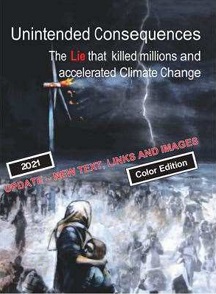
    When I encountered the book Unintended Consequences1 by the recently departed Dr. George Erickson, I had long since abandoned a belief that I had held to be the gospel truth. Growing up in Nairobi, Kenya and seeing how stochastic everyday life was, I was conditioned to invest my faith and emotions in other stuff that I hoped would be a bit more consistent and impeccable than the seemingly random occurrences that seem dictate life in a country like Kenya; one that was perched atop a solid foundation. As a young impressionable kid just beginning the long trudge towards an education, the answer back then was “Science” – or rather what I thought was “science.” It had, after all, been presented to me as an impartial evidence-based approach that our species had settled upon as the tool to probe and extract information from the universe around us. I embraced it all with relish.

    A series of events culminated in me ending up a student at the Korea Advanced Institute of Science and Technology (KAIST), an environment where “science” was not just being consumed, but also being “made.” One of the things that come with travelling in pursuit of education is that you pick up certain cultural subtleties on top of the technical knowledge that sends us there in the first place. Most of what you pick tends to be benign; how to not leave the lab before the professor does and such. Others tend to leave an indelible mark on you. In my case, this was the realization that rather than being impartial, science was yet another human activity done by humans, and left unchecked, it had the potential to reflect everything it means to be human; the strengths and indeed more worrying, our flaws.

    The first alarm bell sounded when I learned that Korean society had “optimized and localized” regulations governing radiation exposure. This struck me as rather bizarre since it implied that scientific “fact” was parochial in nature; that scientific facts could shift depending on who was interpreting them and from where. A bit of a tangent, trying to quell the unease led me to the heated yet messy debate on dose limits that had apparently been raging on for decades within the nuclear industry. I couldn’t fathom why an issue that ought to have been straightforward saw different national entities looking at the same data and coming to wildly differing conclusions. A very gentle scratch of the surface trying to figure things out led me to the infamous Linear Non-Threshold (LNT) model that even to this day refuses to go away regardless of how much updated data, common sense and logic are thrown at it.
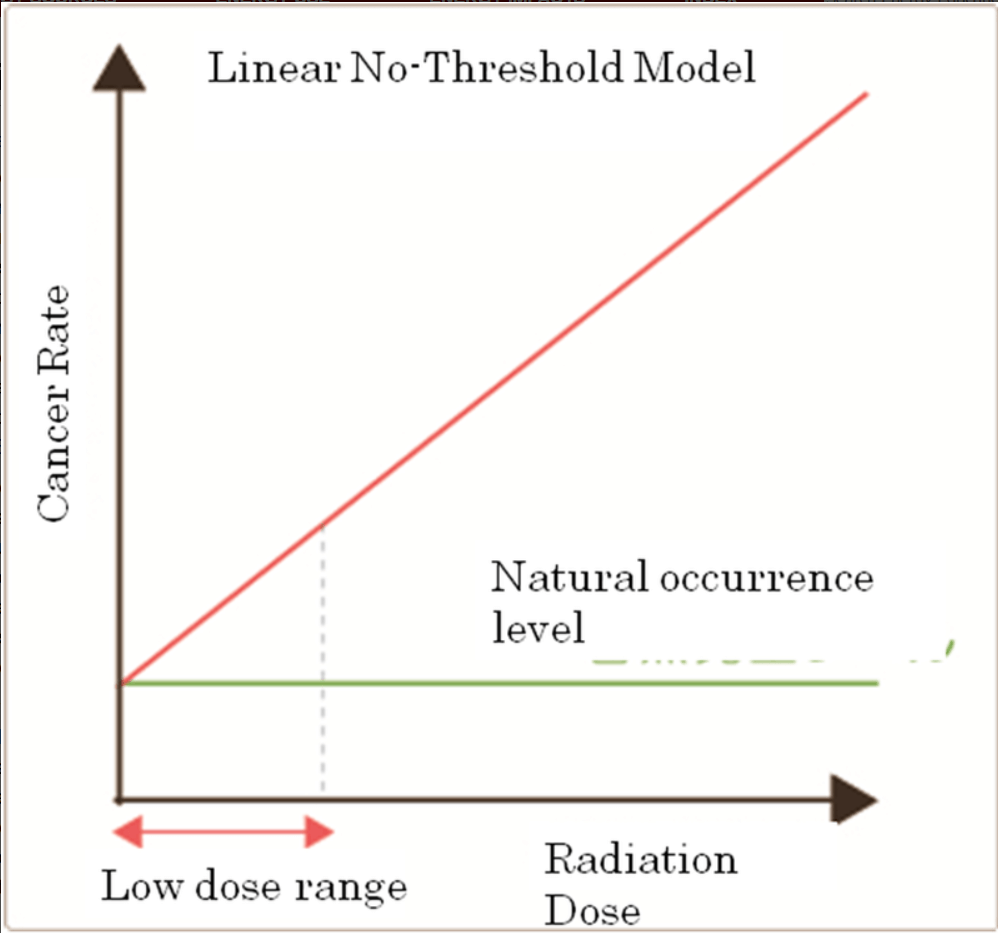
    Chart of LNT
    Chart of LNT

    A must-read on the topic was obviously “Unintended Consequences” by the late Dr. George Erickson who deserves recognition for his passionate advocacy of not just nuclear power, but also particularly Liquid fission thorium-based reactors that showed a lot of promise in the golden era of nuclear engineering when innovative designs seemed popping out of thin air.

    Read together with “Why Nuclear has been a Flop”2 by Jack Devanney of  Thorcon International, the two are primers on how not to handle new cutting-edge technology like nuclear and reveal how it was possible for scientific mischief by a handful of individuals could wipe out the 500,000:1 advantage that nuclear power was projected to have compared to other technologies.

    It is always fun to read a book. It is even more intriguing to read about the author. A man of varied accomplishments – dentist, bush pilot, and author – Dr Erickson made the decision to dedicate his life to promoting safe, clean energy solutions in a way that, as I looked up his work, resonates very deeply with me. Reading “Unintended Consequences” posthumously I found him answering questions I had long before I was even aware of them. He challenged the prevailing ideas about the excesses that have followed the adoption of Hermann Muller’s LNT model and laid bare the dire consequences that have followed. From the crippling energy poverty that continues to afflict the vast majority of the people on this planet to the very real threat of runaway climate change extinguishing the flames of our civilization, Dr Erickson doesn’t mince his words.
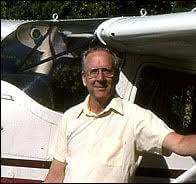
    Dr George Erickson RIP
    Dr George Erickson RIP

    Dr. Erickson was a proponent of a scientific approach to safety. Like the other visionaries of his time, he championed the use of thorium as a superior alternative to traditional finite and clunky uranium.  He argued for its efficiency, environmental benefits, and reduced proliferation risks. He was a voice of reason in the often-charged debate where catchphrases are brandished as counterarguments against the use of nuclear to rescue our civilization from the brink of runaway climate change. His writing style and wordplay do an excellent job of bridging the gap between scientific and public discourse.

    Though I only discovered his work posthumously, the more I read about the man, the more I appreciate his indelible mark on nuclear discourse. It is a legacy that relatively young fellas like testing the waters as we try to build careers, can learn a lot from.

    The best way to ensure that the Late Dr George Erickson’s legacy lives on is to do what he dedicated a significant portion of his life to; keep asking the questions that need answers. Few things would better celebrate his memory than continuing the pursuit of a fact-based approach to addressing the questions that will come as the effects of climate change start to bite. Only then will we stand a chance at addressing what Jack Devanney aptly refers to as “The Gordian knot of our time.”

    May the light that Dr George Erickson has cast on this issue and others, keep guiding those of us keen to take up the mantle of spreading the gospel of nuclear power to every corner of our planet.
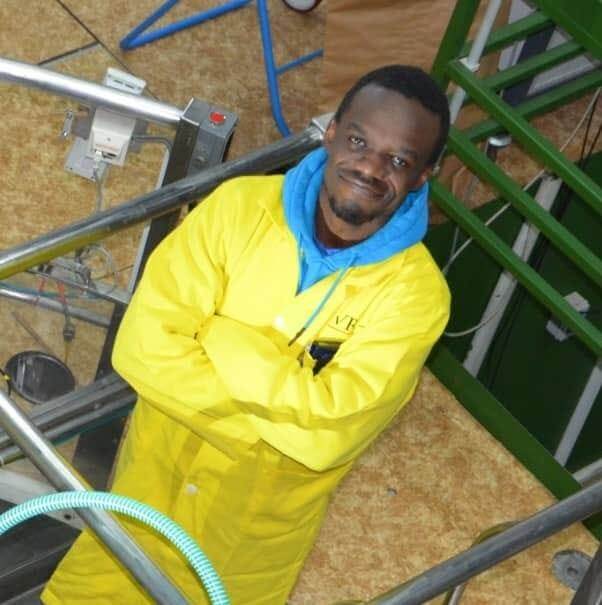
    Omondi Agar

    By Omondi Agar

    PS, Thanks to Jeremiah Josey and Dusya Lyubovskaya for setting this up and making the post for me.

    Links and References

    1. Launching the Unintended Consequences Series on The Thorium Network
    2. The full pdf version of Unintended Consequences
    3. Why Nuclear Power Been Flop – on Amazon

    #UnintendedConsequences #GeorgeErickson #FissionEnergy #NuclearEnergy #TheThoriumNetwork #Fission4All #RadiationIsGood4U #GetYourRadiation2Day #WindTurbines #Solar #RareEarthWastes

  • Episode 17 – All At Sea – The Best Technology and Not Used. Why? Unintended Consequences – Chapter 8 Part 1

    Post created by Jeremiah Josey and the team at The Thorium Network

    Powering Ships and Desalination

    Cargo ships emit more air pollution than all of the world’s cars, but we don’t power them with emission-free nuclear power because we are worried about nuclear proliferation. However, if we would equip these ships with new, proliferationresistant reactors, we could save seven million barrels of oil per day, eliminate 4% of our greenhouse gas emissions and replace those huge fuel tanks with profitable cargo.

    Hyundai Merchant Marine, Algecira Class, at River Elbe, World Largest Carrier. 400 m long x 61 m wide

    Propelling one of our [USA] immense aircraft carriers at 27 mph for 24 hours requires only three pounds [1.36 kg] of nuclear fuel, which is equivalent to 400,000 gallons [1.8 million litres] of diesel fuel. (Burning 100 gallons [455 litres] of diesel fuel creates one ton of carbon dioxide.)

    Thor’ – a Thorium Molten Salt Reactor ship design by Ulstein for Replenishment, Research and Rescue

    California’s drought-stricken Central Valley, which was a dry savanna before “civilisation” arrived, is more than 10 trillion gallons [46 billion metres3] per year behind in precipitation. Fortunately, there is a remedy, but that remedy will require an abundance of carbon-free electricity created by safe, efficient nuclear power plants.

    Drought in Tuolumne River, CA

    The non-nuclear Carlsbad desalination plant produces some 50 million gallons [230 million litres] of fresh water per day with 40 MW, which only supplies 7% of San Diego’s needs, but supplying all of the state would require 140 Carlsbads, which is why the Diablo Canyon nuclear power plant has begun to produce fresh water.

    Claude “Bud” Lewis Carlsbad Desalination Plant

    Diablo Canyon Nuclear Power Plant

    There should be many more plants like Diablo, and there would be, but for the opposition of anti-nuclear zealots whose efforts helped accomplish the closure of California’s San Onofre nuclear power plant. As a result, San Onofre’s 2.4 billion watts of carbon-free electricity are being generated by plants that burn huge volumes of natural gas (methane), which raises CO2 levels and worsens Climate Change.

    What nuclear power plant?
    San Onofre Nuclear Generating Station 2013 photo D Ramey Logan

    Tree ring study shows California’s drought worst in 1,200 years

    Kevin Anchukaitis collecting a tree ring sample from a blue oak in California. Image Credit: Dan Griffin
    Just one $3 fuel pellet = 170 gallons of gasoline

    Why do we persist with carbon fuels when six uranium oxide pellets the size of the tip of your little finger, contain as much energy as 3 tons of coal or 60,000 cubic feet of natural gas? Just a fistful of uranium can run all of New York City for an hour, and the spent fuel “waste” products are far less than that.

    The 2.2-megawatt Excel Energy plant at Becker, MN – the state’s largest emitter of greenhouse gases – turns 60 million pounds of coal per day into CO2, but less than 100 pounds of uranium would produce the same amount of electricity without creating any CO2.

    How does a water-cooled, uranium-fuelled Light Water Reactor (LWR) work?

    What are its pluses and minuses?

    Some claim that uranium mining is especially dangerous because the ore is radioactive, but they are wrong. The radiation level just one foot from a drum of uranium [yellow cake] is only 20% of the cosmic radiation level that passengers experience on a jet flight – and the ore from which the oxide was derived is even less hazardous.

    In a LWR, uranium pellets containing about 4-5% U-235 are sealed in about 25,000 12-foot zirconium tubes. Within those tubes, the U-235 emits neutrons that sustain a chain reaction that releases huge amounts of heat that raises the water temperature to 600 degrees F [320 C], so it must be “kept” at 2,700 psi [20 MPa] to prevent it from boiling. The super-heated water is circulated through a heat-exchanger to make steam in a separate plumbing loop. That steam powers a turbine, which spins a generator. And because the super-heated water would explosively expand 1,000 times if there were a leak, a huge, immensely strong containment dome encloses the reactor so that steam or other gases can’t escape. Once started, a LWR can run for three years with only periodic breaks for refuelling.

    Typical Uranium Fuelled Power Plant

    What about the “waste”?

    Nuclear Fuel Recycling Could Offer Plentiful Energy

    Nuclear power plants are required to contain 100% of their spent fuel (“waste”), but if you were to get all the electricity for your lifetime from conventional reactors, your share would weigh just two pounds [one kilogram], and only a small part of that would be hazardous long term.

    During fission, reaction products accumulate in the pellets, which become cracked, and must be replaced during a multi-day shut-down during which the rods are moved to pools filled with water, which absorbs neutrons, to keep the decaying fuel from overheating.

    After underwater storage for up to 8 years, radioactivity has decreased to the point that the rods can be stored in self-ventilating, concrete cylinders. And after 10 more years, 90% of the highly radioactive elements are no longer hazardous.

    Spent Fuel Storage Pond at a Nuclear Power Station

    On-site storage is a sensible solution because 96% of this spent fuel can fuel modern, “fast” and other reactors to make more electricity. In 2018, the US generated 4.2 billion megawatt hours of electricity from all sources, but we have enough spent fuel to generate 4 billion megawatt years of CO2-free electricity! Why are we waiting?

    “Human societies are addicted to their way of life, and they are fanatical in their defence. Hence, they are reluctant to reform. To admit error is rare among individuals and unknown among states. Instead of changing their minds, leaders redouble their efforts to do what no longer works, wooden-headedly persisting in error until the bitter end.” [Wind and solar – not nuclear]

    William Ophuls

    These pellets also contain isotopes needed for nuclear medicine. (Plutonium 239, which the anti-nukes fuss about, has a half-life of 24,000 years. When held in a gloved hand, one only feels slight warmth due to its extremely slow decay, and as spent fuel decays, it becomes safer – unlike the toxic ash and the particulates made by burning carbon, which remain toxic forever.

    Spent Fuel Ain’t Really “Spent”

    However, Caesium, Iodine and Strontium isotopes are dangerous because they mimic food elements that our bodies need. Iodine decays rapidly, but Strontium and Caesium decay by half in about 30 years, so we should store them safely for 120 years, at which time their activity has dropped by 94%.

    Harold Agnew Fat Man Core 1945

    Note the absence of shielding, even though Mr. Agnew [b. 1921, d. 2013, age 92] is carrying the plutonium that destroyed Nagasaki at the end of World War II.

    Good video on spent fuel from Columbia plant, featuring Dr. James Conca.

    Nuclear Waste | Dr. James Conca

    Dry Storage of Spent [Used] Fuel Casks. No worker protection is needed

    • Used Fuel Dry Storage 1 Prairie Island Nuclear Plant Minnesota
    • Used Fuel Dry Storage 2 Prairie Island Nuclear Plant in Minnesota
    • Used Fuel Dry Storage Canada
    • Used Fuel Dry Storage James A. Fitzpatrick Nuclear Power Plant Scriba New York
    • Used Fuel Dry Storage
    • Used Fuel Dry Storage Central Missouri

    Heavily nuclear France has a recycling program that greatly reduces its volume and the length of time it must be stored. As a consequence, all of France’s multi-decade spent fuel could be stored on one basketball court.

    In comparison, all of the “waste” generated in the U.S. since the fifties could be stored on one football field in self-ventilating, concrete containers. After just 40 years of storage, only about one thousandth as much radioactivity remains as when the reactor was turned off for fuel replacement. (Only a small portion needs long term storage or recycling.)

    Australian Nuclear ResponsibilitiesBen Heard

    However, because recycling can retrieve plutonium isotopes from the waste, some of which can be used for making weapons, President Carter closed our [USA] only recycling plant during the Cold War in an attempt to placate Russian fears that we’d use the plutonium for making nuclear bombs.

    Scientists turn nuclear waste into diamond batteries (that will last 1,000’s of years) by Philip Perry

    WHO’S AFRAID OF NUCLEAR WASTE?

    Unfortunately, there was, and is, another reason: The anti-nuclear crowd has promoted radiophobia so effectively that many voters and legislators refuse to even consider building the new, super-safe, highly efficient reactors that can use 95% of our stored “waste”, including the plutonium, as fuel. (During the last 70 years, just 56,000 tons of nuclear “waste” was generated in the U S, but the city of New York creates that much in just 6 days.

    Trash Recycling Management in New York – Low Cost Fission Would Recycle All of It

    General Electric and Southern Company Team Up to Power the Planet With Nuclear Waste

    [Types of Radioactive Waste by Cameco

    Radioactive waste is generally divided into three categories depending on its level of radioactivity: low, intermediate and high-level waste.

    • Low-level waste includes slightly contaminated clothing and items that comes from places such as nuclear medicine wards in hospitals, research laboratories and nuclear plants. Low-level waste contains only small amounts of radioactivity that decays away in hours or days. After the radioactivity has decayed, low-level waste can be treated like ordinary garbage.
    • Intermediate-level wastes mostly come from the nuclear industry. They include used reactor components and contaminated materials from reactor decommissioning. Typically these wastes are embedded in concrete for disposal and buried.
    • High-level waste generally describes spent (or used) fuel from nuclear reactors. It is highly radioactive, will remain so for many years, and requires special handling.

    According to the IAEA, low and intermediate level wastes comprise about 97% of the volume, but only 8% of the radioactivity of all radioactive waste. ]


    Coming up next week, Episode 18 – Pass the Salt Dear – How Fission Gets Rock Solid Stability


    Links and References

    1. Next Episode – Episode 18 – Pass the Salt Dear – How Fission Gets Rock Solid Stability
    2. Previous Episode – Episode 16 – Green is Clean Air and Clean Water for All
    3. Launching the Unintended Consequences Series
    4. Dr. George Erickson on LinkedIn
    5. Dr. George Erickson’s Website, Tundracub.com
    6. The full pdf version of Unintended Consequences
    7. https://dailylogistic.com/world-largest-container-ships/
    8. https://splash247.com/ulstein-debuts-thor-claiming-it-is-shippings-nuclear-powered-silver-bullet/
    9. https://www.youtube.com/watch?v=IBRVb0-0kAw
    10. https://en.wikipedia.org/wiki/Diablo_Canyon_Power_Plant
    11. https://en.wikipedia.org/wiki/Claude_%22Bud%22_Lewis_Carlsbad_Desalination_Plant
    12. https://en.wikipedia.org/wiki/San_Onofre_Nuclear_Generating_Station
    13. https://earthsky.org/earth/tree-ring-study-shows-californias-drought-worst-in-1200-years/
    14. http://climatewarmingcentral.com/nuclear_page.html
    15. https://www.anl.gov/article/nuclear-fuel-recycling-could-offer-plentiful-energy
    16. https://nuclearenergyinfo.blogspot.com/2010/10/what-is-spent-fuel.html
    17. https://en.wikipedia.org/wiki/Harold_Agnew
    18. https://www.youtube.com/watch?v=0JfJEK3R1k0
    19. https://www.linkedin.com/in/jim-conca-2a51037/
    20. https://www.kiteandkeymedia.com/videos/is-nuclear-energy-and-waste-safe-or-dangerous-and-how-to-manage-storage-disposal-radiation/
    21. https://www.cameco.com/uranium_101/spent-fuel-management/spent-fuel/
    22. https://www.youtube.com/watch?v=IzbI0UPwQHg
    23. https://www.linkedin.com/in/ben-heard-743b6014/
    24. https://bigthink.com/surprising-science/scientists-turn-nuclear-waste-in-diamond-batteries-thatll-last-for-thousands-of-years/
    25. https://bigthink.com/people/philip-perry/
    26. https://www.foxbusiness.com/markets/general-electric-and-southern-company-team-up-to-power-the-planet-with-nuclear-waste
    27. https://www.cameco.com/uranium_101/spent-fuel-management/spent-fuel/

    #UnintendedConsequences #GeorgeErickson #ClimateChange #FissionEnergy #NuclearEnergy #SpentNuclearFuel #DiabloCanyon #TheThoriumNetwork #Thorium #Fission4All #RadiationIsGood4U #GetYourRadiation2Day

  • Episode 1 – Why I Care, by Dr. George Erickson – Unintended Consequences

    Episode 1 – Why I Care, by Dr. George Erickson – Unintended Consequences

    Post created by Jeremiah Josey and the team at The Thorium Network

    This is the first episode taken from Dr. George Erickson‘s Unintended Consequences: The Lie that Killed Millions and accelerated Climate Change. Follow our media for a bite sized portion each week of Dr. Erickson’s book with additional images and references for easy information access. Follow our social media to read some of the best, some of the most concise words you’ll find on Climate Change and how Molten Salt Fission TechnologyTM with Thorium can fix it.

    Over to you Dr. George Erickson…

    Back in the sixties, when I was living in a small Minnesota farming community, my sons were taught to “duck and cover” beneath their desks in case of a nuclear war.

    George Erickson
    George Erickson – Why I care

    We’d been warned about radiation and fallout, so I built a concrete block shelter in my basement that I hoped would shield my family for a week or two if events with Russia turned sour.

    Time passed. The Cold War waned, and when concerns about nuclear power changed from making bombs to making electricity, my concerns about nuclear issues receded – until I attended a lecture on thorium near the turn of the century. Intrigued, I began to investigate thorium because of its many advantages over uranium for producing electricity

    Thorium for a lifetime

    I joined the National Center for Science Education and the Thorium Energy Alliance, which provided a huge upgrade to my better than average knowledge of physics and energy issues, including Climate Change.

    I had known about greenhouse gases, global warming and sea level rise, and I had read about Dr. Charles Keeling’s work with carbon dioxide on the slopes of Mauna Loa, but I hadn’t realized that expanding nuclear power, which creates no carbon dioxide (CO2) could be our most effective weapon for combating Climate Change, much of which is caused by burning coal, oil, wood and natural gas to supply electricity to an expanding world that exceeds 7 billion – a world that is finally beginning to consider the value of CO2-free, environmentally benign nuclear power.

    One solution seemed obvious: replace the carbon-burning steam generators at every power plant with nuclear power plants. However, I quickly discovered that many powerful organizations oppose almost everything nuclear – some out of ignorance, many from fear, and some for profit, but I also found support from those who’d set their fears aside after discovering the impressive safety record and efficiency of CO2-free nuclear power. And so, with Climate Change becoming deadlier every year (assisted by former Pres. D. J. Trump, our anti-science Climate Change Denier in Chief), and because my grandchildren’s futures are at stake, I have decided to respond to those who fear our safest, most efficient, environmentally benign power technology by revealing its true record – including that of Chernobyl, which has caused fewer than 80 deaths, and of Fukushima Daiichi, where two workers drowned at the plant – and I’ll highlight some of the new plants that are even safer and more efficient than the hundreds we have relied on for 60 years.

    But first, I must mention two discoveries that came as a huge surprise – the fact that our radiation safety standards are based on a fraud that became dogma not long after World War II [Ed. see later episodes for this explanation], and the existence of compelling evidence that low levels of background radiation can even improve our lives. I know that sounds crazy, but there is abundant science to back it up.

    “An ecologist must be the doctor who sees the marks of death in a community that believes itself well and does not want to be told otherwise.” Aldo Leopold – 1943

    Aldo Leopold

    The Green New Deal will accelerate climate change and damage our environment unless it expands safe, highly efficient, resource-sipping, CO2-free nuclear power and stops funding inefficient, resource-gobbling environment-damaging wind and solar farms, Russia, South Korea, Turkey, Argentina, Poland, Sweden, Finland, India, China, the Czech Republic, Estonia, the Netherlands, France; Slovakia, Hungary, Romania, Gr. Britain, Belarus, Ukraine, the Emirates, Pakistan, Bangladesh and Egypt have approved or are building nuclear plants, and we [Ed. “we” = USA] should, too.

    Dr. James Hansen

    The belief that we can get all of our energy from wind, water and solar is exactly what Dr. James Hansen, former chief scientist at NASA, had in mind when he wrote, “We have two political parties; neither wants to face reality. Conservatives pretend that climate change is a hoax, and liberals propose solutions that are non-solutions.

    We must turn away from carbon. We must do better than this!

    [Ed. Cartoon copyright Toles 2013, The Washington Post. Reprinted with permission of Universal Uclick.]

    Cartoon - survival plan

    This is the end of the first episode taken from Dr. George Erickson’s Unintended Consequences: The Lie that Killed Millions and accelerated Climate Change. Each week we’ll be posting a bite sized portion of Dr. Erickson’s book with additional images and references for easy information access. So follow our social media to read some of the best, some of the most concise words you’ll find on Climate Change and how Molten Salt Fission TechnologyTM with Thorium can fix it.

    Coming up next week, Episode 2 – Forward of Unintended Consequences.

    1. Next Episode – Episode 2 – The Forward
    2. Launching the Unintended Consequences Series
    3. Dr. George Erickson on LinkedIn
    4. Dr. George Erickson’s Website, Tundracub.com
    5. The full pdf version of Unintended Consequences
    6. Thorium Energy Alliance
    7. National Center for Science Education
    8. Dr. Charles David Keeling on Wikipedia
    9. Dr. Charles David Keeling Biography
    10. The Green New Deal by John de Graaf
    11. Aldo Leopold
    12. Nuclear Power Is the Best Climate-Change Solution by Far by Andrew I. Fillat and Henry I. Miller

    #GeorgeErickson #UnintendedConsequences #MoltenSaltFissionEnergy #Thorium #ClimateChange #MoltenSaltFissionTechnology