Author: Jeremiah Josey

  • Interview #3, Dr. Reşat Uzmen, Nuclear Technology Director of FİGES. Part of the Thorium Student Guild Interview Series, “Leading to Nuclear”

    Post created by Jeremiah Josey and Rana, president of the Student Guild

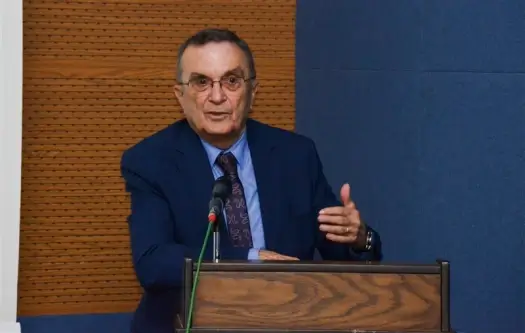
    Dr. Reşat Uzmen

    Since the 1960’s Turkey were trying to get involved with nuclear energy. Turkey was one of the countries that participated in the International Conference on the Peaceful Uses of Atomic Energy, held in Geneva in 1955 September. There is no doubt that Turkey wants to use nuclear energy for energy production. In Turkey, there are many experts that have knowledge about nuclear fission technology. Dr. Reşat Uzmen is one of the most important people who is experienced in the nuclear fuel area. During the interview, his ideas and visions enlighten us about the future of Molten Salt Fission Technology. Here is another instructive interview for building a MSR!

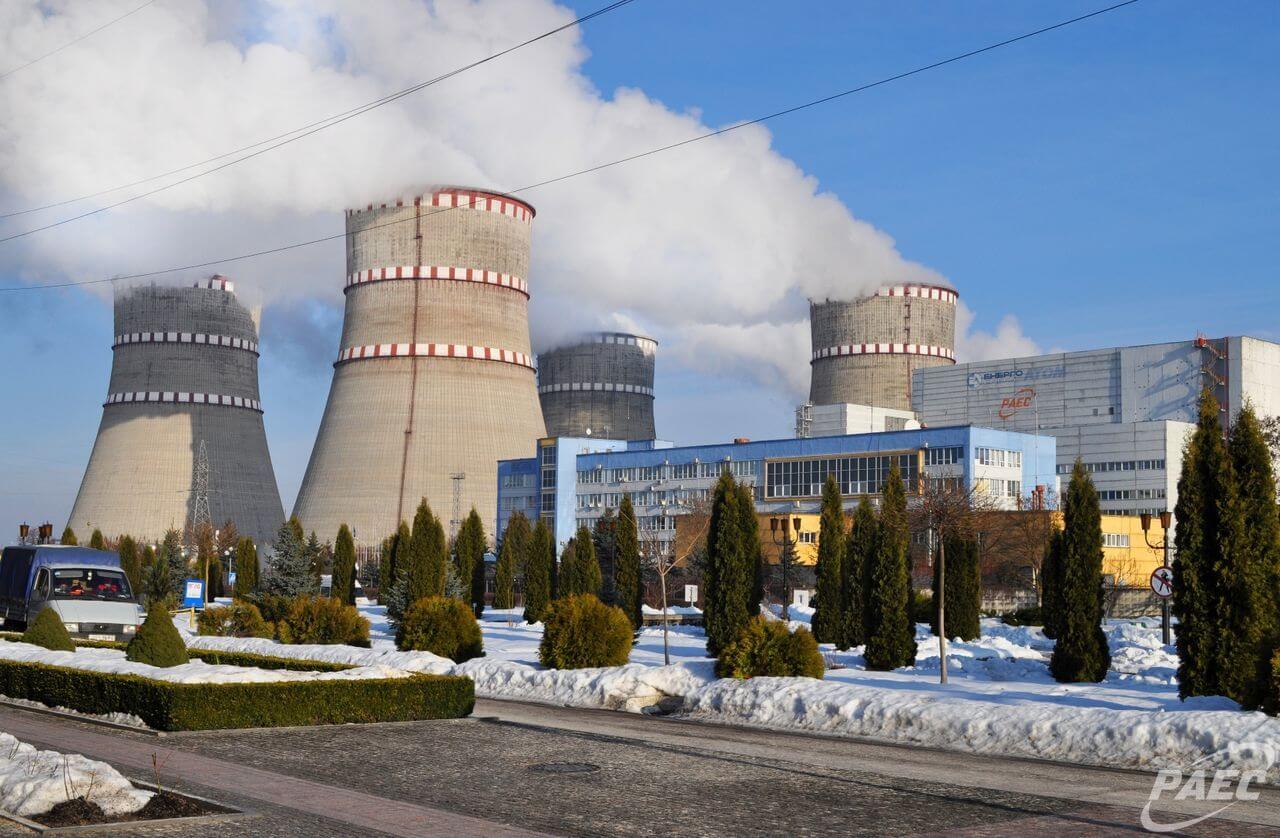
    The Atoms for Peace symbol was placed over the door to the American swimming pool reactor building during the 1955 International Conference on the Peaceful Uses of Atomic Energy in Geneva, often called the Atoms for Peace conference.

    Rana
    President of the Student Guild
    The Thorium Network

    Leading to Nuclear Interview Series, Interview #3, Dr Resat Uzmen of Figes Turkey

    Mr. Reşat, can you tell us a little about yourself?

    I graduated from İstanbul Technical University (İTU) in the chemical engineering department. I did my master’s degree in İTU also. As soon as I finished the department I became a researcher in The Çekmece Nuclear Research and Training Center, known as ÇNAEM. My research was about how uranium could be treated to obtain an uranium concentrate. I did my doctor’s degree in that topic. Back then, it was so hard to get information because it is a delicate technology. That’s why we did the research by ourselves. Think about that: there was no internet! There was a library in ÇNAEM, it still remains there. All the reports that were collected from all over the world were kept here. We benefit from those reports that were about uranium and thorium. In addition, getting chemicals was difficult. The ores that we were working on were coming from Manisa so mine was tough to process. Despite all these obstacles Turkey needed uranium so we have done what has to be done. I am the founder of “the nuclear fuel technology department in ÇNAEM”. This department was focused on producing uranium fuel that could be ready for fuelling and we did it. We produced uranium pellets by ourselves in our laboratories. We did research about ore sorting of thorium and how it can be used in nuclear reactors. Now I am working as a nuclear technology director at FİGES.

    Dr. Reşat Uzmen, Thorium NTE Field in Burdur Turkey

    “Turkey is capable of designing its own reactor now!”

    Dr. Reşat Uzmen

    What are your thoughts on Turkey’s nuclear energy adventure? Although nuclear engineering education has been given at Hacettepe University since 1982, Turkey has never been able to gain an advantage in nuclear energy. What could be the main reasons for this?

    Nuclear energy needs government support and government incentive. Government policy must include nuclear energy. In Turkey, nuclear energy was too personal. A government is formed then a team becomes the charge of the Turkey Atomic Energy Agency and this team is working hard, trying to encourage people about nuclear energy but then the new government is formed and the team is changed. Unfortunately, this is how it is done in Turkey. Also, you need money to build reactors. There were some countries that try to build a nuclear reactor in Turkey. Once CANDUs was very popular in Turkey. Canadians supported us a lot. Argentineans came with CAREM design and wanted to develop the design with Turkey also they wanted to build CAREM in Turkey, it was a great offer but the politicians at that time were not open up to this idea. Nuclear energy must be government policy and it should not be changed by different governments.

    As you know, there is a PWR-type reactor under construction in cooperation with Rosatom and Akkuyu in our country. Do you think Turkey’s first reactor selection was the right choice?

    This cooperation is not providing us any nuclear technology. When The Akkuyu Nuclear Power Plant is finished we will have a nuclear reactor that is operating in Turkey but we can not get any nuclear technology transformation. Right now Turkey can not construct the sensitive components of a nuclear reactor. Akkuyu is like a system that produces energy for Turkey. It would be the same thing if Russia build that plant in a place that is near Turkey. In addition, there is the fate of spent fuels. Russia takes away all the spent fuels, these spent fuels can be removed from Turkey in two ways: by water, starting from the Akkuyu harbor, the ship will pass through the Turkish straits, then pass to the Black Sea and pass through the Novorossiysk harbor to reach Siberia and by land, from Akkuyu it will arrive in Samsun or Trabzon then by water the ship will arrive in Siberia. I suppose spent fuels are going to be transported by water.

    What are your thoughts on molten salt reactors?

    Molten Salt Reactor is a Gen. 4 reactor and has a lot of advantages. First of all, the fuel of the MSR is molten salt so it is a liquid fuel. Since I am interested in the fuel production part of nuclear energy I am aware of the challenges of solid fuel production. Having liquid fuel is a big virtue. Liquid fuel can be ThF4-UF4. The fuel production step can proceed as: UF4 may be imported as enriched uranium. If you have the technology then UF₆ may be imported as enriched uranium then UF₆ can be converted to UF4. After that step fabrication of the liquid fuel is easier than solid fuel. Second, MSR has a lot of developments in the safety systems of a nuclear reactor. There is no fuel melting danger because it is already melted. The liquid fuel is approximately 700 °C. The important point is molten salt may freeze. If fuel temperature is below approximately 550°C the fuel becomes solid we don’t want that to happen. Also, the fuel has a negative temperature coefficient which means that as the temperature of the fuel rises reactivity of the fuel is going to decrease. There is a freeze plug at the bottom of the core. If the core overheats the freeze plug will melt and the contents of the core will be dropped into a containment tank fed by gravity. This is a precaution against the loss of coolant accident. One of the other advantages is reprocessing opportunity. It is possible with helium to remove volatile fission products from the reactor core. Tritium can be a problem but if the amount of tritium is below the critical level then it wouldn’t be a problem.

    ” Molten Salt Reactors are advantageous in many ways. The fuel is already melted, freeze plug is going to melt in case of an overheating issue, reproccessing is easier than the solid fuel. ”

    FİGES took on the task of designing MSR’s heat exchangers in the SAMOFAR project and your designs were approved. Can you talk a bit about heat exchangers? What are the differences with a PWR exchanger? Why did it need to be redesigned?

    There are a lot of differences between a PWR heat exchanger and an MSR heat exchanger. The basic difference is, that in a PWR heat exchanger steam is produced from water. MSR heat exchanger is working with molten salt to produce steam. FİGES finished calculations like the flow rate of the molten salt, the temperature of the molten salt, etc. for a heat exchanger of SAMOFAR. The heat exchanger is made of a material that is the same as the reactor core. In SAMOFAR, Hastelloy is used but boron carbide sheeting may be used for the heat exchanger.

    Can you talk a little bit about your collaboration with Thorium Network?

    The Founder of the Thorium Network Jeremiah has contacted FİGES about 5 months ago. We met him in one of the FİGES offices which are located in İstanbul. We have discussed what we have done in Turkey thus far. We signed an agreement about sharing networks. We share the thorium and molten salt reactor-based projects with them and they do the same.

    If the idea of building an MSR in Turkey is accepted, where will FİGES take part in this project?

    As FİGES, building an MSR in Turkey has two steps. The first step is about design. To design a reactor you need software. The existing codes are for solid fuel. First of all the codes that are going to be used for liquid fuel must be developed. There are companies that work to develop required software all around the world. We want to take part in the design step as FİGES. After the design is finished the second step comes. The second step is building the reactor. FİGES doesn’t have the base to build a reactor but an agreement can be made with companies that can build a nuclear power plant.

    Do you have any advice you can give to nuclear power engineer candidates who want to work on MSR? What can students do about it?

    There are tons of documents about Molten Salt Reactor Technology. These documents are about the material of the reactor core, software codes, design, etc. A student can find everything about MSR on the internet. In addition to this, students should follow the Denmark-based company that is called “Seaborg“. They have a compact molten salt reactor design. Also, there is another MSR design called “ThorCon“. Students can follow the articles, presentations, and events about these two MSR designs. As I said, students must research and follow the literature about Molten Salt Fission Technology.

    . . .

    It was a great opportunity for me to meet Mr. Reşat who has been working to develop nuclear energy in Turkey. I would like to thank him for his time and great answers.

    As students, we are going to change the world step by step with Molten Salt Fission Technology by our side. We are going to continue doing interviews with key people in nuclear energy and MSR!

    The Student Guild of the Thorium Network

    LINKS AND REFERENCES:

    1. Dr. Reşat Uzmen on Linkedin
    2. Rana on Linkedin
    3. The interview on Youtube
    4. Figes AS
    5. SAMOFAR
    6. Atoms for Peace
    7. Interview #2, Mr. Emre Kiraç “Leading to Nuclear”
    8. Launching “Leading to Nuclear, Interviews by the Thorium Network Student Guild”
    9. The Thorium Student Guild

    #ThoriumStudentGuild #LeadingToNuclear #Interview #ResatUzmen #Figes #Turkey
  • Interview #2, Mr. Emre Kiraç of Kiraç Group. Part of the Student Guild Interview Series, “Leading to Nuclear”

    Interview #2, Mr. Emre Kiraç of Kiraç Group. Part of the Student Guild Interview Series, “Leading to Nuclear”

    Created by Jeremiah Josey and Rana, president of the Student Guild

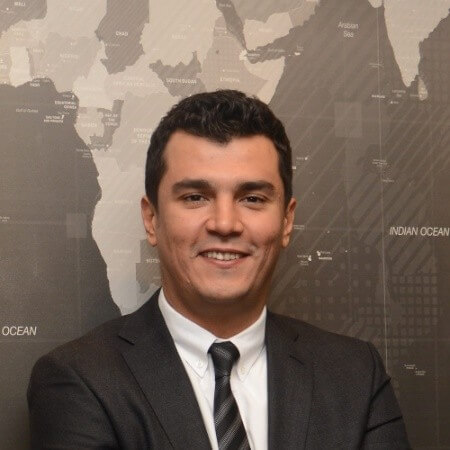
    Emre Kiraç

    Under favour of The Thorium Network, I met a successful and farsighted person. The person who caught my attention with his works and ideas in various fields is Emre Kıraç, CEO of Kıraç Group. If we talk about him briefly, Mr. Emre received his bachelor’s degree in electrical engineering from Istanbul Technical University. After completing his master’s degree in Entrepreneurial Management at London EBS (European Business School), he still works as the general manager of Kıraç Group companies operating in the fields of energy, transportation and health. If I were to talk about Mr. Emre for myself, I can say that he is open to new ideas and a model to young entrepreneurs with his success in many sectors he has entered. As a nuclear engineer, the thing that draws my attention the most is his innovative views, support and work in the field of energy. The reason why I say so is that, as we know, the need for energy is increasing day by day due to the increasing population and other factors. There are many different methods to supply with the energy need. One of them is nuclear energy. We see that Mr. Emre closely follows and supports the developments in the nuclear field.

    Without further ado, you can see what we asked in our interview. Good reading!

    Rana,
    President of the Student Guild
    The Thorium Network

    https://kiracgroup.com/en
    Leading to Nuclear Interview Series, Interview #2, Engineer Emre Kiraç of Kiraç Group, Turkey

    Can you tell us about the development of Kıraç Group? Since 1982, your company has continued to grow. What is your biggest source of motivation?

    Our company’s history and the fact that we have earned people’s confidence in the workplace. Moreover, one of our major sources of motivation is to ensure and improve the continuation of our businesses. 

    In which areas and specifically on which subjects does Kıraç Group focus on R&D studies?

    In particular, we have four companies engaged in R&D work. These companies develop their own products. Kıraç Metal is working on solar energy systems, Kıraç Galvaniz is working on highway protection systems, Kıraç Bilişim is working on hospital automation, and Kıraç HTS is working on aviation.

    You’ve worked in the energy business for a long time and have a lot of experience in it. I’d want to hear your own thoughts on nuclear energy and reactors.

    Nuclear energy, in my opinion as an electrical engineer, is a healthy and safe source of energy. Of course, if it’s done correctly. There have unfortunately been awful examples of this in the past. Unfortunately, many associate nuclear energy with nuclear weapons, and as a result, they are biased towards this sort of energy. But, with smart design and hard effort, I’m confident that many people will see nuclear power as clean and safe.

    As Kıraç Group, you give importance to green energy. You have studies and activities on solar energy and wind energy. The world also needs nuclear energy and we cannot stop climate change with wind and solar energy alone. What do you think about Turkey’s adventure in the field of nuclear energy? What changes will happen after that?

    As we know, Akkuyu nuclear power plant installation has started. Of course, our country does not have any nuclear technology. In fact, nuclear technology is a technology that has been on the world agenda since the 1940s. Although Turkey has technology in many fields, unfortunately it has not had any technology in the nuclear field. Therefore, our country should develop itself in the global conjuncture.

    Do you find Turkey’s studies on renewable energy sufficient? What do you think should be done more?

    The main country that creates the economy of renewable energy is Germany. In this sector, we continue our work in Germany. Although this country is less efficient in terms of solar energy compared to other countries, it has many more solar power plants. In Turkey, on the other hand, solar power plants will definitely become more widespread. We are also in this business. Turkey is a complete renewable energy country in terms of both wind and solar energy. We also closely follow the hydrogen-based energy technology. Renewable energy should become more widespread in our country. Our country is very clear in this regard. The important thing is to increase the incentives of the state to this sector.

    What are your thoughts on molten salt reactors? Can a molten salt reactor be established in Turkey after the VVER 1200 (PWR) to be established in Akkuyu and can it be produced entirely with national resources?

    I got detailed information on this subject. The implementation of this technology would be incredibly good for Turkey. Since Turkey is rich in thorium reserves, this technology carries our country much further in the nuclear field. But for this technology to be applicable, R&D studies are needed. I think this will be possible with the efforts of our state and universities.
    Can you tell us about your cooperation with Thorium Network? What prompted you to make this collaboration? What was the most influential factor for you?

    First of all, since we are in the energy sector, Thorium Network attracted our attention. We have an old friendship with Mr. Jeremiah. I am interested in Jeremiah’s blogs and I follow them. After he came to Turkey, I had the opportunity to get to know him better. In addition to these, I feel responsible for this issue as Eskişehir has thorium deposits. I want to promote and develop Thorium Network in this environment. This is my biggest goal right now.

    What kind of work can be done to spread the idea of nuclear energy in Turkey?

    We need to lobby on this issue. People like you and us need to understand this technology very well and explain it to other people. We are just at the beginning of the road. Firstly, the Molten Salt Reactor technology needs to be developed. The more R&D studies we do on this subject, the more positive returns will be.

    Turkey wants to design and install a molten salt reactor with completely domestic and national resources. Especially the Turkish Energy, Nuclear and Mining Research Institute (TENMAK) is very enthusiastic about this issue. Do you think TENMAK and universities alone will be enough for R&D studies or do we need other organizations?

    We need an international communication on this issue. There may also be a need for the private sector, but we do not have many companies that have worked in the nuclear field. Together we can research and develop. Apart from these, it is important for the state to support, technical and commercial reports should be prepared and funds should be allocated. Then an international partner can be found and brought to better places.

    When I examined your company, the years you entered new sectors caught my attention. You identify the needs very clearly and produce solutions in the most effective way. What do you pay attention to when entering a new industry? In your opinion, if the first molten salt reactor were to be successfully established in our country, where would Kıraç Group be in this process? (Part production, liquid fuel production, construction, electricity etc.)

    The nuclear industry is a very large and complex field. We have thousands of products, of course, we can meet some of them in the future. But it’s too early to talk about that. We will cooperate with Thorium Network on this issue. There is also a large thorium reserve and precious metals in Eskişehir. These mines are currently being sold. It would be much better if we were in a position to add value to these mines. We continue our research on this subject.

    We had a great time during the interview. We’d like to show our thanks to Mr. Emre for the information he gave and for his participation. 

    You may also stay updated on developments by visiting our website and joining our student guild.

    Thorium Network Student Guild continues to inspire people all around the world. Come and join our team! You can find the Student Guild application on this page:

    The Student Guild of The Thorium Network

    1. Emre Kirac on LinkedIn
    2. Rana on LinkedIn
    3. The interview on YouTube
    4. Kirac Group
    5. Interview #1 Akira Tokuhiro, “Leading to Nuclear”
    6. Launching “Leading to Nuclear, Interviews by the Thorium Network Student Guild”
    7. The Student Guild

    #StudentGuild #LeadingToNuclear #Interview #EmreKirac #KiracGroup

  • Launching the Student Guild Interview Series, “Leading to Nuclear”

    Launching the Student Guild Interview Series, “Leading to Nuclear”

    Created by Jeremiah Josey and Rana, president of the Student Guild

    We live in a finite world. Our world has a limited time until its end. There are 7.753 billion people who are trying to survive every day out there. Climate change is real and our world continues to warm. If we don’t do something about climate change, we will never live in the same world that we used to live in. Our lives might change completely. We are responsible for all the actions that we have done to the world and nature. So it is time to correct our mistakes and take the action! 

    Bill Gates

    “Nuclear energy, in terms of an overall safety record, is better than other energy.” 

    Bill Gates

    We all know that wind and solar are not enough to stop climate change. We need a combination of nuclear, solar, and wind because nuclear energy has zero carbon emissions. That’s what we need! Do your research, ask what you want to ask at the end of the day you will see that nuclear is the only answer. Now we have an even better option which is Molten Salt Fission Energy Technology. It is safe, reachable but needs committed research and development programs worldwide. We need to convince the world that now nuclear power is safer than ever.

    Students have the power of changing minds, creating new ideas, and supporting each other. At this point we are going to do all the things that we can do since still we have time. We are going to interview nuclear engineers, nuclear energy experts, and people who are interested in nuclear power to learn how we can reach a net-zero carbon economy with nuclear power. Also, we are going to learn how Molten Salt Fission Energy Technology can be accepted by regulators and what can we do about Thorium-based fuel. We are going to publish blogs about every interview. We interview people as much as we can. This way we will create a new era about Molten Salt Fission Energy Technology and Thorium fuel. It is a long journey but hopefully, at the end of it, we will have smiles on our faces with champagnes in our hands. 

    Our first interview is with Professor Akira Tokuhiro of Canada. He recently stepped down as the Dean of the Faculty of Energy Systems and Nuclear Science at Ontario Tech University in Canada. Also, he was in the American Nuclear Society’s President’s Committee on the 2011 Fukushima Daiichi nuclear power plant accident in Japan. As international nuclear energy expert readers of this interview will gain a rare insight few will experience in their lifetime.

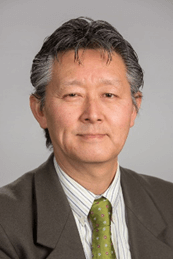
    Prof. Akira Tokuhiro

    Our interview with Professor Tokuhiro will be one of many coming over the next several months as we bring you key insights on an industry rarely discussed outside.

    Rana,
    President
    The Student Guild

    Thorium Network Student Guild continues to inspire people all around the world. Come and join our team! You can find the Student Guild member application on this page:

    The Student Guild of The Thorium Network

    1. Leading to Nuclear, Interiew #1, Prof. Akira Tokurio, Ontario Technical University, Canada
    2. Launching “Leading to Nuclear, Interviews by the Thorium Network Student Guild”
    3. The Student Guild
    4. Rana on Linkedin

    #StudentGuild #LeadingToNuclear #Interview #MoltenSaltFissionEnergy #Thorium

  • The Danger of Hype – Why Fusion is getting a bad name

    Author Jeremiah Josey

    It’s unfortunately when good science is spun to create bad press.

    Fusion is nowhere near a solution. In the very same article Qout (thermal and not electrical) is 11 MW. Qin is 1 GW. Hence Q = 0.011.

    It’s just media hype, BBC style. Europe’s ITER has collected Euro 65b of public money on the fusion lie. Well not a lie, but misinformation. To maintain funding. If politicians – and the handful of duped investors – really new the science it would be given a few million, but that’s a digression…

    From the data in the BBC/Oxford/JET article the ratio of energy out to energy in is only 1.1%, and only for 11 seconds…

    Q= 0.011

    Hype.

    One suspects BBC/Oxford trying something similar to collect some of the billions going into UK fission projects for the JET project. There’s 300 scientists working on JET after all.

    (Point to note: 14,000 people worked on the first molten salt project in 1954. It’s not because they didn’t have iPads).

    The downside of hyping such projects is it delays public acceptance of fission (the same way the fossil fuel industry plays the green renewable card to the public).

    Most investors are more savvy – it’s their purpose to be savvy. Eg, now Bill Gates, and of course the Turkish, Chinese, Russians and French.

    Note that ITER is aiming for Q-Plasma parity. Not Q-Total… A small detail even the director of ITER opening ignores, and I am sure an ignorance he promotes. What’s his budget after all? Watch the YouTube in this article:

    Here’s the original BBC article:

    https://www.bbc.com/news/science-environment-60312633

    #fusion #ITER #jet #fission #science

    Whilst it’s not our focus – ours is production of energy using Molten Salt Fission Energy technology and Thorium – we’ve found it appropriate for a couple of focused articles – this one on JET and one on ITER – to highlight the inappropriate gap between the science and the spin.  Both articles are be found here.

    This spin on fusion distracts from real progress on carbon free power production for our societies. It diverts attention from real technologies. It confuses the public. It diverts public money – and a few duped private investors – who, given full knowledge, would provide their support to such projects more judiciously.

    For more comprehensive study on the inadequacies of fusion for power production we refer you to the work of Steven B. Krivit and this site New Energy Times.

  • Going Backwards with Wind and Solar

    Author Jeremiah Josey

    So, let’s go back to basics. Energy = Life. I don’t think anyone disagrees. More energy = more life, and for humans, it means a better society. There are ample studies on this, but we do like to study the obvious, don’t we. It’s the not-so-obvious that this post is about.

    Specifically, let’s talk about the ratio of energy obtained compared to the effort expended to obtain that energy in the first place. Hence let’s define EROI: Energy Return on Investment. EROI is far more encompassing than ROI or LCOE. I’ll leave it to others to explain those two. EROI provides “full boundary enclosure” – and that means you include the entire planet – to properly assess the impact and suitability of an energy system. The evidence of this can be described through an empirical timeline of humanity. For an eon of human development no fire meant an EROI ranging from 1 (let’s call it one human power -> direct effort in = direct effort out) to 4 (horses have about 4 times as much power as a human).

    Then fire is harnessed. What happens? Civilisations are born. Massive growth in population and subsequently culture, technology and thus quality of life. The EROI? It’s between 7 and 12 for burning biomass (i.e. trees). It depends on the water content, cell density etc. It turns out that the magic number for humans to Thrive is about 7:1. Seven is the bare minimum for a society to move from survival to thriving. Otherwise the search effort for energy is too much for anything more than a simple lifestyle (Think: Inuit, Australian Aboriginals, or American Indians, et al).

    Another eon passes, and coal is harnessed. With an EROI of 30:1 suddenly there’s excess energy. What happened? The Industrial Revolution. Steel production. Steam power. Drill bits, oil derricks and…. oil… Rocket ship stuff.

    Oil: with an EROI of 80:1 what a panacea it became! (Saving the whales along the way – another story for another day). But hold your breath because burning oil stinks and so does coal.

    The story is almost done.

    With such a high EROI (80:1) our civilisation truly becomes global. And… we are able to develop Fission Energy! (Nuclear for those not in the know). Solid fission is about 75:1, so again incredible and just perfect for our civilisation – no CO2 is produced. Unfortunately, oil had already a 100 year head start and the piles of money stashed away were quite ready, willing and able to snuff out any competitor. Which they did with great efficaciousness. (That’s another story too).

    So, that’s the short story of humanity based on energy, but more importantly EROI – Energy Return on Investment.

    What is the EROI of solar? Check the chart below. It’s 1.6:1. Not good. What about wind? 3.9:1. Not good either. These systems do produce energy and yes, a house, a village, perhaps a city can be “green” using only wind and solar. But their neighbours take the burden of everything that can’t be made in that society. Because nothing can work at such a low EROI, except providing for a nice simple lifestyle. Even food production will suffer.

    If the entire world switched to EROIs below 7, the net result will be a generational decline in living standards for everyone. This is actually impossible, as there are many who understand EROI. There are however countries that will try to do it. The impacts can be seen after only 20 years in Germany.

    Now let me introduce an EROI of 2000:1…

    Jeremiah Josey

    Author Jeremiah Josey
    Founder and CEO
    The Thorium Network

    #wind #solar #eroi #moltensaltfission

  • One Day in 2050 – A New Dawn Comes

    Author Jeremiah Josey

    This piece was written as part of the oneday2050.org program, created by Jaume Enciso Cachafeiro of Sabadell, Catalonia, Spain. Reach out to Jaume if you want also to contribute.

    “Our minds are the most powerful tools we have. Applied correctly, we can achieve anything”

    Jeremiah Josey

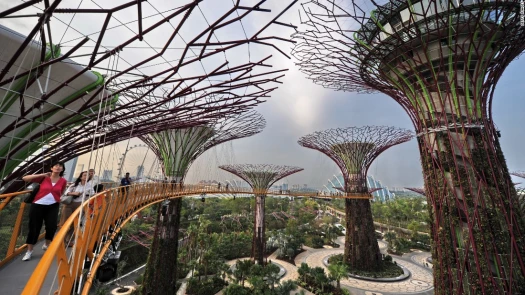
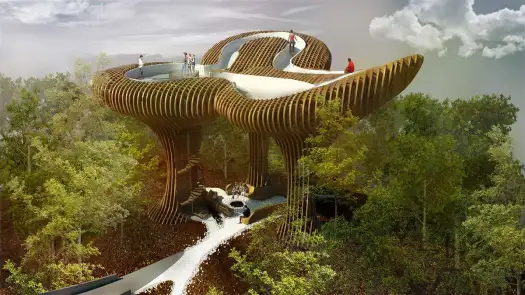
    The sun rises and over a verdant green vista. My home awakes me with the gentle sounds of birds and the curtains slightly to let in the Eastern rising sun. I motion with my hand and the curtains fully open. Other folk have the electrostatic polymer window panes installed but I still like the feel and texture of a material window covering. Even if it is 100% fabricated from grown polymer fibres. Through my windows I see the tops of thousands of trees lit by the brilliant, new, fresh gold of the morning sun. These trees are less than 30 years old and spread as far as I can see.

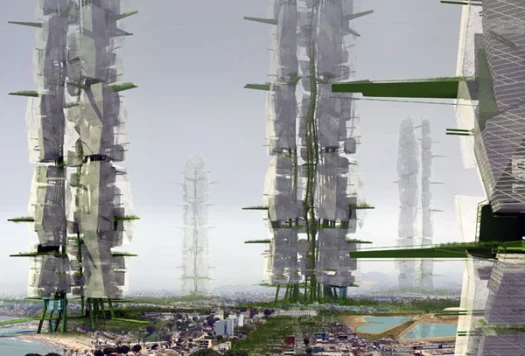
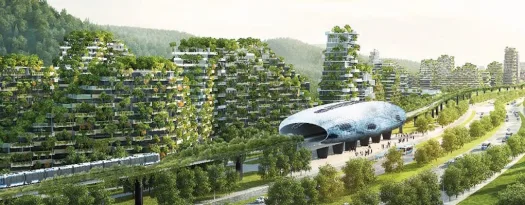
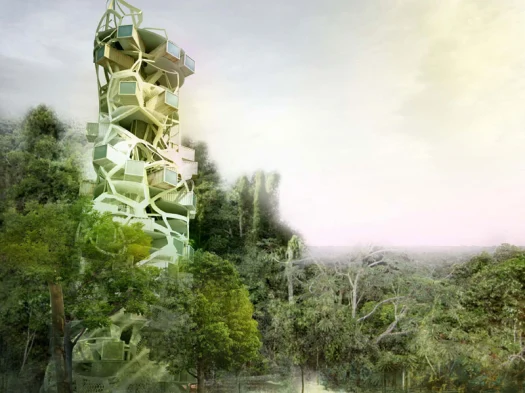
    I also see 5 other residential towers like the one I’m in. Each is 1,000 metres high and with the same 10,000 apartments. All are connected beneath the trees by boulevards and underground maglev personnel pods and shuttle carriages. I can also see the faint steam coming up from several areas among the tees.

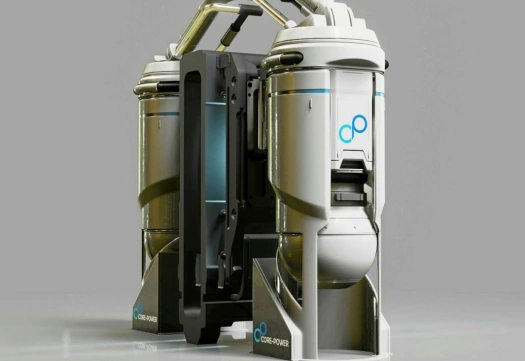
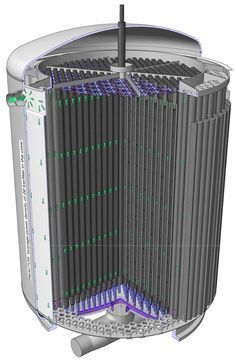
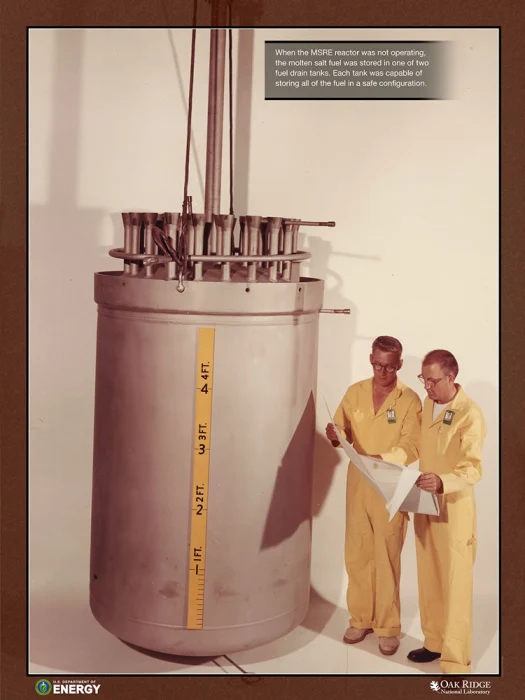
    That’s why I live here. Cheap electrical energy, and thermal domestic heating. 10 times less than even the cheapest fossil fuel from 30 years ago. Hidden beneath the trees and 20 metres of earth are tiny power generators driven by Thorium Molten Salt Fission Technology. I had a small hand in that – I was one of the scientists in the early design teams.

    Safe, clean and green. The power units are entirely replaced every 20 years – even though they have a lifespan of 30. These power units are second generation already. Maybe 40 years they can be here. No overhead cables. No step down transformers. No cooling towers. No fuel lines. No coal conveyor belts. No waste heaps. Wow, what a change.

    The supercritical CO2 turbo-machinery was developed by Mitsubishi and Siemens. They are tiny and work for decades with no maintenance. Heck, we are even using Stirling cycle machines in 3 of the power units. Maybe we’ll switch over soon for all of them.

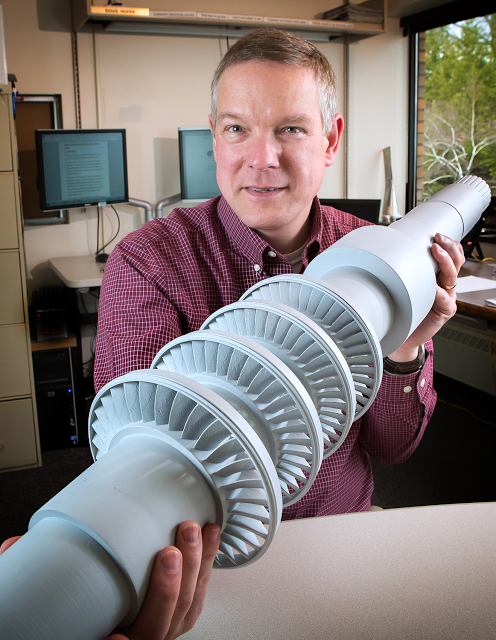
    This device produces the same energy output as the one behind. That’s the power of Super Critical CO2

    Power generation in 2050 has become easy. No more oil wars, oil blockades, gas transit or border disputes. Each country has access to technology as common as the once common internal combustion engine. 

    Thankfully Elon Musk finally killed that infernal fossil driven machine 20 years ago. It’s all electric from here – neutrons to electrons. Everyone is happy. There’s still lots to do: millions have had to move because of rising sea levels. At least now we can build it right.

    Authored by Jeremiah Josey
    Founder and CEO of The Thorium Network

    Jeremiah Josey

    References

    1. https://www.oneday2050.org/participants
    2. https://www.linkedin.com/in/jaume-enciso-cachafeiro/
    3. Media content: https://mcusercontent.com/05029fefeb09e61eff7ed3715/files/8f938462-404b-3c76-49f3-92d6cf01cce9/10_07_Jeremiah_Josey_ENG_TEC.pdf
    4. https://www.powermag.com/first-commercial-deployment-of-supercritical-co2-power-cycle-taking-shape-in-alberta/
    5. GE’s 10MW Supercitical CO2 https://www.nextbigfuture.com/2016/04/ge-has-prototype-10-megawatt.html
    6. Doug Hofer https://www.linkedin.com/in/doug-hofer-561a1919/
    7. Vitali Lissianski https://www.linkedin.com/in/vitali-lissianski-06387827/
    8. http://madan.org.il/en/news/futuristic-green-city-china
    9. https://futurearchitectureplatform.org/projects/d6538a2a-0f90-4a6d-aaf6-89ca56e3d3a3/
    10. https://www.theglobeandmail.com/report-on-business/economy/canada-competes/singapores-futuristic-gardens/article11674777/
    11. https://www.yankodesign.com/2011/04/26/2011-evolo-magazine-skyscraper-competition-finalists/
    12. https://www.ornl.gov/molten-salt-reactor/history
    13. https://futurism.com/tree-skyscrapers-underwater-restaurants-most-futuristic-designs-year
    14. https://www.sustainable-carbon.org/report/power-generation-from-coal-using-supercritical-co2-cycle-ccc-280/

  • Fission Energy for Across Africa – a Vision of 2050

    Author Jeremiah Josey

    A Land of Plenty

    The African continent is a behemoth of people, resources and potential. The area of the combined 58 countries and regions is 1.8 times larger than Russia; 3 times larger than the European Union; and 84 times larger than Germany. The 1.3 billion people living in Africa (16% of the worlds’ population) have available to them a combined power generating capacity of ~230 GW. This equates to about 1,500 kWh per person per year in energy consumption.

    A Billion More People

    Over the next 30 years there will be another 1 billion new people born on the African continent. Africa will be the youngest and most dynamic region on earth. With global “peak child” happening in 2014 (a demonstrable fact) the number of children coming to the planet has plateaued and will remain that way for the foreseeable future as societies improve their living standards and reduce the size of families. This is also so in Africa, yet the population will grow no matter what. Furthermore, the African continent will hold more than 3 billion people by 2100.

    And energy will be the prime enabler to provide those billions with a decent quality of life.

    Improving Lifestyle means Increasing Energy Consumption

    South Africa has the highest energy consumption per person, at 4,100 kWh per year. Yet this is still below the 5,500 kWh average across Europe. Further across the continent it is clear that some countries lack basic energy infrastructure to bring energy to their people.

    African power consumption
    African power consumption per person

    Let’s assume that by 2050 the present average of 1,500 kWh per person per year increases to 3,000 kWh*. Thus the total energy generation capacity becomes almost 800 GW. Thus 570 GW of new power generating capacity is required to be built from now to 2050.

    *This means a 50 MW ‘burner’ will produce the energy needed for about 150,000 people.

    Sting on Nuclear energy
    Sting on Nuclear energy

    Avoiding the Renewables Trap

    The Africa Renewable Energy Initiative planned to install 10 GW of wind and solar by 2020 (achieved) and 300 GW of wind and solar by 2030. But they are forgetting Germany’s failed 20 year experiment in wind and solar. In Germany, CO2 levels are unchanged and electricity prices have doubled. Germany is restarting coal fired power stations because their industry is failing on the weak intermittent energy from wind and solar. The reason is simple. When considering all factors, wind and solar are simply not viable. This is best illustrated by the Energy Return on Investment ratio, or EROI. This bar chart is developed from the Berlin Institute for Solid-State Nuclear Physics (Institut für Festkörper-Kernphysik) and available on the Australian government’s nuclear scientist’s website.

    ANSTO EROI Bar Chart
    Energy Return on Investment

    The Energy Return on Investment Ratio is a macro level indicator of the overall usefulness of the energy derived from any particular form. How many units of energy can be recovered for each unit of energy expended. The EROI of wind and solar (3.9 and 1.6 respectively) fails miserably when compared to coal (30), gas (28) and existing solid-fuel nuclear fission (75). But our focus is the literal purple elephant in the room – Liquid Fission Technology. It’s EROI is 2000 to 1! With such a significant obvious benefit, over all other forms of energy production, it is only a matter of time before the genie is out of the bottle.

    Thus as the reality of low value return on wind and solar is realised, Liquid Fission Technology (and other small modular fission machines using traditional solid fuels) will gain traction to fill the growing requirements of Africa’s energy needs.

    A New Paradigm of Industrial Growth

    One can imagine a fleet of up to 5,000 small modular Liquid Fission machines each with a capacity of 100 MW installed strategically across Africa.  Creating a decentralised, distributed power generation system. Some sites will be larger or smaller than others, driven by  domestic electricity demands. With the power facilities having a fuelled lifespan exceeding 50 years, it is quite easy to see energy as no longer an issue across the African continent.

    Integrated Industrial Zone Powered by Molten Salt courtesy of Figes
    Integrated Industrial Zone Powered by Liquid Fission, courtesy of Figes of Turkiye

    But it goes further. Whilst reliable 24/7 power from Liquid Fission machines provides ample energy for domestic needs, the technology supports industrial growth and development. 1 GW and larger power installations are able to drive industries reliant on both heat and power. Facilities of this size could lead to industrial parks such as the one here envisaged by government energy and industrial development planners in Turkiye.

    A Positive Future

    Africa Blockchain

    The people of Africa have a bright future ahead for them. With technologies tried and true from western spheres, the people of Africa can select and choose the most appropriate and most suitable means to improve their quality of life. For themselves and for their children. Liquid Fission energy technology is a strong contender for the energy mix of Africa.

    Authored by Jeremiah Josey
    Founder
    The Thorium Network

    Links and References

    1. African power generation https://www.statista.com/statistics/1229517/installed-renewables-and-fossil-fuels-generation-capacity-in-africa-by-energy-source/
    2. Energy Consumption across Africa https://www.indexmundi.com/facts/indicators/eg.use.elec.kh.pc/map/africa
    3. Hans Rosling, 2015, Why the world population won’t exceed 11 billion https://www.youtube.com/watch?v=2LyzBoHo5EI
    4.  IEA Africa Energy Outlook 2019 https://www.iea.org/reports/africa-energy-outlook-2019
    5. African Renewable Energy Initiative https://media.un.org/en/asset/k1q/k1qnk48vzo
    6. https://stopthesethings.com/2021/04/25/big-backpedal-a-week-after-shutting-its-coal-fired-plants-germany-forced-to-reopen-them/
    7. Australian government nuclear science organisation https://www.ansto.gov.au/our-science/nuclear-fuel-cycle/advanced-nuclear-reactors/evolution-of-molten-salt-reactors
    8. https://figes.com.tr/
  • Launching the Unintended Consequences Series

    Launching the Unintended Consequences Series

    Post created by Jeremiah Josey and the team at The Thorium Network

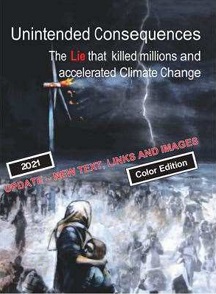
    To start the new year we will be publishing episodes from the book “Unintended Consequences: The Lie that Killed Millions and accelerated Climate Change“, by best selling science author Dr. George Erickson. Each week we be posting part of Dr. Erickson’s book onto our web page and social media channels in a bite size episode. There will be more than 40 episodes. Sign up for regular reminders of the next episode and spend the next 10 months learning from someone with first hand experience in the effects of climate change, and knowledgeable in the only real alternative we have for carbon free energy: safe, clean, green Molten Salt Fission Technology(TM), fuelled by Thorium.

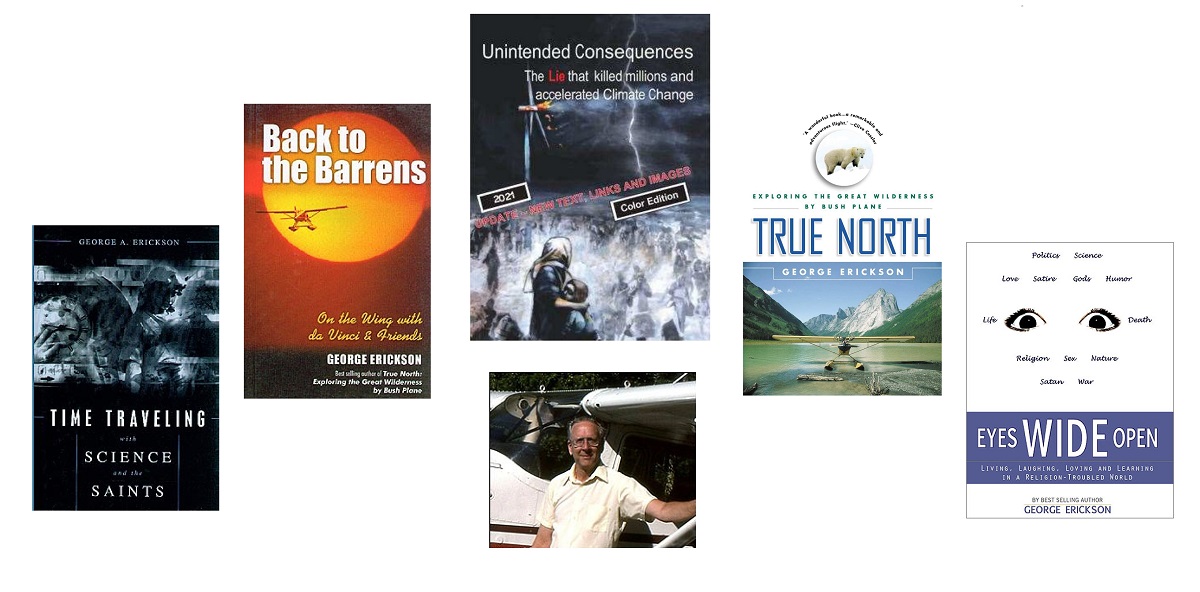
    Dr. Erickson is the best-selling author of five pro-science books, a former bush pilot in Alaska and Canada, a retired dentist, a former vice president of the American Humanist Association, a member of the National Centre for Science Education and a member of the Thorium Energy Alliance.

    Dr. Erickson occasionally exchanges climate change / energy emails with Dr. James Hansen, the former chief scientist at NASA whom George Bush tried to silence on climate change. Dr. Hansen is quoted often in Dr. Erickson’s book, “Unintended Consequences: The Lie that Killed Millions and Accelerated Climate Change“.

    In Unintended Consequences, Dr. Erickson exposes the lie that created our excessive and fraudulent radiation safety standards and the damage those regulations have caused. He expresses his dismay with “greens” in their profit of promoting low efficiency, intermittent supply, carbon reliant solar panels and bird and bat-killing, carbon-dependent windmills, yet oppose 90% efficiency, environmentally friendly, carbon free, super safe nuclear power.


    Because of the increasing damage from climate change, Dr. Erickson has made the November, 2021 update of this book FREE. You can still buy the paperback off Amazon.

    And here it is here:

    A prolific writer of climate change and energy op-eds, Dr. Erickson’s also self funds travel campaigns to give climate change and energy presentations at colleges, schools, universities, service clubs and affinity groups. To schedule a presentation, email Dr. Erickson directly at tundracub7@gmail.com or call +1 218 744 2003.

    “Your writing is brilliant and so clear.”
    Dr. James Hansen, former chief climate scientist at NASA.

    “By comparing the safety, reliability and emissions of nuclear reactors to carbon combustion and unreliable wind and solar, Dr. Erickson sends a message to people who love the earth – nuclear is the rational way forward.”
    Dr. Tim Maloney 

    “Unintended Consequences is excellent. I will recommend it widely.”
    Dr. Martin Goodman MD 

    “This great book reveals why the green movement is wrong on nuclear energy.”
    Mathijs Beckers 

    “Universal Consequences is rational thought for those seeking a sustainable planet.”
    Dr. Rod Coenen 

    His 38 “summers” of exploring arctic Canada and Alaska with a variety of seaplanes led to his best seller, True North: Exploring the Great Wilderness by Bush Plane. To help moderate the stress on our lives caused by Covid-19 restrictions, he has also made this highly praised book available FREE from his website

    His second book, Time Travelling with Science and the Saints – an overview of the long conflict between science and religion – soon followed, and his third book, Back to the Barrens: On the Wing with da Vinci & Friends, his much-requested sequel to True North, was published in mid- 2008.

    True North and Back to the Barrens both are endorsed by multi-million-copy-author Clive Cussler.

    Eyes Wide Open: Living Laughing, Loving and Learning in a Religion-troubled World, an anthology of new and published fiction and non-fiction published in 2010 by the American Humanist Association, is his fourth book. It is also an eBook.

    After retiring near Virginia, Minnesota, United States of America, Dr. Erickson initiated and led a campaign to build a $1.2 million indoor tennis facility for his hometown. He helps coach the Virginia boys and girls tennis teams, funds scholarships at the Mesabi Range Community College and donates all of his book profits to educational charities. He is married and has two sons.

    Coming up next week, Episode 1 – Why I care by Dr George Erickson of Unintended Consequences.

    1. Episode 1 – Why I Care
    2. Dr. George Erickson on LinkedIn
    3. Dr. George Erickson’s Website, Tundracub.com
    4. The full pdf version of Unintended Consequences
    5. Thorium Energy Alliance
    6. Youtube of Dr. George Erickson – What is Energy from Thorium and what it means for the world?
    7. Unintended Consequences on Amazon
    8. Youtube of Thorium vs Renewable Energy (climate change) – Dr. Erickson, Mike Conley, Jeremiah Josey
    9. True North: Exploring the Great Wilderness by Bush Plane
    10. Time Travelling with Science and the Saints
    11. Back to the Barrens: On the Wing with da Vinci & Friends
    12. Clive Cussler
    13. Eyes Wide Open: Living Laughing, Loving and Learning in a Religion-troubled World

    #GeorgeErickson #UnintendedConsequences #FissionEnergy #ThoriumMoltenSalt #MoltenSaltFissionTechnology

  • Asia leads the way for our Carbon Free Future

    Author Jeremiah Josey

    With so many nuclear reactors planned (a.k.a. fission energy machines), it’s an obvious outcome for the world in general: clean, green, safe energy production for the most populous region on earth. That means for Asia: clean air, clean water, and clean lives, with… low cost, safe energy. Production efficiency rates in the region will sore. Innovation will eclipse anything we’ve seen before. The environment will become a green wilderness again (remember too China reclaims over 2,000 square km of desert each year). This is the next revolution, after the Industrial, after the Information. It’s the Energy Revolution. And it’s very exciting to be part of it.

    Remember, we all breath the same air.

    Jeremiah Josey
    Founder and CEO
    TheThoriumNetwork.com

    #EnergyRevolution #greenenergy # #energy #innovation #thorium #moltensaltfissiontechnology

  • Australia needs to adopt Thorium Molten Salt Technology for energy production

    Post by Jeremiah Josey. Content by Liz Penfold

    Australian Prime Minister Scott Morrison

    “Technology, not taxes is the Australian Way to reduce emissions while protecting our economy and living standards.”
    Prime Minister Scott Morrison pledging Net Zero by 2050

    But Mr. Morrison, it’s not just about reducing CO2. It’s also about Australia being a world leader.

    China and Russia are building small modular reactors for themselves and for export to third world countries. They’re lowering their own carbon emissions and those in other countries, whilst reducing fossil fuel pollution that is killing millions particularly children under 5 years and also saving more lives by enabling desalination for clean drinking water and growing food.

    Australia exports uranium and coal and say we are good citizens, on the right track to the solution for global warming. We are not being good world citizens when we don’t look at the big picture but only our self-interest.

    Small, modular, transportable, Thorium molten salt burners could be this new technology that our Australian Government is relying on to create jobs, reduce carbon emissions and win the next election.

    “Small Modular Reactors are the Future. Since 1970, nuclear has saved 60,000 million tonnes of CO2 emissions. Nuclear could deliver net zero, if only it was allowed to. Nuclear power will also solve water supply problems in a scalable manner.” Paul Kristensen Western Australian Owner/Principle- PK Science Consulting, nuclear scientist, and advocate.

    Paul Kristensen Western Australian Owner/Principle- PK Science Consulting, nuclear scientist, and advocate

    CURRENTLY the Rare Earth Elements (REE) in our mineral sands, which contain Thorium and uranium, cannot be used due to provisions in the Australia’s Environmental Protection and Biodiversity Conservation Act 1999. [AEP&BC Act] The Act is causing this potentially very valuable product to be disposed of as waste by unrecoverable burial.

    “Only Australia, a true laggard and outlier, holds nuclear energy as illegal. In this, Australia is not just eccentric, but nuts.”
    Greg Sheridan, Foreign Editor, The Weekend Australian 10/11 July 2021.

    Greg Sheridan, Foreign Editor, The Australian

    Thorium is now being researched by over 30 countries. China is already operating a prototype reactor and building a commercial reactor to supply energy for a desert city.

    Thorium molten salt burners can:-
    • provide safe, low-cost, carbon free, reliable base load energy replacing fossil fuels.
    • desalinate water for drinking and growing food.
    • use nuclear waste as fuel.
    • transport a reactor by truck or barge in a container to where needed.
    • produce much less waste which only needs storing for 300 years not thousands.
    • use a small earth footprint unlike solar, wind and hydro.
    • be rebooted after 60 years so do not have the expensive and difficult recycling of
    wind and solar.
    • be cooled without water so can be used in deserts.
    • not blow up or easily used to make bombs
    • be used to produce medical isotopes to save thousands of lives.

    “Technology will have the answers to a decarbonised economy, particularly over time.” Scott Morrison

    The Liberal goal is to create wealth and jobs in Australia and win the next elections both State and Federal in March 2022 and hopefully gain the respect of other countries.

    Liz Penfold

    Authored by Mrs Liz Penfold
    Former public representative for Flinders, South Australia.
    Undefeated in office from 1993 until retirement in 2010, with an approval rating always above 70%.
    Adviser to The Thorium Network on Australian Political Affairs.
    Liz on Wikipedia; Liz on Linkedin