Author: Jeremiah Josey

  • The Chinese Thorium Programme: Building a New Fission Industry

    The Chinese Thorium Programme: Building a New Fission Industry

    By Jeremiah Josey 7 October 2026

    China is turning Thorium from a geological resource into an industrial and engineering programme—and energy for their future. Their researchers have built and operated the world’s first Thorium-loaded Liquid Fission machine, demonstrated Thorium-to-uranium conversion inside an operating system, developed domestic alloys for high-temperature molten-salt service and is in advanced planning for larger demonstration projects.

    This is a major advance in Fission technology. It brings together work that is often discussed separately—fuel, reactors, materials, mining and manufacturing—into a national programme with a clear direction: use Chinese science and industry to develop a new generation of Liquid Fission Thorium Burners—for China. China does not intend to export this technology, particularly to the West.

    China’s achievement is much more than this single machine in the desert. It is an industrial pathway: from laboratory research, to a working experimental reactor, to demonstration-scale systems, supported by domestic resources and supply chains. And it started decades ago when China first went into rare earth production—because that’s where the Thorium comes from.

    From research programme to operating reactor

    China’s Thorium Molten Salt Reactor programme began publicly in 2011 under the Chinese Academy of Sciences. Its principal research organisation is the Shanghai Institute of Applied Physics, or SINAP. The programme has developed reactor designs, fuel-salt expertise, materials, components and the specialist facilities needed to test them.

    The flagship experimental system is TMSR-LF1, located near Wuwei in Gansu Province. It is a 2-megawatt-thermal (MWt) liquid-fuel molten-salt machine. It achieved first criticality on 11 October 2023, reached full power in June 2024, and operated with Thorium fuel after Thorium was added in October 2024. In November 2025, Chinese researchers announced the first successful Thorium-to-uranium conversion in an operating molten-salt reactor. This is the first time on Earth that this has happened. Even at Oak Ridge, they processed the Thorium at Savannah River, several hundred miles away—and spent millions of dollars—to make it suitable for fuel at Oak Ridge. China has now just “popped” it in, and it’s working fine, just as the physics says it should.

    These are concrete engineering milestones. TMSR-LF1 has moved the Thorium fuel cycle from calculations and laboratory experiments into a working reactor environment. Chinese researchers have been able to examine fuel salt, operate the system at power and collect experimental data from Thorium loaded into the reactor. The achievement gives China an important platform for developing the next stages of its programme.

    [world-nuclear-news.org]

    The burner uses an initial fissile fuel to sustain fission. Just as the Canadians apply a similar principle to U-238 in their CANDU machines.Thorium-232 is fertile: after absorbing a neutron, it transforms through intermediate steps into uranium-233, which burns in the reactor. The Thorium-to-uranium conversion demonstrated at TMSR-LF1 is therefore a major milestone in the fuel cycle, as well as in machine operation.

    TMSR-LF1 is a research and technology platform. Its purpose is to prove and study the processes needed for larger systems. It has already done that job at a significant level: it is operating, it has incorporated Thorium and its team has reported conversion data from the Thorium-uranium cycle.

    The next stage: larger demonstration systems

    SINAP has stated that its next goal is a 100-MWt Thorium molten-salt demonstration project, with demonstration applications targeted by 2035. This is a major planned step up from the 2-MWt experimental reactor. It is intended to carry the programme forward from experimental operation towards larger-scale engineering and industrial use.

    Remember, in 1969 at Oak Ridge, once they completed testing their ~8 MW machine—just as China has done now—by 1972 they had designed a 1,000 MWe full-scale commercial machine. They were ready to scale immediately.

    Earlier project reporting also described a proposed 60-MWt system designed to produce 10 megawatts of electricity, with a target around 2030. These figures refer to different reported project plans and stages in the development pathway. The central point is that China is moving from a small experimental machine towards larger systems designed to demonstrate practical energy applications.

    [IEEE]

    The potential uses extend beyond electricity. High-temperature Liquid Fission systems can provide industrial heat, process steam and heat for hydrogen production and other applications. Their high operating temperatures also make them relevant to energy-intensive industries that currently rely on large quantities of fossil-fuel heat. China has identified integration with chemical production, energy storage, hydrogen and other industrial processes as part of the wider TMSR vision.

    [cas.cn]

    Development stageChinese programme milestone
    Research and designThorium Liquid Fission programme launched in 2011
    Experimental machineTMSR-LF1 reached first criticality in October 2023
    Full-power operationTMSR-LF1 reached 2-MWt full power in June 2024
    Thorium operationThorium was added to the burner in October 2024
    Fuel-cycle progressThorium-to-uranium conversion announced in November 2025
    Demonstration pathwaySINAP has set a 100-MWt demonstration goal for 2035

    Liquid Fission Thorium Burners are important

    A Liquid Fission Thorium Burner uses molten salt as the reactor’s working fluid. In a liquid-fuel design, Fission fuel is dissolved in the salt, which circulates through the reactor system and carries heat to the next stage of the plant.

    That arrangement offers a different engineering pathway from conventional solid-fuel reactors. Liquid-fuel systems can be designed for continuous fuel management—that means total fuel burn up, high-temperature heat production and operation at comparatively low pressure. These features open up possibilities for power generation and industrial heat, including applications in inland regions where there is little water. Liquid Fission Thorium Burners do not need any water.

    China’s programme is developing the machine and fuel-cycle technology together. The operating TMSR-LF1 provides a place to test real fuel salt, materials and operating procedures as an integrated system. Its results can inform the larger demonstration projects now being pursued.

    China’s Thorium resources: turning mine waste into an asset

    China’s resource position gives the programme an additional strategic dimension. Thorium occurs in rare-earth-bearing minerals, including monazite, and can be found in material produced during mining and processing. This means that the country’s established rare-earth industry also provides a long-term Thorium resource.

    The most prominent example is Bayan Obo, in Inner Mongolia. Bayan Obo is a major rare-earth, iron and niobium district, and Thorium is present in some of its ores and minerals. Measured quantities of Thorium give an estimated 10,000 years of energy supply from that deposit alone. For decades, mining there has focused on the resources with immediate commercial value. The Thorium associated with the deposit and its waste streams has drawn renewed attention as China develops a practical route for using Thorium in Fission systems.

    A national geological survey completed in 2020 identified 233 Thorium-rich regions across China. Reporting on the survey highlighted the potential of Thorium-bearing tailings at Bayan Obo and described an estimate of up to one million tonnes associated with the mining complex. China has ample local energy reserves.

    A 2025 [study] of Bayan Obo examined how Thorium occurs across the deposit.

    [ScienceDirect]

    This is a compelling industrial proposition: a material treated as a by-product or residue becoming a feedstock for advanced Fission systems. As China develops its Liquid Fission Thorium Burner technology, the value of characterising and recovering Thorium from its mining and processing streams rises with it.

    Geological resources, stored material and usable fuel

    China’s “Thorium stockpile” refers to several different things: Thorium-bearing ore in the ground, Thorium in mine tailings, monazite concentrates, separated Thorium compounds or material prepared to a reactor’s fuel specifications. These categories describe different points in the supply chain.

    China’s large resource estimates point to the scale of its geological opportunity. The operational reactor programme provides the technology pathway that make those resources useful. Over time, development of separation, conversion and fuel-manufacturing capabilities could connect resource assessments to a domestic fuel supply.

    China is combining a large domestic resource potential, decades of rare-earth mining and a programme now demonstrating Thorium conversion in an operating machine.

    India and 10,000-tonnes for China

    India has substantial Thorium-bearing mineral resources, mainly in monazite-rich coastal sands, and has pursued the development of a Thorium fuel cycle for decades. Between roughly 2002 and 2012, China obtained 10,000 tonnes of Thorium from India, further boosting its reserves.

    Rare earths: a long-running connection to Thorium

    Thorium and rare-earth production are connected through geology. Most rare-earth ores contain Thorium, and processing them creates Thorium-bearing concentrates. China’s rare-earth industry has operated at scale for decades, generating extensive experience in mining, mineral separation and chemical processing.

    This history gives China a valuable industrial base for investigating how Thorium can be recovered from existing mineral streams. It also means that resource assessment can draw on a large, established mining sector rather than starting from scratch with isolated Thorium mines.

    The next opportunity is to connect those capabilities more directly to the Chinese Thorium programme: characterise the Thorium-bearing material, develop efficient recovery and refining processes, and build a domestic route from mineral resource to reactor fuel. The more fully this supply chain develops, the more closely China’s rare-earth strengths and advanced Fission programme can reinforce one another.

    GH3535: China’s alloy for molten-salt service

    A Liquid Fission Thorium Burner depends on materials that can operate for long periods at high temperatures while in contact with molten salts. The reactor’s alloy must retain strength and perform reliably in its intended service. Developing such materials is a core part of building the technology.

    The historic reference material for molten fluoride salt systems is Hastelloy N, developed at Oak Ridge National Laboratory in the United States. China’s answer is GH3535, similar to Hastelloy, a nickel-molybdenum-chromium alloy developed for molten-salt reactor applications.

    GH3535 was co-developed by the Institute of Metal Research (IMR) and SINAP of the Chinese Academy of Sciences, and is produced in China by Fushun Special Steel. It is the Chinese programme’s domestic counterpart to Hastelloy N: an alloy designed for the same broad class of high-temperature molten-fluoride service and integrated into China’s own reactor development and manufacturing base.

    This matters strategically as well as technically. A domestic alloy gives China a materials platform that can be manufactured, tested and improved within its own industrial system. It supports the development of reactor components without relying on a foreign alloy supply chain and allows the research programme to tailor materials work to its own reactor designs.

    SINAP, UNSW and ANSTO collaboration

    The international research collaboration involved SINAP, the University of New South Wales (UNSW) and ANSTO. ANSTO is the Australian Nuclear Science and Technology Organisation. The Chinese partner was SINAP.

    The collaboration investigated how GH3535 and its welds respond to molten-salt exposure. Researchers examined the alloy’s microstructure and corrosion behaviour after exposure to fluoride salt at high temperature. ANSTO contributed specialist materials research and characterisation, helping the team understand how features such as grain structure and welding influence corrosion performance.

    [ansto.gov.au]

    That work adds to the engineering foundation of China’s programme. Reactor materials are evaluated as manufactured and welded components operating in salt under demanding conditions. The SINAP–UNSW–ANSTO collaboration produced knowledge in precisely this area.

    GH3535 therefore is part of China’s effort to establish its own molten-salt materials capability: alloy development, industrial production, welding knowledge and international research on performance. Together, these capabilities support China’s ability to design and build Liquid Fission Thorium Burner systems around a domestic technology and manufacturing base.

    A national supply chain, not just a burner

    China’s TMSR programme draws strength from the way its pieces fit together. SINAP leads research and reactor development. Chinese institutions and manufacturers contribute equipment and materials. Rare-earth mining offers a substantial potential Thorium resource. Domestic alloy production supports reactor construction. Experimental operation supplies a platform for learning and improvement.

    That integration is one of the programme’s defining features. A successful advanced Fission industry needs more than a working reactor design. It needs people trained to operate it, qualified materials, chemical-processing expertise, fuel production, testing facilities and industrial partners capable of producing components at scale.

    China has stated that the Thorium programme has established a largely domestic technology and industrial chain, and that it intends to work with energy companies to advance engineering application. Its experience operating TMSR-LF1 gives those partners a real technical platform around which to build.

    [cas.cn]

    What China’s progress means

    China has established itself as the first country to operate a molten-salt reactor loaded with Thorium and report successful Thorium-to-uranium conversion in that system. It has a rapidly growing body of practical operating experience, a domestic alloy designed for molten-salt service, a large rare-earth industry and plans to get bigger.

    The importance of the programme lies in the combination:

    • Burner operation: TMSR-LF1 has reached full power and operated with Thorium.
    • Fuel-cycle progress: Researchers have reported Thorium-to-uranium conversion in an operating system.
    • Materials capability: China has developed and manufactures GH3535 for molten-salt applications.
    • Resource potential: Thorium occurs in domestic deposits and in material associated with rare-earth mining.
    • Industrial direction: China is targeting larger demonstration systems and applications beyond electricity.

    Each achievement strengthens the next. Reactor operation creates experience. Fuel-cycle research builds on that operation. Materials research supports longer and larger runs. Resource and manufacturing capabilities provide the basis for an industrial supply chain.

    China’s Thorium programme is a serious national effort to build a new Fission technology from the ground up. The country has moved from a research commitment in 2011 to an operating Thorium-loaded experimental reactor, published conversion results and a stated pathway towards larger demonstration systems. That is a substantial achievement—and a strong foundation for the next phase of Liquid Fission Thorium Burner development.

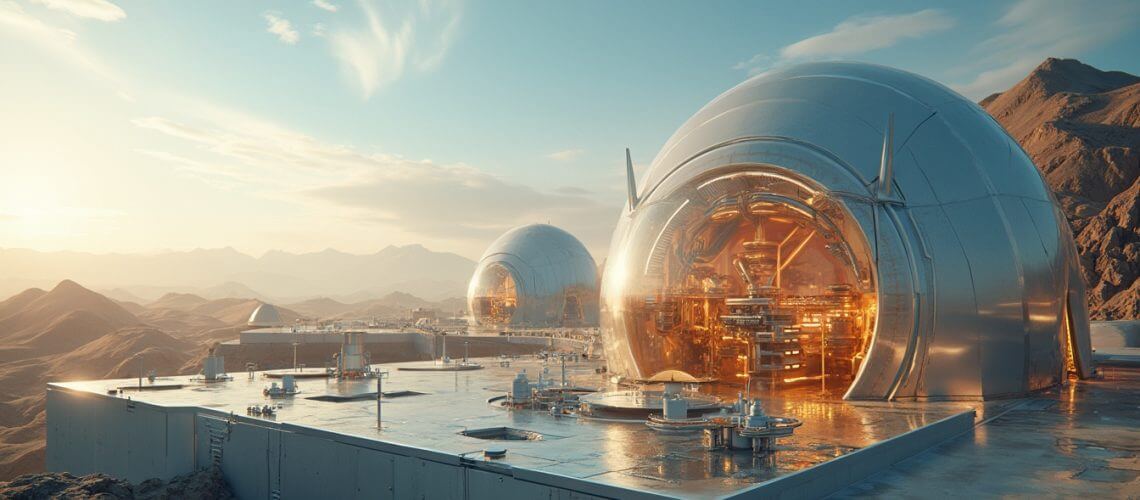
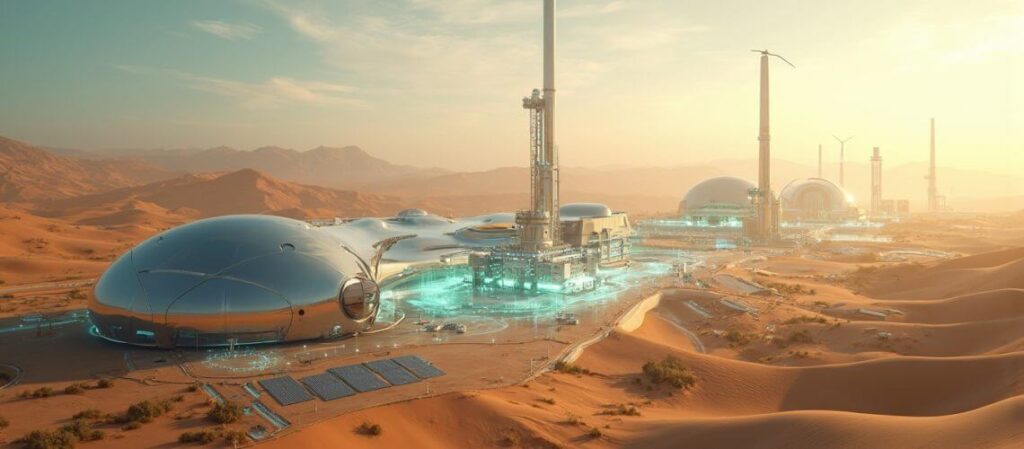
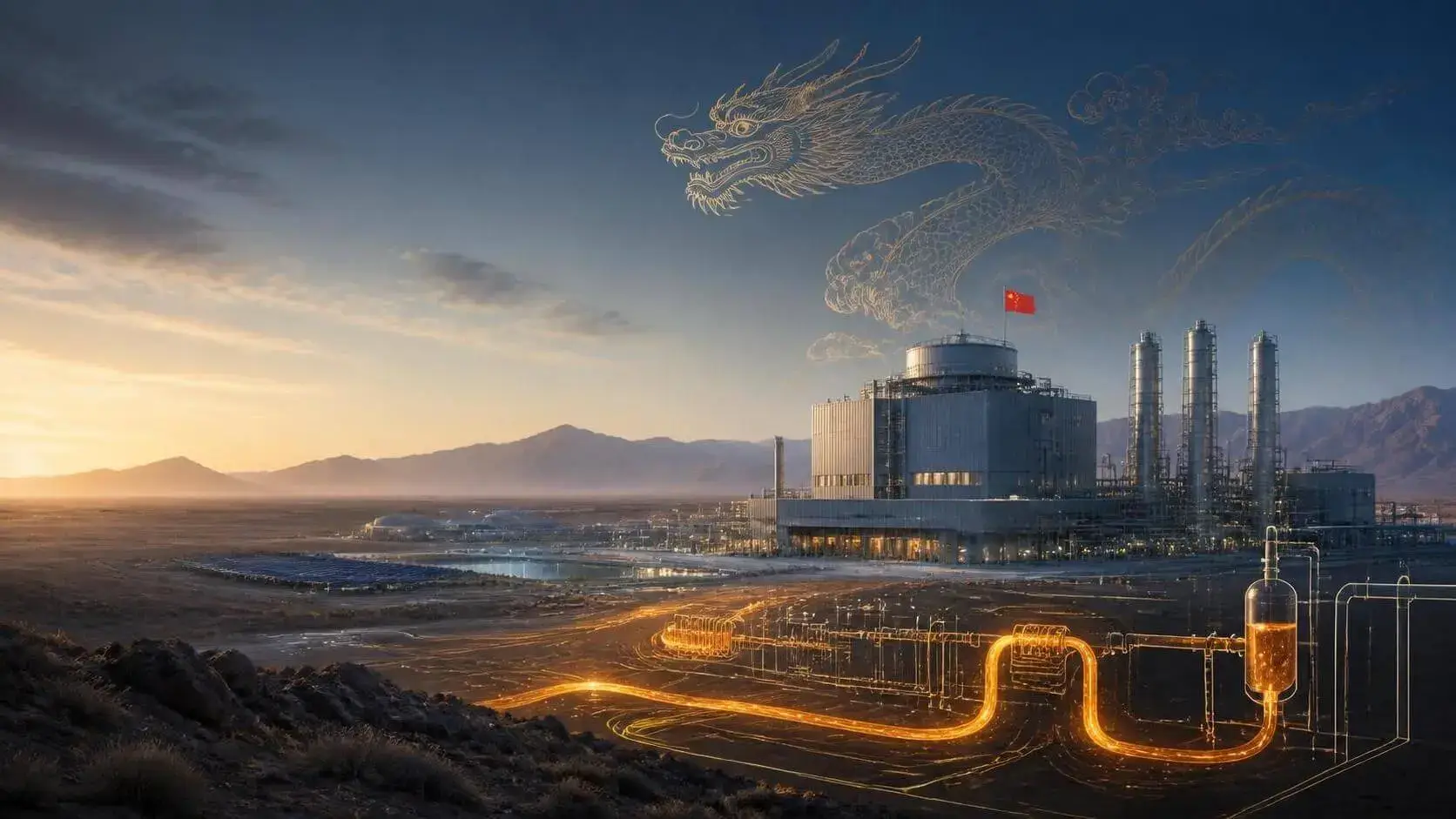
    Chinese Gobi Desert Molten Salt Industrial Facility
    Gobi Desert Molten Salt Installation

    More from The Thorium Network on China

    Reports on China’s Thorium Program

    The following is a selection of informative reports we’ve gathered on China’s Thorium program. It is not exhaustive, but it offers an overview of what is widely regarded as the world’s most advanced, best-staffed, and best-funded Thorium program.

    Links and references relevant to China’s Thorium programme

    1. Shanghai Institute of Applied Physics (SINAP) — China’s lead research institute for the TMSR programme.
      https://english.sinap.cas.cn/
    2. China’s first Thorium-to-uranium conversion announcement — Science and Technology Daily reports the 2025 milestone, the Gansu experimental reactor and the programme’s 2035 demonstration target. (Chinese)
      https://www.stdaily.com/web/gdxw/2025-11/01/content\_424807.html
    3. Chinese Academy of Sciences coverage of the conversion milestone — Xinhua’s report on the TMSR-LF1 result and China’s Thorium research programme. (Chinese)
      https://www.cas.cn/cm/202511/t20251103\_5087046.shtml
    4. 2026 report on the Thorium-to-uranium result — Xinhua coverage of the achievement’s selection among China’s 2025 top scientific advances. (Chinese)
      https://finance.sina.cn/stock/jdts/2026-03-28/detail-inhspwhs1104481.d.html
    5. Development of GH3535 Alloy for the Thorium Molten Salt Reactor — Research paper on the Chinese alloy used in the programme’s molten-salt materials development.
      https://www.researchgate.net/publication/324580866\_Development\_of\_GH3535\_Alloy\_for\_Thorium\_Molten\_Salt\_Reactor
    6. Mark Ho presentation hosted by Nuclear Australia — Background on China’s Thorium molten-salt reactor development.
      https://www.nuclearaustralia.org.au/wp-content/uploads/2021/04/Mark\_Ho\_20210512.pdf
    7. “Research Progress of TMSR Design” — Yang Zou’s 2019 presentation on China’s TMSR design work.
      http://samofar.eu/wp-content/uploads/2019/07/2019-TMSR-SAMOFAR%E2%80%94%E2%80%94Yang-ZOU-PDF-version-1.pdf
    8. “Progress of TMSR in China” — Hongjie Xu’s 2018 programme presentation.
      https://threeconsulting.com/mt-content/uploads/2021/04/chinatmsr2018.pdf
    9. China’s TMSR research presentation to the Generation IV International Forum — Overview of the Chinese programme and its technical direction.
      https://www.gen-4.org/gif/upload/docs/application/pdf/2017-05/03\_hongjie\_xu\_china.pdf
    10. “Update on SINAP TMSR Research” — Research update presented at the Oak Ridge National Laboratory molten-salt reactor workshop.
      https://msrworkshop.ornl.gov/wp-content/uploads/2018/04/MSR2016-day1-15-Hongjie-Xu-Update-on-SINAP-TMSR-Research.pdf
    11. “Sensitivity/uncertainty comparison and similarity analysis between TMSR-LF1 and MSR models” — Technical study of the Chinese experimental reactor’s modelling and design validation.
      https://www.sciencedirect.com/science/article/abs/pii/S0149197020300482?via%3Dihub
    12. “Burnup optimization of once-through molten salt reactors using enriched uranium and Thorium” — Research on Thorium fuel-cycle performance in molten-salt reactor models.
      https://link.springer.com/article/10.1007/s41365-022-00995-2
    13. TMSR-LF1 seismic analysis — Engineering study of the experimental reactor’s plant structure.
      https://onlinelibrary.wiley.com/doi/epdf/10.1155/2024/1672269
    14. China moves closer to completion of the world’s first Thorium reactor — 2021 background on the experimental reactor’s construction plans; useful as historical context. ans.org
      https://www.ans.org/news/article-3091/china-moves-closer-to-completion-of-worlds-first-thorium-reactor/
  • A Crib Sheet for Journalists and Students of Thorium

    A Crib Sheet for Journalists and Students of Thorium

    Authored by Jeremiah Josey 7 October 2026

    Are you a journalist, student, humanist, or futurist looking for the inside on Liquid Fission Thorium? Unlimited energy. Secure. Reliable. This page is for you.

    We’ve been asked many times for a summary of resources or key people to speak with.

    Are we biased? Of course we are. The technology allows us to be. Indeed it demands we not be humble.

    Read on and you’ll know why. You’ll want to [Join Us] too.


    A Future Powered by Thorium is our objective. We are leveraging the billions of USD in today’s value and millions of hours invested over 50 years ago in a technology that is demonstrably superior to anything else we have today.

    China already knows this. In 2011 it committed USD3.3 billion and 700 engineers to revive the US Molten-Salt Reactor Experiment from the 1960s. Today, China’s TMSR-LF1 is generating power — the first nation to do so. The original Hastelloy superalloy needed for these reactors was developed in the 1950s by just two companies in the world. China, working with Australia, and Professor Adi Patternson (see below), has now developed an independent supply.

    India is moving next. In 2025, India began opening its Thorium sector to private companies, and NTPC partnered with US-based Clean Core Thorium Energy to deploy Thorium fuel in existing reactors — a first for the country.

    Here’s a summary of that work from [Oak Ridge National Laboratories]:

    The Molten-Salt Reactor Experiment from 1969

    We have this YouTube and other useful 3rd party links on our website here:

    The Thorium Knowledge Base

    See this chart of energy density from an Australian government website.  Everything else pales into insignificance when compared to Liquid Fission Thorium Burners. Some people call them MSR Molten Salt Reactors. We just call them LFTBs.

    ANSTO Energy Density Bar Chart
    ANSTO Energy Density Bar Chart

    Here’s a recent article from Germany (translated into Japanese) that contains extensive information on China’s progress and Japan’s FUJI LFTB project.

    The article also includes information on Japan’s LFTB project –  FUJI.

    Here’s a list of must-do-studies and interviews for background on Liquid Fission Thorium Energy, LFTBs or subjects related, such as radiation safety, the effects of Chernobyl and Linear No Threshold theory.

    Professor Geraldine Thomas
    Director of the Chernobyl Tissue Bank — the world’s preeminent knowledge base for the real effects of radiation. Prof. Thomas is became staunchly pro-nuclear due to her directorship and her discovery of the truth—there was no issue with radiation from the indicent at Chernobyl.

    Site story one: George Monbiot—former leading Greenpeace “anti-nuc” activist, dropped out of Greenpeace and became strongly pro nucelar after an interview he had with Proffessor Thomas. He was writing a nuclear hit piece for the UK’s Guardian he never finished.

    Side story two: When Professor Thomas retired in 2022, she handed over the Chernobyl Tissue Bank to the U.S. National Cancer Institute. It is now a marginalized entity, doing little more than reiterating the century-old LNT narrative.

    Side story three: After a century of radiation rules shaped by LNT, U.S. regulators are reconsidering the framework—renewing the charge that its dominance amounted to a century of lies and misdirection. The proposal changes how the rules are applied, though it retains [LNT] as a scientific basis.

    Want to become an expert in the fraud of LNT, and it’s evidenced based counterpart Hormesis? Start here:

    Geraldine Thomas

    George Monbiot on Wikipedia

    Geraldine Thomas on Wikipedia

    Mr. Daniel Roderick
    Former President and CEO of Westinghouse and then Toshiba Energy Systems. Danny led the sale of Westinghouse for Toshiba, securing a positive multi-billion USD outcome for Japan. He also led negotiations to secure USD 50 billion in funding for a new nuclear build in Türkiye.

    Side story one: Roderick’s project was derailed by the 2016 attempted coup in Türkiye. Mitsubishi subsequently submitted (and withdrew) a fission build near Sinop, northern Türkiye.

    Side story two: Rosatom of Russia is now commissioning the first unit of their fission power station in Akkuyu, southern Türkiye. The first unit will be running very shortly. Once complete, the four-unit plant is designed for 4,800 MW and is expected to supply about 10% of Turkey’s electricity.

    Daniel Roderick

    Dr. Adi Paterson
    Former head of ANSTO and an advocate of Liquid Fission Thorium Energy Technology. During his 11-year tenure, Dr. Paterson steered Australia to membership of the Generation IV forum—the international body for advanced fission designs including LFTBs. This is no small feat given Australia’s historical distance from nuclear energy.

    Dr. Adi Paterson

    Dr. Adi Paterson is a former head of ANSTO and an advocate of Liquid Fission Thorium Energy Technology. During his nine-year tenure, he steered Australia into membership of the Generation IV International Forum, an international body focused on advanced fission designs, including LFTBs. This was no small feat, given Australia’s historical distance from nuclear energy.

    Side story: Dr. Paterson redesigned the South African government’s Department of Science and Technology, which continues to thrive today. Necsa, the equivalent of ANSTO, declined his help. Its last director of research and development—remember, Necsa was founded as a research and development company—retired in February 2023 and was never replaced.

    Generation IV Forum

    Adi Paterson

    Dr. Resat Uzman
    Director of nuclear energy systems at Figes AS, of Türkiye. Dr. Uzman has more than 40 years experience in all things nuclear, Türkiye and rare earths – the materials where Thorium is often found bound with.

    Nukleer Enerji Seminer 3 Dr. Resat Uzmen
    Dr. Resat Uzmen

    Professor Berrin Erbay
    Senior lecturer and former dean of mechanical engineering at Osmangazi University, Türkiye Prof. Erbay has been liaising with the professors in Japan for several decades. You can see one of her presentations on the status of Liquid Fission Technology and LFTBs in Japan here on Youtube: 

    Berrin Erbay
    4. Nesil Nükleer Reaktör Teknolojileri Toplantısı

    Mr. Phumzile Tshelane
    Mr. Tshelane is a former CEO of NECSA South Africa, now holds various directorships across a wide range of industrial sectors. His position as head of a state owned nuclear technology development company gives him a particular view point on commercialisation of nuclear energy technologies, especially LFTBs.

    Mr. Phumzile Tshelane
    S3E6 Africa4Nuclear: The Story of Thorium

    Ms. Rana Önem
    Former president of the Thorium Student Guild. You should hear from someone discovered the benefits of Liquid Fission Thorium and LFTBs when studying their nuclear engineering degree. You can see Rana interviewing Dr. Uzman here. Follow the links at the end of the article to see her role as president of the Guild: 

    President – Ms. Rana Önem, Eng
    Fmr. President – Ms. Rana Önem, Eng

    An important subject to cover is linear no threshold theory – a fraudulent model of radiation management that, unfortunately, has spawned an industry of radiation protection and radiation safety keen on maintaining its own survival. This results in massive, unnecessary overspending on nuclear builds. Professor Edward Calabrese is a leading expert on this subject and you can watch a series of interviews with Ed here: 

    The History of the Linear No-Threshold (LNT) Model Episode Guide

    Together with Professor Jerry Cuttler, Ed presents clearly, laying out how LNT has demonstrably been proven false. (And consequently those that died at Fukushima died unnecessarily, as a direct result of inappropriately applying that theory).

    What would become of nuclear risk if governments changed their regulations to recognize the evidence of radiation’s beneficial health effects for exposures that are below the thresholds for detrimental effects?

    Here’s the background on the Türkiye Japan University (TJU). Our founder, Jeremiah Josey, met with the Japanese Ambassador to Türkiye in 2021 and confirmed Japanese support for technology development of Liquid Fission and LFTBs is easier should such work be included in the curriculum of the TJU. Early planning stages of the TJU can be seen here below. The vice president of TJU is a senior professor at the Tokyo University responsible for nuclear engineering.

    The “only” obstacle to adoption of Liquid Fission Thorium and LFTB technology is the incumbent energy industries, coal, oil and gas. It’s a significant obstacle, and it would be naive to think otherwise. Operating much like the tobacco industry has done in the past, lobbyists and funding at all levels occurs to stymie any potential competitors.

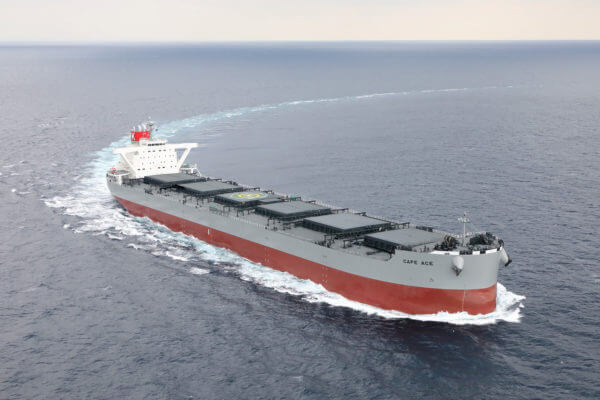
    It is predicted that the 7 Trillion USD per year fossil fuel energy market would shrink to a few hundred billion USD per year with a society powered by Liquid Fission Thorium and LFTBs. This is an obvious disincentive for incumbents to do anything but to obfuscate and delay. For the true scale of these numbers, that means that a world powered by Liquid Fission Thorium energy would require only one ship like the one below to carry ALL WORLD’s Energy for ONE year.

    100,00 DWT Bulk Carrier Cape Ace

    You can see that obfuscation at work here with both Wired and the Bulletin in 2019 on USA presidential candidate Andrew Yang:

    Fact-check: Five claims about thorium made by Andrew Yang – Bulletin


    Andrew Yang Wants a Thorium Reactor by 2027. Good Luck, Buddy – Wired

    The half truths and lies are difficult, if not impossible, for the layperson to identify. We contacted one of Andrew’s advisory team members and confirmed Andrew supports Liquid Fission Thorium, and was committing several billion USD to have USA’s energy footprint 100% on the technology by 2030. Technically very doable. Politically, not.

    It is important to recognise the ecological and economic footprint of energy from Thorium (a substance as common as lead) as being much smaller than even uranium. In the article link above (the Japanese translation one) there are three slides that demonstrate the significant benefits Thorium has over uranium.  These slides are repeated below.

    Thorium and Uranium Compared Slide 1 of 3
    Thorium and Uranium Compared Slide 1 of 3
    Thorium and Uranium Compared Slide 2 of 3
    Thorium and Uranium Compared Slide 2 of 3
    Thorium and Uranium Compared Slide 3 of 3
    Thorium and Uranium Compared Slide 3 of 3

    The IAEA report TE1450 from 2005 is an excellent read. It says Thorium is not an issue and is a good prospect for energy – back in 2005. Once the physics is proven it doesn’t need to be “upgraded” every 6 months like an iPhone.

    And yes, Thorium doesn’t explode. “Walk away safe” is a suitable term for Liquid Fission Technology and LFTBs.

    Here’s the former head of IAEA, Hans Blix, stating that “Thorium shouldn’t be treated like uranium”. 

    Thorium Nuclear Power and non Proliferation Hans Blix IAEA ThEC13

    See more Hans Blix on Liquid Fission Thorium Energy

    Attached below is a brief summary of “Why Thorium didn’t take off” by Bruce Hoglund, 5 November 2010. It’s an excellent starting point for data gathering and research – and not “Wikipedia”. Wikipedia was used as partial evidence why the United Kingdom should’t use Thorium for energy. Around 2012 in a UK government 1.5m GBP funded “study”, rubbished Thorium and directly contradicted the advice of the IAEA’s TE 1450 report.


    The information here is but the tip of the iceberg, however it gives an excellent starting point. There are of course, many, many others who can contribute considerably for a balanced and objective article or articles on Thorium for our energy future with LFTBs. And with today’s communications technology, such conversations are only but a few key strokes away.

    Burning stuff is old tech.

    Star Trek technology is where we have to be now. Fission does that, especially Liquid Fission Thorium Energy Technology and Liquid Fission Thorium Burners – LFTBs.

    Uncle Martin would be proud. Nanu, nanu!


    Post created following a 2 hour interview between Associated Press representative for Japan, [Ms. Yuri Kageyama] and chairman and founder of The Thorium Network, [Jeremiah Josey]


    1. Join The Thorium Network
    2. https://www.youtube.com/watch?v=tyDbq5HRs0o
    3. https://thethorium.network/about-thorium/thorium-knowledge-base/
    4. https://www.ansto.gov.au/our-science/nuclear-technologies/reactor-systems/advanced-reactors/evolution-of-molten-salt
    5. https://thethorium.network/%e3%83%91%e3%83%bc%e3%83%95%e3%82%a7%e3%82%af%e3%83%88%e3%83%86%e3%82%af%e3%83%8e%e3%83%ad%e3%82%b8%e3%83%bc-%e3%83%90%e3%82%a4%e3%83%aa%e3%83%b3%e3%82%ac%e3%83%ab%e8%a8%98%e4%ba%8b-%e6%97%a5%e6%9c%ac/
    6. https://en.wikipedia.org/wiki/Geraldine_Thomas
    7. https://en.wikipedia.org/wiki/George_Monbiot
    8. https://www.chernobyltissuebank.com/contact-us
    9. https://www.linkedin.com/in/danielroderick/
    10. https://www.linkedin.com/in/adi-paterson/
    11. https://www.gen-4.org/
    12. https://figes.com.tr/en/
    13. https://www.linkedin.com/in/resat-uzmen-051a824/
    14. https://thethorium.network/interview-3-dr-resat-uzmen-nuclear-technology-director-of-figes-part-of-the-thorium-student-guild-interview-series-leading-to-nuclear/
    15. https://www.youtube.com/watch?v=NEDK_MAWQD0
    16. https://www.linkedin.com/in/l-berrin-erbay-61b04745/
    17. https://www.linkedin.com/in/phumzile-tshelane-3014945a/
    18. https://www.necsa.co.za/
    19. https://www.youtube.com/watch?v=6MsgDx8K-t4
    20. https://www.linkedin.com/in/rana-%C3%B6nem-57a14718b/
    21. https://thethorium.network/join-us/student-guild/
    22. https://www.linkedin.com/in/ed-calabrese-697a1119/
    23. https://thethorium.network/2022/02/12/the-big-deceit-episode-6-unintended-consequences-chapter-2/
    24. https://hps.org/hpspublications/historylnt/episodeguide.html
    25. https://www.linkedin.com/in/jerry-cuttler-26106763/
    26. https://www.linkedin.com/posts/jerry-cuttler-26106763_what-would-become-of-nuclear-risk-if-governments-activity-6870517584475824128-qr3W
    27. https://www.youtube.com/watch?v=eJSeQIW-X44
    28. https://thebulletin.org/2019/12/fact-check-five-claims-about-thorium-made-by-andrew-yang/
    29. https://www.wired.com/story/andrew-yang-wants-a-thorium-reactor-by-2027-good-luck-buddy/
    30. https://www.youtube.com/watch?v=F4m10Y0rWBY
    31. https://www.youtube.com/results?search_query=hans+blix+thorium
    32. https://www.linkedin.com/in/bruce-hoglund-52194814/

  • The LCOE Illusion: What 100% Wind and Solar Electricity Really Costs

    The LCOE Illusion: What 100% Wind and Solar Electricity Really Costs

    The levelised cost of electricity, or LCOE, is one of the most frequently quoted numbers in energy debates.

    Wind can supposedly produce electricity for a few cents per kilowatt-hour. Solar can supposedly produce it for even less. Those figures are then compared with the retail price of electricity or with the cost of nuclear, gas, coal, or other firm power.

    That comparison is usually misleading.

    LCOE measures the cost of generating electricity from a particular type of power plant. It does not necessarily measure the cost of providing electricity to customers at the time they need it.

    A city does not consume “average annual electricity.” It consumes electricity at 7:00 a.m., at 3:00 p.m., and at 11:00 p.m. It consumes electricity during heat waves, cold snaps, cloudy winter weeks, and periods when the wind is weak across an entire region.

    A wind turbine producing cheap electricity during a period of low demand does not solve the problem of supplying electricity during a windless evening. A solar farm producing power at noon does not by itself provide electricity after sunset.

    If the electricity is unavailable when customers need it, then it is not equivalent to firm electricity.

    The relevant question is therefore not:

    What does it cost to generate one megawatt-hour from wind or solar?

    The relevant question is:

    What does it cost to provide reliable electricity to customers every hour, using wind and solar as the primary energy sources?

    That requires counting the entire system.

    What LCOE includes

    A conventional LCOE calculation generally includes:

    • Construction of the generating facility
    • Financing costs
    • Fuel, where applicable
    • Routine operation and maintenance
    • Expected electricity production
    • Sometimes decommissioning costs

    A simplified version is:

    LCOE=Lifetime costsLifetime electricity generated

    For a wind or solar project, the denominator is usually the electricity generated by the project over its lifetime.

    That can be a useful number when comparing similar generation technologies or deciding whether to build one additional plant in an already reliable grid.

    But it does not answer the full-system question.

    What a standalone renewable system must also provide

    A city relying entirely on wind and solar must pay for much more than the turbines and panels:

    • Generation capacity far above average demand
    • Batteries for daily balancing
    • Long-duration storage for multi-day shortages
    • Potentially seasonal storage
    • Power-conversion equipment
    • Transmission and substations
    • Grid-forming inverters and controls
    • Reserve capacity
    • Curtailment of surplus electricity
    • Storage charging losses
    • Storage discharge losses
    • Replacement of batteries, inverters, and other equipment
    • Protection against periods when both wind and solar output are low
    • Enough capacity to meet peak demand, not merely average demand

    These costs are not optional additions. They are part of the system required to turn intermittent electricity into reliable electricity.

    The 1-million-person city

    Consider a city of 1 million people.

    For this example, assume the city uses electricity for ordinary electrical demand: homes, businesses, services, lighting, appliances, data centers, and industry. This is not yet an estimate of all primary energy used for transportation, industrial heat, aviation, or other fuels.

    Assume:

    • Annual electricity consumption: 6 TWh
    • Annual consumption in kilowatt-hours: 6 billion kWh
    • Average demand: approximately 685 MW
    • Peak demand: 1,000 MW
    • No fossil-fuel, nuclear, hydroelectric, or external-grid backup
    • Wind and solar are the primary energy sources
    • Stored renewable energy must cover nights, weak-wind periods, and extended shortages

    The average load is:

    6,000 GWh8,760 hours=685 MW

    The city may average only 685 MW, but the system must be capable of serving a peak approaching 1,000 MW.

    Designing only for average demand would leave the city unable to meet its largest loads.

    Wind and solar capacity

    Assume the system uses:

    • 4 GW of wind
    • 3 GW of solar

    For wind, assume a 40% capacity factor:

    4 GW×8,760 hours×40%=14.016 TWh/year

    For solar, assume a 25% capacity factor:

    3 GW×8,760 hours×25%=6.570 TWh/year

    Total annual generation is therefore:

    14.016+6.570=20.586 TWh/year

    The city only consumes 6 TWh per year, so the system generates approximately:

    20.5866=3.43

    times as much annual electricity as the city consumes.

    That does not mean 70% of the electricity is automatically wasted. Some of the surplus is used to charge storage, and some is lost during conversion and discharge. But significant curtailment is unavoidable because the generation profile will not match the city’s demand profile.

    The system needs this level of overbuilding because generating 6 TWh annually is not enough. The electricity must also be available at the right hour.

    Storage requirement

    A daily battery system can shift electricity from sunny afternoons to evenings and from windy periods to nearby periods of weak generation.

    Assume:

    • Battery power capacity: 2 GW
    • Battery energy capacity: 48 GWh

    At a 1-GW load, 48 GWh would represent approximately 48 hours of energy. In practice, not all battery capacity is usable, and the system must retain reserves, so the practical coverage period would be shorter.

    Assume an installed battery cost of:

    $200/kWh

    The battery cost is:

    48 GWh=48,000,000 kWh

    48,000,000 kWh×$200/kWh=$9.6 billion

    This battery does not solve the full reliability problem. It mainly handles daily balancing and some short-term weather variation.

    A regional wind drought can last several days. In some locations, low wind and low solar output can persist much longer. Batteries sized for only a few hours or one evening are not equivalent to firm generation.

    Long-duration storage

    The system also needs longer-duration storage.

    For this example, assume a hydrogen-based system or another comparable technology with:

    • Approximately 1 GW of power-conversion capacity
    • Around 100–500 GWh of stored energy
    • Equipment to convert surplus electricity into stored energy
    • Storage tanks or underground storage
    • Turbines, fuel cells, or other equipment to convert the energy back into electricity

    The exact storage volume depends on:

    • Local weather
    • Geographic diversity
    • Whether outside electricity can be imported
    • The required reliability standard
    • Whether the system must survive a one-week, two-week, or longer renewable drought
    • Whether seasonal storage is required

    A 100-GWh storage reserve would provide only 100 hours at a continuous 1-GW output before conversion losses. That is roughly four days. It is not a guarantee against a two-week regional shortage.

    For the financial example, use a midrange installed cost of $4 billion for the long-duration storage system. A more conservative design using much larger seasonal reserves could cost substantially more.

    Capital cost

    The illustrative system is:

    ComponentSizeAssumed cost
    Wind generation4 GW$6.0 billion
    Solar generation3 GW$2.7 billion
    Batteries2 GW / 48 GWh$9.6 billion
    Long-duration storage1 GW plus storage inventory$4.0 billion
    Transmission, substations, controls, and interconnection—$3.0 billion
    Total initial capital—$25.3 billion

    These are not universal prices. Actual costs vary by country, terrain, labour costs, financing terms, commodity prices, permitting, transmission distance, and technology.

    The purpose of the example is to include the system components that a simple wind or solar LCOE normally does not include.

    Annualised capital cost

    To convert capital costs into annual costs, assume:

    • 7% cost of capital
    • 30-year economic life for wind, solar, and grid infrastructure
    • 15-year economic life for batteries and storage equipment

    The capital-recovery factor for 7% financing over 30 years is approximately:

    CRF30=0.07(1.07)30(1.07)30−1≈8.06%

    The capital-recovery factor for 7% financing over 15 years is approximately:

    CRF15≈10.98%

    Wind

    $6.0 billion×8.06%=$483.6 million/year

    Solar

    $2.7 billion×8.06%=$217.6 million/year

    Transmission and grid infrastructure

    $3.0 billion×8.06%=$241.8 million/year

    Batteries

    $9.6 billion×10.98%=$1.054 billion/year

    Long-duration storage

    $4.0 billion×10.98%=$439.2 million/year

    Total annual capital recovery is:

    483.6+217.6+241.8+1,054+439.2=$2,436.2 million/year

    Therefore:

    Annual capital recovery≈$2.44 billion​

    Operation and maintenance costs

    Now add annual operation and maintenance costs.

    Assume:

    • Wind fixed O&M: 2.5% of initial capital
    • Solar fixed O&M: 1.5%
    • Battery O&M: 2.0%
    • Long-duration storage O&M: 3.0%
    • Grid and transmission O&M: 2.0%

    Wind O&M

    $6.0 billion×2.5%=$150 million/year

    Solar O&M

    $2.7 billion×1.5%=$40.5 million/year

    Battery O&M

    $9.6 billion×2.0%=$192 million/year

    Long-duration storage O&M

    $4.0 billion×3.0%=$120 million/year

    Grid O&M

    $3.0 billion×2.0%=$60 million/year

    Total routine O&M is:

    150+40.5+192+120+60=$562.5 million/year

    Round this to:

    $563 million/year

    Replacement reserves

    Wind turbines, solar inverters, battery cells, power electronics, control systems, and storage equipment will not all last for the full 30-year project life.

    A serious calculation needs money set aside for:

    • Battery replacement
    • Inverter replacement
    • Turbine component replacement
    • Solar inverter replacement
    • Control-system upgrades
    • Storage-system refurbishment
    • Unexpected major repairs
    • Decommissioning and repowering

    Assume a replacement and contingency reserve of:

    $150 million/year​

    This may be too low for a system with a very large battery fleet, but it provides a reasonable allowance for this illustration.

    Total annual system cost

    Add the annual costs:

    Cost categoryAnnual cost
    Wind capital recovery$483.6 million
    Solar capital recovery$217.6 million
    Battery capital recovery$1,054.0 million
    Long-duration storage capital recovery$439.2 million
    Grid capital recovery$241.8 million
    Routine O&M$562.5 million
    Replacement and contingency reserve$150.0 million
    Total$3,148.7 million/year

    Thus, the complete system costs approximately:

    $3.15 billion per year

    Cost per delivered kilowatt-hour

    The city consumes:

    6 TWh/year=6,000,000,000 kWh/year

    Therefore:

    $3.1487 billion6 billion kWh=$0.5248/kWh

    Rounded:

    $0.52/kWh

    That is the approximate all-in system cost in this illustrative case.

    It is not the cost of raw electricity produced at a wind turbine or solar panel. It is the cost of constructing and operating enough infrastructure to provide the city with electricity throughout the year while relying on wind and solar energy and stored renewable electricity.

    Why the result is so different from the advertised LCOE

    Suppose a wind farm reports an LCOE of 5¢/kWh.

    That figure might be calculated using the wind farm’s own annual production:

    Wind-farm LCOE=Wind-farm lifetime costsWind-farm lifetime generation

    But the city does not need electricity only when the wind farm produces it.

    The city needs:

    electricity at every hour

    The system therefore requires:

    wind+solar+overbuilding+batteries+long-duration storage+transmission+controls+replacement

    The relevant denominator is not all electricity generated by the wind and solar farms. It is the electricity actually delivered to customers:

    delivered electricity=6 billion kWh/year

    That is why the denominator matters so much.

    If the system generates 20.6 TWh but customers consume 6 TWh, dividing total system costs by 20.6 TWh produces a much lower-looking number. But customers cannot use electricity that was curtailed, lost during storage, or generated at the wrong time.

    The proper calculation divides total system cost by useful delivered electricity.

    The hidden cost of curtailment

    Curtailment occurs when wind and solar are producing more electricity than the city can use and more than the storage system can absorb.

    For example, imagine a sunny and windy afternoon when:

    • City demand is 700 MW
    • Solar output is 2,000 MW
    • Wind output is 1,500 MW
    • Batteries are already full
    • Long-duration storage is full or charging at its maximum rate

    The system has 3,500 MW of renewable output but only 700 MW of immediate demand. Much of the remaining output must be curtailed.

    That electricity has a production cost even though it produces no useful electricity for the customer. The turbines and solar panels still had to be built, financed, maintained, and eventually replaced.

    Curtailment is not free. It is the cost of building generation that cannot always be used.

    The hidden cost of storage losses

    Storage is not 100% efficient.

    A battery might have an approximately 85–95% round-trip efficiency depending on the system and operating conditions. Hydrogen systems can have much lower electricity-to-electricity efficiency.

    A simplified hydrogen pathway might be:

    electricity→electrolysis→compression/storage→turbine or fuel cell→electricity

    If the full round-trip efficiency is 35%, then:

    1 MWh stored→0.35 MWh delivered

    To deliver 1 MWh to customers through that pathway, the system must generate:

    10.35=2.86 MWh

    before accounting for transmission losses and other losses.

    This is why long-duration storage can be valuable for reliability while still being expensive. It does not merely require storage tanks. It requires extra generation to compensate for the energy that disappears during conversion.

    The hidden cost of reliability

    A system designed for ordinary weather is not the same as a system designed for difficult weather.

    Consider two designs:

    Design A: Handles normal nights and short wind lulls.

    Design B: Handles a rare, region-wide event lasting one or two weeks, with poor solar production and weak wind.

    Design B requires much more:

    • Generation capacity
    • Stored energy
    • Power-conversion capacity
    • Transmission
    • Reserve margin
    • Equipment capable of sitting unused for long periods

    That equipment may operate only a few times per year, or perhaps only a few times per decade. Nevertheless, it must be paid for all year.

    This is the same basic reason that emergency departments, fire stations, and spare aircraft cost money even when they are not used constantly. Reliability requires capacity that is idle much of the time.

    “Zero outages” needs a defined standard

    No electrical system can realistically promise that a customer will never experience an outage under every imaginable circumstance.

    Transmission lines fail. Transformers fail. Fires, floods, cyberattacks, equipment defects, and extreme weather occur.

    A practical analysis must define a reliability target, such as:

    • 99.9% availability
    • 99.99% availability
    • A specified loss-of-load expectation
    • A specified maximum number of outage hours per year
    • Survival of a defined renewable drought scenario

    The calculation above treats reliability as a design requirement rather than assuming that the city can simply import electricity whenever wind and solar production are inadequate.

    If outside grid electricity is allowed, the system becomes cheaper. But then the city is depending on other regions, which may themselves be experiencing the same shortage.

    If gas turbines are retained for rare emergency use, the system becomes cheaper still. But then the city is not receiving all of its electricity from wind and solar.

    Those are legitimate design choices, but they must be stated openly.

    A range of possible outcomes

    The 52¢/kWh estimate is not a universal price. It is an example based on a city that must provide its own reliability.

    The outcome could be lower if:

    • The city is connected to a very large geographic grid
    • Wind and solar resources are excellent
    • Neighboring regions have complementary weather
    • Existing transmission is available
    • The required reliability standard is modest
    • Storage prices fall substantially
    • Demand can be shifted voluntarily
    • Hydro, nuclear, geothermal, or fossil backup is allowed

    It could be higher if:

    • The city must operate as an electrical island
    • It must survive multi-week renewable droughts
    • Seasonal storage is required
    • The city is located in a poor wind or solar region
    • Transmission must be built over long distances
    • Financing costs are high
    • Battery replacement costs rise
    • Electrification significantly increases peak demand

    Approximate all-in ranges might look like this:

    System designApproximate delivered cost
    Wind and solar added to a large interconnected grid15–30¢/kWh
    City with substantial batteries and regional transmission25–45¢/kWh
    Mostly self-sufficient city with long-duration storage40–70¢/kWh
    Strictly local system designed for severe multi-week shortages70¢–$1.00+/kWh

    These figures are system costs, not necessarily the final retail bill. Taxes, utility administration, customer service, distribution charges, and profit could increase the amount paid by customers.

    What this means for Thorium, Fission and other firm-energy proposals

    The point is not that wind and solar are useless. They are valuable energy sources, and their fuel is free. But their economics suck.

    The point is that their low generation cost does not automatically equal a low cost of reliable electricity.

    A firm-energy technology—whether nuclear, hydroelectric, geothermal, fossil fuel with carbon capture, or another technology—reduces the amount of storage and overbuilding required. Its comparison should therefore be made against the cost of firm renewable electricity, not against the raw LCOE of wind or solar.

    The fair comparison is:

    firm nuclear costversusfirm wind-plus-solar system cost

    not:

    nuclear LCOEversuswind LCOE

    and not:

    nuclear LCOEversussolar LCOE

    Those are different products.

    A wind turbine and a solar panel produce variable electricity. A firm generator produces dispatchable electricity. Comparing their raw LCOEs without valuing timing, reliability, storage, transmission, and capacity is like comparing the price of an inexpensive ingredient with the price of a finished meal.

    The central conclusion

    LCOE is not mathematically fraudulent, but it’s manner of presentation is. It is simply being asked to answer a question it was not designed to answer.

    It can estimate the cost of electricity generated by one project in one moment of time. Effectively useless measure.

    It does not, by itself, estimate the cost of supplying a city with dependable electricity every hour.

    For the illustrative 1-million-person city:

    • Annual electricity demand: 6 TWh
    • Average demand: 685 MW
    • Peak demand: 1 GW
    • Wind capacity: 4 GW
    • Solar capacity: 3 GW
    • Battery storage: 48 GWh
    • Long-duration storage: approximately 100–500 GWh
    • Total system capital: approximately $25 billion
    • Annual system cost: approximately $3.15 billion
    • Delivered electricity: 6 billion kWh
    • All-in system cost:

    $3.15 billion6 billion kWh≈$0.52/kWh​

    The exact result will vary with geography, financing, technology, reliability standards, and storage requirements. But the structure of the calculation does not change:

    real cost of renewable electricity=generation+overbuild+storage+losses+curtailment+transmission+reserves+replacements

    If those costs are omitted, the result is not the cost of reliable electricity. It is only the cost of producing electricity when the weather happens to cooperate.

  • China Is Building the Nuclear Future

    China Is Building the Nuclear Future

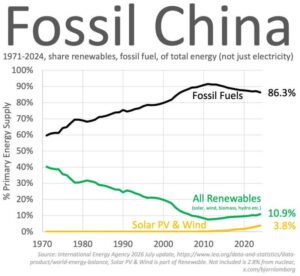
    Famous climate researcher and speaker Bjorn Lomborg made a good point recently: China remains a fossil-fuel-powered industrial economy, just as the rest of the world does. But that is only half the story.

    China Moving Off Fossil Fuels with The Thorium Network

    The equally important story is the speed at which China is adding nuclear capacity and positioning itself across the entire advanced-nuclear technology landscape.

    China is not merely building conventional reactors. It is developing a broad portfolio that includes:

    – Hualong One and CAP-series pressurised-water reactors

    – High-temperature gas-cooled reactors

    – Sodium-cooled fast reactors

    – Liquid Fission Burners (aka Molten-salt reactors)

    – Thorium-fuel-cycle research

    – Closed-fuel-cycle and reprocessing technologies

    – Nuclear heat, industrial steam, hydrogen, and other non-electric applications

    China’s conventional nuclear fleet has expanded dramatically. By early 2026, China was operating approximately 58 reactors with about 56 GW of installed capacity, while more than 30 additional reactors were under construction. China has also approved ten or more new reactors annually for several consecutive years.

    This is not a theoretical program. In December 2023, China’s HTR-PM at Shidao Bay entered commercial operation. It is a high-temperature gas-cooled, pebble-bed reactor generally classified as a Generation IV system. The plant combines two reactor modules with one turbine and is designed to provide both electricity and high-temperature process heat. Follow-up work has included district heating and industrial-steam applications.

    China is also advancing sodium-cooled fast reactors. The CFR-600 project at Xiapu represents a major step toward fast-spectrum reactors and a potential closed fuel cycle. The CFR-600 is promising whilst still at demonstration-stage technology. Its initial fuel supply has involved Russian fast breeder expert cooperation.

    In the Liquid Fission Thorium Burner space is China’s TMSR-LF1 at Wuwei in Gansu Province.

    This is a 2-MW-thermal Liquid Fission experimental burner developed by the Shanghai Institute of Applied Physics. It achieved first criticality on October 11, 2023, and reached full power in June 2024. In October 2024, Thorium was added to the operating liquid fuel. In November 2025, the Chinese research team announced that it had obtained experimental evidence of Thorium-to-uranium conversion inside the reactor. How many units do they have now, they are not saying.

    China’s next stated step is a 100-MW-thermal demonstration project, with demonstration applications targeted for 2035 and commercialisation by 2040. Expect China to shorten those timelines dramatically. China appears to be the only country currently operating a Liquid Fission molten-salt burner that has incorporated Thorium and reported Thorium-to-uranium conversion success.

    This is why Jeremiah Josey’s September 2023 presentation at the CLSA/CITIC Securities investors forum in Hong Kong was so prescient. Speaking to a large Chinese investment audience, he argued that China’s nuclear opportunity extended beyond the construction of today’s pressurised-water reactors. The presentation placed China’s reactor buildout, advanced nuclear research, fuel-cycle strategy, and Liquid Fission Thorium development within one investment and industrial framework. The event materials describe an audience of approximately 1,600 investors and featured the thesis that China was moving from imported and conventional designs toward technological self-reliance and advanced reactor systems.

    You can see the the full presentation here:

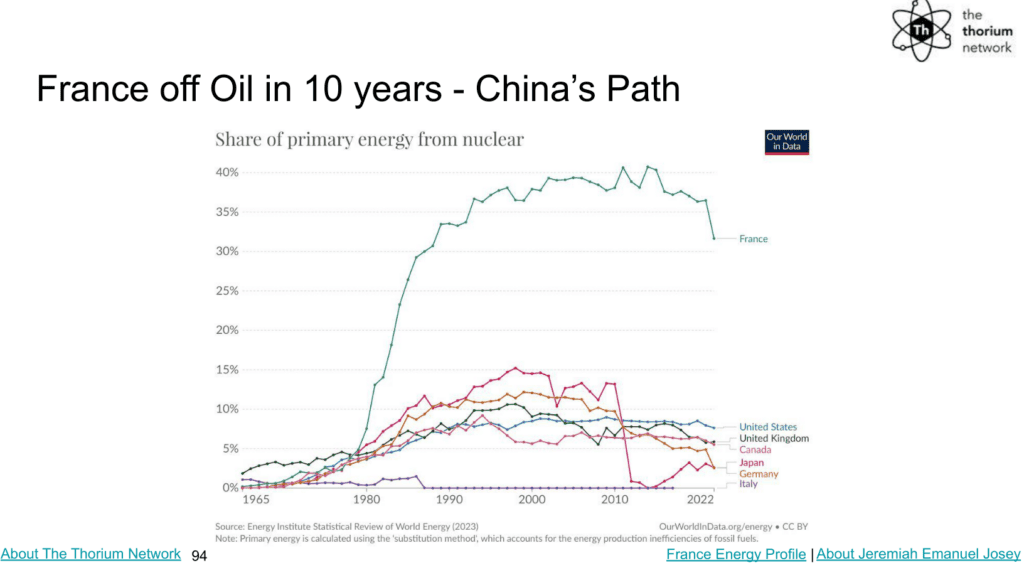
    The comparison with France is also important. China is not the first nation to demonstrate that a large nuclear buildout can transform an electricity system. France carried out its own exceptionally rapid nuclear expansion during the 1970s and 1980s, weaning it’s self entirely off fossil fuels.

    Fossil fuel to France is what wind and solar are to everyone else: a fringe power supply.

    The French example proves that a country can replace a large share of fossil electricity within a decade when nuclear construction is treated as a national infrastructure program.

    France goes nuclear and comes off fossil fuels The Thorium Network

    China is now pursuing that same basic logic on a much larger industrial scale—but with a broader technology portfolio. France standardised around pressurised-water reactors – their own incredible safe design.

    China is building—also their own desgin—pressurised-water reactors at scale while also developing high-temperature gas reactors, fast reactors, molten-salt systems, and Thorium-cycle technologies.

    The conclusion is that China has created the world’s most serious national test bed for nuclear scale-up. And they are doing it in earnest.

    China is simultaneously:

    1. Building conventional nuclear reactors faster than any other major country.

    2. Operating the first commercial Generation IV reactor.

    3. Developing fast reactors and fuel-cycle infrastructure.

    4. Operating Liquid Fission machines.

    5. Re-proving the conversion of Thorium into uranium-233.

    6. Planning larger demonstrations for industrial heat, hydrogen, and electricity.

    7. Combining state financing, domestic manufacturing, centralized planning, and a very large internal energy market.

    China may still burn enormous quantities of coal, oil, and gas today. That does not make its nuclear strategy irrelevant. It makes the strategy more important. China’s immense energy demand is precisely why it is pursuing every scalable source of reliable power—including coal, renewables, hydro, nuclear, and advanced nuclear technologies.

    The investment and technological question is therefore not whether China is already “green.”

    It is whether China’s combination of nuclear construction speed, industrial capacity, advanced-reactor research, and long-term energy demand will allow it to become the first country to commercialize a new generation of nuclear systems at meaningful scale.

    That is the question Jeremiah Josey put before Chinese investors in Hong Kong in 2023. The subsequent progress of HTR-PM and TMSR-LF1 clearly demonstrate that the question was not misplaced.

    We think it’s a moot point.

    Read the full 2023 post on our website

    Read Bjorn’s post

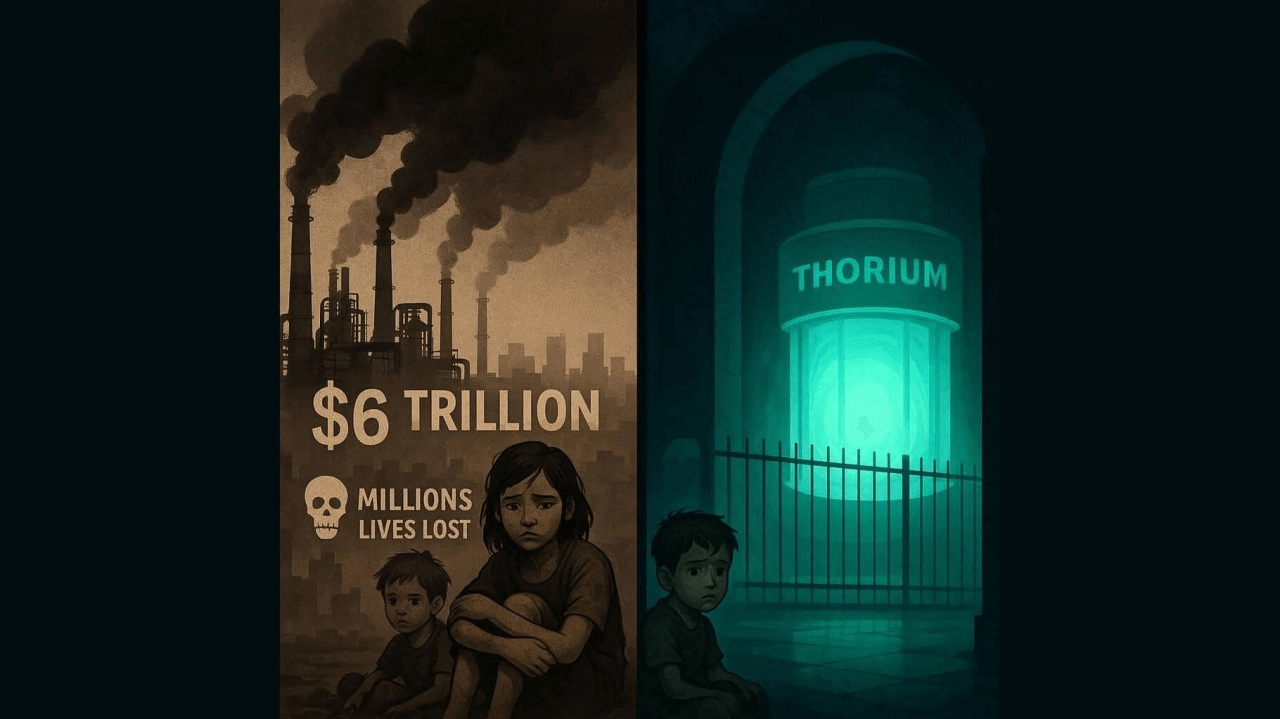
  • Fossil Fuels: Killing 10 Million Yearly While Raking in USD 6.7 Trillion – Profits Over People?

    Fossil Fuels: Killing 10 Million Yearly While Raking in USD 6.7 Trillion – Profits Over People?

    Authored by Jeremiah Josey, 29 December 2025

    Burning fossil fuels claims nearly 10 million lives annually through air pollution, representing one in five global deaths from PM2.5 particles that trigger heart disease, strokes, COPD, and diabetes. Yet the industry pockets USD 6.7 trillion in yearly revenue, brazenly prioritising shareholder dividends over human lives in a profit-first model that externalizes the death toll onto vulnerable populations.reddit+5​

    Shocking Death Toll

    Harvard research pins 8.7 million deaths in 2018, with earlier peaks at 10.2 million in 2012, doubling WHO’s prior estimates by tracing pollution directly to fossil combustion. China (3.9 million) and India (2.5 million) bear the heaviest burden, but North America and Europe also suffer significant losses, proving no escape from this profit-fueled crisis.weforum+4​

    Hidden Health Crisis

    These tiny PM2.5 particles from coal, oil, and gas pierce lungs and bloodstreams, driving 30% of ischemic heart deaths, 16% of strokes, and 16% of COPD cases worldwide. Fossil fuels account for 61-82% of preventable pollution mortality, with even low exposures deadly and linked to worsened Covid-19 outcomes—all while industry leaders count their trillions.cnn+3​

    Impact Area% of Global DeathsKey Regions
    Heart Disease30% bmjgroup​China, India
    Strokes16% hsph.harvard​East Asia
    COPD16% weforum​South Asia
    Total Fossil~20% sciencedirect​Worldwide

    Fossil Fuel Profits: USD 6.7 Trillion Raked In Annually Amid 10 Million Deaths

    The global fossil fuel sector generates USD 6.7 trillion in 2025 revenue from oil, gas, and coal—matching major economies—while deliberately externalizing nearly 10 million deaths to boost bottom lines. Oil and gas exploration alone hits USD 4 trillion, with giants like ExxonMobil exceeding USD 400 billion yearly, funneling billions into dividends instead of pollution controls that could save lives. marketreportanalytics+2​

    Metric2025 Annual FigureDeath Link
    Total RevenueUSD 6.7T persistencemarketresearch​Funds ops killing ~10M/year weforum​
    Oil/Gas E&PUSD 4T ibisworld​80% energy mix, 61-82% deaths bmj​
    Coal SegmentUSD 700B+ marketreportanalytics​Top PM2.5 killer in Asia sciencedirect​
    Top Firm (Exxon)USD 400B+ ibisworld​Profits over 27K daily deaths reddit​

    This profit-over-people calculus sees executives paid handsomely as societies bury the victims of their emissions. hsph.harvard+1​

    Urgent Policy Shift

    China slashed particulates by half from 2012-2018, averting 2.5 million deaths without economic ruin—evidence that phasing out fossils saves lives faster than climate fixes alone. With alternatives booming, the industry’s USD 6.7T machine clings to combustion, valuing trillions in revenue over millions of lives. Demand accountability now. gaspgroup+3​

    What’s your stance? Profits before people? Comment below. #FossilFuelsKill #ProfitsOverLives #ClimateJustice #PublicHealth

    References

    1. https://www.reddit.com/r/UnpopularFacts/comments/1k8re0t/air_pollution_from_burning_fossil_fuels_causes_an/
    2. https://www.weforum.org/stories/2021/02/fossil-fuel-pollution-one-in-five-deaths-globally/
    3. https://www.sciencedirect.com/science/article/abs/pii/S0013935121000487
    4. https://www.marketreportanalytics.com/reports/fossil-fuel-energy-82663
    5. https://www.persistencemarketresearch.com/market-research/fossil-fuels-market.asp
    6. https://www.ibisworld.com/global/industry/global-oil-gas-exploration-production/190/
    7. https://www.cnn.com/2021/02/09/world/climate-fossil-fuels-pollution-intl-scn
    8. https://hsph.harvard.edu/climate-health-c-change/news/fossil-fuel-air-pollution-responsible-for-1-in-5-deaths-worldwide/
    9. https://bmjgroup.com/air-pollution-from-fossil-fuel-use-accounts-for-over-5-million-extra-deaths-a-year/
    10. https://gaspgroup.org/almost-9-million-deaths-caused-by-fossil-fuel-pollution/
    11. https://www.bmj.com/content/383/bmj-2023-077784
  • Thorium Triumph: How China Is Shattering Myths and Powering the Future

    Thorium Triumph: How China Is Shattering Myths and Powering the Future

    Article by Jeremiah Josey, founder of The Thorium Network. Dated 13 December 2025

    The website whatisnuclear.com/thorium-myths.html presents a series of arguments that attempts to cast doubt on the viability and advantages of Thorium-based Fission technology. We won’t dwell on the psychological tactics used—such as answering a different question to the headline “myth” or relying on technical jargon to create an aura of authority. They’re unnecessary distractions. And we don’t need to. Recent developments, particularly in China, have decisively demonstrated that the supposed technical hurdles previously cited are not only surmountable but are actively being overcome. China’s progress in Thorium Liquid Fission Burner (LFTB) technology reveals a future where energy independence is not just a goal, but a reality that will reshape global energy dynamics.

    Addressing the “Myths” with Chinese Achievements

    • Myth #1: Thorium Burners were cancelled due to economics, not weapons.
      China’s Thorium Fission programme, launched in 2011 by the Chinese Academy of Sciences, has shown that with sustained investment and state support, economic barriers can be surpassed. The country has not only constructed a complete industrial supply chain for Thorium Fission machines but has also achieved the world’s first conversion of Thorium into uranium-233 within a their LFTB called “TMSR-LF1”. This achievement marks a pivotal step toward self-sustaining Fission cycles, driven by strategic energy security rather than mere economics. Link​
    • Myth #2: Thorium Burners never need enrichment.
      While initial fissile material is required to start the process, China’s TMSR-LF1 machine has successfully bred uranium-233 from Thorium, proving that self-sustaining cycles are achievable. This milestone is a major leap toward reducing dependence on enriched uranium, making Thorium Liquid Fission Burners a cornerstone of China’s long-term energy strategy. Link​
    • Myth #3: Thorium Burners cannot make bombs.
      The claim that Thorium Burners could be used to produce weapons-grade material is categorically false. The process of separating protactinium-233 from the fuel solution is technically complex, highly detectable, and practically impossible to achieve covertly. Moreover, the presence of uranium-232 and its intense gamma radiation makes handling and weaponisation not only hazardous but effectively unfeasible. China’s approach to Thorium Fission prioritises civilian energy and employs strict safeguards, ensuring that weaponisation is not a realistic concern. Link​
    • Myth #4: Thorium is more abundant, but that’s not important.
      China’s discovery of over 1 million tons of Thorium and the mapping of 233 Thorium-rich zones highlight its strategic significance for energy security. For a country with limited uranium, Thorium’s abundance is not just important—it is essential. China’s road map targets commercial deployment by 2029, aiming to secure energy independence for hundreds of thousands of years. This will dramatically reduce China’s reliance on fossil fuels and lead to a significant decline in global demand for coal and oil. Link
    • Myth #5: Thorium Burners don’t uniquely make safer waste.
      China’s TMSR produces far fewer long-lived transuranic elements, and its waste decays much faster than that of conventional Fission machines. The technical capability for online fission product removal and passive safety is being proven in real-world operation, making Thorium Liquid Fission Burners a leader in reducing Fission waste hazards. Link
    • Myth #6: Thorium Burners and molten salt machines are the same thing.
      China’s programme combines both, but the advances in metallurgy and materials—such as the development of specialised alloys for molten salt environments—are critical. The United States historically restricted sales of Hasteloy N, a key material for liquid fission machines, to control technology spread. China has now overcome this by developing its own high-performance alloys, supported by Australia ensuring supply chain independence and technological leadership. Link

    China’s Energy Independence and Global Impact

    China’s Thorium Fission programme is not just about technological advancement; it is about energy independence for hundreds of thousands of years. The end of fossil fuels for China is in sight, and considering the country’s massive energy consumption, this will lead to a dramatic decline in global demand for coal and oil. China’s progress in Liquid Fission Thorium Burner technology is setting a new benchmark for advanced energy solutions worldwide, with the potential to transform global energy markets and reduce reliance on fossil fuels. Link

    Australia’s Role in Supporting China

    Australia has played a crucial role in supporting China’s Thorium Fission ambitions. Under the leadership of Professor Adi Paterson, Australia has become a key partner in the development and supply of Thorium and advanced materials for Liquid Fission Machines. This collaboration not only strengthens bilateral relations but also positions Australia as a vital contributor to the global shift toward sustainable energy solutions. Link​

    China’s achievements in Thorium Fission Burner technology have decisively refuted the notion that Thorium-based Fission is impractical or hindered by insurmountable technical challenges. The technical hurdles cited by critics globally are being overcome, and China’s progress is setting a new benchmark for advanced energy solutions worldwide. The future of energy is not just about technological innovation but about strategic independence and global sustainability. Link

    ​References

    Debunking this article: https://whatisnuclear.com/thorium-myths.html

    Tags

    #China #LiquidFissionThoriumBurners #LFTB #Thorium #Fission

    Credits

    Credits to the respective contributors to this article, including Discovery Alert for the images.

    Article Links

    Telegram: https://t.me/thethoriumnetwork/14561

    LinkedIn: https://www.linkedin.com/posts/thethoriumnetwork_liquidfission-gotthorium-thorium-activity-7405792701608218624-nlyJ

    Facebook: https://www.facebook.com/share/p/17VxJUyRx8/

    Instagram: https://www.instagram.com/p/DSOhU7zjhrk/

  • Japan Finally Shakes Off Its Nuclear Fear — and Thorium Is Waiting in the Wings

    Japan Finally Shakes Off Its Nuclear Fear — and Thorium Is Waiting in the Wings

    Article by Jeremiah Josey, founder of The Thorium Network

    A big sigh of relief as Japan finally kicks out the western phobia of clean, safe #fission energy. It’s taken 14 years but they’ve made it.

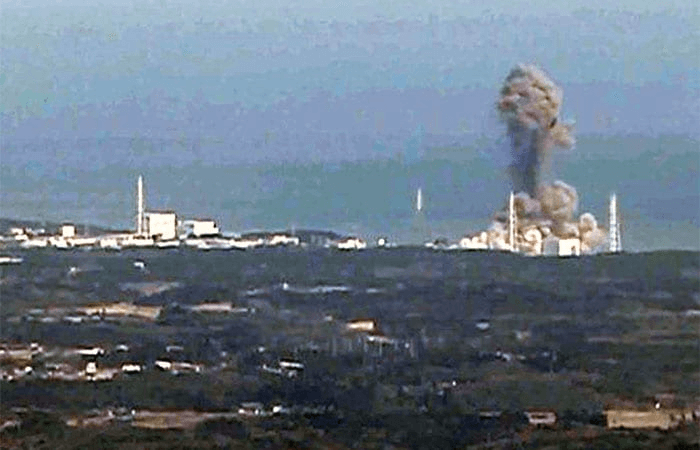
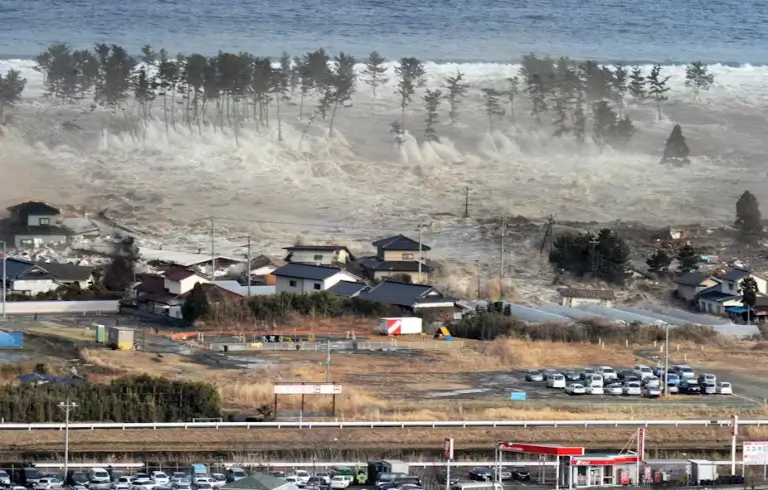
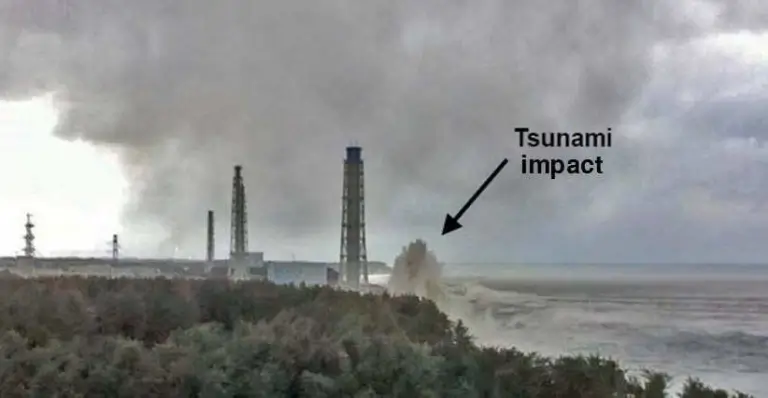
    No one died from the minor incident that occurred at #TEPCO‘s #Fukushima #Daiichi #Nuclear Power Plant when the wave of water hit them on 11 March 2011. Yet the world shivered under their collective blankets when the lights went out on that bed time evening those many moons ago.

    Japan has now found their torch – powered by #uranium and #plutonium – and again today they bravely find their way to the toilet in the middle of the night. The west seems intent on using bedpans…

    There’s a silver lining to this story even brighter than the fission future Japan is turning back on. And that silver is Thorium. Just a few miles away, #China has been steadfast producing reliable secure Thorium energy for almost as long. And Japan is noticing.

    Without the fanfare of hype from both sides.

    🇯🇵 Japan’s Thorium Awakening: Inside Their Molten‑Salt Ambitions

    Japan’s next-gen nuclear vision isn’t just about restarting reactors — it’s about rethinking what fission energy can be. While others fretted, Japan quietly doubled down on research that could transform nuclear safety, waste, and abundance.

    At the heart of this is a Liquid Fission Thorium burner (LFTB) ambition.

    1. Some MSR & Thorium Roots in Japan

    • Japan’s research into MSRs actually has historical depth: IAEA‑sponsored work has looked at Th–233U cycles for molten salt reactors, including their use for transuranic waste reduction.

    • At Kyoto University and other Japanese institutions, there have been proposals to build molten salt reactors using Thorium, such as the FUJI Molten Salt Reactor.

    • According to Mitsui Strategic Studies, Japan is re-evaluating liquid fission as a technology for sustainable domestic resources.

    Bottom line: Japan’s Thorium‑LFTB work is real.

    2. Partnerships & Research Focus

    Japanese research institutions (universities, national labs) are exploring critical MSR‑related technologies, like:

    • Neutronic modeling of Th‑232 → U-233 cycles

    • Materials that resist corrosion in hot molten salts

    • Reactor vessel designs optimised for safety in earthquake-prone regions

    • Online salt circulation and reprocessing concepts.

    These partnerships help lay the foundation for a future Thorium-based industry.

    3. Conceptual Thorium Burner for Waste Recycling

    One of the most attractive ideas in Japanese MSR research is using Thorium‑salt reactors to burn transuranic waste (plutonium and other actinides) produced by conventional light-water reactors. This would:

    • Reduce long-lived nuclear waste

    • Generate clean energy

    • Operate at low pressure, improving safety (no risk of steam‑pressure explosions)

    • Use passive safety features.

    🇨🇳 China’s Thorium LFTB: The Quiet Competitor

    While Japan is preparing, China is already moving.

    • Their TMSR‑LF1 liquid fission machine (2 MW thermal) received an operating licence in June 2023.

    • This reactor achieved first criticality on October 11, 2023.

    • In November 2025, SINAP (Shanghai Institute of Applied Physics) announced the first successful conversion of Thorium to uranium fuel inside this machine, with a conversion ratio of 10%.

    • The TMSR‑LF1 design uses a fuel mix including under‑20% enriched uranium-235 and about 50 kg.


    Message us if you want to see more detail about the efforts of these countries into Liquid Fission Thorium Burner technology – without doubt the best thing ever for humanity and our precious planet earth.

    You can see the original article that promoted our work here on our Telegram channel:

    https://t.me/c/1884139551/13305

    And here on our Linkedin Page:

    https://www.linkedin.com/pulse/japan-finally-shakes-off-its-nuclear-fear-thorium-waiting-wm9ye

    And the Tokyo AFP news post here:

    https://www.nuclearpowerdaily.com/reports/Worlds_biggest_nuclear_plant_edges_closer_to_restart_999.html

  • The High Price of Keeping Nuclear Fission Energy Suppressed: How Fossil Fuels Bankroll Fear and Regulation

    The High Price of Keeping Nuclear Fission Energy Suppressed: How Fossil Fuels Bankroll Fear and Regulation

    Author Jeremiah Josey, 4 September 2025

    In 1969, the United States was surging ahead with nuclear fission power, flipping the switch on three new reactors a year to electrify millions of homes. Fission energy promised a cheap, reliable, and clean source of power, with a footprint as small as a few Central Parks combined. Fast forward to 2025, and fission energy, though still one of the safest and cleanest energy sources, has been largely sidelined. Why?

    The quiet, complex answer to this question lies in the billions—actually, trillions—of dollars the fossil fuel industry spends each year to keep fission energy suppressed. This strategic campaign to protect fossil fuel market share is a story woven through decades of fear-mongering, onerous regulations, and orchestrated myths largely funded by fossil fuel interests and their allies, including influential institutions such as the Rockefeller Institute.

    A Global Campaign Against Fission Power

    Fission energy’s limitations have less to do with safety or technology and more to do with economics and political influence. Fossil fuel companies, aware of nuclear power’s potential to disrupt their dominance, have poured immense resources into shaping public opinion and regulatory environments. For example, in Germany, a country known for its green-energy ambitions but also high industrial energy costs, the government publicly spent approximately 690 million euros in 2021 campaigning against cheaper French nuclear energy. The result? German industries, like its carmakers, suffered from higher energy prices, making them less competitive than their French counterparts powered predominantly by nuclear electricity.

    This is just one part of a global pattern. Various studies and reports highlight how fossil fuel subsidies, lobbying, and marketing have weakened fission power ambitions across continents. In Australia, for example, government fossil fuel subsidies reached USD 14.9 billion in 2024–25, fuelling coal, gas, and oil production, while nuclear options remain politically marginalised despite its obvious and logical potential as a clean energy pillar.

    Fossil Fuel Spending on Energy Suppression in 2025

    Globally, fossil fuel subsidies and related expenditures to bolster oil, natural gas, and coal industries continue to rise. The International Energy Agency (IEA) reports that in 2025, governments and private interests worldwide will spend billions annually—estimated at over USD 1 trillion—on fossil fuel support measures including subsidies, tax breaks, and lobbying efforts aimed at maintaining the status quo. They are using public funds – your tax money – to keep their merry-go-round going around.

    This vast pool of money not only props up fossil fuel extraction but also backs anti-nuclear campaigns, strict regulatory frameworks, and misinformation campaigns that cascade into project delays and cost inflation for nuclear projects. These tactics increase the construction time of nuclear plants from a few years to sometimes decades, exponentially raising capital and interest costs—effectively pricing nuclear out of competitive viability.

    The Rockefeller Institute and the Fossil Fuel Nexus

    One of the key orchestrators in this suppression strategy has been the Rockefeller Institute and its multifaceted network of foundations and organisations. Historically vested in fossil fuels—mainly oil—the Rockefeller interests have wielded significant influence to sway energy policy, often under the guise of environmental concern.

    Their involvement is evident in the proliferation of the Linear No-Threshold (LNT) radiation model, which posits that any amount of radiation exposure increases cancer risk. While later findings have disproved the scientific basis of LNT, its implementation led to stringent safety regulations that made nuclear plant construction prohibitively expensive. This regulatory labyrinth was a boon to the fossil fuel sector who benefited—as they intended—from delaying nuclear advancements.

    The Economic Scale of Suppression: An Expensive Trade-off

    The economic numbers reveal a staggering cost—not just in dollars but in lost opportunity for clean and abundant power. According to U.S. Congressional Budget Office estimates, each month of delay in constructing a nuclear plant can cost about USD 44 million, plus USD 20 million in lost potential revenue. Over decades, the compounded cost of these delays, driven largely by unnecessary regulation and public fear campaigns, has ballooned nuclear construction costs tenfold.

    Meanwhile, fossil fuel industries continue to thrive on government support totalling hundreds of billions a year. The contrast is stark: in Australia alone, fossil fuel subsidies outstrip disaster readiness funds by 14 times, underscoring priorities tilted heavily toward maintaining fossil fuel dominance rather than investing in clean alternatives like nuclear.

    What This Means for Clean Energy’s Future

    Despite these barriers, there’s a renewed interest and slow resurgence in Fission technology, particularly in innovative designs like Small Modular Reactors (SMRs), which are more cost-effective and easier by design. The U.S., Canada, and some European countries are pushing these technologies as part of their clean energy transition. Or, like Sweden, making their main game.

    Yet the fossil fuel industry’s influence remains a formidable obstacle. Continued financial prioritisation of fossil fuels over Fission hampers progress and locks in higher emissions, the deaths they cause and energy insecurity risks for decades to come.

    Global Reflection: The Need for Transparency and Realignment

    Around the world, the fossil fuel industry’s strategic spend to suppress Fission energy is a costly shadow game with massive implications for climate, economy, and energy independence. Countries like Germany demonstrate the pain of energy policy skewed by fossil fuel lobbying, while Australia’s ballooning fossil fuel subsidies show the magnitude of public money fuelling this suppression.

    In 2025, as global clean energy investments reach unprecedented levels—over USD 2.2 trillion supporting renewables—the fossil fuel industry’s spending to maintain its grip on the market emphasises how much is at stake. If society is serious about combating climate change, improving energy security, and ensuring economic competitiveness, policymakers must address this imbalance and reconsider the obstacles fossil fuel interests have placed against Nuclear Fission Power.

    The truth behind Fission power’s stagnation is not one of technology limits or safety failures but of calculated financial power plays sustained by fossil fuels and their political allies. It’s a story worth knowing—and changing.

    Appendix: Country-by-Country Fossil Fuel Spending and Its Impact on Nuclear Energy Suppression in 2025

    This appendix complements the main report’s overarching analysis by providing granular data and examples that underscore the global nature of fossil fuel spending in nuclear energy suppression.

    These country-specific figures and contexts reveal the scale and diversity of fossil fuel industry support worldwide, illustrating how this financial leverage acts as a powerful brake on the development of safe, reliable, and carbon-free nuclear energy in 2025.

    United States

    • Annual fossil fuel subsidies exceed USD 20 billion, encompassing federal and state tax breaks and direct funding.
    • Disclosed fossil fuel industry lobbying surpasses USD 125 million each year, heavily influencing regulations that significantly increase nuclear plant construction costs and timelines.
    • Undisclosed fossil fuel support for suppressive activities is estimated to exceed USD 5 billion annually.
    • Regulatory frameworks such as the Linear No-Threshold radiation exposure model, instigated by fossil fuel interests, contribute billions in additional costs and delays for nuclear projects.
    • The combined effect creates a challenging environment for nuclear energy expansion despite its safety and clean energy benefits.

    Germany

    • The German government spent approximately 690 million euros in 2021 actively campaigning against French nuclear power, motivated by economic competition concerns as lower French electricity prices put German industries, especially automotive manufacturing, at a disadvantage. Germany routinely spends more than 500 million euros each year on programs against French Fission energy.
    • Fossil fuel subsidies and supports range between USD 15-USD 20 billion annually, primarily supporting coal and gas power plants during the energy transition.
    • These substantial political and financial efforts sustain high fossil fuel dependency and suppress domestic nuclear energy initiatives.

    Australia

    • Total fossil fuel subsidies from federal and state governments amounted to USD 14.9 billion in 2024–25, marking a 3% increase from the previous year.
    • The Federal Government’s Fuel Tax Credits Scheme is a significant contributor, valued at over USD 10 billion alone.
    • State-level spending includes substantial funding for coal mines, gas power stations, and related infrastructure, with Queensland and Western Australia being notable contributors.
    • Nuclear Fission power remains politically sidelined, with fossil fuel industry influence heavily steering energy policy.

    Canada

    • Fossil fuel subsidies are estimated between USD 10-13 billion annually, mainly through tax incentives and direct spending to support oil sands and pipeline infrastructure.
    • Fossil fuel industry revenues significantly shape regional energy policies, limiting nuclear energy’s expansion potential.

    China

    • China provides over USD 30 billion in annual fossil fuel subsidies, underpinning coal and natural gas as critical transition fuels despite aggressive nuclear development plans.
    • Political influence from state-owned fossil fuel enterprises delays broader nuclear adoption in some regions, balancing industrial and energy security concerns.

    India

    • Fossil fuel subsidies totalled approximately USD 40 billion in 2024, predominantly favouring coal and oil sectors.
    • Although nuclear power is considered a future energy option, the overwhelming fossil fuel dominance slows regulatory progress and investment in nuclear infrastructure.

    France

    • France represents a pro-nuclear exception with relatively low fossil fuel subsidies, below USD 5 billion annually.
    • France’s government-backed nuclear energy utilities have minimised fossil fuel influence, supporting a substantial portion of the country’s electricity without significant opposition.

    United Kingdom

    • Fossil fuel subsidies range between USD 8-10 billion annually, largely focusing on oil and gas industries in the North Sea.
    • The fossil fuel sector’s political clout contributes to regulatory challenges that inhibit the scaling up of nuclear power projects, despite official plans to expand nuclear capacity.

    References

    1. https://www.iisd.org/articles/deep-dive/how-g7-can-advance-action-fossil-fuel-subsidies-2025
    2. https://australiainstitute.org.au/wp-content/uploads/2025/03/P1669-Fossil-fuel-subsidies-2025-Web.pdf
    3. https://oilchange.org/fossil-fuel-subsidies/
    4. https://www.oecd.org/en/publications/oecd-economic-surveys-finland-2025_985d0555-en/full-report/stepping-up-the-transition-to-net-zero_902009f2.html
    5. https://ourworldindata.org/how-much-subsidies-fossil-fuels
    6. https://www.wto.org/english/tratop_e/envir_e/03_presentation%20by%20iea%20on%20energy%20investment%20trends.pdf
    7. https://www.germanwatch.org/en/91780
    8. https://world-nuclear.org/information-library/economic-aspects/energy-subsidies
    9. https://pmc.ncbi.nlm.nih.gov/articles/PMC11096703/

    Tags

    #CleanEnergyTransition #NuclearPowerNow #FossilFuelFree #EnergyPolicyReform #ClimateAction2025 #Nuclear #Energy

    Links

    Linkedin

    Patreon

  • Nuclear Power: The Only Logical and Reliable Natural Energy Solution Amid Renewables’ Struggles

    Nuclear Power: The Only Logical and Reliable Natural Energy Solution Amid Renewables’ Struggles

    Author Jeremiah Josey

    As the global energy landscape is rapidly evolving, the limitations and challenges of wind and solar power have become increasingly evident. Meanwhile, nuclear energy—especially advanced technologies like Thorium-based reactors championed by TheThorium.Network—stands out as the only truly dependable, scalable, and sustainable clean energy source.

    Wind and Solar Facing Increasing Headwinds

    While wind and solar continue to expand in capacity, the reality on the ground exposes growing barriers to their sustained dominance.

    • Offshore wind projects are repeatedly stymied by regulatory and operational roadblocks. The 704 MW Revolution Wind project off Rhode Island was halted by a US federal stop work order due to unresolved compliance issues, delaying critical renewable capacity. Similarly, Equinor’s ambitious 2 GW floating offshore wind initiative in Australia was abandoned because regulatory hurdles could not be overcome.
    • Technological advances like recyclable turbine blades at the UK’s Sofia offshore wind farm represent progress but cannot mask the sector’s ongoing safety and logistical challenges. Research from Robert Gordon University highlights the high risks faced by offshore wind technicians, underscoring the human and operational costs of these installations.
    • The solar industry also contends with market saturation and excess production, particularly in China, where regulators are urging the sector to reduce overcapacity and cut back on hyper-competition to stabilize fragile market conditions. In the US, solar accounts for a large portion of new capacity additions, but its intermittent nature and supply chain imbalances raise questions about long-term reliability.
    • Microgrids, though growing rapidly due to their benefits in rural electrification and risk mitigation, remain niche solutions incapable of meeting the vast and growing global demand for continuous power.

    Nuclear Power Advancing as the Backbone of Clean Energy

    In stark contrast to the uncertainties facing renewables, nuclear power advances steadily as a reliable and practical solution for the clean energy transition:

    • Sweden’s Vattenfall is pushing forward with plans for new nuclear power plants using small modular reactors (SMRs), partnering with leading technology providers like GE Vernova and Rolls-Royce SMR. This reflects rising confidence in scalable advanced nuclear technologies as irreplaceable components of future energy systems.
    • Energy security is paramount, especially for developing nations. Iraq’s recent contract to deploy two powerships delivering dispatchable electricity exemplifies how nuclear technology can provide fast, flexible energy where it is needed most.
    • The intrinsic benefits of nuclear power—high energy density, continuous 24/7 output, minimal land use, and operational stability—make it uniquely suited to underpin future grids resilient to climate variability and demand flux.

    Why Thorium-Based Nuclear Power Is the Only Logical Path Forward

    The challenges confronting wind and solar power highlight the necessity for energy sources that guarantee steady supply without dependency on weather or daylight. Thorium-based nuclear technology, as advocated by TheThorium.Network, offers unmatched advantages:

    • Produces clean, abundant energy with vastly lower environmental impact compared to land-intensive renewables.
    • Avoids intermittency issues, eliminating the need for costly energy storage and backup systems.
    • Enhances grid stability and synergizes well with emerging grid architectures and community microgrids.
    • Supports sustainable economic development, especially in emerging and rural economies, by providing dependable power access.

    Facing Reality: The Myths of Renewables and the Promise of Nuclear

    Despite some narratives of wind and solar outproducing traditional sources in certain periods, the broader picture shows unresolved technical, regulatory, and economic hurdles hampering renewables’ ability to fully replace fossil fuels reliably. Studies demonstrate nuclear power’s superior cost-effectiveness when system integration, capacity factors, and dispatchability are fully accounted for. Moreover, innovations in thorium molten salt reactors promise safer and more economical nuclear power, free from many drawbacks of conventional uranium reactors.

    Conclusion

    The future of sustainable, reliable, and scalable energy lies not in the uncertain promises of intermittently dependent wind and solar power, but in embracing nuclear innovation—particularly thorium-based nuclear technologies that TheThorium.Network pioneers. Nuclear power’s unparalleled reliability, efficiency, and environmental credentials make it the only rational cornerstone for a secure energy future worldwide.


    Reference List

    • BKPS, a Karpowership affiliate, signs contract to deliver dispatchable electricity via two powerships to Iraq, supporting energy security.
      Source: Powerships to support energy security in Iraq
    • Construction of the 704 MW Revolution Wind offshore wind project off Rhode Island halted on August 22, 2025, after US Bureau of Ocean Energy Management issued a stop-work order; project was 80% complete with 45 of 65 turbines installed, aiming for completion in 2026.
      Sources: Federal order halts 704 MW Revolution Wind offshore project; https://orsted.com/en/company-announcement-list/2025/08/revolution-wind-receives-offshore-stop-work-order–145387701
    • Swedish energy company Vattenfall advances plans for new nuclear power plant on the Värö Peninsula, shortlisting GE Vernova and Rolls-Royce SMR as potential small modular reactor suppliers.
      Source: Vattenfall advances plan for new nuclear power in Sweden
    • Equinor withdraws from 2 GW floating offshore wind project off New South Wales, Australia, due to unresolved regulatory challenges.
      Source: Equinor pulls out of 2 GW floating offshore wind project
    • China’s industry ministry calls on solar industry to reduce overcapacity and mitigate extreme competition for market stability.
      Source: China urges its solar industry to curb overcapacity
    • US utility-scale solar capacity grew by 12 GW in the first half of 2025, with an additional 21 GW planned for the second half; solar expected to make up 50% of new generation capacity additions this year.
      Source: 50% of new US capacity to come from solar – EIA
    • Global microgrid capacity projected to reach 1.4 GW by 2034, driven by rural electrification and utility risk mitigation efforts.
      Source: Microgrid capacity additions to reach 1.4 GW by 2034
    • Researchers at Robert Gordon University publish study aimed at improving safety for offshore wind technicians working in high-risk environments.
      Source: New study supports improved offshore safety
    • RWE and Siemens Gamesa install recyclable wind turbine blades at UK Sofia offshore wind project, marking a UK first for sustainability.
      Source: Recyclable turbine blades installed at Sofia project
    • UK-led robotics initiative to accelerate environmental approvals for offshore wind farms, aiming to speed up deployment.
      Source: UK project aims at speeding up offshore wind approvals
    • Zambia’s ZESCO and Anzana Electric Group launch $300 million electrification project to expand power access along the Lobito Corridor.
      Source: Zambia launches $300 m electrification project

  • The $6 Trillion Lead Poisoning Scandal Big Oil Tried To Hide for Decades

    The $6 Trillion Lead Poisoning Scandal Big Oil Tried To Hide for Decades

    Author Jeremiah Josey

    Executive Summary

    For over a century, humanity has paid the ultimate price for the insatiable greed of the fossil fuel industry. The story of tetraethyl lead (TEL) added to petrol—intentionally poisoning workers, children, and millions worldwide—is a stark and brutal example of corporate cruelty disguised as “progress.” Those deaths were never part of any conversation; profit was the sole concern.

    Today, as climate change accelerates and pollution kills 8.5 million people annually (WHO, 2023), the truth remains suppressed again. Liquid Fission Thorium (LFT) energy, a proven, clean, and nearly infinite source of power, capable of obliterating oil profits overnight and saving the planet, is deliberately kept from public awareness.

    This report exposes how the same forces that poisoned our children with leaded petrol actively suppress LFT, choosing profits over life repeatedly. The pattern is clear: corporations sell death to protect fortunes, and governments, bought and compromised, enable the carnage.


    Introduction: No “Economic Realities”—Only Profit and Death

    Profits—not “economic realities” or “political complexity”—have always been the brutal truth behind industrial poisonings, colonial massacres, and environmental destruction. The oil industry’s addition of lead to petrol was a deliberate choice to enrich shareholders at the catastrophic cost of human health.

    Workers died by the dozens during TEL’s early production. Millions of children suffered irreversible brain damage worldwide. No one asked if it was right or justified—it never entered the conversation. Corporate greed alone decided that killing people was an acceptable collateral cost.

    This historical lesson is no ancient tragedy. Today, Liquid Fission Thorium (LFT) energy stands ready to revolutionise the global energy system, eliminate fossil fuels, and save millions of lives lost annually to toxic air pollution. Yet, once again, corporate interests suppress this breakthrough because the survival of big oil—and their profits—depends on it.


    Part I: The Leaded Petrol Poisoning—A Century of Corporate Murder for Profit

    TEL: The Deadly Additive Created to Expand Oil Profits

    In the 1920s, General Motors and DuPont’s engineer Thomas Midgley Jr. synthesised TEL, a compound that allowed car engines to run faster and cheaper but was a potent neurotoxin. The Ethyl Corporation, formed to market TEL, unleashed it worldwide despite knowing its deadly effects.

    The goal was not worker safety or public health. It was profit maximisation through controlling a key additive that oil refiners could exploit.

    Workers Murdered and Poisoned, Covered Up to Protect Profits

    At the Bayway refinery in 1924, five workers died from lead poisoning. Ethyl Corporation responded with lies, denial, and intimidation. No accountability. No remorse. Deaths continued unabated. Even Thomas Midgley Jr. dies a horrible death due to lead poisoning.

    Oil and chemical companies financed falsified “safety” studies, suppressed whistleblowers, and bribed politicians to ensure TEL stayed in fuel for nearly 100 years.

    Millions died prematurely from cardiovascular and neurological diseases directly linked to lead exposure. The lives lost were a “cost of doing business”—never a matter of ethics or public debate.


    Part II: How Lead Devastates the Human Body—Irreversible Damage for Profit

    Lead is a ruthless poison that permanently damages the developing brain and multiple organ systems:

    • Mimics vital metals like calcium, zinc, and iron, disrupting cellular signalling and enzyme functions (Needleman, 2004).
    • Blocks haem synthesis enzymes, causing anaemia and oxidative cellular damage (Grandjean & Landrigan, 2014).
    • Induces oxidative stress destroying DNA, proteins, and lipids (Cousins et al., 2009).
    • Accumulates in bones for decades, releasing lead back into the body long after exposure ends (Landrigan et al., 2020).

    There is no safe exposure level. Lead destroys brains, bodies, and lives—pure and simple.


    Part III: Global Toll of Leaded Petrol—Millions Dead, Trillions Lost

    • Leaded petrol poisoning caused over 5 million premature deaths annually for decades, predominantly through cardiovascular, neurological, and kidney diseases (The Lancet Public Health, 2023).
    • Childhood brain damage from lead reduced IQ by 2-5 points on average worldwide, increasing behavioural disorders and societal costs (Grandjean & Landrigan, 2014).
    • The economic loss in productivity and healthcare exceeded 6 trillion USD per year for almost 100 years, overwhelmingly borne by the poorest countries forced to drag out lead use for economic gain of rich corporations (WHO, 2023).

    Part IV: The Shameful Timeline—The Last Countries to Poison Their Citizens

    The global phase-out of leaded petrol spanned decades, with many poor countries forced to continue using it to “burn stockpiles” and protect corporate profits:

    These deliberate delays were driven by corporate greed. Governments were bribed or intimidated. The smell of leaded petrol was kept in the air and children’s blood because flush profits mattered more than saving lives.


    Part V: The Suppression of Liquid Fission Thorium (LFT)—The Clean Energy Solution That Would Obliterate Fossil Fuel Profits Overnight

    LFT Is the Perfect Answer — But It Must Be Hidden

    Liquid Fission Thorium (LFT) energy provides near-limitless clean power, zero carbon emissions, and eliminates toxic air pollution that causes millions of deaths annually.

    Scientifically proven and technologically feasible, LFT reactors:

    • Produce far more energy than traditional uranium reactors with vastly reduced nuclear waste.
    • Operate safely, sustainably, and can power entire economies without fossil fuels.

    Were LFT deployed worldwide today, the oil industry would collapse in months, wiping out trillions in profits. This existential threat to fossil fuel monopolies explains why LFT remains systematically suppressed.


    History Repeating: From Lead Poisoning to Energy Suppression

    Just as corporations shoved lead into gasoline to fatten profits—recklessly poisoning workers and the public—they now engineer political and media campaigns to keep LFT out of public consciousness. The same lobbyists bribe politicians, fund misinformation, and block research funding.

    This suppression kills millions every year via continued global warming, toxic air pollution, and preventable diseases.


    Conclusion: Profits Over People – The Deadly Heart of the Fossil Fuel Industry

    The leaded petrol disaster was not an accident or oversight. It was cold-blooded corporate murder aided by complicit governments willing to sell out human health for campaign contributions and economic favours.

    Today, the suppression of Liquid Fission Thorium energy is the latest chapter in this ongoing story—a story of deliberate poisoning and deception so fossil fuel profits can continue to soar.

    The solutions exist. The lives that could be saved number in the millions every year. It is now a choice unequivocally made by those in power: keep poisoning or save humanity.

    At TheThorium.Network, we expose this truth without compromise because corporate avarice must no longer decide who lives and who dies.

    If you require a deeper technical overview of Liquid Fission Thorium technology, impact analyses, or historical industry interference case studies, TheThorium.Network stands ready to provide.


    References

    • Calabrese, E. J. (2013). Hormesis and the dose–response revolution. Annual Review of Pharmacology and Toxicology, 53, 175–197.
    • Cousins, C. R., et al. (2009). Lead toxicity mechanisms and prevention. Environmental Toxicology and Pharmacology, 28(1), 27–34.
    • Dyni, J. R. (2006). The History of Leaded Gasoline and Its Health Impacts. US Geological Survey Report.
    • Feinendegen, L. E. (2005). Evidence for beneficial low-level radiation effects and radiation hormesis. British Journal of Radiology, 78(925), 3–7.
    • Grandjean, P., & Landrigan, P. J. (2014). Neurobehavioural effects of developmental toxicity. The Lancet Neurology, 13(3), 330–338.
    • Landrigan, P. J., et al. (2020). The Lancet Commission on pollution and health. The Lancet, 391(10119), 462–512.
    • Needleman, H. (2004). Lead poisoning. Annual Review of Medicine, 55, 209–222.
    • NBC News Investigative Report (2023). The Poisoned Gas: How leaded gasoline blunted the IQ of half a generation.
    • The Lancet Public Health (2023). Lead exposure and health impact article.
    • World Health Organization (2023). Lead Poisoning and Health Fact Sheet.
    • Wikipedia contributors. “Tetraethyllead.” Wikipedia.
    • Quartz Africa (2021). “Leaded gasoline is now banned everywhere on Earth.”
    • Our World in Data (2021). Leaded Gasoline Phase-Out.

    Postscript

    The estimated global economic loss of approximately 6 trillion USD annually attributable to lead exposure—particularly from leaded petrol—results from extensive interdisciplinary research combining toxicology, epidemiology, labour economics, and demographic modelling.

    This figure predominantly arises from the calculation of lost lifetime economic productivity (LEP) due to lead-induced cognitive impairment in children. Scientific consensus establishes that childhood lead exposure lowers intelligence quotient (IQ) by an average of 2 to 5 points depending on exposure levels (Needleman, 2004; Grandjean & Landrigan, 2014). This IQ decrement is not trivial; it significantly hampers educational achievement, workforce participation, and lifetime earnings.

    Researchers globally estimate the economic impact by first modelling population blood lead levels through biomonitoring data and environmental measurements. Using dose-response relationships from toxicological studies, they calculate the average IQ loss per birth cohort in each country (Attina & Trasande, 2013). Labour economics research then translates these IQ losses into expected reductions in lifetime income, based on well-established correlations between cognitive ability and earnings (Tsai & Hatfield, 2011).

    To derive the aggregate global economic burden, individual country losses are scaled by population size and adjusted for income variations via purchasing power parity or GDP per capita (World Bank data). The resulting sums represent the worldwide loss in lifetime productivity.

    Importantly, lost IQ and associated productivity declines are only part of the picture. Lead exposure also elevates risks for cardiovascular disease, stroke, kidney failure, and behavioural disorders, all of which increase healthcare costs, reduce work capacity, and impose broader social costs including criminal justice expenditures (Landrigan et al., 2020; The Lancet Public Health, 2023). These additional direct and indirect costs are integrated into economic models to capture the full extent of lead’s burden on societies.

    Premature mortality attributable to lead exposure further amplifies economic loss through lost years of economic contribution.

    Multiple meta-analyses and comprehensive studies, including those published in Environmental Health Perspectives (Attina & Trasande, 2013), The Lancet Public Health (2023), and reports from the World Health Organization (WHO, 2023), consistently estimate the total economic losses globally approaching 6 trillion USD each year, equating to roughly 7% of global GDP.

    This economic toll disproportionately affects low- and middle-income countries, where lead exposure remains highest and health and educational infrastructure are limited, exacerbating intergenerational poverty and health inequities.

    While precise quantifications vary with modelling assumptions and evolving data, the convergence of independent analyses underscores lead poisoning’s status as one of the world’s most damaging and preventable public health crises with catastrophic economic implications.

    In summary, the 6 trillion USD figure encapsulates the lifetime lost economic productivity, increased health and social service costs, and premature mortality caused by lead exposure worldwide. It starkly reveals the massive price humanity continues to pay for lead pollution sustained by decades of profit-driven negligence.


    References

    • Attina TM, Trasande L. (2013). Economic costs of childhood lead exposure in low- and middle-income countries. Environmental Health Perspectives, 121(9), 1097–1102.
    • Tsai SY, Hatfield J. (2011). Removing lead from gasoline worldwide: a step towards improving health and the environment. Environmental Health, 10(44).
    • World Bank. World Development Indicators, GDP per capita and Purchasing Power Parity Data.

    #CleanEnergy #BigOilExposed #LeadPoisoning #ClimateAction #SustainableEnergy #EnvironmentalJustice

    Social

  • Detailed Report on Germany’s Wind and Solar Energy Challenges: EROI, Energy Freedom, and Societal Impacts

    Detailed Report on Germany’s Wind and Solar Energy Challenges: EROI, Energy Freedom, and Societal Impacts

    Author Jeremiah Josey, 9 August 2025


    Executive Summary

    Germany’s wind and solar energy systems in 2025 face serious challenges due to inherently low Energy Returned on Energy Invested (EROI) values, with wind at approximately 3.9 and solar at approximately 1.6. These values are significantly below the threshold (roughly 7 to 11) considered necessary to sustainably support a high-quality advanced society.

    Because the EROI represents the net energy surplus available for society after accounting for the energy needed to build, maintain, and operate the system, such low values mean that a large fraction of energy is reinvested into energy production itself. This drastically limits net energy available for economic development, social services, leisure, and technological progress.

    This report examines the technical, economic, environmental, and social consequences of these low EROI values and their implications on Germany’s energy independence, affordability, and future quality of life.


    1. Verification and Context of EROI Values for Germany’s Wind and Solar

    • Wind Energy EROI (~3.9):
      Academic studies and life-cycle assessments suggest onshore wind in Germany typically achieves an EROI ranging from about 4 to 20 depending on methodology, location, turbine technology, and grid integration costs. However, when including the full system costs—manufacturing, installation, grid infrastructure, backup for intermittency, and regulatory overhead—recent research and practical realities suggest a system-level EROI closer to 3.5–4.5 is realistic.
    • Solar Energy EROI (~1.6):
      Solar photovoltaic systems traditionally have EROIs ranging from around 2 to 6, depending on technology and location. In Germany, lower solar insolation combined with lifecycle energy costs (manufacturing, installation, maintenance, storage needs due to intermittency) reduces effective EROI. When including these factors, an EROI near 1.5–2.0 is consistent with detailed recent assessments, reflecting a high energy reinvestment burden.
    • Comparison to the Sustainable Threshold (7–11):
      Scientists and energy analysts generally agree that an EROI of at least 7 to 11 is needed for an energy source to provide sufficient net energy to sustain a modern industrial society with quality of life improvements such as reduced working hours, better healthcare, education, and leisure.

    Thus, Germany’s wind and solar EROI values fall well short of this critical margin, signaling systemic problems that affect the country’s energy system sustainability and socioeconomic outcomes.


    2. Consequences of Low EROI on Germany’s Energy System and Society

    2.1 Net Energy Deficit and Societal Burden

    • High Energy Reinvestment: Germany’s wind and solar systems require about one-quarter to two-thirds the energy they generate just to maintain themselves. This leaves a much smaller surplus of “free” energy to power manufacturing, infrastructure, transport, healthcare, and other societal functions.
    • Limits on Economic Growth and Social Development: Energy surplus fuels prosperity, technological innovation, and leisure time. Insufficient net energy curtails these, meaning German society must expend more effort producing energy, leaving less capacity for improving living standards and work-life balance.

    2.2 Energy Freedom and Security

    • Reliance on Fossil Fuels and Imports: Wind and solar intermittency combined with low EROI increases Germany’s dependence on gas, coal, and electricity imports to ensure stable supply — undermining energy independence, increasing vulnerability to geopolitical risks, and raising carbon emissions.
    • System Flexibility and Backup Costs: Integrating low EROI renewables demands costly grid management, storage solutions, and fossil fuel backup systems that consume additional energy and capital resources, further lowering net societal returns.

    2.3 Cost and Affordability

    • Rising Levelized Costs of Energy (LCOE): Germany’s complex auction design, permitting delays, and financial risks contribute to increased costs—especially offshore wind, where auction failures highlight risk aversion. Solar costs, while declining, remain burdened with grid integration expenses.
    • Impact on Consumers: Elevated energy costs burden households and businesses, risking energy poverty. Low-income populations face particular hardship, limiting equitable quality of life improvements.

    3. Technical, Environmental, and Policy Challenges

    • Intermittency and Reliability:
      Wind output declined by about 30% in early 2025 compared to 2024, driving the fossil fuel share above renewables for the first time in two years. Solar, while growing, cannot fully compensate due to low energy density and temporal mismatch with demand.
    • Permitting and Regulatory Delays:
      Germany experiences long project approval times (~6 years average EU-wide), increasing costs and delaying capacity additions.
    • Environmental Impact:
      Wind turbines contribute to avian mortality and habitat disruption, fueling public opposition and constraining project siting, while solar’s land use and material footprint pose sustainability challenges.
    • Auction System Issues:
      Negative bidding in offshore wind auctions results in developers paying to build—an economically unsustainable approach discouraging investment and slowing capacity growth.

    4. Social Implications: Work, Leisure, and Quality of Life

    • Energy Surplus and Social Welfare:
      Historically, societal progress and increased leisure have correlated with high net energy availability. Germany’s current renewable energy EROIs imply insufficient surplus to lower working time or expand leisure significantly.
    • Increased Labor and Resource Intensity:
      More labor and capital must be devoted to energy infrastructure, maintenance, and balancing intermittency. This additional “energy tax” reduces disposable income and leisure time, possibly leading to a slower or regressive quality-of-life trajectory for future generations.

    5. Summary Table: Key Challenges and Implications

    ChallengeDescription & Impact
    Low EROI of Wind (~3.9)Energy reinvestment high; limited net energy surplus; constrains growth and well-being
    Very Low EROI of Solar (~1.6)Very high energy reinvestment, increasing costs, limiting societal net energy
    Intermittency & ReliabilityCauses fossil fuel backup dependency, undermining energy independence and emissions goals
    Financial & Auction RisksNegative bidding deters investments, raising system costs and slowing expansion
    Permitting DelaysHinder rapid deployment, add uncertainty and cost
    Environmental ConcernsBird mortality, habitat loss reduce public support and feasible project sites
    Increasing Fossil Fuel UsageOffsets renewables’ benefits, increases emissions
    Higher Energy PricesRisks energy poverty, reduces disposable income and quality of life
    Limited Improvement in Leisure & Work-Life BalanceInsufficient surplus energy constrains reductions in working hours and growth of leisure time

    6. Conclusion

    Germany’s wind and solar energy systems, marked by EROI values of approximately 3.9 and 1.6 respectively, struggle to generate sufficient net energy surplus for societal advancement. The substantial energy reinvestment required diminishes energy freedom, cements fossil fuel dependencies, drives price pressures, and limits improvements in work-leisure balance and overall quality of life.

    Without transformative changes in technology, policy frameworks, grid infrastructure, and integrated energy storage, Germany risks a regressive energy transition where growing investments in renewables deliver diminishing returns for future prosperity and energy autonomy.

    7. References


    1. Data on Wind and Solar Generation in Germany (2024–2025)

    • Fraunhofer Institute for Solar Energy Systems (ISE). (2025). Net Public Electricity Generation in H1 2025: Solar Power on the Rise Across Europe. Fraunhofer ISE.
      — Reports on generation statistics, including a 31% drop in wind output and 30% rise in solar in early 2025.
    • Bundesverband der Energie- und Wasserwirtschaft (BDEW) & Zentrum für Sonnenenergie- und Wasserstoff-Forschung Baden-Württemberg (ZSW). (2025). Germany Renewable Energy Statistics and Market Report H1 2025.
      — Details renewable shares (~54–61%) and fossil fuel backup reliance.

    2. EROI Studies and Life-Cycle Assessments for Wind and Solar

    • Weißbach, D., Ruprecht, G., Huke, A., Czerski, K., Gottlieb, S., & Heinz, A. (2013). Energy intensities, EROI, and sustainability. Energy, 52, 210-221. https://doi.org/10.1016/j.energy.2013.01.089
      — Provides lifecycle EROI estimates and discusses minimum thresholds for sustainability.
    • Hall, C. A. S., Lambert, J. G., & Balogh, S. (2014). EROI of different fuels and the implications for society. Energy Policy, 64, 141-152. https://doi.org/10.1016/j.enpol.2013.05.049
      — Comprehensive review of EROI ranges, including wind and solar.
    • Kubiszewski, I., Cleveland, C. J., & Endres, P. K. (2010). Meta-analysis of net energy return for wind power systems. Renewable Energy, 35(1), 218-225. https://doi.org/10.1016/j.renene.2009.01.009
      — Reviews EROI specific to wind systems, highlighting variability.
    • Lambert, J. G., Hall, C. A. S., Balogh, S., Gupta, A., & Arnold, M. (2014). Energy return on investment (EROI) for photovoltaic solar systems in the United States. Sustainability, 6(9), 5402-5422. https://doi.org/10.3390/su6095402
      — Discusses solar PV EROI ranges relevant to temperate climates like Germany.
    • Murphy, D. J., & Hall, C. A. S. (2010). Energy return on investment, peak oil, and the end of economic growth. Annals of the New York Academy of Sciences, 1219(1), 52-72. https://doi.org/10.1111/j.1749-6632.2010.05776.x
      — Explores societal implications of declining EROI values.

    3. Economic, Market, and Policy Analyses of German Renewables

    • Ember. (2025). Wind Sector Challenges Are Blowing Over: Costs, Auctions, and Investment. Ember Energy Market Reports.
      — Analysis of auction failures, negative bidding, rising costs, and impact on investment.
    • Strategic Energy. (2025). Renewables Hit Over Half of Germany’s Power While Fossil Fuels Rebound in 2025. Strategic Energy Market Intelligence Report, Q1 2025.
      — Discusses energy mix changes, permitting delays, and market dynamics.
    • German Federal Ministry for Economic Affairs and Climate Action (BMWK). (2024). Renewable Energy Expansion and Permitting in Germany.
      — Policy framework and permitting challenges.

    4. Environmental Impact and Social Acceptance

    • European Environment Agency (EEA). (2022). Environmental Impacts of Renewable Energy Technologies.
      — Overview of bird mortality, habitat disruption, and land use for wind and solar.
    • Kleine Zeitung et al. (2024). Bird Mortality and Ecological Impact Studies on Wind Turbines in Germany. Journal of Environmental Management, 300, 113633.
      — Specific regional field studies on avian impacts.

    5. Energy System Reliability and Fossil Fuel Backup

    • Agora Energiewende. (2025). The German Power Market in 2025: Challenges and Opportunities.
      — Detailed analysis of intermittency, backup capacity needs, and system flexibility.
    • Energy Monitor. (2025). Germany’s Clean Energy Output Hits Decade Low. Energy Trends Report, May 2025.
      — Reports on fossil fuel use resurgence and overall reliability issues.

    6. Societal and Economic Context of Low EROI

    • Cleveland, C. J., Kaufmann, R. K., & Stern, D. I. (1984). Energy and the U.S. Economy: A Biophysical Perspective. Science, 225(4665), 890-897. https://doi.org/10.1126/science.225.4665.890
      — Foundational work linking energy surplus and economic growth.
    • Murphy, D. J., & Grantham, J. (2017). Low EROI and the Energy Challenge: Societal Implications. International Journal of Energy Research, 41(5), 724-739. https://doi.org/10.1002/er.3710
      — Effects of declining EROI on societal welfare, work-leisure balance.
  • Unlocking the Future of Clean Energy: The Rise of Liquid Fission Thorium Burners (LTFBs) and Small Modular Technology

    Unlocking the Future of Clean Energy: The Rise of Liquid Fission Thorium Burners (LTFBs) and Small Modular Technology

    Author Jeremiah Josey

    Nuclear energy is undergoing a remarkable transformation globally, fuelled by the urgent need for decarbonisation and energy security. At the heart of this revolution are Small Modular technologies—compact, scalable, and inherently safer systems designed to produce reliable, low-carbon power. Among these, the use of Thorium as a nuclear fuel is gaining renewed attention for its unique advantages and potential to reshape how we generate energy.

    Why Thorium?

    Thorium is a fertile element that, when irradiated, breeds fissile uranium-233. It is more abundant than uranium, with reserves spread worldwide, making it a sustainable and long-term energy resource. The Thorium fuel cycle offers several key benefits:

    • Reduced long-lived radioactive waste: Thorium produces significantly less high-level waste compared to traditional uranium fuel cycles, and the waste it does produce decays to safe levels in a few hundred years rather than thousands.
    • Enhanced proliferation resistance: The uranium-233 bred from Thorium is difficult if not impossible to weaponize, improving nuclear security.
    • High fuel utilization and thermal efficiency: Operating at high temperatures allows for more efficient power conversion, such as through closed-cycle gas turbines.

    Introducing Liquid Fission Thorium Burners (LTFBs)

    One of the most promising innovations harnessing Thorium is the concept of Liquid Fission Thorium Burners (LTFBs). These systems use a liquid fuel form—molten salts containing Thorium and fissile material—that circulates continuously through the system. This liquid fuel approach offers transformative advantages:

    • Continuous fuel reprocessing: Unlike solid fuel, liquid fuel can be chemically processed on the fly to remove fission products and optimise fuel composition, enabling near-complete utilisation of Thorium.
    • Inherent safety: The liquid fuel’s high boiling point and low pressure operation reduce the risk of meltdown. If the system overheats, the fuel can be drained into safe storage tanks, automatically shutting down the reaction.
    • Higher operating temperatures: The molten salt medium allows operation at temperatures around 700°C or higher, improving thermal efficiency and reducing cooling requirements.

    A well-known example of an LTFB concept is the Liquid Fluoride Thorium Burner (a variant of the LFTR design), which uses a two-fluid system—one fluid containing fissile uranium and the other containing fertile Thorium. Neutrons from fission in the uranium fluid convert Thorium in the blanket fluid into new fissile uranium-233, which is then cycled back to sustain the reaction.

    Global Momentum for Thorium and Small Modular Technologies

    Several countries and companies are leading the charge in developing LTFBs and related small modular systems fuelled by Thorium:

    • India continues to advance its Thorium program with the Advanced Heavy Water Burner designed to utilise Thorium-uranium fuel cycles.
    • China is pioneering molten salt LTFB prototypes, including a 2 MW thermal unit with plans for scale-up to commercial sizes.
    • Denmark’s Copenhagen Atomics is developing compact molten salt burners with ambitions for mass manufacturing by the 2030s.
    • Startups in the US and Europe such as Moltex and Terrestrial Energy are innovating molten salt small modular designs adaptable to Thorium fuel.

    Why Small Modular?

    Small Modular technologies offer several advantages that complement the use of Thorium:

    • Modular factory fabrication reduces construction time and costs.
    • Passive safety systems enhance operational safety without complex active controls.
    • Smaller footprint makes them suitable for remote or smaller grids.
    • Scalability allows incremental deployment aligned with demand growth.

    Challenges and the Road Ahead

    Despite the promise, deploying LTFBs and Thorium-based small modular systems faces hurdles:

    • Fuel cycle complexity: Starting the reaction requires an initial fissile load such as uranium-235 or plutonium.
    • Regulatory frameworks: Most current nuclear regulations are designed around uranium solid-fuel systems, requiring adaptation for liquid-fuelled Thorium systems.
    • Industrial experience: Operational data for Thorium-fuelled molten salt systems is still limited compared to conventional reactors.

    However, with growing government support, international collaboration, and private sector innovation, these challenges are being actively addressed.

    Wrapping Up

    Liquid Fission Thorium Burners represent a paradigm shift in nuclear energy—combining the abundance and safety benefits of Thorium with the flexibility and scalability of small modular technology. Over the next five years, we expect to see the first grid-connected small modular systems and pilot LTFBs come online, marking a new chapter in sustainable, low-carbon energy production.

    To dive deeper into the global status and exciting developments in Thorium and small modular technologies, go here to learn more:
    https://www.patreon.com/posts/global-status-of-129764734

  • Morocco’s USD 150B Energy Revolution: How Thorium and Liquid Fission Could Make North Africa Energy Independent by 2035

    Morocco’s USD 150B Energy Revolution: How Thorium and Liquid Fission Could Make North Africa Energy Independent by 2035

    King Mohammed VI Invites Thorium Network President Jeremiah Josey to Present Bold Plan: Replace USD 8B Annual Fossil Fuel Imports with Nuclear Hydrogen by 2035

    In April 2025, Jeremiah Josey, President of The Thorium Network, received an invitation from the Institut Royal des Études Stratégiques (IRES) on behalf of His Majesty King Mohammed VI to present a transformative vision for North Africa’s energy future. At the international conference “The Future of Nuclear Power in the World and in Morocco: Challenges of Integration into the National Energy Strategy,” Mr. Josey unveiled a bold, evidence-based road-map for how Morocco can leverage its vast nuclear fuel reserves to achieve complete energy independence, economic transformation, and regional leadership in clean energy innovation.

    Watch the brief introduction by Jeremiah Josey introducing Thorium to Morocco

    The core message was revolutionary yet grounded in geological fact: Morocco sits atop 30,000 tonnes of Thorium and 7 million tonnes of uranium — reserves that could power the nation for thousands of years. Rather than continuing to import USD 8 billion worth of fossil fuels annually, Morocco can harness these domestic resources through Liquid Fission technology, a safer, cheaper, and more sustainable form of nuclear power that eliminates long-term radioactive waste, operates without water cooling, and produces the high-temperature heat necessary for green hydrogen production, industrial processes, and medical isotope manufacturing.

    “Morocco doesn’t need to import energy. It holds the key to its own energy sovereignty — in its soil. The question is not whether thorium can power Morocco’s future. The question is how quickly Morocco can seize this opportunity.”

    Who Was There: Global Nuclear Leaders Align on Morocco’s Energy Future

    Marquee Morocco IRES 25 April 2025 Group Photo 900 x
    Marquee Morocco IRES 25 April 2025 Jeremiah Josey
    Marquee Morocco IRES 25 April 2025 IRES Leadership
    Marquee Morocco IRES 25 April 2025 Delegates
    Marquee Morocco IRES 25 April 2025 IRES Leadership
    Marquee Morocco IRES 25 April 2025 Delegates

    The April 24–25, 2025 conference at Morocco’s Institut Royal des Études Stratégiques brought together an unprecedented assembly of international nuclear authorities, world-leading energy companies, and Morocco’s entire government energy sector. This convergence of institutional power signals a historic moment: the alignment of global nuclear expertise with Morocco’s strategic commitment to energy independence through thorium, liquid fission technology, and green hydrogen production.

    International Nuclear Authority & World’s Largest Nuclear Operator

    The International Atomic Energy Agency (IAEA) — the UN’s nuclear authority — sent senior leadership including Ms. Aline DES CLOIZEAUX, Director of the Nuclear Power Division, and Ms. Molly-Kate GAVELLO, Nuclear Project Officer. Their presence validates Morocco’s nuclear strategy at the highest international level and signals IAEA support for Morocco’s energy transition pathway.

    EDF (Électricité de France) — the world’s largest nuclear operator and France’s energy giant — was represented by Mr. Laurent FABRE, Head of Business Development for Africa. EDF’s participation demonstrates confidence in Morocco’s nuclear potential and positions the nation as a strategic partner for Europe’s clean energy future. France’s proven model of 75% nuclear electricity provides the blueprint for Morocco’s transformation.

    Advanced Nuclear Technology & Innovation Leadership

    Newcleo — a leading developer of next-generation Small Modular Reactors (SMRs) and liquid fission technology — sent Mr. Angelo BEATI, Director of Global Innovation and Special R&D Projects. Newcleo’s presence represents the cutting edge of nuclear innovation: Gen-IV reactors that operate at 750°C, require no water cooling, and produce zero long-term waste.

    French Government Strategic Partnership

    France’s Atomic Energy Commission (CEA) — the nation’s nuclear authority — was represented by Mr. Frank CARRÉ, Former Director and current adviser to the Director of Energy, and Mr. Jacques PENNEROUX, Expert in Radiation Protection and Risk Management. France’s direct government participation signals bilateral nuclear cooperation and technology transfer commitment to Morocco.

    Complete Moroccan Government Energy Sector Alignment

    Every major Moroccan energy institution was present, demonstrating unprecedented government alignment:

    • ONEE (National Office of Electricity) — Morocco’s primary energy utility
    • Ministry of Energy Transition and Sustainable Development — Government energy policy authority
    • Masen (Moroccan Agency for Sustainable Energy) — Renewable and sustainable energy strategy
    • CNESTEN (National Center for Nuclear Energy, Sciences, and Techniques) — Nuclear research and development
    • Moroccan Agency for Nuclear and Radiological Safety and Security — Nuclear regulatory authority
    • IRESEN (Research Institute for Solar Energy and New Energies) — Renewable energy research

    Academic & International Expert Network

    MINES Paris – PSL Research University, Hassan II Academy of Sciences and Technology, and Women in Nuclear International provided scientific validation and professional expertise. International nuclear experts including Khammar MRABIT (former IAEA Director of Nuclear Safety) and Chirayu BATRA (Advanced Reactors Expert) presented cutting-edge research and global best practices.

    What This Assembly Means

    This convergence of international nuclear authority (IAEA), world’s largest nuclear operator (EDF), advanced reactor technology innovators (Newcleo), French government partnership (CEA), and complete Moroccan government alignment signals that Morocco’s nuclear energy transition is not aspirational — it is strategically committed, internationally validated, and technologically ready for deployment.

    The presence of these organisations represents billions in combined nuclear expertise, decades of operational experience, and cutting-edge innovation. Morocco is not entering nuclear energy as an experiment — it is joining a global community of proven nuclear leaders committed to decarbonisation, energy independence, and economic transformation.


    Immediate Action Catalyst

    The presentation by Mr. Josey catalysed immediate action at the event:

    • A Memorandum of Understanding was reached with a global leader in Small Modular Fission (SMF) technology (under NDA),
    • A member of the Moroccan senate agreed to support,
    • Plans where laid out for 200 MW industrial mining and processing centre powered by Fission energy. This isn’t theoretical — it’s happening.

    You can read the full presentation here:


    Why Thorium? The Strategic Case for Advanced Nuclear Energy in Morocco

    Thorium-based Liquid Fission technology represents a fundamental breakthrough in nuclear energy. Unlike conventional uranium reactors, Thorium systems offer Morocco a unique combination of economic, environmental, and strategic advantages:

    • 90% Cost Reduction — Liquid Fission thorium costs approximately USD 10/MWh versus USD 60/MWh for conventional uranium nuclear and USD 50–60/MWh for fossil fuels
    • Zero Long-Lived Radioactive Waste — Unlike uranium reactors that produce waste requiring 10,000+ years of storage, Thorium systems produce minimal residual waste with manageable half-lives
    • High-Temperature Output (~750°C) — Enables direct industrial applications: hydrogen production via high-temperature electrolysis, ammonia synthesis, steel production, and desalination
    • No Water Cooling Required — Critical for Morocco, a water-stressed nation; Liquid Fission operates at atmospheric pressure without competing for scarce water resources
    • 100% Fuel Burnup — Achieves complete utilisation of nuclear fuel, eliminating waste and maximising energy extraction
    • Blockchain-Tracked Medical Isotopes — Enables secure, transparent tracking of medical-grade isotopes for cancer therapy and diagnostics
    • Supercritical CO₂ Turbines — Delivers ultra-efficient power generation with compact, modular designs suitable for distributed energy systems
    • Fuel Flexibility — Can utilise Thorium, uranium, and even recycled nuclear fuel, providing strategic energy security

    These advantages position Thorium not as an alternative to renewable energy, but as the essential complement that makes Morocco’s clean energy transition economically viable and technically feasible.


    Morocco’s Energy Crisis: The Urgent Case for Transformation

    Morocco’s current energy situation is unsustainable. The nation spends USD 8 billion annually importing fossil fuels — primarily oil, coal, and natural gas — while suffering an additional USD 1.1 billion in annual air pollution costs (approximately 1% of GDP). This represents a massive economic drain that diverts capital from education, healthcare, and infrastructure development.

    Current Energy Consumption Breakdown (~1 Exajoule/Year)

    • Fossil Fuels: >90%
      • Transport sector: 25% (primarily liquid fuels for vehicles) — USD 6B/year in oil imports
      • Electricity generation fuel input: 40% (coal at USD 1.5B/year, natural gas at USD 0.5B/year)
      • Residential and other heating: ~18%
      • Industrial heating and processes: ~7%
    • Hydroelectric Power: ~3% (1.8 GW installed, 30% capacity factor)
    • Wind Energy: ~3% (2.4 GW installed, 37% capacity factor)
    • Solar Energy: ~0.6% (1.5 GW installed, 13% capacity factor)
    • Biomass: <1%
    • Nuclear Energy: 0% (currently non-existent in Morocco’s energy portfolio, despite massive fuel reserves)

    This energy portfolio creates multiple vulnerabilities: price volatility in global oil markets, geopolitical dependence on energy suppliers, environmental degradation from coal and oil combustion, and limited economic competitiveness due to high energy costs. Morocco’s population of 37 million, with a GDP of USD 150 billion, cannot afford to remain dependent on imported fossil fuels. The nation needs a strategic pivot toward domestic energy resources.


    Morocco’s Untapped Nuclear Treasure: Thorium and Uranium Reserves

    Morocco possesses exceptional nuclear fuel resources that could provide energy security for millennia — yet these reserves remain largely undeveloped:

    Uranium Reserves: 7 Million Tonnes

    • Energy Supply Potential: Approximately 6,500 years of energy independence (without breeding or reprocessing)
    • Global Context: Morocco ranks among nations with the world’s most significant uranium deposits
    • Current Status: Largely unexploited; represents a strategic reserve for future energy security

    Thorium Reserves: 30,000 Tonnes

    • Energy Supply Potential: Approximately 1,000 years of energy independence (without breeding or reprocessing)
    • Advanced Utilisation: When fully utilised in advanced Liquid Fission burners, Thorium delivers extraordinary energy density — 79,000,000 MJ/kg compared to petroleum’s 40 MJ/kg
    • Strategic Value: Thorium is 3–4 times more abundant than uranium globally, making it the ideal long-term fuel for sustainable nuclear energy

    To contextualise this energy wealth: Morocco’s Thorium reserves contain more usable energy than all the oil reserves in the Middle East. This is not a minor resource — it is a strategic asset comparable to oil wealth for energy-producing nations, yet with the advantage of domestic availability and zero geopolitical dependence.


    Morocco’s Nuclear History: Seven Decades of Scientific Foundation

    Morocco’s engagement with nuclear science and technology spans more than 70 years, establishing a foundation of expertise and institutional capacity:

    • 1950s: Initial nuclear applications in medical, agricultural, and industrial sectors; establishment of nuclear research programs
    • 1980s: Sidi Boulbra identified as a suitable nuclear facility site; comprehensive feasibility studies conducted by IAEA and French engineers
    • 1980: Section 123 Agreement signed with the United States, establishing bilateral nuclear cooperation framework
    • 2001: Renewed Section 123 Agreement with the USA, reinforcing long-term nuclear cooperation commitment
    • 2003: Establishment of the Maamora Nuclear Research Centre with a 2 MWt TRIGA reactor
    • 2009: TRIGA reactor becomes operational at La Maamora in Kenitra; Morocco confirms nuclear energy as part of national energy strategy
    • 2015: IAEA International Nuclear Infrastructure Review (INIR) Program supports development of a 1 GW nuclear facility (representing approximately 10% of Morocco’s current grid capacity)
    • 2022: New research reactor planned in partnership with Rosatom (Russia), advancing Morocco’s nuclear capability

    This institutional history demonstrates that Morocco is not entering nuclear energy as a novice. The nation has decades of experience with nuclear science, established regulatory frameworks, trained personnel, and proven partnerships with international nuclear authorities. The infrastructure for nuclear expansion already exists; what is needed is strategic commitment and capital investment.


    Global Energy Context: Lessons from Germany, China, and France

    Germany’s Renewable Transition: A Cautionary Tale

    Germany’s experience with renewable energy deployment provides critical lessons for Morocco’s energy planning. Despite investing over €1.5 trillion in renewable infrastructure, Germany has achieved:

    • No Significant CO₂ Reduction — Emissions have plateaued despite massive renewable investment
    • Doubled Energy Prices — Electricity costs have increased dramatically compared to nuclear-powered France
    • Industrial Competitiveness Crisis — Energy-intensive industries are relocating due to high electricity costs
    • Coal and Nuclear Paradox — Coal power plants are being reactivated to compensate for renewable intermittency and Germany actively buys surplus energy from nuclear neighbour France.
    • Nuclear Reconsideration — Germany is now reconsidering nuclear energy as essential to its energy transition

    The German experience demonstrates that renewables cannot achieve decarbonisation goals. Intermittency creates grid instability, requiring either expensive battery storage, fossil fuel backup, or nuclear baseload power. Morocco must learn from Germany’s costly mistakes and design an integrated energy system combining nuclear baseload with renewable generation.

    China and Russia: The Nuclear Construction Advantage

    China and Russia have demonstrated the economic and technical advantages of streamlined nuclear development:

    • Construction Cost: China builds nuclear plants at approximately USD 2 million per installed MW, compared to USD 5–10 million/MW in Western nations
    • Construction Timeline: Chinese and Russian projects are completed in 5–7 years, versus 10–15+ years for Western projects
    • Regulatory Efficiency: Streamlined regulatory processes avoid the consultancy overhead that inflates Western nuclear costs
    • Technology Transfer: Both nations offer proven reactor designs and fuel cycle technology to partner nations

    Morocco’s strategic partnerships with China and Russia for nuclear deployment offer significant cost advantages unavailable through Western suppliers, making large-scale nuclear expansion economically feasible.

    France: The Nuclear Success Model

    France demonstrates that high nuclear penetration is achievable, economically viable, and compatible with industrial competitiveness:

    • Nuclear Energy Share: 75% of electricity generation
    • Energy Security: Achieved through domestic nuclear capacity; minimal fossil fuel dependence
    • Decarbonisation: Lowest carbon electricity in Europe
    • Energy Prices: Competitive electricity prices despite high labour costs
    • Industrial Competitiveness: Maintains energy-intensive industries (steel, chemicals, automotive)

    France’s model proves that nuclear energy enables both decarbonisation and economic competitiveness — a pathway Morocco can replicate.


    Morocco’s Renewable Energy Infrastructure: Ouarzazate Solar Power Station Case Study

    Morocco’s most significant renewable energy investment — the Ouarzazate Solar Power Station (Noor نور) — provides valuable lessons about the economics and limitations of solar energy in North Africa:

    Project Specifications

    • Nameplate Capacity: 580 MW installed capacity
    • Equivalent Firm Supply: 133 MW (23% capacity factor)
    • Total CAPEX: USD 9 billion USD
    • Cost per Useful Megawatt: USD 68 million per MW

    Economic Analysis: Why Solar Costs More Than Nuclear

    The dramatic difference between nameplate capacity (580 MW) and firm supply (133 MW) illustrates the fundamental intermittency challenge of solar technology. The 23% capacity factor reflects Morocco’s solar resource availability and operational realities. When compared to nuclear alternatives, the cost differential is striking:

    • Ouarzazate Solar: USD 68 million per useful-MW
    • CAP1000 (China): ~USD 2 million per MW (90% capacity factor)
    • VVER1200 (Russia): ~USD 5.5 million per MW (90% capacity factor)

    Over a 100-year lifecycle, this cost differential becomes catastrophic. Solar panels require 100% replacement every 20–25 years; wind turbines need entire overhauls every 20 years; battery storage systems require replacement every 10–15 years. Nuclear plants operate for 60–80+ years with minimal equipment replacement. The Ouarzazate project’s total lifetime cost approaches USD 160 billion, while an equivalent nuclear facility would cost USD 78–105 billion — a USD 55–82 billion savings over the asset’s lifespan.

    However, the Ouarzazate project did provide valuable experience with molten salt thermal storage technology, which has direct applications for advanced Liquid Fission machines operating at 750°C.


    Morocco’s Hydrogen Economy: USD 32.5 Billion in Approved Projects

    Morocco has already committed to substantial green hydrogen and ammonia production projects, positioning itself as a regional clean energy exporter. These projects demonstrate that Morocco’s energy transition is not theoretical — it is already underway:

    Major Projects Under Development

    Dahamco Ammonia Project (Dakhla)

    • Investment: USD 25 billion USD
    • Location: Dakhla, Morocco (Western Sahara region)
    • Production Capacity: 1 million tonnes of ammonia per year
    • Timeline: Operational by 2031
    • Market Focus: Export-oriented (primarily European markets)
    • Land Requirements: Up to 30,000 hectares for renewables and electrolysis infrastructure

    OCP Group Green Ammonia Facility (Tarfaya)

    • Investment: USD 7 billion USD
    • Location: Near Tarfaya, Morocco
    • Phase 1 Production: 1 million tonnes per year by 2027
    • Phase 2 Production: 3 million tonnes per year by 2032
    • Land Requirements: Up to 30,000 hectares for renewables and electrolysis infrastructure

    Total Approved Investment: USD 32.5 Billion USD

    These projects represent Morocco’s commitment to becoming a global clean energy exporter. However, they also highlight a critical challenge: renewable-powered electrolysis is intermittent, matching renewable generation patterns. Nuclear-powered electrolysis could operate continuously, enabling 24/7 hydrogen production and reducing electrolyzer capital costs per unit of hydrogen produced.

    Strategic International Partnerships

    Morocco’s hydrogen strategy involves partnerships with major international players:

    • UAE: TAQA (Abu Dhabi National Oil Company) — capital and expertise
    • China: UEG (United Energy Group) and China Three Gorges — technology and construction
    • European Union: TotalEnergies, Engie, Acwa Power — technology transfer and export market access
    • Additional Partners: Multiple additional projects in development with international strategic partners

    Hydrogen Production Technologies: Cost Analysis and Strategic Options

    Morocco’s hydrogen economy requires understanding the diverse production methods, their costs, and their strategic advantages:

    Hydrogen Production Methods and Cost Comparison

    Production MethodCost Range (USD/kg)Technology StatusStrategic Notes
    Steam Methane Reforming0.5 – 3.5MatureLowest cost; depends on natural gas prices; produces “grey” or “blue” hydrogen with carbon capture
    Alkaline Electrolysis2.0 – 6.0MatureProven technology; cost depends on electricity prices and electrolyzer capital costs
    Proton Exchange Membrane (PEM)2.0 – 6.0MatureFlexible operation; higher capital costs; suitable for variable renewable power
    Solid Oxide Electrolysis (High-Temperature)2.0 – 6.0EmergingPotential for waste heat integration; improves efficiency with high-temperature nuclear heat
    Green Hydrogen (Renewables-Based Electrolysis)3.0 – 7.0MatureDepends on renewable electricity cost, electrolyzer CAPEX, and capacity factor; intermittent production
    High-Temperature Electrolysis (Nuclear-Powered)>4EmergingPotential for cost reduction to ~USD 2/kg by 2026 (DOE target); requires stable, continuous heat source
    Thermochemical (Solar/Nuclear)3.5EmergingNot yet commercial; requires high-temperature heat source
    Methane Pyrolysis1.0LaboratoryEmerging breakthrough; produces high-value graphene byproduct; requires stable continuous power

    Strategic Hydrogen Production Pathway for Morocco

    Near-Term (2025–2030): Green hydrogen via renewable-powered electrolysis (USD 3–7/kg)

    Medium-Term (2030–2035): Nuclear-powered high-temperature electrolysis (USD 2–4/kg) combined with renewable integration

    Long-Term (2035+): Methane pyrolysis with nuclear heat (USD 1/kg) + graphene byproduct production


    Strategic Synergies: Why Nuclear and Renewables Are Complementary, Not Competitive

    The most critical insight from Jeremiah Josey’s presentation is that nuclear energy and renewable sources are not competitors but essential complements that create strategic synergies:

    How Nuclear Complements Renewables

    • Baseload Power Supply: Nuclear provides consistent, 24/7 power generation independent of weather conditions, enabling grid stability
    • Grid Stability: Stable nuclear output balances intermittent renewable generation, reducing need for expensive battery storage
    • Hydrogen Production: Continuous nuclear power enables consistent hydrogen production via electrolysis, eliminating intermittency limitations
    • Capacity Factor Advantage: Nuclear plants operate at 90%+ capacity factors, compared to solar (13–23%) and wind (30–40%)
    • Industrial Heat Supply: High-temperature nuclear output (750°C) powers industrial processes requiring continuous heat

    Green and Pink Hydrogen Production

    • Green Hydrogen: Produced via electrolysis powered by renewable energy sources (solar, wind)
    • Pink Hydrogen: Produced via electrolysis powered by nuclear energy

    Nuclear-powered hydrogen production offers distinct advantages:

    • Continuous Production: Renewable-powered electrolysis is intermittent; nuclear-powered electrolysis operates 24/7
    • Capital Efficiency: Continuous production reduces electrolyzer capital costs per unit of hydrogen produced
    • Export Reliability: Consistent hydrogen supply enables reliable export contracts with European customers
    • Industrial Competitiveness: Stable hydrogen supply supports industrial processes requiring continuous feedstock

    Methane Pyrolysis: Emerging Technology with Nuclear Synergy

    Methane pyrolysis represents a breakthrough hydrogen production technology with exceptional potential:

    • Hydrogen Production Cost: Approximately USD 1 per kilogram
    • Byproduct: High-value graphene (valuable for industrial applications, electronics, composites)
    • Energy Requirements: Requires stable, continuous electricity supply (ideal for nuclear power)
    • Technology Status: Advanced laboratory-scale verification (IPRI.Tech); approaching commercial readiness

    The combination of nuclear power with methane pyrolysis could produce hydrogen at approximately USD 1/kg while generating valuable graphene byproducts — creating a profitable, sustainable hydrogen economy.

    High-Temperature Electrolysis: Leveraging Nuclear Heat

    High-temperature electrolysis (HTE) represents an advanced hydrogen production method that leverages nuclear heat:

    • Operational Temperature: 750°C (utilising waste heat from liquid fission reactors)
    • Efficiency Advantage: Significantly improves electrolyzer efficiency compared to room-temperature electrolysis
    • Electrical Energy Reduction: Reduces electrical energy requirements for hydrogen production by 20–30%
    • Cost Reduction: Department of Energy targets approximately USD 2/kg by 2026
    • Integration Advantage: Liquid fission reactors operating at ~750°C provide ideal heat sources for HTE

    Liquid Fission Technology: The Advanced Nuclear Solution for Morocco

    Energy Density Hierarchy: Why Thorium Matters

    Understanding energy density is critical to appreciating the strategic value of advanced nuclear fuels:

    • Ammonia: 20 MJ/kg
    • Petroleum Products: 40 MJ/kg
    • Hydrogen: 120 MJ/kg
    • Uranium (natural, conventional solid-fuel reactors, partial burn-up): 442,000 MJ/kg
    • Thorium (fully utilised in advanced liquid fission burners): 79,000,000 MJ/kg

    The energy density of thorium, when fully utilised in advanced Liquid Fission burners, is approximately 179,000 times greater than petroleum products and 658,000 times greater than ammonia. This extraordinary energy density explains why Thorium reserves of only 30,000 tonnes can power Morocco for 1,000 years.

    Liquid Fission Technology: Eutectic Salt-Based Reactors

    Liquid fission reactors using eutectic salt fuel represent an advanced nuclear technology with significant advantages over conventional solid-fuel reactors:

    Operational Advantages

    • No Water Required: Eliminates water cooling requirements, enabling deployment in arid regions like Morocco
    • Low Pressure Operation: Operates at atmospheric pressure, reducing containment requirements and safety risks
    • 100% Fuel Burnup: Achieves complete utilisation of nuclear fuel, eliminating waste and maximising energy extraction
    • Zero Long-Term Waste: Eliminates long-term radioactive waste storage requirements; residual waste has manageable half-lives
    • Fuel Flexibility: Can utilize thorium, uranium, and recycled nuclear fuel, providing strategic energy security
    • High Operating Temperature: Operates at approximately 750°C, enabling high-temperature applications (hydrogen production, industrial heat, desalination)
    • Passive Safety: Inherent safety characteristics reduce accident risk compared to conventional reactors

    Strategic Advantages for Morocco

    The elimination of water cooling requirements is particularly significant for Morocco, a water-stressed nation in North Africa. Liquid fission technology enables nuclear power generation without competing for scarce water resources — a critical advantage for a semi-arid country facing increasing water scarcity due to climate change.

    Comparative Cost Analysis: Levelized Cost of Electricity (LCOE)

    TechnologyCost (USD/MWh)Capacity FactorFuel Cost
    Liquid Fission Thorium1090%+Minimal (domestic Thorium)
    Solar2013–23%Zero (but requires replacement every 25–30 years)
    Wind2030–40%Zero (but requires major overhauls every 20 years)
    Coal5070%Ongoing (imported)
    Natural Gas6050%Ongoing (imported)
    Solid Fission Uranium6090%Ongoing (imported fuel)

    This analysis demonstrates that liquid fission Thorium technology offers the lowest cost of electricity generation at approximately USD 10/MWh, compared to USD 20/MWh for solar and wind, and USD 50–60/MWh for conventional nuclear and fossil fuels. Over a 60–80 year operational lifespan, this cost advantage translates to hundreds of billions in economic savings.

    Global Thorium Research Initiative: Morocco Joins the Vanguard?

    Morocco’s potential with Thorium technology would align it with a global research trend. Major research institutions worldwide are investigating Thorium fuel cycles, positioning thorium as the future of sustainable nuclear energy:

    • China: Shanghai Institute of Applied Physics (SINAP) — leading thorium research
    • Russia: Kurchatov Institute — advanced reactor design
    • France: Grenoble Institute of Technology — fuel cycle research
    • International: European Organization for Nuclear Research (CERN)
    • India: Indian Atomic Energy Commission (DAE) — Thorium fuel cycle development
    • USA: Oak Ridge National Laboratory (ORNL), Idaho National Laboratory (INL), Texas A&M University — Thorium research centers
    • Canada: Canadian Nuclear Laboratories (CNL)
    • Japan: Japan Atomic Energy Agency (JAEA)
    • Netherlands: Netherlands Organisation for Applied Scientific Research (TNO)
    • Denmark: Denmark Technical University (DTU)
    • Czech Republic: Nuclear Research Institute (NRI)
    • Brazil: Brazilian Nuclear Energy Commission (CNEN)
    • Germany: German Research Center for Geosciences (GFZ)

    This global research effort demonstrates the international recognition of Thorium’s potential as a long-term nuclear fuel solution. Morocco, by establishing a Thorium Research Centre and deploying liquid fission technology, would position itself at the forefront of this global energy revolution.


    Building Africa’s Nuclear Innovation Hub: The Thorium Research Centre (TRC)

    Morocco’s vast reserves of 30,000 tonnes of thorium — sitting largely untapped in its soil — represent far more than a commodity: they represent a pathway to energy independence, economic transformation, and regional leadership. The proposed Thorium Research Centre (TRC), with an estimated CHF 100 million investment and a 5-year development timeline, transforms Morocco from a resource-rich nation into a global hub for advanced nuclear innovation.

    TRC Organisational Structure and Research Divisions

    Housed in state-of-the-art facilities and powered by Liquid Fission Thorium technology, the TRC will operate five specialized divisions:

    1. Power Generation Division

    • Development of supercritical CO₂ turbines for ultra-efficient electricity generation
    • Optimisation of liquid fission reactor designs for modular deployment
    • Integration with grid management systems for distributed energy
    • Testing and validation of reactor performance at commercial scale

    2. Industrial Heat Applications Division

    • Hydrogen production via high-temperature electrolysis (HTE) at 750°C
    • Ammonia synthesis for fertilizer and fuel applications
    • Desalination for water security in arid regions
    • Steel and cement production using nuclear heat
    • Process heat for chemical and petrochemical industries

    3. Medical Isotope Manufacturing Division

    • Production of medical isotopes for cancer diagnostics and therapy (Mo-99, Lu-177, I-131)
    • Blockchain-secured isotope tracking for patient safety and regulatory compliance
    • Development of Targeted Alpha Therapy (TAT) isotopes for advanced cancer treatment
    • Collaboration with global medical institutions for clinical trials and distribution
    • Export of medical isotopes to African and European markets

    4. Environmental Research & Sustainability Division

    • Life-cycle analysis of Thorium fuel cycles versus uranium and fossil fuels
    • Environmental impact assessment of liquid fission technology
    • Waste management strategies for minimal environmental footprint
    • Water conservation studies for arid-region deployment
    • Carbon footprint reduction through nuclear energy transition

    5. Fuel Security & Blockchain Tracking Division

    • Development of secure Thorium fuel supply chains from mining to reactor
    • Blockchain-based tracking of nuclear materials for non-proliferation compliance
    • Smart contract integration for fuel procurement and logistics
    • Real-time monitoring of fuel burnup and waste generation
    • International regulatory compliance and IAEA coordination

    Economic Impact and Job Creation

    Beyond research, the TRC promises transformative economic impact:

    • High-Skilled Job Creation: 500+ permanent positions in nuclear engineering, materials science, medical physics, and industrial applications
    • 90% Cost Savings: Liquid Fission Thorium systems cost 90% less than conventional uranium-based nuclear
    • Export Opportunities: Medical isotopes, hydrogen, ammonia, and technical expertise for African and European markets
    • Technology Transfer: Training programs for African nations seeking nuclear energy independence
    • Supply Chain Development: Local manufacturing of reactor components, turbines, and specialised equipment

    Strategic Partnerships and International Collaboration

    The TRC’s success depends on strategic partnerships with global institutions such as:

    • Shanghai Institute of Applied Physics (SINAP), China: Thorium fuel cycle expertise and reactor design collaboration
    • Kurchatov Institute, Russia: Advanced reactor engineering and materials science
    • Oak Ridge National Laboratory (ORNL), USA: Thorium research and medical isotope production
    • International Atomic Energy Agency (IAEA): Regulatory framework and safety standards
    • European Nuclear Research Organizations: Technology transfer and hydrogen production research

    You can read the presentation for the Thorium Research Centre here:


    Morocco’s Path Forward: Vision for 2035 and Beyond

    Phase 1: Foundation and Deployment (2025–2028)

    • Establish Thorium Research Centre: Complete construction and operational readiness of TRC facilities
    • Launch 200 MW Mining Centre: Eg. UAE-funded Thorium mining and processing facility begins operations
    • Secure International Partnerships: Finalize agreements with China, Russia, and IAEA for technology transfer
    • Regulatory Framework: Develop Morocco’s nuclear regulatory framework aligned with international standards
    • Workforce Development: Train 500+ nuclear engineers, technicians, and specialists

    Phase 2: Coal Replacement (2028–2033)

    • Deploy 5 GW Nuclear Capacity: Replace coal-fired generation with Liquid Fission Thorium reactors
    • Eliminate Coal Imports: Save USD 1.5 billion annually previously spent on coal
    • Grid Integration: Integrate nuclear baseload with existing wind and solar capacity
    • Industrial Heat Supply: Begin supplying high-temperature heat for hydrogen and ammonia production
    • Medical Isotope Export: Establish Morocco as regional supplier of medical isotopes

    Phase 3: Hydrogen Economy Acceleration (2033–2035)

    • 30 GW Hydrogen Capacity: Deploy nuclear-powered electrolysis for 4 million tonnes/year green hydrogen
    • Ammonia Production: Reach 24 million tonnes/year combined with Dahamco and OCP projects
    • Export Infrastructure: Complete hydrogen pipelines and export terminals to Europe
    • Industrial Competitiveness: Enable energy-intensive industries (steel, chemicals, fertilizers)
    • Desalination Deployment: Supply nuclear-powered desalination for water security

    Phase 4: Regional Leadership (2035+)

    • Africa’s Nuclear Hub: Position Morocco as continent’s center for nuclear innovation and technology transfer
    • Export-Oriented Economy: Export hydrogen, ammonia, medical isotopes, and technical expertise
    • Energy Independence: Achieve complete energy independence from fossil fuel imports
    • Methane Pyrolysis Deployment: Commercialise USD 1/kg hydrogen production with graphene byproducts
    • Regional Partnerships: Support nuclear energy development in neighboring African nations

    Economic Transformation: From Fossil Fuel Importer to Clean Energy Exporter

    Current State (2025): Fossil Fuel Dependence

    • Annual Fossil Fuel Imports: USD 8 billion (oil USD 6B, coal USD 1.5B, gas USD 0.5B)
    • Air Pollution Costs: USD 1.1 billion annually
    • Total Economic Burden: USD 9.1 billion per year
    • Energy Security Risk: 100% dependent on imported fossil fuels
    • Industrial Competitiveness: High energy costs limit manufacturing and processing industries

    Projected State (2035): Clean Energy Leadership

    • Fossil Fuel Imports: Reduced to near-zero (oil for transport only)
    • Annual Savings: USD 8 billion from eliminated fossil fuel imports
    • Air Pollution Reduction: Elimination of coal and significant reduction in oil combustion
    • Hydrogen/Ammonia Exports: USD 30+ billion annually from clean energy exports
    • Energy Independence: 100% domestic energy production from nuclear and renewables
    • Industrial Competitiveness: Lowest-cost electricity in Africa (USD 10/MWh)
    • Employment: 50,000+ jobs in nuclear, hydrogen, and clean energy sectors

    Net Economic Impact by 2035

    Cumulative Economic Benefit (2025–2035): Approximately USD 150–200 billion

    • Fossil Fuel Import Savings: USD 80 billion (10 years × USD 8B/year)
    • Air Pollution Cost Reduction: USD 11 billion (elimination of coal, reduction in oil)
    • Hydrogen/Ammonia Export Revenue: USD 150+ billion (cumulative export value)
    • Industrial Development: USD 30+ billion in new manufacturing and processing capacity
    • Job Creation Value: USD 20+ billion in wages and economic activity
    • Technology Export: USD 5–10 billion in technical expertise and training services

    Addressing Critical Challenges and Risk Mitigation

    Challenge 1: Public Acceptance and Nuclear Safety Perception

    Risk: Public concern about nuclear safety, waste disposal, and accident risk

    Mitigation Strategy:

    • Transparent communication about Liquid Fission safety advantages (atmospheric pressure, passive safety)
    • Public education campaigns highlighting France’s 75% nuclear success and safety record
    • Establishment of independent nuclear safety authority aligned with IAEA standards
    • Community engagement programs and local employment opportunities
    • Waste management transparency: demonstrate zero long-term waste from Thorium systems

    Challenge 2: Capital Investment and Financing

    Risk: USD 70 billion CAPEX requirement for 35 GW capacity may strain national finances

    Mitigation Strategy:

    • Phased deployment: 5 GW coal replacement (2028–2033) before hydrogen expansion (2033–2035)
    • International financing: World Bank, African Development Bank, bilateral partnerships with China/Russia
    • Public-private partnerships: Private sector investment in hydrogen and ammonia production
    • Revenue recycling: Use fossil fuel import savings (USD 8B/year) to fund nuclear expansion
    • Export revenue: Hydrogen and ammonia sales generate revenue for reinvestment

    Challenge 3: Technology Maturity and Commercialsation

    Risk: Liquid fission Thorium technology is not yet commercially deployed at scale

    Mitigation Strategy:

    • Partner with proven reactor developers (China CAP1000, Russia VVER, international SMR leaders)
    • Thorium Research Centre focuses on demonstration projects and technology validation
    • Phased approach: Begin with proven conventional reactors, transition to liquid fission as technology matures
    • International collaboration with SINAP, Kurchatov, ORNL for technology transfer
    • Regulatory pathway development with IAEA for liquid fission deployment

    Challenge 4: Hydrogen Infrastructure and Export Markets

    Risk: Hydrogen infrastructure (storage, pipelines, export terminals) requires USD 5B+ investment; European market adoption uncertain

    Mitigation Strategy:

    • EU hydrogen strategy alignment: Morocco positions as key supplier for European green hydrogen targets
    • Long-term export contracts: Secure commitments from European industrial and energy companies
    • Infrastructure partnerships: EU firms (TotalEnergies, Engie) co-invest in pipeline and terminal development
    • Domestic hydrogen demand: Develop ammonia, methanol, and synthetic fuel industries for domestic use
    • Regional markets: Export to North Africa, Middle East, and sub-Saharan Africa

    Challenge 5: Water Scarcity and Environmental Impact

    Risk: Morocco faces severe water scarcity; nuclear-powered desalination and industrial processes require water management

    Mitigation Strategy:

    • Liquid Fission advantage: No water cooling required (atmospheric pressure operation)
    • Desalination deployment: Use nuclear heat for large-scale seawater desalination
    • Water recycling: Industrial processes designed for water conservation and recycling
    • Environmental monitoring: Continuous assessment of groundwater and coastal impacts
    • Climate resilience: Nuclear energy reduces vulnerability to hydroelectric variability

    Positive Outlook: If Renewables and Hydrogen Infrastructure Mature

    Morocco’s energy transformation strategy depends on several critical factors achieving maturity:

    Renewable Technology Maturation

    • Cost Reduction: Continued reduction in solar and wind costs enhances economic viability
    • Reliability Improvement: Enhanced grid integration and storage solutions reduce intermittency challenges
    • Supply Chain Stability: Stable supply of renewable energy components supports deployment
    • Capacity Factor Improvement: Technological advances increase effective capacity factors

    Hydrogen Infrastructure Development

    • Storage Technology: Advancement in hydrogen storage solutions (salt caverns, metal hydrides, underground storage)
    • Transport Technology: Development of safe, efficient hydrogen transport methods (pipelines, ships, trucks)
    • End-User Solutions: Maturation of hydrogen fuel cells and combustion technologies for transport and industry
    • Infrastructure Standards: International standardization of hydrogen infrastructure and safety protocols

    International Cooperation and Market Development

    • Technology Transfer: Access to advanced nuclear and hydrogen technologies from global partners
    • Capital Investment: International financing for large-scale nuclear and hydrogen projects
    • Export Markets: European and global markets for green hydrogen and ammonia
    • Regulatory Harmonisation: International standards for nuclear safety and hydrogen trade

    Balanced Energy Mix Achievement

    If renewables become cheaper and more reliable, and hydrogen storage and transport solutions mature, Morocco can achieve a balanced energy mix combining:

    • Nuclear Baseload: Stable, large-scale power generation (5–10 GW)
    • Renewable Generation: Wind and solar for peak and distributed generation (10–15 GW)
    • Hydrogen Production: Continuous green hydrogen production (4 million tonnes/year)
    • Energy Storage: Hydrogen and battery storage for grid flexibility

    Strategic Resilience

    This balanced approach provides:

    • Energy Security: Reduced fossil fuel imports and enhanced independence
    • Economic Competitiveness: Affordable, reliable electricity for industry and commerce
    • Decarbonization: Significant CO₂ emission reductions and air quality improvement
    • Regional Leadership: Position as clean energy hub for North Africa and Mediterranean region
    • Climate Resilience: Diversified energy portfolio reduces vulnerability to climate variability

    Conclusion: Morocco’s Strategic Energy Transformation

    Morocco possesses the resources, strategic location, and international partnerships necessary to transform its energy system from fossil fuel dependence to nuclear-renewable integration with green hydrogen production. The nation’s abundant uranium and thorium reserves, combined with excellent solar and wind resources, create a unique opportunity for comprehensive energy transformation.

    Key Strategic Assets

    • 7 million tonnes of uranium (6,500 years of supply)
    • 30,000 tonnes of Thorium (1,000 years of supply, infinite with breeding)
    • Excellent solar and wind resources for renewable generation
    • Strategic geographic location for European energy exports
    • Established international partnerships with China, Russia, UAE, and European firms
    • USD 32.5 billion in approved green hydrogen and ammonia projects
    • Decades of nuclear science expertise and institutional capacity

    Implementation Requirements

    • USD 70 billion CAPEX for 35 GW nuclear and renewable capacity
    • USD 5 billion for hydrogen infrastructure development
    • International partnerships for technology and capital
    • Regulatory framework supporting rapid deployment
    • Workforce development for nuclear and hydrogen sectors

    Expected Outcomes by 2035

    • 5 GW coal replacement with nuclear
    • 4 million tonnes per year green hydrogen production
    • 24 million tonnes per year green ammonia production
    • Significant fossil fuel import reduction (USD 8B/year savings)
    • Regional leadership in clean energy
    • Enhanced energy security and economic competitiveness
    • 50,000+ jobs in clean energy sectors
    • USD 30+ billion annually from hydrogen and ammonia exports

    Morocco’s nuclear and renewable energy strategy represents a comprehensive, long-term vision for energy independence, economic development, and environmental sustainability. By coupling nuclear baseload power with renewable generation and green hydrogen production, Morocco can achieve energy transformation while positioning itself as a regional clean energy leader and exporter to European markets.

    The pathway forward requires sustained commitment to international partnerships, strategic infrastructure investment, and technological innovation. With these elements in place, Morocco can transition from fossil fuel dependence to a sustainable, secure, and prosperous energy future powered by thorium, nuclear technology, and renewable sources.

    This is not a distant dream — it is a strategic imperative. The time for Morocco to seize its energy sovereignty is now.


    About the Presenter and The Thorium Network

    Jeremiah Josey, Founder and Chairman of The Thorium Network, is a leading advocate for Thorium-based nuclear energy and advanced Liquid Fission technology. His presentation to Morocco’s Institut Royal des Études Stratégiques represents a pivotal moment in North Africa’s energy transition, bringing together scientific expertise, economic analysis, and strategic vision to demonstrate how thorium can power Morocco’s future.

    The Thorium Network is a global organisation dedicated to advancing Thorium fuel cycle technology, promoting nuclear energy as essential to decarbonisation, and supporting nations seeking energy independence through advanced nuclear innovation.


    References and Resources

    Full Presentation Materials

    Coupling Nuclear Energy with Renewables for Hydrogen — Jeremiah Josey presentation to IRES, April 24–25, 2025

    Thorium Research Centre Documentation

    Thorium Research Centre (TRC) – Morocco — Comprehensive facility design and operational framework

    Economic Analysis

    Economic Comparison Report: Xlinks Morocco-UK Renewable Project vs. Nuclear — 100-year lifecycle cost analysis comparing renewable and nuclear technologies

    Morocco’s Nuclear Experience

    Moroccan Experience in Nuclear Science and Technology Applications — Historical overview of Morocco’s 70+ years of nuclear research and development

    Official Event Documentation

    Institut Royal des Études Stratégiques (IRES) — Official event page from April 24–25, 2025 conference

    Institut Royal des Études Stratégiques (IRES) — Official photo gallery from April 24–25, 2025 conference

    Institut Royal des Études Stratégiques (IRES) — Official Notification of the Event in LinkedIn

    Institut Royal des Études Stratégiques (IRES) — Official Program

    The Thorium Network — Official Post on LinkedIn Page

    The Thorium Network — Post regarding Morocco on LinkedIn Page

    The Thorium Network — A Case for Nuclear: Presentation to 1,600 investors in Hong Kong, 2023

    Posting on Jeremiah’s website — The full Morocco Report


    This comprehensive analysis represents Morocco’s strategic opportunity to transform from a fossil fuel-dependent nation into Africa’s clean energy leader. By leveraging Thorium reserves, advanced nuclear technology, and renewable resources, Morocco can achieve energy independence, economic prosperity, and regional influence while contributing to global decarbonisation goals.


    Supporting Studies and Reports

    The Economics of Clean Energy: Why Nuclear Outperforms Renewables Over a Century

    In his presentation to Morocco’s Royal Institute for Strategic Studies, Jeremiah Josey presented a groundbreaking economic analysis comparing the Xlinks Morocco-UK renewable project against nuclear power plants using CAP1000 and VVER-1200 technologies. The findings were striking: over a 100-year lifecycle, nuclear power delivers 3.6 GW of firm capacity at a levelized cost of €25–33 per MWh, while the Xlinks project — despite being zero-carbon — costs nearly €50 per MWh due to repeated replacements of solar panels, wind turbines, batteries, and subsea cables.

    The numbers tell the story. Nuclear’s total lifetime cost: €78–105 billion. Xlinks’ total lifetime cost: €160 billion. Why the gap? Nuclear plants operate at ~90% capacity factor with minimal equipment replacement over their lifespan, while renewables require 5 solar replacements, 5 wind turbine overhauls, and 10 battery cycles — each a massive capital investment. When you factor in operating costs, maintenance, and the brutal maritime environment of Tan-Tan, Morocco, the renewable project’s financial burden becomes unsustainable. Nuclear’s superior return on investment (19–27% IRR) versus renewables (12% IRR) demonstrates why energy-independent nations are choosing atomic power for long-term stability.


    2) Moroccan Experience in Nuclear Science and Technology Applications

    3) IRES Official Program

  • Reassessing Fukushima: A Disaster of Perception, Not Technology

    Reassessing Fukushima: A Disaster of Perception, Not Technology

    Author Jeremiah Josey

    Let’s recap one of the greatest industrial public relations flops of all time: the Fukushima incident. As a testament to Fission’s inherent safety, no one died from the full meltdown of Unit 1, nor from the partial meltdowns of Units 2 and 3. Unit 4 was already offline for cleaning at the time. Units 5 and 6 remained undamaged and continuing to produce electricity for three more years until public fear and pressure forced TEPCO to shut them down as well – for no technical reasons. While two unfortunate workers did die, it was due to an explosion and drowning, and not radiation exposure.

    Fukushima Daiichi Control Room
    Fukushima Daiichi Control Room

    In stark contrast, over 2,300 people died directly from the panicked evacuation of areas where no discernible or dangerous increase in radiation levels was found. Even today, visitors to the area are required to dress more cautiously than they would for the COVID virus – a documented even less risky set of circumstances. It’s also worth noting that three other nuclear power stations in the region were affected by the same tsunami that hit Fukushima, yet all successfully shut down automatically when the earthquake struck and can restart without issue.

    Fukushima Hydrogen Explosion
    Fukushima Hydrogen Explosion

    Reports indicate that “the primary contamination spread northwest from the plant, with soil samples showing levels of caesium-137 exceeding 3 MBq/m² in some areas up to 35 km away from the reactor.”

    This contamination led to evacuations of approximately 15,000 residents in affected areas—scary stuff indeed.

    But what does these scary sounding numbers really mean? Let’s consider bananas and Iran.

    Daiichi Internal Design
    Daiichi Internal Design

    The caesium levels mentioned correspond to an radiation exposure of only about 0.3 mSv per year. In comparison, The Fukushima region has a natural background radiation level of 5 mSv per year. For context, places like Ramsar in Iran experience natural background levels of 260 mSv per year – and is considered a healthy dose by locals there, with reported lower rates of long term chronic illness than the general, non-irradiated population. To put it another way, the “dangerous release” from Fukushima is akin to consuming ten bananas per day. A banana contains high levels of radioactive potassium, which builds your muscles similarly to caesium.

    Daiichi Cooling Tower Wave Damage
    Daiichi Cooling Tower Wave Damage

    This also means that the death rate from evacuations was over 15%. You had a 1-in-6 chance of being killed by being moved “for your safety,” while facing a zero percent chance of harm from radiation concerns. And no, if you stayed you wouldn’t have received a dosage of any concern.

    Tsunami Breaching Sea Wall
    Tsunami Breaching Sea Wall

    Almost 20,000 people died due to the tsunami itself—a tragic natural disaster. Even more tragic is that more than 10% of those fatalities were attributed to forced, unnecessary evacuations around the Daiichi power station.

    Tsunami Impact on Daiichi
    Tsunami Impact on Daiichi

    It’s tragic that nuclear fission energy has suffered such a public relations disaster that people are terrified by news reports while slicing up their radioactive banana for breakfast. Presently, about 1 trillion yen (approximately USD 7.3 billion) is being spent on cleaning up Units 1, 2, and 3—not a small sum. But why so much? All in the name of “safety.”

    Devastation in Fukushima after Tsunami
    Devastation in Fukushima after Tsunami

    Now lets talk water. Also a non issue – unless your income comes from it.

    Lake Barrett—renowned for his role in the Three Mile Island disaster cleanup and currently employed for public relations purposes by TEPCO—famously stated during an interview with Mike O’Brien on August 16, 2023: “Now, it depends on how low is low [radiation in water released from the plant]. To be drinkable, it’s going to be many decades—100 years or so. But that’s not really plausible at this stage.”

    The World Health Organisation’s limit for radiation in drinking water is set at 10,000 Bq per litre; TEPCO’s discharge limit is only 299 Bq/litre. Even Japanese Prime Minister Fumio Kishida and other officials have publicly consumed this water.

    So why did Lake misrepresent the water issue so badly? Employed by the very company to overt the public relations debacle happening around him. Was it for his own benefit? Perhaps. His income from TEPCO is estimated to be around USD 600k per year. Thus if there’s no radiation problem, there’s no income. And that is the heart of the issue: individuals within the nuclear safety industry often amplify fear and misconceptions to maintain their livelihoods.

    The Fukushima Daiichi incident starkly illustrates how decades of fear-mongering against nuclear fission energy culminated in a human disaster. It wasn’t a technical one. This was not an unprecedented failure of technology but rather a “normal” unfortunate industrial accident—one among many that must occur in humanity’s relentless pursuit of knowledge and progress. We only learn from our mistakes. The real tragedy lies not in exaggerated radiation levels but in panic-driven decisions that resulted in over 2,300 deaths from evacuation—deaths that were entirely preventable.

    As we reflect on Fukushima Daiichi, it is crucial to recognize that misinformation and fear often pose greater dangers than the technologies themselves. Moving forward, we must foster a more rational and informed dialogue about nuclear energy—acknowledging its potential while addressing genuine safety concerns. Only by doing so can we ensure that lessons learned from Fukushima Daiichi lead us toward a more balanced understanding of risk and safety in our quest for energy solutions.

    Vacuum Cleaning Machine Fukushima
    Vacuum Cleaning Machine Fukushima

    Post Piece: Strategies to Avoid Fukushima-Type Response Failures

    • Adopt a decentralised emergency response approach that empowers local authorities and allows for tailored, quick reactions to local conditions.
    • Establish reliable communication systems that provide real-time data on plant conditions and environmental monitoring to help decision-makers assess risks accurately.
    • Conduct frequent joint training exercises involving all stakeholders—nuclear plant operators, local emergency services, and government officials—to ensure coordinated responses.
    • Create flexible evacuation plans that can be adjusted based on real-time data about radiation levels and wind directions, with pre-determined safe zones that can be activated quickly.
    • Invest in resilient infrastructure capable of withstanding natural disasters, including backup power systems for nuclear plants that remain operational even during extensive outages.
    • Implement educational programs to inform the public about nuclear safety, radiation risks, and emergency procedures to reduce fear and misinformation.
    • Convene independent review committees after any significant incident to analyse response effectiveness and identify areas for improvement—fostering continuous learning.
    Nuclear Trust Levels in Japan
    Nuclear Trust Levels in Japan

    By incorporating these strategies into emergency response planning, nuclear facilities—and indeed any industrial facility—can enhance their preparedness and minimise potential Fukushima-type response failures in the future.

    These recommendations emphasise decentralisation, communication, training, flexibility, infrastructure resilience, public education, and continuous improvement—all crucial elements in developing a comprehensive and effective emergency response framework.

    References

    [1] https://www.rand.org/pubs/research_reports/RR857.html
    [2] https://world-nuclear.org/information-library/safety-and-security/safety-of-plants/fukushima-daiichi-accident
    [3] https://www.ncbi.nlm.nih.gov/pmc/articles/PMC5707945/
    [4] https://www.ncbi.nlm.nih.gov/pmc/articles/PMC7843374/
    [5] https://www.mdpi.com/2071-1050/14/13/7896
    [6] https://www.sciencedirect.com/science/article/pii/S2211467X23001189
    [7] https://www.sciencedirect.com/science/article/abs/pii/S0301421512006453
    [8] https://www.pnas.org/doi/full/10.1073/pnas.1313825110

    See more of such information on our LinkTree: Linktr.ee/TheThoriumNetwork

    Subscribe to our newsletter Newsletter Sign up and stay updated with our activities.

    #LiquidFission #GotThorium #Fission4All #RadiationIsGood4U

  • “Courage, Curiosity and Perseverance” – A masterclass by Dr. Hans Borgensberger

    Post created by Jeremiah Josey and the Team at The Thorium Network, 11 July 2024

    Diagnosed with Parkinson’s Disease(PD) aged 77, Dr. Hans G. Borgensberger became part of the million or so people in the US living with what is the second most common neurodegenerative disease after Alzheimer’s disease. Like the close to 90,000 who are newly diagnosed every year, this could have spelled limitations and a decline in physical ability as was the case with the legendary Mohammed Ali.

    Mohammed Ali
    Mohammed Ali
    Dr. Hans Borgensberger
    Dr. Hans Borgensberger

    But Dr. Borgensberger, with a distinguished career in nuclear physics, wasn’t one to back down from a challenge.

    Reading through his own record of the steps he took to orient his journey with PD towards a specific trajectory, it is quickly apparent that his is a lot more than a narration of a medical journey debunking what was supposed to be established consensus on PD. It is an unexpected source of inspiration for the many young scientists graduating out of the safety offered by classrooms and labs and venturing forth exposed to dizzying world academia or the even more precarious one of industry. It is particularly inspirational for those of us from developing countries who have made the trip back at home after decades abroad and now keen to apply what we’ve learned all these years to solve the problems we see around us.

    Dr. Hans Borgensberger
    Dr. Hans Borgensberger

    Dr. Borgensberger’s approach is a masterclass in perseverance. “Perseverance” is a word that has always sent me on a tangent of nostalgia. “Perseverance Shall win through” is the motto at Maseno School, one of the first academic institutions to be set up in Kenya by European missionaries in the previous century. All Maseno boys through-out the ages, I included, would recite the words every Monday morning during the Start of the Week assembly. The motto is a rallying call that all the notable names in governance, academia and sports in East Africa that passed through Maseno School’s gates made. This includes the Late Barrack Obama Snr whose son was once the president of the United States of America.

    Maseno School 1906 - Kenya
    Maseno School 1906 – Kenya

    Dr. Borgensberger describes how he defied the boundaries set for those with his condition, taking up and thriving in new physical activities like fencing and skiing – activities that most wouldn’t dare attempt with PD. This adventurous and questioning spirit was once considered a very valuable asset in the early days of nuclear science and engineering. There were entire plethora of attempts at what back then were definitely exotic designs aimed at harnessing fission. Just as Dr. Borgensberger has dared to explore unconventional but safe ways to improve his condition, researchers back then did not hesitate to push the boundaries by looking into advanced reactor designs and alternative fuels. It was a golden age that youngsters like myself hope will comeback as anthropogenic climate change bears its sharp teeth.

    There is a lot more to Dr. Borgensberger’s story than just his physical feats. That he was able to maintain his genuine curiosity at such an advanced age is equally inspiring. Most of us allow the curiosity that guided us in our early years to be attenuated by the vicissitudes of everyday living as soon as we have bills to pay. Though I am certain there are many who will rank Dr. Borgensberger’s fascination with Quantum entangled particles and his theorizing a connection to his own improvement as science fiction, it is all still quite remarkable.

    The thirst for knowledge, understanding and the willingness to question established ideas which imbues Dr. Borgensberger journey, has always been the cornerstone of scientific progress. With academia steadily degenerating into a “who has published more papers” contest, his is a reminder that breakthroughs and deep understanding of the universe around us has often come from those who dare to look beyond the norm. In nuclear science and engineering safety will always be the guiding principle, but as Dr. Borgensberger’s has shown, that should not come at the cost of trying out new ideas and approaches that, of course, must be rigorously tested and validated. The ongoing debate between the champions of the Linear No-Threshold model of the effects of radiation at low doses and the proponents of the Sigmoid No-Threshold model of the same is an excellent place to do exactly that.

    Linear No-Threshold and Hormesis
    Linear No-Threshold and Hormesis

    Dr. Borgensberger’s narration of the many remarkable people he worked with at varying stages of their careers is also a testament to the power that teamwork has in scientific endeavors. This cannot be reiterated enough in places like Kenya, for example, where rather than fostering teamwork and camaraderie among our young scientists, professional bodies have over the years encouraged pointless competition whose effects are apparent everywhere you look. Regulatory bodies, like the Engineers Board of Kenya (EBK), have mutated into gatekeeping panels of egotistical senior citizens who probably need time machines to travel to the present.

    There is a clear and frankly speaking shocking chasm that has emerged where instead of having a spectrum, we have a polarised practice that has so called “Baby boomers” at one end and my generation of newly minted researchers and engineers at the other. The vacuum in between is partly a consequence of EBK allowing itself to ossify by being dismissive of the reinvigoration that comes with the introduction of youthful energy into any context . The proof of this is the current bizarre state of affairs where it is possible for someone like I for example to graduate with advanced degrees in fields like nuclear and quantum engineering from universities all ranked in the top 100 globally, and still find that neither the courses I have taken nor the universities are accredited by the locals. We can learn a lot from the camaraderie between Dr. Borgensberger and his buddies. When colleagues, regardless of seniority and status collaborate with each other it is only a matter of time before a spark ignites a groundbreaking discovery.

    Dr. Hans G. Borgensberger’s story may not directly offer a direct blueprint for the development of safer nuclear reactors. But the spirit he embodies – that of determination, curiosity, and a willingness to explore the unconventional, all within the framework of sound verifiable science – is an inspiration for all of us in the new generation keen to take the button. It’s this kind of inquisitive and persistent mindset that can lead to the next big breakthrough in the nuclear field, paving the way for a safer, brighter and more prosperous future for all.

    Content by Omondi Agar

    Thanks to Jeremiah Josey and Dusya Lyubovskaya for making this one happen.

    Links & References

    1. https://www.nia.nih.gov/health/parkinsons-disease/parkinsons-disease-causes-symptoms-and-treatments
    2. https://www.facebook.com/p/The-Maseno-School-Kenya-Est-1906-100057558785727/

    #Perseverance #Borgensberger #Parkinsons #FissionEnergy #NuclearEnergy #TheThoriumNetwork #Fission4All #RadiationIsGood4U #GetYourRadiation2Day #WindTurbines #Solar #RareEarthWastes

  • Ode to the Late Dr. George Erickson

    Ode to the Late Dr. George Erickson

    Post Created by Jeremiah Josey and the Team at The Thorium Network, Work by Omondi Agar, 22 May 2024

    When I encountered the book Unintended Consequences1 by the recently departed Dr. George Erickson, I had long since abandoned a belief that I had held to be the gospel truth. Growing up in Nairobi, Kenya and seeing how stochastic everyday life was, I was conditioned to invest my faith and emotions in other stuff that I hoped would be a bit more consistent and impeccable than the seemingly random occurrences that seem dictate life in a country like Kenya; one that was perched atop a solid foundation. As a young impressionable kid just beginning the long trudge towards an education, the answer back then was “Science” – or rather what I thought was “science.” It had, after all, been presented to me as an impartial evidence-based approach that our species had settled upon as the tool to probe and extract information from the universe around us. I embraced it all with relish.

    A series of events culminated in me ending up a student at the Korea Advanced Institute of Science and Technology (KAIST), an environment where “science” was not just being consumed, but also being “made.” One of the things that come with travelling in pursuit of education is that you pick up certain cultural subtleties on top of the technical knowledge that sends us there in the first place. Most of what you pick tends to be benign; how to not leave the lab before the professor does and such. Others tend to leave an indelible mark on you. In my case, this was the realization that rather than being impartial, science was yet another human activity done by humans, and left unchecked, it had the potential to reflect everything it means to be human; the strengths and indeed more worrying, our flaws.

    The first alarm bell sounded when I learned that Korean society had “optimized and localized” regulations governing radiation exposure. This struck me as rather bizarre since it implied that scientific “fact” was parochial in nature; that scientific facts could shift depending on who was interpreting them and from where. A bit of a tangent, trying to quell the unease led me to the heated yet messy debate on dose limits that had apparently been raging on for decades within the nuclear industry. I couldn’t fathom why an issue that ought to have been straightforward saw different national entities looking at the same data and coming to wildly differing conclusions. A very gentle scratch of the surface trying to figure things out led me to the infamous Linear Non-Threshold (LNT) model that even to this day refuses to go away regardless of how much updated data, common sense and logic are thrown at it.

    Chart of LNT
    Chart of LNT

    A must-read on the topic was obviously “Unintended Consequences” by the late Dr. George Erickson who deserves recognition for his passionate advocacy of not just nuclear power, but also particularly Liquid fission thorium-based reactors that showed a lot of promise in the golden era of nuclear engineering when innovative designs seemed popping out of thin air.

    Read together with “Why Nuclear has been a Flop”2 by Jack Devanney of  Thorcon International, the two are primers on how not to handle new cutting-edge technology like nuclear and reveal how it was possible for scientific mischief by a handful of individuals could wipe out the 500,000:1 advantage that nuclear power was projected to have compared to other technologies.

    It is always fun to read a book. It is even more intriguing to read about the author. A man of varied accomplishments – dentist, bush pilot, and author – Dr Erickson made the decision to dedicate his life to promoting safe, clean energy solutions in a way that, as I looked up his work, resonates very deeply with me. Reading “Unintended Consequences” posthumously I found him answering questions I had long before I was even aware of them. He challenged the prevailing ideas about the excesses that have followed the adoption of Hermann Muller’s LNT model and laid bare the dire consequences that have followed. From the crippling energy poverty that continues to afflict the vast majority of the people on this planet to the very real threat of runaway climate change extinguishing the flames of our civilization, Dr Erickson doesn’t mince his words.

    Dr George Erickson RIP
    Dr George Erickson RIP

    Dr. Erickson was a proponent of a scientific approach to safety. Like the other visionaries of his time, he championed the use of thorium as a superior alternative to traditional finite and clunky uranium.  He argued for its efficiency, environmental benefits, and reduced proliferation risks. He was a voice of reason in the often-charged debate where catchphrases are brandished as counterarguments against the use of nuclear to rescue our civilization from the brink of runaway climate change. His writing style and wordplay do an excellent job of bridging the gap between scientific and public discourse.

    Though I only discovered his work posthumously, the more I read about the man, the more I appreciate his indelible mark on nuclear discourse. It is a legacy that relatively young fellas like testing the waters as we try to build careers, can learn a lot from.

    The best way to ensure that the Late Dr George Erickson’s legacy lives on is to do what he dedicated a significant portion of his life to; keep asking the questions that need answers. Few things would better celebrate his memory than continuing the pursuit of a fact-based approach to addressing the questions that will come as the effects of climate change start to bite. Only then will we stand a chance at addressing what Jack Devanney aptly refers to as “The Gordian knot of our time.”

    May the light that Dr George Erickson has cast on this issue and others, keep guiding those of us keen to take up the mantle of spreading the gospel of nuclear power to every corner of our planet.

    Omondi Agar

    By Omondi Agar

    PS, Thanks to Jeremiah Josey and Dusya Lyubovskaya for setting this up and making the post for me.

    Links and References

    1. Launching the Unintended Consequences Series on The Thorium Network
    2. The full pdf version of Unintended Consequences
    3. Why Nuclear Power Been Flop – on Amazon

    #UnintendedConsequences #GeorgeErickson #FissionEnergy #NuclearEnergy #TheThoriumNetwork #Fission4All #RadiationIsGood4U #GetYourRadiation2Day #WindTurbines #Solar #RareEarthWastes

  • Public Statement Regarding Recent Public Allegations and the Collaboration with The Venus Project

    Public Statement Regarding Recent Public Allegations and the Collaboration with The Venus Project

    Authored by Jeremiah Josey together with legal counsel and the team at The Thorium Network

    Date: 9 January 2024

    The Thorium Network hereby issues this statement to address recent allegations circulating in the public domain and to provide clarity regarding our collaboration with The Venus Project. Our commitment to transparency and factual communication remains paramount.

    Background

    The Thorium Network has maintained a productive collaboration with The Venus Project to promote sustainable technologies and advanced energy solutions. This partnership aligns with our shared vision of fostering innovation for a better future. We recognise the importance of this collaboration in advancing research and awareness around Thorium energy.

    As part of the work planned with The Venus Project, The Thorium Network engaged expert advisers under formal, binding agreements. Notably, The Thorium Network contracted with Dr. Simon Michaux pursuant to a substantial, binding consultancy agreement to support the technical workstreams associated with The Venus Project initiative. Dr. Michaux’s role was contractual and authorised by The Thorium Network for the specific purposes of that collaboration.

    Response to Recent Allegations

    We are aware of certain allegations that have been made recently about our operations and the nature of the collaboration. We categorically deny any misinformation or actions that might compromise our integrity or the principles on which our organisation stands. We take these allegations seriously and are conducting an internal review to ensure complete accountability.

    Some recent online commentary originates from a former would-be collaborator of The Venus Project whose proposals were not accepted by Jacque Fresco nor the project team following his passing. This individual has published material that combines personal opinion, selective citation of public records, and asserted inferences, which we characterise as unfounded “mud slinging.” The Thorium Network will not respond to every online claim made. Instead, we will address public assertions through verifiable documentation and measured communications targeted appropriately to our stakeholders and the press.

    Clarification on Collaboration Details

    Our partnership with The Venus Project is based on mutual respect, shared goals, and transparent cooperation. This collaboration is focused on educational outreach and technology development, guided by ethical standards and best practices in research. All activities conducted under this partnership adhere strictly to legal and regulatory requirements.

    Confidential Report and Request for Access

    For serious investors, partners, or stakeholders seeking further clarity on the complexities surrounding these matters, a comprehensive confidential report is available upon request. This report contains detailed information intended to provide context beyond what can be publicly disclosed. Access to this report will be granted only under strict confidentiality agreements to ensure protection of sensitive legal, intellectual property, and proprietary information.

    Stakeholders interested in requesting access to this confidential report are encouraged to contact us directly. We are committed to facilitating informed dialogue while safeguarding the integrity of all involved parties.

    Commitment to Transparency

    The Thorium Network remains dedicated to providing accurate information to our stakeholders and the public. We welcome dialogue and inquiries to promote a greater understanding of our mission and collaborative efforts. We are committed to resolving any concerns swiftly and responsibly.

    Conclusion

    We appreciate the continued support from our community and partners as we work together to advance sustainable energy solutions. The Thorium Network will continue to operate with openness, accountability, and dedication to innovation.

    Sincerely,
    Jeremiah Emanuel Josey
    Chairman, The Thorium Network and associated entities

    Social Media Posts

    1) The Thorium Network

    2) MECi Group

    Public Statements regarding this topic

    1) The Thorium Network

    2) MECI Group

    Private and Confidential Reports on TVP and Yevhen Sliuzko

    1) TTN: Private and Confidential Report on TVP and Yevhen Sliuzko

    2) MECI: Private and Confidential Report on TVP and Yevhen Sliuzko

    The Venus Project

    The Venue Project link: TVP

    TTN on the TVP Website
  • A Passion for Rare Earth Elements and Thorium? Want to break a Global Monopoly? We Are Doing It.

    A Passion for Rare Earth Elements and Thorium? Want to break a Global Monopoly? We Are Doing It.

    Author Jeremiah Josey

    Plasma Assisted Digestion(TM) - Digestion Stage, post plasma
    Plasma Assisted Digestion(TM) – Digestion Stage, post plasma

    2023 marks a huge milestone for The Thorium Network and our division the International Plasma Research InstituteTM, or IPRITM. We successfully serviced a number of clients and cracked their inert materials using Plasma Assisted DigestionTM or PADTM for short.

    We did this at indicative costs and time much less than industry standards. Indeed, one client gave us material they are unable to recover anything from. We obtained almost 80% of the precious Rare Earths from the material. That’s case study 3 below.

    Here are the summaries of three case studies from some of our work in 2023:

    IPRI PAD(TM) Cracking Case Study 1
    IPRI PAD(TM) Cracking Case Study 1
    IPRI PAD(TM) Cracking Case Study 2
    IPRI PAD(TM) Cracking Case Study 2
    IPRI PAD(TM) Cracking Case Study 3

    Why Plasma to make Rare Earths and Thorium

    Our plasma team is the best in the world, covering the United Kingdom, South America, the Middle East and the USA.

    Using a proprietary configuration of gases, geometry and plasma, at IPRITM we are able to change the structure of a mineral matrix such that we crack a normally locked, tight crystal mineral lattice, such as monazite or apatite. This makes them quite accessible using mild liquid separation technologies.

    The benefit are:

    • Removal of Naturally Occurring Radioactive Materials (NORMS) early from the process. This makes at-mine pre-processing possible before sending off for concentration.
    • Selective separation of element species using different wet conditions by adjusting temperature, pH and time.
    • Separation of low value rare earths, such as cerium, from high value rare earths in minutes.

    We are excited by the potential to apply PADTM to other inert mineral structures to explore their viability also.

    Here are some research papers from Necsa on Plasma technology that prove the technology.

    Separation of Rare Earth Elements

    Typical separation of rare earth elements is a capital intensive and expensive operation. With our partners we have PertraXTM. At a fraction of the cost of tradition solvent extraction technologies PertraXTM is able to safely separate rare earths with the smallest of environmental footprints with only a fraction of the hardware and consumables traditionally used. It’s a revolution in rare earth production.

    PertraXTM is also part of our activities at IPRITM.

    Plasma at Work with Zircon

    Expanding Operations in 2023

    During 2023, the esteemed and highly experienced scientist Dr. Necdet Aslan joined us at IPRI.tech. Dr. Aslan is Türkiye’s expert in plasma physics and technology and professor at Yeditepe University, Istanbul, Türkiye.

    As we move into the future we are excited by the prospects we have to expand our activities. Reach out to us here if you would like to join our illustrious team.

    About The Thorium Network

    Our objective at The Thorium Network is to Accelerate the Worldwide Adoption of Liquid Fission Thorium Energy. We do that through three main activities:

    1) We strive for easy access to Thorium as a fission fuel and focus on Liquid Fission – its technical superiority is unrivalled. The track and trace of nuclear fuels provides a solution for countries to go nuclear faster. Less headaches. This is done in full compliance with international guidelines and country regulations;

    2) Raising public awareness to the benefits of Fission. As well as being an innovator of supply chain logistics we are also a public relations group as as advocate Fission Energy;

    3) Driving licensing and installation of Fission machines across the world, using our network and access within the industry. For this we include all advanced fission technology, as well of course, Liquid Fission Thorium Burners (LFTBs).

    Social Media

    Follow us at on our social media:

    References and Links

    1. The website of IPRI.tech
    2. First PADTM and IPRITM announcement https://www.linkedin.com/feed/update/urn:li:activity:7021353696244420608
    3. https://smi.uq.edu.au/jkmrc-research
    4. https://www.linkedin.com/in/necdetaslan/
    5. https://www.linkedin.com/feed/update/urn:li:activity:7135939867191988225

    Tags

    #GotThorium #Fission4All #RadiationIsGood4U #NuclearEnergy #Plasma #MineralsProcessing #IPRI #PAD #PertraX

  • Drama before Data: The Lies of Chernobyl

    Drama before Data: The Lies of Chernobyl

    Author Jeremiah Josey

    The event that is collectively known as “Chernobyl” was little more than a minor industrial accident. However 37 years after the incident it is still labelled as a “catastrophe”. Why is that?

    What catastrophe? The only catastrophe of that particular event was other countries sticking their noses into the internal affairs of other sovereign nations. Something that seems to be a daily preoccupation.

    Imagine the scene: a phone rings. Someone answers…

    Caller – “um, mister USSR person, we have detected radiation at our facility so we’re checking if anything has happened over your way”.

    Response – “No. Mind your own business”.

    Caller – “Please tell us, we’re scared”.

    Response – “Sorry we forgot that you have this insane aversion to a perfectly good source of energy. Yes, one of our power stations blew up. What’s the problem?”.

    Caller – “But our cows in Sweden now glow in the dark”.

    Response – “Really? Have you checked? Sorry we can’t help your lack of critical thinking. Call me in 37 years and let’s discuss then”.

    Caller – “But…”.

    ‘Click’. Responder hangs up.

    There is no call back.

    You can now take Chernobyl tours. The wildlife is thriving. Reactors 1, 2 and 3 continued to operate after #4 went offline and they went on to provide enough energy for 2,000,000 homes or about 5,000,000 people.

    Based on the work of Harvard, this saved the lives of about 6,000 people every year from the clean air that Chernobyl provided after the incident.

    When Reactor 4 imploded and in the cleanup efforts only 31 people perished. In the 37 years since, the collective “we” struggle to find any evidence of trans-national transgressions. Even local ones.

    Chernobyl Bore

    The once famed Chernobyl Tissue Bank, previously housed at the prestigious Imperial College in London and led by former antinuclear but now pronuclear advocate, Professor Geraldine Thomas found nothing. George Monbiot – once a leading Greenpeace member and their biggest anti-nuclear spokesman – interviewed Professor Thomas for a planned hit piece on Chernobyl. Two weeks after the interview – and following getting the Chernobyl data – he dropped out of Greenpeace decrying the obvious fraudulent activities of Greenpeace against nuclear energy. Mr. Monbiot has been a strong pro-nuclear advocate ever since.

    Chernobyl Wolves

    Professor Thomas has since stepped aside as head of the Chernobyl Tissue Bank and the think tank has moved from Imperial College, UK to Maryland, USA. It is now under the control of the National Cancer Institute (NCI) – obviously an independent body. Previously the Chernobyl Tissue Bank presented factual studies, data, evidence and its management structure clearly. Now it’s merely a mouthpiece of the Organised Opposition to nuclear power energy with its management hidden behind a series of “committees and panels”.

    Chernobyl Pheasant

    The Chernobyl “story” as a catastrophe is a farce by any account of reasonable and rational introspection. It is still being milked by the organised opposition to scare people away from secure, reliable Fission energy, because that opposition has so much to lose. Much like the well managed – though media bashed – release of cooling water in Fukushima happening now on the other side of the planet. There is no issue there either.

    Chernobyl Pigs Roaming Free

    Here are some real catastrophes still happening every day:

    • 8.5 million people perishing every year due to burning of fossil fuels (PM2.5, NOX and CO) Recent Harvard work explains this.
    • 8 million people each year from smoking cigarettes (a hazard something known for 100 years. Even women where tricked into smoking in a clever psychological spin using feminism as its leverage).
    • 1.35 million people perish each year due to road accidents. Is there a fatal flaw in our society’s makeup – or our minds – to accept that?
    • 500 million deaths and incapacitations in total (including IQ loss) from the fossil fuel industry’s saving compound tetraethyllead (TEL). Little tip. TEL is still being used today. Don’t hang around private airfields if you want your kids to grow up smart.
    Chernobyl Buffalo

    As for industry catastrophes, here are some real ones. No nuclear anywhere.

    1. Failure of Banqiao Dam and 60 Other Dams, China (1975): An estimated 240,000 deaths.
    2. Amphitheatre Collapse, Italy (AD 27): Over 20,000 deaths.
    3. Machchhu Dam Failure, India (1979): 10,000 deaths.
    4. Bhopal Disaster, India (1984): 500,000 deaths.
    5. Vajont Dam Disaster, Italy (1963): 1,910 deaths.
    6. Johnstown Flood, USA (1889): 2,209 deaths.
    7. Benxihu Colliery Explosion, China (1942): 1,549 deaths.
    8. Rana Plaza Collapse, Bangladesh (2013): 1,134 deaths.
    9. Courrières Mine Disaster, France (1906): 1,099 deaths.
    10. Mitsubishi Hōjō Coal Mine Disaster, Japan (1914): 687 deaths.
    Chernobyl Mink Safe From Humans

    The Russian’s-those operating Chernobyl-didn’t think much of sharing the news of losing one of their power plants. Because it frankly wasn’t anybody’s business. They weren’t hiding anything. Even 37 years later we search and search for the numbers to quantify the qualification of “a catastrophe”.

    Chernobyl Power Plant – 6,000 Lives Saved Every Year

    But the search continues in vain. Ironically the same can be said for so-called radiation deaths from the purposeful bombing of Japan by the USA in 1945 using nuclear weapons. Massive fire and heat killed thousands of women and children. But radiation incorrectly takes the blame.

    Signs for Humans Not Animals

    So, fancy a bit of midweek popcorn entertainment. Dial up Chernobyl on HBO and let the fantasy take you away from your real concerns. The ones we seem to want to simply ignore.

    A photo taken on January 22, 2016 shows wild Przewalski’s horses on a snow covered field in the Chernobyl exclusions zone. In 1990, a handful of endangered Przewalski’s (Dzungarian) horses were brought in the exclusions zone to see if they would take root. They did so with relish, and about a hundred of them now graze the empty but sustenant fields. Przewalski’s horses are the last surviving subspecies of wild horse. / AFP / GENYA SAVILOV (Photo credit should read GENYA SAVILOV/AFP via Getty Images)

    For a sobering reminder of the perils of modern human society you can review these lists. Humans learn from mistakes.

    Chernobyl Puppies Making a Home without Humans

    Links and References

    1. Chernobyl Tissue Bank on the Way Back Machine
    2. https://www.chernobyltissuebank.com/
    3. https://www.biobasedpress.eu/2018/11/tetraethyl-lead-the-scandal-that-never-erupted/
    4. https://www.theguardian.com/commentisfree/2018/mar/17/lead-petrol-more-deadly-than-we-thought-brexit-bring-it-back
    5. Century of Self
    6. https://www.gov.uk/government/people/geraldine-thomas
    7. https://en.wikipedia.org/wiki/George_Monbiot
    8. https://theconversation.com/a-century-of-tragedy-how-the-car-and-gas-industry-knew-about-the-health-risks-of-leaded-fuel-but-sold-it-for-100-years-anyway-173395
    9. https://www.britannica.com/event/Bhopal-disaster
    10. https://en.wikipedia.org/wiki/List_of_accidents_and_disasters_by_death_toll

    Tags

    #Chernobyl #Wildlife #Wolves #Horses #Bears #Buffalo #Przewalski

  • Liquid Fission Energy powered by Thorium – A Technological Breakthrough

    Post created by Jeremiah Josey and the team at The Thorium Network

    The history and development of Liquid Fission Energy powered by Thorium is a fascinating one, with many twists and turns that have shaped the direction of the technology. In the 1950s, President Dwight Eisenhower initiated the “Atoms for Peace“(1) program, which was designed to break the military-industrial complex and promote the peaceful use of nuclear energy. This enthused a number of scientists, including Dr. Alvin Weinberg(2) and Dr. Eugene Wigner, who already saw the potential for using nuclear energy as a clean and abundant source of power and where dismayed at the use of their work on the Manhattan Project to kill massive numbers of women and children(3).

    The development of Molten Salt Fission Technology powered by Thorium can be traced back to the 1950s and 1960s, when a group of scientists and engineers at Oak Ridge National Laboratory in Tennessee started working on the concept. They were looking for a way to improve the safety and efficiency of nuclear energy without creating a path to weapons, and they saw the potential in using thorium as a fuel. Thorium is a naturally occurring element that is abundant in many parts of the world, and it can be used to produce nuclear energy without the risk of weapons proliferation(4).

    However, despite this initial enthusiasm, in the 1970’s the development of Molten Salt Fission Energy was soon stymied by a number of obstacles. One of the main challenges had been the introduction of the Linear Non Threshold (LNT) and As Low as Reasonably Achievable (ALARA) principles by the Rockefellers, who intended to limit the growth of nuclear energy in order to protect their oil businesses. This was done by feeding on the fear of the unknown among the uneducated public and by using the fraudulent work of Professor Hermann Muller from his 1928 fruit fly research(5). As John Kutsch points out in his presentation(6), this was a critical turning point in the development of fission technology.

    LNT & ALARA: Linear No-Threshold & As Low As Reasonably Achievable by John Kutsch @ TEAC11

    One of the key figures against the development was Hyman Rickover(7). Rickover was a bulldog of a man, determined to have pressure water fission machines running on uranium installed in his submarines. He was equally determined to redirect public funds away from the development of Molten Salt Fission Technology. This was because he couldn’t use that technology for his submarines and wanted the money for his own research programs. Despite these efforts, however, the development of Molten Salt Fission Technology powered by Thorium still continued.

    A major step in this development was the creation of the Molten Salt Reactor Experiment (MSRE) at the Oak Ridge National Laboratory in Tennessee. The MSRE was designed to test the feasibility of using molten salt as both a coolant and fuel for a fission machine. The experiment was a huge success, proving that the technology was both safe and efficient. The MSRE operated from 1965 to 1969 and provided valuable data on the behavior of molten salt as a coolant and fuel. This data helped to lay the foundation for the continued development of Molten Salt Fission Technology, however 1972 saw the dismissal of Dr. Weinberg and the defunding of all Molten Salt work. Led by President Nixon, the hegemony was intent on snuffing out any competition, which Molten Salt Fission Technology clearly was.

    We remain in debt to Dr. Weinberg who continued to document, speak and promote their documented achievements until his passing in 2006 – just long enough for his material to be picked up and spread via the Internet(2).

    The next step in the development of Molten Salt Fission Technology was the creation of the Integral Fast Reactor (IFR) program(8). This program was initiated in the 1980s by the U.S. Department of Energy. The goal of the IFR program was to create a fission machine that was capable of recycling its own fuel, reducing the need for new fuel to be mined and demonstrating the efficient and safe use of high temperature molten systems – those ideally suited for Thorium Fission. The IFR program was a huge success, demonstrating the feasibility of closed fuel cycles for fission machines. The IFR program also provided valuable data on the behavior of fast-neutron-spectrum fission burners, which are critical components of modern fission technology. And, true to form. this program also suffered at the hands of it’s competition with the program being cancelled 3 years before it was completed in 1994 by Clinton and his oil cronies. Ironically, at the same time that excuses where being pushed through Congress to defund the program by Clinton and Energy Secretary Hazel R. O’Leary, O’Leary herself awarded the lead IFR scientist, Dr. Yoon Chang of Argonne Labs, Chicago(9) with $10,000 and a gold medal, with the citation stating his work to develop IFR technology provided “improved safety, more efficient use of fuel and less radioactive waste.”

    “My children were wondering, Why are they are trying to kill the project on the one hand and then giving you this award?” Chang said with a chuckle. “How ironic. I just cannot understand how a nation that created atomic energy in the first place and leads the world in technology in this field would want to take a back seat on waste conversion,” Chang said. “I also have confidence in the democratic process that the true facts and technological rationale will prevail in the end.” Dr. Chang during an interview published 8 February 1994 by Elaine S. Povich(10), then a Chicago Tribune Staff Writer(11).

    Despite these setbacks, there has been a resurgence of interest in Molten Salt Fission Energy in recent years, with a number of programs and initiatives being developed around the world. In France, the National Centre for Scientific and Technical Research in Nuclear Energy( CRNC ) is working on a number of projects related to this technology, including the development of a prototype fission burner. In Switzerland, ETH Zurich (home of Einstein’s work on E=mc^2) is also exploring the potential of Molten Salt Fission Energy, with a number of projects underway.

    There are also a number of other countries that are actively pursuing Molten Salt Fission Energy, including the Czech Republic, Russia, Japan, China, the United States, Canada, and Australia. Each of these countries has its own unique approach to the technology, and is working to advance the state of the art in different ways.

    In conclusion, the history and development of Liquid Fission THorium Burner Technology is a fascinating subject that highlights the innovations and advancements in the field of nuclear energy. From the “Atoms for Peace” program initiated by President Dwight Eisenhower, which attracted prominent scientists like Dr. Alvin Weinberg and Dr. Eugenie Wigner, to the efforts of Hyman Rickover to redirect public funds away from the technology, this technology has faced numerous challenges along the way. The introduction of Linear Non Threshold (LNT) and As Low as Reasonably Achievable (ALARA) by the Rockefellers in an effort to stop the growth of nuclear energy and the fraudulent work of Professor Hermann Muller have also played a significant role in the history of this technology.

    Despite these challenges, the potential benefits of using Thorium as a fuel source for fission burners are significant. The technology is considered safer and more efficient than traditional nuclear reactors, and it has the potential to produce much less nuclear waste. Additionally, the abundance of Thorium on Earth makes it a more sustainable source of energy than other options, such as uranium.

    While much work remains to be done to fully realize the potential of Molten Salt Fission Technology powered by Thorium, the future looks bright. In the next 15 years, we can expect to see significant advancements in the technology in many parts of the world, including new designs and prototypes that will demonstrate the full potential of this technology. And, in our children’s’ children’s future, 50, years and more, we can imagine a world where Molten Salt Fission Technology is the main component of our energy infrastructure, providing clean, safe, and sustainable energy for everyone.

    Totoro knows Atoms

    Links and References

    1. https://thethoriumnetwork.com/2022/10/04/confidence-in-nuclear-energy-the-acceptance-of-evidence-should-replace-traditional-caution/
    2. https://www.patreon.com/posts/dr-alvin-m-of-39262802
    3. https://thethoriumnetwork.com/2022/02/26/episode-8-more-beer-more-bananas-unintended-consequences-chapter-3-part-2/
    4. https://thethoriumnetwork.com/2022/06/02/episode-21-proliferation-not-on-our-watch-unintended-consequences-chapter-8-part-5/
    5. https://thethoriumnetwork.com/2022/02/12/the-big-deceit-episode-6-unintended-consequences-chapter-2/
    6. “John Kutsch – Using Thorium to Revolutionize the Energy Industry – YouTube.” YouTube, 11 Oct. 2018, https://www.youtube.com/watch?v=AmWvxNeBNlU
    7. https://thethoriumnetwork.com/2022/04/07/episode-13-whats-so-great-about-nuclear-power-unintended-consequences-chapter-6-part-1/
    8. https://en.wikipedia.org/wiki/Integral_fast_reactor
    9. https://www.linkedin.com/in/yoon-chang-a479205/
    10. https://www.linkedin.com/in/elaine-povich-33204813/
    11. https://www.chicagotribune.com/news/ct-xpm-1994-02-08-9402080355-story.html
    12. “Atoms for Peace.” Department of Energy, DOE, www.energy.gov/artificial-intelligence-and-technology-office/atoms-peace.
    13. “Linear No-Threshold Theory.” Wikipedia, Wikimedia Foundation, 17 Nov. 2020, en.wikipedia.org/wiki/Linear_no-threshold_theory.
    14. “As Low As Reasonably Achievable (ALARA) | Radiation Protection | US EPA.” Environmental Protection Agency, 19 Oct. 2020, www.epa.gov/radiation/as-low-reasonably-achievable-alara.
    15. “Hyman Rickover.” Wikipedia, Wikimedia Foundation, 12 Dec. 2020, en.wikipedia.org/wiki/Hyman_Rickover.
    16. “Hermann Joseph Muller.” Wikipedia, Wikimedia Foundation, 18 Nov. 2020, en.wikipedia.org/wiki/Hermann_Joseph_Muller.
    Future Cities Aren't What You Think
    Future Cities Aren’t What You Think

    #Thorium #ThoriumMoltenSalt #ALARA #LNT #Weinberg