Post created by Jeremiah Josey with the team at The Thorium Network
What’s a LFTR?
A thorium–fuelled MSR[Molten Salt Reactor] is a Liquid Fluoride Thorium Reactor – a LFTR
Pronounced ‘LIFTER‘
A Lifetime of power in the palm of your hand [with Thorium]
With a half-life of 14 billion years, Thorium-232 is one of the safest, least radioactive elements in the world. Thorium-232 emits harmless alpha particles that cannot even penetrate skin, but when it becomes Th-233 in a Molten Salt Reactor, it becomes a potent source of power. Sunlight, living at high altitude and the emissions from your granite counter-top or a coal-burning plant are more hazardous than thorium-232.
LFTRs are even more fuel-efficient than uranium- fuelled MSRs, and they create little waste because a LFTR consumes close to 99% of the thorium-232. LWRs reactors consume just 3% of their uranium before the rods need to be changed. That’s like burning just a tiny part of a log while polluting the rest with chemicals you must store for years.
Just one pound of thorium can generate as much electricity as 1700 tons coal, so replacing coal-burning plants with LFTRs would eliminate one of the largest causes of climate change. That same pound (just a golf ball-size lump), can yield all the energy an individual will ever need, and just one cubic yard of thorium can power a small city for at least a year. In fact, if we were to replace ALL of our carbon-fuelled, electrical power production with LFTRs, we would eliminate 30 to 35% of all man-made greenhouse gas production.
From 1977 to 1982, the Light Water Reactor at Shippingport, Pennsylvania was powered with thorium, and when it was eventually shuttered, the reactor core was found to contain about 1% more fissile material (U233/235) than when it was loaded. (Thorium has also fuelled the Indian Point 1 facility and a German reactor.)
India, which has an abundance of thorium, is planning to build Thorium-powered reactors, as is China while we struggle to overcome our unwarranted fear of nuclear power. And in April, 2015, a European commission announced a project with 11 partners from science and industry to prove the innovative safety concepts of the Thorium-fuelled MSR and deliver a breakthrough in waste management.
Please read Thorium: the last great opportunity of the industrial age – by David Archibald
Thorium is four times as plentiful as uranium ore, which contains only 1% U-235. Besides being almost entirely usable, it is 400 times more abundant than uranium’s fissile U-235. Even at current use rates, uranium fuels can last for centuries, but thorium could power our world for thousands of years.
Just 1 ton of thorium is equivalent to 460 billion cubic meters of natural gas. We already have about 400,000 tons of thorium ore in “storage”, and we don’t need to mine thorium because our Rare-Earth Elements plant receives enough thorium to power the U. S. every year. Australia and India tie for the largest at about 500,000 tons, and China is well supplied.
A 1 GW LWR requires about 1.2 tons of uranium each year, but a 1 GW LFTR only needs a one-time “kick start” of 500 pounds of U-235 plus 1 ton of thorium each year.
Waste and Storage
Due to their high efficiency, LFTRs create only 1% of the waste that conventional reactors produce, and because only a small part of that waste needs storing for 400 years – not the thousands of years that LWR waste requires – repositories much smaller than Yucca mountain would easily suffice.
Furthermore, LFTRs can run almost forever because they produce enough neutrons to make their own fuel, and the toxicity from LFTR waste is 1/1000 that of LWR waste. So, the best way to eliminate most nuclear waste is to stop creating it with LWRs and replace them with reactors like MSRs or LFTRs that can utilize stored “waste” as fuel.
With no need for huge containment buildings, MSRs can be smaller in size and power than current reactors, so ships, factories, and cities could have their own power source, thus creating a more reliable, efficient power grid by cutting long transmission line losses that can run from 8 to 15%. Unfortunately, few elected officials will challenge the carbon industries that provide millions of jobs and wield great political power. As a consequence, thorium projects have received little to no help from our government, even though China and Canada are moving toward thorium, and India already has a reactor that runs on 20% thorium oxide.
After our DOE signed an agreement with China, we gave them our MSR data. To supply its needs while MSRs are being built, China is relying on 27 conventional nuclear reactors plus 29 Generation III+ (solid fuel) nuclear plants that are under construction. China also intends to build an additional fifty-seven nuclear power plants, which is estimated to add at least 150 GigaWatts (GW) by 2030.
“Global increase in nuclear power capacity in 2015 hit 10.2 gigawatts, the highest growth in 25 years driven by construction of new nuclear plants mainly in China…. We have never seen such an increase in nuclear capacity addition, mainly driven by China, South Korea and Russia,.. It shows that with the right policies, nuclear capacity can increase.”
Russia Building the Akkuyu Nuclear Power Plant in Turkey
“When the China National Nuclear Power Manufacturing Corporation sought investors in 2015, they expected to raise a modest number of millions but they raised more than $280 billion.”
In 2016, the Chinese Academy of Sciences allocated $1 billion to begin buildingLFTRs by 2020. As for Japan, which began to restart its reactors in 2015, a FUJI design for a 100 to 200 MW LFTR is being developed by a consortium from Japan, the U. S. and Russia at an estimated energy cost of just three cents/kWh. Furthermore, it appears that five years for construction and about $3 billion per reactor will be routine in China.
Post created by Jeremiah Josey and the team at The Thorium Network
What’s an MSR? A Molten Salt Reactor of Course!
Molten Salt Reactors are superior in many ways to conventional reactors.
In a Molten Salt Reactor, the uranium (probably Thorium in the future), is dissolved in a liquid fluoride salt. (Although fluorine gas is corrosive, fluoride salts are not.) Fluoride salts also don’t break down under high temperatures or high radiation, and they lock up radioactive material, which prevents it from being released to the environment.
As noted earlier, Dr. Alvin Weinberg’s Oak Ridge MSR ran successfully for 22,000 hours during the sixties. However, the program was shelved, partly for political reasons and partly because we [USA] favoured Admiral Rickover’s water-cooled reactors.
Schematic of a Molten Salt Reactor
When uranium or thorium is combined with a liquid fluoride salt, there are no pellets, no zirconium tubes and no water, the source of the hydrogen that exploded at Chernobyl and Fukushima. The fluid that contains the uranium is also the heat-transfer agent, so no water is required for cooling. MSRs are also more efficient than LWR plants because the temperature of the molten salt is about 1300 F [700 C], whereas the temperature of the water in a conventional reactor is about 600 F [315 C], and higher heat creates more high-pressure steam to spin the turbines.
This extra heat can also be used to generate more electricity, desalinate seawater, split water for hydrogen fuel cells, make ammonia for fertilizer and even extract CO2 from the air and our oceans to make gasoline and diesel fuel. In addition, MSRs can be fueled with 96% of our stored uranium “waste” – spent fuel – and the fissile material in our thousands of nuclear bombs.
Because some MSR designs do not need to be water-cooled, those versions don’t risk a steam explosion that could propel radioactive isotopes into the environment. And because MSRs operate at atmospheric pressure, no huge, concrete containment dome is needed.
When the temperature of the liquid salt fuel rises as the chain reaction increases, the fuel expands, which decreases its density and slows the rate of fission, which prevents a “runaway” reaction. As a consequence, an MSR is inherently self-governing, and because the fuel is liquid, it can easily drain by gravity into a large containment reservoir. As a consequence, the results of a fuel “spill” from an MSR would be measured in square yards, not miles.
In the event of a power outage, a refrigerated salt plug at the bottom of the reactor automatically melts, allowing the fuel to drain into a tank, where it spreads out solidifies, stopping the reaction. In effect, MSRs are walk-away- safe.
Even if you abandon an MSR, the fuel will automatically drain and solidify without any assistance.
If the Fukushima reactor had been an MSR, there would have been no meltdown, and because radioactive by-products like caesium, iodine and strontium bind tightly to stable salts, they would not have been released into the environment. (In 2018 Jordan agreed to purchase two, 110 MW, South Korean molten salt reactors,)
May 2021 – Danish firm plans floating SMR for export South Korea firm to build floating nuclear plants. NuScale and Canadian firm to build floating MSRs. Saskatchewan Indigenous company to explore small MSRs. August 2021 – Wall Street Journal – Small Reactors, Big Future for Nuclear Power
Besides producing CO2-free electricity, fissioning U-233 in an MSR creates essential industrial elements that include xenon, which is used in lasers, neodymium for super-strength magnets, rhodium, strontium, medical molybdenum-99, zirconium, ruthenium, palladium, iodine-131 for the treatment of thyroid cancers and bismuth-213, which is used for targeted cancer treatments.
Post created by Jeremiah Josey and the team at The Thorium Network
Powering Ships and Desalination
Cargo ships emit more air pollution than all of the world’s cars, but we don’t power them with emission-free nuclear power because we are worried about nuclear proliferation. However, if we would equip these ships with new, proliferation–resistant reactors, we could save seven million barrels of oil per day, eliminate 4% of our greenhouse gas emissions and replace those huge fuel tanks with profitable cargo.
Propelling one of our [USA] immense aircraft carriers at 27 mph for 24 hours requires only three pounds [1.36 kg] of nuclear fuel, which is equivalent to 400,000 gallons [1.8 million litres] of diesel fuel. (Burning 100 gallons [455 litres] of diesel fuel creates one ton of carbon dioxide.)
California’s drought-stricken Central Valley, which was a dry savanna before “civilisation” arrived, is more than 10 trillion gallons [46 billion metres3] per year behind in precipitation. Fortunately, there is a remedy, but that remedy will require an abundance of carbon-free electricity created by safe, efficient nuclear power plants.
The non-nuclear Carlsbad desalination plant produces some 50 million gallons [230 million litres] of fresh water per day with 40 MW, which only supplies 7% of San Diego’s needs, but supplying all of the state would require 140 Carlsbads, which is why the Diablo Canyon nuclear power plant has begun to produce fresh water.
There should be many more plants like Diablo, and there would be, but for the opposition of anti-nuclear zealots whose efforts helped accomplish the closure of California’s San Onofre nuclear power plant. As a result, San Onofre’s 2.4 billion watts of carbon-free electricity are being generated by plants that burn huge volumes of natural gas (methane), which raises CO2 levels and worsens Climate Change.
Why do we persist with carbon fuels when six uranium oxide pellets the size of the tip of your little finger, contain as much energy as 3 tons of coal or 60,000 cubic feet of natural gas? Just a fistful of uranium can run all of New York City for an hour, and the spent fuel “waste” products are far less than that.
The 2.2-megawatt Excel Energy plant at Becker, MN – the state’s largest emitter of greenhouse gases – turns 60 million pounds of coal per day into CO2, but less than 100 pounds of uranium would produce the same amount of electricity without creating any CO2.
How does a water-cooled, uranium-fuelled Light Water Reactor (LWR) work?
What are its pluses and minuses?
Some claim that uranium mining is especially dangerous because the ore is radioactive, but they are wrong. The radiation level just one foot from a drum of uranium [yellow cake] is only 20% of the cosmic radiation level that passengers experience on a jet flight – and the ore from which the oxide was derived is even less hazardous.
In a LWR, uranium pellets containing about 4-5% U-235 are sealed in about 25,000 12-foot zirconium tubes. Within those tubes, the U-235 emits neutrons that sustain a chain reaction that releases huge amounts of heat that raises the water temperature to 600 degrees F [320 C], so it must be “kept” at 2,700 psi [20 MPa] to prevent it from boiling. The super-heated water is circulated through a heat-exchanger to make steam in a separate plumbing loop. That steam powers a turbine, which spins a generator. And because the super-heated water would explosively expand 1,000 times if there were a leak, a huge, immensely strong containment dome encloses the reactor so that steam or other gases can’t escape. Once started, a LWR can run for three years with only periodic breaks for refuelling.
Nuclear power plants are required to contain 100% of their spent fuel (“waste”), but if you were to get all the electricity for your lifetime from conventional reactors, your share would weigh just two pounds [one kilogram], and only a small part of that would be hazardous long term.
During fission, reaction products accumulate in the pellets, which become cracked, and must be replaced during a multi-day shut-down during which the rods are moved to pools filled with water, which absorbs neutrons, to keep the decaying fuel from overheating.
After underwater storage for up to 8 years, radioactivity has decreased to the point that the rods can be stored in self-ventilating, concrete cylinders. And after 10 more years, 90% of the highly radioactive elements are no longer hazardous.
Spent Fuel Storage Pond at a Nuclear Power Station
On-site storage is a sensible solution because 96% of this spent fuel can fuel modern, “fast” and other reactors to make more electricity. In 2018, the US generated 4.2 billion megawatt hours of electricity from all sources, but we have enough spent fuel to generate 4 billion megawatt years of CO2-free electricity! Why are we waiting?
“Human societies are addicted to their way of life, and they are fanatical in their defence. Hence, they are reluctant to reform. To admit error is rare among individuals and unknown among states. Instead of changing their minds, leaders redouble their efforts to do what no longer works, wooden-headedly persisting in error until the bitter end.” [Wind and solar – not nuclear]
William Ophuls
These pellets also contain isotopes needed for nuclear medicine. (Plutonium 239, which the anti-nukes fuss about, has a half-life of 24,000 years. When held in a gloved hand, one only feels slight warmth due to its extremely slow decay, and as spent fuel decays, it becomes safer – unlike the toxic ash and the particulates made by burning carbon, which remain toxic forever.
However, Caesium, Iodine and Strontium isotopes are dangerous because they mimic food elements that our bodies need. Iodine decays rapidly, but Strontium and Caesium decay by half in about 30 years, so we should store them safely for 120 years, at which time their activity has dropped by 94%.
Note the absence of shielding, even though Mr. Agnew [b. 1921, d. 2013, age 92] is carrying the plutonium that destroyed Nagasaki at the end of World War II.
Good video on spent fuel from Columbia plant, featuring Dr. James Conca.
Used Fuel Dry Storage 1 Prairie Island Nuclear Plant Minnesota
Used Fuel Dry Storage 2 Prairie Island Nuclear Plant in Minnesota
Used Fuel Dry Storage Canada
Used Fuel Dry Storage James A. Fitzpatrick Nuclear Power Plant Scriba New York
Used Fuel Dry Storage
Used Fuel Dry Storage Central Missouri
Heavily nuclear France has a recycling program that greatly reduces its volume and the length of time it must be stored. As a consequence, all of France’s multi-decade spent fuel could be stored on one basketball court.
In comparison, all of the “waste” generated in the U.S. since the fifties could be stored on one football field in self-ventilating, concrete containers. After just 40 years of storage, only about one thousandth as much radioactivity remains as when the reactor was turned off for fuel replacement. (Only a small portion needs long term storage or recycling.)
However, because recycling can retrieve plutonium isotopes from the waste, some of which can be used for making weapons, President Carter closed our [USA] only recycling plant during the Cold War in an attempt to placate Russian fears that we’d use the plutonium for making nuclear bombs.
Unfortunately, there was, and is, another reason: The anti-nuclear crowd has promoted radiophobia so effectively that many voters and legislators refuse to even consider building the new, super-safe, highly efficient reactors that can use 95% of our stored “waste”, including the plutonium, as fuel. (During the last 70 years, just 56,000 tons of nuclear “waste” was generated in the U S, but the city of New York creates that much in just 6 days.
Trash Recycling Management in New York – Low Cost Fission Would Recycle All of It
Radioactive waste is generally divided into three categories depending on its level of radioactivity: low, intermediate and high-level waste.
Low-level waste includes slightly contaminated clothing and items that comes from places such as nuclear medicine wards in hospitals, research laboratories and nuclear plants. Low-level waste contains only small amounts of radioactivity that decays away in hours or days. After the radioactivity has decayed, low-level waste can be treated like ordinary garbage.
Intermediate-level wastes mostly come from the nuclear industry. They include used reactor components and contaminated materials from reactor decommissioning. Typically these wastes are embedded in concrete for disposal and buried.
High-level waste generally describes spent (or used) fuel from nuclear reactors. It is highly radioactive, will remain so for many years, and requires special handling.
According to the IAEA, low and intermediate level wastes comprise about 97% of the volume, but only 8% of the radioactivity of all radioactive waste. ]
Coming up next week, Episode 18 – Pass the Salt Dear – How Fission Gets Rock Solid Stability
Post created by Jeremiah Josey and the team at The Thorium Network
この記事は、2022年3月14日にプロイセンの一般新聞Preußische Allgemeine Zeitungによって公開されました。著作権表示:教育目的でフェアユースを適用する。 / This article published 14 March 2022 by Preußische Allgemeine Zeitung, the Prussian General Newspaper. Copyright notice: applying fair use for educational purposes.
THORIUM MOLTEN SALT REACTORS Nuclear reactors in which the nuclear fuel is in the form of molten salt offer a wealth of advantages. A test plant will go into operation in China in the near future.
The raw material is cheap and available worldwide, not even cooling water is needed and the waste is less and decays much faster than conventional nuclear waste: Thorium technology stands for a new quality of the use of nuclear energy
In the Hongshagang Industrial Park near Wuwei in the central Chinese province of Gansu, a pilot plant will go into operation in the near future, which has the potential to revolutionize energy production not only in the Middle Kingdom, but throughout the world. No more carbon dioxide emissions as a result of the use of fossil fuels, no more landscape degradation by wind turbines, no mass use of batteries from environmentally harmful production, no power outages in calm winds and clouds, but also no radiation risk due to reactor accidents, all this promises the innovative Thorium-based Molten Salt Reactor-Liquid Fuel No. 1 (TMSR-LF1) of the Shanghai Institute of Applied Physics, which advocates a new quality of use of the Nuclear energy is in place and this should give it a kind of “green coat of paint”.
The operation of the Thorium Molten Salt reactor TMSR-LF1 is relatively simple. The weakly radioactive element Thorium is dissolved in molten salt and bombarded with neutrons. This produces the isotope uranium 233, the fission of which releases large amounts of heat. So the reactor produces its own fuel. This process ultimately brings much more safety than the operation of classic nuclear reactors (see below) and also a variety of other advantages.
First, only extremely small amounts of Thorium 232 are needed. The energy content of one ton of Thorium corresponds to that of 200 tons of uranium metal or 28 million tons of coal, as the Italian Nobel Laureate in Physics Carlo Rubbia calculated.
Secondly, there are larger Thorium deposits all over the world. In principle, the element occurs in the rock crust as often as lead and is also produced as a waste product in the extraction of rare earths. That’s why it’s not expensive. On the other hand, there is a risk of shortages and price explosions for uranium in the future, because the number of conventional nuclear power plants has recently increased significantly again.
Thirdly, a Thorium Molten Salt reactor can be built virtually anywhere, including desert regions, for example. Because it does not require any cooling water.
Fourthly, its operation also generates significantly less radioactive waste. In addition, more than 99 percent of the nuclear waste from the TMSR-LF1 is said to have decayed into harmless isotopes after 300 years at the latest. Furthermore, it is possible to process the small residual amounts of longer radiating material later in more advanced molten salt reactors and thus completely neutralise. By way of comparison, conventional nuclear reactors powered by uranium produce long-lived radioactive fission products with half-lives of many thousands of years, even though only a small fraction of the nuclear fuel used is used.
Fifthly, the costs for the construction and operation of Thorium Molten Salt reactors are lower than those of the light-water reactors that are usually used. This is mainly due to the low operating pressure of the systems, which makes numerous safety precautions superfluous, as well as the fact that no fuel rods have to be procured.
Sixthly, reactors such as the TMSR-LF1 can also be operated extremely economically because not only uranium 233 is incubated in them, but also many other radioactive fission products are produced, which are required, for example, in nuclear medicine. And some of the radionuclides even turn into highly sought-after elements such as rubidium, zirconium, molybdenum, ruthenium, palladium, neodymium and samarium. Likewise, the noble gas xenon is released, which is used, among other things, as an insulation medium as well as in laser and aerospace technology.
The technology underlying the TMSR-LF1 was not invented in China, but in the USA. As early as 1954, the Air Force experimented with a small molten salt reactor to power long-range bombers. However, the project came to a rapid end when the United States had intercontinental ballistic missiles. Likewise, at the beginning of the 1970s, West German scientists from the Jülich nuclear research facility presented some studies on molten salt reactors, which ultimately received no attention because of the negative attitude of the then head of reactor development, Rudolf Schulten [main developer of the pebble bed reactor design, a non fluid fuel system].
Another reason for the lack of acceptance of the alternative reactor type was the absolute lack of interest of the nuclear industry around the world. With the classic nuclear reactors, excellent money could be earned, and no one wanted to do without the income from the production of fuel rods. Therefore, all sorts of pretended arguments against the use of molten salt reactors were brought into play, such as the allegedly higher risk of corrosion and the hypothetical danger that someone will misuse the reactors to produce weapons-grade fissile material.
This has not prevented the People’s Republic of China from investing the equivalent of 400 million euros in the development of the TMSR-LF1 since 2011. After all, Beijing’s leaders are pursuing the ambitious goal of making the Middle Kingdom “climate neutral” by 2050, and the “perfect technology” of molten salt reactors could prove absolutely indispensable.
250MW溶融塩核分裂エネルギー発電設備 / 250 MW Molten Salt Fission Energy Power Facility
The reactor, which is now to be tested on the edge of the Gobi Desert, initially has a nominal output of only two megawatts. This means that it can only supply around 1000 households with electricity. If the design principle of the TMSR-LF1 proves successful, however, the first prototype of a Thorium Molten Salt reactor with an output of 373 megawatts would go into operation by around 2030, which will then be followed by identical plants throughout China in rapid succession. It remains to be seen whether Germany will still remain in its abstinence from nuclear power at this time or whether it will now also rely on “green nuclear energy”.
The Preußische Allgemeine Zeitung (PAZ) is a unique voice in the German media landscape. Week after week, it reports on current events in politics, culture and business and takes a stand on the fundamental developments in our society. In their work, the editors feel committed to the traditional Prussian canon of values: The old Prussia stood and stands for religious and ideological tolerance, for love of homeland and open-mindedness, for the rule of law and intellectual honesty, and not least for reason-guided action in all areas of society . With this in mind, the PAZ maintains an open culture of debate, which passionately represents its own point of view and respects the opinions of those who think differently – and also lets them have their say. Beyond day-to-day events, the PAZ feels committed to remembering historical Prussia and caring for its cultural heritage. With these principles, the Preußische Allgemeine Zeitung is a unique journalistic bridge between yesterday, today and tomorrow, between the countries and regions in West and East – as well as between the different social currents in our country.
Translation courtesy of Duck Duck Go – Your personal data is nobody’s business.
Post created by Jeremiah Josey and the team at The Thorium Network
The trail of destruction continues from Episode 15.
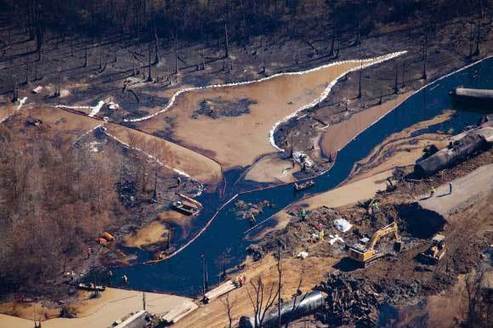
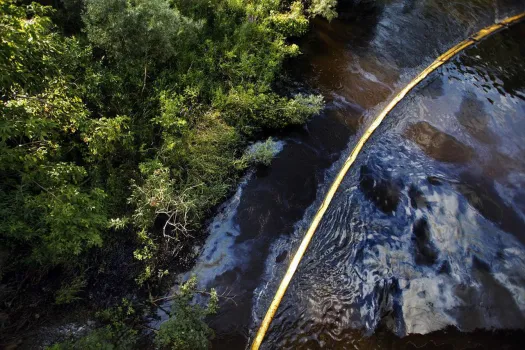
Later in 2010, an Enbridge pipeline ruptured in Michigan, eventually “spilling” more than a million gallons of tar sands crude into the Kalamazoo River. When monitors at the Alberta office reported that the line pressure had fallen to zero, control room staff dismissed the warning as a false alarm and cranked up the pressure twice, which worsened the disaster. In 2018, Enbridge’s “cleanup” was still incomplete.
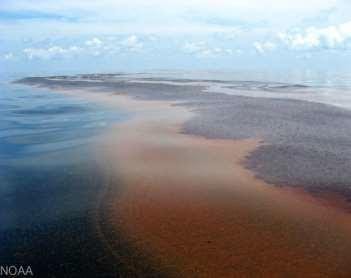
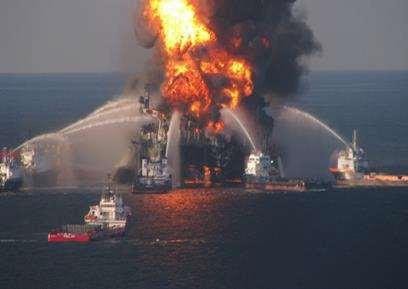
Fire at BP Deepwater Horizon 2010
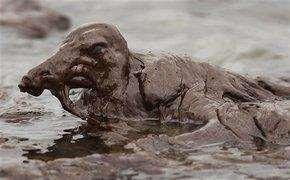
Bird in Oil Alaska 1989
800 Mile Oil Spill Alaska 1989
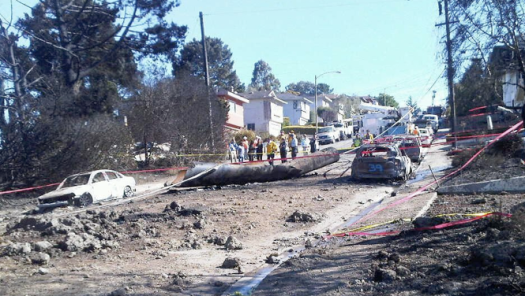
San Bruno Gas Pipeline Explosion 2010
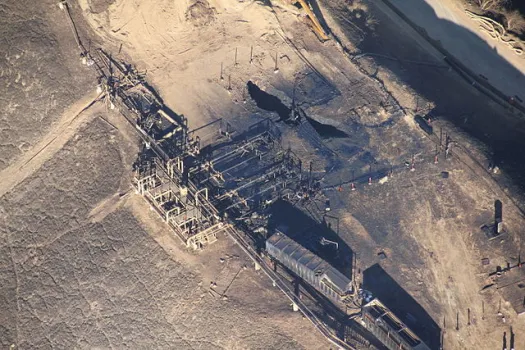
Aliso Canyon Methane Leak 2014
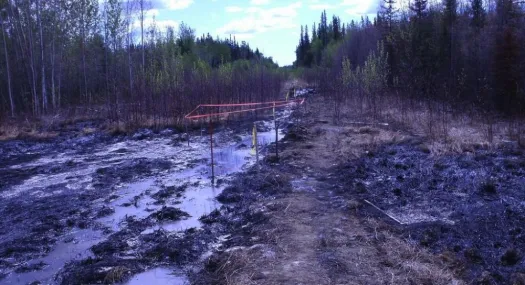
Alberta Waste Oil Spill 2014
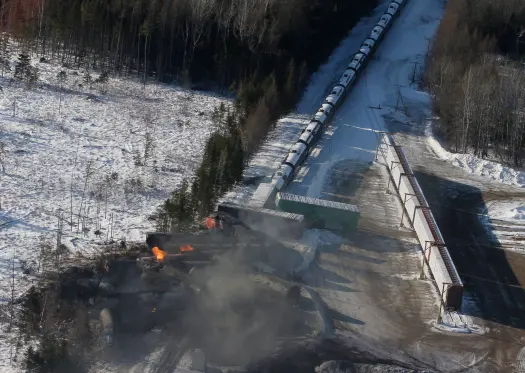
Oil Train Derailment in New Brunswick, Canada 2014
Alabama Oil Train Crash 2013
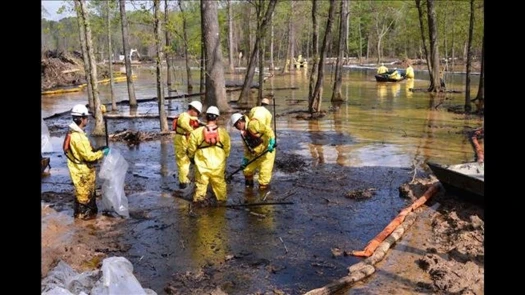
Mayflower, Arkansas Exxon Oil Spill 2016
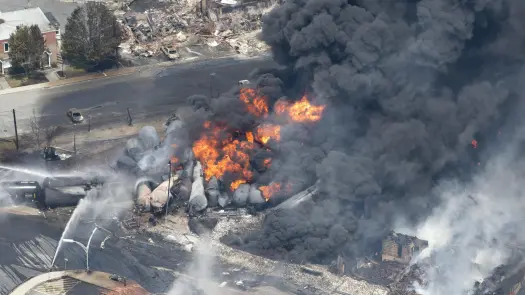
Lac Megantic Quebec Oil Train Crash 2013
Enbridge Tar Sands Oil Pipeline Spill Kalamazoo 2010
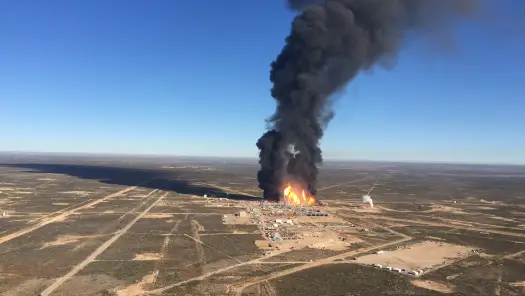
Ramsey Natural Gas Processing Plant in Orla, Texas 2015
In 2013, a spectacular train wreck dumped 2 million gallons of North Dakota crude oil into Lac Megantic, Quebec, killing 47 residents and incinerating the centre of the town – but that’s just another page in the endless petroleum tale that includes Exxon’s disastrous, 2016 “spill” in Mayflower, Arkansas, that received scant notice from the press.
And in November 2013, a train loaded with 2.7 million gallons of crude oil went incendiary in Alabama, followed in December by a North Dakota conflagration.
2014 began with a fiery derailment in New Brunswick, Canada, and in October 2014, 625,000 liters of oil and toxic mine-water were “spilled” in Alberta.
July, August and September brought Alberta’s autumn, 2014 total to 90 pipeline “spills.” 2015 brought four, fiery oil train wrecks just by March, and 2016 delivered two Alabama pipeline explosions – one close to Birmingham.
George Erickson
July, August and September brought Alberta’s autumn, 2014 total to 90 pipeline “spills.” 2015 brought four, fiery oil train wrecks just by March, and 2016 delivered two Alabama pipeline explosions – one close to Birmingham.
In late 2015, California’s horrific, Aliso Canyon methane “leak” (think “geyser”) erupted, spewing forth 100,000 tons of natural gas, the equivalent of approximately 3 billion gallons of gasoline or adding 500,000 cars to our roads for a year.
The Southern California Gas Company finally managed to throttle the geyser in February, 2016. Incidentally, Aliso’s 100,000 tons of “leakage” is just 25% of California’s allowed leakage, which is an indication of the political power of the natural gas industry. (Five months later, a new headline appeared: “Massive Fracking Explosion in New Mexico”)
The Aliso “leak” caused the loss of 70 billion cubic feet (BCF) of gas that California utilities count on to create electricity for the hot summer months. As a consequence, the California Independent Service Operator, which manages California’s grid, estimated that due to Aliso, 21 million customers should expect to be without power for 14 days during the summer.
According to Reuters, (June 2016), “SoCalGas uses Aliso Canyon to provide gas to power generators that cannot be met with pipeline flows alone on about 10 days per month during the summer, according to state agencies.”
However, during the summer, SoCalGas also strives to fill Aliso Canyon to prepare for the winter heating season. State regulators, however, subsequently ordered the company to reduce the amount of gas in Aliso to just 15 BCF and use that fuel to reduce the risk of power interruptions in the hot summer months of 2016. Fortunately, State regulators have also said that they won’t allow SoCalGas to inject fuel into the facility until the company has inspected all of its 114 storage facilities.
The Aliso disaster wiped out all of the state’s Green House Gas (GHG) reductions from its wind and solar systems – and led to a USD 1.8 billion judgement against SoCalGas in September, 2021. In 2016, California officials also reported leakage at a San Joachim County storage facility that was “similar to, or slightly above, background levels at other natural gas storage facilities.”
“Combustion sources [unlike nuclear power], aren’t burdened with their true costs. Natural gas, for example, is not cheaper than nuclear or anything else. In 2016, our allowed leakage wipes wind/solar out by 4 times. In other words, ‘renewables’ in a gas state like California wipe out their benefits every 3 months because they depend on gas for most of their nameplate ratings. The Aliso storage was largely used to compensate for ‘renewables’ inevitable shortfall.
“The most important combustion cost is the unlimited downside risk of its emissions for the entire planet, but in February 2016, our CEC approved 600MW of added gas burning in the San Diego region simply because the San Onofre nuclear plant wasn’t running, due to possibly corrupt actions by SoCla Gas, SCE, Sempra Energy and Edison Intl.
“Such practices were prevented for 75 years by the 1935 PUHCA, but the Bush administration repealed it in 2005 after decades of carbon combustion-interest lobbying. Some states – not California – passed legislation to correct for the 2005 PUHCA repeal.”
There’s more: In August, 2016, the PennsylvaniaEPA admitted that oil and gas production in the state emitted as much methane as Aliso Canyon. The Aliso “leak” was deemed a disaster, but the hundreds of equally damaging Pennsylvania “leaks” were considered business as usual.
Finally, also in August, 2016, a thirty-inch pipeline exploded in southeast New Mexico, killing five adults and five children while leaving two other adults in critical condition in a Lubbock, Texas hospital.
All of this could have been avoided if, instead of pursuing intermittent, short-lived, carbon-dependent windmills and solar panels (Chapters 9 and 10), we had expanded safe, CO2-free Nuclear Power.
Dr. Wade Allison, in Nuclear is For Life, wrote: “Critics of civilian nuclear power use what they fear might happen due to a nuclear failure – but never has – but ignore other accidents that have been far worse: – The 1975 dam failure in China that killed 170,000; – The 1984 chemical plant disaster in Bhopal, India where 3,899 died and 558,000 were injured; – The 1889, Johnstown. PA flood that drowned 2,200; – The 1917 explosion of a cargo ship in Halifax, N. S. where 2,000 died and 9,000 were injured; – Turkey’s 2014 coal mine accident that took 300 lives; – The 2015 warehouse explosion in China that cost 173 lives. “
The list seems endless, but no one advocates destroying dams or closing chemical plants.
The way the world has reacted to the Fukushima accident has been the real disaster with huge consequences to the environment, but the accident itself was not.”
“In California, defective, Japanese-built steam generators at the San Onofre plant could have been replaced for about USD 600 million, but the plant is being decommissioned at a cost of USD 4.5 billion because of Fukushima and anti-nuclear zealotry. The plant could be replaced with two, CO2-free AP-1000 reactors for USD 14 Billion.” Mike Conley
In this foolish way, California lost the CO2-free electricity generated by San Onofre – 9% of California’s needs – which was replaced by carbon burning power plants and/or carbon-reliant wind and solar.
Nuclear plants are required to set aside part of their profits to pay the cost of decommissioning, but no such requirement is made of wind and solar farms. Neither are carbon companies required to pre-fund the removal of miles of pipelines, the cleanup of refinery sites, or the sealing of their abandoned wells.
I repeat, NO ONE has died from radiation created by commercial nuclear power production in Western Europe, Asia or the Southern and Western hemispheres, but up to 5,000,000 people die prematurely every year from the burning of coal, gas, wood and oil.
The 2008 UNSCEAR update on their Chernobyl Report changed the “4000” future deaths from cancer to undetectable future deaths. With that reduction, the deaths per TWh drop accordingly.
A 2019 study lowered the nuclear rate even further from 0.0013 to 0.0007/TWh.
The original version of this chart, which rated nuclear power at 0.04 deaths per Terawatt hour, included thousands of LNT-predicted Chernobyl deaths that never happened.
As a consequence, this image, which reflects reality instead of LNT [Linear No Threshold] errors, reveals that nuclear power is far safer than initially thought, and that nuclear is actually 115 times safer than wind – not 4,340 times safer than solar – not 10, 3,000 times safer than natural gas, 27,000 times safer than oil – and coal is out of sight.
“Renewables” vs Nuclear Power by George Erickson 21 Sept 2017
While we are at it, let’s explore resources necessary to build equivalent power facilities and the fuel required.
Because the carbon industries are heavily subsidised, one might expect them to have exemplary safety and social records, but one would be wrong!
According to the Guardian, 6 Oct 2021 “The IMF found the production and burning of coal, oil and gas was subsidised by USD 5.9tn in 2020″ Or USD 11 million a minute every day. This is according to a startling new estimate by the International Monetary Fund. The IMF has noted before that existing fossil fuel subsidies overwhelmingly go to the rich, with the wealthiest 20% of people getting six times as much as the poorest 20% in low and middle-income countries.
IMF found the production and burning of coal, oil and gas was subsidised by USD 5.9tn in 2020, or USD11 per minute.
The ash derived from burning coal averages 80,000 pounds per American lifetime. Compare that to two pounds of nuclear “waste” for the same amount of electricity. The world’s 1,200 largest coal-fired plants cause 30,000 premature U.S. deaths every year plus hundreds of thousands of cases of lung and heart diseases.
In 2006, the Sago coal mine disaster killed 12. A few years later, a West Virginia coal mine explosion killed 29. In May 2014, 240 miners died in a Turkish coal mine.
Generating the 20% of U.S. electricity with nuclear power saves our atmosphere from being polluted with 177 million tons of greenhouse gases every year, but despite the increasing consequences of Climate Change and Ocean Acidification, the burning of carbon to make electricity is still rising.
Scientific American, 13 Dec 2007: “Coal-fired plants expel mercury, arsenic, uranium, radon, cyanide and harmful particulates while exposing us to 100 times more radiation than nuclear plants that create no CO2. In fact, coal ash is more radioactive than any emission from any operating nuclear plant.”
In one year, a CO2-free, 1,000 MW nuclear plant creates about 500 cu ft of spent fuel that can be recycled to retrieve useful U-238, reducing its bulk by about 90%. (An average U. S. bathroom is about that size.) In that same year, a 1,000 MW coal plant creates 65,000 tons of CO2 plus enough toxic ash to cover an entire football field to a height of at least 200 feet.
Burning fossil fuels releases significant quantities of carbon dioxide, aggravating climate change. Although it gets less attention these days, combustion also emits volumes of pollutants, which can cause a variety of illnesses. Mark Fischetti
Every year, we store 140 million tons of coal ash in unlined or poorly lined landfills and tailing ponds. In 2008, five million tons of toxic ash burst through a Tennessee berm (see below), destroying homes and fouling lakes and rivers.
Coal-fired power plants leak more toxic pollution into America’s waters than any other industry. (A June, 2013 test found that arsenic levels leaking from unlined coal ash ponds were 300 times the safety level for drinking water.)
And in 2014, North Carolina’s Duke Energy’s plant (now bankrupt) “spilled” 9,000 tons of toxic coal ash sludge into the Dan River. Why do they always say “spilled” – never “gushed?”
Coal companies like to promote their supposedly “clean coal,” which really means “not quite so filthy,” but despite making an attempt at carbon capture and storage (CCS) at a new power plant in Saskatchewan, the plant has been a failure. (Burning fossil fuels causes 4.5 million early deaths per year.)
CO2 removal devices use natural gas or electricity, which is usually generated by burning carbon. The moral hazard of removing CO2 from the air is that it justifies burning fossil fuels.
An electrical plant in Saskatchewan was the great hope for industries that burn coal.
In the first large-scale project of its kind, the plant was equipped with a technology that promised to pluck carbon out of the utility’s exhaust and bury it, transforming coal into a cleaner power source. In the months after opening, the utility and the government declared the project an unqualified success, but the USD 1.1 billion project is now looking like a dream.
Known as SaskPower’s Boundary Dam 3, the project has been plagued by shutdowns, has fallen way short of its emissions targets, and faces an unresolved problem with its core technology. The costs, too, have soared, requiring tens of millions of dollars in new equipment and repairs.
“At the outset, its economics were dubious,” said Cathy Sproule, a member of the legislature who released confidential internal documents about the project. “Now they’re a disaster….”
New York Times by Ian Austen, 29 March 2016, Ottawa
Even modern, 75% efficient coal-burners with thirty-year lifespans can’t compete with nuclear plants that have lifespans of 60 years and provide CO2-free power at 90% efficiency, and the new plants are even safer. In addition, our coal reserves will last 100 years at best. And as we “decarbonize”, we will require increasing amounts of electricity, and the only source of economical CO2-free, 24/7 power must be our new, super-safe, highly efficient nuclear reactors that cannot melt down.
Note: The word “efficiency,” AKA “capacity factor,” in this book means the amount of electricity created over an extended period by wind, solar, etc. compared to their maximum power rating. Unfortunately, the maximum power rating is often used to sell the project. For nuclear reactors, this figure is at least 90%, but it is 33% for windmills and just 19 -22% for pv solar – and solar panel efficiency degrades by 1% per year during their short, 20 year lifespan. (Thermal efficiency is a separate matter.)
When a gas pipeline exploded in 2010 at San Bruno, California, 8 people died, 35 homes were levelled and dozens more were damaged. In 2016, a federal government report stated that natural gas explosions cause heavy property damage, often with deaths, about 180 times per year– that’s every other day.
GULF OF MEXICO – APRIL 21: In this handout image provided by the U.S. Coast Guard, fire boat response crews battle the blazing remnants of the off shore oil rig Deepwater Horizon in the Gulf of Mexico on April 21, 2010 near New Orleans, Louisiana. An estimated leak of 1,000 barrels of oil a day are still leaking into the gulf. Multiple Coast Guard helicopters, planes and cutters responded to rescue the Deepwater Horizon’s 126 person crew. (Photo by U.S. Coast Guard via Getty Images)
In 2010, British Petroleum’s Deepwater Horizon disaster in the Gulf of Mexico “spilled” 200 million gallons of oil and killed 11 workers and 800,000 birds. Prior to that, an explosion at a Texas BP refinery killed fifteen workers. And BP, which was also involved in the Exxon Valdez “spill” in Alaska’s Prince William Sound, is just one of the many oil companies that we subsidise with USD 2.4 billion every year.
“‘Evolution is driven by the tendency of all organisms to expand their habitat and exploit the available resources… Just as bacteria in a Petri dish grow until they have consumed all of the nutrients, and then die in a toxic soup of their own waste.”
Post created by Jeremiah Josey and the team at The Thorium Network
Japan responded [to the 2011 Tōhoku earthquake] by closing its nuclear plants – a foolish move that has required the country to spend USD 40 billion per year on liquefied natural gas plus billions more for coal, which has created huge amounts of greenhouse gases. Another USD 11 billion per year has been spent to maintain their perfectly functional-but-idle reactors.
Nuclear power has been tarred by the Fukushima Daichi disaster, but the failure was NOT the fault of nuclear power. It was caused by repeated corporate lying, record falsifying and penny-pinching, by the lack of government enforcement of seawall height, by building too low to the ocean, and by installing backup generators in easily flooded basements.
Blaming nuclear power for Fukushima is like blaming the train when an engineer derails it by taking a turn at 70 mph that is posted for 30. (The Japanese Diet has stated that the Fukushima accident was not the fault of “nuclear power.”)
Blaming nuclear power for Fukushima is like blaming the train when an engineer derails it by taking a turn at 70 mph that is posted for 30. (The Japanese Diet has stated that the Fukushima accident was not the fault of “nuclear power.”)
A few days later, Goodman’s article was read by Captain Reid Tanaka, a United States Navy professional with considerable expertise in nuclear matters who had been intimately involved during the meltdown – and Captain Tanaka presented a very different view:
“I was in Japan, in the Navy, when the tsunami struck and because of my nuclear training, I was called to assist in the reactor accident response and served as a key adviser to the US military forces commander and the US Ambassador to Japan. I spent a year in Tokyo with the US NRC-led team to assist TEPCO and the Japanese Government in battling through the casualty.
“My command (CTF 70) was the direct reporting command for the REAGAN (where we had control over REAGAN’S assignments and missions) and were in direct decision-making with REAGAN’S Commanding Officer and team. I don’t qualify to be called an “expert” in reactor accidents…, but I am well informed enough to know where my limits are and to see through much of the distortions on this issue….
“A Google search will tend to drive people to alarmist websites and non-technical news reports, but you could also find the dull, technical (yet truthful) places such as the IAEA or DOE…
“Numerous bodies of experts have weighed in and provided assessments and reports. A couple are quite critical of TEPCO and the Japanese nuclear industry and regulators.
Operation Tomodachi On Reagan
“… the biggest problem the public has is … being able to distinguish the science-based, objective reports from the alarmist and emotionally charged positions that get the attention of the press, some of whom are self- proclaimed experts in some fields but NOT nuclear power: Dr. David Suzuki and Dr. Michio Kaku. Neither understand spent fuel, nor the condition of spent fuel pools….
“Dr. Suzuki is an award-winning scientist and a champion for the environment, but he is lacking any real understanding of spent fuel or radioactivity. “Bye-bye Japan?’ A headline grabbing sound-bite, but the math just doesn’t work…
“[Sometimes] the true experts cannot give a simple answer because there isn’t one, while those who have no science to back their claims have no compunction in saying the sky is falling and everyone else is lying.
“For the Navy, the contamination caused by Fukushima created a huge amount of extra work and costs for decontaminating the ships and our aircraft to ‘zero’, but [there was] no risk to the health of our people.
“REAGAN was about 100 miles from Fukushima when the radiation alarms first alerted us to the Fukushima accident. Navy nuclear ships have low-level radiation alarms to alert us of a potential problem with our onboard reactors. So, when the airborne alarms were received, we were quite surprised and concerned. The levels of contamination were small, but they caused a great deal of additional evaluation and work. REAGAN’s movements were planned and made to avoid additional fallout. Sailors who believe they were within five miles or so, were misinformed. Japanese ships were close; the REAGAN was not….
“There are former sailors who are engaged in a class-action suit against TEPCO for radiation sickness they are suffering for the exposure they received from Operation Tomodachi. The lead plaintiffs were originally sailors from REAGAN but now have expanded to a few other sailors from other ships. Looking at the claims, I have no doubt some of the SAILORS have some ailments, but without any real supporting information (I haven’t seen ANY credible information to that end), I do not believe any of their ailments can be attributable to radiation—fear and stress related, perhaps, but not radiation directly. Radiation sickness occurs within a ‘minutes/hours’ time frame of exposure and cancer occurs in a ‘years’ time frame. These sailors were not sick in either of these windows. I believe that many of them believe it, but I also believe most are being misled.”
The closure of Japan’s nuclear plants and its increased use of imported liquefied natural gas put an end to Japan’s long-standing trade surplus. But in 2015, bowing to financial realities and because of diminishing fear, Japan restarted the second of its reactors. As of May, 2018, seven reactors had been restarted, with many scheduled to follow.
Shortly thereafter, the U. S. media and many of the “Green” organizations began to report that a Fukushima worker had been “awarded compensation and official acknowledgment that his cancer [leukemia] was caused by working in the reactor disaster zone.” That’s wrong, and competent journalists who do adequate research should know it. Here are the facts:
The worker received a workman’s comp benefit package because he satisfied the statutory criteria stipulated in the 1976 Industrial Accident Compensation Insurance Act, which says that workers who are injured or become ill while working or while commuting to and from work, can receive financial aid and medical coverage. The worker spent 14 months at F. Daiichi. (October, 2012 to December 2013.)
In late December 2013, the worker felt too ill to work, so he went to a doctor, and was diagnosed with acute leukaemia in January, 2014. No link was made between his occupational exposure and his cancer. In addition, because the latency period between radiation exposure and the onset of leukaemia is 5 to 7 years, the worker did not get cancer from working at Fukushima. It was, in fact, a pre-existing condition that was exploited by opponents of nuclear power who routinely repeat convenient-but-wrong stories because being honest and accurate takes time, knowledge and integrity.
In 2016, anti-nuclear zealots began to fear-monger about the effects of Cesium-134 on fish while ignoring reports from NOAA and the Japanese government that stated, “Radioactive Cesium in fish caught near Fukushima Daiichi continues to dwindle. Of the more than 70 specimens taken in October, only five showed any Caesium isotope 134, the ‘fingerprint’ for Fukushima Daiichi contamination. The highest Cs-134 concentration was [associated] with a Banded Dogfish, at 8.3 Becquerels per kilogram. Half of the sampled fish had detectable levels of Cs-137, but all were well below Japan’s limit of 100 Bq/kg….”
These amounts are tiny, and the particles emitted from the Potassium-40, which we all contain, are more potent than the Caesium-137 emissions that many greens apparently fear.
There is 500,000 times more natural radiation in the ocean than the amount added by Fukushima.
Regarding the risk from remaining reactor material that many greens agonize over, Dr. Alex Cannarasubsequently wrote,
“As of late 2013, the spent fuel at Fukushima was 30 months old. That means that the rods and the fuel pellets within them are able to be stored in air. If any rods had never been in a reactor core, they have no fission products in them and are perfectly safe to take apart by hand.
“So, what do we have at Fukushima? We have some melted core materials (corium), which can be entombed. We have water containing a small amount of fission products like Cesium. And, we have a bunch of fuel assemblies that are very radioactive because of their internal creation of fission products when they were in their reactor cores. (No fission products are created when rods are out of cores, in pools or dry air storage.)
“Since the rods are at least 30 months out of fission-product production [2013], one can see how quickly they’ve lost the need for cooling and the reduction in their radioactivity.
“Nuclear power has for its entire life, been the safest form of power generation. The EPA estimates that we lose more than 12,000 Americans every year to coal emissions. The Chinese lose 700,000, and the Indians, 100,000. To delay building nuclear power plants will cause diseases and deaths that could easily be avoided.”
Nuclear power is the safest way to generate electricity.
World Health Organisation
“A nuclear power plant that melts down is less dangerous than a fossil fuel plant that is working correctly. [Because of their toxic ashes and emissions.] Fukushima illustrates that even a meltdown that penetrates containment is very little danger to the public when a few basic precautions are taken.” Andrew Daniels, author, “After Fukushima What We Now Know”.
“Not 1 in 10,000 people have any concept of the huge amount of 24/7, low-carbon electricity a nuclear power plant can deliver compared to the intermittent dribble provided by the renewables.”
Every year, U.S., nuclear-generated electricity prevents more than 500 million tons of carbon dioxide from entering our atmosphere – Wall Street Journal
Created by Jeremiah Josey and the team at The Thorium Network
Three Mile Island, Chernobyl and Fukushima
No other technology produces energy as cheaply, safely and continuously on a large scale as nuclear power. No other energy source can match nuclear power’s low environmental impact, partly because its energy density is a million times greater than that of fossil fuels – and more so for wind or solar.
As of 2016, the world’s 400 + nuclear reactors created about 15% of our electricity. France, alarmed by the cost of petro-fuels, went to 70% nuclear in just 16 years, and Finland, now at 30%, is aiming for 60%. Sweden is adding 10.
Nuclear France emits about 40 grams of CO2/kWh, but Germany, the US, Japan and most industrialised nations emit 400 – 500 grams per kiloWatt hour – ten times more per kWh than heavily nuclear France. Compared to fossil fuel-reliant wind and solar farms, nuclear power is a gift from the energy gods.
Nuclear power, being CO2-free, is by far the most effective displacer of greenhouse gases, so how can my fellow “greens,” oppose nuclear power when the environmental costs of burning carbon-based fuels are so high?
Dr. James Lovelock, a patriarch of the environmental movement, has begged people to support nuclear energy: “Civilization is in imminent danger and has to use nuclear power, the one safe, available, energy source now or suffer the pain soon to be inflicted by an outraged planet.”
“In the core of just one reactor, the power density is about 338 million watts per square meter. To equal that with wind energy, which has a power density of 1 watt per square meter, you’d need about 772 square miles of wind turbines….
“Some opponents still claim that nuclear energy is too dangerous. Debunking that argument requires only a close look at the facts about Fukushima….
“Here’s the reality: The tsunami caused two deaths – two workers who drowned at the plant.
“It was feared that radiation from the plant would contaminate large areas of Japan and even reach the U.S. That didn’t happen. In 2013, the World Health Organization concluded: ‘Outside of the geographical areas most affected by radiation, even within Fukushima prefecture, the predicted risks remain low and no observable increases in cancer above natural variation in baseline rates are anticipated.
“High on my list of well intentioned dupes are those who praise science and are eager to confront Climate Change but refuse to accept nuclear power as an essential part of carbon-reduction strategies. They dismiss new reactor designs that they don’t understand, and then talk about how wind and solar power can ‘supply our needs.’
“They are wrong, but nuclear can supply our needs when people conquer their fears, educate themselves on the safety of nuclear power – and constructively join the fray. Until they do, they must accept their culpability in creating an overheated planet with millions of climate refugees.”
Only at the “illegal” plant at Chernobyl, which was designed to also make plutonium for bombs, with electricity being a by-product, has anyone died from radiation from nuclear power, but we’ve had tens of millions of coal, gas and petroleum-related, early deaths. Furthermore, our reactors, by generating electricity from the 20,000 Russian warheads we purchased in the Megatons to Megawatts program, have become the ultimate in weapons-reduction techniques.
What about 3-Mile Island, Chernobyl and Fukushima? We’ll examine each of them, but it is important to remember that nuclear plants have been supplying 15% of the world’s electricity, while creating no CO2, for 16,000 reactor-years of almost accident-free operation. And the reactors that have powered our nuclear Navy for more than 50 years have similar safety records. (Naval reactor fuel can be up to 90% U-235.)
In March, 1979, two weeks after the release of the popular movie, The China Syndrome, a partial meltdown of a reactor core due to a stuck coolant valve and design flaws that confused the operators, caused mildly radioactive gases to accumulate inside one of the reactor buildings.
After the gases were treated with charcoal, they were vented, and a small amount of contaminated water was released into the Susquehanna River. No one died or was harmed.
However, when an AP reporter described a “bubble” of hydrogen inside the reactor building in a way that led people to think that the plant was a “hydrogen bomb,” many residents fled, which caused more harm than the accident.
In fact, radiation exposure from Three Mile Island was far less than the amount of radiation that pilots and airline passengers receive during a round-trip flight between New York and Los Angeles [1 mrem, or 1 microSivert – 100 times less than average yearly background exposure in the area around Three Mile Island]. Furthermore, in the following decades, more than a dozen studies have found no short or long-term ill effects for anyone, whether they were downwind or downstream from the plant or at it – and since then, operator training and safety measures have greatly improved.
President Carter—who had specialized in nuclear power while in the United States Navy—told his cabinet after visiting the plant that the [Three Mile Island] accident was minor, but reportedly declined to do so in public in order to avoid offending Democrats who opposed nuclear power.
Over the years, many people have asked me how I run the Naval Reactors Program [55 years safe operation], so that they might find some benefit for their own work. I am always chagrined at the tendency of people to expect that I have a simple, easy gimmick that makes my program function. Any successful program functions as an integrated whole of many factors. Trying to select one aspect as the key one will not work. Each element depends on all the others.
Despite all of the fear and panic, nothing happened. No one died, and no one got cancer, but the media-hyped event at Three Mile Island came very close to shutting down all progress in American nuclear power. Because of the radiophobia generated by our sensation-seeking press and fervent greens, neither of whom bothered to check the facts, many proposed reactors were replaced by coal plants, and in the following decades, pollution from those plants brought premature death to at least 500,000 Americans.
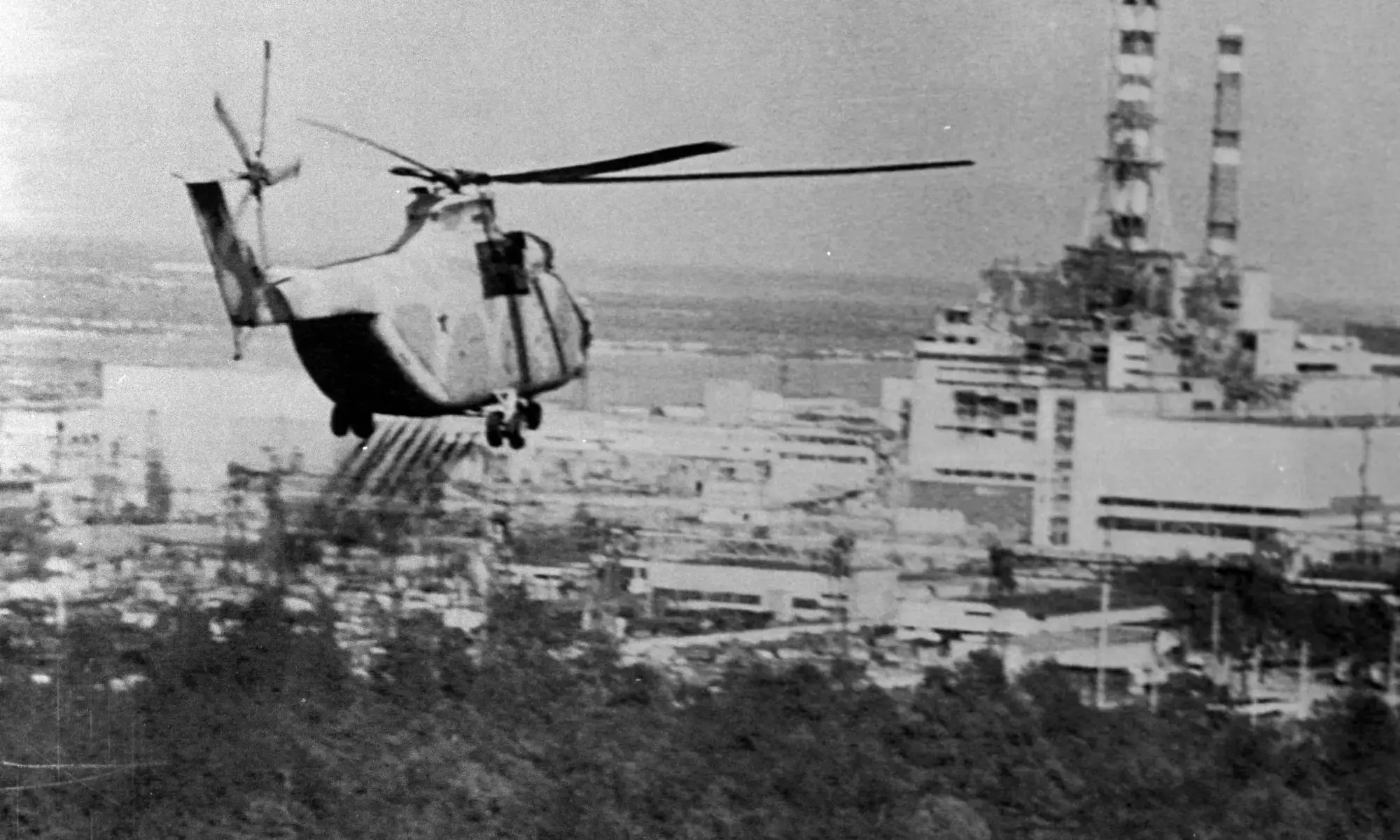
In 1986, during a test ordered by Moscow that involved disabling the safety systems, a portion of the core of the reactor, which had design hazards not present in Western reactors, was inadvertently exposed. (The RKMB reactor at Chernobyl was long judged to be dangerous by scientists outside of the Soviet Union.)
As Dr. Spencer Weart wrote in The Rise of Nuclear Fear, “In short, for Soviet reactor designers, safety was less important than building ‘civilian’ reactors that could produce military plutonium if desired, and building them cheaply.”
This negligence led to a steam/hydrogen explosion that released radioactive gases into the atmosphere because the reactor had no effective containment structure. In contrast, no U.S. reactor contains flammables. Each has a reinforced concrete containment structure that can survive an airliner hit, and every plant is strictly regulated by the NRC.
There has never been a source of energy as safe or kind to the environment as nuclear power, and the reason for the safety is regulation.
Every responsible nation similarly regulates its nuclear power plants and shares information and training practices via international agencies. This cooperation, which was expanded after Three Mile Island, resulted in so many improvements that civilian nuclear power climbed from 60% up-time in the sixties to at least 90% today.
For three days, Soviet authorities hid the [Chernobyl] disaster and delayed evacuating the area, coming clean when radiation readings across Europe began to rise. (The government also failed to distribute iodine tablets, which could have protected thousands from airborne Iodine-131, which is readily absorbed by the thyroid, particularly in the young. (A body with an abundance of benign I-127 is less likely to absorb I-131.)
Chernobyl failed due to bad design, Moscow’s interference, poor training and a system that forbade operators from sharing essential information about reactor problems. It is the only “civilian” reactor accident where radiation directly killed anyone. Initially, approximately eighteen firefighters died from intense radiation. Yet, with design changes and proper procedures, several similar reactors still operate in the former Soviet Union.
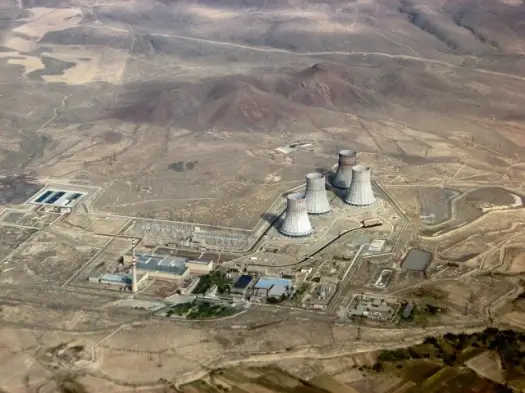
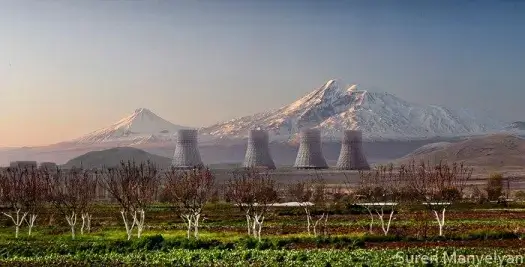
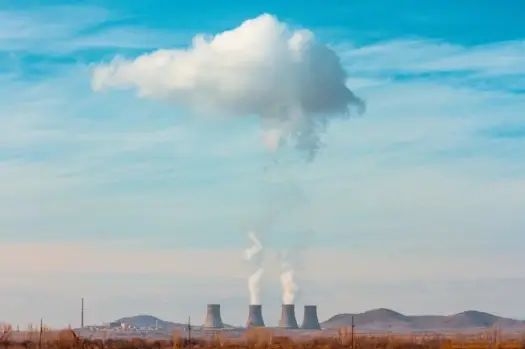
Metsamor, a nuclear power plant in Armenia, (former USSR), also has no containment structure. The European Union has urged Armenia to close down the site for years, and offered $289 million to finance shutting down the plant…
(A round trip flight for the U. S. to Chernobyl will expose travellers to twice as much additional background radiation as their 2-day tour in the exclusion zone, which even includes a tour of the damaged plant).
Furthermore, the deformed and brain-damaged “Chernobyl children” that sensation-seeking TV programs occasionally feature are no different from similarly afflicted children elsewhere in Europe who received no fallout, but that information is never provided by anti-nuclear activists and the media. (Since Chernobyl, cancer rates in the Ukraine have been about 2/3 of the rate in Australia.)
Because of the erroneous, dangerous LNT theory and many dire predictions from people like Helen Caldicott (coming up in future episodes), many thousands of badly frightened European women endured needless abortions because they had become convinced that they were carrying monster babies.
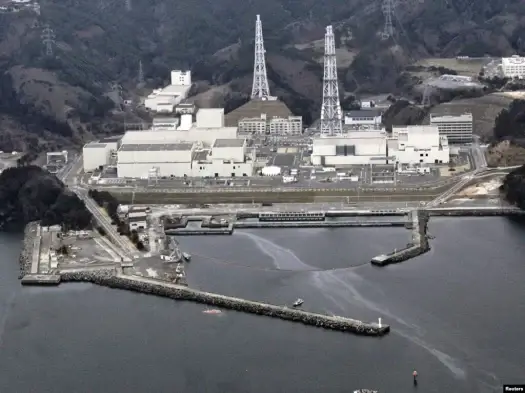
Tepco’s Fukushima reactors began operation in 1971 and ran safely for 40 years, generating huge amounts of electricity without creating any CO2 or air pollution, but then, in 2011, came a record-setting earthquake – Tōhoku.
However, the quake destroyed the plant’s connections to the electrical grid, which required emergency generators to power the systems that cooled the still-hot reactors.
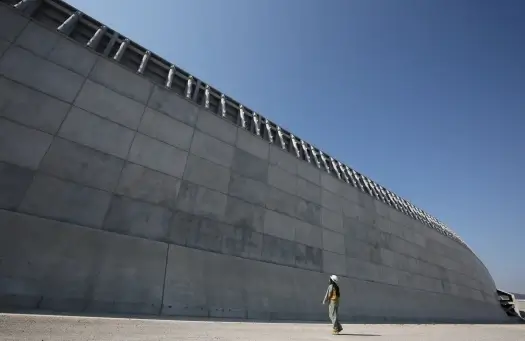
Although three of Tepco’s six nuclear reactors were off-line when the quake struck, five were eventually doomed because: 1. In 1967, Tepco removed 25 meters from the site’s 35-meter seawall to ease bringing equipment ashore. 2. Tepco replaced the original seawall with only a six-meter seawall. 3. The Japanese government advised Tepco to raise it, but Tepco declined – and the government did nothing. 4. Tepco had inexplicably placed five of its six emergency generators in the basements. 5. The tsunami flooded all but #6. 6. Batteries powered the controls for about 8 hours, and then failed. Without coolant, meltdown was assured.
Reactors 1 – 4 are useless, and number 5 is damaged, but reactor 6 was unaffected because its back-up equipment was intelligently sited well above the tsunami’s reach. Reactor 6 is capable of producing power, but it has not been started, largely because of the anti-nuclear hysteria fanned by most of the Japanese press.
There were warnings: All along the coast, ancient “Sendai stones” have been warning residents to avoid building below 150 feet above sea level for centuries.
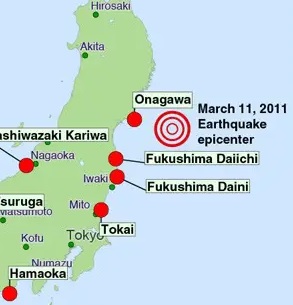
The Onagawa nuclear plant, which was closer to the epicenter of the quake, also survived the quake, and its 45-foot high seawall easily blocked the tsunami. The tsunami took more than 15,000 lives, but Fukushima’s seawall failure took the lives of just two workers who drowned.
Created by Jeremiah Josey and the team at The Thorium Network
Remembering Leslie Corrice’s words from Episode 11, Corrice’s dismay over the results of radiophobia are echoed by many professionals, one being Dr. Antone “Tony” Brooks, who grew up in “fallout-drenched” St. George, Utah, which led him to study radiation at Cornell University. For an excellent, short video of the conclusions he reached, please visit:
LNT begat ALARA “As Low As Reasonably Acheiveable” LNT- “Any radiation can kill you minimise the risk”. “Achievable” depends on technology, not health effects. Country Tritium Limits Canada 0.1 mSv/y World Health Org US 0.04 mSv/yr LWRs can meet
The belief that tiny amounts of radiation can be lethal created ALARA – As Low As Reasonably Achievable – an anti-nuclear bias that has permeated our regulations for decades. However, “reasonably” is vague, and “achievable” depends on technology, not health effects.
For example, the World Health Organisation has set a public exposure limit for tritium from nuclear power plants of 0.1 mSv per year. Canada’s reactors comply with this limit, but due to ALARA, the limit in the USA is 0.04 mSv per year. Why? Because it is achievable – not because it is necessary.
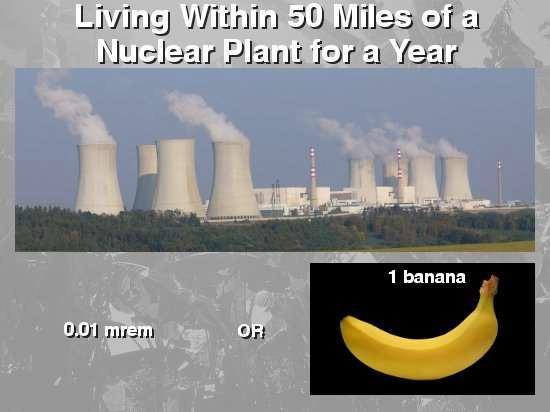
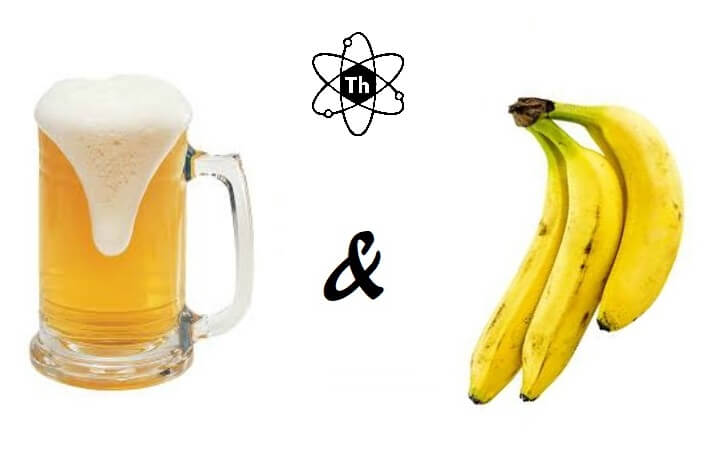
Tritium (also known as hydrogen-3), is often used in watches and emergency exit signs. It is also present in our food and water. Furthermore, its tiny nucleus emits a particle so slow that it cannot even penetrate skin. In comparison, the Potassium-40 in our omnipresent banana emits beta particles that are 230 times as energetic, but no one worries about those deadly bananas.
“Adults would have to drink ~3 gallons of Vermont-Yankee tritiated water every day to match the internal radiation they get from the Potassium-40 in their own bodies.”
LNT and ALARA can easily lead to absurdities: For example, airline passengers are exposed to about 20 times more cosmic radiation than those at ground level, but despite the dire predictions of LNT, they experience no more cancer than those who don’t fly. Should jets be required to fly at low altitudes, where they produce more greenhouse gases, just to satisfy ALARA – and what about the flight attendants and pilots who constantly work in higher levels of cosmic radiation?
As Radiation detection technology improves, ALARA just increases fear.
Caesium-137 from Fukushima is detectable, so Counter Punch complains of Blue Fun tuna containing 0.0000077 mSv per 7 oz serving [200 grams], writing “… no radiation exposure of any kind is safe”.
Washington’s Hanford storage site has a budget of about USD 3 billion per year, much of which is used to try to reduce area radiation to the LNT-based standard of less than 0.15 mSv. (Normal Denver exposure is 40 times higher.)
It is wasteful to spend money “protecting” people from tiny amounts of radiation. Instead, let’s finance programs that help people stop smoking, which brings carcinogens like cyanide, formaldehyde, ammonia, carbon monoxide and nitrogen oxide into intimate contact with their lungs. (Smoking related diseases kill 5 million people per year).
Radiation exposure in reactor buildings is so low that it isn’t an issue, but educating the public on basic environmental radiation is a very critical issue.
For example, after Fukushima, lack of accurate radiation knowledge and the media’s eagerness to hype radiation issues caused a run on potassium iodide [KI] pills along our west coast, but no media explained that this was pointless. Pharmacies ran out, and some patients who needed KI couldn’t get it, while those who needlessly took it actually raised their chances of disease because too much KI can cause thyroid malfunction.
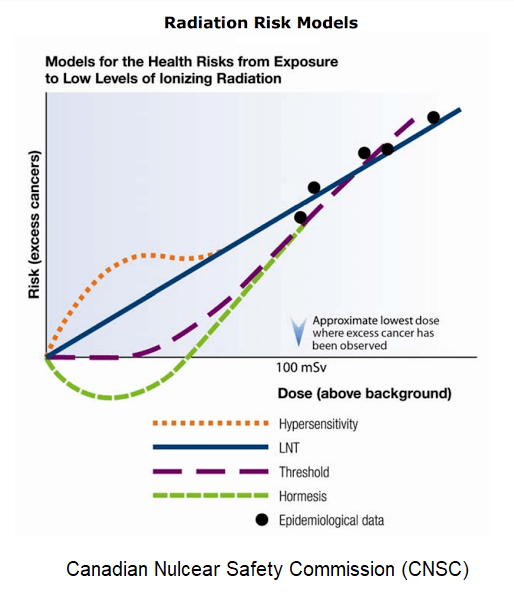
Radiation is safe within limits LNT and ALARA are regulation policies, not scientific facts. Replace them An evidence-based radiation safety limit would be 100 mSv per year. Rational regulation is all that is needed to let nuclear power thrive and solve our global environmental and economic crises.
“Radiation safety limits have been ratcheted down from 150 mSv/year in 1948 to 5 mSv/y in 1957 to 1 mSv/y in 1991 without supporting evidence by relying on the erroneous LNT model. EPA limits are set 100 times lower than levels that could cause harm. ALARA leads people, the press, and Big Green to falsely conclude that any radiation exposure may kill you.”
The petitioner recommends the following changes to 10 CFR part 20:
(1) Worker doses should remain at present levels, with allowance of up to 100 mSv (10 rem) effective dose per year if the doses are chronic.
(2) ALARA should be removed entirely from the regulations. The petitioner argues that “it makes no sense to decrease radiation doses that are not only harmless but may be hormetic.”
(3) Public doses should be raised to worker doses. The petitioner notes that “these low doses may be hormetic. The petitioner goes on to ask, “why deprive the public of the benefits of low dose radiation?”
(4) End differential doses to pregnant women, embryos and fetuses, and children under 18 years of age.
James Conca, in Forbes: “There are some easy decisions to make that will save us a trillion dollars, and they could be made soon by the Environmental Protection Agency. The EPA could raise the absurdly low radiation levels considered to be a threat to the public. These limits were based upon biased and fraudulent “research” in the 1940’s through the 1960’s, when we were frightened of all things nuclear and knew almost nothing about our cells’ ability to repair damage from excess radiation.
“These possible regulatory changes have been triggered by the threat of nuclear terrorism and by the unnecessary evacuation of tens of thousands of Japanese after Fukushima Daiichi, and hundreds of thousands of Russians after Chernobyl. There, the frightened authorities were following U. S. plans that were created because of the ALARA policy (As Low As Reasonably Achievable) that has always been misinterpreted to mean that all forms of radiation are dangerous, no matter at what level. It’s led to our present absurdly low threat level of 25 millirem.
“Keep in mind that radiation workers can get 5,000 mrem/year and think nothing of it. We’ve never had problems with these levels. Emergency responders can get up to 25,000 mrem to save human lives and property. I would take 50,000 mrem just to save my cat.
“This wouldn’t be bad if it didn’t have really serious social and economic side-effects, like pathological fear, significant deaths during any forced evacuation, not receiving medical care that you should have, shutting down nuclear power plants to fire up fossil fuel plants, and a trillion-dollar price tag trying to clean up minor radiation that even Nature doesn’t care about.”
Approximately 100,000 people were evacuated from the Fukushima area after the meltdown, and by September, 2013, about 1,200 evacuees had died from suicide and the stress of the excessive evacuation.
Dr. Brian Hanley: [Fukushima] “If no evacuation had occurred, and everyone had lived outdoors with no precautions, at most 15 cancer deaths might have happened, but probably none.
“People have been going to radioactive spas in Ramsar, Iran for a long time without ill effect. In a 2-week visit, the dose would be a maximum of 10 mSv. That is 6 to 80 times more radioactive than the evacuation zone of Fukushima.”
LNT [Linear No Threshold Theory] was pushed through the U.N. by Russia and China in the 1950’s to stop America’s above-ground weapons testing. It worked, but it also caused a worldwide fear of radiation below levels that are dangerous.. The radiation safety people liked it because it seemed so… conservative. But it has become an ideology “ruled by hysteria and fuelled by ignorance.” Dr. Kathy Reichs, Society for the Advancement of Education.
Dr. Tim Maloney: “Anyone living permanently in the green zone would only receive a dose rate equal to twice the rate in Colorado, where the cancer rate is less than the US average. The dose rate in the dark red regions is 1/3 of the safety threshold set by the International Commission on System of Radiological Protection in 1934. Even by today’s extreme standards, this level of exposure carries no known cancer risk.
“Anxious to impress, officials and reporters donned white suits and masks, which made good TV but did nothing for the child who saw the school playground being dug up by workers who were afraid of an unseen evil called radiation. Unfortunately, most people see their fears confirmed as fact when workers and officials dress this way. An open-necked shirt with rolled-up sleeves, a firm hand shake and a cup of tea would be a better way to reassure.”
A man uses a roller near a Geiger counter, measuring a radiation level of 0.207 microsieverts per hour, during nuclear radiation decontamination work at a park in Koriyama. Photograph: Toru Hanai/Reuters
Imagine the anxiety created by clueless officials who provided useless information, as when a school official warned parents that the radiation intensity was 0.14 micro Sieverts per hour, which was meaningless because the normal radiation level in some Japanese cities can be five times that high.
Officials in protective gear check for signs of radiation on children who are from the evacuation area near the Fukushima nuclear plant on March 13, 2011, two days after the accident began. Photo: Kim Kyung-Hoon/Reuters
Fukushima Fear of Radiation Killed People
In 2012, UNSCEAR stated, “…no clinically observable effects have been reported and there is no evidence of acute radiation injury in any of the 20,115 workers who participated in Tepco’s efforts to mitigate the accident at the plant.”
A year later, UNSCEAR added: “Radiation exposure following the accident at Fukushima Daiichi did not cause any immediate health effects. It is unlikely [that there will be] any health effects among the general public and the vast majority of workers.”
And in an April, 2014 follow-up, UNSCEAR reported that, “Overall, people in Fukushima are expected on average to receive less than 10 mSv due to the accident over their whole lifetime, compared with the 170 mSv lifetime dose from natural background radiation that most people in Japan typically receive.”
Finally, in October, 2015, UNSCEAR confirmed that none of the new information accumulated after the 2013 report “materially affected the main findings in, or challenged the major assumptions of, the 2013 report.” However, despite these positive reports, as of November, 2016, most of the 150,000 people who were forced to evacuate still lived in temporary housing.
Dr. Jane Orient, who practices internal medicine agreed: “The number of radiation casualties from the meltdown of the Fukushima nuclear reactors stands at zero. In Fukushima Prefecture, the casualties from radiation terror number more than 1,600… The U.S. is vulnerable to the same radiation terror as occurred in Japan because of using the wrong dose-response model, which is based on the linear no- threshold hypothesis (LNT), for assessing radiation health risks.”
The number of radiation casualties from the meltdown of the Fukushima nuclear reactors stands at zero.
“The BABYSCAN, a whole-body counter (WBC) for small children, was developed in 2013, and units have been installed at three hospitals in Fukushima Prefecture. Between December, 2013 and March, 2015, 2702 children between the ages of 0 and 11 have been scanned, and none had a detectable level of cesium-137.” (The anti-nuclear crowd had been obsessing about exposure to cesium-137.)
Positive reports like this rarely appear in our American press, which frustrates professionals like Leslie Corrice, a former nuclear power plant operator, environmental monitoring technician, health physics design engineer, public education coordinator and emergency planner who writes the informative and highly respected blog, The Hiroshima Syndrome.
“As long as the LNT theory is maintained, our fear of radiation will continue to damage the psyche of all humanity, restrict the therapeutic and healing effects of non-lethal doses of radiation, limit the growth of green nuclear energy, and needlessly prolong the burning of fossil fuels to produce electricity.
“In 1987, when I was frustrated because it seemed like the major news outlets bent over backwards to broadcast negative nuclear reports while seemingly ignoring anything positive, a former Press manager with a major news outlet in Cleveland took me aside and gave me the facts of life.
“He first explained that the Press is a moneymaking venture. The ratings determine advertising income; the lifeblood of the business – and the surefire money-makers were war, presidential elections, natural disasters and airline crashes.
…the surefire money-makers were war, presidential elections, natural disasters and airline crashes.
Cleveland press manager
“Turning to Three Mile Island, he said the ratings sky-rocketed and stayed that way for the better part of two weeks. In the years that followed, the media found that negative reports caused an increase in ratings, and positive stuff didn’t. This trend slowly dwindled, but Chernobyl re-ignited the ratings impact of nuclear accident reporting and proved that broadcasting the negative was better for business…
“He added that the media might someday entirely ignore the positive and only report the negative in regard to nuclear energy, and he speculated that all it would take was one more accident. Unfortunately, he was right. Fukushima has pushed the world’s Press into the journalistic dark side. My Fukushima Updates blog has lashed the Japanese Press and the world’s news media outside Japan severely for primarily reporting the negative…. A recent example concerns the child care thyroid study in Fukushima Prefecture during the past four years.
“On October 5, 2015, four PhDs in Japan alleged in the Tsuda Report that the Fukushima accident had spawned a thyroid cancer epidemic among the prefecture’s children, which contradicted the Fukushima Univ. Medical School, Japanese Research Center for Cancer Prevention and Screening, and National Cancer Center, which all found that the detected child thyroid precancerous anomalies in Fukushima Prefecture cannot be realistically linked to the accident. Regardless, the Tsuda Report’s claim made major headlines in Japan, then spread to mainstream outlets outside Japan, including UPI and AP.
“Here’s the problem. In December 2013, a scientific report was published on a comparison of the rate of child thyroid, pre-cancerous anomalies in Fukushima Prefecture with the rates in three prefectures hundreds of kilometers distant: Aomori, Yamanashi and Nagasaki.
“The Fukushima University medical team studying the issue had discovered that there was no prior data on child thyroid cancer rates in Japan, so there was nothing to compare the 2012 results to.
“Because of the furor caused by the original release of their findings in 2012, the team decided to take matters into their own hands and offer free testing to volunteer families in the distant prefectures. Nearly 5,000 parents took advantage of the opportunity and had their children screened.
“What was found was completely unexpected. The abnormality rates in Aomori, Yamanashi and Nagasaki Prefectures were actually higher than that discovered in Fukushima Prefecture, which conclusively indicated that the radiation from the Fukushima accident had no negative impact on the health of the thyroid glands in Fukushima’s children. Just one Japanese Press outlet mentioned the 2013 discovery at the very end of an article about a few more children being found to have the anomalies in Fukushima….
…no negative impact on the health of the thyroid glands in Fukushima’s children.
Fukushima University
“On the other hand, when a maverick team of four Japanese with PhDs publish a highly questionable report – full of so many holes that it should be tossed into the trash – alleging a severe cancer problem caused by the Fukushima accident, it gets major coverage inside Japan and significant coverage by the world’s mainstream press!
“It is important to emphasize that the Tsuda Report fails to acknowledge the fact that Prefectures unaffected by the Fukushima accident had the higher anomaly rates. (Which is why the Tsuda Report is worthy of the trash heap.)
“The media might not make money off sharing the good news about Fukushima, but they are committing a moral crime against humanity by not doing it.”
Created by Jeremiah Josey and the team at The Thorium Network
Dr. Zbigniew Jaworowski, UNCLEAR Chairman
Dr. Zbigniew Jaworowski, MD PhD, DSc, former Chairman of the United Nationals Scientific Committee on the Effects of Atomic Radiation (UNSCEAR): “What is really surprising, however, is that data collected by UNSCEAR and the Forum show 15% to 30% fewer cancer deaths among Chernobyl emergency workers and about 5% lower solid cancer incidences among the people on the Bryansk district (the most contaminated in Russia) in comparison with the general population. In most irradiated group of these people (mean dose of 40 mSv) the deficit of cancer incidence was 17%.”
Because of their daily exposure to low levels of radiation, which seems to stimulate the DNA repair system, nuclear power plant workers get one third fewer cancers than other workers. They also lose fewer workdays to accidents than office workers.
Knowing this, it is not surprising that, when steel containing cobalt-60 was used to build Taiwan apartments, which exposed 8,000 people to an additional 400 mSv of radiation during some twenty years, cancer incidence was sharply down, not up 30% as Linear No Threshold Theory would have predicted.Instead, the residents’ adaptive response to low- level radiation seems to have provided health benefits. The following chart reveals lower cancer rates for those who receive extra low-level radiation vs. those who only get background radiation.
In 2015, a study of bacteria grown at a dose rate 1/400 of normal background radiation yielded a reduction in growth, but when the cells were returned to normal background radiation levels, growth rates recovered. The conclusion: Insufficient radiation can yield harmful results.
Therefore, it seems reasonable that radiation limits should be the same regardless of the source of the radiation. Nevertheless, nuclear plants are held to a standard 100 times higher than coal plants, which actually emit moreradiation than nuclear power plants. Per unit of electricity created, the fly ash emitted by a coal power plant exposes the environment to 100 times more radiation than a nuclear plant’s on-site-stored spent fuel – it’s so-called “waste”, 90% of which can be consumed in modern reactors. (Granite buildings irradiate their occupants more than nuclear power plants.)
“Workers employed in fifteen utilities that generate nuclear power in the U. S. have been followed for up to 18 years between 1979 and 1997.
“Their cumulative dose from whole body radiation has been determined from records maintained by the facilities and by the Nuclear Regulatory Comm. and the Energy Department.
“Mortality in the cohort … has been analyzed with respect to individual radiation doses. The cohort displays a very substantial healthy worker effect, i.e. considerably lower cancer and non-cancer mortality than the general population.”
In Radiation and Health, Hendrickson and Maillie wrote “…during radiation therapy for cancer, we’ve learned that chromosome damage to lymphocytes can be reduced by up to 50% if a small dose is given to the cells a few hours before the larger ‘cancer-killing’ dose is administered.”
In the southwest Indian state of Kerala, children under five have the lowest mortality rate in the country, and life expectancy is 74 despite background radiation rates that can range as high as 30 times the global average.
For thousands of years, Keralites have lived with radiation three times the level that caused the evacuation at Fukushima, where the limit was, on July, 2016, just 20 mSv. In contrast, some sections of Kerala experience 70 mSv, with a few areas measuring 500 – and many Keralites also eat food that is five times as radioactive as food in the United States.
Kerala Beach People Live Longer
Despite these radiation levels, cancer incidence in Kerala is the same as the rate in greater India, which is about 1/2 that of Japan’s and less than a third of the rate in Australia. As the linked article says, “Cancer experts know a great deal about the drivers of these huge differences, and radiation isn’t on the list.”
Kerala Beach
In Kerala, scientists have been working with a genuinely low rate of radiation exposure that mirrors what would have been the case in Fukushima if the Japanese officials hadn’t panicked and needlessly evacuated so many thousands of people.
So, why did they? Partly from fear, but primarily because most radiation protection standards have been derived from LNT bias and studies of Japanese atomic bomb victims who received their dose in a very short time, and being bombed is very different from living for years with a slightly higher radiation level.
Kerala also confirms our modern knowledge of DNA repair- namely that radiation damage is not cumulative at background dose rates up to 30 times normal, and that 70 mSv over a lifetime does nothing. In fact, the concepts of an “annual dose” or a “cumulative dose” are misleading. Instead, evidence reveals that an annual exposure to 100 mSv is comparable to a dose of zero because it doesn’t exceed a person’s capacity for repair.
In the past, when experts discussed these issues they couldn’t consider delivery rates or DNA repair because the power and mechanisms of DNA repair were not known until long after Muller’s LNT theory became dogma. As a consequence, the suffering caused by this obsolete “science” has been immense. (UK radiation expert Malcolm Grimston has characterised the Fukushima evacuation as being “stark raving mad”).
When the Japanese government lifted the evacuation orders because the radiation level had dropped to 20 mSv, 80 % of the residents refused to return because of their fear of radiation despite the fact that the most highly irradiated areas near the plant received only 1/5 of the lowest dose linked to a detectable increase in cancer. (At Guarapari beach in Brazil, residents often bury themselves in sand that yields 340 mSv without ill effect.)
Guarapari Beaches, Brazil
We should be concerned about genuinely dangerous isotopes, but we shouldn’t waste energy and money cleaning up minor radioactivity that doesn’t do anything – but that is what we are doing.
Despite our learning that our cells have amazing repair abilities, LNT advocates still create the radiophobia that caused the extreme evacuations at Fukushima and the flood of needless, fear-induced European abortions that followed Chernobyl. In my opinion, people who refuse to examine the evidence that negates this discredited illusion have abandoned their integrity.
October, 2020. New U.S. Department of Energy research indicates that at low doses, biological reactions are often unrelated to those that occur at high levels. The influential Linear-No-Threshold model, which predicted that acute exposure damage can be extrapolated linearly to low dose exposures—was flawed. In fact, small amounts can have an adaptive positive effect. In addition, it appears that cells communicate with each other and a dose to one affects the cells around it.
The LNT model for cancer induction is not supported by radiobiological data
This article published 14 March 2022 by Preußische Allgemeine Zeitung, the Prussian General Newspaper. Copyright notice: applying fair use for educational purposes.
THORIUM-FLÜSSIGSALZREAKTOREN Kernreaktoren, in denen der Kernbrennstoff in Form geschmolzenen Salzes vorliegt, bieten eine Fülle von Vorteilen. In China wird in nächster Zukunft eine Versuchsanlage in Betrieb gehen
THORIUM MOLTEN SALT REACTORS Nuclear reactors in which the nuclear fuel is in the form of molten salt offer a wealth of advantages. A test plant will go into operation in China in the near future.
„Perfekte Technologie“
Der Ausgangsstoff ist billig und weltweit vorhanden, nicht einmal Kühlwasser wird benötigt und der Müll wird weniger und verfällt viel schneller als herkömmlicher Atommüll: Die Thorium-Technologie steht für eine neue Qualität der Nutzung der Kernenergie
Wolfgang Kaufmann, 23.01.2022
“Perfect technology”
The raw material is cheap and available worldwide, not even cooling water is needed and the waste is less and decays much faster than conventional nuclear waste: Thorium technology stands for a new quality of the use of nuclear energy
Wolfgang Kaufmann 23.01.2022
Im Hongshagang-Industriepark bei Wuwei in der zentralchinesischen Provinz Gansu wird in nächster Zukunft eine Versuchsanlage in Betrieb gehen, die das Potential besitzt, nicht nur die Energieerzeugung im Reich der Mitte, sondern in der ganzen Welt zu revolutionieren. Keine Kohlendioxidemissionen mehr infolge der Nutzung fossiler Brennstoffe, keine Landschaftsverschandelung durch Windräder, kein massenhafter Einsatz von Akkus aus umweltschädlicher Produktion, keine Stromausfälle bei Windstille und Bewölkung, aber auch kein Strahlungsrisiko aufgrund von Reaktorhavarien, alles das verspricht der innovative Thorium-based Molten Salt Reactor-Liquid Fuel No. 1 (TMSR-LF1) des Shanghai Institute of Applied Physics, der für eine neue Qualität der Nutzung der Kernenergie steht und dieser quasi einen „grünen Anstrich“ geben soll.
In the Hongshagang Industrial Park near Wuwei in the central Chinese province of Gansu, a pilot plant will go into operation in the near future, which has the potential to revolutionize energy production not only in the Middle Kingdom, but throughout the world. No more carbon dioxide emissions as a result of the use of fossil fuels, no more landscape degradation by wind turbines, no mass use of batteries from environmentally harmful production, no power outages in calm winds and clouds, but also no radiation risk due to reactor accidents, all this promises the innovative Thorium-based Molten Salt Reactor-Liquid Fuel No. 1 (TMSR-LF1) of the Shanghai Institute of Applied Physics, which advocates a new quality of use of the Nuclear energy is in place and this should give it a kind of “green coat of paint”.
Die Funktionsweise des Thorium-Flüssigsalzreaktors TMSR-LF1 ist relativ einfach. Das schwach radioaktive Element Thorium wird in Flüssigsalz aufgelöst und mit Neutronen beschossen. Dadurch entsteht das Isotop Uran 233, dessen Spaltung große Wärmemengen freisetzt. Der Reaktor produziert also seinen Brennstoff selbst. Dieses Verfahren bringt letztlich sehr viel mehr Sicherheit als der Betrieb klassischer Kernreaktoren (siehe unten) und darüber hinaus auch noch eine Vielzahl weiterer Vorteile.
The operation of the Thorium Molten Salt reactor TMSR-LF1 is relatively simple. The weakly radioactive element Thorium is dissolved in molten salt and bombarded with neutrons. This produces the isotope uranium 233, the fission of which releases large amounts of heat. So the reactor produces its own fuel. This process ultimately brings much more safety than the operation of classic nuclear reactors (see below) and also a variety of other advantages.
Sechs Vorteile
Six Benefits
Zum Ersten werden nur äußerst geringe Mengen an Thorium 232 benötigt. Denn der Energiegehalt einer Tonne Thorium entspricht der von 200 Tonnen Uran-Metall oder 28 Millionen Tonnen Kohle, wie der italienische Physik-Nobelpreisträger Carlo Rubbia errechnete.
First, only extremely small amounts of Thorium 232 are needed. The energy content of one ton of Thorium corresponds to that of 200 tons of uranium metal or 28 million tons of coal, as the Italian Nobel Laureate in Physics Carlo Rubbia calculated.
Zum Zweiten gibt es überall auf der Welt größere Thorium-Vorkommen. Im Prinzip kommt das Element in der Gesteinskruste ähnlich häufig vor wie Blei und fällt zudem als Abfallprodukt bei der Förderung von Seltenen Erden an. Deshalb ist es auch nicht teuer. Dahingegen drohen perspektivisch Verknappungen und Preisexplosionen beim Uran, weil die Zahl der konventionellen Kernkraftwerke neuerdings wieder deutlich zunimmt.
Secondly, there are larger Thorium deposits all over the world. In principle, the element occurs in the rock crust as often as lead and is also produced as a waste product in the extraction of rare earths. That’s why it’s not expensive. On the other hand, there is a risk of shortages and price explosions for uranium in the future, because the number of conventional nuclear power plants has recently increased significantly again.
Zum Dritten kann ein Thorium-Flüssigsalzreaktor praktisch überall errichtet werden, also beispielsweise auch in Wüstenregionen. Denn er benötigt keinerlei Kühlwasser.
Thirdly, a Thorium Molten Salt reactor can be built virtually anywhere, including desert regions, for example. Because it does not require any cooling water.
Zum Vierten entstehen bei seinem Betrieb auch deutlich weniger radioaktive Abfälle. Außerdem sollen über 99 Prozent des Atommülls aus dem TMSR-LF1 nach spätestens 300 Jahren in harmlose Isotope zerfallen sein. Des Weiteren besteht die Möglichkeit, die geringen Restmengen an länger strahlendem Material später in fortgeschritteneren Flüssigsalzreaktoren zu verarbeiten und damit gänzlich zu neutralisieren. Zum Vergleich: In mit Uran betriebenen konventionellen Atommeilern fallen langlebige radioaktive Spaltprodukte mit Halbwertszeiten von vielen tausend Jahren an, obwohl nur ein kleiner Bruchteil des verwendeten Kernbrennstoffs genutzt wird.
Fourthly, its operation also generates significantly less radioactive waste. In addition, more than 99 percent of the nuclear waste from the TMSR-LF1 is said to have decayed into harmless isotopes after 300 years at the latest. Furthermore, it is possible to process the small residual amounts of longer radiating material later in more advanced molten salt reactors and thus completely neutralise. By way of comparison, conventional nuclear reactors powered by uranium produce long-lived radioactive fission products with half-lives of many thousands of years, even though only a small fraction of the nuclear fuel used is used.
Zum Fünften liegen die Kosten für den Bau und Betrieb von Thorium-Flüssigsalzreaktoren niedriger als bei den sonst zumeist verwendeten Leichtwasser-Reaktoren. Das resultiert vor allen aus dem geringen Betriebsdruck der Anlagen, der zahlreiche Sicherheitsvorkehrungen überflüssig macht, sowie der Tatsache, dass keine Brennstäbe beschafft werden müssen.
Fifthly, the costs for the construction and operation of Thorium Molten Salt reactors are lower than those of the light-water reactors that are usually used. This is mainly due to the low operating pressure of the systems, which makes numerous safety precautions superfluous, as well as the fact that no fuel rods have to be procured.
Zum Sechsten lassen sich Reaktoren wie der TMSR-LF1 auch deshalb ausgesprochen wirtschaftlich betreiben, weil in ihnen nicht nur Uran 233 erbrütet wird, sondern zusätzlich noch viele andere radioaktive Spaltprodukte entstehen, die zum Beispiel in der Nuklearmedizin benötigt werden. Und manche der Radionuklide verwandeln sich sogar in ausgesprochen begehrte Elemente wie Rubidium, Zirconium, Molybdän, Ruthenium, Palladium, Neodym und Samarium. Desgleichen wird das Edelgas Xenon frei, das unter anderem als Isolationsmedium sowie in der Laser- und Raumfahrttechnik zum Einsatz kommt.
Sixthly, reactors such as the TMSR-LF1 can also be operated extremely economically because not only uranium 233 is incubated in them, but also many other radioactive fission products are produced, which are required, for example, in nuclear medicine. And some of the radionuclides even turn into highly sought-after elements such as rubidium, zirconium, molybdenum, ruthenium, palladium, neodymium and samarium. Likewise, the noble gas xenon is released, which is used, among other things, as an insulation medium as well as in laser and aerospace technology.
Der Krieg ist aller Dinge Vater
War is the father of all things
Erfunden wurde die dem TMSR-LF1 zugrunde liegende Technologie nicht in China, sondern in den USA. Dort experimentierten die Luftstreitkräfte bereits ab 1954 mit einem kleinen Flüssigsalzreaktor, der zum Antrieb von Langstreckenbombern dienen sollte. Das Projekt fand jedoch ein rapides Ende, als die Vereinigten Staaten über Interkontinentalraketen verfügten. Ebenso legten bundesdeutsche Wissenschaftler aus der Kernforschungsanlage Jülich zu Beginn der 1970er Jahre einige Studien über Flüssigsalzreaktoren vor, die letztlich wegen der ablehnenden Haltung des damaligen Leiters der Reaktorentwicklung, Rudolf Schulten, keine Beachtung fanden.
The technology underlying the TMSR-LF1 was not invented in China, but in the USA. As early as 1954, the Air Force experimented with a small molten salt reactor to power long-range bombers. However, the project came to a rapid end when the United States had intercontinental ballistic missiles. Likewise, at the beginning of the 1970s, West German scientists from the Jülich nuclear research facility presented some studies on molten salt reactors, which ultimately received no attention because of the negative attitude of the then head of reactor development, Rudolf Schulten [main developer of the pebble bed reactor design, a non fluid fuel system].
Ein weiterer Grund für die fehlende Akzeptanz des alternativen Reaktortyps war das absolute Desinteresse der Nu-klearindustrie rund um die Welt. Mit den klassischen Atommeilern ließ sich hervorragend Geld verdienen, und auf die Einnahmen aus der Herstellung von Brennstäben wollte auch niemand verzichten. Deshalb wurden allerlei vorgeschobene Argumente gegen den Einsatz von Flüssigsalzreaktoren ins Spiel gebracht, wie beispielsweise das angeblich höhere Korrosionsrisiko und die hypothetische Gefahr, dass jemand die Meiler missbraucht, um waffenfähiges Spaltmaterial zu produzieren.
Another reason for the lack of acceptance of the alternative reactor type was the absolute lack of interest of the nuclear industry around the world. With the classic nuclear reactors, excellent money could be earned, and no one wanted to do without the income from the production of fuel rods. Therefore, all sorts of pretended arguments against the use of molten salt reactors were brought into play, such as the allegedly higher risk of corrosion and the hypothetical danger that someone will misuse the reactors to produce weapons-grade fissile material.
Dies hat die Volksrepublik China nicht davon abgehalten, seit 2011 umgerechnet 400 Millionen Euro in die Entwicklung des TMSR-LF1 zu investieren. Schließlich verfolgt die Pekinger Führung das ehrgeizige Ziel, das Reich der Mitte bis 2050 „klimaneutral“ zu machen, und dabei könnte sich die „perfekte Technologie“ der Flüssigsalzreaktoren als absolut unverzichtbar erweisen.
This has not prevented the People’s Republic of China from investing the equivalent of 400 million euros in the development of the TMSR-LF1 since 2011. After all, Beijing’s leaders are pursuing the ambitious goal of making the Middle Kingdom “climate neutral” by 2050, and the “perfect technology” of molten salt reactors could prove absolutely indispensable.
250 MW Molten Salt Fission Energy Power Facility
Der Reaktor, der nun am Rande der Wüste Gobi erprobt werden soll, hat erst einmal nur eine Nennleistung von zwei Megawatt. Damit kann er lediglich um die 1000 Haushalte mit Strom versorgen. Sollte sich das Konstruktionsprinzip des TMSR-LF1 bewähren, dann würde allerdings bis etwa 2030 der erste Prototyp eines Thorium-Flüssigsalzreaktors mit 373 Megawatt Leistung in Betrieb gehen, dem dann in schneller Folge identische Anlagen in ganz China folgen. Ob Deutschland zu diesem Zeitpunkt immer noch in seiner Atomkraft-Abstinenz verharrt oder inzwischen auch auf die „Grüne Kernenergie“ setzt, bleibt abzuwarten.
The reactor, which is now to be tested on the edge of the Gobi Desert, initially has a nominal output of only two megawatts. This means that it can only supply around 1000 households with electricity. If the design principle of the TMSR-LF1 proves successful, however, the first prototype of a Thorium Molten Salt reactor with an output of 373 megawatts would go into operation by around 2030, which will then be followed by identical plants throughout China in rapid succession. It remains to be seen whether Germany will still remain in its abstinence from nuclear power at this time or whether it will now also rely on “green nuclear energy”.
Die Preußische Allgemeine Zeitung (PAZ) ist eine einzigartige Stimme in der deutschen Medienlandschaft. Woche für Woche berichtet sie über das aktuelle Zeitgeschehen in Politik, Kultur und Wirtschaft und bezieht zu den grundlegenden Entwicklungen unserer Gesellschaft Stellung. In ihrer Arbeit fühlt sich die Redaktion dem traditionellen preußischen Wertekanon verpflichtet: Das alte Preußen stand und steht für religiöse und weltanschauliche Toleranz, für Heimatliebe und Weltoffenheit, für Rechtstaatlichkeit und intellektuelle Redlichkeit sowie nicht zuletzt für ein von der Vernunft geleitetes Handeln in allen Bereichen der Gesellschaft. In diesem Sinne pflegt die PAZ eine offene Debattenkultur, die gleichermaßen den eigenen Standpunkt mit Leidenschaft vertritt wie sie die Meinung von Andersdenkenden achtet – und diese auch zu Wort kommen lässt. Jenseits des Tagesgeschehens fühlt sich die PAZ der Erinnerung an das historische Preußen und der Pflege seines kulturellen Erbes verpflichtet. Mit diesen Grundsätzen ist die Preußische Allgemeine Zeitung eine einzigartige publizistische Brücke zwischen dem Gestern, Heute und Morgen, zwischen den Ländern und Regionen in West und Ost – sowie zwischen den verschiedenen gesellschaftlichen Strömungen in unserem Lande.
The Preußische Allgemeine Zeitung (PAZ) is a unique voice in the German media landscape. Week after week, it reports on current events in politics, culture and business and takes a stand on the fundamental developments in our society. In their work, the editors feel committed to the traditional Prussian canon of values: The old Prussia stood and stands for religious and ideological tolerance, for love of homeland and open-mindedness, for the rule of law and intellectual honesty, and not least for reason-guided action in all areas of society . With this in mind, the PAZ maintains an open culture of debate, which passionately represents its own point of view and respects the opinions of those who think differently – and also lets them have their say. Beyond day-to-day events, the PAZ feels committed to remembering historical Prussia and caring for its cultural heritage. With these principles, the Preußische Allgemeine Zeitung is a unique journalistic bridge between yesterday, today and tomorrow, between the countries and regions in West and East – as well as between the different social currents in our country.
Translation courtesy of Duck Duck Go – Your personal data is nobody’s business.
Created by Jeremiah Josey and the team at The Thorium Network
Near the end of the 20th century, researchers at the Massachusetts Institute of Technology (MIT) discovered that DNA strands can break and repair about 10,000 times per day per cell, (this is not a typo), and that a 100 mSv per year dose increases the number of breaks by only 12 per day.
“… MIT discovered that DNA strands can break and repair about 10,000 times per day per cell, (this is not a typo), and that a 100 mSv per year dose increases the number of breaks by only 12 per day.“
In addition, the majority of DNA breaks are caused by ionised oxygen atoms from the normal metabolism that constantly occurs within our cells. And because DNA is a double helix, the duplicate information in the other strand lets enzymes easily repair single strand breaks. In fact, our cells have been repairing DNA breaks since forever, and they have become extremely good at it.
DNA damage, due to environmental factors and normal metabolic processes inside the cell, occurs at a rate of 1,000 to 1,000,000 molecular lesions per cell per day. A special enzyme, DNA ligase (shown here in color), encircles the double helix to repair a broken strand of DNA. DNA ligase is responsible for repairing the millions of DNA breaks generated during the normal course of a cell’s life.
“Radiation from unstable isotopes is always decreasing. That’s what the ‘half-life’ for an isotope expresses. Going back in time is going back to much higher radiation environments – 8 times more for U-235 when photosynthesis began to make oxygen common in air, and oxidation made elements like Uranium soluble in water. Living things were, back then, even more intimately in contact with radioactive isotopes.
“So how did life survive higher radiation, and how did it survive the increasing oxygen atmosphere, which corrodes life’s hydrocarbons into CO2 and water?
“The answer is simple: Nature evolved repair mechanisms. Each cell repairs proteins or digests badly malformed cells. Each cell repairs genetic material before it’s copied for reproduction.
“A DNA or protein molecule, or one of the many repair molecules in our cells, doesn’t know if a bond has been broken by an oxidizing radical, an alpha particle, or a microbial secretion. Our cellular-repair systems have evolved to fix defects regardless of cause. Thus, Nature has, for billions of years, been able to deal with chemical and radiation threats. Today, chemical threats have increased because of industry, but radiation threats have decreased.
“Therefore, we should not be surprised by the absence of radiation deaths at Fukushima and the small death rates in and around Chernobyl.”
We have also learned that low dose irradiation of the torso is an effective treatment for malignant lymphomas. Fear of radon has been hyped by the EPA’s devotion to the LNT theory, and their efforts have greatly assisted those who sell and install radon-related equipment, whether needed or not. (Studies of every US county have revealed that those with low levels of radon actually had higher levels of lung cancer than counties with higher levels – where the incidence was lower!
But compare the two maps. The counties with less radon have more lung cancer deaths. EPA’s LNT theory is clearly wrong.
Here’s US lung cancer deaths, by county. Red have the highest death rates. Blue the lowest
The EPA recommends remediation when radiation measures 4picoCuries per litre of air, but an average adult is naturally radioactive at about 200,000 picoCuries. If the EPA knows this, and they should, why are they concerned about such low, natural radon levels?
The south eastern states had the lowest radon levels, but high cancer rates.
Created by Jeremiah Josey and the team at The Thorium Network
All radioactive elements “decay” by emitting [either] an alpha particle (a helium nucleus), a beta particle (an electron) or a gamma ray (pure energy), eventually becoming stable elements. An element’s “half-life” is the time needed for ½ of the atoms in the “parent” element to decay into a “daughter” isotope. For the Potassium-40 in our bananas and bodies, it is 1.2 billion years. For the Americium-241 in our smoke detectors, it’s 432 years, and for Iodine-131, it’s 8 days.
Contrary to popular belief, elements with long half-lives, which decay slowly, present less risk than those with short half lives.
Radioactivity is measured by the number of decays per second. One decay per second is one Becquerel (Bq). One banana produces about 15 Becquerels from its potassium-40, and smoke detectors emit 30,000 Becquerels, so when nuclear power critics fuss about 64,000 Becquerels entering the ocean at Fukushima, remember that 64,000 Becquerels is equal to 14 seconds of potassium radiation activity that occurs inside our bodies every day. (The radioactivity of normal seawater is 14,000 Becquerels per cubic meter).
However, focusing on Becquerels without considering the energy absorbed by the body is pointless: You can throw a bullet or you can shoot one, but only one will cause harm.
Fortunately, radiation is easy to detect. A single emission (1 Becquerel) will trigger a click in any decent detector, and an average adult emits 7,000 Becquerels, of which 4,400 Becquerels come from our Potassium-40, which “clicks” 4,400 times per second, for life.
“The word ‘radioactivity’ doesn’t account for the energy propelling the emissions, so quoting large Becquerel counts says nothing about risk. However, big numbers can frighten uninformed people, and in building their case against nuclear power, many environmentalists have been doing just that.”Dr. Timothy Maloney
As noted earlier, radiation dose, which we measure in Sieverts, is the biologically effective energy transferred by radiation to tissue. For example, one mammogram equals 1 to 2 milliSieverts (mSv), and one dental X-ray (0.001 mSv) is nowhere near enough to cause concern.
Let’s now consider the normal background radiation that accompanies us throughout our years.
Natural “background” radiation dose rates vary widely, averaging 1 mSv/year in Britain, 3 in the US, 7 in Finland, 10 in Spain, 12 in Denver and up to 300 mSv per year in Kerala, India and even higher on a number of “radioactive” beaches around the world that people flock to for health reasons. Given these statistics, one might expect cancer rates in Finland and Spain to be higher than in Britain, but Britain has higher rates of cancer than both Spain and Finland despite LNT dogma [See Episode 6 where we expose the Linear No Threshold lie].
A massive, single, whole-body radiation dose, as at Hiroshima and Nagasaki [1945 United States of America bombings of Japan], severely damages blood cell production and the digestive and nervous systems.
A single 5,000 mSv dose is usually fatal, but if it is spread over a lifetime it is harmless because at low dose rates, damaged cells are repaired or replaced. (Consume a cup of salt in one sitting, and you will probably die, but do it over six months or more, and it won’t be a problem.)
In 1945, the U. S. exploded two atomic bombs over Japan, killing 200,000 people. Since then, 93,000 survivors have been studied for health effects. In 55 years, 10,423 of those survivors died from cancer, which is just 573 (5%) more than the number of deaths expected by comparison with unexposed residents.
According to Dr. Shizuyo Sutou, expert in mutations, Shujitsu University, Japan, ”Ionizing radiation is not always hazardous, and low dose radiation sometimes stimulates our beneficial defence mechanisms.” Hiroshima/Nagasaki survivor data since 1945 shows that, on average, lifespan was extended and cancer mortality was reduced.
In addition, no excess cancer deaths have been observed in those who received radiation doses below 100 mSv. In fact, Japanese A-bomb survivors who received less than 100 mSv, have been outliving their unexposed peers.
Subsequent studies by the United Nations Scientific Committee on the Effects of Atomic Radiation (UNSCEAR) have proved that below 100mSv, which is well above normal background radiation levels, it is not possible to find any cancer excesses.
[You can see the rubbish perpetuated by the ICRP dose limits here and here. These fictitious, made-up numbers cause the deaths of millions of people each year and hobble the advancement of our civilisation – all for maintaining the oil industry’s profits.]
– TRUTH –
We are surrounded by naturally occurring radiation. Less than 1/1000th of the average American’s dose comes from nuclear power.
This yearly dose is 200 times less than a cross country flight…
…is 13 times less than a glass of beer…
… and about the same as eating one banana(21).
Are we really doing our best when it comes to managing radiation safety?
World’s first reactor was built in 1942 in Chicago by Enrico Fermi and his team. Since then several hundred nuclear reactors were built, shut downed and rebuilt. For the future, six types of Generation 4 fission machines wait to be born. The world needs the energy to develop and maintain life but above all these reasons there is an essential one: going to Mars and supplying all energy that is needed for life. That’s my priority motivation and purpose for choosing the nuclear area to work. History tells us that “never forget to take lessons from past” and future tells us that “enlighten your ways from your mistakes”. The nuclear accidents that happened in the past led us to Gen 4 designs. As students, we are the ones who determine the nuclear reactor’s destiny. One of the Gen 4 designs is Molten Salt Reactor. We are trying to understand what can we do to design and build a molten salt reactor. We do this by interviewing nuclear experts, engineers all over the world. Come and join our story!
Stagg Field, Chicago Pile 1Enrico Fermi
Molten Salt Fission Energy Technology
The Student Guild’s first interview was with Professor Akira Tokuhiro. He recently stepped down as the Dean of the Faculty of Energy Systems and Nuclear Science at Ontario Tech University in Canada. Also, he was in the American Nuclear Society’s President’s Committee on the 2011 Fukushima Daiichi nuclear power plant accident in Japan. He is an international nuclear energy expert.
Rana President of the Student Guild The Thorium Network
We do many things. We design Generation 4 (IV) systems. We look at the safety issues of current reactors and reactors that will be constructed. We are always looking for continuous safety improvements. We have 4 questions to be answered about safety and accidents, “what can happen, how often can it happen, how does it happen and what are the consequences?”. We ask these questions and we do the engineering design, safety analysis for that. Now nuclear engineering requires computer programming and engineering analysis. Applications of virtual reality, augmented reality, new applications of artificial intelligence, and machine learning will be used by new nuclear engineers to design and operate reactors.
In one of your interviews, you said “Nuclear reactors are challenging, that’s why I choose the nuclear energy area to work”. What is the most complex and challenging thing in the nuclear area or reactor physics?
For me, the most interesting and challenging thing is you have to know many things. You may find the solution for a small area but nuclear power plant is many different things. If you find a solution for a small area, it may impact other things. That’s why you have to look at many different things and you have to integrate them. That’s challenging for me. That integration that I teach to my students. How do you design a reactor? You design from the reactor core and then outward from the core.
What are the most common safety design features for Gen 4 that at the same time can be used for Gen 3 or Gen 2 reactor safety designs?
We have learned from Generation 2, 3 and 3+ about human factors engineering. There are two things about human beings, one is human beings are unreliable, other is unpredictable. When you apply these to safety systems, you want to design the reactor that minimizes probability for human error. Gen 4 and small modular reactors are designed so that cooling is assured, and do not rely on human operators because they can make mistakes under pressure. You have to design the reactor so that after shutdown decay heat can be removed without human intervention.
What is the biggest problem about safety that must be redesigned immediately now? For example, for PWR Generation 2 designs, what is the biggest safety problem about that reactor, and how can it be redesigned?
My opinion is reactor is designed so that it can shut down when a postulated event occurs. Even if an earthquake happens, the reactor can shut down like the reactors are located at Fukushima. The reactor was shut down after the earthquake. To remove the decay heat that’s remaining, pumps may be required to facilitate cooling for the first 72 hours. After two weeks the decay heat has to be much less. That has to change in all plants. Cooling after shut down is possible, we can do that but we have to make sure that even if we have a terrible earthquake, sufficient cooling has to remove thermal energy from the core. In SMR’s we don’t need pumps, like large reactors; when you have a pump, you also need a source of water in order to maintain cooling to take the heat. The safety problem of Gen 2 and Gen 3 designs is to prevent the meltdown of the core.
“By 2030 or 2035 Gen 4 large reactors or small modular reactors will be built by Russia or China.”
When do you think the first Gen 4 reactor will be built and where will it be built and which design will be built?
I think by 2030 or 2035 some Gen 4 reactors will be built. It may be Gen 4 large reactors but it is also possible that small modular reactor may be built too. It depends on the country. Russia and China have their designs and they are being constructed. It is difficult to call them Gen 4 but recent VVER is an improved design. China is building different kinds of reactors and operating them. So by 2030 or 2035 Gen 4 large reactors or small modular reactors will be built by Russia or China. In the west, new reactors very much depends on investment. For example, in North America before 2035 there will be a small modular reactor constructed and ready to operate as well.
What are your thoughts about thorium molten salt reactors?
Thorium Molten Salt reactors combine interesting reactor design with a fresh look at a new type of fuel. In the least next 3-5 years, we need much more engineering to finish the design and to get the regulatory approval of the completed design. Since my background is from the US, I am familiar with US Nuclear Regulatory Commission and they will importantly ask safety questions about design basis accidents. If you don’t have a pump, as part of the design natural convection cools the reactor so it may be a preferred design. Molten salt reactors are an interesting design and thorium is a different type of fuel. Perhaps by analogy, the nuclear industry is very similar to a restaurant or the automotive sector. You have to have customers and people come to eat at a restaurant. You have to make a popular automobile and people have to trust the safety and they are buying the safety in design that comes with it. Thorium Molten Salt design has to be finished and the design has to convince the regulator that it is a sufficiently safe design and that is constructed.
You are an expert on nuclear safety. Do you think passive safety systems designed for molten salt reactors are sufficient? Are there any other passive systems projects running? Can you please give us the details?
The molten salt reactor concept came from the 1950s and 1960s. Modernized design of the MSR started with Oak Ridge Molten Salt Reactor. (MSRE) They operated a research and demonstration reactor for a few years so fifty years later we are updating this design. I think the concept is solid but needs details; safety cases are convincing. If you have the money and engineers the first step to building a reactor is making a research and demonstration reactor to show that the reactor is very safe. For example, in molten salt reactors, fuel flows in a tank by gravity when an unanticipated event occurs. That is when a PS may be needed. So this means no operator, no human error.
“We need more nuclear power plants because we need a quick transition to a lower CO2 economy or scale.”
About thorium molten salt reactors, what can students do?
Now in the last five years, I think it is very important for students to find friends all over the world and to be interested in solving the challenges posed by climate change. We need to reach net-zero as quickly as possible: even before 2050. I think we have to make progress every five years or it will become very difficult to meet our net-zero carbon economy. We have to make as much progress by 2030. By 2050 we have to make substantial progress or net-zero carbon economy. If we don’t have any progress by 2030 reaching a net-zero carbon economy becomes increasingly difficult. Now we have the power of social media. Students have to ask many questions to old people like me about safety, design. We have to change and seek from the regulator, approval of the new reactors designs. We have a lot of experts from many countries. We already have about 440 nuclear power plants in the world but we need as many as ten times as many reactors to tackle climate change. We need more nuclear power plants because we need a quick transition to a lower CO2 economy or scale. It is not the ultimate solution for climate change but it is a solution that we have now. Young people can become involved through social media and by asking good questions. We need to convince people that by combining nuclear energy, wind, and solar we can reach a net-zero carbon economy. We need nuclear power, it may be risky, but risk and fear are a spectrum. If you think the benefit is greater than the risk then you would do it. People are usually afraid when they don’t understand the risk so they think the risk is very big and the benefit is not so big.
How did you decide to join the Thorium Network? What was the most attractive thing that impressed you about Thorium Network?
I contacted one of the founders Jeremiah Josey. I thought the thorium molten salt reactor is interesting and thorium is an alternative to uranium. It is a network. This network includes many people all around the world. That’s why I joined. The network is a new way to design a reactor.
I had a great time while talking with Professor Tokuhiro. I would like to thank him for his time and perfect answers.
Thorium Network Student Guild continues to inspire people all around the world. Come and join our team! You can find the Student Guild application on this page:
Post created by Jeremiah Josey and the team at The Thorium Network
A Little Nuclear History
In the sixties, the United States built a new, super-safe, highly efficient Molten Salt Reactor (MSR). Fuelled by uranium dissolved in a very hot, liquid salt, the MSR had performance and safety advantages over water-cooled, uranium-powered, solid-fuel Light Water Reactors (LWRs) – also called “conventional” reactors.
LWRs are cooled with normal (light) water, a term used to distinguish them from reactors cooled with “heavy” water – deuterium. LWR pellets contain 3.5 – 5% U-235, with the remainder being “inactive” U-238 for dilution, but deuterium cooled reactors can utilize un-enriched U-238. (Most nuclear reactors in use today are LWRs).
Alvin Weinberg, the Director of Oak Ridge National Laboratories, proved the superiority of MSRs in hundreds of tests during 22,000 hours of operation, but due to the success of conventional reactors in Admiral Hyman Rickover’s submarines, water-cooled reactors became the choice for commercial power production. Weinberg, who protested that MSRs were safer and more efficient, was fired, and the MSR program was terminated, partly for political reasons [See more about Dr Weinberg’s firing here].
“I hope that after I’m gone, people will look at all the dusty books ever written on Molten Salt and say hey, these guys had a pretty good idea, lets go back to it.”
There was a second reason: The Cold War was heating up, and the uranium-plutonium fuel cycle of LWRs could be adapted for making bombs. However, making a weapon with MSR technology is more difficult and dangerous.
The Atomic Energy Commission also knew that MSRs could generate abundant, low cost, 24/7 electricity while breeding their own fuel from U-238 or Thorium – and that Thorium would create less waste than conventional reactors.
If we had switched to MSRs in the 1960’s instead of burning carbon, we would have eliminated much of the CO2 that created Climate Change and reduced the toxic emissions that have caused medical expenses in the billions of dollars.
From the April, 2013 Scientific American: “Dr. James Hansen, former head of the NASA Goddard Institute for Space Studies, has said that just our partial reliance on carbon-free nuclear power since 1971 has saved 1.8 million lives that would have been lost due to fossil fuel pollution. By contrast, we assess that large-scale expansion of natural gas use would not mitigate the climate change problem and would cause more deaths than expansion of nuclear power.”
Dr. James Hansen
US Health Burden
Carbon-fuelled power plants cause at least 30,000 premature U. S. deaths/year.
Because we rejected MSRs, almost all of the electricity we have generated with nuclear power has been produced by high pressure, water-cooled LWRs, which require a containment dome. MSRs do not.
Unfortunately, according to Michael Mayfield, head of the Office of Advanced Reactors at the Nuclear Regulatory Commission, the NRC is “unfamiliar with most, new small reactor technology, [including MSRs] and has no proven process to certify one.” (2010)
In 2013, the U. S. Energy Information Administration predicted that world energy use will increase 56% by 2040. Most of that increase will come from burning carbon-based fuels, which will add even more CO2 to our already damaged biosphere.
We must replace CO2-creating power plants with GREEN nuclear power plants!
When Radiation Is Safe and When It Isn’t
The largest obstacle to expanding nuclear power is the fear caused by misinformation about radiation safety, so let’s begin with a question intended for seniors like me: “Do you still have your toes?”
This foolish sounding question refers to a machine that, during the [19]thirties and [19]forties, stood near the entrance of every up-to-date shoe store in America. Called the ADRIAN shoe fitting machine, it was ballyhooed as the perfect way to see if one’s shoes fit properly.
Attractive ads with photos of the marvellous machine proclaimed, “Now, at last, you can be certain that your children’s foot health is not being jeopardised by improperly fitting shoes. If your children need new shoes, don’t buy their shoes blindly. Come in and try our new ADRIAN Fluoroscopic Shoe Fitting machine. Use the new, scientific method of shoe fitting that careful parents prefer.”
The customers, usually children, inserted their feet into an opening while their parents watched the image in two viewing ports. Unattended children would often repeatedly switch sides to watch their siblings’ toes wiggle. It was fun, and no-one gave a thought to X-ray exposure.
Despite these fairly high exposures to children who frequently hopped onto the machine just for fun, no malignancies or other damage to the feet of foot-radiating junkies like me were ever reported.
Now, as I travel the country with my presentations on nuclear power, “renewables” and radiation safety, I always ask the seniors in my audiences, all of whom instantly recognize the machine, if they still have their toes.
During 2016, I queried some 1,000 seniors, but I never found any evidence of damage. However, my tale of the shoe-fitting machine always brought laughter and an opportunity to talk about the Merchants of Fear whose hype created a new 20th century word: radiophobia.
All natural substances contain radioactive material. In fact, beer contains thirteen times as much radioactivity as the cooling water discharged from a nuclear plant – Modern Marvels
“We’ve accepted for decades that millions of people are allowed to be killed by combustion pollution and mass produced weapons. We’ve accepted for at least 100 years that the planet’s climate and oceans can be allowed to be changed for the worse because of our love of combustion. We even accept poverty and all its ill effects, simply due to our general inaction. But the safest form of energy production, nuclear power, is foolishly married to fear of nuclear weapons.” – Dr. Alex Cannara
Radiation from nuclear power is just a tiny part of the “industrial” sliver.
We are bathed in radiation for our entire lives – 2/3 from cosmic radiation and elements like radon, and the rest from elements within us plus from consumer products like smoke detectors and medical use. We all have some 4,400 beta/gamma decays per second throughout our bodies for life, largely from Potassium-40 in foods like bananas and potato chips. (Living beside a nuclear power plant for a year is less “dangerous” than eating bananas and potato chips.)
Living beside a nuclear power plant for a year is less “dangerous” than eating bananas and potato chips.
Because radioactive elements are constantly decaying, our ancestral life forms evolved during times when radiation levels were far higher than they are today. As a consequence, they evolved some very effective ways to repair the damage to the DNA in our cells caused by radiation and oxidation, which is why we are told to favor anti-oxidants like grapes and greens. (DNA is “short” for deoxyribonucleic acid, a complex, spiral, chain-like molecule that contains our genetic codes.) If you irradiate E. coli bacteria for many generations, the bacteria evolve amazing radiation resistance, surviving huge doses of radiation, and some fungi even thrive on radiation.
“Fear and paranoia are the two most common forms of radiation sickness.” Mike Conley, Road Map to Nowhere
However, even the highest natural background radiation rate is insignificant compared to the damage caused by our internal chemistry. DNA bond breaks caused by oxidation and toxins occur more frequently than breaks caused by background radiation. Our bodies are actively repairing DNA damage every second of our lives.
DNA Structure
If people understood that “…we have billions of cells that die every day and must be replaced, they will be better able to accept the fact that our bodies have efficient repair mechanisms that can handle low level radiation”. Science Magazine, March, 2015. (Adults have about 37 trillion cells.)
“Each cell contains a coiled mass of DNA that carries the thousands of genetic instructions that we need to run our bodies. These strands of DNA undergo thousands of spontaneous changes every day, and DNA copying for cell division and multiplication, which happens in the body millions of times daily, also introduces defects.
DNA can be damaged by ultraviolet light from the sun, industrial pollutants and natural toxins like cigarette smoke. What fights pandemonium are our DNA repair mechanisms.
“In the 70s, Dr. Lindahl defied orthodoxy about DNA stability by discovering a molecular system that counteracts DNA collapse, and Dr. Sancar mapped out how cells repair DNA damage from UV light.
“People born with defects in this system, when exposed to sunlight, develop skin cancer, and Dr. Modrich showed how our cellular machinery repairs errors that arise during DNA replication, thereby reducing the frequency of error by about 1,000.”
In 1928, Hermann Muller, the originator of the Linear No Threshold (LNT) theory, exposed fruit flies to 2,750 milliSieverts (mSv) of radiation in just 3 1/2 minutes, which caused gene deletions and deformities. Radiation dose, which we measure in Sieverts, is the biologically effective energy transferred to body tissue by ionizing radiation.)
Although the dose that Muller used was equivalent to receiving 1,000 mammograms in just 3.5 minutes, he called it a low dose, even though it was extremely high. (Even Japanese atomic bomb survivors didn’t receive such a large dose.)
Muller then extrapolated his results down to ZERO mSv without testing low levels of radiation and continued to promote his theory into the fifties, perhaps because he wanted to heighten fear of fallout from testing nuclear bombs. Muller argued that there is no safe level for radiation and claimed that even tiny amounts of radiation are cumulative. (According to LNT dogma, a butcher who cuts his finger fairly often will be dead in ten years from blood loss – despite his continuing to work.)
Ernst Caspari
Muller’s results were disputed by several of his colleagues, one being a researcher named Ernst Caspari, whose work Muller praised. (We learned this after Muller’s correspondence became public late in the 20th century). Muller wrongly asserted that, even at low dose rates over long times, the risk is proportionate to the dose.
In the fifties, no one knew that our cells routinely repair DNA damage, whether caused by radiation or oxidation, a normal body process, so we accepted his theory. (DNA is “short” for deoxyribonucleic acid, a complex, spiral, chain-like molecule that contains our genetic codes.)
By Zephyris – Own work, CC BY-SA 3.0, https://commons.wikimedia.org/w/index.php?curid=15027555
Muller’s theory is analogous to the earth-centered solar system that everyone “knew” was true for thousands of years, and it’s regrettable that so many still believe it. From its beginning, the LNT theory was based on a fraud, and it has been perpetuated by anti-nuclear fearmongers.
Excerpt from Muller’s Nobel acceptance speech.
So why wasn’t Muller truthful? During a radio interview on IEEE SPECTRUM’s “Techwise Conversations,” Dr. Calabrese explained it this way:
“Ernst Caspari and Kurt Stern were colleagues, and Muller was a consultant to Stern. Muller provided the fruit fly strain that Stern and his coworkers used. Stern and Muller thought there was a linear dose-response relationship even at low doses….
“In the chronic study, which was done far better in terms of research methodology than an earlier study, they found that the linear relationship was not supported, and what they observed would be supportive of a [safe] threshold dose- response relationship. This created a conflict—not for the actual researchers like Caspari—but for his boss, Kurt Stern, who tried to convince Caspari that his study didn’t support the linear model because his control group values were artificially high.
Calabrese Explaining the Fraud of Linear No Threshold Theory
“So Caspari… got lots of unpublished findings from Muller and put together a case that his boss was wrong. Ultimately, he got Stern to accept his findings that supported the threshold dose response. [Which actually meant that there was a threshold below which low levels of radiation were safe.]
“They sent Caspari’s paper to Muller on Nov. 6, 1946. On Nov.12 he [Muller] wrote to Stern indicating that he went over the paper, and he saw that the results were contrary to what he thought would have happened, that he couldn’t challenge the paper because Caspari was an excellent researcher, that they needed to replicate this, and that this was a significant challenge to a linear dose response because this study was the best study to date, and it was looking at the lowest dose rate that had ever been used in such a study.
“A month later, Muller went to Stockholm to accept his Nobel Prize, and in his speech, he tells the scientists, dignitaries, press… that one can no longer accept any consideration of a threshold model, that all you can really accept is the linear dose- response model. …Yet Muller had actually seen the results of a study that he was a consultant on, that was the best in showing no support for the linear model – but support for a [safe] threshold model.
“He had the audacity to actually go in front of all these dignitaries and mislead the audience. He could have said, ‘This is a critical area, and we need to do more research to try to figure this out.’ It would have been intellectually honest and the appropriate thing to say, but that’s not what he says. He tries to actually mislead the audience by saying there’s not even a remote possibility that this alternative exists, and yet he has seen it.”
Because Muller had also strongly (and appropriately) opposed the atmospheric testing of nuclear weapons, and because he wanted to persuade Congress and the American public to oppose the expansion of nuclear energy, he seems to have concluded that the end would justify his lie, even if it compromised his integrity.
In November, 2014, Dr. John Boice, president of the National Council on Radiation Protection, stated, ”…the reason they were concerned about the risk of radiation doses all the way to zero was because they used a theory [LNT] for genetic effects that assumed that even a single hit on a single cell could cause a mutation, and they did not believe there was any such thing as a beneficial mutation.”
When the LNT model was adopted by the National Academy of Sciences in 1956, its summary stated: “Even small amounts of radiation have the power to injure.” The report, which was published in the New York Times, inflated the fear of radiation, even at extremely low levels.
NAS Adopts Fraudulent LNT Theory
However, newly discovered letters between some of the members of the National Academy of Science committee indicate that the reason for adopting the LNT model was not that small amounts of radiation might be dangerous, but that Muller’s deception (and possibly self-interest), had trumped science – with one individual writing, “I have a hard time keeping a straight face when there is talk about genetic deaths and the dangers of irradiation. Let us be honest—we are both interested in genetics research, and for the sake of it, we are willing to stretch a point when necessary… the business of genetic effects of atomic energy has produced a public scare and a consequent interest in and recognition of the importance of genetics. This is good, since it may lead to the government giving more money for genetic research.”
In 2015, while reading Dr. Siddhartha Mukherjee’sThe Emperor of All Maladies, a Pulitzer Prize winner about our long battle with cancer, I came upon the following passage:
“In 1928, Dr. Hermann Muller, one of Thomas Morgan’s students, discovered that X-rays could increase the rate of mutations in fruit flies…” [Morgan, by studying an enormous number of fruit flies, had discovered that the altered genes and mutations could be carried from one generation to the next.]
“Had Morgan and Muller cooperated, they might have uncovered the link between mutations and malignancy. But they became bitter rivals Morgan refused to give Muller recognition for his theory of mutagenesis…
“Muller was sensitive and paranoid; he felt that Morgan had stolen his ideas and taken too much credit. In 1933, having moved his lab to Texas, Muller walked into a nearby woods and swallowed a roll of sleeping pills in an attempt at suicide. He survived, but was haunted by anxiety and depression.”
Knowing this, I wonder if Muller’s need for recognition and his resentment of Morgan, who received the Nobel Prize for his work on fruit fly genetics in 1933, might have caused him to hide the work of Ernst Caspari and others because it would have jeopardised his “fifteen minutes of fame.”
Muller received his Nobel Prize in 1946, but his deception has promoted the fear of all forms of radiation, however feeble. In addition, it has caused the deaths of millions and accelerated Climate Change by stunting the growth of CO2-free nuclear power, which has required us to burn huge amounts of polluting,health-damaging coal, oil and natural gas.
(Muller’s claim that tiny amounts of radiation are cumulative is like arguing that 50 jumps off of a one-foot step will be as damaging as one jump from a 50-foot cliff.)
For the great enemy of the truth is often not the lie – deliberate, contrived, and dishonest – but the myth – persistent, persuasive, and unrealistic. Too often we hold fast to the clichés of our forebears. We subject all facts to a prefabricated set of interpretations. We enjoy the comfort of opinion without the discomfort of thought.
US President John F Kennedy 1960-1963
“To overturn orthodoxy is no easier in science than in philosophy or religion.” Ruth Hubbard
Due largely to LNT, only a few new nuclear power plants have been designed and built since the NRC was created. There are at least 1,000 papers that prove LNT wrong—all of them ignored by NRC and EPA. On average the NRC creates one new regulation per day, and it can cost a billion dollars just to get approval for a test reactor of a new design.
Post by Jeremiah Josey and the team at The Thorium Network
“The same oceans that nourished human evolution are poised to unleash misery on a global scale unless the carbon pollution destabilizing Earth’s marine environment is brought to heel.”
In 1866, Svante Arrhenius, a Swedish chemist, estimated that doubling our Earth’s atmospheric carbon dioxide would raise its temperature by 9 degrees F, which is why CO2 and its “associates” are called greenhouse gases (GHG).
Svante Arrhenius
Then, in 1958, Dr. Charles Keeling, the American chemist and oceanographer began to record the level of atmospheric CO2 at Hawaii’s Mauna Loa Observatory, which, being 10,300 feet above sea level and far out in the Pacific Ocean, avoided misleading data from mainland sources that could skew his research. Although Keeling proved that CO2 levels were soaring, his work had little influence for more than 20 years.
Acting like blankets, greenhouse gases limit how much of the Earth’s heat can escape into space. If the blanket becomes too thin for too long, too much heat escapes, and an Ice Age follows. However, if it thickens excessively, as it already has, too much heat is trapped, and the Earth develops a fever.
If we give water vapor a rating of 1, carbon dioxide would rate a 5, but methane, (CH4 – the primary component of natural gas), is initially 80 times worse than CO2, averaging 20 times worse as it slowly oxidizes to CO2 and H2O, which takes decades.
However, despite the fact that CO2 is 5 times more potent than water on a molecule to molecule basis, water vapor is a more powerful accelerator of climate change because there is a lot more water vapor, and as the planet warms, even more is created. That extra water vapor traps additional heat, which raises ocean and land temperatures even higher.
For millions of years, our planet has been nurtured by a gassy comforter that, like Goldilocks’ bed, has been just right. Those gases have served us well, especially since the last Ice Age, varying only a little while periodically providing nothing worse than a string of harsh winters or abnormally hot summers before returning to normal. That has changed, and the rate of change is rapidly increasing.
Thanks to air trapped in ice from Greenland and Antarctica, we know that the level of atmospheric CO2 has been hovering near 280 parts per million (ppm) since the age of the dinosaurs. However, that number slowly began to rise about 250 years ago when the Industrial Revolution allowed us to burn increasing amounts of carbon. By 1950, atmospheric CO2 levels had reached 300 ppm.
Spurred on by increasing industrialization and burgeoning populations, that number reached 421 ppm in May, 2021. Now that we are no longer hampered by an anti-environment President, his carbon-loving, anti-science cabinet and a badly distracted Congress, we can and must elevate planet above profit if we and the environment that supports us are to survive.
As temperatures rise, heat-reflecting snow and ice become water, which absorbs 90% of the greenhouse gas (GHG) heat and creates water vapor. Warming the oceans increases their volume, which will bring coastal flooding plus serious economic and social upheaval. Nevertheless, Florida’s Governors have ordered employees to avoid discussing climate change, and Miami is launching a building boom despite street flooding from increasingly higher tides.
The loss of snow and ice exposes land, which, as it warms, produces more water vapor, which brings heavier rains and stronger thunderstorms and tornadoes. In addition, our warming planet will experience a decrease of snowfall, which will reduce the mountain runoff needed to replenish reservoirs that store precious water for agricultural, industrial and personal use.
As the land-based ice in the Antarctic and Greenland melts, rising sea levels will destroy coastal cities, create millions of refugees and cause civil unrest. The insurance industry knows this, and it has already begun to adjust its rates.
Rising seas will displace 300 million people by 2050
The world is at its hottest for at least 12,000 years
The Guardian, 2021
For eons, Nature has relied on three primary methods to capture CO2. The first is photosynthesis by forests, crops and ocean plants that range from huge kelp “forests” to tiny phytoplankton, but we are clear-cutting forests equal in area to West Virginia every year while polluting our oceans. The second also involves the oceans, which can absorb huge amounts of CO2, and the third depends on CO2-hungry basalts that have been stripped of their carbon dioxide by the heat of volcanoes.
However, adding CO2 to water creates carbonic acid, which impedes the formation of the calcium carbonate shells of crabs, shrimp, lobsters, oysters, scallops, and most importantly, tiny organisms like the phytoplankton that comprise the foundation of the ocean food chain.
Acidifying our oceans is already causing greater damage than sea level rise, and it will have far more serious consequences.
We now have evidence that the concentrations of CO2 and other greenhouse gases will, within a few decades, equal those that caused the Permian extinction that occurred some 250 million years ago – when more than 90% of all oceanic species died due largely to huge eruptions of CO2 and methane in Siberia.
Because these conditions developed over hundreds of thousands of years, many organisms had time to evolve, but our anthropogenic (human-caused) Climate Change, being much more rapid, will leave too little time for many species to evolve. (The Cretaceous-Paleogene die-off 56 million years ago also followed a significant drop in the pH of the oceans.)
Like it or not, the problems we face are the direct result of our creating 2.1 trillion tons of Industrial Age CO2, to which we are adding 50 billion tons per year. Only 1/3 of that CO2 has dissolved in our seas, and as the remainder is absorbed, our oceans will become even more acidic (less alkaline) and increasingly hostile to life.
In April, 2021, atmospheric CO2 levels reached 418 ppm.
Our oceans have been slightly basic for millions of years, having an average pH of 8.2. (7.0 is neutral, being neither acid nor basic). However, in the last 250 years, our excesses of CO2 have made our oceans more acidic as their pH has dropped from 8.2 to 8.1.
That might seem trivial, but because the pH scale is logarithmic, not linear, this represents a large increase toward acidity, and a pH of 8.0 or 7.9 couldl mean death to many species, including phytoplankton, and near-death to the oceans that provide 20% of our protein and 50% of our oxygen.
Even if we stop burning carbon today, we will still have almost 1.2 trillion tons of excess, man-made CO2 in our atmosphere to deal with. It is no exaggeration to say that we only have about 15 years, not decades, to prevent the next 0.1 drop in pH.
Since 1980, we have melted 72% of the Arctic’s ice, and in 2014, scientists at California’s Jet Propulsion Laboratory who monitor the rate of arctic melting reported that at least 50 cubic miles of the Greenland ice sheet melted during just 2013. And in early April, 2017, the Coast Guard International Ice Patrol, which tracks icebergs, sighted 450, which is far more than the historical average of 83 in the same area at that same time of year.
As the Arctic warms, the tree line is slowly moving north, as are robins, black bears and a host of “southern” insects. I have seen these changes and many more.
Beginning in 1961, I spent parts of the next 38 summers “bush flying” in northern Canada and Alaska. There, winters are now at least five weeks shorter than they were just 50 years ago, and the shrinking ice pack is leaving many polar bears insufficient time to fatten up on seals, with some bears coming off of the springtime ice severely underweight. Some are drowning, having become too weak to survive what was once an easy 100-mile swim to shore for a healthy bear.
Once ashore, these weakened bears face a new hazard: Grizzly bears are expanding their range, and even a healthy polar bear is no match for a grizzly.
When the winter of 2016 began, the North Pole was 36 degrees F above normal, and in July, 2017, an ice shelf the size of Delaware broke free from Antarctica.
With NOAA reporting that 2019 was, globally, the hottest year ever recorded, (with arctic temperatures running as high as 16 degrees F above normal), and that 2020 has been the hottest on record, what hope is there for these magnificent animals – and for many other species that are not as photogenic or obvious? In March, 2020, Antarctica broke previous records with a high of 68 degrees F.
In Oregon, Washington and British Colombia, oyster farmers must now add lime to their tanks of ocean water to counter its increasing acidity. And according to the World Wildlife Fund, over fishing just between 1970 and 2014 has reduced the number of fish and other ocean species by 50%, with tuna and mackerel down by 74%. In addition, several new studies show that even current levels of oceanic CO2 can even “intoxicate” fish, which can impact their ability to survive.
Plankton Surface Mass
The year scale in this image ranges from 1850 to 2100. The dark blue line shows decreasing pH – increasing acidity – and the green line reveals the decrease in carbonate available for making shells. In the chart, “NOW” is 2014. We will be farther down the dark blue line when you read this book.
In 2014, Canadian scientists discovered that the volume of arctic phytoplankton had dropped an alarming 40% since 1950, and since then it has continued to drop by 1% per year.
Why should we care about these tiny organisms? Because phytoplankton provide the base of the food pyramid that sustains most oceanic life, and no phytoplankton will eventually mean “no fish.” In addition, as previously noted, phytoplankton produce 50% of our oxygen and consume most of the carbon- dioxide we produce by using carbonates to build their shells.
When they die, their tiny shells accumulate on the ocean floor, eventually becoming limestone – the end result of the most effective carbon sequestration process on earth. That process can sequester a billion tons of CO2 per year, which sounds impressive, but, as noted earlier, we are emitting 50 billion tons of CO2 every year. Worse yet, since prehistoric times, the amount of oxygen in our atmosphere has declined by a third, almost entirely due to deforestation and the decrease in phytoplankton.
Deepwater Horizon PhytoplanktonDungeness CrabsHealthy North Sea larvae on left side, sick on the right
Carbon emissions are acidifying the ocean so rapidly that the seafloor is disintegrating.
National Academy of Science, 2018
Australia’s Great Barrier Reef is 50% dead. Caribbean corals are 80% dead (PBS May, 2021). By 2050, shellfish calcification and survival could become impossible. Our carbon dioxide emission rate is even greater than the volcanic emission rate that caused the Permian extinction 250 million years ago when the world lost 90% of its species.
Even if we find a way to emit less CO2 than is being absorbed, our oceans will continue to acidify because the CO2 we have already created will persist in our atmosphere for hundreds of years, and in the oceans for tens of thousands of years, which is why we must develop some form of corrective geo-engineering. However, that will require huge amounts of CO2-free, non-polluting nuclear power.
Reducing acidification must become a worldwide priority if we are to avoid a life-changing oceanic and humankind disaster. Extinctions of sea life are certain if we do nothing.
“We cannot cheat on DNA. We cannot get around photosynthesis. We cannot say I am not going to give a damn about phytoplankton. All of these mechanisms provide the preconditions of our planetary life. To say we do not care is to say that we choose death.”
1. Mimic the natural carbon sequestration process of the oceans: Use CO2-free, highly efficient nuclear energy to heat limestone or dolomite to release lime (calcium oxide and magnesium oxide), which we distribute across the ocean to neutralize the carbonic acid. The CO2 produced when limestone is heated would be sequestered in porous basalt, with which it chemically combines. Refining enough lime from limestone will require about 900 1-Gigawatt (GW) nuclear plants, and that’s only enough to neutralize our present emissions.
[A team led by Dr. Ken Caldeira, a climate scientist at the Carnegie Institution for Science, used an alkaline substance to alter the chemistry of seawater at a small atoll in Australia’s Great Barrier Reef. The resulting decrease in seawater acidity mimicked pre-industrial ocean conditions – so this remedy could work.]
[If we had adopted the Atomic Energy Commission’s 1962 recommendation to expand nuclear power, we’d already have those nuclear plants, we’d have created less CO2, and we’d have saved MILLIONS of lives that have been lost due to carbon-related pollution.]
2. Spread finely ground basalt into the oceans. Basalt, which is created by volcano1es, is “carbon hungry,” so basalt would remove CO2 from the oceans. Lime and basalt, being basic, would assist shell formation by neutralizing the carbonic acid. Volcanic ash, which is primarily powdered basalt, can also be used to improve soil quality, so scattering “powdered” basalt across farm fields could help remove the excess carbon dioxide from our troubled atmosphere.
“Our current anthropogenic carbon dump rate is about 33.4 gigatons of CO2/year. Each ton of powdered basalt can “fix” about 0.2 tons of carbon (0.73 tons CO2), so we’ll need to mine, grind, and disperse about 46 billion tons of basalt powder/yr to keep up with our current CO2 dump rate (about the total amount of sand & gravel now mined/yr). At 100 kWhr/ton, the power needed to convert that much rock to powder would require the electrical output of 500, 1 GWe nuclear reactors. However, basalt contains many minerals, some of which might be harmful to sea life, so basalt might have to yield to lime, which is as natural as the organisms that incorporate it in their carbonate shells and skeletons. In any case, marine biologists should oversee these actions and the production of the materials.
Enhanced chemical weathering as a geoengineering strategy to reduce atmospheric carbon dioxide, supply nutrients, and mitigate ocean acidification
“For this to work on land, fields should be warm, watered, tilled and biologically active. The world’s 400 million acres of rice fields seem to fit that bill. Land currently devoted to corn and soybean production would probably also be suitable.
“This approach is more affordable than scenarios that invoke electrochemistry or the calcination of limestone. In addition, it would appeal to countries that want to increase agricultural productivity.
3. “Pump water and CO2 from the air into the basalt that underlies huge areas of the globe. The volcanic basalt, will combine with the carbonic acid to LOCK UP the CO2. This is not same as just pumping compressed CO2 down a hole and hoping it stays there.“Iceland studies reveal that up to about 150 pounds of CO2 can be stored in just one cubic meter of basalt, and if we could also apply this process to the basalt in ocean ridges, we could sequester the 5,000 Gigatons of CO2 created by burning all of the fossil fuel on Earth. If this were done worldwide, it could drastically shorten the timescale of carbon trapping. Instead of taking centuries, CO2-trapping via basalt carbonation could be completed within a few decades, but it will require huge amounts of CO2-free electrical power.” In 2017, scientists at Caltech and USC found a way to speed up part of the reaction that helps sequester CO2 as limestone in the ocean. By adding the enzyme carbonic anhydrase, the researchers made the sequestering process proceed 500 times faster, and in 2018, a new process for sequestering carbon dioxide in concrete was developed.
We must also electrify cement making, which requires huge amounts of energy, by using electricity generated by CO2– free nuclear power, then sequester the CO2 released during the process in basalt and use the lime to assist the ocean.
To summarize: Our planet’s ocean life can sequester a billion tons of CO2 per year by making shells, skeletons, limestone, etc. However, the 1/3 of the 2 trillion tons that the ocean has already absorbed has already lowered ocean pH close to extinction levels for many organisms.
Ocean warming has worsened the threat, and 2050, not 2100, is the key oceanic end-of-life date, and this doesn’t include the warming caused by methane liberated by thawing permafrost and sub-sea methane hydrates.
Therefore, getting CO2 levels down to 350 is probably meaningless if we don’t protect ocean chemistry.
To sequester CO2 one must chemically remove about 500 CO2 molecules from every 1,000,000 molecules of air – and then store them FOREVER.
We will also need to connect the removal sources to basalt formations that permanently store CO2 as rock. Then, we must address methane leakage, which is adding about 200 ppm of equivalent CO2 to the air because our natural gas wells and our porous distribution systems are leaking so severely.
We must get serious. Our yearly 40+ trillion tons of CO2 emissions have already brought ocean chemistry 2/3 of the way to the death of the oceans that create 50 % of our oxygen.
Bad news: If we add the effects of methane leaking from fracking wells and our porous distribution system, and methane released from thawing permafrost, our May, 2021 CO2 level of 421 ppm would, in effect, be over 500.
More bad news: Because humans cool their bodies by sweating, rising heat and humidity will increase stress while decreasing comfort and efficiency. Further increases will cause medical issues that can even be fatal.
Even more bad news: 50 % of the Arctic’s shallow permafrost is predicted to thaw by 2100. As it does, some of its 40 million gallons of previously immobilized, hazardous mercury will be released into the polar ocean and the atmosphere.
At least 30,000 plant and animal species are threatened with extinction.
Dr. James Hansen, former chief climate scientist at NASA, now chief climate scientist at Columbia University, is well known for bringing definitive evidence of global warming to Congress in 1988:
“Environmentalists and world leaders must accept nuclear power now to avoid catastrophic climate change…Mass species extinction, extreme weather events, dry spells and fires are climate change impacts which are happening now.
“A warmer atmosphere and warmer oceans can lead to stronger storms,” he explained. (Superstorm Sandy, for example, remained a hurricane all the way up the Eastern seaboard to New York because Atlantic waters were abnormally warm.)
Planet is trapping almost twice as much heat in atmosphere as it did 15 years ago.
NASA, 2021
“Amplifying impacts” and feedback loops will accelerate the changes, says Hansen. “It will happen faster than you think,” he said. (If major coastal cities become dysfunctional because of sea level rise, which he believes is possible, the global economy could be in peril of collapse.)
Only when the last tree has died, the last river has been poisoned and the last fish has been caught, will we realize that we cannot eat money. – Cree Indian Proverb
Post by Jeremiah Josey and the team at The Thorium Network
What’s the Fossil Fuel Record? Millions of Air Pollution Deaths each year Because the carbon industries are heavily subsidised, one might expect them to have exemplary safety and social records, but one would be wrong!
According to the Guardian(2021-10-21) “The IMF found the production and burning of coal, oil and gas was subsidised by USD 5.9tn in 2020″ Or USD 11 million a minute every day. This is according to a startling new estimate by the International Monetary Fund. The IMF has noted before that existing fossil fuel subsidies overwhelmingly go to the rich, with the wealthiest 20% of people getting six times as much as the poorest 20% in low and middle-income countries.
In 2006, the Sago coal mine disaster killed 12. A few years later, a West Virginia coal mine explosion killed 29. In May 2014, 240 miners died in a Turkish coal mine.
The ash derived from burning coal averages 80,000 pounds per American lifetime. Compare that to two pounds of nuclear “waste” for the same amount of electricity. The world’s 1,200 largest coal-fired plants cause 30,000 premature U.S. deaths every year plus hundreds of thousands of cases of lung and heart diseases.
Normal Operations – Ash from Coal Fired Power Station – Tennessee Valley Authority
Generating the 20% of U.S. electricity with nuclear power saves our atmosphere from being polluted with 177 million tons of greenhouse gases every year, but despite the increasing consequences of Climate Change and Ocean Acidification, the burning of carbon to make electricity is still rising.
Scientific American, 13 Dec 2007: “Coal-fired plants expel mercury, arsenic, uranium, radon, cyanide and harmful particulates while exposing us to 100 times more radiation than nuclear plants that create no CO2. In fact, coal ash is more radioactive than any emission from any operating nuclear plant.” How Coal Kills 17 Feb 2015
In one year, a CO2-free, 1,000 MW nuclear plant creates about 500 cu ft of spent fuel that can be recycled to retrieve useful U-238, reducing its bulk by about 90%. (An average U. S. bathroom is about that size.) In that same year, a 1,000 MW coal plant creates 65,000 tons of CO2 plus enough toxic ash to cover an entire football field to a height of at least 200 feet.
Every year, we store 140 million tons of coal ash in unlined or poorly lined landfills and tailing ponds. In 2008, five million tons of toxic ash burst through a Tennessee berm (see below), destroying homes and fouling lakes and rivers.
Coal-fired power plants leak more toxic pollution into America’s waters than any other industry. (A June, 2013 test found that arsenic levels leaking from unlined coal ash ponds were 300 times the safety level for drinking water.)
And in 2014, North Carolina’s Duke Energy’s plant (now bankrupt) “spilled” 9,000 tons of toxic coal ash sludge into the Dan River. Why do they always say “spilled” – never “gushed?”
Coal companies like to promote their supposedly “clean coal,” which really means “not quite so filthy,” but despite making an attempt at carbon capture and storage (CCS) at a new power plant in Saskatchewan, the plant has been a failure. (Burning fossil fuels causes 4.5 million early deaths per year.)
CO2 removal devices use natural gas or electricity, which is usually generated by burning carbon. The moral hazard of removing CO2 from the air is that it justifies burning fossil fuels.
Technology to Make Clean Energy from Coal is Stumbling in Practice An electrical plant in Saskatchewan was the great hope for industries that burn coal. In the first large-scale project of its kind, the plant was equipped with a technology that promised to pluck carbon out of the utility’s exhaust and bury it, transforming coal into a cleaner power source. In the months after opening, the utility and the government declared the project an unqualified success, but the USD 1.1 billion project is now looking like a dream.
Known as SaskPower’s Boundary Dam 3, the project has been plagued by shutdowns, has fallen way short of its emissions targets, and faces an unresolved problem with its core technology. The costs, too, have soared, requiring tens of millions of dollars in new equipment and repairs.
“At the outset, its economics were dubious,” said Cathy Sproule, a member of the legislature who released confidential internal documents about the project. “Now they’re a disaster….”
New York Times by Ian Austen, 29 March 2016, Ottawa
Even modern, 75% efficient coal-burners with thirty-year lifespans can’t compete with nuclear plants that have lifespans of 60 years and provide CO2-free power at 90% efficiency, and the new plants are even safer. In addition, our coal reserves will last 100 years at best. And as we “decarbonize”, we will require increasing amounts of electricity, and the only source of economical CO2-free, 24/7 power must be our new, super-safe, highly efficient nuclear reactors that cannot melt down.
Note: The word “efficiency,” AKA “capacity factor,” in this book means the amount of electricity created over an extended period by wind, solar, etc. compared to their maximum power rating. Unfortunately, the maximum power rating is often used to sell the project. For nuclear reactors, this figure is at least 90%, but it is 33% for windmills and just 19 -22% for pv solar – and solar panel efficiency degrades by 1% per year during their short, 20 year lifespan. (Thermal efficiency is a separate matter.)
When a gas pipeline exploded in 2010 at San Bruno, California, 8 people died, 35 homes were levelled and dozens more were damaged. In 2016, a federal government report stated that natural gas explosions cause heavy property damage, often with deaths, about 180 times per year– that’s every other day.
In 2010, British Petroleum’s Deepwater Horizon disaster in the Gulf of Mexico “spilled” 200 million gallons of oil and killed 11 workers and 800,000 birds. Prior to that, an explosion at a Texas BP refinery killed fifteen workers. And BP, which was also involved in the Exxon Valdez “spill” in Alaska’s Prince William Sound, is just one of the many oil companies that we subsidise with USD 2.4 billion every year.
“‘Evolution is driven by the tendency of all organisms to expand their habitat and exploit the available resources… Just as bacteria in a Petri dish grow until they have consumed all of the nutrients, and then die in a toxic soup of their own waste.”
William Ophuls
Later in 2010, an Enbridge pipeline ruptured in Michigan, eventually “spilling” more than a million gallons of tar sands crude into the Kalamazoo River. When monitors at the Alberta office reported that the line pressure had fallen to zero, control room staff dismissed the warning as a false alarm and cranked up the pressure twice, which worsened the disaster. In 2018, Enbridge’s “cleanup” was still incomplete.
800 Mile Oil Spill Alaska 1989Alabama Oil Train Crash 2013Alberta Waste Oil Spill 2014Aliso Canyon Methane Leak 2014Bird in Oil Alaska 1989Enbridge Tar Sands Oil Pipeline Spill Kalamazoo 2010Fire at BP Deepwater Horizon 2010Lac Megantic Quebec Oil Train Crash 2013Mayflower, Arkansas Exxon Oil Spill 2016Oil Train Derailment in New Brunswick, Canada 2014Ramsey Natural Gas Processing Plant in Orla, Texas 2015San Bruno Gas Pipeline Explosion 2010
In 2013, a spectacular train wreck dumped 2 million gallons of North Dakota crude oil into Lac Megantic, Quebec, killing 47 residents and incinerating the centre of the town – but that’s just another page in the endless petroleum tale that includes Exxon’s disastrous, 2016 “spill” in Mayflower, Arkansas, that received scant notice from the press.
And in November 2013, a train loaded with 2.7 million gallons of crude oil went incendiary in Alabama, followed in December by a North Dakota conflagration.
2014 began with a fiery derailment in New Brunswick, Canada, and in October 2014, 625,000 liters of oil and toxic mine-water were “spilled” in Alberta.
July, August and September brought Alberta’s autumn, 2014 total to 90 pipeline “spills.” 2015 brought four, fiery oil train wrecks just by March, and 2016 delivered two Alabama pipeline explosions – one close to Birmingham.
In late 2015, California’s horrific, Aliso Canyon methane “leak” (think “geyser”) erupted, spewing forth 100,000 tons of natural gas, the equivalent of approximately 3 billion gallons of gasoline or adding 500,000 cars to our roads for a year.
The Southern California Gas Company finally managed to throttle the geyser in February, 2016. Incidentally, Aliso’s 100,000 tons of “leakage” is just 25% of California’s allowed leakage, which is an indication of the political power of the natural gas industry. (Five months later, a new headline appeared: “Massive Fracking Explosion in New Mexico”)
The Aliso “leak” caused the loss of 70 billion cubic feet (BCF) of gas that California utilities count on to create electricity for the hot summer months. As a consequence, the California Independent Service Operator, which manages California’s grid, estimated that due to Aliso, 21 million customers should expect to be without power for 14 days during the summer.
According to Reuters, (June 2016), “SoCalGas uses Aliso Canyon to provide gas to power generators that cannot be met with pipeline flows alone on about 10 days per month during the summer, according to state agencies.”
However, during the summer, SoCalGas also strives to fill Aliso Canyon to prepare for the winter heating season. State regulators, however, subsequently ordered the company to reduce the amount of gas in Aliso to just 15 BCF and use that fuel to reduce the risk of power interruptions in the hot summer months of 2016. Fortunately, State regulators have also said that they won’t allow SoCalGas to inject fuel into the facility until the company has inspected all of its 114 storage facilities.
The Aliso disaster wiped out all of the state’s Green House Gas (GHG) reductions from its wind and solar systems – and led to a USD 1.8 billion judgement against SoCalGas in September, 2021. In 2016, California officials also reported leakage at a San Joachim County storage facility that was “similar to, or slightly above, background levels at other natural gas storage facilities.”
Dr. Alex Cannara, a California resident writes, “Combustion sources [unlike nuclear power], aren’t burdened with their true costs. Natural gas, for example, is not cheaper than nuclear or anything else. In 2016, our allowed leakage wipes wind/solar out by 4 times. In other words, ‘renewables’ in a gas state like California wipe out their benefits every 3 months because they depend on gas for most of their nameplate ratings. The Aliso storage was largely used to compensate for ‘renewables’ inevitable shortfall.“The most important combustion cost is the unlimited downside risk of its emissions for the entire planet, but in February 2016, our CEC approved 600MW of added gas burning in the San Diego region simply because the San Onofre nuclear plant wasn’t running, due to possibly corrupt actions by SoCla Gas, SCE, Sempra Energy and Edison Intl.
“Such practices were prevented for 75 years by the 1935 PUHCA, but the Bush administration repealed it in 2005 after decades of carbon combustion-interest lobbying. Some states – not California – passed legislation to correct for the 2005 PUHCA repeal.”
There’s more: In August, 2016, the PennsylvaniaEPA admitted that oil and gas production in the state emitted as much methane as Aliso Canyon. The Aliso “leak” was deemed a disaster, but the hundreds of equally damaging Pennsylvania “leaks” were considered business as usual.
Finally, also in August, 2016, a thirty-inch pipeline exploded in southeast New Mexico, killing five adults and five children while leaving two other adults in critical condition in a Lubbock, Texas hospital.
All of this could have been avoided if, instead of pursuing intermittent, short-lived, carbon-dependent windmills and solar panels (Chapters 9 and 10), we had expanded safe, CO2-free Nuclear Power.
Dr. Wade Allison, in Nuclear is For Life, wrote: “Critics of civilian nuclear power use what they fear might happen due to a nuclear failure – but never has – but ignore other accidents that have been far worse: – The 1975 dam failure in China that killed 170,000; – The 1984 chemical plant disaster in Bhopal, India where 3,899 died and 558,000 were injured; – The 1889, Johnstown. PA flood that drowned 2,200; – The 1917 explosion of a cargo ship in Halifax, N. S. where 2,000 died and 9,000 were injured; – Turkey’s 2014 coal mine accident that took 300 lives; – The 2015 warehouse explosion in China that cost 173 lives. “
The list seems endless, but no one advocates destroying dams or closing chemical plants.
The way the world has reacted to the Fukushima accident has been the real disaster with huge consequences to the environment, but the accident itself was not.”
“In California, defective, Japanese-built steam generators at the San Onofre plant could have been replaced for about USD 600 million, but the plant is being decommissioned at a cost of USD 4.5 billion because of Fukushima and anti-nuclear zealotry. The plant could be replaced with two, CO2-free AP-1000 reactors for USD 14 Billion.” – Mike Conley
In this foolish way, California lost the CO2-free electricity generated by San Onofre – 9% of California’s needs – which was replaced by carbon burning power plants and/or carbon-reliant wind and solar.
Nuclear plants are required to set aside part of their profits to pay the cost of decommissioning, but no such requirement is made of wind and solar farms. Neither are carbon companies required to pre-fund the removal of miles of pipelines, the cleanup of refinery sites, or the sealing of their abandoned wells.
I repeat, NO ONE has died from radiation created by commercial nuclear power production in Western Europe, Asia or the Southern and Western hemispheres, but more than 2,000,000 people die prematurely every year from the burning of coal, gas, wood and oil.
If you REALLY care about safety, check this chart!
A 2019 study lowered the nuclear death rate from 0.0013 to 0.0007/Twh.
The original version of this chart, which rated nuclear power at 0.04 deaths per Terawatt hour, included thousands of LNT-predicted Chernobyl deaths that never happened.
As a consequence, this image, which reflects reality instead of LNT [Linear No Threshold] errors, reveals that nuclear power is far safer than initially thought, and that nuclear is actually 115 times safer than wind – not 4,340 times safer than solar – not 10, 3,000 times safer than natural gas, 27,000 times safer than oil – and coal is out of sight.
Comparing Daily Fuel requirements and CO2 production for a 1,000 MW Power Plant
Power Train
Fuel Quantity
Fuel Quantity (kg)
CO2 Production (Tons)
Solid Fission (U232)
7 Pounds
3.2
Zero
Coal burning
9,000 tons
9,000,000
26,000
Natural Gas Burning
240,000,000 cu ft
4,621,309
15,210
Coming up next week, Episode 5 – The Big Melt and The Acid Bath.
Post created by Jeremiah Josey and the team at The Thorium Network
A Deadly Evacuation
Excerpts from the Report of the United Nations Scientific Committee on the Effects of Atomic Radiation (UNSCEAR) 7- 31 May, 2013 General Assembly Records.
Chapter III Scientific findings [Fukushima]
“1. The accident and the release of radioactive material into the environment.
On 11 March 2011, at 14:46 [2:46 pm] local time, a 9.0 magnitude earthquake occurred near Honshu, Japan, creating a devastating tsunami that left a trail of death and destruction in its wake.
The earthquake and subsequent tsunami, which flooded over 500 square kilometres of land, resulted in the loss of more than 20,000 lives.
The loss of off-site and on-site electrical power and compromised safety systems at the Fukushima Daiichi nuclear power station led to severe core damage to three of the six nuclear reactors on the site.
In this March 11, 2011 photo taken about 2 hours after a massive earthquake and tsunami occurred, Fukushima Dai-Ichi nuclear power plant in Okumamachi, is pictured. (AP Photo/Yomiuri Shimbun, Yasushi Kanno) JAPAN
The Government of Japan recommended the evacuation of about 78,000 people living within a 20-km (12 mile) radius of the power plant and the sheltering in their own homes of about 62,000 other people living between 20 and 30 km from the plant. However, the evacuations themselves also had repercussions for the people involved, including a number of evacuation-related deaths and the subsequent impact on mental and social well-being
Those “evacuation-related deaths” would eventually total 1,600, with 90% of them caused by Japan’s reliance on American radiation safety standards that are based on a fraud that began in the 1920’s. More on that in coming episodes.
That fraud, committed by a Nobel laureate and formalised by the U.S. in the 1950’s, became regulatory dogma that has greatly retarded the expansion of CO2-free nuclear power, accelerated Climate Change and caused the deaths of millions who, out of fear of radiation, avoided essential diagnostic methods and treatments, and at Fukushima caused hundreds of suicides by distraught and unstable people, primarily the elderly, who feared that they would never see their homes or businesses again.
The linear model has since been dropped by a number of international bodies specialising in radiation protection.
The daughter of an elderly woman who had hung herself lamented, “If she had not been forced to evacuate, she wouldn’t have killed herself.” (Chapter 7 of the book compares the deaths caused by using fossil fuels instead of emission-free nuclear power).
Children were not allowed to play outside, and topsoil was needlessly removed at great expense from farm fields that became, as a consequence, less fertile.
Hundreds of elderly people were hastily removed from nursing homes and hospitals, only to be scattered across the hardwood floors of gymnasiums, where many died from makeshift medical care, or sometimes none at all.
These deaths were preventable, just as Climate Change can be moderated if the industrialised nations replace the burning of carbon and the use of deadly, inefficient, carbon-reliant windmills and solar farms (chapters 9 and 10) with CO2-free nuclear power as rapidly as possible while developing technologies that support natural processes that can remove CO2 from our atmosphere. Windmills can’t do it. Neither can solar, not singly or combined with wind. For that, we will need an abundance of safe, efficient, CO2-free nuclear power. Nothing else will do.
Here is a podcast with George Erickson talking about Fukushima Daiichi: