Category: China

  • The Chinese Thorium Programme: Building a New Fission Industry

    The Chinese Thorium Programme: Building a New Fission Industry

    By Jeremiah Josey 7 October 2026

    China is turning Thorium from a geological resource into an industrial and engineering programme—and energy for their future. Their researchers have built and operated the world’s first Thorium-loaded Liquid Fission machine, demonstrated Thorium-to-uranium conversion inside an operating system, developed domestic alloys for high-temperature molten-salt service and is in advanced planning for larger demonstration projects.

    This is a major advance in Fission technology. It brings together work that is often discussed separately—fuel, reactors, materials, mining and manufacturing—into a national programme with a clear direction: use Chinese science and industry to develop a new generation of Liquid Fission Thorium Burners—for China. China does not intend to export this technology, particularly to the West.

    China’s achievement is much more than this single machine in the desert. It is an industrial pathway: from laboratory research, to a working experimental reactor, to demonstration-scale systems, supported by domestic resources and supply chains. And it started decades ago when China first went into rare earth production—because that’s where the Thorium comes from.

    From research programme to operating reactor

    China’s Thorium Molten Salt Reactor programme began publicly in 2011 under the Chinese Academy of Sciences. Its principal research organisation is the Shanghai Institute of Applied Physics, or SINAP. The programme has developed reactor designs, fuel-salt expertise, materials, components and the specialist facilities needed to test them.

    The flagship experimental system is TMSR-LF1, located near Wuwei in Gansu Province. It is a 2-megawatt-thermal (MWt) liquid-fuel molten-salt machine. It achieved first criticality on 11 October 2023, reached full power in June 2024, and operated with Thorium fuel after Thorium was added in October 2024. In November 2025, Chinese researchers announced the first successful Thorium-to-uranium conversion in an operating molten-salt reactor. This is the first time on Earth that this has happened. Even at Oak Ridge, they processed the Thorium at Savannah River, several hundred miles away—and spent millions of dollars—to make it suitable for fuel at Oak Ridge. China has now just “popped” it in, and it’s working fine, just as the physics says it should.

    These are concrete engineering milestones. TMSR-LF1 has moved the Thorium fuel cycle from calculations and laboratory experiments into a working reactor environment. Chinese researchers have been able to examine fuel salt, operate the system at power and collect experimental data from Thorium loaded into the reactor. The achievement gives China an important platform for developing the next stages of its programme.

    [world-nuclear-news.org]

    The burner uses an initial fissile fuel to sustain fission. Just as the Canadians apply a similar principle to U-238 in their CANDU machines.Thorium-232 is fertile: after absorbing a neutron, it transforms through intermediate steps into uranium-233, which burns in the reactor. The Thorium-to-uranium conversion demonstrated at TMSR-LF1 is therefore a major milestone in the fuel cycle, as well as in machine operation.

    TMSR-LF1 is a research and technology platform. Its purpose is to prove and study the processes needed for larger systems. It has already done that job at a significant level: it is operating, it has incorporated Thorium and its team has reported conversion data from the Thorium-uranium cycle.

    The next stage: larger demonstration systems

    SINAP has stated that its next goal is a 100-MWt Thorium molten-salt demonstration project, with demonstration applications targeted by 2035. This is a major planned step up from the 2-MWt experimental reactor. It is intended to carry the programme forward from experimental operation towards larger-scale engineering and industrial use.

    Remember, in 1969 at Oak Ridge, once they completed testing their ~8 MW machine—just as China has done now—by 1972 they had designed a 1,000 MWe full-scale commercial machine. They were ready to scale immediately.

    Earlier project reporting also described a proposed 60-MWt system designed to produce 10 megawatts of electricity, with a target around 2030. These figures refer to different reported project plans and stages in the development pathway. The central point is that China is moving from a small experimental machine towards larger systems designed to demonstrate practical energy applications.

    [IEEE]

    The potential uses extend beyond electricity. High-temperature Liquid Fission systems can provide industrial heat, process steam and heat for hydrogen production and other applications. Their high operating temperatures also make them relevant to energy-intensive industries that currently rely on large quantities of fossil-fuel heat. China has identified integration with chemical production, energy storage, hydrogen and other industrial processes as part of the wider TMSR vision.

    [cas.cn]

    Development stageChinese programme milestone
    Research and designThorium Liquid Fission programme launched in 2011
    Experimental machineTMSR-LF1 reached first criticality in October 2023
    Full-power operationTMSR-LF1 reached 2-MWt full power in June 2024
    Thorium operationThorium was added to the burner in October 2024
    Fuel-cycle progressThorium-to-uranium conversion announced in November 2025
    Demonstration pathwaySINAP has set a 100-MWt demonstration goal for 2035

    Liquid Fission Thorium Burners are important

    A Liquid Fission Thorium Burner uses molten salt as the reactor’s working fluid. In a liquid-fuel design, Fission fuel is dissolved in the salt, which circulates through the reactor system and carries heat to the next stage of the plant.

    That arrangement offers a different engineering pathway from conventional solid-fuel reactors. Liquid-fuel systems can be designed for continuous fuel management—that means total fuel burn up, high-temperature heat production and operation at comparatively low pressure. These features open up possibilities for power generation and industrial heat, including applications in inland regions where there is little water. Liquid Fission Thorium Burners do not need any water.

    China’s programme is developing the machine and fuel-cycle technology together. The operating TMSR-LF1 provides a place to test real fuel salt, materials and operating procedures as an integrated system. Its results can inform the larger demonstration projects now being pursued.

    China’s Thorium resources: turning mine waste into an asset

    China’s resource position gives the programme an additional strategic dimension. Thorium occurs in rare-earth-bearing minerals, including monazite, and can be found in material produced during mining and processing. This means that the country’s established rare-earth industry also provides a long-term Thorium resource.

    The most prominent example is Bayan Obo, in Inner Mongolia. Bayan Obo is a major rare-earth, iron and niobium district, and Thorium is present in some of its ores and minerals. Measured quantities of Thorium give an estimated 10,000 years of energy supply from that deposit alone. For decades, mining there has focused on the resources with immediate commercial value. The Thorium associated with the deposit and its waste streams has drawn renewed attention as China develops a practical route for using Thorium in Fission systems.

    A national geological survey completed in 2020 identified 233 Thorium-rich regions across China. Reporting on the survey highlighted the potential of Thorium-bearing tailings at Bayan Obo and described an estimate of up to one million tonnes associated with the mining complex. China has ample local energy reserves.

    A 2025 [study] of Bayan Obo examined how Thorium occurs across the deposit.

    [ScienceDirect]

    This is a compelling industrial proposition: a material treated as a by-product or residue becoming a feedstock for advanced Fission systems. As China develops its Liquid Fission Thorium Burner technology, the value of characterising and recovering Thorium from its mining and processing streams rises with it.

    Geological resources, stored material and usable fuel

    China’s “Thorium stockpile” refers to several different things: Thorium-bearing ore in the ground, Thorium in mine tailings, monazite concentrates, separated Thorium compounds or material prepared to a reactor’s fuel specifications. These categories describe different points in the supply chain.

    China’s large resource estimates point to the scale of its geological opportunity. The operational reactor programme provides the technology pathway that make those resources useful. Over time, development of separation, conversion and fuel-manufacturing capabilities could connect resource assessments to a domestic fuel supply.

    China is combining a large domestic resource potential, decades of rare-earth mining and a programme now demonstrating Thorium conversion in an operating machine.

    India and 10,000-tonnes for China

    India has substantial Thorium-bearing mineral resources, mainly in monazite-rich coastal sands, and has pursued the development of a Thorium fuel cycle for decades. Between roughly 2002 and 2012, China obtained 10,000 tonnes of Thorium from India, further boosting its reserves.

    Rare earths: a long-running connection to Thorium

    Thorium and rare-earth production are connected through geology. Most rare-earth ores contain Thorium, and processing them creates Thorium-bearing concentrates. China’s rare-earth industry has operated at scale for decades, generating extensive experience in mining, mineral separation and chemical processing.

    This history gives China a valuable industrial base for investigating how Thorium can be recovered from existing mineral streams. It also means that resource assessment can draw on a large, established mining sector rather than starting from scratch with isolated Thorium mines.

    The next opportunity is to connect those capabilities more directly to the Chinese Thorium programme: characterise the Thorium-bearing material, develop efficient recovery and refining processes, and build a domestic route from mineral resource to reactor fuel. The more fully this supply chain develops, the more closely China’s rare-earth strengths and advanced Fission programme can reinforce one another.

    GH3535: China’s alloy for molten-salt service

    A Liquid Fission Thorium Burner depends on materials that can operate for long periods at high temperatures while in contact with molten salts. The reactor’s alloy must retain strength and perform reliably in its intended service. Developing such materials is a core part of building the technology.

    The historic reference material for molten fluoride salt systems is Hastelloy N, developed at Oak Ridge National Laboratory in the United States. China’s answer is GH3535, similar to Hastelloy, a nickel-molybdenum-chromium alloy developed for molten-salt reactor applications.

    GH3535 was co-developed by the Institute of Metal Research (IMR) and SINAP of the Chinese Academy of Sciences, and is produced in China by Fushun Special Steel. It is the Chinese programme’s domestic counterpart to Hastelloy N: an alloy designed for the same broad class of high-temperature molten-fluoride service and integrated into China’s own reactor development and manufacturing base.

    This matters strategically as well as technically. A domestic alloy gives China a materials platform that can be manufactured, tested and improved within its own industrial system. It supports the development of reactor components without relying on a foreign alloy supply chain and allows the research programme to tailor materials work to its own reactor designs.

    SINAP, UNSW and ANSTO collaboration

    The international research collaboration involved SINAP, the University of New South Wales (UNSW) and ANSTO. ANSTO is the Australian Nuclear Science and Technology Organisation. The Chinese partner was SINAP.

    The collaboration investigated how GH3535 and its welds respond to molten-salt exposure. Researchers examined the alloy’s microstructure and corrosion behaviour after exposure to fluoride salt at high temperature. ANSTO contributed specialist materials research and characterisation, helping the team understand how features such as grain structure and welding influence corrosion performance.

    [ansto.gov.au]

    That work adds to the engineering foundation of China’s programme. Reactor materials are evaluated as manufactured and welded components operating in salt under demanding conditions. The SINAP–UNSW–ANSTO collaboration produced knowledge in precisely this area.

    GH3535 therefore is part of China’s effort to establish its own molten-salt materials capability: alloy development, industrial production, welding knowledge and international research on performance. Together, these capabilities support China’s ability to design and build Liquid Fission Thorium Burner systems around a domestic technology and manufacturing base.

    A national supply chain, not just a burner

    China’s TMSR programme draws strength from the way its pieces fit together. SINAP leads research and reactor development. Chinese institutions and manufacturers contribute equipment and materials. Rare-earth mining offers a substantial potential Thorium resource. Domestic alloy production supports reactor construction. Experimental operation supplies a platform for learning and improvement.

    That integration is one of the programme’s defining features. A successful advanced Fission industry needs more than a working reactor design. It needs people trained to operate it, qualified materials, chemical-processing expertise, fuel production, testing facilities and industrial partners capable of producing components at scale.

    China has stated that the Thorium programme has established a largely domestic technology and industrial chain, and that it intends to work with energy companies to advance engineering application. Its experience operating TMSR-LF1 gives those partners a real technical platform around which to build.

    [cas.cn]

    What China’s progress means

    China has established itself as the first country to operate a molten-salt reactor loaded with Thorium and report successful Thorium-to-uranium conversion in that system. It has a rapidly growing body of practical operating experience, a domestic alloy designed for molten-salt service, a large rare-earth industry and plans to get bigger.

    The importance of the programme lies in the combination:

    • Burner operation: TMSR-LF1 has reached full power and operated with Thorium.
    • Fuel-cycle progress: Researchers have reported Thorium-to-uranium conversion in an operating system.
    • Materials capability: China has developed and manufactures GH3535 for molten-salt applications.
    • Resource potential: Thorium occurs in domestic deposits and in material associated with rare-earth mining.
    • Industrial direction: China is targeting larger demonstration systems and applications beyond electricity.

    Each achievement strengthens the next. Reactor operation creates experience. Fuel-cycle research builds on that operation. Materials research supports longer and larger runs. Resource and manufacturing capabilities provide the basis for an industrial supply chain.

    China’s Thorium programme is a serious national effort to build a new Fission technology from the ground up. The country has moved from a research commitment in 2011 to an operating Thorium-loaded experimental reactor, published conversion results and a stated pathway towards larger demonstration systems. That is a substantial achievement—and a strong foundation for the next phase of Liquid Fission Thorium Burner development.

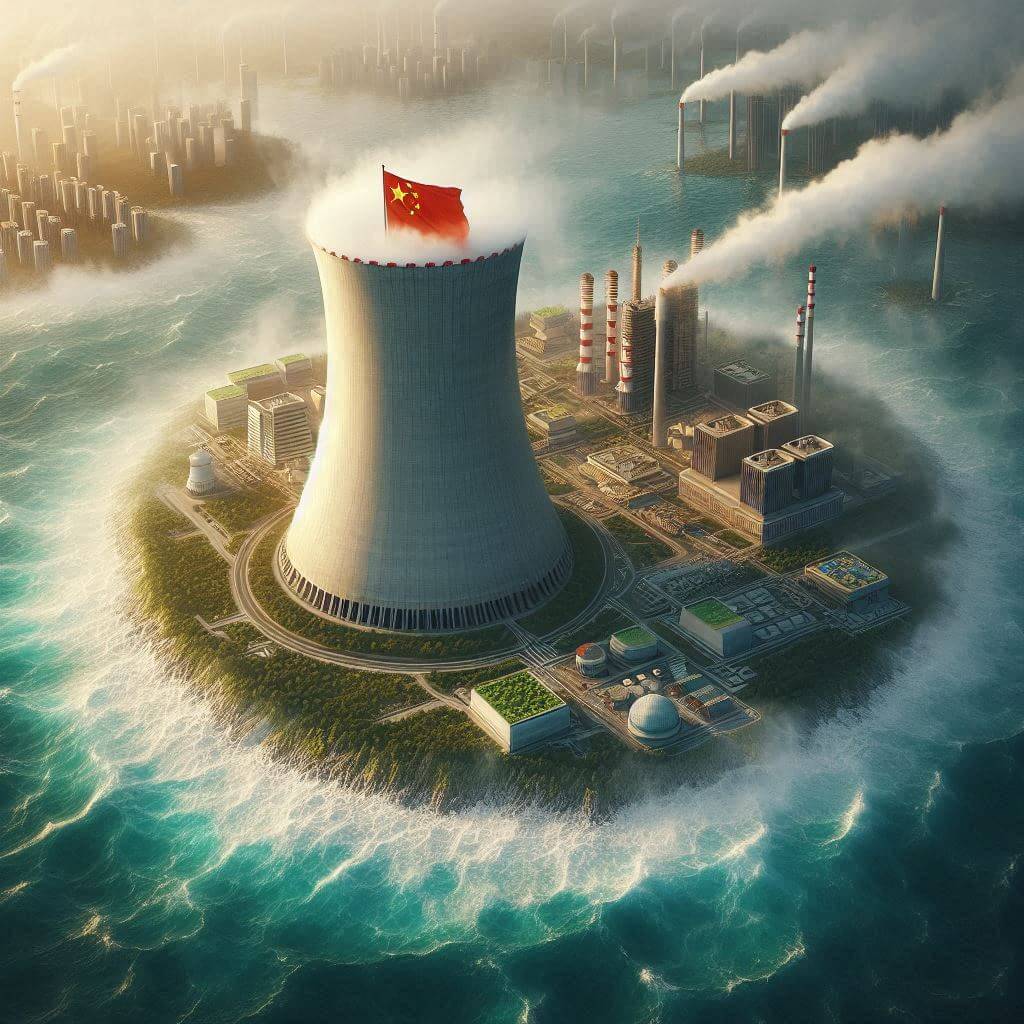
    Chinese Gobi Desert Molten Salt Industrial Facility
    Gobi Desert Molten Salt Installation

    More from The Thorium Network on China

    Reports on China’s Thorium Program

    The following is a selection of informative reports we’ve gathered on China’s Thorium program. It is not exhaustive, but it offers an overview of what is widely regarded as the world’s most advanced, best-staffed, and best-funded Thorium program.

    Links and references relevant to China’s Thorium programme

    1. Shanghai Institute of Applied Physics (SINAP) — China’s lead research institute for the TMSR programme.
      https://english.sinap.cas.cn/
    2. China’s first Thorium-to-uranium conversion announcement — Science and Technology Daily reports the 2025 milestone, the Gansu experimental reactor and the programme’s 2035 demonstration target. (Chinese)
      https://www.stdaily.com/web/gdxw/2025-11/01/content\_424807.html
    3. Chinese Academy of Sciences coverage of the conversion milestone — Xinhua’s report on the TMSR-LF1 result and China’s Thorium research programme. (Chinese)
      https://www.cas.cn/cm/202511/t20251103\_5087046.shtml
    4. 2026 report on the Thorium-to-uranium result — Xinhua coverage of the achievement’s selection among China’s 2025 top scientific advances. (Chinese)
      https://finance.sina.cn/stock/jdts/2026-03-28/detail-inhspwhs1104481.d.html
    5. Development of GH3535 Alloy for the Thorium Molten Salt Reactor — Research paper on the Chinese alloy used in the programme’s molten-salt materials development.
      https://www.researchgate.net/publication/324580866\_Development\_of\_GH3535\_Alloy\_for\_Thorium\_Molten\_Salt\_Reactor
    6. Mark Ho presentation hosted by Nuclear Australia — Background on China’s Thorium molten-salt reactor development.
      https://www.nuclearaustralia.org.au/wp-content/uploads/2021/04/Mark\_Ho\_20210512.pdf
    7. “Research Progress of TMSR Design” — Yang Zou’s 2019 presentation on China’s TMSR design work.
      http://samofar.eu/wp-content/uploads/2019/07/2019-TMSR-SAMOFAR%E2%80%94%E2%80%94Yang-ZOU-PDF-version-1.pdf
    8. “Progress of TMSR in China” — Hongjie Xu’s 2018 programme presentation.
      https://threeconsulting.com/mt-content/uploads/2021/04/chinatmsr2018.pdf
    9. China’s TMSR research presentation to the Generation IV International Forum — Overview of the Chinese programme and its technical direction.
      https://www.gen-4.org/gif/upload/docs/application/pdf/2017-05/03\_hongjie\_xu\_china.pdf
    10. “Update on SINAP TMSR Research” — Research update presented at the Oak Ridge National Laboratory molten-salt reactor workshop.
      https://msrworkshop.ornl.gov/wp-content/uploads/2018/04/MSR2016-day1-15-Hongjie-Xu-Update-on-SINAP-TMSR-Research.pdf
    11. “Sensitivity/uncertainty comparison and similarity analysis between TMSR-LF1 and MSR models” — Technical study of the Chinese experimental reactor’s modelling and design validation.
      https://www.sciencedirect.com/science/article/abs/pii/S0149197020300482?via%3Dihub
    12. “Burnup optimization of once-through molten salt reactors using enriched uranium and Thorium” — Research on Thorium fuel-cycle performance in molten-salt reactor models.
      https://link.springer.com/article/10.1007/s41365-022-00995-2
    13. TMSR-LF1 seismic analysis — Engineering study of the experimental reactor’s plant structure.
      https://onlinelibrary.wiley.com/doi/epdf/10.1155/2024/1672269
    14. China moves closer to completion of the world’s first Thorium reactor — 2021 background on the experimental reactor’s construction plans; useful as historical context. ans.org
      https://www.ans.org/news/article-3091/china-moves-closer-to-completion-of-worlds-first-thorium-reactor/
  • China Is Building the Nuclear Future

    China Is Building the Nuclear Future

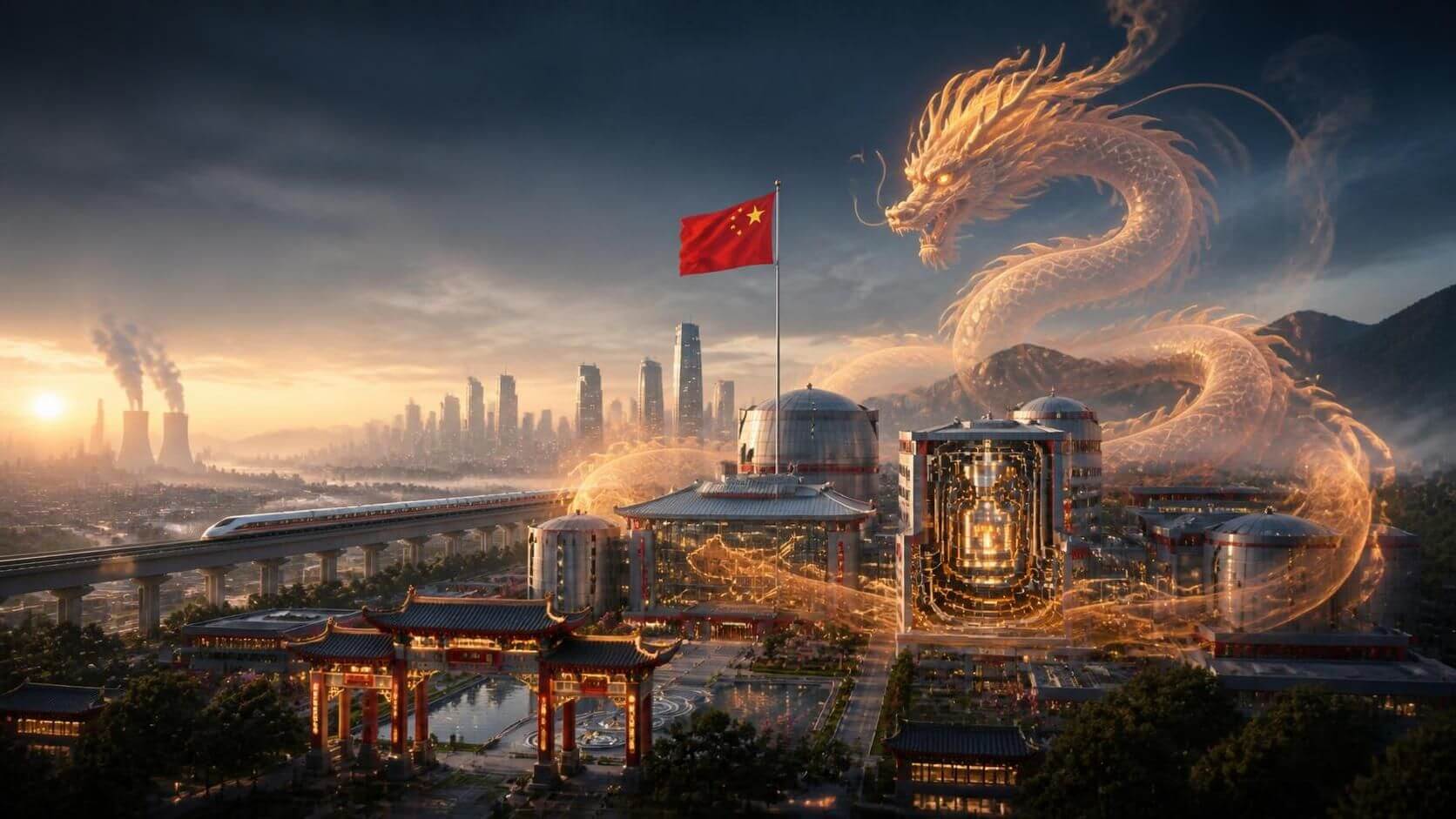
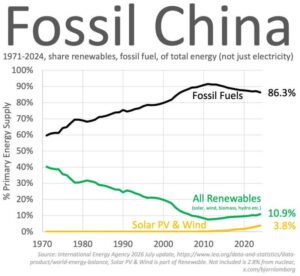
    Famous climate researcher and speaker Bjorn Lomborg made a good point recently: China remains a fossil-fuel-powered industrial economy, just as the rest of the world does. But that is only half the story.

    China Moving Off Fossil Fuels with The Thorium Network

    The equally important story is the speed at which China is adding nuclear capacity and positioning itself across the entire advanced-nuclear technology landscape.

    China is not merely building conventional reactors. It is developing a broad portfolio that includes:

    – Hualong One and CAP-series pressurised-water reactors

    – High-temperature gas-cooled reactors

    – Sodium-cooled fast reactors

    – Liquid Fission Burners (aka Molten-salt reactors)

    – Thorium-fuel-cycle research

    – Closed-fuel-cycle and reprocessing technologies

    – Nuclear heat, industrial steam, hydrogen, and other non-electric applications

    China’s conventional nuclear fleet has expanded dramatically. By early 2026, China was operating approximately 58 reactors with about 56 GW of installed capacity, while more than 30 additional reactors were under construction. China has also approved ten or more new reactors annually for several consecutive years.

    This is not a theoretical program. In December 2023, China’s HTR-PM at Shidao Bay entered commercial operation. It is a high-temperature gas-cooled, pebble-bed reactor generally classified as a Generation IV system. The plant combines two reactor modules with one turbine and is designed to provide both electricity and high-temperature process heat. Follow-up work has included district heating and industrial-steam applications.

    China is also advancing sodium-cooled fast reactors. The CFR-600 project at Xiapu represents a major step toward fast-spectrum reactors and a potential closed fuel cycle. The CFR-600 is promising whilst still at demonstration-stage technology. Its initial fuel supply has involved Russian fast breeder expert cooperation.

    In the Liquid Fission Thorium Burner space is China’s TMSR-LF1 at Wuwei in Gansu Province.

    This is a 2-MW-thermal Liquid Fission experimental burner developed by the Shanghai Institute of Applied Physics. It achieved first criticality on October 11, 2023, and reached full power in June 2024. In October 2024, Thorium was added to the operating liquid fuel. In November 2025, the Chinese research team announced that it had obtained experimental evidence of Thorium-to-uranium conversion inside the reactor. How many units do they have now, they are not saying.

    China’s next stated step is a 100-MW-thermal demonstration project, with demonstration applications targeted for 2035 and commercialisation by 2040. Expect China to shorten those timelines dramatically. China appears to be the only country currently operating a Liquid Fission molten-salt burner that has incorporated Thorium and reported Thorium-to-uranium conversion success.

    This is why Jeremiah Josey’s September 2023 presentation at the CLSA/CITIC Securities investors forum in Hong Kong was so prescient. Speaking to a large Chinese investment audience, he argued that China’s nuclear opportunity extended beyond the construction of today’s pressurised-water reactors. The presentation placed China’s reactor buildout, advanced nuclear research, fuel-cycle strategy, and Liquid Fission Thorium development within one investment and industrial framework. The event materials describe an audience of approximately 1,600 investors and featured the thesis that China was moving from imported and conventional designs toward technological self-reliance and advanced reactor systems.

    You can see the the full presentation here:

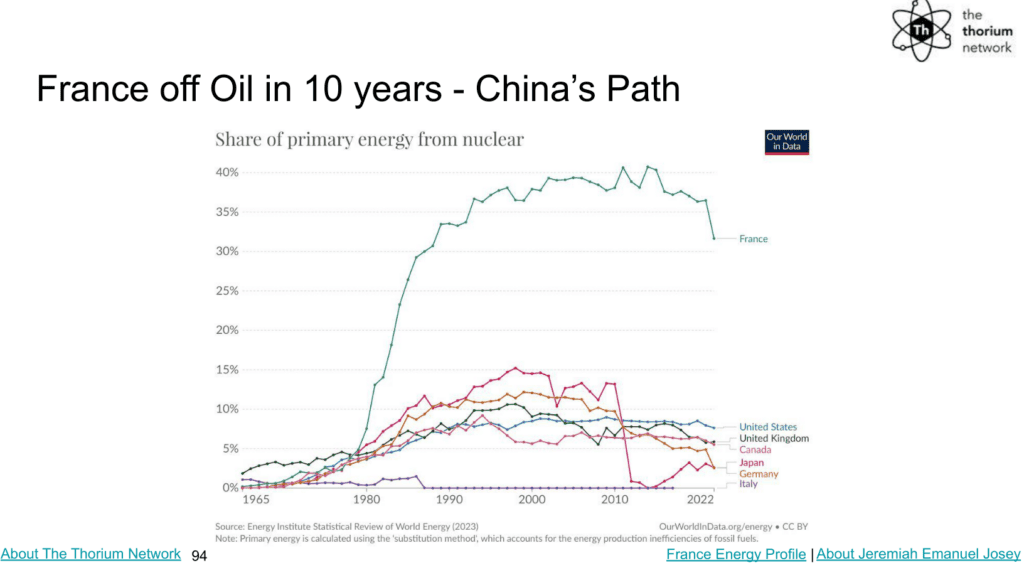
    The comparison with France is also important. China is not the first nation to demonstrate that a large nuclear buildout can transform an electricity system. France carried out its own exceptionally rapid nuclear expansion during the 1970s and 1980s, weaning it’s self entirely off fossil fuels.

    Fossil fuel to France is what wind and solar are to everyone else: a fringe power supply.

    The French example proves that a country can replace a large share of fossil electricity within a decade when nuclear construction is treated as a national infrastructure program.

    France goes nuclear and comes off fossil fuels The Thorium Network

    China is now pursuing that same basic logic on a much larger industrial scale—but with a broader technology portfolio. France standardised around pressurised-water reactors – their own incredible safe design.

    China is building—also their own desgin—pressurised-water reactors at scale while also developing high-temperature gas reactors, fast reactors, molten-salt systems, and Thorium-cycle technologies.

    The conclusion is that China has created the world’s most serious national test bed for nuclear scale-up. And they are doing it in earnest.

    China is simultaneously:

    1. Building conventional nuclear reactors faster than any other major country.

    2. Operating the first commercial Generation IV reactor.

    3. Developing fast reactors and fuel-cycle infrastructure.

    4. Operating Liquid Fission machines.

    5. Re-proving the conversion of Thorium into uranium-233.

    6. Planning larger demonstrations for industrial heat, hydrogen, and electricity.

    7. Combining state financing, domestic manufacturing, centralized planning, and a very large internal energy market.

    China may still burn enormous quantities of coal, oil, and gas today. That does not make its nuclear strategy irrelevant. It makes the strategy more important. China’s immense energy demand is precisely why it is pursuing every scalable source of reliable power—including coal, renewables, hydro, nuclear, and advanced nuclear technologies.

    The investment and technological question is therefore not whether China is already “green.”

    It is whether China’s combination of nuclear construction speed, industrial capacity, advanced-reactor research, and long-term energy demand will allow it to become the first country to commercialize a new generation of nuclear systems at meaningful scale.

    That is the question Jeremiah Josey put before Chinese investors in Hong Kong in 2023. The subsequent progress of HTR-PM and TMSR-LF1 clearly demonstrate that the question was not misplaced.

    We think it’s a moot point.

    Read the full 2023 post on our website

    Read Bjorn’s post

  • The Vogtle Effect: Investor Flight and China’s Race to USD1,000/kW Reactors

    The Vogtle Effect: Investor Flight and China’s Race to USD1,000/kW Reactors

    Summary

    U.S. investor appetite for large nuclear fell sharply after Vogtle’s cost—USD 15,000 per installed KW—coupled with schedule failures, driven by lost on‑site generation skills, financing risk, and contingency inflation. China’s program, by contrast, uses volume, standardisation, domestic supply chains and state capital to drive large‑reactor costs toward and potentially below USD 1,000 per installed kW and to compress build times toward multi‑unit serial schedules under three years in aggressive scenarios. The result is diverging investment signals: risk‑averse private capital in the U.S. vs. state‑enabled industrial scaling in China.

    Root causes of U.S. investor retrenchment

    • Vogtle created visible multibillion‑dollar overruns, amplified perception of extreme first‑unit risk and raised lender risk premia; utilities now avoid large private finance absent strong government guarantees.
    • Decades‑long U.S. construction hiatus has led to loss of tacit skills, fragmented and broken supply chains and higher contingency allowances—raising capital/ schedule estimates and scaring investors.
    • Contractual disputes and vendor failures (e.g., Westinghouse bankruptcy) increased perceived counterparty risk and pushed insurers/lenders away.

    China’s pathway to very low unit costs and short schedules

    • Policy levers: state coordination, cheap capital, and centralised approval reduce financing and permitting premiums.
    • Industrial levers: standardised designs, high domestic content, supplier capacity kept warm between projects, large apprenticeship pipelines, and offsite modular fabrication drive down per‑unit engineering, QA and onsite labour.
    • Trend targets: Chinese programs publicly target USD 1,800/kW and aim lower (USD 1,200– USD 1,000/kW or below in high‑volume optimised scenarios), with repeat build schedules compressing toward 36–50 months for mature serial units in aggressive programs.

    Comparative percentage declines (observable from China’s infrastructure programs)

    • Coal‑fired plants (China): capital USD / kW down ~40–60% since 2000s through 2010s/2020s.
    • Construction time for serial civil projects: down ~25–50% with repeat designs and modular practices.
    • On‑site labor/productivity: hours per kW reduced by ~30–50% via prefab and continuous pipelines.

    Table — China’s Progress: percentage drops

    CategoryHistorical drop range
    Coal plant capital cost (USD/kW)40–60%
    Construction time (repeat projects)25–50%
    On‑site labor/productivity30–50%

    Investment implications — U.S. vs China

    • In the U.S.: private investors price in Vogtle‑level contingencies, require credit enhancements or government guarantees, and prefer alternatives with clearer cost predictability; this kills large private‑financed reactor projects absent policy intervention.
    • In China: state absorption of early risk plus high serial volume creates a downward spiral of cost and time that further lowers investment risk and reinforces future scaling — enabling targets toward or below USD 1,000/kW.

    Conclusion

    Without major U.S. policy action (direct subsidies, loan guarantees, standardised national designs, long‑term offtake guarantees, or state‑backed industrial rebuilding), U.S. investors will remain shy of large reactors; China’s evidence shows that scale + state coordination can compress costs and schedules dramatically, producing percentage declines similar to those already achieved in coal, rail and bridge programs.

    Social Links

    [LinkedIn Post]

  • The Long Game: Why Liquid Fission Thorium is the Best Investment for the 21st Century

    The Long Game: Why Liquid Fission Thorium is the Best Investment for the 21st Century

    The Imminent Shift in Global Energy Investment

    Based on the insights of Jeremiah Josey, founder of The Thorium Network

    The world stands at a pivotal moment in energy history. As the limitations of fossil fuels become increasingly apparent and the urgency of climate change accelerates, investors are searching for solutions that offer both scale and sustainability. The most compelling opportunity emerging from this convergence of challenges and opportunities is not in the familiar realms of solar or wind, but in the realm of Liquid Fission Thorium Burners—a technology that promises to transform the energy landscape in ways that are both profound and enduring.

    This report examines the dual nature of this investment opportunity: the short-term momentum driven by existing infrastructure and market dynamics, and the long-term generational wealth that can be captured through strategic positioning in the emerging Thorium-based energy ecosystem. By understanding both time horizons, investors can make informed decisions that position them at the forefront of the next energy revolution.

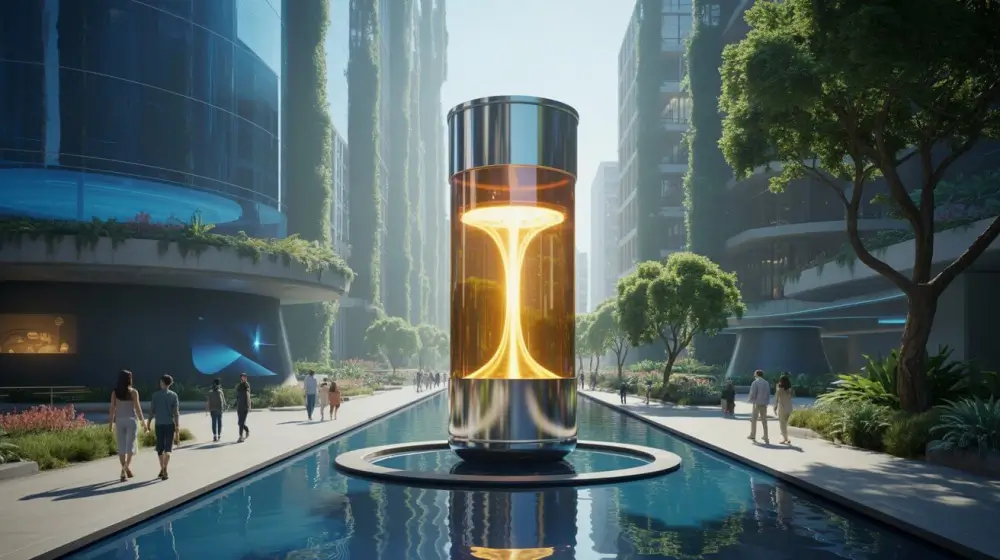
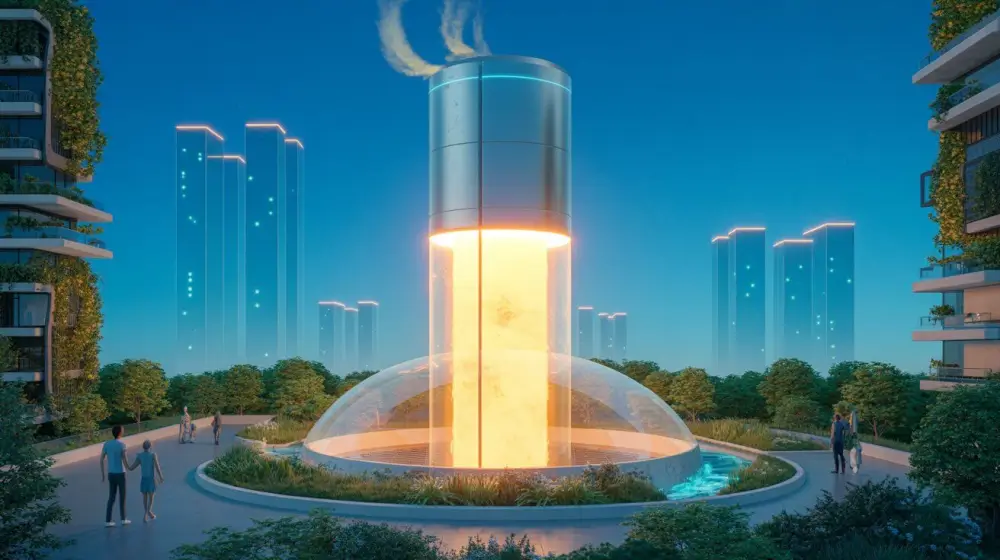
    Liquid Fission Thorium Burner Quietly Powering a Modern City

    The Short-Term Reality: Momentum and Market Dynamics

    The foundation of the current energy investment landscape is being shaped by several powerful forces. The global demand for reliable, 24/7 baseload power is surging, driven primarily by the insatiable appetite of artificial intelligence and data centers. This demand creates a clear and immediate market need that existing energy sources struggle to meet. While renewable energy sources like solar and wind have made significant strides, they are inherently intermittent and require massive storage solutions to provide consistent power. This limitation makes them less suitable for the high-demand, high-reliability applications that define the modern digital economy.

    In this context, Fission stands out as the only scalable, zero-carbon solution capable of meeting these demands. The market is already responding to this reality. The Liquid Fission Thorium Burner technology, while still in its developmental stages, is benefiting from the momentum of the broader Fission energy sector. This momentum is driven by several key factors:

    1. Energy Security and Geopolitical Stability: As nations seek to reduce their dependence on volatile fossil fuel markets, the ability to generate energy from a domestically controlled fuel source becomes a strategic imperative. This has led to increased government support and investment in Fission technologies, creating a favorable policy environment.
    2. Supply Chain Dynamics: The global supply of conventional uranium is constrained by years of underinvestment in mining. This structural deficit creates upward pressure on uranium prices, which in turn drives demand for alternative fuel cycles like Thorium. The Liquid Fission Thorium Burner offers a path to leverage this demand by utilising a fuel cycle that is more abundant and potentially more secure.
    3. Market Capitalisation and Valuation: The existing Fission energy market, including companies involved in fuel production, enrichment, and reactor operations, has seen significant capital appreciation. This creates a positive feedback loop where increased investment attracts more capital, further fuelling growth.

    This short-term momentum provides a critical window of opportunity. It validates the fundamental need for reliable, clean energy and creates a market environment where the benefits of Fission technology are being recognised and rewarded. For investors, this means that the Liquid Fission Thorium Burner is not just a speculative venture, but an investment in a market that is already demonstrating strong demand and favorable economic conditions.

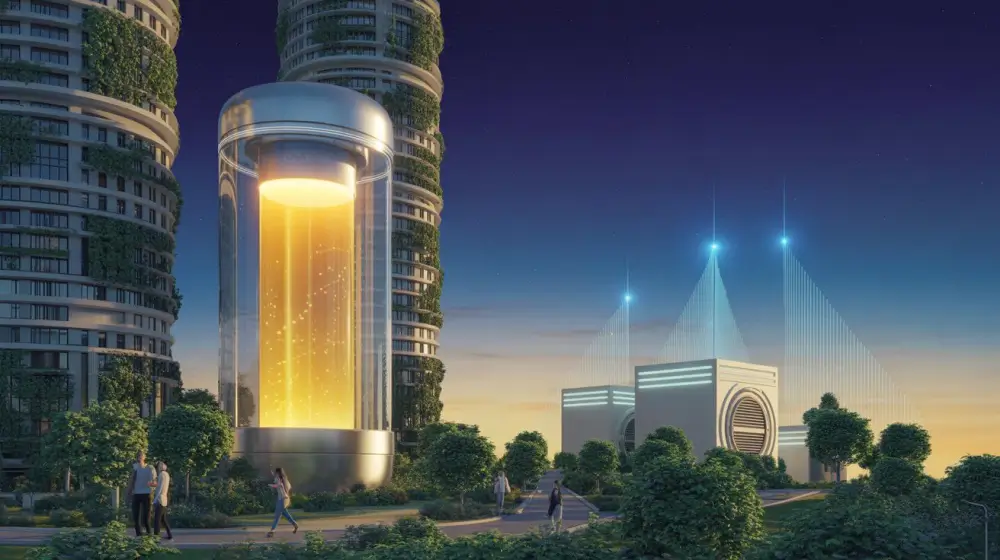
    Liquid Fission Thorium Energy is Safe

    The Long-Term Vision: Generational Wealth and Technological Leadership

    While the short-term momentum is significant, the true value of the Liquid Fission Thorium Burner lies in its long-term potential. This technology represents a fundamental shift in how we generate and manage energy, with implications that extend far beyond simple electricity production. The long-term vision is one of generational wealth, built on the foundation of technological leadership and strategic advantage.

    The Liquid Fission Thorium Burner is not merely an incremental improvement on existing Fission technology. It is a paradigm shift. By utilising Thorium as a fuel source, this technology offers several key advantages that position it to become the cornerstone of future energy systems:

    1. Inherent Safety and Proliferation Resistance: The Liquid Fission Thorium Burner operates on a fundamentally different principle than traditional solid-fuel reactors. Its liquid fuel design allows for passive safety features, meaning that in the event of a malfunction, the reaction naturally shuts down without the need for external intervention. This inherent safety reduces the risk of catastrophic accidents and eliminates the need for complex, expensive safety systems. Furthermore, the Thorium fuel cycle produces minimal amounts of long-lived radioactive waste and is inherently resistant to nuclear weapons proliferation, making it a more secure and politically viable option.
    2. High Energy Density and Fuel Efficiency: Thorium is a remarkably energy-dense fuel. A single ton of Thorium can produce as much energy as several thousand tons of coal or millions of gallons of oil. This high energy density translates into a significant reduction in fuel transportation and storage requirements, as well as a lower environmental footprint. The Liquid Fission Thorium Burner can also be designed to efficiently consume existing nuclear waste, effectively turning a liability into a valuable resource.
    3. Scalability and Global Applicability: The Liquid Fission Thorium Burner is designed to be scalable, from small, modular units suitable for remote communities to large, centralised power plants. This scalability allows for flexible deployment in a wide range of environments, from developing nations seeking to build their energy infrastructure to industrialised nations looking to decarbonize their grids. The technology’s ability to operate in a wide range of climates and conditions makes it a truly global solution.
    4. Economic Viability and Long-Term Returns: The combination of inherent safety, high fuel efficiency, and low operational costs creates a highly attractive economic model. The Liquid Fission Thorium Burner can generate significant returns on investment over its long operational life, often exceeding 50 years. This long-term stability provides a reliable source of income for investors and a predictable source of energy for consumers.

    The long-term vision is not just about generating electricity. It is about creating a new industrial paradigm. The Liquid Fission Thorium Burner has the potential to revolutionise not only the energy sector but also industries that rely on high-temperature process heat, such as hydrogen production, desalination, and industrial manufacturing. By providing a reliable, zero-carbon source of high-temperature heat, this technology can enable the decarbonization of entire sectors of the global economy.

    The Convergence of Short-Term and Long-Term Opportunities

    The true power of the Liquid Fission Thorium Burner lies in the convergence of short-term momentum and long-term vision. The current market dynamics create a favorable environment for the development and deployment of this technology. The demand for reliable, clean energy is real and growing, and the existing Fission energy market is already demonstrating the economic viability of the sector.

    This momentum provides a critical window of opportunity for investors to position themselves in the emerging Thorium ecosystem. By investing in the Liquid Fission Thorium Burner now, investors can capture both the short-term gains from the market’s recognition of Fission’s value and the long-term rewards of being at the forefront of a transformative technology.

    The Liquid Fission Thorium Burner represents a unique investment opportunity that combines the immediate benefits of a growing market with the long-term potential of a technology that could reshape the global energy landscape. For investors seeking to build generational wealth, this is not just an investment in energy—it is an investment in the future of civilisation. The time to act is now, as the world moves towards a new era defined by clean, safe, and abundant energy.

    Resources

    This post is based on the experience of Jeremiah Josey founder and chairman of The Thorium Network. He gave the details of this in a presentation to over 1000 investors in Hong Kong. You can see that post here on our Patreon.

  • Hot or Not? Why Investing into Nuclear is the best for the 21st century

    Hot or Not? Why Investing into Nuclear is the best for the 21st century

    A Presentation by Founder Jeremiah Josey to 1000 Chinese Investors, Hong Kong, September 2023

    China’s nuclear transformation is one of the most important, yet misunderstood, energy stories of the 21st century—and it was at the heart of a presentation Jeremiah Josey delivered to around one thousand Chinese investors in Hong Kong in September 2023. Speaking not as an armchair commentator but as a long‑time energy and project advisor, he argued that China’s nuclear strategy is not just an engineering program; it is a generational wealth and sovereignty project in which Chinese capital has a unique first‑mover advantage.

    China’s nuclear moment

    In the presentation “Hot or Not? Investing in Nuclear,” Jeremiah set out the case that nuclear power is the most strategic, scalable energy platform for the 21st century and that China is positioning itself as its global champion. At the time of his talk, China operated around 55–60 nuclear units with roughly 57 GW of capacity and had declared plans to expand this to about 150 GW by 2030, a growth trajectory unmatched anywhere else in the world.

    For the Hong Kong audience, many of whom were already familiar with landmark projects such as the Taishan Nuclear Power Plant, he emphasized that this expansion is not a publicity exercise but a continuation of the same disciplined, infrastructure‑led development that produced China’s high‑speed rail network—already some 40,000 km in 2023 and targeted to reach around 200,000 km by 2035. Nuclear sits in that same category of long‑lived, nation‑defining assets that underpin industry, trade, and geopolitical leverage.

    From 5% to the backbone of global energy

    Jeremiah framed China’s nuclear build‑out against the background of global energy demand and the limitations of the current system. Today’s worldwide nuclear fleet of roughly 440 reactors provides about 5% of total world energy and around 10% of electricity, a surprisingly small share given nuclear’s role in some national grids. Total world energy demand is on the order of 600 exajoules per year—about half for transport and half for electricity and heat—meaning that nuclear, at roughly 30 exajoules, is only scratching the surface of what is physically and economically possible.

    He then outlined a thought experiment: to supply all global energy needs with conventional solid‑fuel uranium reactors would require on the order of 10,000 large plants (1,000–5,000 MW each), or about 100,000 small modular units (100–300 MW each), numbers that sound vast until compared with the approximately 2,400 coal‑fired power stations already operating worldwide. For Chinese investors accustomed to thinking in industrial scale, this reframed nuclear not as an exotic niche, but as a realistic backbone for global energy—one where China’s early and aggressive build gives it industrial and financial leadership.

    Why nuclear suits China’s model

    One of the central themes of Jeremiah’s talk was that the usual Western objections to nuclear—high costs, long build times, intractable regulation—simply do not apply in the same way in China. In the West, he noted, nuclear projects are hampered by fragmented regulation, politicized permitting, and well‑funded anti‑nuclear campaigns that funnel hundreds of millions or even billions of euros and dollars annually into lobbying against fission. In China, by contrast, alignment between industrial policy, regulators, and state‑owned enterprises allows for standardized designs, repeat builds, and disciplined cost control.

    He highlighted that build costs that are considered unmanageable in Europe or North America are entirely workable in China, where supply chains, project management discipline, and political commitment support serial construction. In this environment, nuclear’s economic profile looks particularly attractive: high upfront capital followed by decades of low, stable operating costs, especially for fuel. For a 5,000 MW plant, Jeremiah used figures on the order of €5 million per installed megawatt, implying roughly €25 billion in capital expenditure, and then showed how, at high capacity factors and realistic power prices, such a plant can generate multi‑billion‑euro annual cash flows over lifetimes of up to 50 years or more.

    He also reminded the audience that China already has examples of nuclear assets designed for very long service lives, and that global precedent—such as U.S. plants licensed for 80 years—shows how nuclear can become a quasi‑permanent part of the industrial landscape. This combination of scale, longevity, and policy alignment makes nuclear a natural fit for China’s development model, in his view.

    The logistics and fuel advantage

    Jeremiah devoted a notable portion of the Hong Kong presentation to the sheer physical advantage nuclear fuel offers—an advantage that plays directly to China’s strengths in logistics and large‑scale planning. He contrasted the sprawling, tanker‑heavy fossil fuel supply chain with the compactness of uranium logistics. At current consumption levels, he explained, a single large bulk carrier similar to the Cape Ace could theoretically carry the entire world’s annual uranium requirement. Even if the world shifted entirely to uranium‑based nuclear power, perhaps twenty such ships would suffice, compared with more than 2,000 crude oil tankers that now criss‑cross the oceans.​

    He also pointed out that the global uranium market is surprisingly small—on the order of only a few tens of thousands of tonnes per year and a market value of roughly single‑digit billions of euros—compared with the multi‑trillion‑dollar fossil fuel complex. Yet, because uranium is so energy‑dense, replacing the entire fossil fuel market with nuclear fuel would require annual uranium spending of perhaps around USD 140 billion, versus over USD 5 trillion spent on fossil fuels today. That translates to fuel cost savings on the order of 97% for the same delivered energy, a number that captured the attention of an audience trained to look for large, structural cost differentials.

    For China, Jeremiah argued, this means the opportunity to secure and manage a compact, strategic fuel supply chain, with far fewer geopolitical choke points and shipping risks than oil and gas. It also opens a long‑term industrial opportunity in enrichment, fuel fabrication, recycling, and advanced fuel cycles—fields where Chinese firms and research institutes are already active

    China and the next nuclear wave: Liquid Fission Thorium

    While much of the talk acknowledged the importance of today’s solid‑fuel uranium reactors, Jeremiah’s message to Chinese investors focused strongly on where he believes the real technological and financial upside lies: liquid fission, and especially liquid Thorium fuel in molten salt reactors.

    He revisited the history of the Molten Salt Reactor Experiment (MSRE) at Oak Ridge in the 1960s, which ran successfully at around 8 MW from 1965 to 1969 and produced a comprehensive 434‑page technical report summarizing more than two decades of research by tens of thousands of staff. The MSRE, he noted, was described by its own engineers as “the most boring experiment ever” because it did exactly what it was designed to do, with no surprises or crises. Yet this line of development was shut down in the early 1970s, as political and strategic considerations in the United States favored once‑through solid fuel cycles aligned with weapons‑grade material production.​

    For the Hong Kong audience, the key point was not the historical injustice, but the opportunity it creates today. Technologies that were effectively “nixed” in the West are now being revived and advanced in China. Jeremiah highlighted the 2 MW Liquid Fission Thorium machine in Wuwei, Gansu province—a modern‑era re‑run of the MSRE concept, backed by international collaboration on high‑temperature materials and corrosion‑resistant alloys. This project signals that China is not content to simply replicate Western light‑water reactor designs but aims to leapfrog into a new generation of reactors with inherently safer characteristics and potentially superior economics.​

    He also mentioned that when modern artificial intelligence systems have been tasked with designing the “best possible” nuclear machine under given constraints, they independently converge on Liquid Fission Thorium architectures similar to those pioneered at Oak Ridge in the 1960s. For investors, this convergence—between historic experimental success, current Chinese industrial capability, and modern computational design—suggests that Liquid Fission Thorium is not an exotic side bet but a likely candidate for the core of future nuclear fleets.​

    Safety, perception, and China’s opportunity

    Jeremiah did not sidestep the safety debate; instead, he sought to reframe it for an audience whose country is still building out its nuclear fleet. He reminded investors that the three most famous nuclear incidents—Three Mile Island, Chernobyl, and Fukushima—have shaped global perception far more than they deserve based on actual casualty numbers. Three Mile Island caused zero deaths or injuries from radiation, and the remaining unit continued operating for decades after the incident. Chernobyl, while a serious industrial accident, resulted in on the order of a few dozen immediate deaths, and three other reactors at the same site kept running for years. Fukushima, despite the enormous social and economic disruption, did not produce deaths from radiation exposure.

    He also cited the work of radiation oncologists and researchers involved with the Chernobyl Tissue Bank who initially expected to find widespread radiation‑induced illness but ultimately found far less than feared, leading some to change their stance from anti‑ to pro‑nuclear. For China, which is designing and regulating new reactors in the 21st century rather than retrofitting mid‑20th‑century plants, this evidence base allows for a more rational, data‑driven approach to safety standards and public communication.

    Jeremiah argued that by building modern reactors with inherently safer designs and by basing radiation limits on empirical data rather than Cold War fears, China can avoid the extreme over‑regulation that has crippled nuclear expansion in the West. This does not mean compromising safety; it means aligning regulation with real‑world risk, thereby reducing costs and delays without accepting unacceptable hazards.

    Nuclear as China’s long game

    For the investors in the Hong Kong room, many of whom manage large pools of patient capital, Jeremiah framed China’s nuclear strategy as part of a much larger macroeconomic and geopolitical shift. He outlined a world in which conventional oil has effectively peaked, U.S. shale is dependent on cheap debt and high prices, and Western governments face rising debt burdens and inflationary pressures as they struggle to maintain the existing energy‑financial order.

    Against that backdrop, he suggested, nuclear offers China a way to secure:

    • Long‑term, low‑cost, low‑carbon energy for its industries and cities.
    • Strategic independence from volatile oil and gas markets.
    • Exportable infrastructure and expertise in both conventional and advanced reactors.
    • A platform for global influence, as other countries seek partners for their own nuclear programs.

    He also noted that demographic trends in Africa and Asia—regions projected to add around two billion people between now and 2050—will drive enormous demand for reliable, affordable electricity. Nations that can offer turnkey nuclear solutions, from financing and design to fuel management and decommissioning, will play a central role in how that demand is met. China, with its existing fleet, proven build capability, and emerging leadership in liquid fission research, is well‑placed to become that provider.

    In closing the Hong Kong presentation, Jeremiah challenged the audience to decide whether they wished to be “following investors,” chasing crowded trades in fashionable renewables, or “foundational investors,” backing the assets and technologies that will form the bedrock of the world’s energy system for the next century. For him, the answer was clear: China’s nuclear program—especially as it moves from solid uranium to Liquid Thorium—represents one of the most consequential foundational investments of our time, and Chinese investors are sitting at the epicentre of that opportunity.

    See the presentation here that Jeremiah Josey gave in Hong Kong September 2023, with selected screen shots from the event. Photographic imagery courtesy of CLSA. No infringement intended, all rights belong to the respective owners.

  • Thorium Triumph: How China Is Shattering Myths and Powering the Future

    Thorium Triumph: How China Is Shattering Myths and Powering the Future

    Article by Jeremiah Josey, founder of The Thorium Network. Dated 13 December 2025

    The website whatisnuclear.com/thorium-myths.html presents a series of arguments that attempts to cast doubt on the viability and advantages of Thorium-based Fission technology. We won’t dwell on the psychological tactics used—such as answering a different question to the headline “myth” or relying on technical jargon to create an aura of authority. They’re unnecessary distractions. And we don’t need to. Recent developments, particularly in China, have decisively demonstrated that the supposed technical hurdles previously cited are not only surmountable but are actively being overcome. China’s progress in Thorium Liquid Fission Burner (LFTB) technology reveals a future where energy independence is not just a goal, but a reality that will reshape global energy dynamics.

    Addressing the “Myths” with Chinese Achievements

    • Myth #1: Thorium Burners were cancelled due to economics, not weapons.
      China’s Thorium Fission programme, launched in 2011 by the Chinese Academy of Sciences, has shown that with sustained investment and state support, economic barriers can be surpassed. The country has not only constructed a complete industrial supply chain for Thorium Fission machines but has also achieved the world’s first conversion of Thorium into uranium-233 within a their LFTB called “TMSR-LF1”. This achievement marks a pivotal step toward self-sustaining Fission cycles, driven by strategic energy security rather than mere economics. Link​
    • Myth #2: Thorium Burners never need enrichment.
      While initial fissile material is required to start the process, China’s TMSR-LF1 machine has successfully bred uranium-233 from Thorium, proving that self-sustaining cycles are achievable. This milestone is a major leap toward reducing dependence on enriched uranium, making Thorium Liquid Fission Burners a cornerstone of China’s long-term energy strategy. Link​
    • Myth #3: Thorium Burners cannot make bombs.
      The claim that Thorium Burners could be used to produce weapons-grade material is categorically false. The process of separating protactinium-233 from the fuel solution is technically complex, highly detectable, and practically impossible to achieve covertly. Moreover, the presence of uranium-232 and its intense gamma radiation makes handling and weaponisation not only hazardous but effectively unfeasible. China’s approach to Thorium Fission prioritises civilian energy and employs strict safeguards, ensuring that weaponisation is not a realistic concern. Link​
    • Myth #4: Thorium is more abundant, but that’s not important.
      China’s discovery of over 1 million tons of Thorium and the mapping of 233 Thorium-rich zones highlight its strategic significance for energy security. For a country with limited uranium, Thorium’s abundance is not just important—it is essential. China’s road map targets commercial deployment by 2029, aiming to secure energy independence for hundreds of thousands of years. This will dramatically reduce China’s reliance on fossil fuels and lead to a significant decline in global demand for coal and oil. Link
    • Myth #5: Thorium Burners don’t uniquely make safer waste.
      China’s TMSR produces far fewer long-lived transuranic elements, and its waste decays much faster than that of conventional Fission machines. The technical capability for online fission product removal and passive safety is being proven in real-world operation, making Thorium Liquid Fission Burners a leader in reducing Fission waste hazards. Link
    • Myth #6: Thorium Burners and molten salt machines are the same thing.
      China’s programme combines both, but the advances in metallurgy and materials—such as the development of specialised alloys for molten salt environments—are critical. The United States historically restricted sales of Hasteloy N, a key material for liquid fission machines, to control technology spread. China has now overcome this by developing its own high-performance alloys, supported by Australia ensuring supply chain independence and technological leadership. Link

    China’s Energy Independence and Global Impact

    China’s Thorium Fission programme is not just about technological advancement; it is about energy independence for hundreds of thousands of years. The end of fossil fuels for China is in sight, and considering the country’s massive energy consumption, this will lead to a dramatic decline in global demand for coal and oil. China’s progress in Liquid Fission Thorium Burner technology is setting a new benchmark for advanced energy solutions worldwide, with the potential to transform global energy markets and reduce reliance on fossil fuels. Link

    Australia’s Role in Supporting China

    Australia has played a crucial role in supporting China’s Thorium Fission ambitions. Under the leadership of Professor Adi Paterson, Australia has become a key partner in the development and supply of Thorium and advanced materials for Liquid Fission Machines. This collaboration not only strengthens bilateral relations but also positions Australia as a vital contributor to the global shift toward sustainable energy solutions. Link​

    China’s achievements in Thorium Fission Burner technology have decisively refuted the notion that Thorium-based Fission is impractical or hindered by insurmountable technical challenges. The technical hurdles cited by critics globally are being overcome, and China’s progress is setting a new benchmark for advanced energy solutions worldwide. The future of energy is not just about technological innovation but about strategic independence and global sustainability. Link

    ​References

    Debunking this article: https://whatisnuclear.com/thorium-myths.html

    Tags

    #China #LiquidFissionThoriumBurners #LFTB #Thorium #Fission

    Credits

    Credits to the respective contributors to this article, including Discovery Alert for the images.

    Article Links

    Telegram: https://t.me/thethoriumnetwork/14561

    LinkedIn: https://www.linkedin.com/posts/thethoriumnetwork_liquidfission-gotthorium-thorium-activity-7405792701608218624-nlyJ

    Facebook: https://www.facebook.com/share/p/17VxJUyRx8/

    Instagram: https://www.instagram.com/p/DSOhU7zjhrk/

  • 「パーフェクトテクノロジー」-バイリンガル記事-日本語/英語 – “The Perfect Technology” – a Bilingual Article – Japanese & English

    Post created by Jeremiah Josey and the team at The Thorium Network

    この記事は、2022年3月14日にプロイセンの一般新聞Preußische Allgemeine Zeitungによって公開されました。著作権表示:教育目的でフェアユースを適用する。 / This article published 14 March 2022 by Preußische Allgemeine Zeitung, the Prussian General Newspaper. Copyright notice: applying fair use for educational purposes.

    トリウムベースの溶融塩原子炉・液体燃料No.1 の責任:上海応用物理学研究所

    Responsible for the Thorium-based Molten Salt Reactor-Liquid Fuel No. 1: The Shanghai Institute of Applied Physics

    中国の溶融塩ループ実験 / China’s molten salt loop experiment

    トリウム溶融塩原子炉

    核燃料が溶融塩の形である原子炉は、多くの恩恵をもたらします。近い将来、中国で試験施設が稼働する予定です。

    THORIUM MOLTEN SALT REACTORS Nuclear reactors in which the nuclear fuel is in the form of molten salt offer a wealth of advantages. A test plant will go into operation in China in the near future.

    「パーフェクトテクノロジー」

    原料は安価で世界中で入手可能であり、冷却水さえも必要ではなく、廃棄物は少なくなり、従来の核廃棄物よりもはるかに速く崩壊する

    “Perfect technology”

    The raw material is cheap and available worldwide, not even cooling water is needed and the waste is less and decays much faster than conventional nuclear waste: Thorium technology stands for a new quality of the use of nuclear energy

    Wolfgang Kaufmann 23.01.2022

    中国中部甘粛省の武威近くにある紅沙港工業団地では、パイロットプラントが間もなく稼働し、中国だけでなく世界中のエネルギー生産に革命を起こす可能性があります。 化石燃料の使用による二酸化炭素の排出、風力タービンの景観の劣化、環境に有害な生産による電池の大量使用、風や曇りのない天候での停電、リスクはありません。原子炉の事故による放射能の増加は、革新的なトリウムベースの溶融塩原子炉によって約束されています。 上海応用物理研究所のトリウムベースの溶融塩原子炉No.1(TMSR-LF1)は、原子力エネルギーの使用における新しい品質を表しており、それに「グリーンコート」を与えることになっています。

    In the Hongshagang Industrial Park near Wuwei in the central Chinese province of Gansu, a pilot plant will go into operation in the near future, which has the potential to revolutionize energy production not only in the Middle Kingdom, but throughout the world. No more carbon dioxide emissions as a result of the use of fossil fuels, no more landscape degradation by wind turbines, no mass use of batteries from environmentally harmful production, no power outages in calm winds and clouds, but also no radiation risk due to reactor accidents, all this promises the innovative Thorium-based Molten Salt Reactor-Liquid Fuel No. 1 (TMSR-LF1) of the Shanghai Institute of Applied Physics, which advocates a new quality of use of the Nuclear energy is in place and this should give it a kind of “green coat of paint”.

    溶融塩核分裂エネルギー回路図 / Molten Salt Fission Energy Schematic
    Yoichiro Shimazu – FUJI Molten Salt Reactor [MSR] Passive Heat Removal System @ ThEC12

    TMSR-LF1トリウム液体塩原子炉の機能は比較的簡単です。 弱放射性元素のトリウムは液体の塩に溶解し、中性子を照射します。 これにより、核分裂時に大量の熱を放出する同位体ウラン233が生成されます。 したがって、原子炉は独自の燃料を生成します。最終的に、このプロセスは、従来の原子炉の運転よりもはるかに安全であり(以下を参照)、他にも多くの利点があります。

    The operation of the Thorium Molten Salt reactor TMSR-LF1 is relatively simple. The weakly radioactive element Thorium is dissolved in molten salt and bombarded with neutrons. This produces the isotope uranium 233, the fission of which releases large amounts of heat. So the reactor produces its own fuel. This process ultimately brings much more safety than the operation of classic nuclear reactors (see below) and also a variety of other advantages.

    6つの恩恵

    Six Benefits

    まず、必要なトリウム232はごく少量です。 イタリアのノーベル物理学賞を受賞したカルロ・ルビアが計算したところ、1トンのトリウムのエネルギー含有量は200トンのウラン金属または2800万トンの石炭のエネルギー含有量に相当するためです。

    First, only extremely small amounts of Thorium 232 are needed. The energy content of one ton of Thorium corresponds to that of 200 tons of uranium metal or 28 million tons of coal, as the Italian Nobel Laureate in Physics Carlo Rubbia calculated.

    第二に、世界中に主要なトリウム鉱床があります。 原則として、この元素は鉛と同様の頻度で岩石地殻に発生し、希土類の採掘における廃棄物としても発生します。 それが高価ではない理由です。 一方で、最近、従来の原子力発電所の数が再び大幅に増加しているため、ウランの不足や価格の高騰が見込まれます。

    Secondly, there are larger Thorium deposits all over the world. In principle, the element occurs in the rock crust as often as lead and is also produced as a waste product in the extraction of rare earths. That’s why it’s not expensive. On the other hand, there is a risk of shortages and price explosions for uranium in the future, because the number of conventional nuclear power plants has recently increased significantly again.

    第三に、トリウム溶融塩反応器は、例えば砂漠地域を含む事実上どこにでも建設することができる。冷却水を必要としないからです。

    Thirdly, a Thorium Molten Salt reactor can be built virtually anywhere, including desert regions, for example. Because it does not require any cooling water.

    第四に、そのオペレーション(原典はドイツ語であるので、この場合ビトリーブとなりうるか)はまた、大幅に少ない放射性廃棄物を生成します。また、TMSR-LF1からの核廃棄物の99%以上は、遅くとも300年後には無害な同位体に崩壊したと言われています。さらに、より高度な溶融塩反応器で後でより長い放射材料の少量の残留量を処理し、したがって完全に中和することができる。比較すると、ウランを動力源とする従来の原子炉は、使用される核燃料のほんの一部しか使用されていないにもかかわらず、数千年の半減期を持つ長寿命の放射性核分裂生成物を生成します。

    Fourthly, its operation also generates significantly less radioactive waste. In addition, more than 99 percent of the nuclear waste from the TMSR-LF1 is said to have decayed into harmless isotopes after 300 years at the latest. Furthermore, it is possible to process the small residual amounts of longer radiating material later in more advanced molten salt reactors and thus completely neutralise. By way of comparison, conventional nuclear reactors powered by uranium produce long-lived radioactive fission products with half-lives of many thousands of years, even though only a small fraction of the nuclear fuel used is used.

    第五に、トリウム溶融塩炉の建設と運転のコストは、通常使用される軽水炉のコストよりも低い。これは主に、システムの動作圧力が低いため、多くの安全上の注意が不要であること、および燃料棒を調達する必要がないという事実によるものです。

    Fifthly, the costs for the construction and operation of Thorium Molten Salt reactors are lower than those of the light-water reactors that are usually used. This is mainly due to the low operating pressure of the systems, which makes numerous safety precautions superfluous, as well as the fact that no fuel rods have to be procured.

    第六に、TMSR-LF1のような原子炉は、ウラン233がインキュベートされるだけでなく、核医学などで必要とされる他の多くの放射性核分裂生成物も生成されるため、非常に経済的に運転することができます。そして、放射性核種のいくつかは、ルビジウム、ジルコニウム、モリブデン、ルテニウム、パラジウム、ネオジム、サマリウムなどの非常に求められている元素にさえ変わります。同様に、希ガスキセノンが放出され、とりわけ絶縁媒体として、またレーザーおよび航空宇宙技術において使用される。

    Sixthly, reactors such as the TMSR-LF1 can also be operated extremely economically because not only uranium 233 is incubated in them, but also many other radioactive fission products are produced, which are required, for example, in nuclear medicine. And some of the radionuclides even turn into highly sought-after elements such as rubidium, zirconium, molybdenum, ruthenium, palladium, neodymium and samarium. Likewise, the noble gas xenon is released, which is used, among other things, as an insulation medium as well as in laser and aerospace technology.

    戦争は万物の父

    War is the father of all things

    TMSR-LF1の基礎となる技術は、中国ではなく米国で発明されました。早くも1954年には、空軍は長距離爆撃機に動力を供給するために小型の溶融塩原子炉を実験しました。しかし、このプロジェクトは、米国が大陸間弾道ミサイルを保有していたときに急速に終了しました。同様に、1970年代初頭、ユーリッヒ原子力研究施設の西ドイツの科学者は、溶融塩炉に関するいくつかの研究を発表しましたが、当時の原子炉開発責任者ルドルフ・シュルテンの消極的な態度のために最終的に注目されませんでした。

    The technology underlying the TMSR-LF1 was not invented in China, but in the USA. As early as 1954, the Air Force experimented with a small molten salt reactor to power long-range bombers. However, the project came to a rapid end when the United States had intercontinental ballistic missiles. Likewise, at the beginning of the 1970s, West German scientists from the Jülich nuclear research facility presented some studies on molten salt reactors, which ultimately received no attention because of the negative attitude of the then head of reactor development, Rudolf Schulten [main developer of the pebble bed reactor design, a non fluid fuel system].

    代替原子炉の受け入れの欠如のもう一つの理由は、世界中の原子力産業の関心の絶対的な欠如でした。古典的な原子炉では、優れたお金を稼ぐことができ、燃料棒の生産からの収入なしには誰もやりたがらなかった。したがって、腐食のリスクが高いとされるものや、誰かが原子炉を誤用して兵器級の核分裂性物質を製造するという仮説的な危険性など、溶融塩反応器の使用に反対するあらゆる種類のふりをした議論が持ち込まれた。

    Another reason for the lack of acceptance of the alternative reactor type was the absolute lack of interest of the nuclear industry around the world. With the classic nuclear reactors, excellent money could be earned, and no one wanted to do without the income from the production of fuel rods. Therefore, all sorts of pretended arguments against the use of molten salt reactors were brought into play, such as the allegedly higher risk of corrosion and the hypothetical danger that someone will misuse the reactors to produce weapons-grade fissile material.

    これは、中華人民共和国が2011年以来、TMSR-LF1の開発に4億ユーロ相当を投資することを妨げていない。結局のところ、北京の指導者たちは、2050年までに中国を「クライメートニュートラル」にするという野心的な目標を追求しており、溶融塩反応器の「完璧な技術」は絶対に不可欠であることを証明することができるだろう。

    This has not prevented the People’s Republic of China from investing the equivalent of 400 million euros in the development of the TMSR-LF1 since 2011. After all, Beijing’s leaders are pursuing the ambitious goal of making the Middle Kingdom “climate neutral” by 2050, and the “perfect technology” of molten salt reactors could prove absolutely indispensable.

    250MW溶融塩核分裂エネルギー発電設備 / 250 MW Molten Salt Fission Energy Power Facility

    現在ゴビ砂漠の端でテストされている原子炉は、当初の公称出力はわずか2メガワットです。これは、約1000世帯にしか電力を供給できないことを意味します。しかし、TMSR-LF1の設計原理が成功すれば、出力373メガワットのトリウム溶融塩反応器の最初のプロトタイプが2030年頃までに稼働し、その後、中国全土で同じプラントが急速に連続して稼働します。ドイツが今なお原子力から遠ざかり続けるのか、それとも今も「グリーン原子力エネルギー」に頼っているのかは、まだ分からない。

    The reactor, which is now to be tested on the edge of the Gobi Desert, initially has a nominal output of only two megawatts. This means that it can only supply around 1000 households with electricity. If the design principle of the TMSR-LF1 proves successful, however, the first prototype of a Thorium Molten Salt reactor with an output of 373 megawatts would go into operation by around 2030, which will then be followed by identical plants throughout China in rapid succession. It remains to be seen whether Germany will still remain in its abstinence from nuclear power at this time or whether it will now also rely on “green nuclear energy”.

    中国ゴビ砂漠溶融塩工業施設 / Chinese Gobi Desert Molten Salt Industrial Facility
    ゴビ砂漠溶融塩インスタレーション / Gobi Desert Molten Salt Installation

    Development of GH3535 Alloy for Thorium Molten Salt Reactor

    Wuwei, Gansu, China

    PreußischeAllgemeineZeitung(PAZ)は、ドイツのメディア業界で唯一の声です。毎週、政治、文化、ビジネスの現在の出来事を報告し、私たちの社会の根本的な発展を支持しています。彼らの作品の中で、編集者は伝統的なプルーセンの価値観にコミットしていると感じています。古いプルーセンは、宗教的および思想的寛容、祖国への愛情と寛容さ、法の支配と知的誠実さ、そして特に社会のすべての分野での理由に基づく行動。このことを念頭に置いて、PAZはオープンな議論の文化を維持しています。これは、情熱的に独自の視点を表し、異なる考え方をする人々の意見を尊重し、発言権を与えます。日々の出来事を超えて、PAZは歴史的なプロイセンを思い出し、その文化遺産を大切にすることにコミットしていると感じています。これらの原則により、PreußischeAllgemeine Zeitungは、昨日、今日、明日、西と東の国と地域の間、そして私たちの国のさまざまな社会の流れの間のユニークなジャーナリズムの架け橋です。

    The Preußische Allgemeine Zeitung (PAZ) is a unique voice in the German media landscape. Week after week, it reports on current events in politics, culture and business and takes a stand on the fundamental developments in our society. In their work, the editors feel committed to the traditional Prussian canon of values: The old Prussia stood and stands for religious and ideological tolerance, for love of homeland and open-mindedness, for the rule of law and intellectual honesty, and not least for reason-guided action in all areas of society . With this in mind, the PAZ maintains an open culture of debate, which passionately represents its own point of view and respects the opinions of those who think differently – and also lets them have their say. Beyond day-to-day events, the PAZ feels committed to remembering historical Prussia and caring for its cultural heritage. With these principles, the Preußische Allgemeine Zeitung is a unique journalistic bridge between yesterday, today and tomorrow, between the countries and regions in West and East – as well as between the different social currents in our country.


    Translation courtesy of Duck Duck Go – Your personal data is nobody’s business.

    Like the article? Give payments directly to PAZ here, Anerkennungszahlung

    Support us to make more bilingual offerings like this via our Patreon.


    Links and References

    1. Original article: https://paz.de/artikel/perfekte-technologie-a6180.html
    2. https://paz.de/impressum.html
    3. https://english.sinap.cas.cn/
    4. https://www.ans.org/news/article-3091/china-moves-closer-to-completion-of-worlds-first-thorium-reactor/
    5. https://en.wikipedia.org/wiki/Thorium
    6. https://de.wikipedia.org/wiki/Forschungszentrum_J%C3%BClich
    7. https://en.wikipedia.org/wiki/Rudolf_Schulten
    8. https://en.wikipedia.org/wiki/Pebble_bed_reactor
    9. https://en.wikipedia.org/wiki/Aircraft_Reactor_Experiment
    10. https://en.wikipedia.org/wiki/Aircraft_Nuclear_Propulsion
    11. https://www.nextbigfuture.com/2017/12/china-spending-us3-3-billion-on-molten-salt-nuclear-reactors-for-faster-aircraft-carriers-and-in-flying-drones.html
    12. https://regulatorwatch.com/reported_elsewhere/china-spending-us3-3-billion-on-molten-salt-nuclear-reactors-for-faster-aircraft-carriers-and-in-flying-drones/
    13. https://www.nuclearaustralia.org.au/wp-content/uploads/2021/04/Mark_Ho_20210512.pdf
    14. http://samofar.eu/wp-content/uploads/2019/07/2019-TMSR-SAMOFAR%E2%80%94%E2%80%94Yang-ZOU-PDF-version-1.pdf
    15. https://threeconsulting.com/mt-content/uploads/2021/04/chinatmsr2018.pdf
    16. https://www.gen-4.org/gif/upload/docs/application/pdf/2017-05/03_hongjie_xu_china.pdf
    17. https://msrworkshop.ornl.gov/wp-content/uploads/2018/04/MSR2016-day1-15-Hongjie-Xu-Update-on-SINAP-TMSR-Research.pdf
    18. https://www.researchgate.net/publication/324580866_Development_of_GH3535_Alloy_for_Thorium_Molten_Salt_Reactor
    19. Wuwei, Gansu, China
    20. https://tcw15.mit.edu/sites/default/files/documents/TMSRstatus-liuwei.pdf
    21. https://paz.de/anerkennungszahlung.html
    22. https://www.patreon.com/TheThoriumNetwork
    23. https://finance.sina.cn/stock/jdts/2026-03-28/detail-inhspwhs1104481.d.html
    24. https://www.stdaily.com/web/gdxw/2025-11/01/content_424807.html
    25. https://www.cas.cn/cm/202511/t20251103_5087046.shtml
    26. https://onlinelibrary.wiley.com/doi/epdf/10.1155/2024/1672269

    #PreußischeAllgemeineZeitung #PAZ #ShanghaiInstituteofAppliedPhysics #SINAP #ThoriumMoltenSalt #MoltenSaltFissionEnergyTechnology #MSFET #Thorium #Japan

  • The „Perfekte Technologie“ – a Bilingual Article

    Post created by Jeremiah Josey

    This article published 14 March 2022 by Preußische Allgemeine Zeitung, the Prussian General Newspaper. Copyright notice: applying fair use for educational purposes.

    Zeichnet für den Thorium-based Molten Salt Reactor-Liquid Fuel No. 1 verantwortlich: Das Shanghai Institute of Applied Physics

    Responsible for the Thorium-based Molten Salt Reactor-Liquid Fuel No. 1: The Shanghai Institute of Applied Physics

    China’s molten salt loop experiment

    THORIUM-FLÜSSIGSALZREAKTOREN Kernreaktoren, in denen der Kernbrennstoff in Form geschmolzenen Salzes vorliegt, bieten eine Fülle von Vorteilen. In China wird in nächster Zukunft eine Versuchsanlage in Betrieb gehen

    THORIUM MOLTEN SALT REACTORS Nuclear reactors in which the nuclear fuel is in the form of molten salt offer a wealth of advantages. A test plant will go into operation in China in the near future.

    „Perfekte Technologie“

    Der Ausgangsstoff ist billig und weltweit vorhanden, nicht einmal Kühlwasser wird benötigt und der Müll wird weniger und verfällt viel schneller als herkömmlicher Atommüll: Die Thorium-Technologie steht für eine neue Qualität der Nutzung der Kernenergie

    Wolfgang Kaufmann, 23.01.2022

    “Perfect technology”

    The raw material is cheap and available worldwide, not even cooling water is needed and the waste is less and decays much faster than conventional nuclear waste: Thorium technology stands for a new quality of the use of nuclear energy

    Wolfgang Kaufmann 23.01.2022

    Im Hongshagang-Industriepark bei Wuwei in der zentralchinesischen Provinz Gansu wird in nächster Zukunft eine Versuchsanlage in Betrieb gehen, die das Potential besitzt, nicht nur die Energieerzeugung im Reich der Mitte, sondern in der ganzen Welt zu revolutionieren. Keine Kohlendioxidemissionen mehr infolge der Nutzung fossiler Brennstoffe, keine Landschaftsverschandelung durch Windräder, kein massenhafter Einsatz von Akkus aus umweltschädlicher Produktion, keine Stromausfälle bei Windstille und Bewölkung, aber auch kein Strahlungsrisiko aufgrund von Reaktorhavarien, alles das verspricht der innovative Thorium-based Molten Salt Reactor-Liquid Fuel No. 1 (TMSR-LF1) des Shanghai Institute of Applied Physics, der für eine neue Qualität der Nutzung der Kernenergie steht und dieser quasi einen „grünen Anstrich“ geben soll.

    In the Hongshagang Industrial Park near Wuwei in the central Chinese province of Gansu, a pilot plant will go into operation in the near future, which has the potential to revolutionize energy production not only in the Middle Kingdom, but throughout the world. No more carbon dioxide emissions as a result of the use of fossil fuels, no more landscape degradation by wind turbines, no mass use of batteries from environmentally harmful production, no power outages in calm winds and clouds, but also no radiation risk due to reactor accidents, all this promises the innovative Thorium-based Molten Salt Reactor-Liquid Fuel No. 1 (TMSR-LF1) of the Shanghai Institute of Applied Physics, which advocates a new quality of use of the Nuclear energy is in place and this should give it a kind of “green coat of paint”.

    Molten Salt Fission Energy Schematic

    Die Funktionsweise des Thorium-Flüssigsalzreaktors TMSR-LF1 ist relativ einfach. Das schwach radioaktive Element Thorium wird in Flüssigsalz aufgelöst und mit Neutronen beschossen. Dadurch entsteht das Isotop Uran 233, dessen Spaltung große Wärmemengen freisetzt. Der Reaktor produziert also seinen Brennstoff selbst. Dieses Verfahren bringt letztlich sehr viel mehr Sicherheit als der Betrieb klassischer Kernreaktoren (siehe unten) und darüber hinaus auch noch eine Vielzahl weiterer Vorteile.

    The operation of the Thorium Molten Salt reactor TMSR-LF1 is relatively simple. The weakly radioactive element Thorium is dissolved in molten salt and bombarded with neutrons. This produces the isotope uranium 233, the fission of which releases large amounts of heat. So the reactor produces its own fuel. This process ultimately brings much more safety than the operation of classic nuclear reactors (see below) and also a variety of other advantages.

    Sechs Vorteile

    Six Benefits

    Zum Ersten werden nur äußerst geringe Mengen an Thorium 232 benötigt. Denn der Energiegehalt einer Tonne Thorium entspricht der von 200 Tonnen Uran-Metall oder 28 Millionen Tonnen Kohle, wie der italienische Physik-Nobelpreisträger Carlo Rubbia errechnete.

    First, only extremely small amounts of Thorium 232 are needed. The energy content of one ton of Thorium corresponds to that of 200 tons of uranium metal or 28 million tons of coal, as the Italian Nobel Laureate in Physics Carlo Rubbia calculated.

    Zum Zweiten gibt es überall auf der Welt größere Thorium-Vorkommen. Im Prinzip kommt das Element in der Gesteinskruste ähnlich häufig vor wie Blei und fällt zudem als Abfallprodukt bei der Förderung von Seltenen Erden an. Deshalb ist es auch nicht teuer. Dahingegen drohen perspektivisch Verknappungen und Preisexplosionen beim Uran, weil die Zahl der konventionellen Kernkraftwerke neuerdings wieder deutlich zunimmt.

    Secondly, there are larger Thorium deposits all over the world. In principle, the element occurs in the rock crust as often as lead and is also produced as a waste product in the extraction of rare earths. That’s why it’s not expensive. On the other hand, there is a risk of shortages and price explosions for uranium in the future, because the number of conventional nuclear power plants has recently increased significantly again.

    Zum Dritten kann ein Thorium-Flüssigsalzreaktor praktisch überall errichtet werden, also beispielsweise auch in Wüstenregionen. Denn er benötigt keinerlei Kühlwasser.

    Thirdly, a Thorium Molten Salt reactor can be built virtually anywhere, including desert regions, for example. Because it does not require any cooling water.

    Zum Vierten entstehen bei seinem Betrieb auch deutlich weniger radioaktive Abfälle. Außerdem sollen über 99 Prozent des Atommülls aus dem TMSR-LF1 nach spätestens 300 Jahren in harmlose Isotope zerfallen sein. Des Weiteren besteht die Möglichkeit, die geringen Restmengen an länger strahlendem Material später in fortgeschritteneren Flüssigsalzreaktoren zu verarbeiten und damit gänzlich zu neutralisieren. Zum Vergleich: In mit Uran betriebenen konventionellen Atommeilern fallen langlebige radioaktive Spaltprodukte mit Halbwertszeiten von vielen tausend Jahren an, obwohl nur ein kleiner Bruchteil des verwendeten Kernbrennstoffs genutzt wird.

    Fourthly, its operation also generates significantly less radioactive waste. In addition, more than 99 percent of the nuclear waste from the TMSR-LF1 is said to have decayed into harmless isotopes after 300 years at the latest. Furthermore, it is possible to process the small residual amounts of longer radiating material later in more advanced molten salt reactors and thus completely neutralise. By way of comparison, conventional nuclear reactors powered by uranium produce long-lived radioactive fission products with half-lives of many thousands of years, even though only a small fraction of the nuclear fuel used is used.

    Zum Fünften liegen die Kosten für den Bau und Betrieb von Thorium-Flüssigsalzreaktoren niedriger als bei den sonst zumeist verwendeten Leichtwasser-Reaktoren. Das resultiert vor allen aus dem geringen Betriebsdruck der Anlagen, der zahlreiche Sicherheitsvorkehrungen überflüssig macht, sowie der Tatsache, dass keine Brennstäbe beschafft werden müssen.

    Fifthly, the costs for the construction and operation of Thorium Molten Salt reactors are lower than those of the light-water reactors that are usually used. This is mainly due to the low operating pressure of the systems, which makes numerous safety precautions superfluous, as well as the fact that no fuel rods have to be procured.

    Zum Sechsten lassen sich Reaktoren wie der TMSR-LF1 auch deshalb ausgesprochen wirtschaftlich betreiben, weil in ihnen nicht nur Uran 233 erbrütet wird, sondern zusätzlich noch viele andere radioaktive Spaltprodukte entstehen, die zum Beispiel in der Nuklearmedizin benötigt werden. Und manche der Radionuklide verwandeln sich sogar in ausgesprochen begehrte Elemente wie Rubidium, Zirconium, Molybdän, Ruthenium, Palladium, Neodym und Samarium. Desgleichen wird das Edelgas Xenon frei, das unter anderem als Isolationsmedium sowie in der Laser- und Raumfahrttechnik zum Einsatz kommt.

    Sixthly, reactors such as the TMSR-LF1 can also be operated extremely economically because not only uranium 233 is incubated in them, but also many other radioactive fission products are produced, which are required, for example, in nuclear medicine. And some of the radionuclides even turn into highly sought-after elements such as rubidium, zirconium, molybdenum, ruthenium, palladium, neodymium and samarium. Likewise, the noble gas xenon is released, which is used, among other things, as an insulation medium as well as in laser and aerospace technology.

    Der Krieg ist aller Dinge Vater

    War is the father of all things

    Erfunden wurde die dem TMSR-LF1 zugrunde liegende Technologie nicht in China, sondern in den USA. Dort experimentierten die Luftstreitkräfte bereits ab 1954 mit einem kleinen Flüssigsalzreaktor, der zum Antrieb von Langstreckenbombern dienen sollte. Das Projekt fand jedoch ein rapides Ende, als die Vereinigten Staaten über Interkontinentalraketen verfügten. Ebenso legten bundesdeutsche Wissenschaftler aus der Kernforschungsanlage Jülich zu Beginn der 1970er Jahre einige Studien über Flüssigsalzreaktoren vor, die letztlich wegen der ablehnenden Haltung des damaligen Leiters der Reaktorentwicklung, Rudolf Schulten, keine Beachtung fanden.

    The technology underlying the TMSR-LF1 was not invented in China, but in the USA. As early as 1954, the Air Force experimented with a small molten salt reactor to power long-range bombers. However, the project came to a rapid end when the United States had intercontinental ballistic missiles. Likewise, at the beginning of the 1970s, West German scientists from the Jülich nuclear research facility presented some studies on molten salt reactors, which ultimately received no attention because of the negative attitude of the then head of reactor development, Rudolf Schulten [main developer of the pebble bed reactor design, a non fluid fuel system].

    Ein weiterer Grund für die fehlende Akzeptanz des alternativen Reaktortyps war das absolute Desinteresse der Nu-klearindustrie rund um die Welt. Mit den klassischen Atommeilern ließ sich hervorragend Geld verdienen, und auf die Einnahmen aus der Herstellung von Brennstäben wollte auch niemand verzichten. Deshalb wurden allerlei vorgeschobene Argumente gegen den Einsatz von Flüssigsalzreaktoren ins Spiel gebracht, wie beispielsweise das angeblich höhere Korrosionsrisiko und die hypothetische Gefahr, dass jemand die Meiler missbraucht, um waffenfähiges Spaltmaterial zu produzieren.

    Another reason for the lack of acceptance of the alternative reactor type was the absolute lack of interest of the nuclear industry around the world. With the classic nuclear reactors, excellent money could be earned, and no one wanted to do without the income from the production of fuel rods. Therefore, all sorts of pretended arguments against the use of molten salt reactors were brought into play, such as the allegedly higher risk of corrosion and the hypothetical danger that someone will misuse the reactors to produce weapons-grade fissile material.

    Dies hat die Volksrepublik China nicht davon abgehalten, seit 2011 umgerechnet 400 Millionen Euro in die Entwicklung des TMSR-LF1 zu investieren. Schließlich verfolgt die Pekinger Führung das ehrgeizige Ziel, das Reich der Mitte bis 2050 „klimaneutral“ zu machen, und dabei könnte sich die „perfekte Technologie“ der Flüssigsalzreaktoren als absolut unverzichtbar erweisen.

    This has not prevented the People’s Republic of China from investing the equivalent of 400 million euros in the development of the TMSR-LF1 since 2011. After all, Beijing’s leaders are pursuing the ambitious goal of making the Middle Kingdom “climate neutral” by 2050, and the “perfect technology” of molten salt reactors could prove absolutely indispensable.

    250 MW Molten Salt Fission Energy Power Facility

    Der Reaktor, der nun am Rande der Wüste Gobi erprobt werden soll, hat erst einmal nur eine Nennleistung von zwei Megawatt. Damit kann er lediglich um die 1000 Haushalte mit Strom versorgen. Sollte sich das Konstruktionsprinzip des TMSR-LF1 bewähren, dann würde allerdings bis etwa 2030 der erste Prototyp eines Thorium-Flüssigsalzreaktors mit 373 Megawatt Leistung in Betrieb gehen, dem dann in schneller Folge identische Anlagen in ganz China folgen. Ob Deutschland zu diesem Zeitpunkt immer noch in seiner Atomkraft-Abstinenz verharrt oder inzwischen auch auf die „Grüne Kernenergie“ setzt, bleibt abzuwarten.

    The reactor, which is now to be tested on the edge of the Gobi Desert, initially has a nominal output of only two megawatts. This means that it can only supply around 1000 households with electricity. If the design principle of the TMSR-LF1 proves successful, however, the first prototype of a Thorium Molten Salt reactor with an output of 373 megawatts would go into operation by around 2030, which will then be followed by identical plants throughout China in rapid succession. It remains to be seen whether Germany will still remain in its abstinence from nuclear power at this time or whether it will now also rely on “green nuclear energy”.

    Chinese Gobi Desert Molten Salt Industrial Facility
    Gobi Desert Molten Salt Installation

    Die Preußische Allgemeine Zeitung (PAZ) ist eine einzigartige Stimme in der deutschen Medienlandschaft. Woche für Woche berichtet sie über das aktuelle Zeitgeschehen in Politik, Kultur und Wirtschaft und bezieht zu den grundlegenden Entwicklungen unserer Gesellschaft Stellung. In ihrer Arbeit fühlt sich die Redaktion dem traditionellen preußischen Wertekanon verpflichtet: Das alte Preußen stand und steht für religiöse und weltanschauliche Toleranz, für Heimatliebe und Weltoffenheit, für Rechtstaatlichkeit und intellektuelle Redlichkeit sowie nicht zuletzt für ein von der Vernunft geleitetes Handeln in allen Bereichen der Gesellschaft. In diesem Sinne pflegt die PAZ eine offene Debattenkultur, die gleichermaßen den eigenen Standpunkt mit Leidenschaft vertritt wie sie die Meinung von Andersdenkenden achtet – und diese auch zu Wort kommen lässt. Jenseits des Tagesgeschehens fühlt sich die PAZ der Erinnerung an das historische Preußen und der Pflege seines kulturellen Erbes verpflichtet. Mit diesen Grundsätzen ist die Preußische Allgemeine Zeitung eine einzigartige publizistische Brücke zwischen dem Gestern, Heute und Morgen, zwischen den Ländern und Regionen in West und Ost – sowie zwischen den verschiedenen gesellschaftlichen Strömungen in unserem Lande.

    The Preußische Allgemeine Zeitung (PAZ) is a unique voice in the German media landscape. Week after week, it reports on current events in politics, culture and business and takes a stand on the fundamental developments in our society. In their work, the editors feel committed to the traditional Prussian canon of values: The old Prussia stood and stands for religious and ideological tolerance, for love of homeland and open-mindedness, for the rule of law and intellectual honesty, and not least for reason-guided action in all areas of society . With this in mind, the PAZ maintains an open culture of debate, which passionately represents its own point of view and respects the opinions of those who think differently – and also lets them have their say. Beyond day-to-day events, the PAZ feels committed to remembering historical Prussia and caring for its cultural heritage. With these principles, the Preußische Allgemeine Zeitung is a unique journalistic bridge between yesterday, today and tomorrow, between the countries and regions in West and East – as well as between the different social currents in our country.


    Translation courtesy of Duck Duck Go – Your personal data is nobody’s business.

    Like the article? Give payments directly to PAZ here, Anerkennungszahlung

    Support us to make more bilingual offerings like this via our Patreon.


    References and Links

    1. Original article: https://paz.de/artikel/perfekte-technologie-a6180.html
    2. https://paz.de/impressum.html
    3. https://english.sinap.cas.cn/
    4. https://www.ans.org/news/article-3091/china-moves-closer-to-completion-of-worlds-first-thorium-reactor/
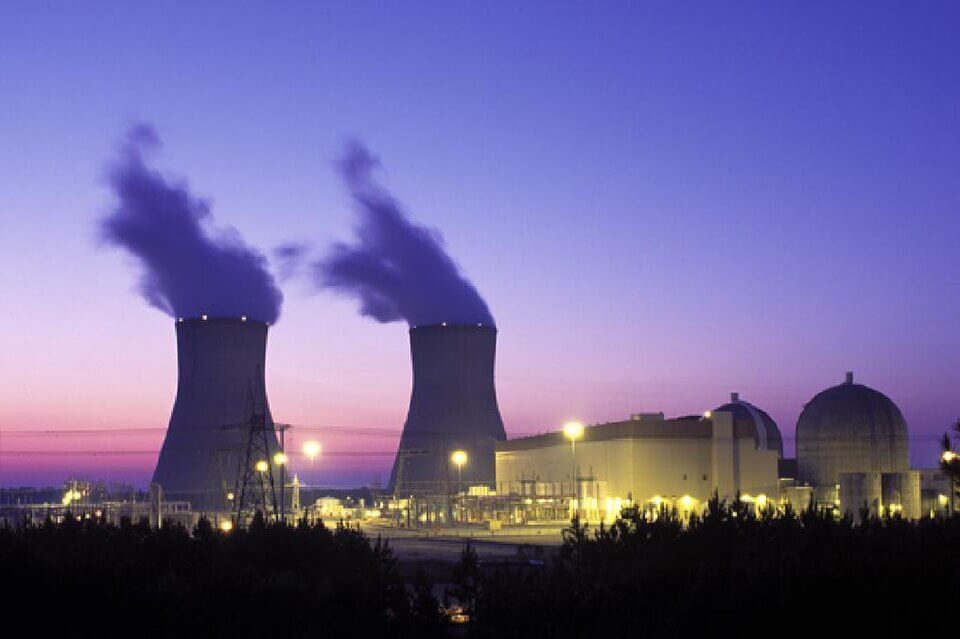
    5. https://en.wikipedia.org/wiki/Thorium
    6. https://de.wikipedia.org/wiki/Forschungszentrum_J%C3%BClich
    7. https://en.wikipedia.org/wiki/Rudolf_Schulten
    8. https://en.wikipedia.org/wiki/Pebble_bed_reactor
    9. https://en.wikipedia.org/wiki/Aircraft_Reactor_Experiment
    10. https://en.wikipedia.org/wiki/Aircraft_Nuclear_Propulsion
    11. https://www.nextbigfuture.com/2017/12/china-spending-us3-3-billion-on-molten-salt-nuclear-reactors-for-faster-aircraft-carriers-and-in-flying-drones.html
    12. https://regulatorwatch.com/reported_elsewhere/china-spending-us3-3-billion-on-molten-salt-nuclear-reactors-for-faster-aircraft-carriers-and-in-flying-drones/
    13. https://www.nuclearaustralia.org.au/wp-content/uploads/2021/04/Mark_Ho_20210512.pdf
    14. https://samofar.eu/wp-content/uploads/2019/07/2019-TMSR-SAMOFAR%E2%80%94%E2%80%94Yang-ZOU-PDF-version-1.pdf
    15. https://threeconsulting.com/mt-content/uploads/2021/04/chinatmsr2018.pdf
    https://www.gen-4.org/gif/upload/docs/application/pdf/2017-05/03_hongjie_xu_china.pdf
    16. https://msrworkshop.ornl.gov/wp-content/uploads/2018/04/MSR2016-day1-15-Hongjie-Xu-Update-on-SINAP-TMSR-Research.pdf
    17. https://tcw15.mit.edu/sites/default/files/documents/TMSRstatus-liuwei.pdf
    18. https://paz.de/anerkennungszahlung.html
    19. https://www.patreon.com/TheThoriumNetwork
    20. https://help.duckduckgo.com/results/translation/

    #PreußischeAllgemeineZeitung #PAZ #ShanghaiInstituteofAppliedPhysics #SINAP #ThoriumMoltenSalt #MoltenSaltFissionEnergyTechnology #MSFET #Thorium

  • Asia leads the way for our Carbon Free Future

    Author Jeremiah Josey

    With so many nuclear reactors planned (a.k.a. fission energy machines), it’s an obvious outcome for the world in general: clean, green, safe energy production for the most populous region on earth. That means for Asia: clean air, clean water, and clean lives, with… low cost, safe energy. Production efficiency rates in the region will sore. Innovation will eclipse anything we’ve seen before. The environment will become a green wilderness again (remember too China reclaims over 2,000 square km of desert each year). This is the next revolution, after the Industrial, after the Information. It’s the Energy Revolution. And it’s very exciting to be part of it.

    Remember, we all breath the same air.

    Jeremiah Josey
    Founder and CEO
    TheThoriumNetwork.com

    #EnergyRevolution #greenenergy # #energy #innovation #thorium #moltensaltfissiontechnology

  • China leading the way in Thorium Molten Salt Technology Development

    China leading the way in Thorium Molten Salt Technology Development

    Post by Jeremiah Josey and the team at The Thorium Network

    More than 50 years since the MSRE ended in Oak Ridge, Tennessee, USA, another starts up. This time in China. Whilst Oak Ridge’s machine was 8 MWt, China’s is 2MWt. This article by Gernot Kramper was published in the German Star online magazine on September 20, 2021. Well done China.

    https://www.stern.de/digital/technik/sicher–klein-und-billig—china-baut-den-ersten-thorium-reaktor–30632008.html