Category: Thorium

  • The Chinese Thorium Programme: Building a New Fission Industry

    The Chinese Thorium Programme: Building a New Fission Industry

    By Jeremiah Josey 7 October 2026

    China is turning Thorium from a geological resource into an industrial and engineering programme—and energy for their future. Their researchers have built and operated the world’s first Thorium-loaded Liquid Fission machine, demonstrated Thorium-to-uranium conversion inside an operating system, developed domestic alloys for high-temperature molten-salt service and is in advanced planning for larger demonstration projects.

    This is a major advance in Fission technology. It brings together work that is often discussed separately—fuel, reactors, materials, mining and manufacturing—into a national programme with a clear direction: use Chinese science and industry to develop a new generation of Liquid Fission Thorium Burners—for China. China does not intend to export this technology, particularly to the West.

    China’s achievement is much more than this single machine in the desert. It is an industrial pathway: from laboratory research, to a working experimental reactor, to demonstration-scale systems, supported by domestic resources and supply chains. And it started decades ago when China first went into rare earth production—because that’s where the Thorium comes from.

    From research programme to operating reactor

    China’s Thorium Molten Salt Reactor programme began publicly in 2011 under the Chinese Academy of Sciences. Its principal research organisation is the Shanghai Institute of Applied Physics, or SINAP. The programme has developed reactor designs, fuel-salt expertise, materials, components and the specialist facilities needed to test them.

    The flagship experimental system is TMSR-LF1, located near Wuwei in Gansu Province. It is a 2-megawatt-thermal (MWt) liquid-fuel molten-salt machine. It achieved first criticality on 11 October 2023, reached full power in June 2024, and operated with Thorium fuel after Thorium was added in October 2024. In November 2025, Chinese researchers announced the first successful Thorium-to-uranium conversion in an operating molten-salt reactor. This is the first time on Earth that this has happened. Even at Oak Ridge, they processed the Thorium at Savannah River, several hundred miles away—and spent millions of dollars—to make it suitable for fuel at Oak Ridge. China has now just “popped” it in, and it’s working fine, just as the physics says it should.

    These are concrete engineering milestones. TMSR-LF1 has moved the Thorium fuel cycle from calculations and laboratory experiments into a working reactor environment. Chinese researchers have been able to examine fuel salt, operate the system at power and collect experimental data from Thorium loaded into the reactor. The achievement gives China an important platform for developing the next stages of its programme.

    [world-nuclear-news.org]

    The burner uses an initial fissile fuel to sustain fission. Just as the Canadians apply a similar principle to U-238 in their CANDU machines.Thorium-232 is fertile: after absorbing a neutron, it transforms through intermediate steps into uranium-233, which burns in the reactor. The Thorium-to-uranium conversion demonstrated at TMSR-LF1 is therefore a major milestone in the fuel cycle, as well as in machine operation.

    TMSR-LF1 is a research and technology platform. Its purpose is to prove and study the processes needed for larger systems. It has already done that job at a significant level: it is operating, it has incorporated Thorium and its team has reported conversion data from the Thorium-uranium cycle.

    The next stage: larger demonstration systems

    SINAP has stated that its next goal is a 100-MWt Thorium molten-salt demonstration project, with demonstration applications targeted by 2035. This is a major planned step up from the 2-MWt experimental reactor. It is intended to carry the programme forward from experimental operation towards larger-scale engineering and industrial use.

    Remember, in 1969 at Oak Ridge, once they completed testing their ~8 MW machine—just as China has done now—by 1972 they had designed a 1,000 MWe full-scale commercial machine. They were ready to scale immediately.

    Earlier project reporting also described a proposed 60-MWt system designed to produce 10 megawatts of electricity, with a target around 2030. These figures refer to different reported project plans and stages in the development pathway. The central point is that China is moving from a small experimental machine towards larger systems designed to demonstrate practical energy applications.

    [IEEE]

    The potential uses extend beyond electricity. High-temperature Liquid Fission systems can provide industrial heat, process steam and heat for hydrogen production and other applications. Their high operating temperatures also make them relevant to energy-intensive industries that currently rely on large quantities of fossil-fuel heat. China has identified integration with chemical production, energy storage, hydrogen and other industrial processes as part of the wider TMSR vision.

    [cas.cn]

    Development stageChinese programme milestone
    Research and designThorium Liquid Fission programme launched in 2011
    Experimental machineTMSR-LF1 reached first criticality in October 2023
    Full-power operationTMSR-LF1 reached 2-MWt full power in June 2024
    Thorium operationThorium was added to the burner in October 2024
    Fuel-cycle progressThorium-to-uranium conversion announced in November 2025
    Demonstration pathwaySINAP has set a 100-MWt demonstration goal for 2035

    Liquid Fission Thorium Burners are important

    A Liquid Fission Thorium Burner uses molten salt as the reactor’s working fluid. In a liquid-fuel design, Fission fuel is dissolved in the salt, which circulates through the reactor system and carries heat to the next stage of the plant.

    That arrangement offers a different engineering pathway from conventional solid-fuel reactors. Liquid-fuel systems can be designed for continuous fuel management—that means total fuel burn up, high-temperature heat production and operation at comparatively low pressure. These features open up possibilities for power generation and industrial heat, including applications in inland regions where there is little water. Liquid Fission Thorium Burners do not need any water.

    China’s programme is developing the machine and fuel-cycle technology together. The operating TMSR-LF1 provides a place to test real fuel salt, materials and operating procedures as an integrated system. Its results can inform the larger demonstration projects now being pursued.

    China’s Thorium resources: turning mine waste into an asset

    China’s resource position gives the programme an additional strategic dimension. Thorium occurs in rare-earth-bearing minerals, including monazite, and can be found in material produced during mining and processing. This means that the country’s established rare-earth industry also provides a long-term Thorium resource.

    The most prominent example is Bayan Obo, in Inner Mongolia. Bayan Obo is a major rare-earth, iron and niobium district, and Thorium is present in some of its ores and minerals. Measured quantities of Thorium give an estimated 10,000 years of energy supply from that deposit alone. For decades, mining there has focused on the resources with immediate commercial value. The Thorium associated with the deposit and its waste streams has drawn renewed attention as China develops a practical route for using Thorium in Fission systems.

    A national geological survey completed in 2020 identified 233 Thorium-rich regions across China. Reporting on the survey highlighted the potential of Thorium-bearing tailings at Bayan Obo and described an estimate of up to one million tonnes associated with the mining complex. China has ample local energy reserves.

    A 2025 [study] of Bayan Obo examined how Thorium occurs across the deposit.

    [ScienceDirect]

    This is a compelling industrial proposition: a material treated as a by-product or residue becoming a feedstock for advanced Fission systems. As China develops its Liquid Fission Thorium Burner technology, the value of characterising and recovering Thorium from its mining and processing streams rises with it.

    Geological resources, stored material and usable fuel

    China’s “Thorium stockpile” refers to several different things: Thorium-bearing ore in the ground, Thorium in mine tailings, monazite concentrates, separated Thorium compounds or material prepared to a reactor’s fuel specifications. These categories describe different points in the supply chain.

    China’s large resource estimates point to the scale of its geological opportunity. The operational reactor programme provides the technology pathway that make those resources useful. Over time, development of separation, conversion and fuel-manufacturing capabilities could connect resource assessments to a domestic fuel supply.

    China is combining a large domestic resource potential, decades of rare-earth mining and a programme now demonstrating Thorium conversion in an operating machine.

    India and 10,000-tonnes for China

    India has substantial Thorium-bearing mineral resources, mainly in monazite-rich coastal sands, and has pursued the development of a Thorium fuel cycle for decades. Between roughly 2002 and 2012, China obtained 10,000 tonnes of Thorium from India, further boosting its reserves.

    Rare earths: a long-running connection to Thorium

    Thorium and rare-earth production are connected through geology. Most rare-earth ores contain Thorium, and processing them creates Thorium-bearing concentrates. China’s rare-earth industry has operated at scale for decades, generating extensive experience in mining, mineral separation and chemical processing.

    This history gives China a valuable industrial base for investigating how Thorium can be recovered from existing mineral streams. It also means that resource assessment can draw on a large, established mining sector rather than starting from scratch with isolated Thorium mines.

    The next opportunity is to connect those capabilities more directly to the Chinese Thorium programme: characterise the Thorium-bearing material, develop efficient recovery and refining processes, and build a domestic route from mineral resource to reactor fuel. The more fully this supply chain develops, the more closely China’s rare-earth strengths and advanced Fission programme can reinforce one another.

    GH3535: China’s alloy for molten-salt service

    A Liquid Fission Thorium Burner depends on materials that can operate for long periods at high temperatures while in contact with molten salts. The reactor’s alloy must retain strength and perform reliably in its intended service. Developing such materials is a core part of building the technology.

    The historic reference material for molten fluoride salt systems is Hastelloy N, developed at Oak Ridge National Laboratory in the United States. China’s answer is GH3535, similar to Hastelloy, a nickel-molybdenum-chromium alloy developed for molten-salt reactor applications.

    GH3535 was co-developed by the Institute of Metal Research (IMR) and SINAP of the Chinese Academy of Sciences, and is produced in China by Fushun Special Steel. It is the Chinese programme’s domestic counterpart to Hastelloy N: an alloy designed for the same broad class of high-temperature molten-fluoride service and integrated into China’s own reactor development and manufacturing base.

    This matters strategically as well as technically. A domestic alloy gives China a materials platform that can be manufactured, tested and improved within its own industrial system. It supports the development of reactor components without relying on a foreign alloy supply chain and allows the research programme to tailor materials work to its own reactor designs.

    SINAP, UNSW and ANSTO collaboration

    The international research collaboration involved SINAP, the University of New South Wales (UNSW) and ANSTO. ANSTO is the Australian Nuclear Science and Technology Organisation. The Chinese partner was SINAP.

    The collaboration investigated how GH3535 and its welds respond to molten-salt exposure. Researchers examined the alloy’s microstructure and corrosion behaviour after exposure to fluoride salt at high temperature. ANSTO contributed specialist materials research and characterisation, helping the team understand how features such as grain structure and welding influence corrosion performance.

    [ansto.gov.au]

    That work adds to the engineering foundation of China’s programme. Reactor materials are evaluated as manufactured and welded components operating in salt under demanding conditions. The SINAP–UNSW–ANSTO collaboration produced knowledge in precisely this area.

    GH3535 therefore is part of China’s effort to establish its own molten-salt materials capability: alloy development, industrial production, welding knowledge and international research on performance. Together, these capabilities support China’s ability to design and build Liquid Fission Thorium Burner systems around a domestic technology and manufacturing base.

    A national supply chain, not just a burner

    China’s TMSR programme draws strength from the way its pieces fit together. SINAP leads research and reactor development. Chinese institutions and manufacturers contribute equipment and materials. Rare-earth mining offers a substantial potential Thorium resource. Domestic alloy production supports reactor construction. Experimental operation supplies a platform for learning and improvement.

    That integration is one of the programme’s defining features. A successful advanced Fission industry needs more than a working reactor design. It needs people trained to operate it, qualified materials, chemical-processing expertise, fuel production, testing facilities and industrial partners capable of producing components at scale.

    China has stated that the Thorium programme has established a largely domestic technology and industrial chain, and that it intends to work with energy companies to advance engineering application. Its experience operating TMSR-LF1 gives those partners a real technical platform around which to build.

    [cas.cn]

    What China’s progress means

    China has established itself as the first country to operate a molten-salt reactor loaded with Thorium and report successful Thorium-to-uranium conversion in that system. It has a rapidly growing body of practical operating experience, a domestic alloy designed for molten-salt service, a large rare-earth industry and plans to get bigger.

    The importance of the programme lies in the combination:

    • Burner operation: TMSR-LF1 has reached full power and operated with Thorium.
    • Fuel-cycle progress: Researchers have reported Thorium-to-uranium conversion in an operating system.
    • Materials capability: China has developed and manufactures GH3535 for molten-salt applications.
    • Resource potential: Thorium occurs in domestic deposits and in material associated with rare-earth mining.
    • Industrial direction: China is targeting larger demonstration systems and applications beyond electricity.

    Each achievement strengthens the next. Reactor operation creates experience. Fuel-cycle research builds on that operation. Materials research supports longer and larger runs. Resource and manufacturing capabilities provide the basis for an industrial supply chain.

    China’s Thorium programme is a serious national effort to build a new Fission technology from the ground up. The country has moved from a research commitment in 2011 to an operating Thorium-loaded experimental reactor, published conversion results and a stated pathway towards larger demonstration systems. That is a substantial achievement—and a strong foundation for the next phase of Liquid Fission Thorium Burner development.

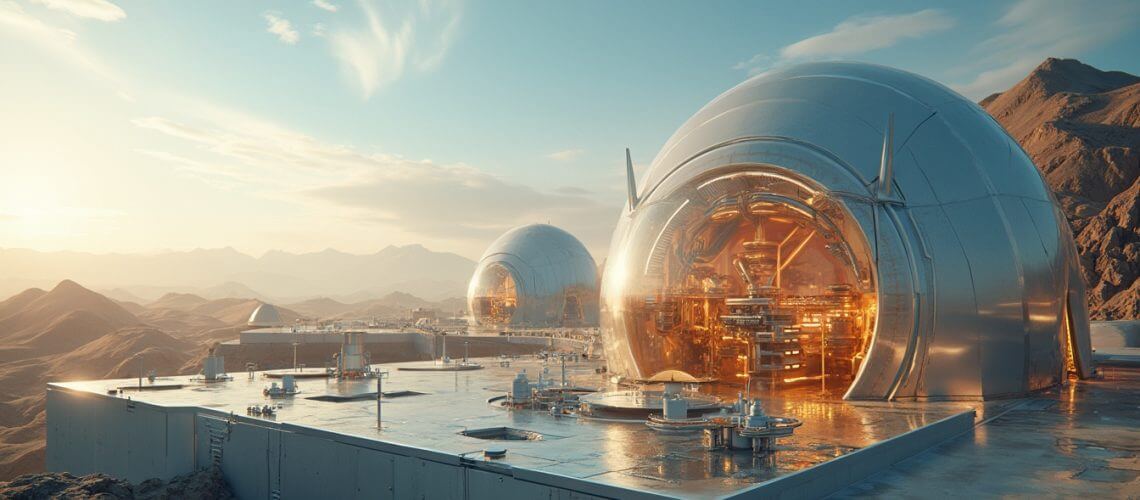
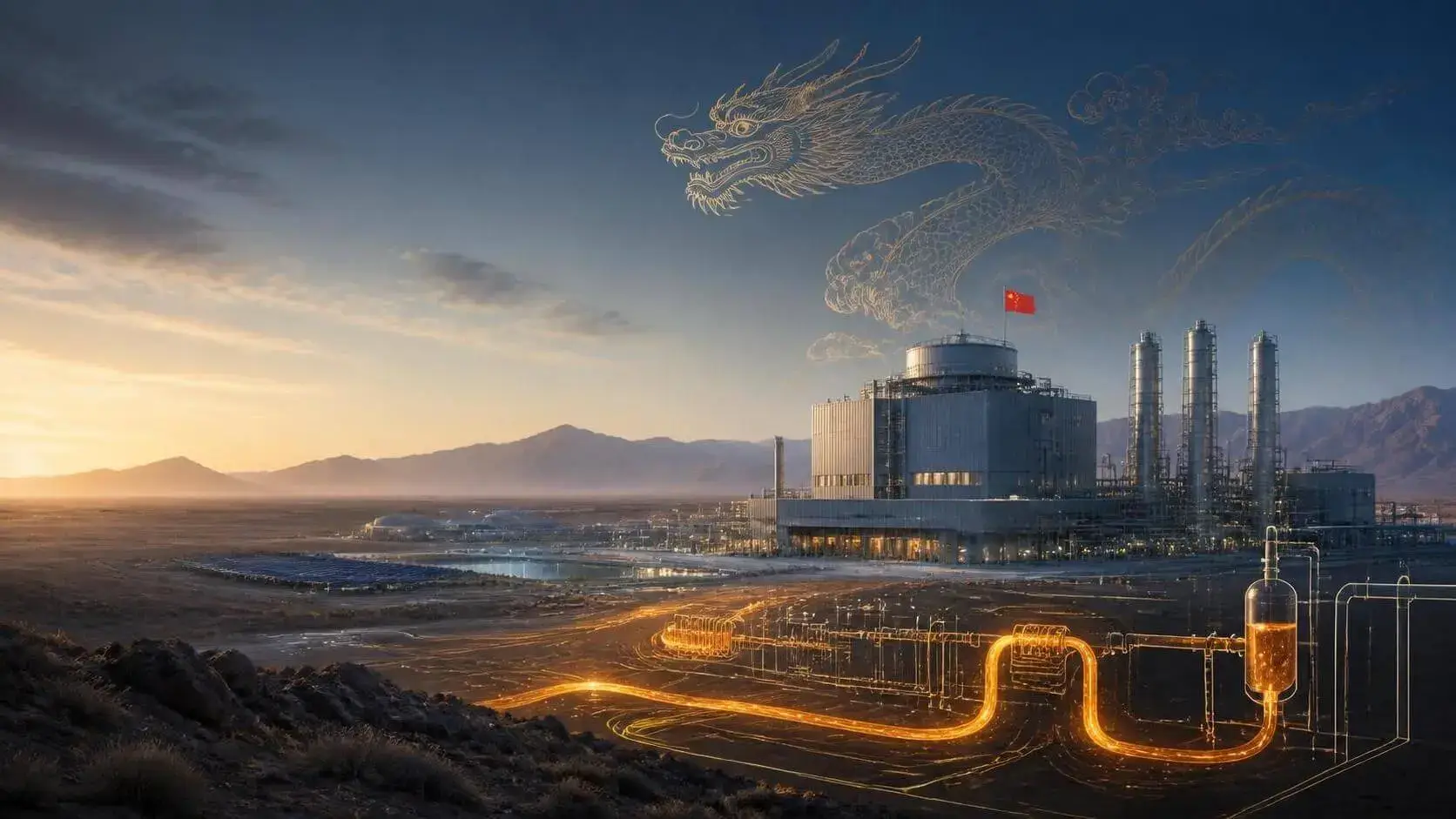
    Chinese Gobi Desert Molten Salt Industrial Facility
    Gobi Desert Molten Salt Installation

    More from The Thorium Network on China

    Reports on China’s Thorium Program

    The following is a selection of informative reports we’ve gathered on China’s Thorium program. It is not exhaustive, but it offers an overview of what is widely regarded as the world’s most advanced, best-staffed, and best-funded Thorium program.

    Links and references relevant to China’s Thorium programme

    1. Shanghai Institute of Applied Physics (SINAP) — China’s lead research institute for the TMSR programme.
      https://english.sinap.cas.cn/
    2. China’s first Thorium-to-uranium conversion announcement — Science and Technology Daily reports the 2025 milestone, the Gansu experimental reactor and the programme’s 2035 demonstration target. (Chinese)
      https://www.stdaily.com/web/gdxw/2025-11/01/content\_424807.html
    3. Chinese Academy of Sciences coverage of the conversion milestone — Xinhua’s report on the TMSR-LF1 result and China’s Thorium research programme. (Chinese)
      https://www.cas.cn/cm/202511/t20251103\_5087046.shtml
    4. 2026 report on the Thorium-to-uranium result — Xinhua coverage of the achievement’s selection among China’s 2025 top scientific advances. (Chinese)
      https://finance.sina.cn/stock/jdts/2026-03-28/detail-inhspwhs1104481.d.html
    5. Development of GH3535 Alloy for the Thorium Molten Salt Reactor — Research paper on the Chinese alloy used in the programme’s molten-salt materials development.
      https://www.researchgate.net/publication/324580866\_Development\_of\_GH3535\_Alloy\_for\_Thorium\_Molten\_Salt\_Reactor
    6. Mark Ho presentation hosted by Nuclear Australia — Background on China’s Thorium molten-salt reactor development.
      https://www.nuclearaustralia.org.au/wp-content/uploads/2021/04/Mark\_Ho\_20210512.pdf
    7. “Research Progress of TMSR Design” — Yang Zou’s 2019 presentation on China’s TMSR design work.
      http://samofar.eu/wp-content/uploads/2019/07/2019-TMSR-SAMOFAR%E2%80%94%E2%80%94Yang-ZOU-PDF-version-1.pdf
    8. “Progress of TMSR in China” — Hongjie Xu’s 2018 programme presentation.
      https://threeconsulting.com/mt-content/uploads/2021/04/chinatmsr2018.pdf
    9. China’s TMSR research presentation to the Generation IV International Forum — Overview of the Chinese programme and its technical direction.
      https://www.gen-4.org/gif/upload/docs/application/pdf/2017-05/03\_hongjie\_xu\_china.pdf
    10. “Update on SINAP TMSR Research” — Research update presented at the Oak Ridge National Laboratory molten-salt reactor workshop.
      https://msrworkshop.ornl.gov/wp-content/uploads/2018/04/MSR2016-day1-15-Hongjie-Xu-Update-on-SINAP-TMSR-Research.pdf
    11. “Sensitivity/uncertainty comparison and similarity analysis between TMSR-LF1 and MSR models” — Technical study of the Chinese experimental reactor’s modelling and design validation.
      https://www.sciencedirect.com/science/article/abs/pii/S0149197020300482?via%3Dihub
    12. “Burnup optimization of once-through molten salt reactors using enriched uranium and Thorium” — Research on Thorium fuel-cycle performance in molten-salt reactor models.
      https://link.springer.com/article/10.1007/s41365-022-00995-2
    13. TMSR-LF1 seismic analysis — Engineering study of the experimental reactor’s plant structure.
      https://onlinelibrary.wiley.com/doi/epdf/10.1155/2024/1672269
    14. China moves closer to completion of the world’s first Thorium reactor — 2021 background on the experimental reactor’s construction plans; useful as historical context. ans.org
      https://www.ans.org/news/article-3091/china-moves-closer-to-completion-of-worlds-first-thorium-reactor/
  • China Is Building the Nuclear Future

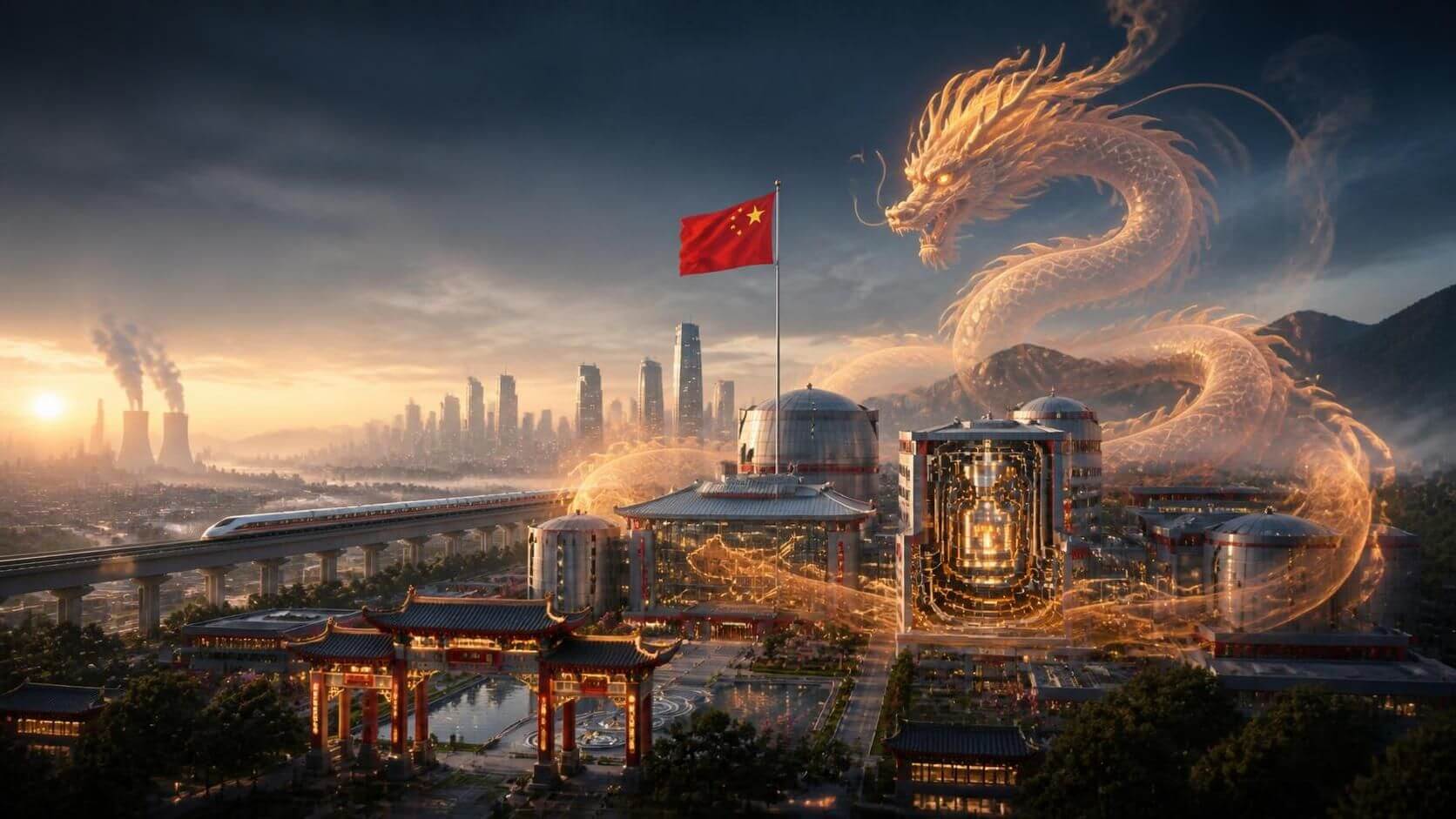
    China Is Building the Nuclear Future

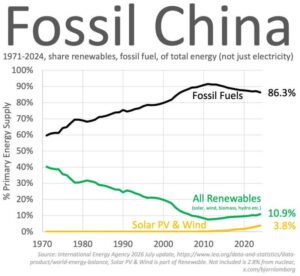
    Famous climate researcher and speaker Bjorn Lomborg made a good point recently: China remains a fossil-fuel-powered industrial economy, just as the rest of the world does. But that is only half the story.

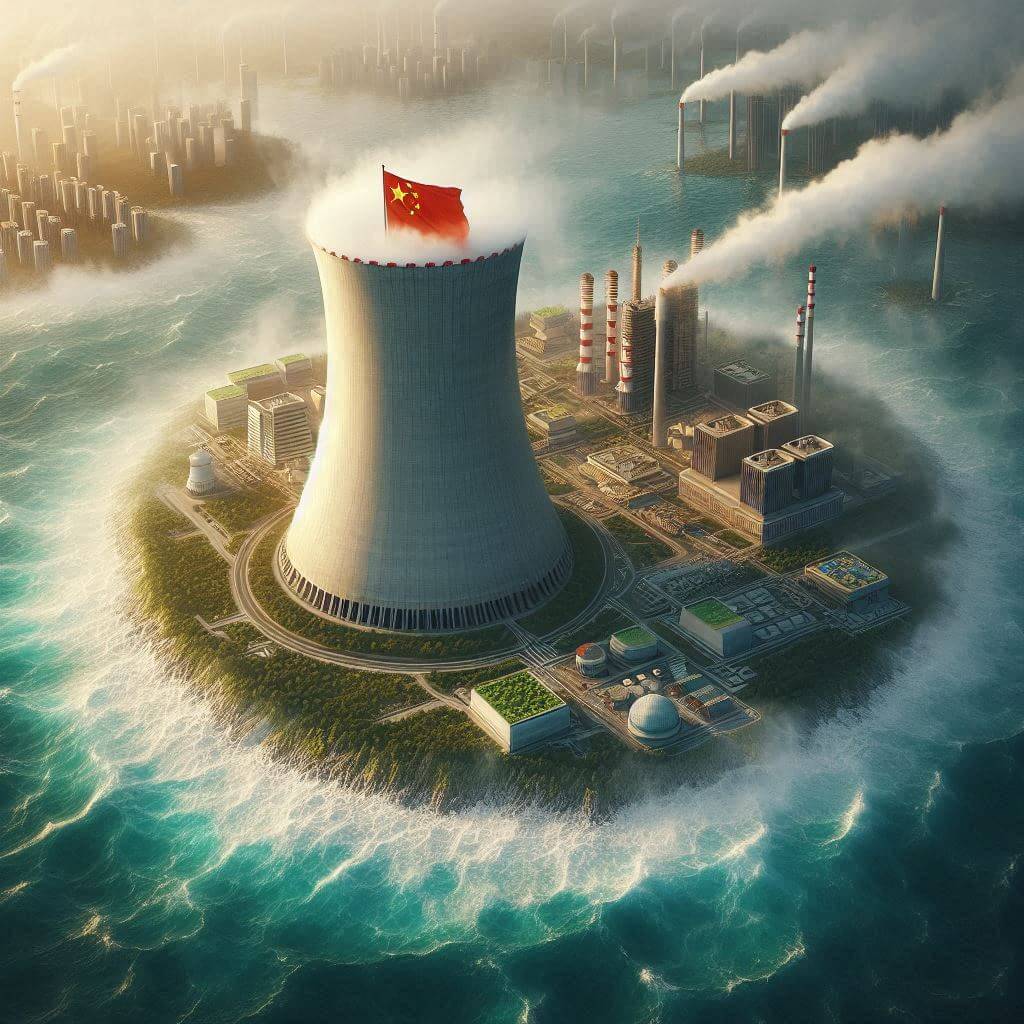
    China Moving Off Fossil Fuels with The Thorium Network

    The equally important story is the speed at which China is adding nuclear capacity and positioning itself across the entire advanced-nuclear technology landscape.

    China is not merely building conventional reactors. It is developing a broad portfolio that includes:

    – Hualong One and CAP-series pressurised-water reactors

    – High-temperature gas-cooled reactors

    – Sodium-cooled fast reactors

    – Liquid Fission Burners (aka Molten-salt reactors)

    – Thorium-fuel-cycle research

    – Closed-fuel-cycle and reprocessing technologies

    – Nuclear heat, industrial steam, hydrogen, and other non-electric applications

    China’s conventional nuclear fleet has expanded dramatically. By early 2026, China was operating approximately 58 reactors with about 56 GW of installed capacity, while more than 30 additional reactors were under construction. China has also approved ten or more new reactors annually for several consecutive years.

    This is not a theoretical program. In December 2023, China’s HTR-PM at Shidao Bay entered commercial operation. It is a high-temperature gas-cooled, pebble-bed reactor generally classified as a Generation IV system. The plant combines two reactor modules with one turbine and is designed to provide both electricity and high-temperature process heat. Follow-up work has included district heating and industrial-steam applications.

    China is also advancing sodium-cooled fast reactors. The CFR-600 project at Xiapu represents a major step toward fast-spectrum reactors and a potential closed fuel cycle. The CFR-600 is promising whilst still at demonstration-stage technology. Its initial fuel supply has involved Russian fast breeder expert cooperation.

    In the Liquid Fission Thorium Burner space is China’s TMSR-LF1 at Wuwei in Gansu Province.

    This is a 2-MW-thermal Liquid Fission experimental burner developed by the Shanghai Institute of Applied Physics. It achieved first criticality on October 11, 2023, and reached full power in June 2024. In October 2024, Thorium was added to the operating liquid fuel. In November 2025, the Chinese research team announced that it had obtained experimental evidence of Thorium-to-uranium conversion inside the reactor. How many units do they have now, they are not saying.

    China’s next stated step is a 100-MW-thermal demonstration project, with demonstration applications targeted for 2035 and commercialisation by 2040. Expect China to shorten those timelines dramatically. China appears to be the only country currently operating a Liquid Fission molten-salt burner that has incorporated Thorium and reported Thorium-to-uranium conversion success.

    This is why Jeremiah Josey’s September 2023 presentation at the CLSA/CITIC Securities investors forum in Hong Kong was so prescient. Speaking to a large Chinese investment audience, he argued that China’s nuclear opportunity extended beyond the construction of today’s pressurised-water reactors. The presentation placed China’s reactor buildout, advanced nuclear research, fuel-cycle strategy, and Liquid Fission Thorium development within one investment and industrial framework. The event materials describe an audience of approximately 1,600 investors and featured the thesis that China was moving from imported and conventional designs toward technological self-reliance and advanced reactor systems.

    You can see the the full presentation here:

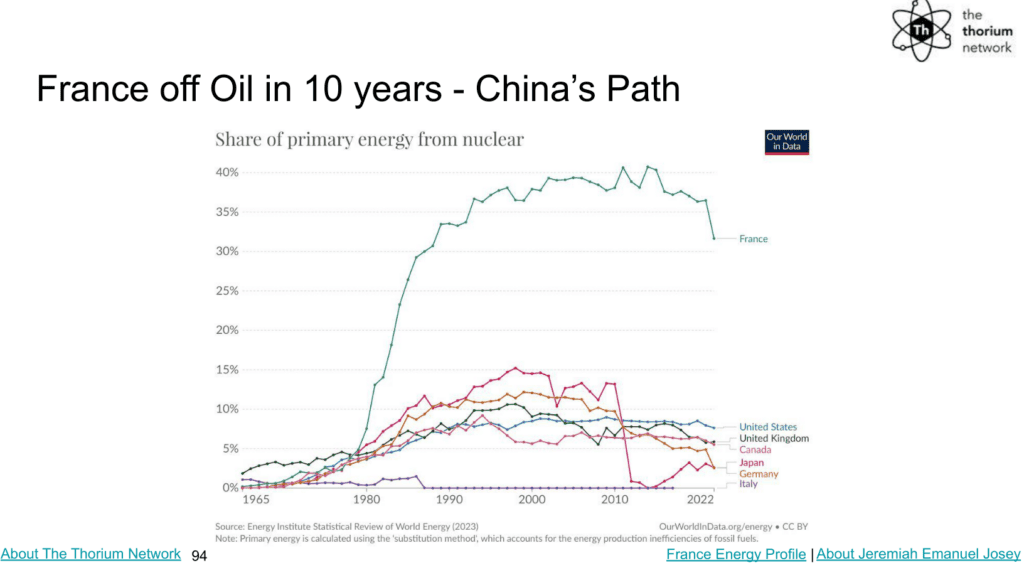
    The comparison with France is also important. China is not the first nation to demonstrate that a large nuclear buildout can transform an electricity system. France carried out its own exceptionally rapid nuclear expansion during the 1970s and 1980s, weaning it’s self entirely off fossil fuels.

    Fossil fuel to France is what wind and solar are to everyone else: a fringe power supply.

    The French example proves that a country can replace a large share of fossil electricity within a decade when nuclear construction is treated as a national infrastructure program.

    France goes nuclear and comes off fossil fuels The Thorium Network

    China is now pursuing that same basic logic on a much larger industrial scale—but with a broader technology portfolio. France standardised around pressurised-water reactors – their own incredible safe design.

    China is building—also their own desgin—pressurised-water reactors at scale while also developing high-temperature gas reactors, fast reactors, molten-salt systems, and Thorium-cycle technologies.

    The conclusion is that China has created the world’s most serious national test bed for nuclear scale-up. And they are doing it in earnest.

    China is simultaneously:

    1. Building conventional nuclear reactors faster than any other major country.

    2. Operating the first commercial Generation IV reactor.

    3. Developing fast reactors and fuel-cycle infrastructure.

    4. Operating Liquid Fission machines.

    5. Re-proving the conversion of Thorium into uranium-233.

    6. Planning larger demonstrations for industrial heat, hydrogen, and electricity.

    7. Combining state financing, domestic manufacturing, centralized planning, and a very large internal energy market.

    China may still burn enormous quantities of coal, oil, and gas today. That does not make its nuclear strategy irrelevant. It makes the strategy more important. China’s immense energy demand is precisely why it is pursuing every scalable source of reliable power—including coal, renewables, hydro, nuclear, and advanced nuclear technologies.

    The investment and technological question is therefore not whether China is already “green.”

    It is whether China’s combination of nuclear construction speed, industrial capacity, advanced-reactor research, and long-term energy demand will allow it to become the first country to commercialize a new generation of nuclear systems at meaningful scale.

    That is the question Jeremiah Josey put before Chinese investors in Hong Kong in 2023. The subsequent progress of HTR-PM and TMSR-LF1 clearly demonstrate that the question was not misplaced.

    We think it’s a moot point.

    Read the full 2023 post on our website

    Read Bjorn’s post

  • The Long Game: Why Liquid Fission Thorium is the Best Investment for the 21st Century

    The Long Game: Why Liquid Fission Thorium is the Best Investment for the 21st Century

    The Imminent Shift in Global Energy Investment

    Based on the insights of Jeremiah Josey, founder of The Thorium Network

    The world stands at a pivotal moment in energy history. As the limitations of fossil fuels become increasingly apparent and the urgency of climate change accelerates, investors are searching for solutions that offer both scale and sustainability. The most compelling opportunity emerging from this convergence of challenges and opportunities is not in the familiar realms of solar or wind, but in the realm of Liquid Fission Thorium Burners—a technology that promises to transform the energy landscape in ways that are both profound and enduring.

    This report examines the dual nature of this investment opportunity: the short-term momentum driven by existing infrastructure and market dynamics, and the long-term generational wealth that can be captured through strategic positioning in the emerging Thorium-based energy ecosystem. By understanding both time horizons, investors can make informed decisions that position them at the forefront of the next energy revolution.

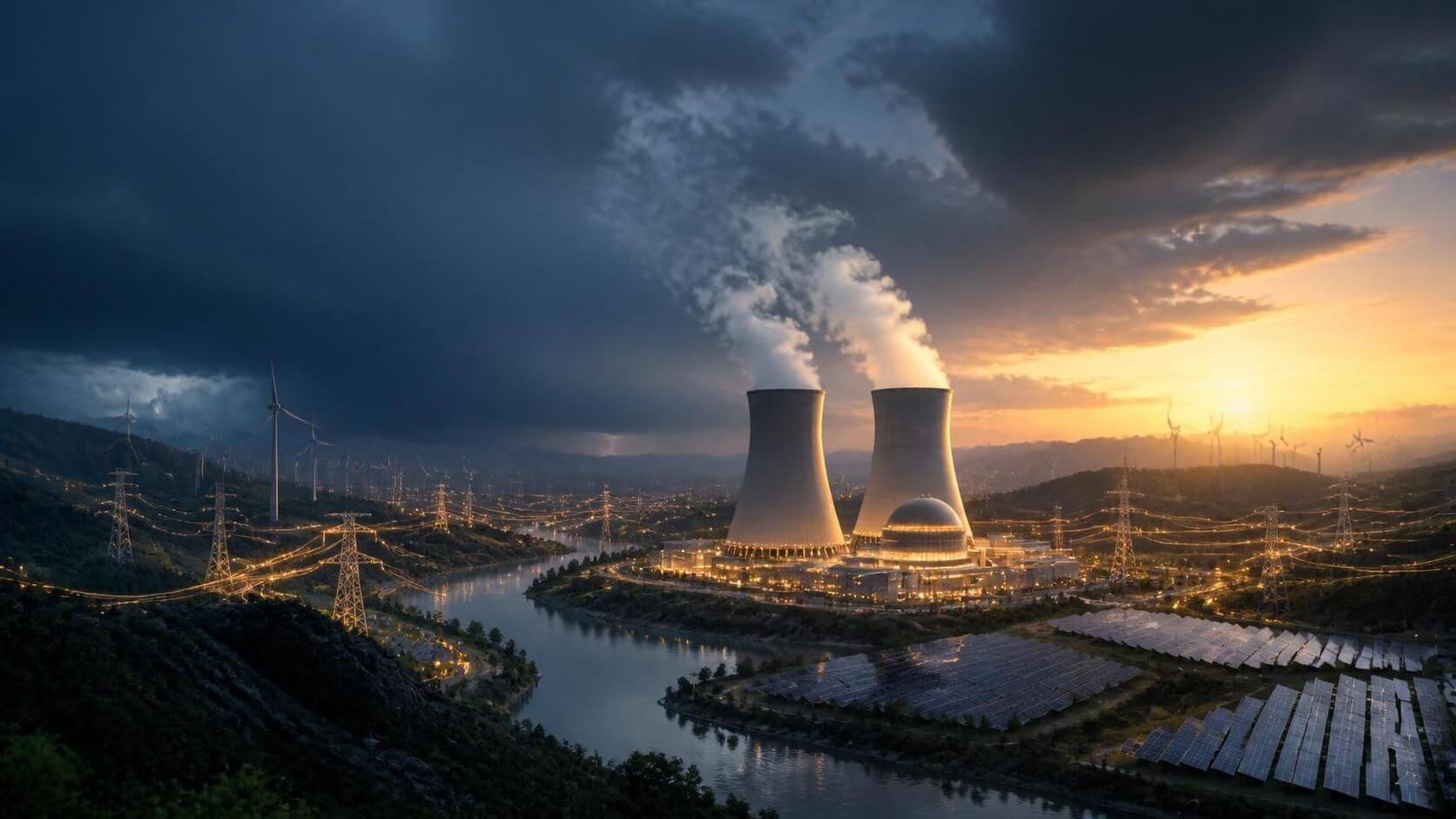
    Liquid Fission Thorium Burner Quietly Powering a Modern City

    The Short-Term Reality: Momentum and Market Dynamics

    The foundation of the current energy investment landscape is being shaped by several powerful forces. The global demand for reliable, 24/7 baseload power is surging, driven primarily by the insatiable appetite of artificial intelligence and data centers. This demand creates a clear and immediate market need that existing energy sources struggle to meet. While renewable energy sources like solar and wind have made significant strides, they are inherently intermittent and require massive storage solutions to provide consistent power. This limitation makes them less suitable for the high-demand, high-reliability applications that define the modern digital economy.

    In this context, Fission stands out as the only scalable, zero-carbon solution capable of meeting these demands. The market is already responding to this reality. The Liquid Fission Thorium Burner technology, while still in its developmental stages, is benefiting from the momentum of the broader Fission energy sector. This momentum is driven by several key factors:

    1. Energy Security and Geopolitical Stability: As nations seek to reduce their dependence on volatile fossil fuel markets, the ability to generate energy from a domestically controlled fuel source becomes a strategic imperative. This has led to increased government support and investment in Fission technologies, creating a favorable policy environment.
    2. Supply Chain Dynamics: The global supply of conventional uranium is constrained by years of underinvestment in mining. This structural deficit creates upward pressure on uranium prices, which in turn drives demand for alternative fuel cycles like Thorium. The Liquid Fission Thorium Burner offers a path to leverage this demand by utilising a fuel cycle that is more abundant and potentially more secure.
    3. Market Capitalisation and Valuation: The existing Fission energy market, including companies involved in fuel production, enrichment, and reactor operations, has seen significant capital appreciation. This creates a positive feedback loop where increased investment attracts more capital, further fuelling growth.

    This short-term momentum provides a critical window of opportunity. It validates the fundamental need for reliable, clean energy and creates a market environment where the benefits of Fission technology are being recognised and rewarded. For investors, this means that the Liquid Fission Thorium Burner is not just a speculative venture, but an investment in a market that is already demonstrating strong demand and favorable economic conditions.

    Liquid Fission Thorium Energy is Safe

    The Long-Term Vision: Generational Wealth and Technological Leadership

    While the short-term momentum is significant, the true value of the Liquid Fission Thorium Burner lies in its long-term potential. This technology represents a fundamental shift in how we generate and manage energy, with implications that extend far beyond simple electricity production. The long-term vision is one of generational wealth, built on the foundation of technological leadership and strategic advantage.

    The Liquid Fission Thorium Burner is not merely an incremental improvement on existing Fission technology. It is a paradigm shift. By utilising Thorium as a fuel source, this technology offers several key advantages that position it to become the cornerstone of future energy systems:

    1. Inherent Safety and Proliferation Resistance: The Liquid Fission Thorium Burner operates on a fundamentally different principle than traditional solid-fuel reactors. Its liquid fuel design allows for passive safety features, meaning that in the event of a malfunction, the reaction naturally shuts down without the need for external intervention. This inherent safety reduces the risk of catastrophic accidents and eliminates the need for complex, expensive safety systems. Furthermore, the Thorium fuel cycle produces minimal amounts of long-lived radioactive waste and is inherently resistant to nuclear weapons proliferation, making it a more secure and politically viable option.
    2. High Energy Density and Fuel Efficiency: Thorium is a remarkably energy-dense fuel. A single ton of Thorium can produce as much energy as several thousand tons of coal or millions of gallons of oil. This high energy density translates into a significant reduction in fuel transportation and storage requirements, as well as a lower environmental footprint. The Liquid Fission Thorium Burner can also be designed to efficiently consume existing nuclear waste, effectively turning a liability into a valuable resource.
    3. Scalability and Global Applicability: The Liquid Fission Thorium Burner is designed to be scalable, from small, modular units suitable for remote communities to large, centralised power plants. This scalability allows for flexible deployment in a wide range of environments, from developing nations seeking to build their energy infrastructure to industrialised nations looking to decarbonize their grids. The technology’s ability to operate in a wide range of climates and conditions makes it a truly global solution.
    4. Economic Viability and Long-Term Returns: The combination of inherent safety, high fuel efficiency, and low operational costs creates a highly attractive economic model. The Liquid Fission Thorium Burner can generate significant returns on investment over its long operational life, often exceeding 50 years. This long-term stability provides a reliable source of income for investors and a predictable source of energy for consumers.

    The long-term vision is not just about generating electricity. It is about creating a new industrial paradigm. The Liquid Fission Thorium Burner has the potential to revolutionise not only the energy sector but also industries that rely on high-temperature process heat, such as hydrogen production, desalination, and industrial manufacturing. By providing a reliable, zero-carbon source of high-temperature heat, this technology can enable the decarbonization of entire sectors of the global economy.

    The Convergence of Short-Term and Long-Term Opportunities

    The true power of the Liquid Fission Thorium Burner lies in the convergence of short-term momentum and long-term vision. The current market dynamics create a favorable environment for the development and deployment of this technology. The demand for reliable, clean energy is real and growing, and the existing Fission energy market is already demonstrating the economic viability of the sector.

    This momentum provides a critical window of opportunity for investors to position themselves in the emerging Thorium ecosystem. By investing in the Liquid Fission Thorium Burner now, investors can capture both the short-term gains from the market’s recognition of Fission’s value and the long-term rewards of being at the forefront of a transformative technology.

    The Liquid Fission Thorium Burner represents a unique investment opportunity that combines the immediate benefits of a growing market with the long-term potential of a technology that could reshape the global energy landscape. For investors seeking to build generational wealth, this is not just an investment in energy—it is an investment in the future of civilisation. The time to act is now, as the world moves towards a new era defined by clean, safe, and abundant energy.

    Resources

    This post is based on the experience of Jeremiah Josey founder and chairman of The Thorium Network. He gave the details of this in a presentation to over 1000 investors in Hong Kong. You can see that post here on our Patreon.

  • Hot or Not? Why Investing into Nuclear is the best for the 21st century

    Hot or Not? Why Investing into Nuclear is the best for the 21st century

    A Presentation by Founder Jeremiah Josey to 1000 Chinese Investors, Hong Kong, September 2023

    China’s nuclear transformation is one of the most important, yet misunderstood, energy stories of the 21st century—and it was at the heart of a presentation Jeremiah Josey delivered to around one thousand Chinese investors in Hong Kong in September 2023. Speaking not as an armchair commentator but as a long‑time energy and project advisor, he argued that China’s nuclear strategy is not just an engineering program; it is a generational wealth and sovereignty project in which Chinese capital has a unique first‑mover advantage.

    China’s nuclear moment

    In the presentation “Hot or Not? Investing in Nuclear,” Jeremiah set out the case that nuclear power is the most strategic, scalable energy platform for the 21st century and that China is positioning itself as its global champion. At the time of his talk, China operated around 55–60 nuclear units with roughly 57 GW of capacity and had declared plans to expand this to about 150 GW by 2030, a growth trajectory unmatched anywhere else in the world.

    For the Hong Kong audience, many of whom were already familiar with landmark projects such as the Taishan Nuclear Power Plant, he emphasized that this expansion is not a publicity exercise but a continuation of the same disciplined, infrastructure‑led development that produced China’s high‑speed rail network—already some 40,000 km in 2023 and targeted to reach around 200,000 km by 2035. Nuclear sits in that same category of long‑lived, nation‑defining assets that underpin industry, trade, and geopolitical leverage.

    From 5% to the backbone of global energy

    Jeremiah framed China’s nuclear build‑out against the background of global energy demand and the limitations of the current system. Today’s worldwide nuclear fleet of roughly 440 reactors provides about 5% of total world energy and around 10% of electricity, a surprisingly small share given nuclear’s role in some national grids. Total world energy demand is on the order of 600 exajoules per year—about half for transport and half for electricity and heat—meaning that nuclear, at roughly 30 exajoules, is only scratching the surface of what is physically and economically possible.

    He then outlined a thought experiment: to supply all global energy needs with conventional solid‑fuel uranium reactors would require on the order of 10,000 large plants (1,000–5,000 MW each), or about 100,000 small modular units (100–300 MW each), numbers that sound vast until compared with the approximately 2,400 coal‑fired power stations already operating worldwide. For Chinese investors accustomed to thinking in industrial scale, this reframed nuclear not as an exotic niche, but as a realistic backbone for global energy—one where China’s early and aggressive build gives it industrial and financial leadership.

    Why nuclear suits China’s model

    One of the central themes of Jeremiah’s talk was that the usual Western objections to nuclear—high costs, long build times, intractable regulation—simply do not apply in the same way in China. In the West, he noted, nuclear projects are hampered by fragmented regulation, politicized permitting, and well‑funded anti‑nuclear campaigns that funnel hundreds of millions or even billions of euros and dollars annually into lobbying against fission. In China, by contrast, alignment between industrial policy, regulators, and state‑owned enterprises allows for standardized designs, repeat builds, and disciplined cost control.

    He highlighted that build costs that are considered unmanageable in Europe or North America are entirely workable in China, where supply chains, project management discipline, and political commitment support serial construction. In this environment, nuclear’s economic profile looks particularly attractive: high upfront capital followed by decades of low, stable operating costs, especially for fuel. For a 5,000 MW plant, Jeremiah used figures on the order of €5 million per installed megawatt, implying roughly €25 billion in capital expenditure, and then showed how, at high capacity factors and realistic power prices, such a plant can generate multi‑billion‑euro annual cash flows over lifetimes of up to 50 years or more.

    He also reminded the audience that China already has examples of nuclear assets designed for very long service lives, and that global precedent—such as U.S. plants licensed for 80 years—shows how nuclear can become a quasi‑permanent part of the industrial landscape. This combination of scale, longevity, and policy alignment makes nuclear a natural fit for China’s development model, in his view.

    The logistics and fuel advantage

    Jeremiah devoted a notable portion of the Hong Kong presentation to the sheer physical advantage nuclear fuel offers—an advantage that plays directly to China’s strengths in logistics and large‑scale planning. He contrasted the sprawling, tanker‑heavy fossil fuel supply chain with the compactness of uranium logistics. At current consumption levels, he explained, a single large bulk carrier similar to the Cape Ace could theoretically carry the entire world’s annual uranium requirement. Even if the world shifted entirely to uranium‑based nuclear power, perhaps twenty such ships would suffice, compared with more than 2,000 crude oil tankers that now criss‑cross the oceans.​

    He also pointed out that the global uranium market is surprisingly small—on the order of only a few tens of thousands of tonnes per year and a market value of roughly single‑digit billions of euros—compared with the multi‑trillion‑dollar fossil fuel complex. Yet, because uranium is so energy‑dense, replacing the entire fossil fuel market with nuclear fuel would require annual uranium spending of perhaps around USD 140 billion, versus over USD 5 trillion spent on fossil fuels today. That translates to fuel cost savings on the order of 97% for the same delivered energy, a number that captured the attention of an audience trained to look for large, structural cost differentials.

    For China, Jeremiah argued, this means the opportunity to secure and manage a compact, strategic fuel supply chain, with far fewer geopolitical choke points and shipping risks than oil and gas. It also opens a long‑term industrial opportunity in enrichment, fuel fabrication, recycling, and advanced fuel cycles—fields where Chinese firms and research institutes are already active

    China and the next nuclear wave: Liquid Fission Thorium

    While much of the talk acknowledged the importance of today’s solid‑fuel uranium reactors, Jeremiah’s message to Chinese investors focused strongly on where he believes the real technological and financial upside lies: liquid fission, and especially liquid Thorium fuel in molten salt reactors.

    He revisited the history of the Molten Salt Reactor Experiment (MSRE) at Oak Ridge in the 1960s, which ran successfully at around 8 MW from 1965 to 1969 and produced a comprehensive 434‑page technical report summarizing more than two decades of research by tens of thousands of staff. The MSRE, he noted, was described by its own engineers as “the most boring experiment ever” because it did exactly what it was designed to do, with no surprises or crises. Yet this line of development was shut down in the early 1970s, as political and strategic considerations in the United States favored once‑through solid fuel cycles aligned with weapons‑grade material production.​

    For the Hong Kong audience, the key point was not the historical injustice, but the opportunity it creates today. Technologies that were effectively “nixed” in the West are now being revived and advanced in China. Jeremiah highlighted the 2 MW Liquid Fission Thorium machine in Wuwei, Gansu province—a modern‑era re‑run of the MSRE concept, backed by international collaboration on high‑temperature materials and corrosion‑resistant alloys. This project signals that China is not content to simply replicate Western light‑water reactor designs but aims to leapfrog into a new generation of reactors with inherently safer characteristics and potentially superior economics.​

    He also mentioned that when modern artificial intelligence systems have been tasked with designing the “best possible” nuclear machine under given constraints, they independently converge on Liquid Fission Thorium architectures similar to those pioneered at Oak Ridge in the 1960s. For investors, this convergence—between historic experimental success, current Chinese industrial capability, and modern computational design—suggests that Liquid Fission Thorium is not an exotic side bet but a likely candidate for the core of future nuclear fleets.​

    Safety, perception, and China’s opportunity

    Jeremiah did not sidestep the safety debate; instead, he sought to reframe it for an audience whose country is still building out its nuclear fleet. He reminded investors that the three most famous nuclear incidents—Three Mile Island, Chernobyl, and Fukushima—have shaped global perception far more than they deserve based on actual casualty numbers. Three Mile Island caused zero deaths or injuries from radiation, and the remaining unit continued operating for decades after the incident. Chernobyl, while a serious industrial accident, resulted in on the order of a few dozen immediate deaths, and three other reactors at the same site kept running for years. Fukushima, despite the enormous social and economic disruption, did not produce deaths from radiation exposure.

    He also cited the work of radiation oncologists and researchers involved with the Chernobyl Tissue Bank who initially expected to find widespread radiation‑induced illness but ultimately found far less than feared, leading some to change their stance from anti‑ to pro‑nuclear. For China, which is designing and regulating new reactors in the 21st century rather than retrofitting mid‑20th‑century plants, this evidence base allows for a more rational, data‑driven approach to safety standards and public communication.

    Jeremiah argued that by building modern reactors with inherently safer designs and by basing radiation limits on empirical data rather than Cold War fears, China can avoid the extreme over‑regulation that has crippled nuclear expansion in the West. This does not mean compromising safety; it means aligning regulation with real‑world risk, thereby reducing costs and delays without accepting unacceptable hazards.

    Nuclear as China’s long game

    For the investors in the Hong Kong room, many of whom manage large pools of patient capital, Jeremiah framed China’s nuclear strategy as part of a much larger macroeconomic and geopolitical shift. He outlined a world in which conventional oil has effectively peaked, U.S. shale is dependent on cheap debt and high prices, and Western governments face rising debt burdens and inflationary pressures as they struggle to maintain the existing energy‑financial order.

    Against that backdrop, he suggested, nuclear offers China a way to secure:

    • Long‑term, low‑cost, low‑carbon energy for its industries and cities.
    • Strategic independence from volatile oil and gas markets.
    • Exportable infrastructure and expertise in both conventional and advanced reactors.
    • A platform for global influence, as other countries seek partners for their own nuclear programs.

    He also noted that demographic trends in Africa and Asia—regions projected to add around two billion people between now and 2050—will drive enormous demand for reliable, affordable electricity. Nations that can offer turnkey nuclear solutions, from financing and design to fuel management and decommissioning, will play a central role in how that demand is met. China, with its existing fleet, proven build capability, and emerging leadership in liquid fission research, is well‑placed to become that provider.

    In closing the Hong Kong presentation, Jeremiah challenged the audience to decide whether they wished to be “following investors,” chasing crowded trades in fashionable renewables, or “foundational investors,” backing the assets and technologies that will form the bedrock of the world’s energy system for the next century. For him, the answer was clear: China’s nuclear program—especially as it moves from solid uranium to Liquid Thorium—represents one of the most consequential foundational investments of our time, and Chinese investors are sitting at the epicentre of that opportunity.

    See the presentation here that Jeremiah Josey gave in Hong Kong September 2023, with selected screen shots from the event. Photographic imagery courtesy of CLSA. No infringement intended, all rights belong to the respective owners.

  • Thorium Triumph: How China Is Shattering Myths and Powering the Future

    Thorium Triumph: How China Is Shattering Myths and Powering the Future

    Article by Jeremiah Josey, founder of The Thorium Network. Dated 13 December 2025

    The website whatisnuclear.com/thorium-myths.html presents a series of arguments that attempts to cast doubt on the viability and advantages of Thorium-based Fission technology. We won’t dwell on the psychological tactics used—such as answering a different question to the headline “myth” or relying on technical jargon to create an aura of authority. They’re unnecessary distractions. And we don’t need to. Recent developments, particularly in China, have decisively demonstrated that the supposed technical hurdles previously cited are not only surmountable but are actively being overcome. China’s progress in Thorium Liquid Fission Burner (LFTB) technology reveals a future where energy independence is not just a goal, but a reality that will reshape global energy dynamics.

    Addressing the “Myths” with Chinese Achievements

    • Myth #1: Thorium Burners were cancelled due to economics, not weapons.
      China’s Thorium Fission programme, launched in 2011 by the Chinese Academy of Sciences, has shown that with sustained investment and state support, economic barriers can be surpassed. The country has not only constructed a complete industrial supply chain for Thorium Fission machines but has also achieved the world’s first conversion of Thorium into uranium-233 within a their LFTB called “TMSR-LF1”. This achievement marks a pivotal step toward self-sustaining Fission cycles, driven by strategic energy security rather than mere economics. Link​
    • Myth #2: Thorium Burners never need enrichment.
      While initial fissile material is required to start the process, China’s TMSR-LF1 machine has successfully bred uranium-233 from Thorium, proving that self-sustaining cycles are achievable. This milestone is a major leap toward reducing dependence on enriched uranium, making Thorium Liquid Fission Burners a cornerstone of China’s long-term energy strategy. Link​
    • Myth #3: Thorium Burners cannot make bombs.
      The claim that Thorium Burners could be used to produce weapons-grade material is categorically false. The process of separating protactinium-233 from the fuel solution is technically complex, highly detectable, and practically impossible to achieve covertly. Moreover, the presence of uranium-232 and its intense gamma radiation makes handling and weaponisation not only hazardous but effectively unfeasible. China’s approach to Thorium Fission prioritises civilian energy and employs strict safeguards, ensuring that weaponisation is not a realistic concern. Link​
    • Myth #4: Thorium is more abundant, but that’s not important.
      China’s discovery of over 1 million tons of Thorium and the mapping of 233 Thorium-rich zones highlight its strategic significance for energy security. For a country with limited uranium, Thorium’s abundance is not just important—it is essential. China’s road map targets commercial deployment by 2029, aiming to secure energy independence for hundreds of thousands of years. This will dramatically reduce China’s reliance on fossil fuels and lead to a significant decline in global demand for coal and oil. Link
    • Myth #5: Thorium Burners don’t uniquely make safer waste.
      China’s TMSR produces far fewer long-lived transuranic elements, and its waste decays much faster than that of conventional Fission machines. The technical capability for online fission product removal and passive safety is being proven in real-world operation, making Thorium Liquid Fission Burners a leader in reducing Fission waste hazards. Link
    • Myth #6: Thorium Burners and molten salt machines are the same thing.
      China’s programme combines both, but the advances in metallurgy and materials—such as the development of specialised alloys for molten salt environments—are critical. The United States historically restricted sales of Hasteloy N, a key material for liquid fission machines, to control technology spread. China has now overcome this by developing its own high-performance alloys, supported by Australia ensuring supply chain independence and technological leadership. Link

    China’s Energy Independence and Global Impact

    China’s Thorium Fission programme is not just about technological advancement; it is about energy independence for hundreds of thousands of years. The end of fossil fuels for China is in sight, and considering the country’s massive energy consumption, this will lead to a dramatic decline in global demand for coal and oil. China’s progress in Liquid Fission Thorium Burner technology is setting a new benchmark for advanced energy solutions worldwide, with the potential to transform global energy markets and reduce reliance on fossil fuels. Link

    Australia’s Role in Supporting China

    Australia has played a crucial role in supporting China’s Thorium Fission ambitions. Under the leadership of Professor Adi Paterson, Australia has become a key partner in the development and supply of Thorium and advanced materials for Liquid Fission Machines. This collaboration not only strengthens bilateral relations but also positions Australia as a vital contributor to the global shift toward sustainable energy solutions. Link​

    China’s achievements in Thorium Fission Burner technology have decisively refuted the notion that Thorium-based Fission is impractical or hindered by insurmountable technical challenges. The technical hurdles cited by critics globally are being overcome, and China’s progress is setting a new benchmark for advanced energy solutions worldwide. The future of energy is not just about technological innovation but about strategic independence and global sustainability. Link

    ​References

    Debunking this article: https://whatisnuclear.com/thorium-myths.html

    Tags

    #China #LiquidFissionThoriumBurners #LFTB #Thorium #Fission

    Credits

    Credits to the respective contributors to this article, including Discovery Alert for the images.

    Article Links

    Telegram: https://t.me/thethoriumnetwork/14561

    LinkedIn: https://www.linkedin.com/posts/thethoriumnetwork_liquidfission-gotthorium-thorium-activity-7405792701608218624-nlyJ

    Facebook: https://www.facebook.com/share/p/17VxJUyRx8/

    Instagram: https://www.instagram.com/p/DSOhU7zjhrk/

  • Japan Finally Shakes Off Its Nuclear Fear — and Thorium Is Waiting in the Wings

    Japan Finally Shakes Off Its Nuclear Fear — and Thorium Is Waiting in the Wings

    Article by Jeremiah Josey, founder of The Thorium Network

    A big sigh of relief as Japan finally kicks out the western phobia of clean, safe #fission energy. It’s taken 14 years but they’ve made it.

    No one died from the minor incident that occurred at #TEPCO‘s #Fukushima #Daiichi #Nuclear Power Plant when the wave of water hit them on 11 March 2011. Yet the world shivered under their collective blankets when the lights went out on that bed time evening those many moons ago.

    Japan has now found their torch – powered by #uranium and #plutonium – and again today they bravely find their way to the toilet in the middle of the night. The west seems intent on using bedpans…

    There’s a silver lining to this story even brighter than the fission future Japan is turning back on. And that silver is Thorium. Just a few miles away, #China has been steadfast producing reliable secure Thorium energy for almost as long. And Japan is noticing.

    Without the fanfare of hype from both sides.

    🇯🇵 Japan’s Thorium Awakening: Inside Their Molten‑Salt Ambitions

    Japan’s next-gen nuclear vision isn’t just about restarting reactors — it’s about rethinking what fission energy can be. While others fretted, Japan quietly doubled down on research that could transform nuclear safety, waste, and abundance.

    At the heart of this is a Liquid Fission Thorium burner (LFTB) ambition.

    1. Some MSR & Thorium Roots in Japan

    • Japan’s research into MSRs actually has historical depth: IAEA‑sponsored work has looked at Th–233U cycles for molten salt reactors, including their use for transuranic waste reduction.

    • At Kyoto University and other Japanese institutions, there have been proposals to build molten salt reactors using Thorium, such as the FUJI Molten Salt Reactor.

    • According to Mitsui Strategic Studies, Japan is re-evaluating liquid fission as a technology for sustainable domestic resources.

    Bottom line: Japan’s Thorium‑LFTB work is real.

    2. Partnerships & Research Focus

    Japanese research institutions (universities, national labs) are exploring critical MSR‑related technologies, like:

    • Neutronic modeling of Th‑232 → U-233 cycles

    • Materials that resist corrosion in hot molten salts

    • Reactor vessel designs optimised for safety in earthquake-prone regions

    • Online salt circulation and reprocessing concepts.

    These partnerships help lay the foundation for a future Thorium-based industry.

    3. Conceptual Thorium Burner for Waste Recycling

    One of the most attractive ideas in Japanese MSR research is using Thorium‑salt reactors to burn transuranic waste (plutonium and other actinides) produced by conventional light-water reactors. This would:

    • Reduce long-lived nuclear waste

    • Generate clean energy

    • Operate at low pressure, improving safety (no risk of steam‑pressure explosions)

    • Use passive safety features.

    🇨🇳 China’s Thorium LFTB: The Quiet Competitor

    While Japan is preparing, China is already moving.

    • Their TMSR‑LF1 liquid fission machine (2 MW thermal) received an operating licence in June 2023.

    • This reactor achieved first criticality on October 11, 2023.

    • In November 2025, SINAP (Shanghai Institute of Applied Physics) announced the first successful conversion of Thorium to uranium fuel inside this machine, with a conversion ratio of 10%.

    • The TMSR‑LF1 design uses a fuel mix including under‑20% enriched uranium-235 and about 50 kg.


    Message us if you want to see more detail about the efforts of these countries into Liquid Fission Thorium Burner technology – without doubt the best thing ever for humanity and our precious planet earth.

    You can see the original article that promoted our work here on our Telegram channel:

    https://t.me/c/1884139551/13305

    And here on our Linkedin Page:

    https://www.linkedin.com/pulse/japan-finally-shakes-off-its-nuclear-fear-thorium-waiting-wm9ye

    And the Tokyo AFP news post here:

    https://www.nuclearpowerdaily.com/reports/Worlds_biggest_nuclear_plant_edges_closer_to_restart_999.html

  • Nuclear Power: The Only Logical and Reliable Natural Energy Solution Amid Renewables’ Struggles

    Nuclear Power: The Only Logical and Reliable Natural Energy Solution Amid Renewables’ Struggles

    Author Jeremiah Josey

    As the global energy landscape is rapidly evolving, the limitations and challenges of wind and solar power have become increasingly evident. Meanwhile, nuclear energy—especially advanced technologies like Thorium-based reactors championed by TheThorium.Network—stands out as the only truly dependable, scalable, and sustainable clean energy source.

    Wind and Solar Facing Increasing Headwinds

    While wind and solar continue to expand in capacity, the reality on the ground exposes growing barriers to their sustained dominance.

    • Offshore wind projects are repeatedly stymied by regulatory and operational roadblocks. The 704 MW Revolution Wind project off Rhode Island was halted by a US federal stop work order due to unresolved compliance issues, delaying critical renewable capacity. Similarly, Equinor’s ambitious 2 GW floating offshore wind initiative in Australia was abandoned because regulatory hurdles could not be overcome.
    • Technological advances like recyclable turbine blades at the UK’s Sofia offshore wind farm represent progress but cannot mask the sector’s ongoing safety and logistical challenges. Research from Robert Gordon University highlights the high risks faced by offshore wind technicians, underscoring the human and operational costs of these installations.
    • The solar industry also contends with market saturation and excess production, particularly in China, where regulators are urging the sector to reduce overcapacity and cut back on hyper-competition to stabilize fragile market conditions. In the US, solar accounts for a large portion of new capacity additions, but its intermittent nature and supply chain imbalances raise questions about long-term reliability.
    • Microgrids, though growing rapidly due to their benefits in rural electrification and risk mitigation, remain niche solutions incapable of meeting the vast and growing global demand for continuous power.

    Nuclear Power Advancing as the Backbone of Clean Energy

    In stark contrast to the uncertainties facing renewables, nuclear power advances steadily as a reliable and practical solution for the clean energy transition:

    • Sweden’s Vattenfall is pushing forward with plans for new nuclear power plants using small modular reactors (SMRs), partnering with leading technology providers like GE Vernova and Rolls-Royce SMR. This reflects rising confidence in scalable advanced nuclear technologies as irreplaceable components of future energy systems.
    • Energy security is paramount, especially for developing nations. Iraq’s recent contract to deploy two powerships delivering dispatchable electricity exemplifies how nuclear technology can provide fast, flexible energy where it is needed most.
    • The intrinsic benefits of nuclear power—high energy density, continuous 24/7 output, minimal land use, and operational stability—make it uniquely suited to underpin future grids resilient to climate variability and demand flux.

    Why Thorium-Based Nuclear Power Is the Only Logical Path Forward

    The challenges confronting wind and solar power highlight the necessity for energy sources that guarantee steady supply without dependency on weather or daylight. Thorium-based nuclear technology, as advocated by TheThorium.Network, offers unmatched advantages:

    • Produces clean, abundant energy with vastly lower environmental impact compared to land-intensive renewables.
    • Avoids intermittency issues, eliminating the need for costly energy storage and backup systems.
    • Enhances grid stability and synergizes well with emerging grid architectures and community microgrids.
    • Supports sustainable economic development, especially in emerging and rural economies, by providing dependable power access.

    Facing Reality: The Myths of Renewables and the Promise of Nuclear

    Despite some narratives of wind and solar outproducing traditional sources in certain periods, the broader picture shows unresolved technical, regulatory, and economic hurdles hampering renewables’ ability to fully replace fossil fuels reliably. Studies demonstrate nuclear power’s superior cost-effectiveness when system integration, capacity factors, and dispatchability are fully accounted for. Moreover, innovations in thorium molten salt reactors promise safer and more economical nuclear power, free from many drawbacks of conventional uranium reactors.

    Conclusion

    The future of sustainable, reliable, and scalable energy lies not in the uncertain promises of intermittently dependent wind and solar power, but in embracing nuclear innovation—particularly thorium-based nuclear technologies that TheThorium.Network pioneers. Nuclear power’s unparalleled reliability, efficiency, and environmental credentials make it the only rational cornerstone for a secure energy future worldwide.


    Reference List

    • BKPS, a Karpowership affiliate, signs contract to deliver dispatchable electricity via two powerships to Iraq, supporting energy security.
      Source: Powerships to support energy security in Iraq
    • Construction of the 704 MW Revolution Wind offshore wind project off Rhode Island halted on August 22, 2025, after US Bureau of Ocean Energy Management issued a stop-work order; project was 80% complete with 45 of 65 turbines installed, aiming for completion in 2026.
      Sources: Federal order halts 704 MW Revolution Wind offshore project; https://orsted.com/en/company-announcement-list/2025/08/revolution-wind-receives-offshore-stop-work-order–145387701
    • Swedish energy company Vattenfall advances plans for new nuclear power plant on the Värö Peninsula, shortlisting GE Vernova and Rolls-Royce SMR as potential small modular reactor suppliers.
      Source: Vattenfall advances plan for new nuclear power in Sweden
    • Equinor withdraws from 2 GW floating offshore wind project off New South Wales, Australia, due to unresolved regulatory challenges.
      Source: Equinor pulls out of 2 GW floating offshore wind project
    • China’s industry ministry calls on solar industry to reduce overcapacity and mitigate extreme competition for market stability.
      Source: China urges its solar industry to curb overcapacity
    • US utility-scale solar capacity grew by 12 GW in the first half of 2025, with an additional 21 GW planned for the second half; solar expected to make up 50% of new generation capacity additions this year.
      Source: 50% of new US capacity to come from solar – EIA
    • Global microgrid capacity projected to reach 1.4 GW by 2034, driven by rural electrification and utility risk mitigation efforts.
      Source: Microgrid capacity additions to reach 1.4 GW by 2034
    • Researchers at Robert Gordon University publish study aimed at improving safety for offshore wind technicians working in high-risk environments.
      Source: New study supports improved offshore safety
    • RWE and Siemens Gamesa install recyclable wind turbine blades at UK Sofia offshore wind project, marking a UK first for sustainability.
      Source: Recyclable turbine blades installed at Sofia project
    • UK-led robotics initiative to accelerate environmental approvals for offshore wind farms, aiming to speed up deployment.
      Source: UK project aims at speeding up offshore wind approvals
    • Zambia’s ZESCO and Anzana Electric Group launch $300 million electrification project to expand power access along the Lobito Corridor.
      Source: Zambia launches $300 m electrification project

  • Jeremiah Josey and The Thorium Network: Facilitating Türkiye’s Path to Advanced Thorium Energy

    Jeremiah Josey and The Thorium Network: Facilitating Türkiye’s Path to Advanced Thorium Energy

    A report on how Jeremiah Josey and The Thorium Network supported Turkey’s Thorium ambitions.

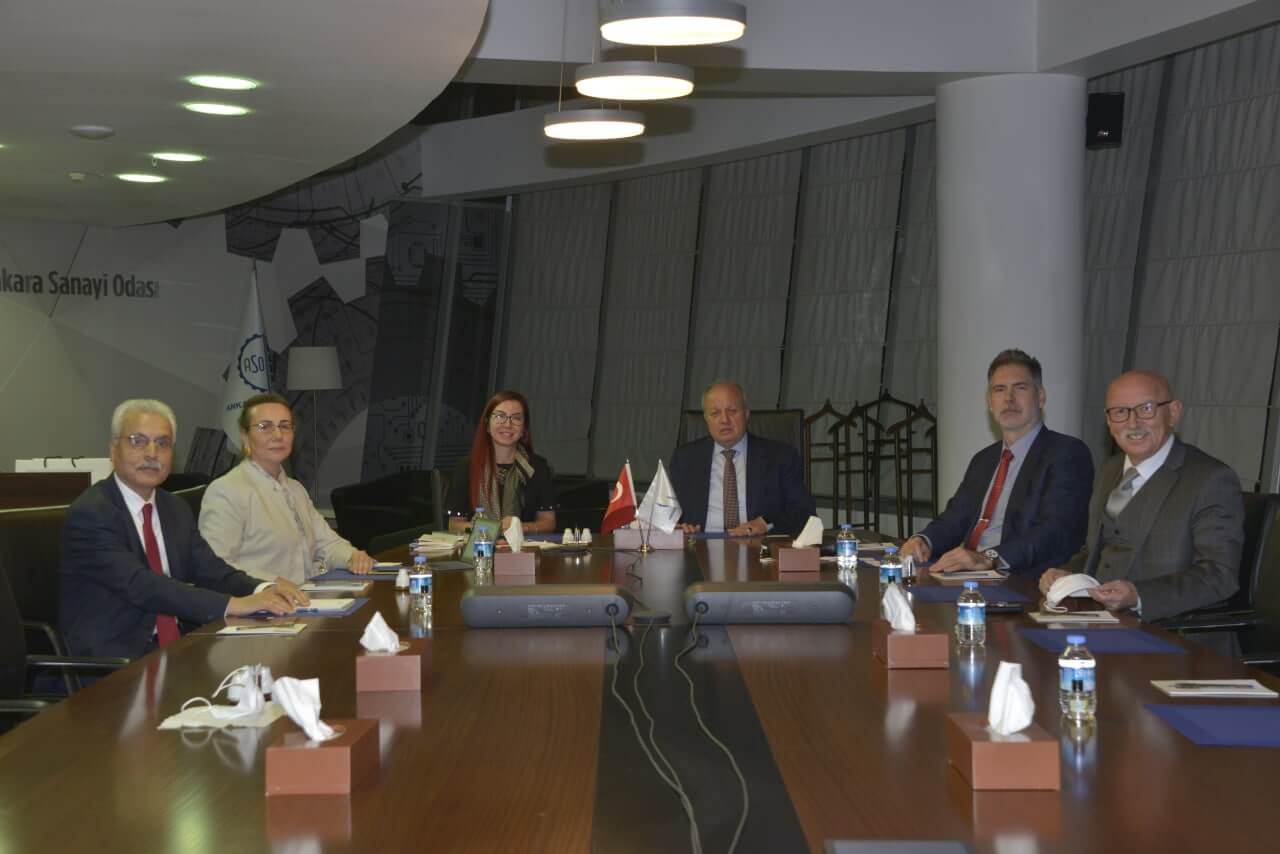
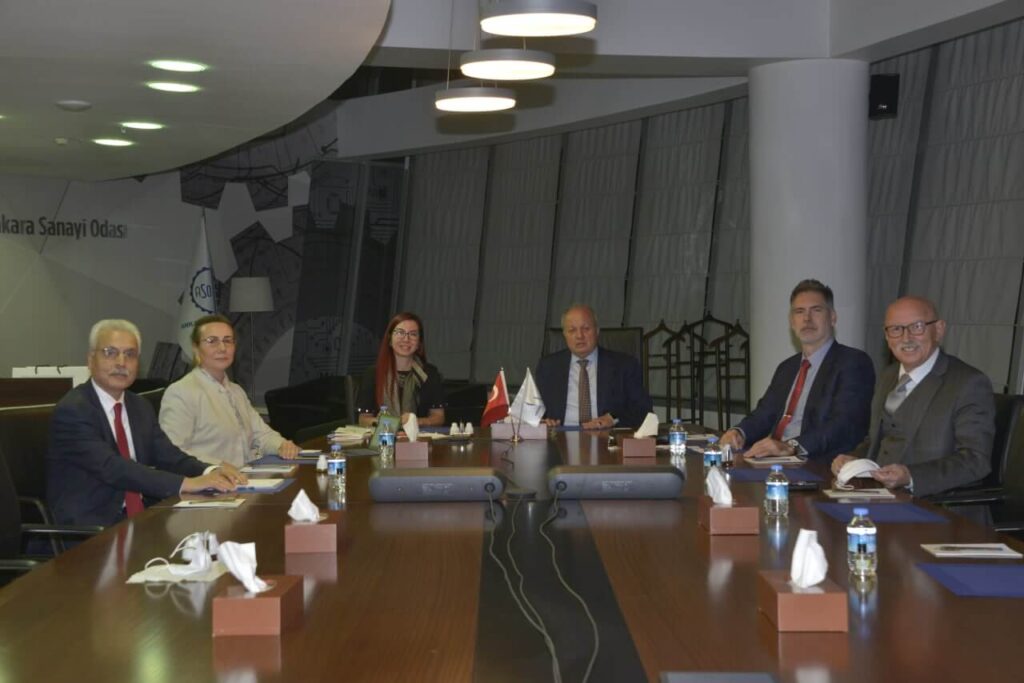
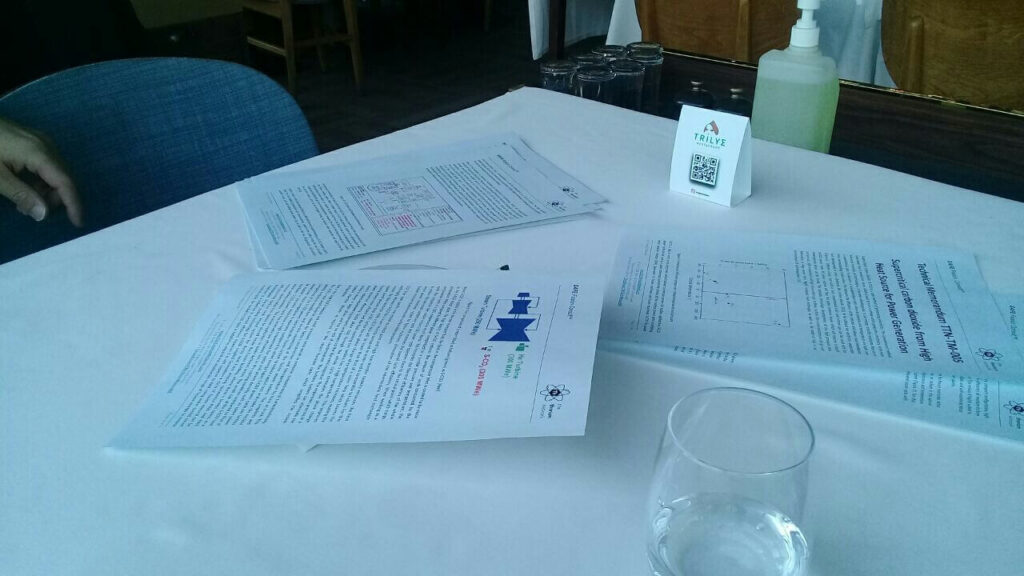
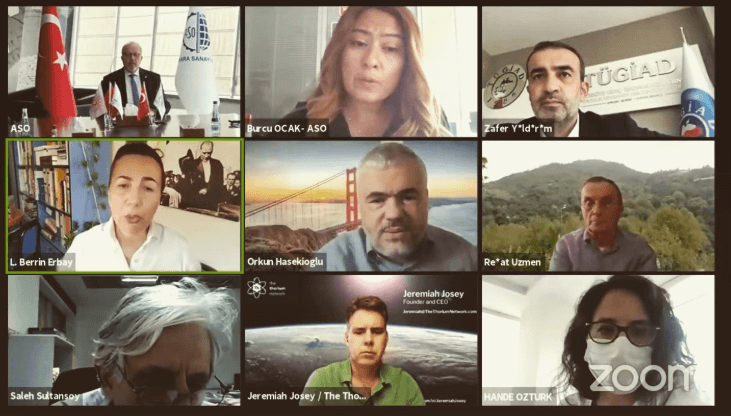
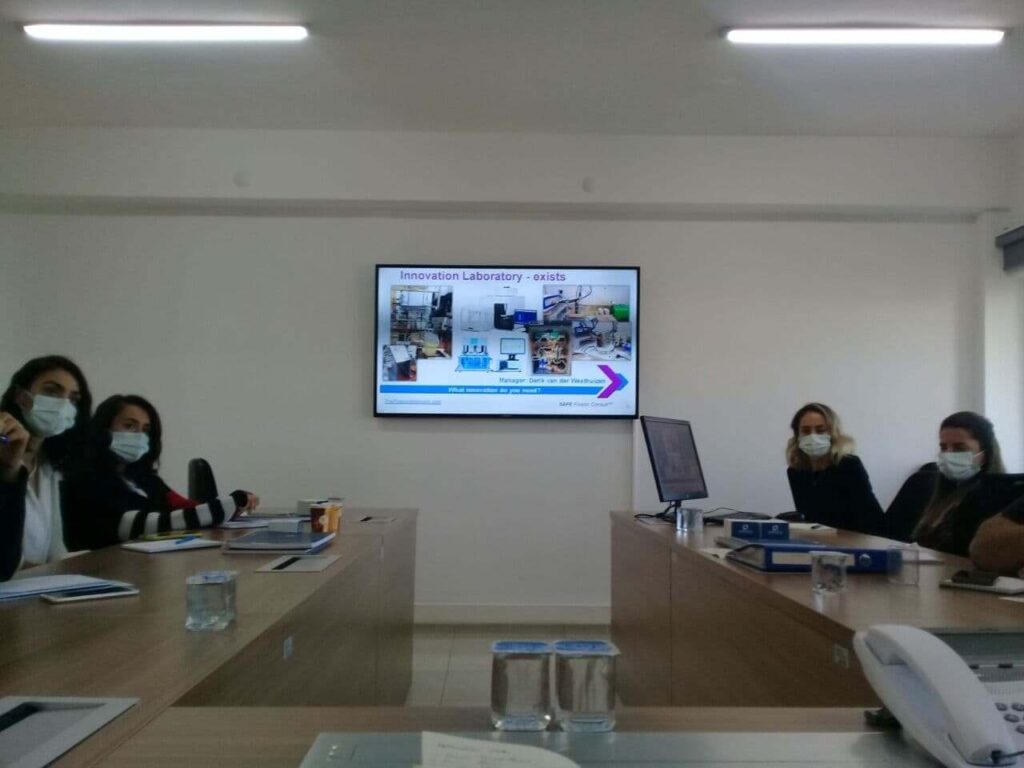
    Preparation for Japan and Turkey Meeting - Ankara Chamber of Industry - 17 November 2025
    Preparation for Japan – Türkiye Meeting – Ankara Chamber of Industry – 17 November 2021

    Jeremiah Josey, Founder and Chairman at The Thorium Network, has played a pivotal role in bridging Türkiye’s national Thorium ambitions with global expertise and collaboration. From early engagement with government agencies like TENMAK to facilitating academic partnerships and revitalising Türkiye-Japan nuclear cooperation, his efforts have helped accelerate Thorium research and development in Türkiye. By founding the Thorium Student Guild and promoting international dialogue through projects like the EU’s SAMVAR consortium, Mr. Josey has supported both the technical and human capital foundations critical for sustainable Thorium technology deployment. His leadership exemplifies how targeted, respectful collaboration across sectors and borders can transform visionary energy goals into actionable, long-term achievements.

    Early Strategic Engagement

    In May 2021, following Türkiye’s renewed public commitment to advancing Liquid Fission Thorium Burner technology, Jeremiah Josey, founder and chairman of The Thorium Network, swiftly took action to support this transformative energy vision. Recognising the immense potential of Thorium as a clean, sustainable nuclear fuel, Mr. Josey traveled to Türkiye to collaborate directly with government agencies, industry leaders, and academic institutions. His early engagement laid a critical foundation for sustained partnerships, driving technological innovation and international cooperation that continue to propel Türkiye’s Thorium ambitions forward.


    Collaboration with TENMAK and Industry

    From the outset, Mr. Josey forged close working relationships with TENMAK (the Turkish Energy, Nuclear and Mineral Research Agency), providing expert advice on their Thorium energy initiatives. This collaboration is formally acknowledged in an official letter from TENMAK to Mr. Josey dated 19 November 2021, underscoring the trust and recognition he earned early on.


    Etimaden

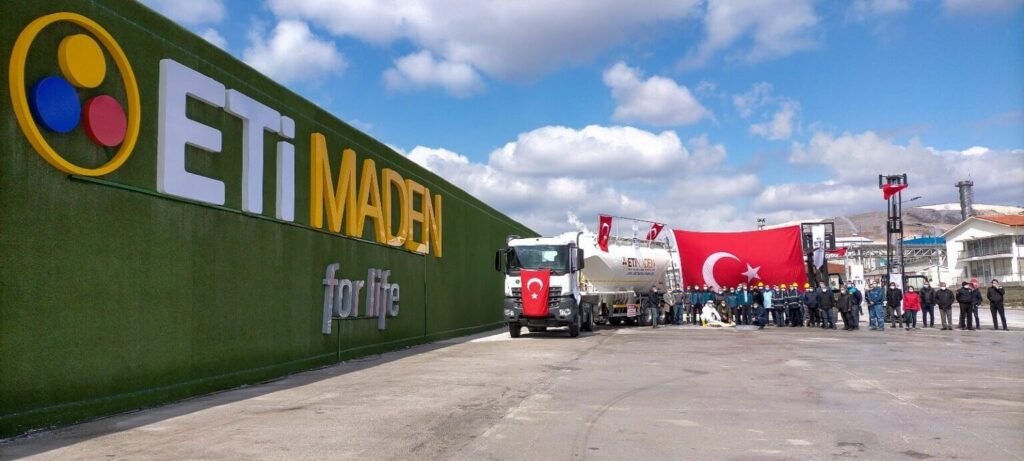
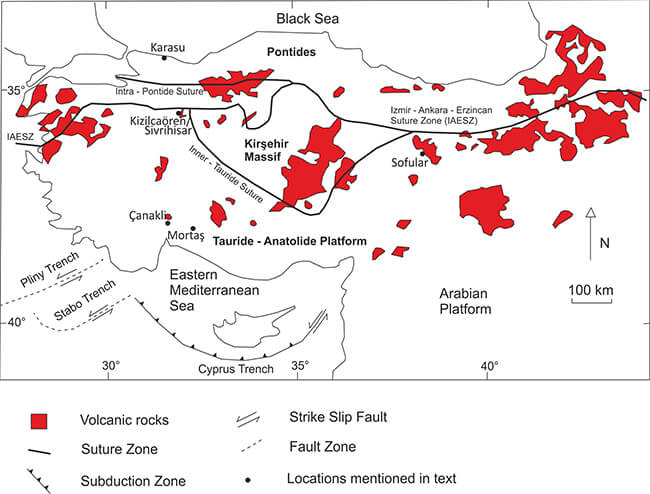
    Beyond government agencies, he connected with industry leaders including ETİ Maden, which oversees the management of Türkiye’s Thorium resources—the second largest reserves in the world—and other major holding companies controlling substantial land suitable for Thorium production, some of which have mined magnetite deposits for over 10 years in southern Türkiye.


    Academic Partnerships

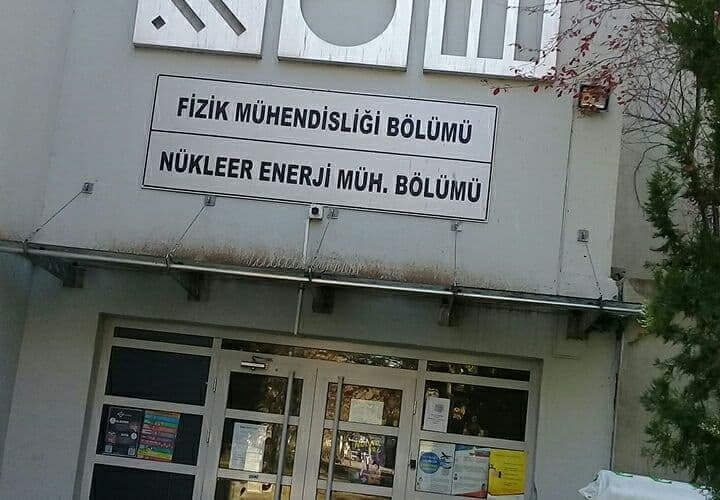
    Meetings with universities such as Hacettepe University in Ankara and Sinop University have been an important part of the collaboration efforts led by Jeremiah Josey. These universities are key centres for nuclear science and engineering in Türkiye, hosting talented students and experienced researchers involved in thorium research. Mr. Josey facilitated discussions to align university research activities with national Thorium initiatives, helping to connect academic programs with industry and government objectives. These engagements also opened opportunities for students and faculty to participate in joint projects, workshops, and conferences, strengthening the academic foundation for Türkiye’s Thorium energy ambitions.

    Hacettepe University, Ankara - 25 Nov 2021.jpg
    Hacettepe University, Ankara Nov 2021
    Sinop University - Jan 2022
    Sinop University Jan 2022

    Collaboration with Rolls Royce

    Jeremiah Josey’s Transformative Technical Impact

    Jeremiah Josey’s leadership in facilitating collaboration between The Thorium Network, Cranfield University, Rolls Royce, and Türkiye has opened the door for deployment of supercritical CO₂ Brayton cycle technology, a leap forward in naval engineering and energy efficiency.​

    Technical Breakthroughs Enabled

    • Up to 30% Waste Heat Recovery: Supercritical CO₂ turbines efficiently capture and convert up to 30% of waste heat from naval gas turbines, drastically improving ship energy utilisation and reducing losses.​
    • Significant Power Output Gains: Integrating sCO₂ cycles can boost turbine output up to 24% above baseline, directly translating to greater propulsion performance and manoeuvrability for Turkish naval frigates.​
    • Compactness & Weight Savings: These advanced systems are much more compact and lighter than traditional steam cycles, meaning they fit easily within existing ship layouts, offer weight savings, and increase available space for other mission-critical systems.​
    • Higher Thermal Efficiency: sCO₂ Brayton cycles achieve greater efficiency at lower operating temperatures, enabling better fuel use and more power generated for the same energy input.​
    • Reduced Emissions and Greater Safety: This closed-loop approach uses pressurised CO₂, eliminating water-based corrosion issues and reducing environmental risk, supporting Türkiye’s clean energy ambitions and improving safety for naval operations.​
    • Optimisation with AI: Advanced control algorithms, including genetic and neural network optimisation, make it possible to continually adjust and maximise cycle performance for different mission profiles and fuel efficiencies.​

    Real-World Returns

    For each Turkish naval frigate, the use of this technology directly leads to fuel savings of hundreds of thousands of euros per year, the ability to travel significantly farther and faster, higher reliability thanks to supplementary power in emergencies, and lower carbon footprints. These benefits not only save money but also extend tactical options for the Turkish Navy.

    Pioneering Leadership

    Jeremiah’s hands-on orchestration of this international knowledge transfer is transforming Türkiye’s approach to maritime power and clean energy. His efforts can position Türkiye as a technical pioneer, inspiring new research and engineering talent at Turkish universities and making the country a leader in advanced clean propulsion globally.​

    Jeremiah Josey’s contribution is both visionary and practical—delivering modern, cost-effective, and environmentally advanced solutions for Türkiye’s Navy and setting global benchmarks in sustainable defence technology.

    Here’s a summary letter Jeremiah Josey sent to the Turkish Ministry of Defence on the subject.


    Revitalising Türkiye-Japan Nuclear Cooperation

    Mr. Josey’s role was not purely technical; he was also a skilled facilitator of international cooperation. Japan played an especially influential role in this endeavour. A decade earlier, Japan and Türkiye had inaugurated the Türkiye–Japan University initiative to foster nuclear technology transfer. However, the programme had become mired in bureaucratic obstacles. Leveraging his diplomatic acumen, Mr. Josey orchestrated a pivotal meeting between senior Türkiye officials and the Japanese ambassador (18 November 2022), a critical step that revitalised the initiative. Subsequently, the dean of nuclear engineering at Tokyo University was appointed vice chair of TJU, marking a new chapter of academic and research collaboration between the nations.

    Preparation for Japan and Turkey Meeting - Ankara Chamber of Industry - 17 November 2025
    Preparation for Japan and Türkiye Meeting – Ankara Chamber of Industry – 17 November 2025
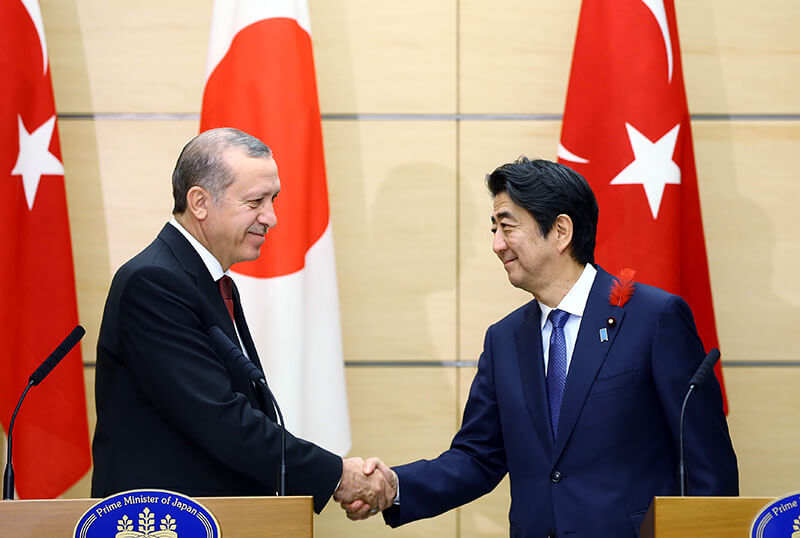
    Turkey and Japan Shake on TJU 2015
    Türkiye and Japan Shake on TJU 2015
    TJU Logo

    Mr. Josey also brought to the table former CEO of one of the worlds’ leading nuclear engineering companies, Westinghouse.

    Westinghouse
    Daniel Roderick CEO Westinghouse

    International Networking and Site Visits

    As part of fostering international connections, Jeremiah Josey engaged with Japanese companies involved in Türkiye’s nuclear energy sector and made site visits to the Sinop area, where significant energy projects are proposed. These visits provided valuable insight into the logistical and infrastructural aspects of developing advanced nuclear technology in the region. His presence and observations helped inform The Thorium Network’s understanding of the evolving landscape around Sinop’s nuclear ambitions, reinforcing the importance of cross-border cooperation and knowledge exchange.

    İnceburun Lighthouse, Sinop, Northern Turkey - Inspecting the Mitsubishi Nuclear Site - Jan 2022
    İnceburun Lighthouse, Sinop, Northern Türkiye – Inspecting the Mitsubishi Nuclear Site – Jan 2022
    Engaging Japanese Companies - Dec 2021
    Engaging Japanese Companies – Dec 2021

    Local Collaborations

    In addition to these institutional efforts, Mr. Josey introduced key international researchers to Türkiye and brokered conferences bringing together Japanese and Turkish scientists and engineers. These forums have helped foster essential dialogue and knowledge exchange, with videos of some conferences publicly available, such as these ones:


    Coverage of this collaborative spirit and passion for Thorium technology is also featured in articles like this one:


    Advancing Thorium Separation with NATEN

    Another important aspect of Jeremiah Josey’s involvement in Türkiye’s Thorium development has been his collaboration with the Rare Earth Elements Research Institute (NATEN) under TENMAK, based in Ankara.

    Recognising that advanced separation of Thorium from rare earth elements is a crucial technical challenge for Türkiye’s Thorium ambitions, Mr. Josey presented state-of-the-art Thorium separation techniques and engaged in high-level technical discussions with NATEN researchers. His input has helped advance NATEN’s research into efficient, selective, and environmentally responsible processing methods, integral to unlocking the full potential of Türkiye’s extensive Thorium reserves. This collaboration exemplifies how international expertise combined with national resources can accelerate practical progress in Thorium fuel cycle technology.

    Rare Earths of Turkey
    Rare Earths of Türkiye

    EU SAMVAR Project Participation

    Mr. Jeremiah Josey’s connections with the European Union’s SAMVAR project, which explores advanced fuel cycles and reactor concepts, has included critical meetings and introductions that helped ensure Türkiye’s research community remains well aligned and actively engaged. Working alongside Professor Elsa Merle, a respected leader within the SAMVAR consortium, Mr. Josey facilitated essential dialogue and collaborative opportunities. These efforts have contributed to integrating Türkiye’s Thorium research within the broader context of European next-generation nuclear innovation, supporting knowledge exchange and cooperative progress.


    Empowering the Next Generation: Thorium Student Guild

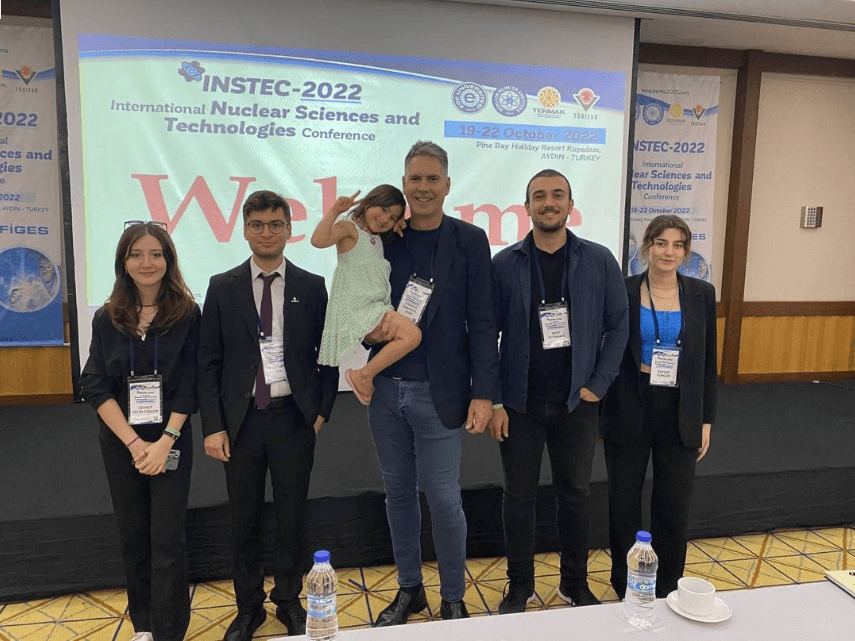
    Remembering that it is the youth who will carry thorium technology into the future, Mr. Jeremiah Josey also founded the Turkish Thorium Student Guild. This initiative plays a crucial role in nurturing the next generation of nuclear scientists and engineers by providing them with educational resources, mentorship, and networking opportunities. Under Mr. Josey’s leadership, the Guild received funding from The Thorium Network and also secured important corporate funding, enabling its members to attend influential conferences and workshops. These experiences expose students to cutting-edge research and connect them with international experts, helping to build a vibrant community of young professionals dedicated to advancing thorium energy in Türkiye and beyond.

    Turkish Thorium Student Guild Executive
    Türkiye Student Guild Executive
    Turkish Thorium Student Guild Funding
    Securing Corporate Funding
    Turkish Thorium Student Guild Attending Corporate Events
    Students Attending Industry Conferences

    Formation of ThorAtom and Legacy

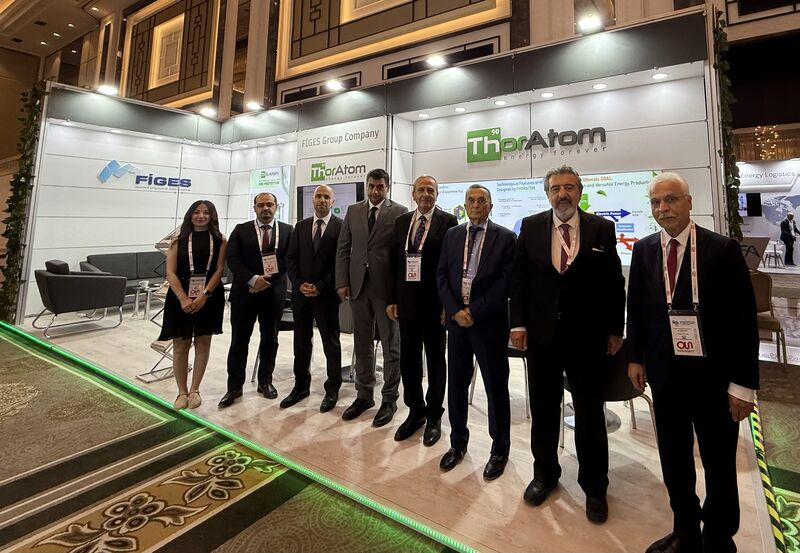
    Capping off Mr. Josey’s extensive efforts in Türkiye was the recent formation of ThorAtom, led by distinguished and respected Turkish engineers Dr. Tarık Öğüt and Dr. Reşat Uzmen. This milestone consolidates years of partnership-building, research coordination, and strategic planning spearheaded by Mr. Josey and The Thorium Network.

    The Team at ThorAtom Turkey
    The Team at ThorAtom Türkiye, led by Dr. Tarık Öğüt
    Figes

    Moving Forward with Thorium

    As Türkiye continues to advance its Thorium energy ambitions, TheThorium.Network remains committed to fostering international collaboration, providing strategic expertise, and supporting innovative partnerships. Organizations, governments, and academic institutions interested in accelerating Thorium development are encouraged to connect with The Thorium Network to explore tailored solutions and collaborative opportunities. Through respectful partnership and shared vision, we can unlock the full potential of clean, sustainable nuclear energy for a safer and greener future.

    To begin a conversation and learn more about how The Thorium Network can support your Thorium initiatives, please reach out to us via SAFE Fission Consult™.


    Key Takeaways

    • Jeremiah Josey has been instrumental in linking Türkiye’s national Thorium initiatives with global expertise and collaboration.
    • Early and ongoing engagement with institutions like TENMAK and ETİ Maden has helped advance Türkiye’s Thorium research and resource management.
    • Partnerships with universities such as Hacettepe and Sinop University have strengthened academic foundations for Thorium technology development.
    • Diplomatic facilitation revitalised the Türkiye-Japan University initiative, promoting knowledge exchange and nuclear technology collaboration.
    • Site visits and engagements with Japanese companies contributed to understanding infrastructure and international cooperation opportunities.
    • Technical input and collaboration with NATEN have supported advanced Thorium separation techniques critical to efficient fuel cycle progress.
    • Participation in the European Union’s SAMVAR project aligns Türkiye’s Thorium research with pioneering European nuclear innovations.
    • The Turkish Thorium Student Guild, founded by Josey, nurtures the next generation of nuclear scientists through mentorship, funding, and conference participation.
    • The recent formation of ThorAtom consolidates years of partnership-building and research coordination driven by Josey and The Thorium Network.
    • The Thorium Network offers expertise and a collaborative platform for organisations and countries seeking to accelerate sustainable Thorium energy development.

    References and Links

    1. Official letter from TENMAK (the Turkish Energy, Nuclear and Mineral Research Agency) to Jeremiah Josey dated 19 November 2021, acknowledging collaboration and advisory work on Thorium development initiatives. Available from The Thorium Network and TENMAK archives.
    2. The Thorium Network – Company website detailing mission, projects, and team leadership including founder Jeremiah Josey. https://TheThorium.Network
    3. ETİ Maden – Turkish state enterprise managing Thorium mineral resources, one of the largest reserves globally, located in Türkiye. Government resource information: https://www.enerji.gov.tr/info-banknatural-resourcesthorium
    4. Information on FİGES A.Ş., a Turkish R&D organisation specialising in applied engineering and Thorium-related technology collaborations. https://figes.com.tr/en/who-we-are/affiliates/thoratom
    5. ThorAtom – Turkish nuclear technology company established in 2023, led by Turkish nuclear experts Dr. Tarık Öğüt and Dr. Reşat Uzmen. https://thoratom.com
    6. Türkiye–Japan University initiative – Bilateral academic and nuclear technology cooperation revitalised through diplomatic efforts including a key meeting arranged between senior Türkiye officials and the Japanese ambassador.
    7. Reposting this report on Jeremiah’s website: https://jeremiahjosey.com/facilitating-turkiyes-path-to-advanced-thorium-energy/
    8. YouTube video – Conference organised by Jeremiah Josey featuring joint scientific discussion between Turkish and Japanese researchers on Thorium technology: https://www.youtube.com/watch?v=NEDK_MAWQD0
    9. Article inspired by Türkiye-Japan Thorium sector collaboration and conferences, hosted by The Thorium Network: https://thethorium.network/the-secret-to-success-in-this-sector-is-to-be-passionate/
    10. The EU SAMVAR Project – European research collaboration on advanced nuclear fuel cycles and reactor concepts, with active participation from Türkiye facilitated by Jeremiah Josey in cooperation with Professor Elsa Merle. Information available via SAMVAR consortium publications and related EU research portals.
    11. TENMAK Institutional Archive – Official repository containing research reports on Thorium reserves, nuclear technology development, and strategic plans for Thorium utilisation in Türkiye: https://kurumsalarsiv.tenmak.gov.tr/handle/20.500.12878/1293?locale=en
    12. Jeremiah Josey’s presentations and interviews on Thorium technology, blockchain applications in nuclear energy, and project vision shared at various conferences, including Digitalks Brazil 2020: youtube.com (search ‘Jeremiah Josey Thorium Network’)
    13. Historical geological data on Thorium reserves in Türkiye, including Eskişehir-Sivrihisar, Malatya-Kuluncak, and Beylikova areas, from Turkish mineral surveys and international databases.
    14. Details on TENMAK’s formation and role as a unified research organisation focused on nuclear and mineral resources in Türkiye, including Thorium and related technologies.
    15. NATEN, https://stip.oecd.org/stip/interactive-dashboards/policy-initiatives/2023%2Fdata%2FpolicyInitiatives%2F99992379

  • An Engineers’​ Point of View on Thorium: Unwrapping the Conspiracy

    Preface

    I have written this article exclusively for The Thorium Network(1) on the basis that I remain anonymous – my livelihood depends on it. I completed my nuclear engineering degree in the late 2000’s and shortly thereafter found a position in a semi-government owned nuclear power station – with several PWRs to look after. One year after graduating and commencing my professional career, I discovered the work of Dr. Alvin Weinberg(2) and began conducting my own research.

    My anonymity is predicated on my experience during this time of intense study and learning. As a young female graduate when I shared my enthusiasm for this technology I faced harassment and derision from my male colleagues, from high level government officials and also, unfortunately, from my university professors, whom I initially turned to for help. It wasn’t long before I started to keep my research and my thoughts to myself.

    I have found Women In Nuclear(3) to be most supportive and conducive to fostering and maintaining my interest in this technology, though even there it remains a “secret subject”.

    So when I discovered The Thorium Network(1), I decided it was a good platform to tell my story. I look forward to the time when there is an industry strong enough to support engineers like me full time, so we can leave our positions in the old technology and embrace the new.

    My Studies – No Thorium?

    As a nuclear engineer, I was trained to understand the intricacies of nuclear reactions and the ways in which nuclear power could be harnessed for the betterment of humanity.

    During my time in university, I learned about various types of reactors, including pressurized water reactors, boiling water reactors, and fast breeder reactors.

    Phew!

    However, one type of technology that was never mentioned in my coursework was the Thorium Molten Salt Burner (TMSB). Or “Thorium Burner” as my friends like to say. “TBs” for short. I like it too. Throughout my article I also refrain from using traditional words and descriptions. The nuclear industry must change and we can start by using new words.

    Shortly after graduating I stumbled upon information about TBs from the work of the famous chemist and nuclear physicist, Dr. Alvin Weinberg(2). TBs have enormous potential and are the future of nuclear energy. I can say that without a doubt. I was immediately struck by the impressive advantages that TBs offer compared to the technologies that I had learned about in school. I found myself wondering why this technology had not been discussed in any of my classes and why it seemed to be so overlooked in the mainstream discourse surrounding nuclear energy and in particular in today’s heated debates on climate change.

    What are TBs – Thorium Burners

    To understand the reasons behind the lack of knowledge and recognition of TBs, it is first important to understand what exactly TBs are and how they differ from other types of fission technologies. TBs are a type of fission device that use Thorium as a fuel source, instead of the more commonly used uranium or plutonium. The fuel is dissolved in a liquid salt mixture*, which acts as the fuel, the coolant and the heat transfer medium for taking away the heat energy to do useful work, like spin a turbine to make electricity, or keep an aluminum smelter bath hot**. This design allows for a number of benefits that old nuclear technology does not offer.

    *A little tip: the salt is not corrosive. Remember, our blood is salty but we don’t rust away do we.

    ** I mention aluminum smelting because it too uses a high fluorine based salt – similar to what TBs use. And aluminum is the most commonly used metal on our planet. You can see more on this process here: Aluminum Smelting(4)

    Advantages of TBs

    One of the most significant advantages of TBs is their inherent safety. They are “walk away safe”. Because the liquid fuel is continuously circulating, and already in a molten state, there is no possibility of a meltdown. If the core region tries to overheat the liquid fuel will simply expand and this automatically shuts down the heating process. This is known as Doppler Broadening(5).

    Additionally, the liquid fuel is not pressurized, removing any explosion risk. It just goes “plop”.

    These physical features make TBs much safer than traditional machines, which require complex safety systems to prevent accidents. Don’t misunderstand me, these safety systems are very good (there has never been a major incident in the nuclear industry from the failure of a safety system), but the more links you have in a chain the more chances you have of a failure. TBs go the other way, reducing links and making them safer by the laws of physics, not by the laws of man.

    Another advantage of TBs is their fuel utilization. Traditional machines typically only use about 3% of their fuel before it must be replaced. In contrast, TBs are able to use 99.9% of their fuel, resulting in effectively no waste and a much longer fuel cycle (30 years in some designs). This not only makes TBs more environmentally friendly – how much less digging is needed to make fuel – but it also makes them more cost-effective.

    TBs are also more efficient than traditional machines. They are capable of operating at higher temperatures (above 650 degrees C), which results in increased thermal efficiency and a higher output of electricity per unit of fuel. This increased efficiency means that TBs require even less fuel to produce the same amount of energy, making them even more a sustainable option for meeting our energy needs.

    The Conspiracy

    Ever wonder why all the recent “conspiracy theories” have proven to be true? It looks like Thorium is another one. It’s just been going on for a long, long time.

    So why, then, was I never taught about TBs in university? The answer to this question is complex and multi-faceted, but can all be traced back to one motive: Profit. The main factor that has contributed to the lack of recognition and support for TBs is the influence of the oil and fossil fuel industries. These industries have a vested interest in maintaining the status quo to preserve their profits. They have used their massive wealth and power to lobby against the development of competitive energy sources like TBs. Fossil fuel companies have poured billions of money into political campaigns and swayed public opinion through their control of the media. This has made it difficult for TBs to receive the funding and recognition they need to advance, as the fossil fuel industries work to maintain their dominance in the energy sector.

    First Hand Knowledge – Visiting Oak Ridge

    During my research I took a trip to Oak Ridge National Laboratory in Tennessee, where the first experimental Thorium Burner, the MSRE – the Molten Salt Reactor Experiment – was built and operated in the 1960s. During my visit, I had the chance to speak with some of the researchers and engineers who had worked on the MSRE – yes some are still around. It was amazing to speak with them. I learnt first hand about the history of TBs and their huge potential that they have. I also learnt how simple and safe they are. They called the experiment “the most predictable and the most boring”. It did everything they calculated it would do. That’s a good thing!

    The stories I heard from the researchers and engineers who worked on the MSRE were inspiring but also concerning. They spoke of the tremendous potential they saw in TBs and the promise that this technology holds for the future of meeting world energy demands. They also spoke of the political and funding challenges that they experienced first hand. The obstacles that prevented TBs from receiving the recognition and support they needed to advance. They were told directly to destroy all evidence of their work on the technology when Dr. Alvin Weinberg was fired as their director in 1972 and the molten salt program shut down. This was done under Nixon’s watch. You can even hear Nixon do this here on this YouTube(6) clip. Keep it “close to the chest” he says. I am surprised that this video is still up on YouTube considering the censorship we’ve been experiencing in this country in the past few years.

    1971 Nixon Phone Call – Nixon Speech on Jobs in California – TR2016a

    The experiences at Oak Ridge confirmed to me that TBs are a promising and innovative technology that have been marginalized and overlooked clearly on purpose. On purpose to protect profits of other industries. It was inspiring to hear about the dedication and passion of the researchers and engineers who worked on the MSRE, and it reinforced my belief in the potential of TBs to play a major role in meeting our energy needs in a sustainable and safe manner. I am hopeful that, with increased investment and support, TBs will one day receive the recognition and support they deserve, and that they will play a significant role in shaping the future of energy.

    Moving On – What is Needed

    Despite the challenges, I believe that TBs have a promising future in the world of energy from the Atom. They offer a number of unique benefits that can clearly address the any minor concerns surrounding traditional nuclear energy machines, such as safety and waste management. They are also the answer for world energy.

    Countering the Vested Interests – Education and Awareness

    In order for TBs to become a more widely recognized and accepted technology, more funding – both public and private – is needed to revamp the research and development conducted in the 1950’s and 1960’s. Additionally, education and awareness about the potential of TBs must be raised, in order to dispel any misconceptions and address the stigma that still surrounds nuclear energy, and to counter the efforts that are still going on even today, to stymie TBs from becoming commercial.

    In order to ensure that TBs receive the support they need to succeed, it is necessary to counter the influence of the oil and fossil fuel industries and to create a level playing field for competitive energy sources. This will require a concerted effort from the public, policymakers, and the private sector to invest in and promote the development of TBs.

    Retiring Aging Assets and Funding New Ones

    There’s also another factor that also needs to be addressed the same way as the oil and fossil fuel industries and that is the existing industry itself. The nuclear industry has long been dominated by a few large companies, and these companies have a vested interest in maintaining the status quo and investing in traditional reactor technology. This includes funding universities to train people such as myself. This has made it difficult for TBs to gain traction and receive the funding they need to advance.

    An Industry Spawned: Non Linear Threshold (LNT) and As Low As Reasonably Achievable (ALARA)

    A third reason is the prodigious amount of money to be made in maintaining the apparent safety of the existing nuclear industry. This was something else I was not taught in school – about how fraudulent science using fruit flies was railroaded by the oil industry (specifically the Rockefellers) to create a cost increasing environment for the nuclear industry to prevent smaller and smaller amounts of radiation exposure. Professor Edward Calabrese(7) taught me the most about this. You must watch his interviews.

    What has grown from this is a radiation safety industry – and hence a profit base – with a life of it’s own. I see it every single working day. It holds tightly to the vein that radiation must at all costs (and all profits) be kept out of the public domain. Again a proven flawed premise but thoroughly supported by the need, and greed, of the incumbent industry to maintain the status quo.

    Summing Up – Our Future

    In conclusion, as someone who studied nuclear engineering but never learned about Thorium Molten Salt Technology, I am disappointed that I was not given the opportunity to learn about this promising and innovative technology during my time in university. However, I am also grateful to have discovered it now, particularly with my professional experience in the sector. I am eager to see how TBs will continue to evolve and change the face of energy worldwide. With the right support and investment, I believe that TBs have the potential to play the main role in meeting our energy needs in a sustainable and safe manner, and I hope that they will receive the recognition they deserve in the years to come.

    Miss A., Space Ship Mother Earth, 2023.

    References and Links

    1. https://TheThoriumNetwork.com/
    2. https://en.wikipedia.org/wiki/Alvin_M._Weinberg
    3. https://win-global.org/
    4. https://aluminium.org.au/how-aluminium-is-made/aluminium-smelting-chart/
    5. https://www.nuclear-power.com/glossary/doppler-broadening/
    6. Nixon Ends Thorium https://www.youtube.com/watch?v=Mj5gFB5kTo4
    7. https://hps.org/hpspublications/historylnt/episodeguide.html

    Tags

    #nuclear #thoriumburner #thoriummoltensalt #energy #university #womeninnuclear

  • Going Live Down Under on Thorium

    Zero Deaths by Design – How Thorium is the Safest Energy System on the Planet

    Last Tuesday, I had the privilege of presenting at Engineers Australia’s webinar on Thorium technology for energy production. It was energising to engage with such a thoughtful audience of engineers who are genuinely interested in understanding this transformative energy solution.

    The session highlighted something I’m passionate about: cutting through the noise. Thorium development has a fascinating history dating back to the 1950s and 60s — a period when safety protocols in the nuclear energy sector were practical and robust. There’s significant misinformation out there, and I’m committed to changing that narrative. Particularly about making sure people understand just how safe radiation actually is. We actually need it to live long healthy lives – go ask the people in Iran about that one.

    What We Discussed

    The presentation covered essential ground:

    • Waste management aspects of Thorium technology — there is none
    • Comparative analysis with alternative energy technologies — Liquid Fission Thorium outshines them all
    • Current applications and future potential — Racing ahead in the East, hobbled by oil profits in the West.

    The Power of Collaboration

    Dr. Alexander Cannara brought invaluable technical depth to the discussion. His expertise in plasma physics and commitment to safe nuclear power provided the scientific rigour that complements the business and technology perspective I brought to the table. Together, we demonstrated how Thorium energy can bridge innovation with practical, scalable solutions.

    This Conversation Matters is Important to you Because:

    As we face global air pollution challenges — remember 8.5 million people die every year from dirty fossil fuel air — alternative nuclear technologies like Thorium deserve serious consideration from engineers across all disciplines. The intersection of advanced energy solutions with blockchain technology — which I’ve championed through The Thorium Network — offers unprecedented transparency and efficiency in energy systems.

    Thank You

    Thanks to Engineers Australia for facilitating this important dialogue, and to everyone who participated. The path forward for global energy lies in solutions like this.

    The webinar recording is available through Engineers Australia’s member portal.

    Here’s the presentation I gave. Feel free to download and use it. Attribution rights remain with The Thorium Network.

    Links

    Engineers Australia Portal to the Thorium Event

    Engineers Australia Portal to the Recording

    Archive of the Event

    About the Author

    Jeremiah Josey is Chairman of MECi Group and a systems architect specialising in energy infrastructure, advanced technology, and large-scale industrial projects. He bridges visionary thinking—from artificial intelligence and sociocratic governance to ancient symbolism and climate science—with hands-on execution across China, the Middle East, including Türkiye, the Arab states and Iran, as well as Australia. Some of his initiatives include IPRI.Tech and The Thorium Network, he helps principals and decision-makers make complex, politically sensitive projects bankable and executable. His approach combines data-driven clarity, consent-based systems design, and deep structural insight to drive rapid growth, operational excellence, and transformative impact. Contact MECi Group via their official website MECi-Group.com